← Post Reports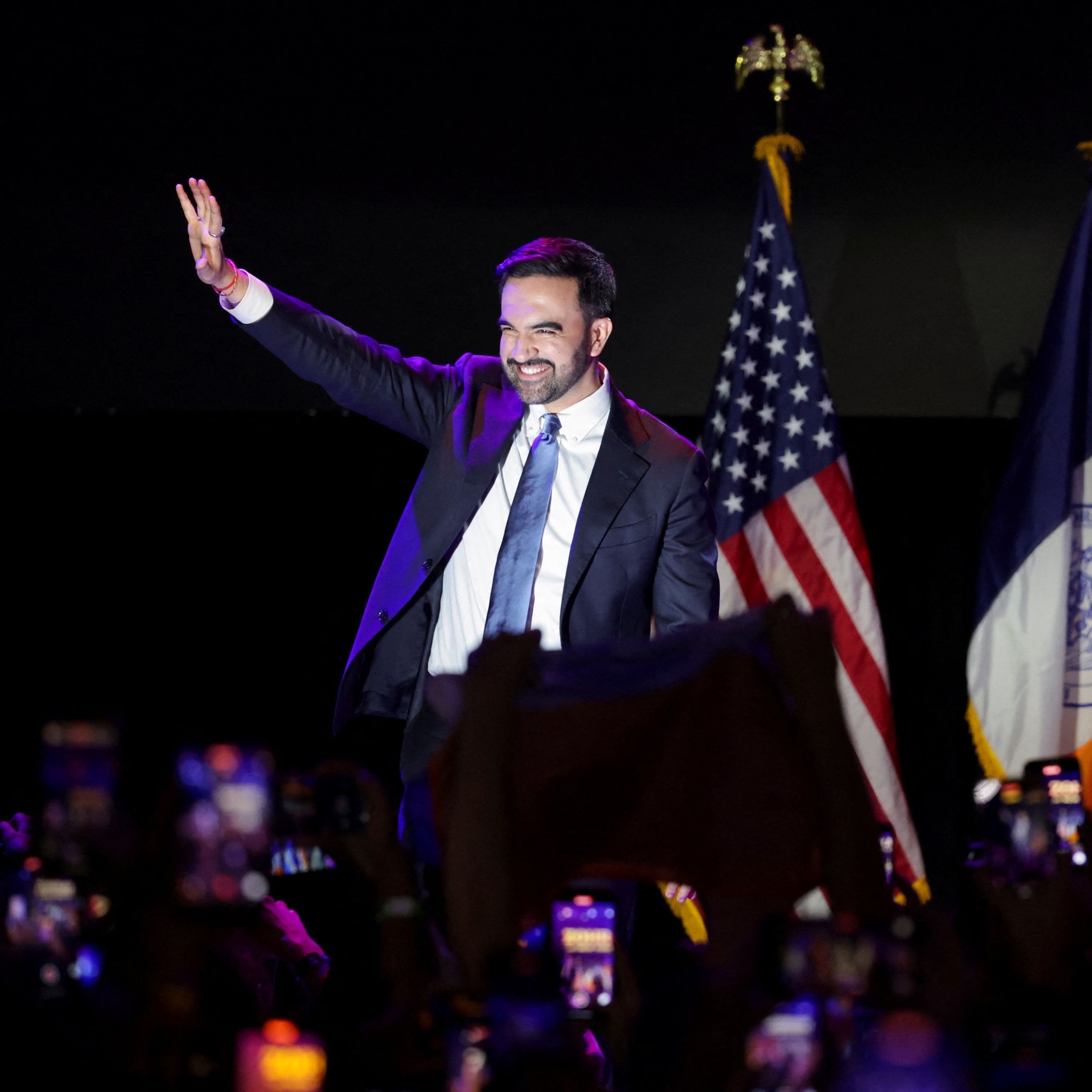
Post Reports
How Democrats swept Tuesday’s key elections
00:26:26
From Zohran Mamdani in New York City’s mayoral race to a ballot initiative on redistricting in California, Democrats handily won all of Tuesday’s biggest races.
Loading summary
Transcript90 lines
- [00:01]
Dan Marika
Mamdani, a Democratic socialist who came at this race from the left. He's very progressive.
- [00:08]
Colby Ekowitz
Yeah.
- [00:08]
Dan Marika
From the far left, including progressive for New York City standards even.
- [00:11]
Washington Post Promo Voice
Yeah.
- [00:12]
Dan Marika
But one of the takeaways I think is gonna be the way he campaigned, not just what he campaigned on.
- [00:17]
Colby Ekowitz
And of course, like we should caveat New York City, though some believe it's the center of the universe. We can't extrapolate those people exist. Some people think. Some people think that some people from the newsroom of the welcome to the Washington Post. This is Post Reports weekly politics show. I'm Colby Ekowitz. We're coming to you a little early this week to give you a post election roundup. It is Wednesday, November 5th. On the show, we're going to be unpacking the big Democratic wins in places like New York City, New Jersey, Virginia and California. I'm joined by regular guest Dan Marika. He's the co anchor of our politics newsletter, the Early Brief. Dan, thank you for joining me at this late hour.
- [01:02]
Dan Marika
Yeah, I'm honored to be here at Post Report After Dark.
- [01:08]
Colby Ekowitz
So let's start with the big mayor's race in New York. Major victory. Zahra Mamdani, self described democratic socialist, ran his whole campaign on affordability, reached out to disaffected voters. It's late Tuesday night. People are going to be listening to this on Wednesday.
- [01:31]
Washington Post Promo Voice
Recap.
- [01:31]
Colby Ekowitz
How big of a win was this?
- [01:33]
Dan Marika
It's a massive win. And I think what it shows is that Zoramdani's entire theory of the case that he could bring out, like you call it, disaffected voters, people who don't regularly vote in New York mayoral races, was accurate. He was correct. And he did it not only in the general election, but also in the primary. And that is significant.
- [01:52]
Zahra Mamdani (quoted)
The sun may have set over our city this evening, but as Eugene Debs once said, I can see the dawn of a better day for humanity.
- [02:11]
Dan Marika
Results already show that it's the highest turnout for local elections since 1969. Wow. Yeah. More than 2 million votes were cast for mayor and that is way more than the last few cycles where they were just over 1 million, 1.1 million in that range. So he really handily defeated former New York Governor Andrew Cuomo, a Democrat, obviously, but decided to run as an independent after he lost the primary to Zoran Mamdani. Firstly, it's a real fall from grace from a former New York governor. He had already fallen from grace because of all the allegations against him that forced him out of office. This is just Kind of him digging deeper into that fall from grace. He is defeated and defeated handily in this general election for Mamdani. He now has to prove what he promised. He ran a really ambitious campaign that promised a whole host of things, from free buses to the way they were gonna change policing in New York to city run grocery stores, just to name a few, freezing the rent for rent, stabilized apartments. There are now voters who came out specifically because of that message. And those voters are going to expect results. That's a problem down the line for now, Mayor elect Mamdani. But what this election shows is that it is possible with a sweeping vision for the future like Mamdani had. Whether you agree with him or not, it was a sweeping vision for the future that you can turn out people who don't traditionally vote.
- [03:35]
Colby Ekowitz
Yeah. I mean, what was it, or is it, I guess, about Mamdani that connected people so, like, you know, people were wild about that. Yeah.
- [03:44]
Dan Marika
I mean, I think sometimes we overthink politics.
- [03:46]
Colby Ekowitz
Yeah.
- [03:48]
Dan Marika
When you boil it down, people want to vote for someone who they think understands them. And Mamdani not only captured that with understanding the affordability message that is really at the heart of what people are concerned about right now, but he also did it in a way that was engaging to people. He smiled, he talked about himself in a personal way. He would go on Instagram shows and talk to influencers about his music tastes and what he thought about pizza in New York and his favorite restaurants and all about sports. I think the couple nights before the election, he was in a Knicks game and the nosebleeds and that became a whole thing. And I think that's a big takeaway for Democrats in this race. Yes. Mamdani, a Democratic socialist who came at this race from the left. He's very progressive.
- [04:38]
Colby Ekowitz
Yeah.
- [04:39]
Dan Marika
From the far left, including progressive for New York City standards, even.
- [04:42]
Washington Post Promo Voice
Yeah.
- [04:42]
Dan Marika
But one of the takeaways, I think is gonna be the way he campaigned, not just what he campaigned on.
- [04:48]
Colby Ekowitz
And of course, like we should caveat New York City, though some believe it's the center of the universe. We can't extrapolate people exist.
- [04:56]
Podcast Sponsor Voice
Some people think.
- [04:56]
Dan Marika
Some people think that.
- [04:57]
Colby Ekowitz
Some people. But I think it is different than the rest of the country. And you can't really extrapolate too much meaning from what voters in New York City are doing to, you know, the midterms as we look into next year.
- [05:08]
Dan Marika
Yeah.
- [05:09]
Colby Ekowitz
But Democrats are going to try to learn some lessons right. From Mamdani as Democrats start strategizing for 2026. Can they learn anything from how Mamdani connected with people, should they be taking anything away from his message?
- [05:24]
Dan Marika
Yeah, I think the main takeaway beyond the way that he campaigned was his laser like focus on affordability. That is something that carries across states, cities, races. That is something that voters, poll after poll after poll, have said is top of mind right now.
- [05:42]
Washington Post Promo Voice
Yeah.
- [05:42]
Dan Marika
Mamdani clearly came at it from a progressive point of view, promising city run grocery stores and free buses and rent stabilization in Des Moines, Iowa, or, you know, rural Wisconsin or some of the places where the house majority in 2026 will be decided probably won't work. And that's why Zoran Mamdani was running for New York mayor and not, you know, the mayor of lacrosse.
- [06:05]
Colby Ekowitz
Yeah.
- [06:06]
Dan Marika
That is something Democrats will have to internalize. And I think it's a big question. Going, leaving this election night is plenty of Republicans are going to want to use Mamdani as the kind of boogeyman of the Democrats. You've already seen it from folks on TV saying that Mamdani is now the leader of the Democratic Party.
- [06:23]
Colby Ekowitz
Right.
- [06:24]
Dan Marika
You know, Democrats are going to have to come up with an answer to that. You've seen some Democrats grapple with this. It does seem like there's kind of an obvious answer for Democrats in that what works in New York doesn't work in other places of the country. And that's why the party is a big tent. Whether Democrats can convey that, I think will be really decisive of how they can take lessons from Mamdani and use it in the midterms successfully and not as kind of a cudgel for Republicans to attack them with.
- [06:51]
Colby Ekowitz
Well, it's interesting that you bring up kind of how Republicans are viewing Madani, because in some ways it seems like President Trump. Other Republicans are almost gleeful that Mamdani won this race because they can treat him as a foil in next year's midterms. But Trump did come out and, you know, somewhat tacitly endorse Andrew Cuomo. He said that Jewish voters are stupid people if they support Mamdani. So did Trump want Mamdani to win? Did he actually hope Cuomo won? Like, where was Trump in all of this?
- [07:24]
Dan Marika
I mean, Trump obviously has a fixation on New York. It's the city that made him. He was born and raised in Cuomo. So he always was gonna have a fixation on New York. The other thing that I think is interesting is that this has been tried before. This is not new for Republicans, like finding a liberal member of Congress or someone who kind of exemplifies the progressive wing and using that as a kind of boogeyman for the entire Democratic Party. So Republicans are gonna try and use this against Democrats. I think the biggest thing is gonna be the reaction to what Mamdani tries to do and how he starts his administration. That will determine, I think, how Republicans attack, use Mamdani to attack Democrats. And whether that works, whether it's well received, I think will determine the success that Republicans have in using Mamdani.
- [08:11]
Colby Ekowitz
What was interesting in this New York Merrill race was how it did divide the Democratic Party. I mean, there were Democratic leaders who were reluctant to back Mamdani. They didn't want to see be seen as getting behind a so called Democratic socialist. So where does that leave those leaders now that he'll be running such an important city?
- [08:35]
Dan Marika
You saw this from some of the leading Democrats in New York. I mean, Governor Kathy Hochul took her time in getting behind Mamdani. House Minority Leader Hakeem Jeffries, who's a congressman from New York, took his time getting behind Mamdani and did it, I would argue, kind of tentatively.
- [08:52]
Colby Ekowitz
Yeah.
- [08:52]
Dan Marika
And then Senate Minority Leader Chuck Schumer, a senator from New York, did not get behind Mamdani. So the Democratic Party is also going to have to have a reckoning with what does Mamdani mean for them. Are they able to make the point that New York is New York and Des Moines is Des Moines and all these different races are going to be decided by different factors? That's one way of going about it. And some of them just didn't want to be seen as associated with somebody who's a Democratic socialist and who has the views that he has had on a whole host of issues, namely Israel and Gaza, which is a pressing issue right now both in this race and just politically throughout the country. I did speak with the chair of the Democratic Congressional Campaign Committee right before the election that his race was called. And she noted that affordability was his main message because that's what Democrats are going to want to talk about. But she also noted that the races that will decide the House majority next cycle are going to be in purple districts that look nothing like New York City. Sure. So the candidates will look nothing like those candidates that can succeed in New York City. If Democrats can make that argument and kind of note that people who are going to be voting in these congressional races don't really care about the mayor of New York, then I think they can find their way through this. If Republicans are more successful in kind of painting Mamdani as the face of the Democratic Party. It could be difficult for them to kind of distance themselves from someone who clearly has a lot of sway and popularity with the base of the party.
- [10:24]
Colby Ekowitz
I mean, and to your point, Dan Mamdani's not the only Democrat that had a decisive win in Tuesday night's elections. You saw Democrats from a purple state like Virginia have a really decisive win. So let's pause there because I want to talk to you about that after the break. Dan and I are going to break down Democratic wins in New Jersey and Virginia and also a major ballot initiative win in California. We'll be right back.
- [10:58]
Podcast Sponsor Voice
The holidays are coming up, which means the air is getting crisper and comfort becomes the best gift of all. And that's where Quint's comes in, delivering layers that last. Their sweaters, outerwear and everyday essentials feel luxurious, look timeless and make holiday dressing and gifting a breeze. That's because quince has it $50 Mongolian cashmere sweaters made for everyday use. Denim that literally never goes out of style. Silk tops and skirts that add polish and down outerwear built to take on the season. Perfect for gifting and maybe even better for upgrading your own wardrobe. You've heard me talk about the Mongolian cashmere sweaters before and now is when they really shine. Next on my list are the Italian wool coats, designer cuts with quality that rivals high end brands, but without the high end markup. Because Quince works directly with ethical top tier factories, they skip the middlemen and can pass the savings on to you, sometimes as much as 50% less than similar brands. Step into the holiday season with layers made to feel good, look polished and last. From Quince, perfect for gifting or keeping for yourself. Go to quince.comreports for free shipping on your order and 365 day returns. Now available in Canada too. That's quince.com reports to get free shipping and 365 day returns. Quince.com reports you listen because you know.
- [12:20]
Washington Post Promo Voice
The power of good journalism and the Washington Post is there for you 24 7. When you become a Washington Post subscriber, you get exclusive reporting you can't find anywhere else. You also get sharp advice, columns, delicious recipes, TV and music reviews and so much more. Right now, you can get all of that for just $4 every four weeks. That's for an entire year. After that, it's just $12 every four weeks and you can cancel anytime. Add to your knowledge and discover all the Post has to offer. Go to washingtonpost.com subscribe that's washingtonpost.com subscribe.
- [13:05]
Colby Ekowitz
So, Dan, two important governor's races, Virginia, New Jersey.
- [13:10]
Dan Marika
Yep.
- [13:10]
Colby Ekowitz
Democrats win big, especially in Virginia. Let's talk about them. Let's start with Virginia Abigail Spamberger. What do we need to know about her? What is so significant about her win?
- [13:19]
Dan Marika
She is one of the many Democrats who was recruited to run for the house in 2018, the year that Democrats swept into control of the House during.
- [13:31]
Colby Ekowitz
President Trump's first term.
- [13:32]
Dan Marika
During President Trump's first term, in response largely to President Trump's first term, she really ran up the score in Virginia. I mean, there's really no other way to say it.
- [13:41]
Abigail Spanberger (quoted)
We sent a message to every corner of the commonwealth, a message to our neighbors and our fellow Americans across the country. We sent amendment message to the whole world that in 2025, Virginia chose pragmatism over partisanship.
- [14:13]
Dan Marika
She ran on a kind of traditional, more centrist Democratic message, talked a ton about issues you would expect Democrats to talk about, education, abortion rights. But the main message she ran on, and I think this is across the board for all the Democrats who won, was affordability. I went and covered her like a week before Election Day, and she really made the case that she understands that people are paying more and connected inflation with the feelings that people are having about their country. In an interesting way. At one point she said what you're feeling is basically valid because the numbers are really dramatic, which is an interesting way to talk about inflation. I thought that she connected it to more than just not being able to, you know, buy the cereal you want or gas is expensive, but just the way you feel about your country and about kind of where you're living. I think it was an interesting way. She also ran on the government shutdown, which was impacting Virginia more so than many other states. She ran on the Doge cuts. Those are the cuts that happened really early in Trump's term. Virginia is a state with tens of thousands of federal workers who not only commute into D.C. every day, but in the Tidewater region of Virginia, kind of around Norfolk, around that area, there are large military installations. Those cuts didn't just impact federal workers. They also impacted contractors, businesses that worked directly with the federal government. So that was a huge part of her campaign as well. And it's also worth noting that lieutenant governor, Republican lieutenant governor, she ran against winsome Earl Sears, was just not a very good candidate. Sure, there were Republican concerns about her throughout the year. She ran a campaign that many Republicans in Virginia told me really couldn't Land on a message. She watched clearly Trump's 2024 campaign and really almost tried to mimic his messaging on transgender rights issue, trying to bring out Republican based voters in Virginia who are largely evangelical, rural voters in particular. And that just didn't happen for her. You saw in exit polls out of the Virginia races that the main issues that voters cared about were affordability, health care, education, that sort of stuff. And transgender rights just didn't even register as one of those issues that doomed her campaign on a message basis. But she also just didn't get the support from Republicans nationally. Yeah, Donald Trump did not endorse her, really kept her at arm's length. I think it's well known that Donald Trump does not love to be associated with people he considers as losers. And I think it was well known within his orbit that they saw her campaign as one that was going to lose.
- [16:58]
Colby Ekowitz
And then the Democrats had another big win in New Jersey. What happened there?
- [17:04]
Dan Marika
Mikey Sherrill, she was the Democrat who won the governor's race in New Jersey. She was also a candidate in 2018, was recruited to run with a former Navy helicopter pilot, ran for Congress in 2018, was part of that wave that responded to the Trump presidency and won competitive races.
- [17:24]
Colby Ekowitz
We should note, fun fact, Spamberger and Cheryl, yes, roommates here in D.C. during their time in Congress.
- [17:31]
Dan Marika
A buddy comedy that I'm sure will be made into some sort of Netflix, you know, made for TV, 10 part series or something like that.
- [17:39]
Colby Ekowitz
It sounds like you've just pitched yourself.
- [17:40]
Dan Marika
We can write it, let's write it, let's do it. She ran very similarly, I would say to Abigail Spamberger, more of a centrist Democrat, did not have the benefit, I would say, of the of the Doge cuts and the government shutdown impact on New Jersey that Spamberger had, but focused a lot on affordability in a state that is very expensive, New Jersey. And what's interesting is while Republicans can claim poor candidate quality in Virginia, Trump himself complimented Jack Cittarelli, the Republican candidate for governor in New Jersey, claimed he was a great candidate, lauded him. And this was around the time that there was some sense that the Republicans may overperform in New Jersey and could even win that race.
- [18:24]
Colby Ekowitz
I mean, New Jersey is at the end of the day, a blue state. Obviously, Republicans have won statewide there before. Chris Christie was the governor there for two terms. But sometimes I feel like people get really excited that there might be a tight race and it ends up not being as tight as they think it might be. Yeah, I mean, Mikey Sheryl was probably gonna always win this race.
- [18:43]
Dan Marika
She was definitely the favorite going in. I think if you dig a little deeper into the results, especially in Virginia, I mean, Abigail Spamberger won different demographics of men that have bewildered the Democrats for years. Yeah, that sort of thing, that sort of result carries beyond a state that might be purple in Virginia or blue in New Jersey. If the Democratic message is landing with voters that they have struggled with, that Joe Biden, Kamala Harris struggled with, that will work in different parts of the country because those voters may see things a little bit similarly to Their men ages 18 to 30 in New Jersey and in Virginia, that does carry. And I think that is what will probably worry Republicans the most when they dig into kind of the exit polls and the voter data that they have, the way that Democrats cut into Trump's base and the base that helped elect Trump in 2024, that is probably where the warning signs are going off in Republican circles. And whether they really address that, I think will determine the Republican success in 2026.
- [19:56]
Colby Ekowitz
Dan, there's this one down ballot race in Virginia that you and I have talked about before, and that's the race for Attorney General. The Democratic candidate, Jay Jones, found himself in some pretty significant hot water after some texts were revealed where he made jokes, I guess, about violence against other colleagues in the House of Delegates down in Virginia. He went on to win his race. What do you make of that?
- [20:24]
Dan Marika
It is a interesting result. I talked to Virginia Democrats even this morning who weren't sure if that was going to be the case. They thought it was possible that Spamberger could win and J. Jones could lose. That did not happen. And I think a big part of that is because Spamberger ran up to score and won by so much that that eventually helped Jay Jones win this.
- [20:46]
Colby Ekowitz
Race because he won, but not by the margins that she won.
- [20:49]
Dan Marika
But it is a significant moment and it says a lot about our politics that a Democrat can get away with texting violent text messages about the then the speaker of the House of Delegates and make jokes about death and killing in these text messages that were released. The fact that a candidate can overcome that and that Democrats can, yes, they repudiated him and they criticized him, but. But they stood by him. They didn't call for him to end his campaign. It is a shift in the party, but it's also worth noting that it didn't hurt Democrats across the state. Democrats are going to carry the House of Delegates by a significant margin. That's the legislative body that was up 100 seats in the legislative body in Virginia. Democrats are going to carry that, likely with well over 60 seats and a significant majority. That will allow Spamberger to do a lot, not just be governor, act out her agenda.
- [21:50]
Colby Ekowitz
Sure.
- [21:50]
Dan Marika
The fact that Jay Jones not only won that race, but didn't hurt other Democrats is an incredibly telling storyline from these elections. And I think that will also be a lesson that Democrats may take from this race, is that it is possible to get in really hot water to say things that are even he acknowledged were abhorrent and still win your race.
- [22:10]
Colby Ekowitz
So another thing we've been watching, I've been really eager to see the results, is what was going to happen out west in California, because Gavin Newsom took a pretty big gamble and put this gerrymandering ballot initiative to the voters, where he basically said, let me redraw our congressional maps essentially so the Democrats can gain a few more seats. 5, 5 more seats. Encounter an effort by President Trump and Republicans in places like Texas and other red states who are doing the same. And California voters resoundedly said, do it.
- [22:51]
Dan Marika
Yeah, it was an overwhelming win. I think it took mere minutes for the race to be called. A big reason for that is that the ballot initiative, the entire campaign around it was less about redistricting, less about the kind of technical questions about where congressional lines are drawn, and far more a referendum on Trump. Democrats leaned heavily into this idea that Trump is trying to rig elections, which is something he has said about elections in the past, by compelling Republicans to redraw lines in Texas, in Missouri, elsewhere.
- [23:31]
Colby Ekowitz
Across the country, essentially to try to help shore up Republican wins in the midterms over fears that maybe Republicans won't perform as well next year.
- [23:43]
Dan Marika
The idea and the way that people describe gerrymandering is that it allows elected officials to pick their voters more so than voters pick their elected officials.
- [23:52]
Colby Ekowitz
Sure.
- [23:52]
Dan Marika
Plenty of states are gerrymandered. Democratic states are gerrymandered. Republican states are gerrymandered. Democrats have had a decade long, kind of love, hate relationship with redistricting. You've had this effort since President Barack Obama left office in 2017 to pass election reforms that included banning gerrymandering. Democratic groups have pushed to have states like Colorado and elsewhere pass these, Virginia included, actually pass what are basically committees or commissions to, to work on gerrymandering. So the lines are drawn more fairly.
- [24:30]
Washington Post Promo Voice
So what?
- [24:31]
Colby Ekowitz
What passed tonight in California was called Prop 50, Proposition 50. Remind us what it actually is going to do. What did it ask voters?
- [24:39]
Dan Marika
It redraws California's Congressional maps. And that's what it does. At its most simplest form, California was a state that, while dominated by Democrats, had plenty of Republican members of Congress or had a number of Republican members of Congress. I should say by passing Proposition 50, California is going to likely lose, I would say around four to five, probably five seats that would have been controlled by Republicans. Those seats were expected to be won by Republicans. Obviously, elections can happen and things can happen that are unexpected, but it really gives Democrats a dramatic upper hand in the congressional seats in California and puts Republicans at a big disadvantage, which is exactly what Republicans did to Democrats in Texas. It's not a permanent change. The proposition 50 is basically operative until the next redistricting cycle, which would have been in 2030, after the 2030 elections. And so after that, California will then go back to a independent commission, and the maps that have now been redrawn will almost certainly be dramatically redrawn by that commission.
- [25:46]
Colby Ekowitz
Right. Because to remind people, redistricting happens every 10 years after the census comes out, based on population changes in a state.
- [25:54]
Dan Marika
That's how it's supposed to happen. Over the last year, we've seen it not happen that way. And states kind of take this dramatic historic step of redrawing their maps in a mid decade cycle.
- [26:05]
Colby Ekowitz
Right.
- [26:05]
Dan Marika
And that is why you have the vote like we did today in California, where voters actually decided to redraw the maps as a response to what Republicans have done in Texas and elsewhere.
- [26:15]
Colby Ekowitz
So that's interesting, Dan, because what you're saying is, Newsom, he developed this strategy as a way to really counter Trump's electoral strategy, but it became for voters, really an actionable way to fight back against Trump. Right. It wasn't just about redistricting anymore.
- [26:34]
Dan Marika
Yeah. I think for a lot of voters in California, this was about the current occupant of the White House.
- [26:39]
Colby Ekowitz
Sure.
- [26:39]
Dan Marika
And less about whether their lines are drawn in a certain way or not.
- [26:43]
Colby Ekowitz
It has been so fascinating to see Democrats, Democrats like former President Barack Obama come out and endorse this, really work behind the scenes to make this happen. People who are avowed anti gerrymandering. Right. Like they want there to be no gerrymandering. But their point now is, well, if there's gonna be gerrymandering, why should only one side get to do it?
- [27:04]
Dan Marika
Barack Obama, when he left office, had a, some would say Pollyannish view of the way politics is conducted. And that was trickled down to everything, including gerrymandering and this push for independent commissions. But in the last decade, politics has changed in large measure because of Donald Trump and because of this view that there is one speed in politics that Donald Trump has and it is full gas at all times. And if you are not winning, you are losing. That maximalist view of politics has taken over both parties now, I would argue, and that is maybe one of the most dramatic shifts we've seen over the last decade.
- [27:43]
Colby Ekowitz
Dan, thanks for joining me at this late hour.
- [27:45]
Dan Marika
It was fun.
- [27:45]
Colby Ekowitz
Appreciate it.
- [27:46]
Dan Marika
Yeah.
- [27:49]
Colby Ekowitz
Dan Marika is the co anchor of the Post's flagship politics newsletter, the Early Brief. That's it for Post Reports. Thanks for listening. If you'd like to watch this episode, it's also available on YouTube. You can find it at our Washington Post podcast YouTube channel. We'll include a link in our show notes. Today's episode was produced by Laura Benchoff and Josh Carroll. It was mixed by Rennie Svirnofsky. It was edited by Rena Flores. I'm Colbykowitz. We'll be back tomorrow with more stories from the Washington Post.
- [28:33]
Washington Post Promo Voice
You listen because you know the power of good journalism and the Washington Post is there for you 24 7. When you become a Washington Post subscriber, you get exclusive reporting you can't find anywhere else. You also get sharp advice columns, delicious recipes, TV and music reviews and so much more. Right now, you can get all of that for just five, four dollars every four weeks. That's for an entire year. After that, it's just $12 every four weeks. And you can cancel anytime. Add to your knowledge and discover all the Post has to offer. Go to washingtonpost.com subscribe. That's washingtonpost.com subscribe.