← Post Reports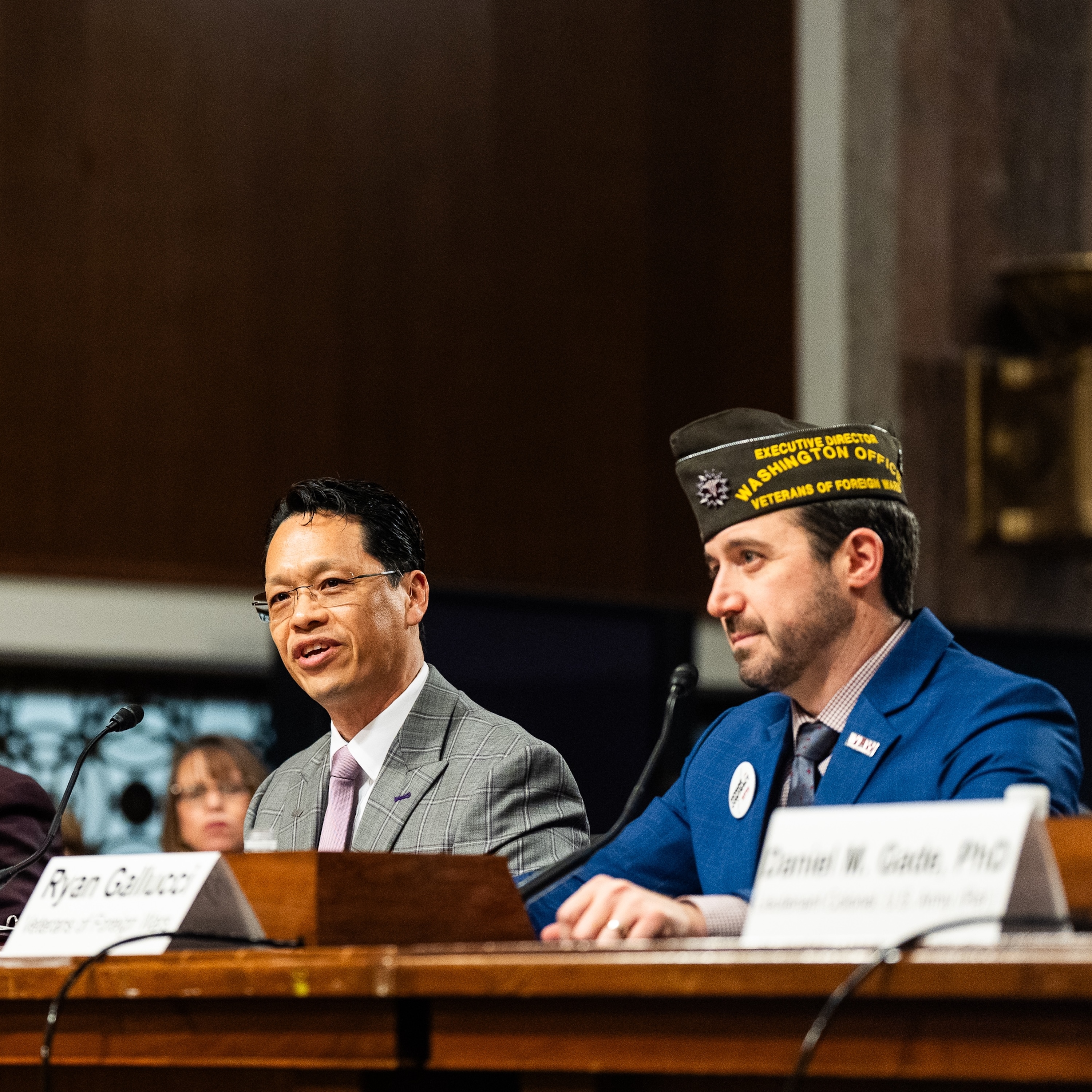
Post Reports
How some veterans exploit the VA disability system
00:29:48
An investigation by The Post found that some veterans are taking advantage of the Department of Veteran Affairs disability compensation program. Today, how the system is being gamed and the attention The Post’s reporting has already received from Congress.
Loading summary
Transcript99 lines
- [00:03]
Tracy Alloway
Want to understand exactly how interest rate rises will impact your mortgage?
- [00:07]
Jill Weisenthal
Or how New York City gets fresh produce?
- [00:10]
Tracy Alloway
Or exactly what on earth was going on over at FTX before the whole thing collapsed?
- [00:15]
Jill Weisenthal
Twice a week we sit down with the perfect guest to answer these sort of questions and understand what's going on with the biggest stories in finance, economics, business and markets.
- [00:24]
Tracy Alloway
I'm Tracy Alloway.
- [00:25]
Jill Weisenthal
And I'm Jill Weisenthal.
- [00:27]
Tracy Alloway
And we are the hosts of Bloomberg's All Thoughts podcast.
- [00:29]
Jill Weisenthal
Look us up wherever you get your podcasts.
- [00:32]
Tracy Alloway
Podcast from Bloomberg.
- [00:45]
Colby Biechowitz
What you're hearing is sound from a video. It's from the social media profile of a man named William Rasheem Rich. He's filming himself working out. Rich is wearing a white tank top, black headphones. He's standing up, lifting a set of dumbbells up and down and dancing around with one of the weights. William Rich is a veteran. He served in Iraq in 2005. During his deployment, Rich was severely injured in a bombing and was temporarily paralyzed from the waist down. But gradually he recovered. Around the same time, Rich posted this video of himself dancing around the gym. He was also pretending to still need a wheelchair during medical appointments. Rich was claiming that he was still paralyzed from the injury he sustained during his military service. For that, he was receiving more than $8,000 a month from the federal government in disability.
- [01:38]
Jill Weisenthal
Yeah, but see, I've been receiving permanent disability since about. I've been in a wheelchair since 2005 and I've been. My status is permanent, not temporary. Can you walk at ulcer or carry anything? Carry? Yes, sir.
- [01:58]
Craig Whitlock
What do you mean?
- [01:58]
Jill Weisenthal
Carry? As in carry something up a flight of stairs or walk for a limited time? No.
- [02:10]
Craig Whitlock
This tape is a recorded interview of William Rich, but it's actually a sting interview that federal agents had set up where they wanted him to call in and actually catch him in a lie.
- [02:21]
Colby Biechowitz
That's Craig Whitlock, an investigative reporter at the Post. Craig is part of an investigative team that's been looking into fraud and abuse of the disability compensation program run by the VA. William Rich is one of about 70 cases the Post investigated where a veteran was criminally charged with defrauding the VA program. About a third of veterans claim disability, and this year federal taxpayers will spend roughly $193 billion on disability compensation for about 7 million veterans. That's more than taxpayers spend to run the US Army. Craig and the team also collected 25 years worth of data from the VA about the various medical conditions veterans were claiming to receive disability and beyond, incidents of criminal fraud like what happened with William Rich, Craig's team also uncovered a wider pattern of abuse of the system.
- [03:13]
Craig Whitlock
What we found is that it's very easy for veterans to stretch the truth about the nature of their disabilities. And we were really surprised by a lot of the conditions that you can get compensated for. Things like acne or hair loss or jock itch or sleep apnea, which is a very common breathing condition. These are things that generally don't keep people from working. But VA is spending, you know, tens of millions of dollars on veterans for these ordinary life issues that most Americans have.
- [03:48]
Colby Biechowitz
From the newsroom of the Washington Post, this is Post Reports. I'm Cole biechowitz. It's Thursday, November 6th. Today, the Post's investigation into how some veterans are exploiting the VA's disability program and the attention the Post reporting has already received from Congress.
- [04:06]
Jill Weisenthal
The attention that these stories have received provides us with an opportunity to have an important discussion about whether this system we have built is serving the needs of veterans today and how we can reform it to better serve those who were designed to help.
- [04:29]
Colby Biechowitz
Craig, hi. Thanks for joining me.
- [04:31]
Craig Whitlock
You bet. Thanks for having me.
- [04:33]
Colby Biechowitz
Can we start by describing how this investigation, this Post investigation even got started? Why did you and our colleagues decide to look at veteran disability benefits?
- [04:44]
Craig Whitlock
So I covered national security issues through the Post. I covered the Pentagon for many years. And one thing just being on the beat is you come across a lot of veterans on disability. You know, because of the last 25 years of conflict in Iraq and Afghanistan and elsewhere, it's pretty common for veterans to be on disability. But one thing I noticed is that there were a lot of people, a lot of veterans, who were classified as 100% disabled by the VA. And that means, on one hand, that they get the most amount of money you can under the compensation program. But a lot of these people were not visibly disabled. I'm not trying to minimize what might be wrong with them in terms of illness or injury, but these are people who hold perfectly normal jobs once they left the military. And it just became very common that people would tell you, yeah, I'm on 100% disability, even though they work full time.
- [05:39]
Colby Biechowitz
Let's explain how the system for claiming disability actually works. So how does the VA determine how much you're owed in disability based on whatever your claim says?
- [05:50]
Craig Whitlock
It's kind of complex. As you can imagine, with the federal government and with the VA, they assign you a percentage. They do it 10%, 20%, 30%, up to 100% disability rating.
- [06:02]
Colby Biechowitz
Okay.
- [06:02]
Craig Whitlock
The higher your Percentage, the more you get in monthly compensation. If you have a family or dependents, you, you get more money in those cases. And what they essentially do is they add up all your different injuries or ailments, and different injuries or accidents can get you a certain rating. But what has happened is the more disabilities you apply for, they essentially add up to a certain total. What we found is that there's more and more people putting in for an increasing number of disabilities. 25 years ago, the average disabled veteran had, let's say, two and a half disabilities, tinnitus and maybe arthritis in your knee.
- [06:43]
Colby Biechowitz
Say.
- [06:44]
Craig Whitlock
Now the average is people have seven disabilities. And what we found out is that a lot of people would be encouraged to put in for 10, 15, 20 different conditions. It's technically legal and allowed under the system, but it's really an abuse of the system. It's people putting in for everything under the sun. And the more you put in for, the higher your rating, the, the more money you get from the government.
- [07:08]
Colby Biechowitz
I mean, how much money are we talking about? Because you said the William Rich, he was at 100%, so he was getting $8,000 a month. But do we have an average, an understanding of what the average veteran might get?
- [07:20]
Craig Whitlock
So on average, last year, disabled veterans got $25,000 a person per year.
- [07:27]
Colby Biechowitz
Okay?
- [07:27]
Craig Whitlock
Now that's on average, if you have 100% disabled rating, you get about $50,000 a year. That's if you're single with no dependents. If you have family members, you get more. There are some categories. People like William Rich, he was almost up to 100,000 a year because he needed a full time caregiver, he needed extra benefits. So there are certain categories you get even more. But on average last year, disabled veterans received $25,000. Now, that's not going to make you rich, but it's tax free. It comes on top of your regular job, comes on top of a military pension if you retired from the military. So it adds up over 20, 30, 40 years. We're talking millions of dollars per person.
- [08:13]
Colby Biechowitz
Once you file these disability claims, is there a renewal process?
- [08:17]
Craig Whitlock
There is. So they are supposed to check on you every so many years to see if you're getting better. But that was also something we found that by and large, the VA is slow to do that. There's an assumption that you're not getting better. People are also coached how to avoid having to go back or how to prove you get better or to say that I'm still the same.
- [08:37]
Colby Biechowitz
And do you have to prove that the injury, the disability, was a result of serving you do.
- [08:43]
Craig Whitlock
And so this is something I do want to emphasize. A lot of veterans say the VA is still very difficult to deal with. It's a very complicated bureaucracy, and it is hard to. To document that you have an ailment that deserves compensation. But the basics of it are you have to have some kind of medical file that you were treated for something when you were in the military. And if you have that, that goes a long way. But over time, VA made it easier for certain conditions where you don't have to have the proof in the same way. And I'll give you one example is post Traumatic Stress disorder, or ptsd. During the wars in Iraq and Afghanistan, there was a real concern that there's a lot of veterans coming back with untreated PTSD or untreated depression from the wars. And this is an absolute legitimate problem that the VA need to do a better job of not just giving them medical care, but compensating ones who were affected in their ability to work because of that. So they gradually took away some of those requirements, and they said, well, if you have a buddy letter, somebody you know you served with who can testify that you had some kind of trauma, when you're in uniform or, you know, a spouse or just to say you served in combat, it became much easier to claim this. One other example is tinnitus. That's the most common disability. Tinnitus is when you have some hearing loss or ringing in your ears. Yeah, it's pretty common. You know, I have it. I served in the military, but it's common. And in the military, it makes sense. A lot of people have hearing loss because you hear artillery going off, there's a lot of loud noises. It's easy to have hearing loss, but it's also something that's easy to fake. You can go in and you have to get checked out, and you can say, well, I can't hear well out of this year. And it's really, how do you disprove that? So people have figured out this is an easy way to game the system.
- [10:44]
Colby Biechowitz
Some of these things, like ptsd, even hearing loss, like, I can understand the association with having served in a war. But there were some other numbers in your stories, like half a million veterans received disability benefits for eczema, 81,000 for acne. Like, how do those relate to serving in Iraq or Afghanistan?
- [11:05]
Craig Whitlock
Well, with all these conditions, there's a kernel of truth to it, right? Let's say eczema. Well, you know, if you're in uniform, people get eczema. Right? You know, you share stuff, you get. You know, you get different contaminants. Let's say you get exposed to toxic substances. And why we tried to collect those numbers over 25 years, because you would see certain conditions that there would be this explosion in growth. And eczema was one of them. Another one we found was sciatica or lower back pain. That's something that really depends on the patient telling the truth. And what we found is a lot of people were being coached to exaggerate a lot of these claims. Agents would tell people, when you go in for your examination at the V, where they're checking you out to see if you really have these conditions, you want to act as if it's your worst day. That's how they emphasize you don't want to minimize your conditions. You want to over dramatize it. And that's how you want to present yourself. Well, you can see how that leads to fraud and abuse and exaggeration when people are being coached to do that.
- [12:09]
Colby Biechowitz
So you're saying there's some kind of a cottage industry around helping veterans gain the system.
- [12:15]
Craig Whitlock
It's a very convoluted cottage industry, but there's a lot of money at stake. Remember, you know, there's $193 billion a year that gets paid to veterans in compensation. That's a lot of money. And so some of these consultants out there, they'll say, we can help you maximize your disability compensation if you give us a cut, if you make it. And this has become very profitable for groups, but frankly, a lot of them are good at it. They know how to milk the system. They know what kind of records you need or don't need. They know how to coach people how to put in for certain things that are gonna pay off in the end.
- [12:53]
Colby Biechowitz
Who are they, like, who make up this industry?
- [12:56]
Craig Whitlock
So it's a big industry, and traditionally, it was one set of groups. They were veterans advocacy groups like the American Legion, Veterans of Foreign wars, these groups that were nonprofit groups chartered by Congress, there to help veterans, and they would give you free advice and help you file a disability claim. But over the years, a lot of veterans were complaining that this system was very bureaucratic, that these nonprofit groups were slow and they weren't getting the maximum amount that they thought they were entitled to. So on the side, there were these unaccredited groups. You know, under the law, you're supposed to be accredited by the VA to put in a claim for a veteran. So These groups on the side said, well, we're not claims agents. We're not putting in the paperwork for them. We're just consultants. And I'm saying that in air quotes, right? It can be lawyers who are trained in this. Or what we found there is this cottage industry that's grown up online of people on YouTube who are veterans themselves, but have just gotten very familiar with the system and would teach people how to game the system. And their videos are flashy, they're attractive, and, and they promise, you know, on their videos it'll say, we can get you to 100%. We can get you the gold mine. We can help you make this easy claim.
- [14:14]
Jill Weisenthal
The number one question I always get is this, how do I get 100% PNT? I mean, that's the goal, right? That's what we all want.
- [14:20]
Craig Whitlock
These are the three best ways to get a 100% VA disability rating.
- [14:27]
Jill Weisenthal
Top 10 VA benefits for disabled veterans that are 100% permanent total.
- [14:34]
Craig Whitlock
By and large, though, they're pretty effective at it. But the coaching of veterans isn't just taking place online or one on one, but the VA and veterans service organizations or advocacy groups like the American Legion and Veterans of Foreign wars, they actually hold classes on military bases for service members as they're getting ready to leave the uniformed service. These are actually a requirement of federal law to have these transition classes, so all service members go through them when they're leaving the military. And of the classes we attended, one of the real points of emphasis was, now it's time to put in for your disability benefits. And the presumption was everybody's disabled by something. So most of these people in the classes, they were medically fit for duty when they were in the armed forces. But as soon as they leave, most of them put in their claims for disability benefits. And they would have these coaches or claim agents with them at these classes, walking them through how the process works.
- [15:34]
Colby Biechowitz
At the military bases, at the military.
- [15:36]
Craig Whitlock
Bases sponsored by va and would say, okay, you need to get your medical records and anything that happened to you when you were in uniform, we need to put in for a disability application for it. And some of them were pretty open. There was one woman from Veterans of Foreign wars who would tell Marines at Camp Lejeune in North Carolina, if you so much as burned your thumb while you're off duty cooking a hot dog while you were in the Marines, you can put in for it. And that, I think, is what the culture has changed. It's seen now as an entitlement, as A benefit as part of your pay package. But it's lost the correlation with whether you can actually work or not.
- [16:16]
Colby Biechowitz
It doesn't seem like the VA completely turns a blind eye, because we have the case of William Rich, where they investigated him and determined that he was in fact faking his disability claim. So how do those investigations work? I mean, you said that there are times where they will audit. How do they decide who to audit, when to audit?
- [16:37]
Craig Whitlock
So the VA has an inspector general. Like a lot of federal agencies, it's an independent watchdog. The va, because it's such a big cabinet department, their inspector general's office has actually over 1,000 employees now. They do everything from auditing hospitals to construction. Any amount of money the VA spends, the inspector general can open an investigation or assess if a policy is being followed. But one aspect of it is they can do criminal investigations. They have policing powers, and they can forward cases to the Justice Department to bring charges. So they will investigate fraud, in particular disability fraud. But what we found is when they do bring a case, they have pretty good odds of bringing charges, Right? And they have a pretty good track record of gaining an indictment and a conviction. But there are so few cases being brought, maybe just 60 a year into disability fraud when there's more than 6 million veterans on it. So the odds of you coming under investigation are extremely remote. And really, the only cases they will investigate are ones where they can document with video that you're faking it. So again, somebody like William Rich, who they show him in a wheelchair, then they show him dancing while he's lifting weights, or somebody who's faking being blind, they show them driving a car. You know, they have to have video evidence of it for it to stand up in court. And those are very time consuming investigations. So they don't do very many of them.
- [18:13]
Colby Biechowitz
After the break, why past efforts to reform the VA's disability compensation program have failed. And the reaction from lawmakers to the Post reporting. We'll be right back.
- [18:37]
Tracy Alloway
The holidays are coming up, which means the air is getting crisper and comfort becomes the best gift of all. And that's where Quince comes in, delivering layers that last. Their sweaters, outerwear and everyday essentials feel luxurious, look timeless, and make holiday dressing and gifting a breeze. That's because Quint's has it all. $50 Mongolian cashmere sweaters made for everyday use. Denim that literally never goes out of style. Silk tops and skirts that add polish and down outerwear built to take on the season. Perfect for gifting and maybe even better for upgrading your own wardrobe. You've heard me talk about the Mongolian cashmere sweaters before and now is when they really shine. Next on my list are the Italian wool coats, designer cuts with quality that rivals high end brands but without the high end markup. Because Quints works directly with ethical top tier factories, they skip the middlemen and can pass the savings on to you, sometimes as much as 50% less than similar brands. Step into the holiday season with layers made to feel good, look polished and last from Quince, perfect for gifting or keeping for yourself. Go to quince.com reports for free shipping on your order and 365 day returns now available in Canada too. That's Q U-I-N-E.com reports to get free shipping and 365 day returns. Quince.com reports want to understand exactly how interest rate rises will impact your mortgage?
- [20:03]
Jill Weisenthal
Or how New York City gets fresh produce?
- [20:06]
Tracy Alloway
Or exactly what on earth was going on over at FTX before the whole thing collapsed?
- [20:10]
Jill Weisenthal
Twice a week we sit down with the perfect guest to answer these sort of questions and understand what's going on with the biggest stories in finance, economics, business and markets.
- [20:19]
Tracy Alloway
Tracy I'm Tracy Alloway.
- [20:21]
Jill Weisenthal
And I'm Jill Weisenthal, and we are.
- [20:23]
Tracy Alloway
The hosts of Bloomberg's All Thoughts podcast.
- [20:25]
Jill Weisenthal
Look us up wherever you get your podcasts.
- [20:27]
Tracy Alloway
The All Thoughts podcast from Bloomberg.
- [20:36]
Colby Biechowitz
So Craig, we mentioned at the top of this episode that your team's reporting has already caught the attention of lawmakers. There was a Senate hearing last week in direct response to your reporting. So what was this hearing and how exactly did it come together?
- [20:54]
Craig Whitlock
So the Senate Veterans Affairs Committee, which is chaired by a Republican, Jerry Moran of Kansas, had a hearing last week specifically in response to our reporting because it created a bit of a stir among veterans groups.
- [21:07]
Jill Weisenthal
Recent articles published by the Washington Post have raised concerns and frustrations within the veteran community. I have heard from numerous veterans and groups who are frustrated that these articles have left an impression that the veterans are engaging in widespread fraud in the disability claims space.
- [21:24]
Craig Whitlock
And a lot of the advocacy groups like Veterans of Foreign wars and Paralyzed Veterans of America, they help veterans file claims. They've lobbied Congress for many years to expand the disability compensation program, and a lot of them were very critical of our reporting, saying that it cast this problem of fraud in an excessive light and they wanted to sort of head off any efforts that could change the system. Among those who testified at the hearing was Ryan Gallucci, who's the executive director for Veterans of Foreign War's Washington office. He in particular said that there's a misperception that some conditions like tinnitus or sleep apnea are, quote, unquote, fake conditions and that it's easy to sort of spotlight a few fraud cases, but that these are legitimate problems.
- [22:18]
Jill Weisenthal
Fraud exists in large systems, Medicare, Social Security, and, yes, va, but it's rare and it's prosecuted when it's found. What's not rare are the invisible wounds of war, ptsd, traumatic brain injury, chronic pain, or cancers caused by toxic exposure. To claim these wounds are embellished or fake is either ignorant or cruel. Invisible does not mean imaginary.
- [22:39]
Craig Whitlock
But what happened during the hearing is that a number of lawmakers, even though they were careful not to criticize veterans for how they file claims, did sort of open questions about whether the system needs to be improved. And the chairman, Senator Moran, did say they will hold future hearings on this subject. And other lawmakers questioned whether they needed to have a commission to, to look at the program writ large.
- [23:06]
Colby Biechowitz
Like you said, there were representatives from advocacy groups there testifying. Who else were the senators hearing from? What were kind of the main takeaways?
- [23:14]
Craig Whitlock
So another witness was a disabled army veteran named Daniel Gate, a retired army officer who lost one of his legs below the knee in Iraq. And unlike a lot of the advocacy groups, he said that there are legitimate, genuine problems with the disability compensation system.
- [23:32]
Jill Weisenthal
This system is anti thriving, anti productivity, and ultimately anti veteran.
- [23:36]
Craig Whitlock
He said exaggeration is a real problem when people file for claims. But he said in general, the compensation system essentially rewards people for being sick and that it needs to be changed in its approach to sort of encourage people to get better.
- [23:52]
Jill Weisenthal
For too long, you've been told that the best way to care for veterans is to shovel billions of taxpayer dollars into their pockets. This approach has resulted in a veteran.
- [24:00]
Craig Whitlock
Class that is sicker, more marginally employed and more suicidal than ever. Instead of rewarding people for staying sick or injured, it needs to have some sort of element in there to help people get better and focus on that instead of rewarding people, as he put it, for being injured for the rest of their lives. And that his philosophical approach was very different.
- [24:22]
Colby Biechowitz
And did the lawmakers hear from anyone, from the VA itself?
- [24:25]
Craig Whitlock
Just one witness, Cheryl Mason, who's the new inspector general appointed by President Trump and confirmed by the Senate just a couple of months ago, testified and in fact, a lot of our reporting was based on investigative documents we had had obtained from the inspector general under the Freedman Information Act. And she acknowledged that fraud was a problem. But Again, it's sort of a sensitive issue and she didn't want to be seen as overstating the problem.
- [24:54]
Jill Weisenthal
While, yes, there are some bad actor veterans who do commit fraud against VA in both benefits and health care, they are few in comparison to the 6.9 million veterans and beneficiaries who receive VA benefits.
- [25:08]
Craig Whitlock
She acknowledges that this is something that they need to keep an eye on. And yet she also wanted to minimize a problem, I think, because there was a lot of concern from veterans groups that fraud is perhaps overstated from their point of view.
- [25:22]
Colby Biechowitz
And so is Congress suggesting they'll do anything? Is there anything that any of the senators said, okay, well, we're gonna take this on and we're gonna try and fix this and make it so that it can't be taken advantage of?
- [25:32]
Craig Whitlock
I think they were training pretty carefully. They were acknowledging there are problems, both problems with exaggeration and fraud. But also they do legitimately have problems with many veterans who have genuine injuries. It still takes them months or years to get adequate compensation. So there's problems on both sides. And, and I think they were acknowledging that, but they were also treading lightly saying, we need to keep studying it, we need to have more hearings. But I think they're being careful not to get ahead of their skis because they do know it's a politically fraught subject.
- [26:04]
Colby Biechowitz
How long has the VA known that these problems existed or may have existed?
- [26:10]
Craig Whitlock
Our reporting has shown they've known about this for years. This has sort of been the dirty little secret because it wants to cater to veterans. And the philosophy has been, particularly since the Obama administration. This spans administrations from both parties. Right. This is not a partisan issue. But what we've seen over the last 25 years is whoever's in charge of the federal government wants to cater to veterans. Understandably, they want to take care of people. But a lot of the checks and balances that used to be there has slowly fallen by the wayside. There have been attempts to try and modernize the system. One thing we found is a lot of the rules are pretty antiquated, that the, the ratings, the amount of money you get for certain conditions are really old fashioned. And one of the best examples we found, which is one of the most striking, was we talked about sleep apnea, that, you know, a lot of Americans have this, it's this common breathing disorder. But you know, modern medicine, if you wear one of those masks at night, you're fine, you can work. It's not a condition that keeps you from doing daily activities. But under the VA system, you get more money if you have sleep apnea on average than you do if you have lost your leg below the knee.
- [27:19]
Colby Biechowitz
Wait, really?
- [27:20]
Craig Whitlock
If you had your leg amputated below the knee, that gets you less in disability compensation than somebody with sleep apnea on average. And that's one of those things that's so out of whack that even the VA recognized that that didn't make any sense. So several years ago, during the Biden administration, they went through this period of new rules and proposed regulations, which, you know, they have public hearings and take public comment. They were going to finally make it so that sleep apnea wasn't as profitable. But then at the last minute, they decided not to because they had gotten so much flack from veterans groups, from people who were already on sleep apnea disability, who didn't want to lose the money. This was a lot of money at stake. So they. They kind of chickened out about it. And that's what we see a lot is they anytime they make a proposal to tighten the rules, to make it more strict, there's a big push against it from veterans groups. And so usually they back down.
- [28:22]
Colby Biechowitz
And, Craig, I'm guessing, as all journalists do, that before you published and before these hearings were called, that you reached out to the VA for a response. And I'm wondering what they said about your findings, because I guess when I think about, you know, President Trump and how he came into office this year and he made such a big deal about cutting waste, fraud, and abuse that the administration must be thrilled that you identified a place where they could cut costs.
- [28:49]
Craig Whitlock
You would be wrong. They were not thrilled. And we made this point that certainly during the this Trump administration with Elon Musk and the US Doge Service, that they are looking for fraud, waste, and abuse. And with va, they've tried to freeze or reduce the headcount of people working at the va. But they made clear from the outset that veterans benefits, meaning medical care, GI Bill for education or disability, they weren't going to touch that they weren't going to reduce the benefits veterans get because, again, it's seen as a sort of sacrosanct policy. But when we did present our findings of all our reporting, the VA didn't want to give an interview. They didn't want to let us talk to VA Secretary Douglas Collins. But VA Press Secretary Pete Kasparowitz provided a statement, quote, the extraordinarily liberal Washington Post never met a government program it didn't love until now. He wrote, unbelievably the far left Washington Post believes many veterans don't deserve the VA benefits they've earned. Our message to the out of touch liberal activists peddling this garbage story is simple. America's veterans earn their VA benefits and it should be easier, not harder, to get them. Under President Trump, we are improving VA so it's faster and more convenient for veterans to get what our nation owes them, end quote.
- [30:18]
Colby Biechowitz
So, Craig, given that the VA has known about this for a while, that this disability compensation system is something that people have tried and failed to change many times, how hopeful are you that this time around there could be some meaningful changes?
- [30:36]
Craig Whitlock
I guess to be blunt, I'm not holding my breath that the VA or Congress are going to make meaningful changes on this. One reason that these problems have accumulated over the years is there isn't a whole lot of political will to really take a hard look at whether this program is being abused or taken advantage of. And given the response to our series from veterans groups, I think a lot of these lobbyists and advocacy groups were putting lawmakers on notice that they don't want them to scale back. They don't want them to tighten the reins on this, that they want to make sure that the benefits keep flowing. So, you know, given the response from the VA, which was dismissive of our findings, even though, as you pointed out, you know, the Trump administration has been looking for fraud, waste and abuse in the government, they've also made very clear this is a subject that's off limits and one they're not going to dig into.
- [31:33]
Colby Biechowitz
Well, Craig, thank you so much for coming on and sharing your reporting with us.
- [31:37]
Craig Whitlock
Of course. Glad to be here with you, Colby.
- [31:42]
Colby Biechowitz
Craig Whitlock is an investigative reporter at the Post. That's it for Post Reports. Thanks for listening. Today's show was produced by Sabi Robinson. It was edited by Ted Muldoon and mixed by Sam Baer. Thanks to Lisa Ryan, Joy Sung, Lisa Gartner, Caitlin Gilbert and Casey Schaefer. I'm Colbyakowicz. We'll be back tomorrow with more stories from the Washington Post.
- [32:27]
Tracy Alloway
Want to understand exactly how interest rate rises will impact your mortgage?
- [32:31]
Jill Weisenthal
Or how New York City gets fresh produce?
- [32:34]
Tracy Alloway
Or exactly what on earth was going on over at FTX before the whole thing collapsed?
- [32:39]
Jill Weisenthal
Twice a week we sit down with the perfect guest to answer these sort of questions. Questions and understand what's going on with the biggest stories in finance, economics, business and markets.
- [32:48]
Tracy Alloway
I'm Tracy Alloway.
- [32:49]
Jill Weisenthal
And I'm Jill Wiesenthal.
- [32:51]
Tracy Alloway
And we are the hosts of Bloomberg's All Thoughts podcast.
- [32:54]
Jill Weisenthal
Look us up wherever you get your podcasts.
- [32:55]
Tracy Alloway
The All Thoughts podcast from Bloomberg.
- [33:05]
Jill Weisenthal
Think about why you listen to podcasts. It's like having a friend who makes you think or can help you wind down right? Well, the Washington Post has a lot of people you can turn to at any hour. You can read the most important and interesting stories. We can help you cook something delicious, give you advice on a tricky friendship. Rave about a movie or book that you shouldn't miss. When you become a Washington Post subscriber, you have a companion for whatever part of your day needs it most. Get it all for just $4 every four weeks. That's for an entire year. After that, it's just $12 every four weeks. Cancel anytime. Go to washingtonpost.com subscribe. That's washingtonpost.com subscribe.