← Post Reports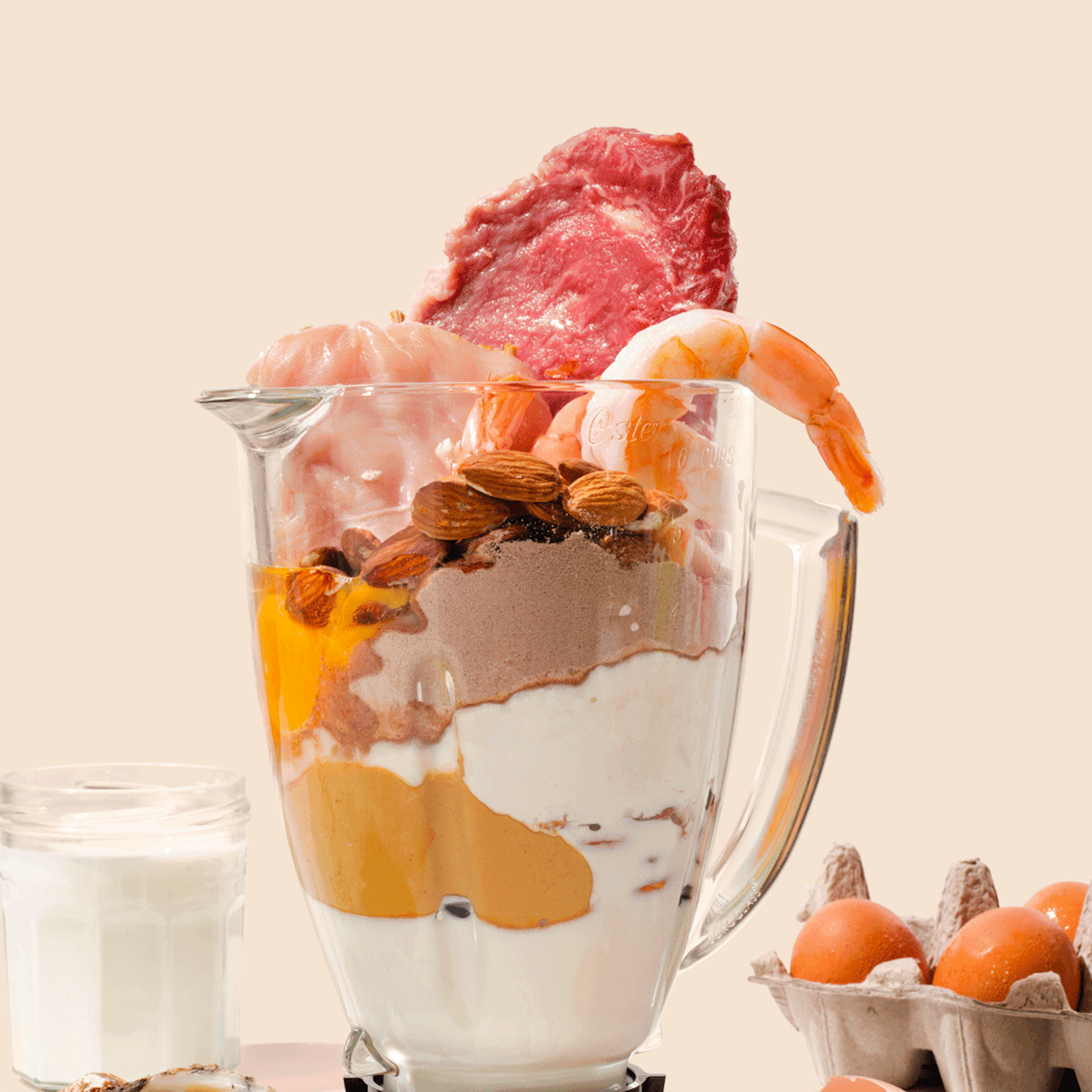
Post Reports
How to get enough protein — without going overboard
00:21:41
Research shows many people benefit from a protein-rich diet. But experts caution that many Americans are going overboard. So how much should you eat?
Loading summary
Transcript71 lines
- [00:02]
A
So I hate to admit it, but I'm someone who can be pretty easily influenced. And so I've become a bit of a sucker for the add protein to everything trend. I can be lured by the promise of an extra 10 grams in my cereal or a snack bar with added protein. And it's easier to find than ever because now there's protein being added to all kinds of unexpected things.
- [00:26]
B
Just the other day, Starbucks announced that you can now buy protein lattes. You can add protein infused foam to your drinks.
- [00:37]
A
That's Anahat o', Connor, a health columnist who writes about nutrition here at the Post.
- [00:42]
B
So you go to the supermarket, there's protein pancakes and waffles and muffins.
- [00:46]
A
He and I sat down recently to discuss this diet trend because despite my constant protein chasing, I hadn't really stopped to think about why added protein is everywhere or how much we really need. Anahat says I'm not alone. A lot of people have bought into this protein mania and they might just be getting it wrong.
- [01:07]
B
Research has shown the benefits of eating protein, but I think, and most experts have told me this, that we're going overboard.
- [01:18]
A
From the newsroom of the Washington Post, this is Post Reports. I'm Colby ekowitz. It's Tuesday, November 4th. Today we do a deep dive into the protein craze. Anahad breaks down how much protein we actually need to eat and the best ways to incorporate this important nutrient into our diets. Anhad, thanks so much for joining me today.
- [01:44]
B
Thanks for having me.
- [01:46]
A
So, Anhad, I'm so interested in this fixation on protein because I have a fixation myself. Do we have any idea, like, where it originated?
- [01:56]
B
So I think it goes back many decades, certainly at least as far back as, like the 50s and 60s and 70s to the very iconic bodybuilders like Arnold Schwarzenegger who were promoting, you know, high meat diets and high protein diets. Big steak, scrambled eggs, six eggs. And you can hear Schwarzenegger and other bodybuilders talking about this in a documentary called Raw Iron and a Tuna Omelet.
- [02:27]
C
Yeah.
- [02:28]
B
Oh, look what he's eating. He's eating three hamburgers in one shot. Oh, God. Who are these gladiators? And it's just continued to evolve and progress over the years. And nowadays, if you listen to most of the big health and wellness influencers, they are promoting high protein intake. Folks like Andrew Huberman and others. What would be the amount of protein that you would have everybody eat?
- [02:57]
A
That's actually an easy question. One gram per pound. Ideal body weight.
- [03:01]
B
Total body weight. Not, you know, talk about the benefits of eating protein and how if you're not eating enough protein, you could be losing muscle mass day by day.
- [03:11]
A
The evidence is also very clear that a more protein forward diet optimizes body composition. And you combine that with resistance training.
- [03:20]
B
And as someone who covers nutrition, you know, I spent a lot of time writing about the research on low carb diets, on low fat diets, on low calorie diets, all these things that we're eating too much of. But protein is this nutrient that's so good for us. It has so many benefits. And so the word got out and the food industry got behind this and said, okay, let's, let's start marketing high protein products because, you know, it's super healthy for you and that's what people want.
- [03:49]
A
So before we get into, and I want to get into kind of how much protein we, we actually need and whether or not some of us might be going a little overboard, let's get really basic for just a second. What is protein and why does our body need it?
- [04:06]
B
So protein is a compound that we are to a large extent made of. It is made of something called amino acids. And these amino acids, they form proteins that help to make up the cells in our body. Our skin cells, our hair cells, our organs, our tissues, even our bones are close to 50% protein by composition. And unlike carbs and fat, our bodies don't really store protein. So we do have to eat it. Every bodies experience wear and tear. You know, think of protein as like a wall and we're constantly pulling bricks out of that wall. You know, when we're exercising, when we're walking around and our bodies are building new tissue and we need to replace those bricks. And so you need to eat protein to give your body the building blocks that it needs.
- [05:09]
A
Okay, so how much protein should we actually be eating on a day to day basis?
- [05:15]
B
Well, therein lies the rub. And I think that's part of the reason why there is a lot of confusion around protein intake because there is what's called the Recommended Dietary Allowance, the RDA set by health authorities. And you know, that's basically the daily amount that of protein that you need. And it's based on, on your body weight. So the Recommended Dietary Allowance says that you should be eating about 0.36 grams of protein per pound of body weight. You know, for the average, let's say 150 pound adult, that's like maybe 54 grams of protein a day. You know, you can get that fairly easily by eating like, you know, a few ounces of chicken.
- [05:56]
D
Yeah.
- [05:57]
B
A few ounces of salmon and like a hard boiled egg. It's not that hard to accomplish. But then there are a lot of experts and especially the advocates of consuming a lot of protein that will say, well, the Recommended Dietary Allowance is really just the floor. That's the minimum amount of protein you need to avoid a deficiency. And so if you're a 150 pound person who is eating 54 grams of protein a day, then sure, you may be getting enough to avoid a deficiency, but that's not really an optimal amount. But then there's a lot of gray area and a lot of confusion. So I think that also creates a lot of room for health influencers to step in and say, you know, you should be eating double or triple the rda. It allows a lot of room for food companies to step in and say, you know, you need to be protein maxing, eating, you know, lots of protein at every meal to, you know, get all the benefits of protein.
- [06:57]
A
So let's get into that gray area a little bit because you mentioned that the optimal amount of protein, that, that might be more than the floor than the recommended amount. So what are some scenarios that that someone would need more than that minimum recommendation?
- [07:13]
B
If you are someone who exercises, let's say you lift weights, or you are a runner, then you're gonna need more protein to build and repair that muscle tissue and build and maintain muscle. If you are someone who has just undergone surgery, you should be eating more protein than the RDA because obviously your body is recovering and it needs to rebuild. If you are someone who's pregnant, for example, you're gonna need to eat more protein because you're literally creating a new life inside you. You're building a new person or fetus inside you. So you need that protein. And the other big thing which is really important is that as we get older, especially in our 50s and 60s, our bodies become less able to metabolize protein. We become more prone to something called anabolic resistance, where we have a harder time digesting the protein that we consume. And so, you know, there are geriatric dietitians who work with older people who really stress that older people should be eating more than the RDA for protein. And studies do show that about a third of adults of older adults in the United States and many other Western countries don't even meet the RDA for.
- [08:26]
A
Protein, don't even meet that minimum, don't.
- [08:28]
B
Even meet the minimum.
- [08:29]
A
And, you know, I feel like all of my algorithms, as I inch closer to middle age and to menopause, are telling me that like, menopausal women should be having like three times the amount of that minimum.
- [08:43]
B
Right.
- [08:43]
A
Like you should be getting something like 120 grams of protein a day. I feel like it's. I hear this all the time now.
- [08:50]
B
That sounds like a bit of a stretch, but there are, it's very individual. But there are so many reasons why most of us should be eating more than the rda. But also, you know, eating three times the RDA for the average person is, is unnecessary.
- [09:07]
A
Is there like a ballpark number that people should be aiming for then? A little more than that minimum, but maybe don't go crazy.
- [09:14]
B
Yeah. So, you know, as I said, it's very individual. But generally speaking, most experts say that you want to be eating at least 0.5 grams per pound of body weight. If you're hitting like sort of, you know, getting up to 1 gram per pound of body weight, that's kind of a lot. Unless you are a bodybuilder or an elite athlete, then you want to get up in that neighborh. I also talk to dietitians who generally say that, you know, if you don't want to do all that calculation and, you know, spend too much time stressing about this, then one good rule of thumb is to think about aiming for about 25 to 30 grams of protein at each meal. So at breakfast, lunch and dinner. And so that might look like, for example, having a hard boiled egg and a bowl of Greek yogurt for breakfast. At lunch you could have something like 3 to 4 ounces of grilled chicken breast. And then for dinner, something like 4 ounces of grilled salmon. And of course served ideally with things like brown rice, broccoli, beans and legumes. And if you're vegan or vegetarian, then you want to incorporate some high protein plant sources in your meals. So that could be things like, obviously lots of beans, legumes, chickpea. Pasta is really high in protein and fiber. 4 ounces of tempeh, 4 ounces of tofu. At, you know, lunch and dinner, you could have things like black beans. Quinoa is a really good high protein plant food. And so if you aim for that, you're getting about 75 grams of protein per day and probably a little bit more.
- [11:00]
A
After the break, common protein myths and mistakes. We'll be right back.
- [11:12]
D
The holidays are coming up, which means the air is getting crisper and comfort becomes the best gift of all. And that's where Quince comes in, delivering layers that last. Their sweaters, outerwear and everyday essentials feel luxurious, look timeless and make holiday dressing and gifting a breeze. That's because quince has it $50 Mongolian cashmere sweaters made for everyday use. Denim that literally never goes out of style. Silk tops and skirts that add polish and down outerwear built to take on the season. Perfect for gifting and maybe even better for upgrading your own wardrobe. You've heard me talk about the Mongolian cashmere sweaters before and now is when they really shine. Next on my list are the Italian wool coats, designer cuts with quality that rivals high end brands but without the high end markup. Because Quince works directly with ethical top tier factories, they skip the middlemen and can pass the savings on to you, sometimes as much as 50% less than similar brands. Step into the holiday season with layers made to feel good, look polished and last. From Quince, perfect for gifting or keeping for yourself. Go to Quince.com reports for free shipping on your order and 365 day returns. Now available in Canada too. That's Quince.com reports to get free shipping and 365 day returns. Quince.com reports you listen because you know.
- [12:34]
C
The power of good journalism and the Washington Post is there for you 24 7. When you become a Washington Post subscriber, you get exclusive reporting you can't find anywhere else. You also get sharp advice columns, delicious recipes, TV and music reviews and so much more. Right now, you can get all of that for just $4 every four weeks. That's for an entire year. After that, it's just $12 every four weeks and you can cancel anytime. Add to your knowledge and discover all the Post has to offer. Go to washingtonpost.com subscribe that's washingtonpost.com subscribe.
- [13:18]
A
When you talk about protein and getting more protein into your diet, what are some mistakes that you see people making when it comes to trying to get more protein?
- [13:31]
B
Well, I think there's a number of big ones that we make. What the studies generally say or show. And I've talked to a lot of dietitians who tell me they see this in their practice as well, is that Americans and people in other countries as well typically eat very little protein at breakfast, slightly more protein at lunch and then a lot of protein at dinner. So we're not really spreading our protein out throughout the day. And if you think about typical breakfast foods, they're often very low in protein and very high in refined carbs. So Think like bagels, pastries, croissants.
- [14:08]
A
All of my favorite things.
- [14:09]
B
Muffins. Yes. All those delicious things. Muffins, snack bars. Those things are very high in refined carbs and very low in protein. And the problem with that is that there have been studies showing that when people do not eat much protein for breakfast, then they're not getting the benefits of the satiety that protein delivers, of the balanced blood sugar. And so they're more likely to snack throughout the day because they're getting cravings and they're hungrier versus the people who are eating, you know, what I would say is an adequate amount of protein at breakfast, they're more likely to be full. They're better able to make smart, healthy decisions of what they're going to eat because they're not struggling with cravings and just looking for a quick fix. The other big mistake that people make, and this has been shown in a lot of studies, is that we tend to get most of our protein from maybe not the best foods. So we eat a lot of red meat, which is a great source of protein. But if you're eating a lot of red meat, especially a lot of processed meats like bacon, sausages, cold cuts, these things with a lot of sodium and preservatives in them, those tend to be linked to a higher likelihood of developing cancer and heart disease.
- [15:25]
C
Yeah.
- [15:25]
B
And that leads the other side of the coin is that we're not eating, generally speaking, much of the really, really excellent sources and really healthy sources of protein, such as seafood and beans and legumes. So the recommendation from health authorities is that we should be eating at least two servings of seafood weekly. And about 90% of Americans don't meet that recommendation. And then we're also not eating enough plant proteins. We're not eating enough beans and lentils and chickpeas. These things are high in protein, but they're also really high in fiber. When we eat fiber, it helps our bodies naturally produce GLP1, which most people are familiar with this compound. Now, because there are drugs that mimic the action of GLP1 in the body. And we know that helps to promote satiety and reduce people's appetites and help with weight loss and has all these really great health benefits. We can naturally produce GLP1, and typically our bodies produce it in response to eating fiber.
- [16:28]
A
Sanhed, let me ask you, because I will often in the morning, I will reach for a protein bar and I will feel virtuous because I've gotten whatever the 12 grams of protein that's in the bar, which is less than the 25 that you say that I should be having. And my seven year old daughter, she's an incredibly picky eater. I buy her this pasta that has added protein in it. I think it has pea protein in it or something. So I'm wondering what you think about this trend of incorporating protein boosted foods. I'm sure you're going to say that, you know, it's better to be getting it from real foods, from whole foods, than from getting it from artificial foods. But in the absence of getting my daughter to eat a piece of salmon, is it important that I'm getting her foods that at least are boosted with protein?
- [17:16]
B
Well, I mean, you're absolutely right that we should be prioritizing protein from real food. But I also know that, you know, I'm a parent myself. I have a six and a half year old boy and I have a daughter who just turned 4 and she's an amazing little girl, but she is kind of picky about her food. I'm like a lot of kids that age and it can be hard as a parent. I buy these relatively nutritious waffles from the freezer section at my local grocery store that are protein waffles.
- [17:47]
A
Yeah.
- [17:48]
B
And she likes those. So some days we'll give that to her for breakfast and I'm like, okay, you know, it's a waffle. She shouldn't be having just that for breakfast. It's not the ideal breakfast. But if she's having milk and she's having maybe some fruit and then she has some protein waffle, like, okay, like she's got enough nutrition, I think, to start the day. So I think you shouldn't feel guilty about that. And if that's what it takes to get your kid to eat enough protein, then, you know, we do the best that we can as, as parents.
- [18:15]
A
That does make me feel better because I feel like when given the choice between like a regular waffle and a waffle with some protein in it, you can feel maybe a little bit better about giving the protein waffle as opposed to just a regular waffle.
- [18:29]
B
Absolutely. And I still look at the nutrition facts, you know, I want to make sure, you know, every. A lot of things, you know, are hyping how much protein they contain. But you also want to be, you know, careful that you're not giving your kid lots of protein foods that say, you know, high protein. But then you flip over the packaging, look at the nutrition facts, and it's also really high in added sugars. Or really high in saturated fat or super high in calories, or it has all these chemical ingredients that you don't recognize and that maybe are not so great for your kid, like emulsifiers and artificial sweeteners. And so I think we just have to be a little careful and say, okay, I'm not going to just give my kid, you know, these protein infused products, but it's okay to include some in their diet.
- [19:14]
A
It is kind of wild. It reminds me a little bit of the, like the low fat or no fat craze in the 90s when you would get like Snackwell's cookies that were, had no fat in them, but they were loaded with sugar.
- [19:28]
B
Attention shoppers, reduce fat. Snackwell's cream sandwich cookies have just arrived. And I. Aisle three. That's aisle three.
- [19:36]
A
But you thought you were eating healthy because they didn't have any fat.
- [19:41]
B
Wait a second. You know there's other reduced fat cookies besides Snack wells. Oh, we tasted them, cookie man. You eat them.
- [19:48]
A
And now we have these products. You know, you can get pop tarts or cookies or candy bars and they have added protein and so you can eat them and feel like you're eating something healthy when in reality you're, you're probably not.
- [20:02]
B
Yeah, and I think that is a really important point. You know, if, if something is a junk food, talking about things like, you know, a donut or a cookie and, and it's, you know, marketed as high in protein, you have to be especially careful about those products because there is, you know, something called the Snack Wells effect. As you said, these products developed a health halo around them because they were low in fat. But what scientists noticed was that when people would buy snack Wells because they perceived them as healthy, they would end up eating a lot of them.
- [20:35]
A
Yes.
- [20:36]
B
And so they would end up consuming in many oftentimes more fat and more calories and sugar than they would have consumed if they had just had the regular cookie that wasn't marketed as healthy. And so if something's marketed as high in protein, but it's a cookie or a donut, you may end up eating more of that food and taking in more fat and sugar and calories than you would eat. If you just said, you know what, this donut is a treat, that's not great for me, but I want to enjoy it. I'll just eat the donut rather than trying to eat a healthy high protein donut.
- [21:12]
A
I think that you have convinced me that I'm going to have some eggs for breakfast tomorrow instead of my power crunch. 10 grams of protein, chocolate bar. But when I think about kind of these nutrition, they're fads, right? They kind of come in waves. Protein seems to be the thing that everyone's talking about right now. Do you see another nutrition fat on the horizon?
- [21:36]
B
I, I have seen on social media this hashtag fiber maxing, the latest Tiktoko trend.
- [21:42]
D
Fiber maxing is changing the game.
- [21:44]
A
Fiber maxing. Everyone's talking about it and we love it. It's the trend that's flipping the script on food hack fiber. Okay.
- [21:50]
B
And that's another thing where it is true that, you know, the average adult needs about 25 grams of fiber a day. And most people are eating, you know.
- [21:59]
A
Like way less than that. Right.
- [22:00]
B
Like maybe half of that on a good day. And so we should be eating more fiber. And you should be doing that by adding more fruits and vegetables and plants and maybe some whole grains to your diet. But if you just go from eating, you know, 8 grams of fiber a day to 30 or 40 grams of fiber a day, that's, that's going to have some side effects. Gas and bloating and indigestion. So you need to do that gradually. But yeah, maybe we can do another on that when we start seeing companies, you know, selling coffee with extra fiber.
- [22:34]
D
Perfect.
- [22:34]
A
We'll do a fiber maxing episode.
- [22:36]
B
Fiber lattes.
- [22:37]
A
Fiber lattes.
- [22:38]
B
When fiber lattes become a thing, then we know it's time to get together again. Let's talk about fiber.
- [22:44]
A
Awesome. Well, Anad, thank you so much for coming on. I really appreciate it.
- [22:47]
B
Thank you so much. It was great talking to you.
- [22:52]
A
Anahad o' Connor is a health columnist who writes about food and nutrition for the Washington Post's wellbeing desk. That's it for Post Reports. Thanks for listening. So we talked about protein today, but there are important elections happening around the country. You can follow the results all night@washingtonpost.com and we'll have a robust Post election discussion on Post Reports tomorrow. Today's show was produced by Laura Benshoff. It was mixed by Sam Baer and edited by Eero Plotnick. Thanks to editor Emily Kotick. I'm Colbykowitz. We'll be back tomorrow with more stories from the Washington Post.
- [23:47]
C
You listen because you know the power of good journalism and the Washington Post is there for you 24 7. When you become a Washington Post subscriber, you get exclusive reporting you can't find anywhere else. You also get sharp advice columns, delicious recipes, TV and music reviews, and so much more. Right now, you can get all of that for just $4 every four weeks. That's for an entire year. After that, it's just $12 every four weeks. And you can cancel any time. Add to your knowledge and discover all the Post has to offer. Go to washingtonpost. Com subscribe. That's Washingtonpost. Com Subscribe.