← Post Reports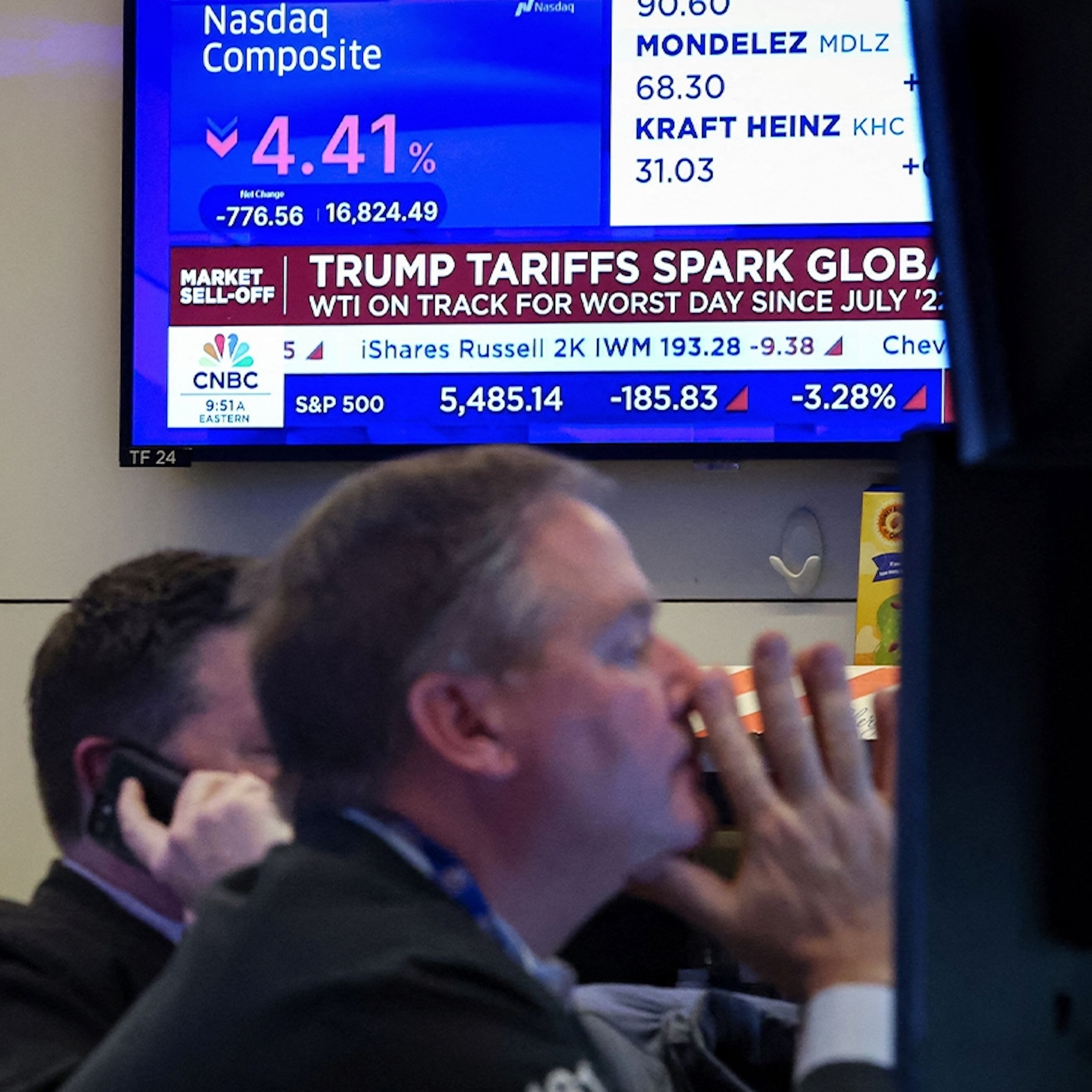
Post Reports
How to manage your money amid turbulent tariffs
00:24:21
Navigating your personal finances in uncertain economic times is stressful. Michelle Singletary, the personal finance columnist at The Washington Post, is here to help.
Loading summary
Transcript59 lines
- [00:00]
Drew Goins
Auto insurance can all seem the same until it comes time to use it. So don't get stuck paying more for less coverage. Switch to USA auto insurance and you could start saving money in no time. Get a quote today, restrictions apply.
- [00:18]
Colby Ekowitz
When President Donald Trump announced far reaching tariffs last week, the markets immediately took notice.
- [00:23]
Drew Goins
Another brutal day on Wall Street. The market's tanking right now. Ahead of the closing bell, just seconds away from the the sell off we're watching.
- [00:32]
Michelle Singletary
Yesterday, the dow swung over 2,500 points.
- [00:36]
Colby Ekowitz
That was the biggest single day fluctuation.
- [00:38]
Drew Goins
Ever since last Wednesday. That's one of the worst three day losses in the history of the index. And this morning, US Stock futures are up. But there are growing fears this volatility will continue in this escalating trade war.
- [00:54]
Colby Ekowitz
If all of that volatility has left you worried about your investments, about inflation, about job security, you're not alone.
- [01:01]
Michelle Singletary
I'm very scared, very anxious and worried, not just for myself, but for a lot of people who probably a lot like me. First generation in the stock market and seeing your portfolio drop like this is heartbreaking.
- [01:16]
Colby Ekowitz
That is Michelle Singletary, the Washington Post's personal finance columnist. She feels this pain acutely and she's here to try to help.
- [01:25]
Michelle Singletary
I would not tell you that you shouldn't panic. And I know that's what you've been hearing. And I think that is not good advice because this is your money. This is decades of savings. And you should feel what you need to feel. You should scream if you need to scream. Punch a pillow if you need to get out the anxiety. I've punched my pillow. I have screamed. And I'm a woman of faith. I shouldn't say this, but I did swear a couple times since this all happened. But I'm not gonna act on that fear. And that's the difference.
- [02:11]
Colby Ekowitz
From the newsroom of the Washington Post, this is Post Reports. I'm Colby IKOWICZ. It's Tuesday, April 8th. There's a ton of uncertainty in the economy right now. What does it mean for our retirement savings? Should we hold off on making big purchases? And are we headed for a recession? Today I talk with Michelle, who's going to help us navigate these turbulent times. Michelle, hi. Thanks for joining us.
- [02:38]
Michelle Singletary
Oh, thank you for having me.
- [02:40]
Colby Ekowitz
So first, Michelle, walk me through what the markets have been doing since Trump announced these tariffs. Why are they going so crazy?
- [02:49]
Michelle Singletary
He announced these crazy tariffs and the market's like, what in the world? The markets have mostly been responding because we know that if the U.S. imposes tariffs that other countries are going to retaliate and now we've got a trade war and the markets are responding to that. And here's the thing about the markets, they don't like uncertainty. And the Trump administration has been flip flopping on the tariffs. And then when they say they're going to have some, it's much larger than anyone thought. And that's what is making the market go bananas. Because we don't know where we're going to end up on this. And if you don't know, you don't know. If you're like your business, should I hire that person I need or should I not? The market is responding to all the uncertainty that is surrounding these tariffs for me. Think about this. We just came off of a global pandemic. We had almost double digit inflation in the US was 9.1%. At one point the Fed had did its magic and gotten it down almost to its bench rate mark of 2%. We were breathing like literally and figuratively. Right. Like we were. Thank you. And just as we felt like we could be comfortable that we were out of the woods, this happens. So you can imagine, you don't have to imagine actually why this is hitting us so hard.
- [04:30]
Colby Ekowitz
Yeah. You mentioned how, you know, it's been hard not to scream or punch a pillow. I mean, how have you kind of been feeling and kind of keeping all of this in perspective.
- [04:42]
Michelle Singletary
I'm going to be honest with you. I talked to my counselor, I have a therapist, whole lot of other reasons that's not related to this talk.
- [04:51]
Colby Ekowitz
Don't we all?
- [04:53]
Michelle Singletary
And I had to talk to somebody because I'm an investor. So my portfolio is down and I have to try to help people figure out what to do. And so every email that I get, every phone call that I get, every tug of my jacket or skirt when I'm in church or in my community, I am right there with them. People telling me I was almost going to retire. What do I do? Should I still put money in the market? What I mean, so I have to deal with it personally and then try to figure out how to calm people down. And I under normal times could say, hey, don't worry about it. And now I don't feel like I can say that. So I have to cry with them and yell with them and then say, okay, now we've done that. Now this is what you should do.
- [05:48]
Colby Ekowitz
Yeah. And I've been thinking so much about people who are, you know, about to retire or have just retired. You're having to give people Advice right now, what are you telling them they should do with their retirement accounts?
- [06:02]
Michelle Singletary
Yeah, well, I am telling them what I'm doing. I'm still working, but my husband is retired. He's coming on two years of retirement. So we had thought about tapping his retirement account. We hadn't had to at this point point, but we were thinking about some major projects around our home. And we think, you know, we've got this nice, you know, retirement account. We can pull out money and do these projects. And then this happened, the tariffs happened and we pulled back. And so I am right there with a lot of folks looking at, in my case, my husband's and my retirement account going down daily over the last week or so. But I have to remind myself that we have set ourselves up in a position that we don't have to tap that money. And we also know, hopefully if we stay healthy, that we have another 20 or 30 years to live off this money. And so even though this is a moment in time where it is so scary, we wouldn't take all that money out at one time anyway. And so I'm saying to you, if you're in retirement, if you must take money, only take what you absolutely need because you don't want to lock in more losses than you have to. And hopefully you have some savings set aside for a time like this. So you should have money in the market, bonds and stocks and some cash. And those of us who save really well, we don't want to touch that cash because, you know, that's our emergency money. Well, guess what, folks, this is an emergency. And so touch the cash first. See how you can do on that. And hopefully if you're retired, you've got Social Security coming or maybe a pension or some other fixed income. You've got maybe some CDs and hopefully you have reduced your debts to little or nothing and that you've got manageable expenses so that you can give yourself some time to ride this out. Everyone else who's got 10 years, 15, 20 years, 30 years, you have time on your side so you can afford to ride this out. I was in church on Sunday and my 24 year old, who my husband and I have been trying to encouraged to put money in the market not related to her retirement so she could save for that car she's going to get in 10 years because, you know, we teach our kids to keep their cars forever. And she texts me at church, she says, mom, should I still put money in the market that you were telling me about now? And I Said I text her back. Two words. Yes, ma'am.
- [08:40]
Colby Ekowitz
You anticipated my next question, Michelle, which is if you're younger, if you're in your 20s, 30s or early 40s, and you're now thinking, oh, I don't want to risk putting my money in the stock market, what is your advice to them? And it sounds like you told your daughter to keep investing, so why keep investing?
- [08:56]
Michelle Singletary
Well, because as I said, there's time on their hands. And listen, right now there are going to be paper losses. She'll put money in and it will lose some of its value. But over time, we know historically, and I have to keep saying it because past results is not indicative of future results. However, the market has had a habit of working a certain kind of way all the time. And so what we told our 24 year old is that you've got decades to see this go up and down. And over time, you're going to see if you have a balanced portfolio, returns of 8 to 10%, good, solid returns help you keep past inflation. And that's a good place to be. People are panicking. I get it. You, you don't want to see any more losses. Although when you do sell now, you're going to lock in those losses.
- [09:48]
Colby Ekowitz
You know, that's a really good point, Michelle, that if you panic and pull all your money out of the market, you've just locked in these losses. But if you wait it out or just continue to invest, that's when you can hopefully see your money rebound.
- [10:00]
Michelle Singletary
That's exactly right. And one of the biggest threats to your retirement or your long term investing is inflation. And we just experienced what that's like. So you need to worry more about inflation than what's happening right now. Guess what, whoever's in the White House right now, he's going to be out in four years. Someone else will be in there, the policies will change. And so that's why you can't have an investment policy based on who's just in the White House. Of course that impacts that. I'm not crazy. Right? It's definitely impacting now, but policies change. The way the market has acted historically goes down, rebounds, has not.
- [10:44]
Colby Ekowitz
I mean, speaking of inflation and kind of the rising price of things, we're expecting prices of goods to go up because of the tariffs that the President has put in place. Are there any products that you would advise people to buy before the tariffs are fully set in? Are there any, anything that you think the tariffs are really going to hit?
- [11:05]
Michelle Singletary
I would say if you have to buy a Big ticket item like a car. If you're in the market, you absolutely need a car. Your car is just dead by the roadside. It's just not going nowhere. You can't fix it anymore. It's too unreliable. And you need to get to work to keep that job. And you've done your research. You have the savings. If you have to get a loan, you know that it can fit into your budget. Buy that car now. Don't wait, don't see if the president will flip flop again on tariffs. Buy it now. But if you've got a car and the repairs, Even if it's $1,500, fix that car. Hold on to it, because cars, vehicles are going to be more expensive. One consulting company said anywhere from 2,500 to $20,000 for imports. That's a lot of money. I mean, I am a big believer in fixing cars and fixing it until they become unreliable. I keep my cars for 10, 15, 20 years. And so if you're in that, you know, category, don't worry about it right now. Just hold on to that car. I've heard and seen stories, people, you know, stockpiling stuff in their pantry in anticipation of higher prices. But see, that's a problem that happened during the COVID We will create a problem. If we're all stockpiling toilet paper and paper towels, then guess what happens. Then there is not enough and the prices rise even more. You know, I'm not going to fill my pantry of stuff because I'm afraid of it. Buy what you need. You know, you don't want to have, you know, two months worth of eggs. You know, and the other thing is, because you might need that cash for something else, like paying your rent. You can get around not having paper towels. You can't get around not being able to pay your rent.
- [12:50]
Colby Ekowitz
Yeah. Let's talk about the housing market right now. What if that's something you're looking into? If you've been thinking maybe you were going to buy a house this year.
- [12:58]
Michelle Singletary
I think if you were right there, you've got the money, the down payment, you've got a decent loan, it can fit in your budget, you go ahead and do it. However, if you're in an industry that is a little wonky right now. If I were working for the federal government right now and I was in a secure housing situation and I was just buying to like, upgrade, I would not. Because your job is not safe. Nobody who has a federal job right now is safe. I wouldn't do it. I would stay in that smaller home, I would not be trying to upgrade right now. I would be trying to save my cash and making sure that I have the money that I need in case I lose my job. So if you're living paycheck to paycheck, if you were squeezing to get into that house and you know it was going to be tough, just imagine how much tougher it'd be if you lose your job.
- [13:59]
Colby Ekowitz
After the break, we talk about how likely it is that we could be headed for a recession and how to prepare. We'll be right back.
- [14:17]
Carol Leonnig
I'm Carol Lennig. I'm an investigative reporter at the Washington Post. My basic assignment is to help readers understand complex government policies and government officials claims and figure out if they're getting the true story. We work to expose what's hidden and what powerful people want to keep hidden. We dig deep to reveal what's true and readers don't have time to do that. Only we can bring to you the reality of how a Medicare program is repeatedly failing. Only we can dig in and figure out that somebody who's nominated for a really important job made up a big part of his resume. Subscriptions support this work. I'm Carol Leonig and I'm one of the people behind the Post.
- [15:16]
Drew Goins
The last thing you want to hear when you need your auto insurance most is a robot with countless irrelevant menu options. Which is why with USAA auto insurance, you'll get great service that is easy and reliable, all at the touch of a button. Get a quote today, restrictions apply.
- [15:33]
Michelle Singletary
I'm Molly Roberts.
- [15:34]
Drew Goins
And I'm Drew Goins. Each Friday on Impromptu, we talk through the questions we can't stop thinking about.
- [15:40]
Michelle Singletary
Do we need to rethink how much we drink?
- [15:42]
Drew Goins
Why are companies really asking workers to.
- [15:44]
Colby Ekowitz
Come back to the office?
- [15:45]
Michelle Singletary
Does boycotting a business actually work?
- [15:47]
Drew Goins
Should we quit social media?
- [15:48]
Michelle Singletary
We're here when the news gets personal and the headlines hit home.
- [15:52]
Drew Goins
Join Molly and me every Friday on Impromptu from Washington Post Opinions.
- [15:57]
Michelle Singletary
Find impromptu wherever you get your podcasts.
- [16:06]
Colby Ekowitz
So the big question, Michelle, how likely do you think it is that we're in fact headed for a recession?
- [16:13]
Michelle Singletary
Well, honestly, if I knew that, I'd be on an island somewhere. I don't know, and I don't think anybody does. A lot rides on what happens with these terrorists, how other countries respond to it. But lots of economists, and I've talked to many of them, as I've been reporting in my column, feel that at the beginning of the year there was a smaller chance of a recession. And now there's a lot of viewpoints that we are definitely headed into a recession. But we thought that during the pandemic as well and we didn't. But I think the headwinds are heading towards that. So I would say hunker down, y'all. Cut your expenses, look at your budget. I would cut out anything that is not a necessity. And I'm not saying that we should all stop spending because that's just going to exacerbate it. But you've got to know what you can do individually. I could still manage to do some things that I've wanted to do. I've chosen not to because I don't want to pay higher prices than I have to. But also my husband and I are committed to helping people in our community and our family if they lose their jobs. So we're holding on some of our money because we may have to help bail out other people that we love and care for.
- [17:36]
Colby Ekowitz
Yeah. Michelle, you're saying it's important in a time of recession to have cash, to have some extra money. So what are the things that people should do like right now to prepare for the possibility of a recession?
- [17:51]
Michelle Singletary
You need a budget and you might have had it in your head, but you need it on paper. All the money that's coming in and all the money's going out and go line by line up. Can I do without this? Can I cut back on this? I've been eating out too much. Go back and look and see how much you spent on eating out for the last couple months and trim that to really not much at all. Just look at everything that is expendable to make sure you have a sufficient amount of money in your emergency fund. Now, if you're living paycheck to paycheck and there is no extra, I would still look at my budget and see is there anything I can cut. Even if it's $10 or $20, that's a meal. If you're, you know, a two person household, you know every dollar is going to count. If I had a vacation scheduled right now and I'm in a job where I'm not so sure it's secure, I'm canceling that vacation. I'm staying home. I'm doing a staycation. I'm not trying to fear monger right now. I am trying to give you a dose of reality that if recession hits, we don't know which industries are going to be the hardest hit. It could be you. And you need to make an assessment of your finances and be serious about it, this is not child's play right now. This is very serious.
- [19:10]
Colby Ekowitz
Michelle, that made me think of another question, which is that, you know, for young people who, like you said, have just lived through the pandemic, I imagine there's going to be some bitterness at the suggestion that they should kind of put the funds, things in their life on hold. They basically had to put a lot of those things on hold during the pandemic. They're starting to live again, and now we're saying, no, no, no, don't do that vacation, don't, you know, go out to eat at that restaurant. What do you say to them?
- [19:36]
Michelle Singletary
Welcome to the adult world.
- [19:40]
Colby Ekowitz
Time to grow up.
- [19:41]
Michelle Singletary
You know, it's actually not a time to grow up. It's just this is the reality. And we as adults, unlike children, children who can't get what they want, they fall to the floor and kick their little heels because they don't understand, why can't I have that, Mommy? Why can't I have that, Daddy? But now that you're a young adult, you got bills to pay. You have to save for retirement. You have to save for an emergency fund. Maybe you've got young children yourselves. You have to put your adult hat on and say, you know what? I wish I could eat out, but I can't. And I under. I understand it. Right, I get it. But this is the reality that we're in right now.
- [20:28]
Colby Ekowitz
How important in a recession is it to, like, pay off your debts?
- [20:33]
Michelle Singletary
So normally I would try to get people to aggressively pay off their debt, but if you're in a job situation where you're not so sure your hours are already being cut back, I would not be aggressively paying down debt. I would be paying just the minimum because you need, need to hoard cash so that if you lose your job, you can put food on a table and keep a roof over your head. But I would stay in communications with my lenders. I would be calling my credit card company and saying, listen, I'm a federal worker. I don't know what's going to happen. Can I pay less of an interest? Can I get on a payment plan? If you already have lost your job, can I skip this month because I have some other necessities I have to pay for. If you're renting, talk to your landlord. Stay constant communication with your creditors so that they know what's going on. And I usually hear from them, if they can help, they will help.
- [21:32]
Colby Ekowitz
Yeah, I feel like a lot of people maybe wouldn't think to do that. So that's really good advice. There's this other kind of scary word that you hear sometimes, stagflation. Should we be worried about a scenario where, you know, prices are gonna remain super high because of these tariffs and then people are losing their jobs? That seems like a worst case scenario.
- [21:54]
Michelle Singletary
You know, I am a natural born worrier. My husband's not worrying is not going to change a single thing. So rather than just worrying, because I'm not going to tell you not to, if that's your nature. It's my nature. But what I will say is that worrying alone is not going to help you. So that's the key, right? We gonna have anxiety right now. That's natural because we're in a frightful situation. But you can't just be scared. You've got to take some action. If you still have a secure job and you've got some good money coming in, but you've got a lot of credit card debt and you're still spending, you still have planned that vacation and you got 5 or 6 or $10,000 in credit card debt, shame on you. I'm gonna say that. I'm going to say that because you're worried, but you're not taking action. So you should not be taking that vacation. If you have outstanding credit card debt, you should not be taking that vacation. If you don't have an emergency fund, use that money that you would have gone to some beach and shore up your emergency fund and making sure that you've got the money if the worst happens.
- [23:06]
Colby Ekowitz
Yeah, I mean, and everything is changing so fast right now, it's hard to even keep track of what's happening in the economy. And it does feel like things are going to get worse before they get better. Is that kind of your sense of things?
- [23:22]
Michelle Singletary
I think given what we've seen, that it would be an educated guess that things are going to get worse. But if it doesn't, and you've done all the things that I've said that you should do, then you're going to be in a great situation. So you're not going to be at a loss. Okay, so maybe you didn't take that beach vacation, but you can take it next year or later in the year. I just believe that you have to prepare yourself for the next crisis. Because guess what? It is going to come. That is the nature of how our economies work, their uptimes and their down times. And if you only live as if there's always going to be uptime, you're going to be in a lot of trouble when the economy does turn down.
- [24:12]
Colby Ekowitz
Michelle, this was so helpful and I hope it helped a lot of our listeners. So thank you so much for taking the time to come on the podcast today.
- [24:20]
Michelle Singletary
I appreciate you having me. Thank you.
- [24:28]
Colby Ekowitz
Michelle Singletary is a personal finance columnist for the Post. That's it for Post Reports. Thanks for listening. If you want to show your support for this kind of advice and deep dives into the economy, please subscribe to the Washington Post. Not only is it a great way to help us continue to do this work, but you can now get access to Washington Post podcasts ad free in Apple Podcasts. Subscribe in Apple Podcasts or by following the link in our show notes. Today's show was produced by Emma Talkoff with help from Ariel Plotnick. It was mixed by Shawn Carter and edited by Rena Flores. Thanks also to Rubon Stinson. I'm Colby Ekowitz. We'll be back tomorrow with more stories from the Washington Post.
- [25:23]
Drew Goins
The last thing you want to hear when you need your auto insurance most is a robot with countless irrelevant menu options. Which is why with USAA auto insurance, you'll get great service that is easy and reliable, all at the touch of a button. Get a quote today. Restrictions apply.