← Post Reports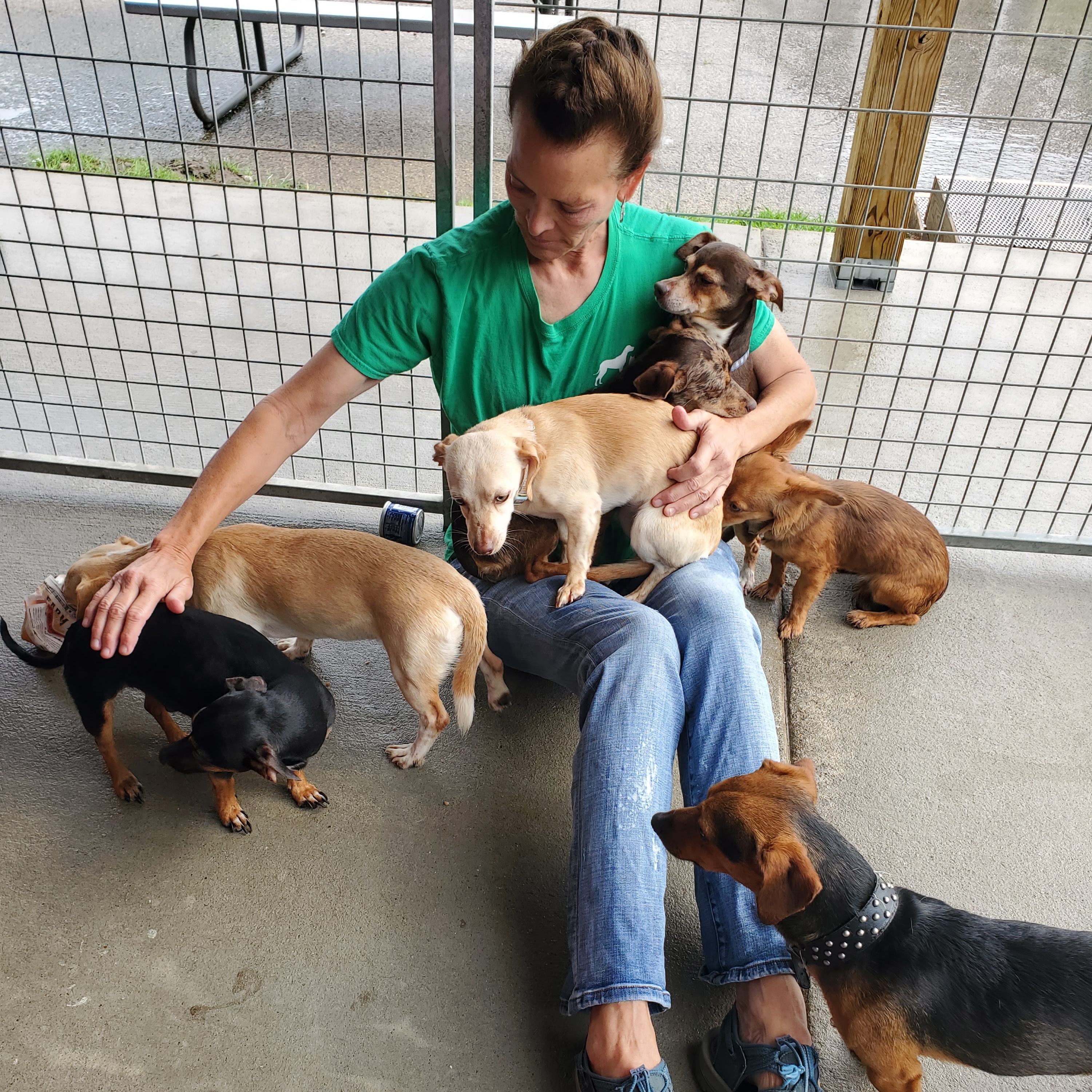
Post Reports
How to save an animal shelter: “If you care about something just do it”
00:13:37
Courtney Proctor Cross was an elementary school teacher for 30 years before she changed her life. When she took over an animal shelter that had become a “death sentence” for the animals who entered, she made it a place of hope.
Loading summary
Transcript66 lines
- [00:01]
Maggie Penman
I think we all know these people in our communities who just make the world a better place. And for Huntington, West Virginia, one of those people is Courtney Proctor Cross. She took an animal shelter that was becoming a death sentence for animals who went there and turned it into a no kill shelter, which means 90% of the animals find homes. I'm Maggie Penman. This is Post Reports Weekend. It's Sunday, Saturday, October 11th. I'm a reporter for the Optimist, reporting on hopeful stories about things that are going right in the world. Believe it or not, there are things going right in the world today. I wanted to bring on my colleague Sydney Page, because she's the one who reported the story about this woman in West Virginia who took over a struggling animal shelter and made it a hopeful place for animals and for people. And what I loved so much about this story was that it, it really made me feel like change is possible even in these really seemingly intractable situations. Sydney, thank you so much for coming on.
- [01:05]
Sydney Page
Thank you for having me.
- [01:10]
Maggie Penman
Okay, so you and I are both reporters for the Optimist, and that often means writing dog stories.
- [01:17]
Sydney Page
Always.
- [01:17]
Maggie Penman
How many dog stories have you written in the, like, last several years?
- [01:22]
Sydney Page
Too many to count. I honestly barely write about humans anymore. I much prefer to write about dogs.
- [01:27]
Maggie Penman
So since this is the first time you're coming on the podcast, maybe you could just tell people a little bit about what the Optimist is. And like, I'm just curious, if you meet someone at a party, how do you describe your job?
- [01:36]
Sydney Page
I say I have the best job in journalism.
- [01:39]
Maggie Penman
That's what I say, too. That's what I say.
- [01:41]
Sydney Page
Yeah, because we get to write about the good stuff. We get to focus on the happy, positive things that are going on in the world and, and spotlight the heroes across the country and around the world.
- [01:53]
Maggie Penman
And you've been at this a lot longer than I have. How long have you been writing for the Optimist?
- [01:58]
Sydney Page
So I've been writing for the Optimist for almost five and a half years, which is crazy. Initially it was called Inspired Life, and we sort of recently rebranded to be the Optimist. But yeah, I've been at the Post for over five years. Which is wild.
- [02:11]
Maggie Penman
Time flies when you're having fun.
- [02:13]
Sydney Page
Exactly.
- [02:14]
Maggie Penman
You had one particular story about dogs that really moved me, and I wanted to talk to you about it because you found this woman, Courtney Proctor Cross, who is just this extraordinary person in Huntington, West Virginia, and she walked into an animal shelter that was just in this horrible shape and completely turned it around. So how did you find her story? How did you hear about Courtney?
- [02:38]
Sydney Page
A longtime reader who actually lives in Huntington wrote me an email about Courtney. And I remember reading it and thinking, we have to write a profile about this woman who has extraordinary work in the community and who has completely transformed the shelter. This particular person actually adopted a dog from the. From the shelter. So she had seen firsthand what the transformation looked like. And yeah, she highly recommended me reaching out to her. And it's nice because it's a combination of human and animal, like good person and.
- [03:05]
Maggie Penman
And some good boys and girls, obviously.
- [03:07]
Sydney Page
Exactly.
- [03:08]
Maggie Penman
What do you think it is about Courtney in particular that made it possible for her to do this?
- [03:13]
Sydney Page
I think she's an unbelievably resilient person. She lost both of her parents when she was six years old in first grade. Very tragically, they died in a plane crash. And I got Courtney on the phone to talk about this and how her parents shaped her.
- [03:26]
Courtney Proctor Cross
I've always felt like my love for animals came from both of them.
- [03:32]
Sydney Page
And they were both huge animal people, huge animal lovers. She talked about all the pets that she had.
- [03:38]
Courtney Proctor Cross
So my mother loved fish and we had aquariums of fish and they were pretty. And we had a couple of cats, a couple of dogs, the buffalo. Just a little menagerie of pets.
- [03:54]
Sydney Page
She did have a buffalo growing up, which is wild.
- [03:57]
Maggie Penman
Where does one keep a buffalo?
- [03:59]
Sydney Page
I actually do not know. That's a good question. I probably should have asked her. I was too struck by the fact that she had a buffalo to even think of a follow up question regarding the bus.
- [04:07]
Maggie Penman
Yeah, no, it's sort of like an interview. Stopping detail.
- [04:10]
Sydney Page
Yeah, exactly, exactly.
- [04:12]
Maggie Penman
Tell me more about her because she has a really interesting backstory that I think speaks to why she was able to do this extraordinary thing.
- [04:21]
Sydney Page
So she was an elementary school teacher in Huntington for many, many, many years. She also volunteered with a lot of local rescue organizations. And she was seeing firsthand just how dire the shelter situation was.
- [04:33]
Courtney Proctor Cross
The shelter was. It was a disaster. It was the most of the animals, at least half, sometimes as many as 75% animals that entered the shelter were euthanized for space.
- [04:46]
Sydney Page
She was trying to keep her job as a teacher and also working with these rescues and sort of petitioning for change. And change wasn't happening one day.
- [04:54]
Courtney Proctor Cross
I just thought. And this was in the spring of 2018. You know, I wonder if I could do this, if I could take a leave from teaching, a sabbatical for a year and see how this goes.
- [05:08]
Maggie Penman
So when she took over this shelter, it sounds like it was in really dire condition. What. What were things like, the animals?
- [05:16]
Sydney Page
Well, at the time she took over the shelter, she estimated that roughly 50 to 75% of the animals who came in were euthanized. So it was a really awful, awful situation.
- [05:26]
Courtney Proctor Cross
Before I became the director, there were lots of parts of the shelter that were off limits to visitors. That first night, we were kind of looking everywhere and walking around, and we got back to the garage, and it was really a take your breath away situation. There were so many animals in there, cats and kittens that had. It was. First of all, it was 100 degrees. It was August. August is hot in Huntington. And there was no ventilation in the garage. And the garage was filled with huge bags of trash. And then around the edges of the garage, on the walls, there were cages with cats and kittens, and they didn't have food, water, litter boxes, nothing. They were literally sitting there waiting to be euthanized. And so we got to work and called in our fellow rescue partners, and we worked until one in the morning getting everyone situated and, you know, the ones who had already died and, like, trying to. It still makes me emotional to think about that. I'm sorry. And there was this dog, and I guess he was in there because he was going to be euthanized, but he was just in a wire crate, just a standard wire dog crate, and he was just barking incessantly, and he was scared, and, you know, he was not having it. When you came over to the crate, like, if you had put your hand in, I'm sure we would have been bitten because he was just, you know, so anxious in such a terrible situation. So we made it a tolerable situation and got some water in there for him. And then the happy part of that story is eventually he was adopted, and he's in a wonderful home, and we still get visits and get videos of him, you know, helping her mow the yard. He runs alongside the woman who adopted him and carries a stick in his mouth the whole time. But, yeah, that first night was just like, oh, my Lord, this is horrible.
- [07:30]
Maggie Penman
How did things get so bad there? Like, what happened that this shelter became a place that so few animals were coming out of?
- [07:39]
Sydney Page
Underfunding has long been an issue there. And so I think it was many years piled on top of the other of not having enough money to care for these animals, not not having enough money to spay and neuter them.
- [07:50]
Courtney Proctor Cross
Rescues and shelters across America are really struggling with the number of animals they have, the number of animals they're trying to move and get adopted. And it's just really been a hard time.
- [08:02]
Sydney Page
And there was tons of overcrowding, which is still a problem today in the shelter. But the easiest solution was to euthanize. The easiest and the cheapest solution was to euthanize. And I think that, you know, one thing that did come up repeatedly in my discussions with Courtney and others was that the people who were running the shelter prior to Courtney didn't really see it as such a terrible, awful thing. And I think, like, the real tragedy is that so many of these animals were adoptable and were healthy and were fit to be great pets to people. But I think it was just several compounding factors that made it a bit of, a, bit of a disaster, unfortunately.
- [08:37]
Maggie Penman
Well, okay, I want to take a quick break there, but when we come back, let's talk about how Courtney transformed this shelter into a hopeful place. We'll be right back.
- [08:54]
FirstNet Advertiser
To first responders, every second counts. Firefighters, paramedics, law enforcement officers, and 911 operators need to communicate instantly. And that's why FirstNet exists. FirstNet is the only network built with and for first responders. It's a unique public private partnership with the FirstNet authority making sure America's first responders always have priority access, whether in the heart of a big city, a rural county or a remote territory. During natural disasters, major storms or large scale events, first responders know they can count on FirstNet to keep them connected, even when other networks are congested or unavailable. FirstNet is more than a network. It's a commitment to first responders, a promise that America's public safety always comes first. FirstNet built with AT&T. Learn more@firstnet.com PublicSafetyFirst.
- [09:51]
Washington Post Advertiser
You listen because you know the power of good journalism and the Washington Post is there for you 24. 7. When you become a Washington Post subscriber, you get exclusive request reporting you can't find anywhere else. You also get sharp advice columns, delicious recipes, TV and music reviews, and so much more. Right now, you can get all of that for just $4 every four weeks. That's for an entire year. After that, it's just $12 every four weeks. And you can cancel anytime. Add to your knowledge and discover all the Post has to offer. Go to washingtonpost.com/subscribe. That's washington post.com subscribe.
- [10:36]
Maggie Penman
So Sydney Courtney walked into what sounds like just an awful, heartbreaking situation. How did she go about starting to turn it around?
- [10:45]
Sydney Page
I think first and foremost she demanded more government funding so she really, really pushed for more funding, which was a huge help. She also opened her own nonprofit that exclusively funds the shelter, and we've received.
- [10:57]
Courtney Proctor Cross
Other grants from other organizations, and she.
- [11:01]
Sydney Page
Started fundraising and going around in the community, using social media to her advantage.
- [11:05]
Courtney Proctor Cross
So many people just had the attitude, you know, I love animals. I don't want to see them suffer. We need to do better. And, you know, what can I do to help? And really, whatever anyone can do is what I want them to do and welcome them to do. You know, some people can come walk one dog. Some people will foster, Some people will, you know, provide financial support. You know, it all. All adds up and all helps.
- [11:33]
Sydney Page
And she really just worked her. Worked her butt off to get the word out there and get people on board and get the community on board.
- [11:41]
Courtney Proctor Cross
I think I lost, like, 15 pounds the first several months, because I was down there practically every day. I lived on. It's a good thing there's such a thing as breakfast bars, because I might have just died without them.
- [11:53]
Maggie Penman
It's amazing. I think this story is so inspiring, and I think so many of us look at the problems in the world and in our communities, and they feel intractable. It feels impossible to think about solving them. So do you think there's a takeaway here or something we can learn from Courtney about how to bring some of this energy into our own communities?
- [12:12]
Sydney Page
That's a really good question. I mean, I think the lesson I learned from Courtney is if you care about something, just do it. Just start. Just try. And, you know, for her, for a long time, it was an uphill battle, and it still is. I know there are so many struggles she faces every day as a shelter director in a small town, but you care about something, and you believe that it can change. You just have to start, and you have to try.
- [12:34]
Maggie Penman
Okay, so, Sydney, it sounds like she's done something truly miraculous here, but it also sounds like so much work, and I'm sure Courtney would love to eat something other than a breakfast bar. So what does she hope for next with this shelter?
- [12:48]
Sydney Page
Well, I think a big challenge she still faces is overcrowding. So she would like to expand the shelter and actually renovate it. It's still in relatively rough shape. I mean, they make do. But it's an old that has not been renovated. There's not a lot of open space and windows and things like that. So I think that she has her sight set on building a really beautiful shelter that can house more animals and accommodate more. And so I think that's her next focus. But in terms of future goals, I think she's just hoping to stay on the path that she's currently on, which is maintaining the shelter as a no kill shelter and helping as many animals as possible.
- [13:26]
Courtney Proctor Cross
I just really want to keep things moving forward. This has been a very life consuming endeavor and you know, I would like to be able to clean my house again at some point. Also, I just, my son just had a little baby three weeks ago and so she's precious and I want to free up, you know, a little bit of time because it's pretty much seven days a week all day long as far as keeping all of this going.
- [13:59]
Maggie Penman
Sydney, thank you so much for coming on to talk about this story. I feel so inspired.
- [14:03]
Sydney Page
Of course. I had so much fun.
- [14:10]
Maggie Penman
Sydney Page is a reporter for the Optimist and she also writes our weekly newsletter. You really should subscribe. I'll put a link in our show Notes. It just is this beautiful ray of sunshine in your inbox every Sunday morning with links to hopeful stories and articles. A lot of them tend to be about dogs, so who wouldn't want that? That's it for Post Reports. Thanks for listening. Let us know if you want more hopeful stories in your feed. Send me a note@podcastsoshpost.com I'm Maggie Penman. Have a great rest of your weekend. Okay, so Ted, who is producing this episode. Ted and I have a long running inside joke that we want to make a podcast called Dogcast. The tagline I proposed is Buy dogs for dogs, which doesn't make sense if you think about it too hard.
- [15:04]
Sydney Page
But you don't have to think about it.
- [15:06]
Maggie Penman
Don't think. Just think about dogs.
- [15:08]
Sydney Page
It makes perfect sense.
- [15:09]
Maggie Penman
This is what we're doing here. We're just making dogcasts.
- [15:12]
Sydney Page
Can I be on dogcasts?
- [15:13]
Maggie Penman
Obviously, you will be on every episode.
- [15:15]
Sydney Page
Okay.
- [15:20]
Washington Post Advertiser
You listen because you know the power of good journalism and the Washington Post is there for you 24 7. When you become a Washington Post subscriber, you get exclusive reporting you can't find anywhere else. You also get sharp advice columns, delicious recipes, TV and music reviews, and so much more. Right now, you can get all of that for just $4 every four weeks. That's for an entire year. After that, it's just $12 every four weeks. And you can cancel anytime. Add to your knowledge and discover all the Post has to offer. Go to washingtonpost.com subscribe. That's washingtonpost.com subscribe.