← Post Reports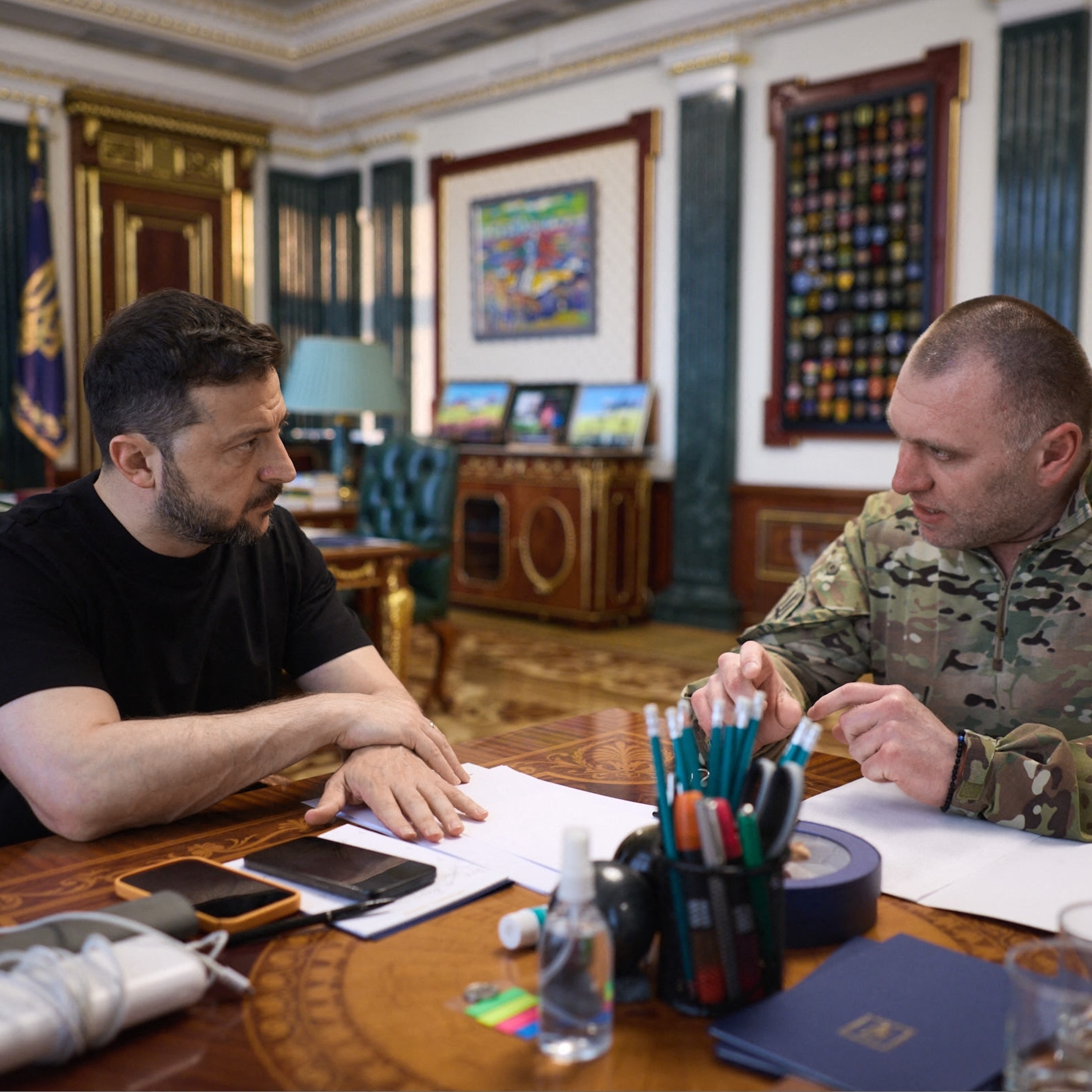
Post Reports
How Ukraine pulled off ‘Operation Spiderweb’ deep inside Russia
00:23:49
In a surprise attack, Ukraine struck targets deep within Russia. How they pulled it off – and what it says about the state of the conflict between these two countries.
Loading summary
Transcript33 lines
- [00:03]
Elahe Izadi
On Sunday, Ukraine launched a giant drone attack deep inside of Russia. Here's the sound of a video shared by Russian locals in the Irkutsk region. It captures part of the attack. The operation was codenamed Spiderweb. It took 18 months to plan, and it was supervised personally by Ukrainian President Volodymyr Zelensky. The Ukrainians smuggled hundreds of drones into Russia. Then they deployed the weapons, striking four Russian air bases. There were no reported casualties, but the damage to Russia's arsenal was massive. The attack was one of Ukraine's biggest and deepest against Russia since the war began three years ago. And they did it just a day before planned peace talks. From the newsroom of the Washington Post, this is Post Reports. I'm Elahei izadi. It's Monday, June 2nd. Today, Ukraine Bureau chief Shavano Grady joins me from Kyiv to explain how Ukraine pulled this off and whether this attack could change the balance of power in the war. Hi, Siobhan. Thanks so much for joining me today.
- [01:29]
Siobhan O'Grady
Thanks for having me.
- [01:30]
Elahe Izadi
So let's just start this conversation with how much damage did this attack by Ukraine cause inside of Russia?
- [01:39]
Siobhan O'Grady
That's something everyone is still trying to figure out. So what we know from Ukrainian officials and from President Zelensky is that at least 41 aircraft were hit. And now the question is how many were destroyed and how many were damaged? So the latest assessments coming out today on Monday are that at least 13 Russian aircraft were completely destroyed and that the other dozens that were hit were at least damaged. So this is a major blow to Russia's capabilities because a lot of these aircrafts, according to Ukraine, were being used to target Ukraine with missiles every night. And so these are the same planes that are launching missiles that have struck civilians in towns, cities and villages all across this country for three years. And for so long, they've been parked out of the range of where Ukraine has been able to attack. And so it took this kind of operation for Ukraine to be able to reach those airfields which are so far away. I mean, they did this operation over three Russian time zones. So these air bases were far from each other and thousands of miles away from Ukraine.
- [02:46]
Elahe Izadi
Wow, that. That's really fascinating to think about how expansive and how difficult this operation was, or at least it sounds like. Siobhan, can you tell me a little bit more about how Ukraine actually carried out this strike?
- [03:02]
Siobhan O'Grady
So they're still being very coy about the details, obviously, and we have to wonder, since this took 18 months, how many other operations are being planned right now and are at some other stage. And that there are reasons, of course, that they don't want to let on exactly how they made this happen. But what we do know is that they use first person view drones, which have become the weapon of choice in this war on the battlefield. These are typically not used for long range strikes because they cannot reach long distances. So they can usually fly around 15 kilometers, 20 kilometers. And these are used to strike positions on the front line. And these drones are so small that you can actually hold one in the palm of your hand. And they are civilian drones. I mean, people also use these in the US and all around the world just for recreational purposes.
- [03:53]
Elahe Izadi
So then how did the Ukrainians get these drones so deep into Russia?
- [03:58]
Siobhan O'Grady
So the drones were hidden inside of sheds and mobile homes that apparently were made of wood that were somehow transported, probably at least the sheds by truck, to areas very close to these. So they parked them very close. And then they somehow, and we still don't totally understand the mechanics of this, remotely lifted the roofs off of the sheds and the mobile homes and the drones flew out from underneath and homed in on their targets and attacked the aircraft. Just in this shocking moment where obviously no one there would have understood what was going on, because where did all of these tiny drones come from? So a lot of the details of how they actually did it they will not reveal for this time, but they very quickly took responsibility for it, which doesn't always happen. A lot of times it takes a long time for Ukraine to admit that it was involved or for the specific agency to admit it. And this time yesterday, we saw President Zelensky hugging the head of the security services in photos. And the security services were immediately claiming responsibility. So it was very clear that they were also very pleased with this operation.
- [05:11]
Elahe Izadi
I want to understand more about why they were so eager to claim responsibility for this operation. I mean, it sounds like this is kind of embarrassing for Russia. Like how do we sort of think about these strikes in the context of the war at this moment?
- [05:28]
Siobhan O'Grady
It's definitely embarrassing for Russia. So there are a few reasons why they would want to take responsibility. One is that Ukraine has been trying to tell its partners, even, even those who support Ukraine wholeheartedly, that Russia does not have these red lines that everyone has been so scared of, because so many of the partners of Ukraine, European countries and the United States, especially during the Biden administration, were constantly warning that they didn't want to cross President Vladimir Putin's red line, which everyone knew meant a nuclear attack. Of course, Russia is a nuclear power Ukraine gave up its nuclear weapons in 1996 as part of the Budapest memorandum. And Ukraine would have really been eager to show that it can still carry out this kind of attack. There have been so many doubts over Ukraine's military capabilities. And, you know, if people think back to the first days of the full scale invasion in 2022, there were predictions that Kyiv would fall within three days. And I'm sitting in Kyiv, you know, three years and several months later, and it's completely under Ukrainian control. And the Russians were pushed back in this unexpected win for Ukraine at that time. And they are still capable of being creative, even if they don't have as many weapons as many soldiers, that they can still attack Russia, weaken it, and prove that they are actually worth fighting for, worth investing in. And they hope that Western partners will see that even if President Donald Trump told Zelensky in the Oval Office several months ago that he had no cards in this war, that actually Ukraine does have cards and that it still is capable of attacking a nuclear power and it's going to continue doing, doing so in hopes that it has support from all of the countries around it and across the ocean.
- [07:12]
Elahe Izadi
Siobhan, I also understand these weapons were Ukrainian. They weren't provided by another country, which kind of makes these strikes so far into Russia all the more remarkable.
- [07:26]
Siobhan O'Grady
This has been a major point of contention throughout the war, this issue of deep strikes inside of Russia. And this has been really complicated for Ukraine to navigate because a lot of times Russia moves its most powerful weaponry, including the planes that it uses to attack Ukraine, nightly far away from the front line and so far away that Ukraine can't reach them. And Ukraine, even with the Western weapons it was provided, has had a lot of restrictions on those weapons where it isn't allowed to use them to strike deep inside of Russia. It can only for a long time, they weren't allowed to use them to strike inside of Russia at all. And then the Biden administration slightly lifted the restrictions to allow some strikes inside of border regions. But, I mean, striking 3,000 miles away would not have even been a remote possibility. The drones appear to have come from Ukraine. And so for them to plan their own attack using homemade weapons and for it to be this effective is just a really major win for Ukraine's drone and military innovation as Ukraine attempts to create an industry here that it hopes other countries will want to invest in in the future in military hardware, including drones.
- [08:35]
Elahe Izadi
So Russian President Vladimir Putin has so far not said anything directly in response to these drone strikes, but how are Russians generally reacting to this attack.
- [08:46]
Siobhan O'Grady
Yeah. So immediately there was a lot of response on social media. People started posting videos, and that's when we really realized the scale of what had happened, because we started seeing videos from the airfields of planes on fire, and then we saw the Ukrainian officials start celebrating this operation. And so obviously, Russia couldn't hide what had happened and that Ukraine had infiltrated in such an intense way to several different regions, and that they'd carried out this attack and planned it in clear view, apparently, of Russian security services. And this is in a very, very restrictive police state that they were able to do this. So it's really, really remarkable that they could. And then we saw that pretty quickly, Russian military bloggers, who are very influential in Russia, a lot of them are very pro war and they have of deep connections in the military, they started posting all about the attack and equating it to Russia's Pearl harbor and all sorts of different descriptions.
- [09:47]
Elahe Izadi
Well, I, I wanted to ask you about that because I, I did see some of these comparisons. And, and just a reminder, Pearl harbor was an attack by the Japanese against the Americans in 1941, and that killed 2,400 people, injured over a thousand more. But it sounds like right now there were no casualties in this attack by Ukraine against Russia. So what do you make of that comparison to Pearl Harbor?
- [10:10]
Siobhan O'Grady
Oh, it's completely outrageous. Obviously it's not comparable, but it is meant to also incite that feeling in Russian society, this anger to justify potential retaliatory strikes by Russia against Ukraine. So then if Russia, you know, last night, on Sunday night, going into Monday, we were bracing for potential huge missile strikes from the remaining. Of course, they have other planes still. This didn't take out their entire arsenal. So we were bracing for them to do a huge drone attack. I blew up the air mattress in my kitchen that I sleep on because I have a thicker wall there where I go with my husband and dog whenever there's an intense attack on Kyiv. So I was really expecting that and it didn't happen. So I think it's still possible that it will happen this week and that they're just sort of stockpiling their we happens right now and planning it. But this is also a way for Russian pro war sectors to sort of influence public opinion and to really ramp up anger in Russia. You know, anytime that Russia feels the war, it's good for Ukraine in many ways, because Ukraine wants regular Russians to feel the war and to understand that this war isn't just something happening far away, that it involves their state because most Russians have been completely isolated from the worst parts of the war, whereas most Ukrainians have been exposed to the worst parts of it. But in this case, it also has that risk of really inciting more anger and hatred against Ukraine and fueling some of those justifications for this very unjust war. So I'm sure that that's what they were trying to do by making that Pearl harbor comparison.
- [11:58]
Elahe Izadi
After the break, what the drone strikes mean for a possible peace deal. We'll be right back. As we mentioned at the top of the show, these drone strikes happened just a day before Ukrainian and Russian officials were expected to meet in Istanbul for these US Backed peace talks. What is Ukraine's position going into these negotiations?
- [12:35]
Siobhan O'Grady
Ukraine has been very clear that it wants at least a 30 day full ceasefire, air, land and sea that is unconditional, which would mean there's no saying, okay, we'll do the ceasefire if Ukraine agrees to stop recruiting for its military during that time, or if the US and other countries stop sending weapons to Ukraine during that time. It cannot have conditions. Ukraine has been very clear about that. The United States has backed this position, European partners have backed this position, that the first step toward goodwill in any peace process like this needs to be a full ceasefire so that both sides can understand that the other is serious about peace and can demonstrate what peace would feel like. I mean, we've now been in this war on a full scale level for nearly three and a half years. And of course, Ukraine's also been at war since 2014 in its eastern region. So this would be a major, major deal to have a 30 day ceasefire. But Russia has been really prolonging agreeing to that. And they have suggested other much shorter ceasefires, like a couple of days at Easter. And Ukraine said, if you can do an Easter ceasefire, then you should be able to do a 30 day ceasefire. So that's been one of the main topics and another is that they really want to continue using these talks to return prisoners to both sides and also for Russia to release the many children, Ukrainian children, who were forcibly deported to Russia, including many who have been put into the adoption system in Russia. And a lot of these kids have just disappeared. So today the Ukrainian delegation apparently handed over a list of names of children that it wants return. It doesn't want these children to be treated like prisoners of war or exchanged in some kind of prisoner swap. It just wants the children returned home to Ukraine so that they can live their lives as Ukrainians. And that is a major sensitive topic for Ukraine So we'll see what happens and what comes out of the talks. I think right now we expect another prisoner exchange to happen. One was agreed upon at the last talks in mid May, which were also held in Istanbul. And those were the first direct talks between Russia and Ukraine since early 2022. So that was a major win for both sides that they each got 1,000 people home. But it was the only concrete outcome from those talks. So it also demonstrated just how far apart are on every other issue regarding a peaceful resolution to this terrible war.
- [15:04]
Elahe Izadi
So you explain what Ukraine wants. What more can you say about what Russia wants from these talks?
- [15:13]
Siobhan O'Grady
Well, Russia doesn't want to concede the territory that it has illegally annexed from Ukraine, and it wants Ukraine also to give up territory that Ukraine still controls. So Russia currently controls Crimea, the Ukrainian peninsula that it illegally annexed in 2014. It also is controlling parts of different regions, and it controls Luhansk region entirely. So it wants Ukraine to agree that the four additional regions plus Crimea are Russian territory and to give up even the parts of those regions that Ukrainian forces still control. And this is just an absolute nonstarter for Ukraine. I mean, both sides want things that the other does not want. And so it's been very hard to find any common ground. And I think that's also why Ukraine has been pushing for this ceasefire. So, okay, let's start with the ceasefire and then we can see. Ukraine certainly doesn't want to concede anything before a ceasefire, and it wants to get as much as it can before it starts conceding. So there's no reason right now for Ukraine to give up anything that Russia hasn't already taken. And in fact, it wants to get back the land that it's lost, if possible. So it's very difficult starting position for talks when the two sides just want completely different things.
- [16:31]
Elahe Izadi
Yeah, well, and then there's this third player in these talks. We, we talked about how these are US Backed talks. So where does the Trump administration stand on the war right now and these talks?
- [16:44]
Siobhan O'Grady
So the Trump administration did not send anyone to Istanbul today for the talks, which I think is a sign of sort of the lack of faith in the process, even though it's a process that they've backed and pushed for. I think originally President Trump was eager to have the two sides meet, really thought that they could come to this ceasefire, that he would be the one who brought them together. Then we saw that last month, President Zelenskyy was in Turkey. He was ready. He said he was ready to meet President Vladimir Putin. That he was ready to meet Trump, that he was ready to do a three way dialogue between all three of them. And Putin didn't show up to the talks and Zelenskyy didn't travel to Istanbul from Ankara because his counterpart wasn't there. It's clear that this whole idea that Trump would have this magic wand that he could wave, that he could end the war in one day as he claimed, that this is just really, really was a major over promise and that the two sides remain extremely far apart and that there's very little that the United States is going to be able to do. And in fact, Russia doesn't really want the U.S. to be at the table because the U.S. of course, is arming Ukraine and providing intelligence information to Ukraine. So there's this very complicated game going on right now where the Russ are trying to draw out the peace process for as long as possible to not irritate the Trump administration because they do fear further sanctions being placed on Russia. So they're sort of half participating or giving the appearance of participating. Meanwhile, Ukraine really, really wants the ceasefire because Ukrainians are dying every day. But Ukraine also can't just say this process is stupid and we don't want to do it because they don't want to irritate the Trump administration either. So everyone is kind of trying not to bother the White House while still participating in this process.
- [18:32]
Elahe Izadi
And I remember the Oval Office visit back in February with Zelensky and American Vice President J.D. vance and President Donald Trump there, and Trump was berating Zelensky or sort of lecturing him and kind of saying, you know, you don't hold the cards, you.
- [18:48]
Siobhan O'Grady
Don'T have the cards right now with us. You start having cards right now, you don't miss the President, you're playing cards, you're gambling with millions of people.
- [18:58]
Elahe Izadi
And the impression that I was left with was he was trying to push Zelinsky to, you know, let go of some of these demands or give in a little more. And I'm just trying to understand right now with the context of these talks and also these strikes, has Trump's tone changed at all with Zelensky or, or Putin for that matter?
- [19:19]
Siobhan O'Grady
I think Zelensky left that meeting a hero in Ukraine because he was seen as having stood up to this huge world power that was bullying him. And the two had the opportunity to meet again on the sidelines at Pope Francis funeral in a one on one meeting, just the two of them @ the Vatican, where they had this very intimate and intense conversation and chairs facing each other very closely. And I think that that sort of helped reset relations. I still don't think that Trump is a huge fan of Zelenskyy or that Zelenskyy is a big fan of Trump. But I do think that Trump has come to the understanding that Russia is also not a fair player and that they are dragging out the process. So he has made a few comments saying that he thinks that Russia is tapping him along, as he puts it, and that he's irritated by it. He's also made some rare criticism of Putin for a missile strike that hit Kyiv and hit an apartment building and killed a bunch of civilians this spring. So we've seen a little bit more of an inclination to. To speak more negatively about Russia than he had in the past. But we still are seeing this attitude from him where he seems to trust that a peace process is possible.
- [20:30]
Elahe Izadi
Siobhan, just stepping back now that this attack has happened inside of Russia by Ukraine, and we had, you know, we can see what the sides are talking about today during these peace talks. How would you characterize the state of play in the war right now? Did this strike by Ukraine change anything fundamentally? Will it make it easier to get to some sort of resolution, or are the underlying dynamics pretty much the same?
- [20:57]
Siobhan O'Grady
I think it did change the dynamic in some way, at least temporarily, because it really gave Ukrainians a morale boost that they really needed after a long time, and it made people feel more like the fight is worth it, that things are happening, that they see some progress, but it didn't change the front lines. And that's the fundamental issue at hand in the war right now, is that Russia is taking Ukrainian territory, and so it didn't return any territory to Ukraine. It didn't allow Ukraine to push anywhere. What it did was it potentially thwarted future missile strikes on Ukrainian cities and other targets in Ukraine, and it probably saved lives in that way. But it won't change the fact that Ukraine is outnumbered and outgunned on the front line, and that so far, that hasn't meant that Ukraine has lost the war. I mean, they're still fighting this war, but it doesn't give them this huge boost where they're suddenly going to run through Russian positions or something like that. It's definitely not at that level. So I think it's important, but it doesn't completely change the calculus.
- [22:10]
Elahe Izadi
Well, Siobhan, thank you so much for taking time to join me and explain all this. I appreciate it.
- [22:14]
Siobhan O'Grady
No problem. Thanks for having me.
- [22:21]
Elahe Izadi
Siobhan o' Grady, is the Ukraine bureau chief for the Post. After Siobhan and I finished our conversation, we learned more details about today's peace talks. They were brief. Russia and Ukraine agreed to exchange gravely wounded prisoners of war, captives under the age of 25 and the bodies of 6,000 killed soldiers from each side. But they agreed on little else, including a ceasefire. The Russian side said it will study the list of missing children who Ukraine says were forcibly deported. But Russia also denied the children had been kidnapped out. The Ukrainian representative said they've proposed holding another round of talks at the end of this month. That's it for Post reports. Thanks for listening. If you're looking for the latest updates on the big news of the day, you should check out our morning News briefing.
- [23:15]
Siobhan O'Grady
The Seven.
- [23:16]
Elahe Izadi
We bring you the seven stories you need to know about every Weekday morning by 7am you can listen to it wherever you listen to Podcasts Podcasts. Today's show was produced by Rennie Sfornowski with help from Laura Benshoff. It was edited by Ariel Plotnick and mixed by Shawn Carter. Thanks to Paul Shem. I'm Elahe Izadi. We'll be back tomorrow with more stories from the Washington Post.