← Post Reports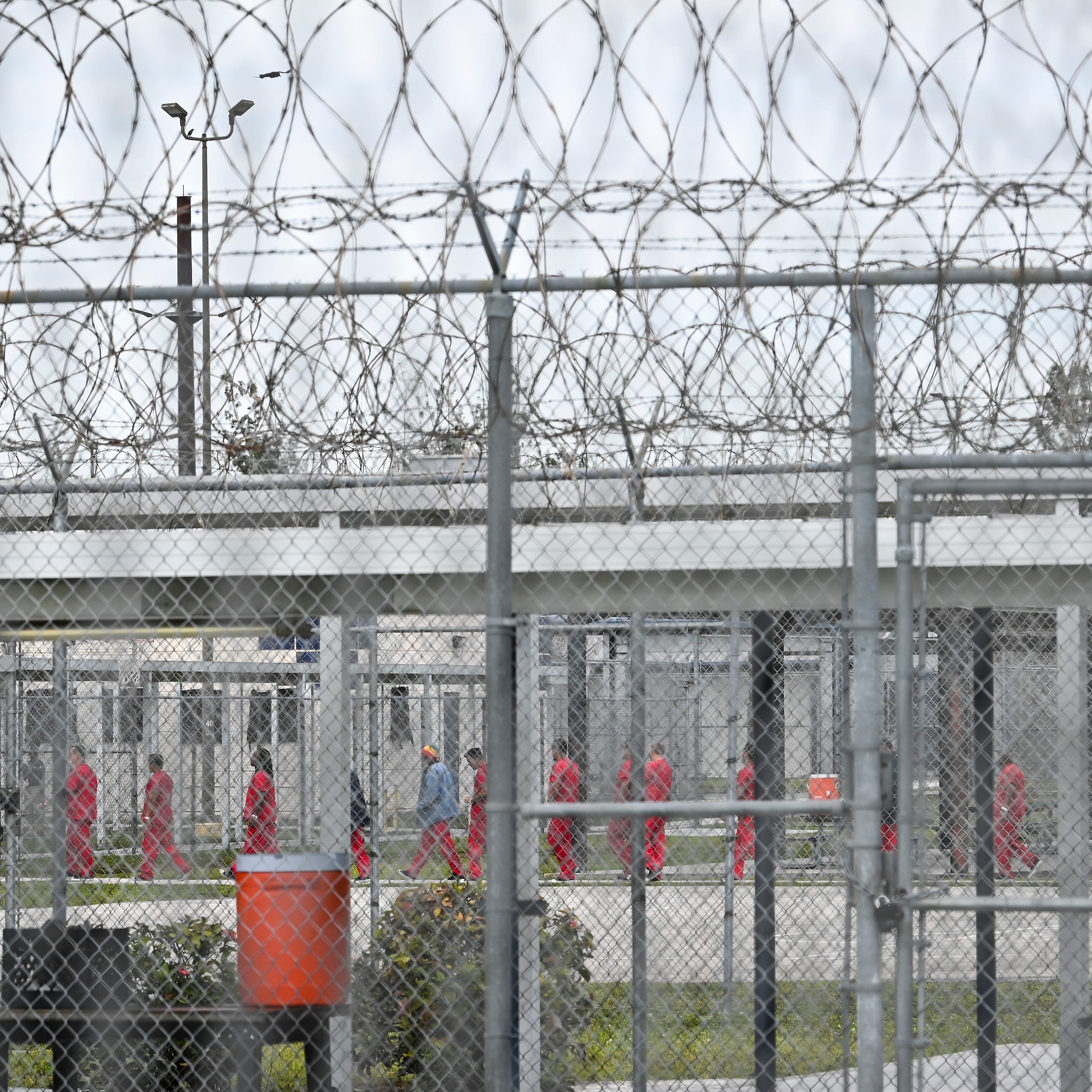
Post Reports
Inside overwhelmed ICE detention centers
00:23:50
As the Trump administration aggressively pushes to deport more migrants, detention centers have started to reach or exceed capacity. Some detainees report being forced to sleep on the floor or wait for access to medical care and other basic necessities.
Loading summary
Transcript54 lines
- [00:03]
Colby Akowitz
America Platt was in the US for two decades. She crossed the border when she was nine years old with her mom fleeing her abusive dad. She went to school, worked, had a kid here. But after a couple of low level run ins with the law as a young adult, marijuana possession and unpaid traffic ticket, she ended up in Prairieland. It's a U.S. immigration and Customs Enforcement detention center in Alvarado, Texas.
- [00:27]
America Platt
You know the place, it's, it's dirty. The holding cell where I was in was as big as a restroom stall. And there was another girl in there with me. And you know, hearing her, her story that, you know, hey, I've been here for three days, like, get ready, because I haven't slept, I haven't been given a blanket. You know, there's no room for you to sleep, no privacy. There's, you know, you're using the restroom and if somebody goes by, like, they can see you.
- [00:59]
Colby Akowitz
America says she needed medical care when she got to the detention center.
- [01:02]
America Platt
When I arrived, I was running a fever. I had a, I had an ear infection. They, they were aware of this. Like, I was letting them know. And, you know, you go in with paperwork and so they know these things and it's just, it's irrelevant because you are an alien. Like, you're stripped from your humanity.
- [01:27]
Colby Akowitz
America says she eventually got medical attention, but it wasn't consistent. She was deported to Mexico with her child left back in the U.S. but what she saw at Prairieland is part of a larger story.
- [01:40]
America Platt
They're understaffed. They're overbooked.
- [01:46]
Colby Akowitz
From the newsroom of the Washington Post, this is Post Reports. I'm Colby ekowitz. It's Tuesday, April 22nd. Today with the Trump administration's sweeping goal to deport 1 million migrants. Many ICE detention centers are at or above capacity, and the overcrowding is likely to get worse. My colleague Laura Benshoff spoke with Investigative reporter Doug McMillan about how the Trump administration's policies are causing unsafe conditions in detention and how people like America Platt have suffered as a result.
- [02:24]
Laura Benshoff
So, Doug, we've been hearing so much about the Trump administration deporting migrants to El Salvador to a mega prison that's high security. What made you want to investigate immigrant.
- [02:36]
Doug McMillan
Detention within the U.S. yeah, this country's system for immigrant detention has been notorious for having poor living conditions for decades already. These are detention centers that are largely run by private companies and have been the subject of lawsuits and accusations over the years of terrible living conditions for people, many of whom were never convicted of a crime other than unlawfully Crossing the border. And right now what is happening is that detained population is growing and growing and growing. It's nearing 50,000 people, five year high. And what I wanted to know was what effect is that having on this system that is already known for poor living conditions? Are we seeing signs of strain? Are we seeing signs of overcrowding and these facilities being overwhelmed by this rush of people coming in?
- [03:39]
Laura Benshoff
And what did you find is happening kind of big picture across all of these detention centers across the US I'm.
- [03:46]
Doug McMillan
Finding at a lot of facilities, they just are not prepared for so many people coming in literally by the busload every day. In Miami, there's a government run detention center called Chrome where there now to be appear to be hundreds of people more than the capacity is supposed to allow. This means that people are sleeping in conference rooms, rooms that were meant for meeting with lawyers or meeting with visitors. Those are being turned into basically bedrooms or cells for these detainees. Some people are reporting not getting adequate food or water, not getting blankets, not getting access to toilets. Some people are living in rooms that do not have a toilet and they have to wait for a guard to take them to the bathroom all day. These seem to be potential violations of the living conditions which these detention centers agree to in their contracts with the government. But right now, there does not appear to be anyone ensuring that those contracts are being met and that the living conditions in these facilities are being appropriate and adequate and that these people are being cared for as, you know, as the numbers of them keeps growing and growing.
- [05:03]
Laura Benshoff
Yeah. Can you say specifically how overcrowded the system is right now? Do you know kind of how much overcapacity we're looking at?
- [05:13]
Doug McMillan
So the exact numbers are hard to know because the government does not publish specific information about how many beds it has in the system. So right now they're currently funded for 41,500 beds. We know that there are close to 50,000 people who are in detention. And we know from the reports from detainees themselves, from lawyers who go to visit these detainees, and for advocates for these people that these people in many facilities appear to be beyond capacity or nearing capacity. And in many facilities, the resources, including medical staff, guards, supplies, don't appear to be keeping up with the growing population.
- [06:00]
Laura Benshoff
Yeah, Doug, I'm wondering about what you're actually hearing from people in these facilities when it comes to things like lack of bed space, things like inadequate food. Can you take me inside a few of these facilities and tell me what you're hearing from people who've been detained there?
- [06:18]
Doug McMillan
So Take the issue of bed space. I spoke with America Platt, who we heard from earlier in in the show about how she was basically just given a mat and told to sleep on the floor.
- [06:31]
America Platt
I'm like, great. You know, like, haven't slept in two days.
- [06:36]
Doug McMillan
And that experience was painful. She says that she didn't get much sleep and just having to kind of lie there on the floor. She kept saying over and over. It reinforced this idea that, you know, she was less than human. The owners of the facilities said that they are not over capacity, but in talking to detainees in these facilities, they reported seeing clear evidence that they were over capacity. So one example was this man, Adrian Garcia Diaz, who is currently being held in Cibola County Detention center in New Mexico. When he got there, there were relatively few people, but over the few weeks that he's been there, there have been more and more busloads of people arriving, some of them being transferred from other detention centers around the country at the point where now he's in a cell block with about 38 men. And he knows that this is more than this system is designed to accommodate because he keeps seeing these clues around him that there usually are fewer people there. For example, there's a day room that the men go to, to eat, to watch tv, to lounge, that kind of thing. He noticed a sign on the wall that said the occupancy of that room is 29 people. He noticed that there are three tables where the men eat their meals, but there's only 18 chairs at those tables.
- [08:07]
America Platt
So more than half of the population. We eat in our bed. In our beds.
- [08:12]
Doug McMillan
He also was never given a pair of sandals. It's the policy of this facility and most facilities to issue clothes, including sandals, to wear in the showers, which is important when you think about kind of how, you know, how much dirt and germs might be in a shower like that.
- [08:30]
Laura Benshoff
Yeah, it's a public shower, you know.
- [08:31]
Doug McMillan
Yeah. It could help you prevent disease. So he's showering barefoot.
- [08:36]
America Platt
I don't know why they don't do that. It's the little things that, you know, they do. You know that you can have it, but you don't have it, because I don't know why. You know, it's just. Booking is horrible.
- [08:50]
Laura Benshoff
So you're seeing lots of signs of overcrowding. Like you said, not enough beds, not enough chairs for people to sit in and eat. We heard from America that she had some trouble accessing medical supplies. Is that another common theme, or what are you hearing on that?
- [09:06]
Doug McMillan
So in some cases, it's not clear whether they're short on supplies or. Or just short on staff to give people the attention that they need. When America Platt arrived at Prayerland, she said that she was on her period and she was requesting sanitary pads because she was bleeding through her pants.
- [09:25]
America Platt
I'm like running a fever. I'm literally bleeding all over myself.
- [09:31]
Doug McMillan
She said that over the first 12, 13 hours, she just sat there and nobody gave her any sanitary pads until finally a doctor saw her and helped her out. It kind of shows how these facilities are not really equipped to accommodate human life right now and all of the needs that that entails.
- [09:58]
Colby Akowitz
After the break, Doug and Laura talk about the response from ICE about overcrowding at detention centers. We'll be right back.
- [10:16]
Michelle Singletary
My name is Michelle Singletary, and I'm the personal finance columnist for the Washington Post. When I was growing up, I was raised by my grandmother, who was such a masterful money manager, and I watched her handle her money and talk to me about it. And I like to think that I'm the reader's big mama. There's so much information about your money out there, a lot of it wrong or inappropriate. But when you pay for a subscription to the Post, you're paying for a skilled journalist who has had years of experience, who I hope that you can trust. Your subscription helps pay for my salary. It helps pay for the illustrators, the copy editors, all the people who are involved in putting together the material that you read that could help inform your life. I'm Michelle Singletary, and I'm one of the people behind the Post.
- [11:15]
GoodRx Advertisement
Allergy season can be a pretty rough time of year, but now you can stop allergy season in its tracks. With big savings from Goodrx, you and your family can kick those itchy eyes, stuffy noses and scratchy throats straight to the curb. With seasonal allergy medication Starting at just $15, GoodRx is free and easy to use, and it helps millions of Americans get the medications they need at a price they can afford. In some cases, you can save up to 80%. GoodRx doesn't require any personal information. Just search your prescription on the GoodRx app or website, compare prices at pharmacies near you, and show the best one to your pharmacist. Goodrx is accepted at over 70,000 pharmacies nationwide, including CVS, Walgreens, Rite Aid, and more. And even if you have insurance, GoodRx could actually beat your copay. So it's always worth checking. Don't let allergies slow you down. Save big on allergy medications this season with Goodrx. Check it out@goodrx.com reports. That's goodrx.com reports.
- [12:23]
Washington Post Advertisement
Think about why you listen to podcasts. It's like having a friend who makes you think or can help you wind down right? Well, the Washington Post has a lot of people you can turn to at any hour. You can read the most important and interesting stories. We can help you cook something delicious, give you advice on a tricky friendship. Rave about a movie or book that you shouldn't miss. When you become a Washington Post subscriber, you have a companion for whatever part of your day needs it most. Get it all for just $4 every four weeks. That's for an entire year. After that, it's just $12 every four weeks. Cancel anytime. Go to washingtonpost.com subscribe that's washingtonpost.com subscribe.
- [13:09]
Laura Benshoff
So it sounds like these facilities are really strapped right now, you know, And I'm just wondering, how are these people getting into detention? Why are people ending up here at such a high rate right now?
- [13:21]
Doug McMillan
So part of the reason that these facilities are growing in population is because there is an increase in arrests. Right now. ICE is under pressure to meet Trump administration's goals for deportations and arrests. And part of that means that they are going out and knocking on doors and rounding up and arresting people who probably would not have been arrested under previous administrations. But also part of the reason this population of detained people is growing is because ICE is not letting many people go from these facilities who normally would have been released. So reasons that you would normally in the past have been released for bond or parole would have included medical conditions, disabilities, or even just a finding from a judge that you are not a danger to the community. Um, the ICE is not exercising their discretion to let as many people go for these kinds of conditions. And a really vivid example of this is a man named Rodney Taylor.
- [14:29]
Laura Benshoff
Yeah, tell me about Rodney. What's his story?
- [14:31]
Doug McMillan
So Rodney is a man from Atlanta. He's actually a barber. He immigrated here with his parents when he was 2 years old from Liberia. He and he is a double amputee. He relies on prosthetics to move around, and this has caused him a lot of trouble in a detention center in Georgia where he's now residing. His prosthetics are electronic, and they require him to plug them into the wall for eight hours a day for them to properly work. And he says that he's only allowed to plug them in for a couple hours a day the most. So right now, Rodney's in a situation where he can't move, he can't adequately use his prosthetics, and that means he can't even go to the cafeteria to get food for himself. He has to ask his other detainees or ask guards to go get him some food. So this is a situation where Rodney probably would be a very strong candidate for release under normal circumstances. And. And his lawyer, who I spoke to, applied for release about a month ago and was told that that request had to go all the way up to Washington, D.C. to ICE headquarters to review that release. His lawyer said that normally those requests would be dealt with on a regional basis by an ICE field officer who could kind of quickly make the triage those requests and help kind of get people like Rodney out, who needed to get out more quickly. But she says right now everything is being sent up to D.C. where there's kind of a bot and there's uncertainty about whether or not people like Rodney are even going to be let go.
- [16:12]
Laura Benshoff
Do you know what they're hearing from D.C. what's the message? Just hold everyone.
- [16:17]
Doug McMillan
She said she's not hearing anything.
- [16:19]
Laura Benshoff
Okay. I'm curious, when you've reached out to the groups that run these detention centers you mentioned, sometimes it's a private prison contractor, sometimes it might be a county facility, and you ask them about these specific cases that you've just run us through, what do they say? What is their response to, you know, these allegations from detainees that they are not receiving adequate care?
- [16:42]
Doug McMillan
So all of the companies who run these facilities that we reached out to told me that they are not over capacity. Many of them said that even though they are hitting the limits or nearing the limits of what ICE has contracted for them, that they actually have more space in other wings, other parts of the facilities, so that they're physically not overcapacity. And all of them said that they are continuing to uphold and meet the terms of their contracts, which call for specific things around safety and health and things like taking detainees out for outdoor recreation once a day. They said that they are diligently upholding everything in their contract and meeting all these standards.
- [17:30]
Laura Benshoff
And you mentioned before at the beginning of our conversation that these facilities just in general, don't. Haven't had a great track record. So how much of a departure is what you're hearing now from the way that ICE detention centers usually run or ran sort of before this ramping up of detention?
- [17:48]
Doug McMillan
Yeah, it's a good question. And I don't think there's an easy Way to answer that. There certainly has been an increase in concerns and complaints. We spoke to a nonprofit group that runs the National Immigration Detention Hotline, which is a free resource for immigrant detainees to call and report complaints. They said that they've fielded nearly double the number of calls over the first three months of this year versus the preceding months. And they said that, you know, common problems in these facilities that they've seen in the past, such as medical neglect, racism, racist slurs, name calling, verbal and physical abuse by guards, and the improper use of solitary confinement, these are all problems that existed in these facilities before. But they say that they're continuing to see those concerns and those complaints ramp up now that there are just more people here and potentially because some of these facilities are struggling to meet their needs kind of in a more profound way.
- [18:48]
Laura Benshoff
Doug, you've just spent a long time laying out, you know, some of the issues that are arising in immigrant detention right now. And it makes me wonder, you know, what rights do detainees have at these centers and what guardrails are there to try to prevent things like overcrowding?
- [19:05]
Doug McMillan
So the federal government has in the past set up two watchdog agencies that help oversee the conditions in these facilities. They're called the Office for Civil Rights and Civil Liberties and the Office for Immigration Detention Ombudsman. And both of these divisions of the Department of Homeland Security job was to go out and inspect these facilities and also to repeatedly send experts in detention standards out to visit the facilities, meet directly with detainees and report back on the conditions. And basically they were trying to have people on the ground see what some of the problems were and get ahead of the problems and, you know, push these prison contractors to make sure that they're meeting their, their duty and upholding their standards in the contracts. These two offices have been closed under the Trump administration, who said that basically they obstructed immigration enforcement by adding bureaucratic hurdles. This means that right now it's a lot harder for the tens of thousands of people who are living in these places to have their voices heard, to. To have their complaints about living conditions or about abusive conditions heard, and to have those complaints investigated. Now, ICE did tell us that it still operates a toll free hotline where detainees in these facilities can call and register these complaints, but we don't have any information. And it's unclear whether the government is still even investigating those complaints in the absence of these watchdog groups.
- [20:37]
Laura Benshoff
And what is the danger of losing those oversight bodies? You know, what experts say is at stake if we fail to uphold kind of basic sanitation and capacity standards in.
- [20:51]
Doug McMillan
A prison setting, you're risking the health and safety of the people who live there first. But generally, there's a concern that these facilities are just turning into black boxes where we don't know what's going on inside of them, and we don't know how bad things are going to get because there's really nobody in the government whose job it is to investigate these concerns and to make sure that things are not getting too bad.
- [21:21]
Laura Benshoff
Doug, what is ICE doing? Or is ICE doing anything to try to fix the overcrowding, to maybe add more capacity, because they have these aggressive enforcement goals?
- [21:33]
Doug McMillan
Tom Homan, Trump's border czar, has set a goal of reaching 100,000 detention beds, and they are doing that by asking private prison contractors to reopen idle facilities. Many of these are state prisons that have been sitting idle for many years. Some of them were closed because they had civil rights violations or health violations. So the government is going out and trying to reopen these places. They're also frantically scrambling to improvise living spaces for. For these detainees, including tents at military bases. We've already talked about and seen instances where people are being held in Guantanamo Bay. I think you're seeing this kind of whole of government approach to how do we solve this big problem of a growing population of detainees by adding more beds and adding more capacity. And problem that a lot of immigrant rights advocates say is that there isn't the same kind of energy being put to how do we accommodate those people in a humane way?
- [22:41]
Laura Benshoff
Yeah. I wanted to ask more about the people. You know, we've heard about their experiences in detention and some of the conditions, but one main talking point for the Trump administration is that they're arresting people with criminal records. Do we know if that's true?
- [22:56]
Doug McMillan
About 46%. So nearly half of the people who are currently detained by ICE or Customs and Border Protection do not have any kind of criminal record.
- [23:08]
Laura Benshoff
Doug, I don't know if you can answer this, but I was really struck when I read your reporting how many of the people you spoke with came to the US as children. You know, you mentioned Rodney Taylor came when he was 2. Is that a difference in who's being targeted right now?
- [23:25]
Doug McMillan
The types of people who are now in these detention centers is looking a little bit different and more diverse than the types of people who were in these detention facilities. You know, just a few years ago, it used to be mostly made up of border crossers, people who were crossing over into the country at the border and arrested at the border right now, after Trump took office, border crossings have plunged. People just are not crossing the borders. And so the people who are being, who were being arrested at the border, those arrests are down. So instead, what we're seeing is extreme uptick in ICE arrests in the interior of the country, all the places that are not the border. And so that means that ICE is going out and they're trying to fill these really ambitious arrest quotas by going out and getting people in other ways. Maybe people who had an unpaid traffic ticket from a few years ago, maybe people who are on an ankle monitor and they can identify exactly where those people are based on their income monitor. So ICE is using the information it has on cases all around the country in ways that the experts I spoke to said that they had never seen before. And that's leading to people with these stories that you typically would not have seen being in these facilities these days.
- [24:49]
Laura Benshoff
Doug, thank you so much for sharing your reporting.
- [24:52]
Doug McMillan
Thanks for having me.
- [24:59]
Colby Akowitz
Doug McMillan is an investigative reporter for the Post. He spoke with my colleague, audio producer Laura Benchoff. If you love the show, help other people discover it by leaving a rating on Spotify or rate and review it on Apple Podcasts. That's it for Post reports. Thanks for listening. Today's episode was produced by Ariel Plotnick. It was edited by Maggie Penman and mixed by Shawn Carter. Thanks to Evelyn Lavrubia. I'm Colbyakowicz. We'll be back tomorrow with more stories from the Washington Post.
- [25:44]
Washington Post Advertisement
Think about why you listen to podcasts. It's like having a friend who makes you think or can help you wind down, right? Well, the Washington Post has a lot of people you can turn to at any hour. You can read the most important and interesting stories. We can help you cook something delicious, give you advice on a tricky friendship. Rave about a movie or book that you shouldn't miss. When you become a Washington Post subscriber, you have a companion for whatever part of your day needs it most. Get it all for just $4 every four weeks. That's for an entire year. After that, it's just $12 every four weeks. Cancel anytime. Go to washingtonpost.com subscribe that's washingtonpost.com subscribe.