← Post Reports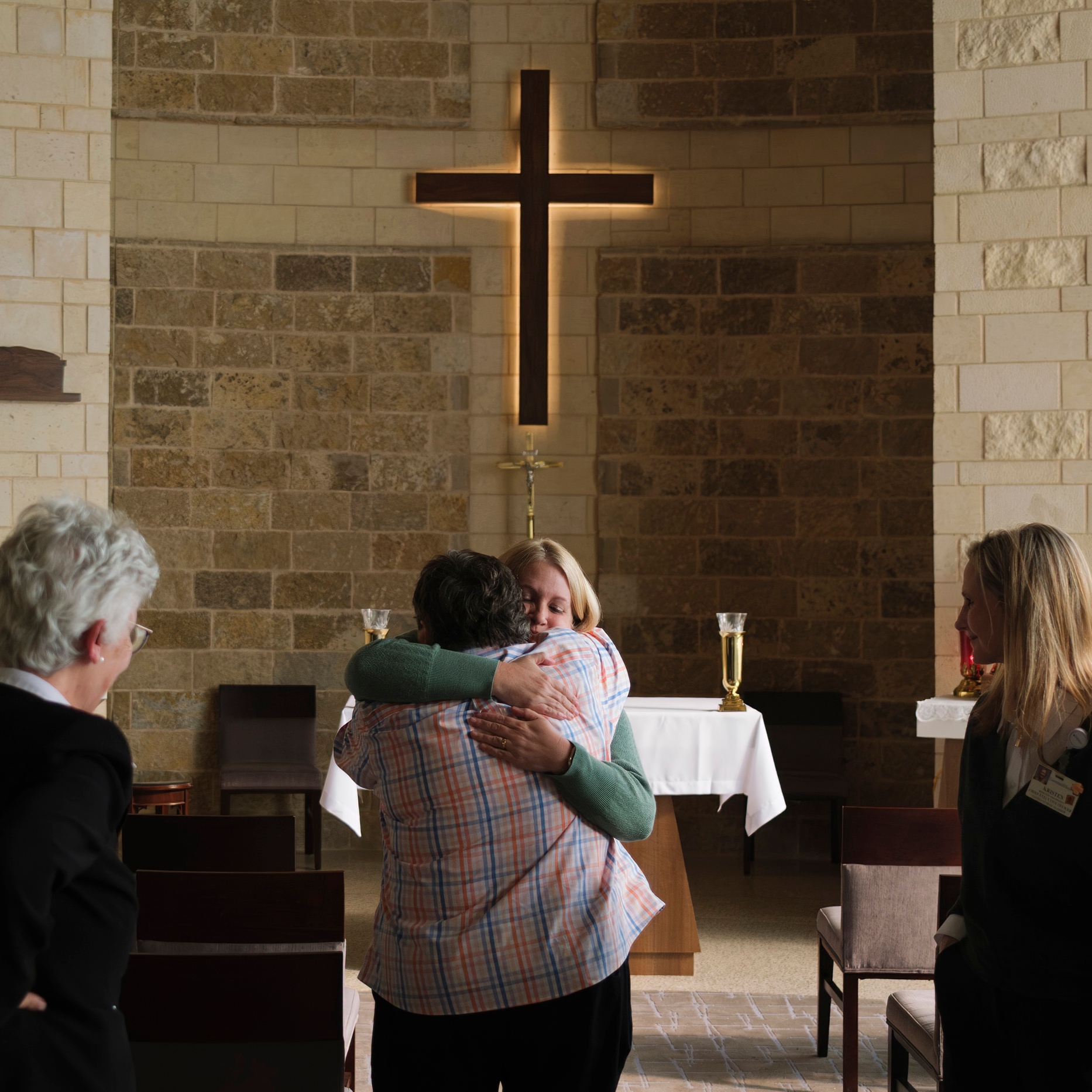
Post Reports
Inside Texas’s growing measles outbreak
00:31:55
A rural community in West Texas is at the center of the state’s worst measles outbreak in 30 years and the largest outbreak in the nation this year. Officials have reported at least 159 cases, 22 hospitalizations and one death.
Loading summary
Transcript98 lines
- [00:02]
Martine Powers
A few weeks ago, Kaylee Brantner's seven year old son got a fever. Days later, he developed a rash.
- [00:09]
Kaylee Brantner
He got the measles.
- [00:12]
Martine Powers
Kaylee pulls out her phone and scrolls through some photos.
- [00:16]
Kaylee Brantner
It just spread and he just had all over. From his head to his toes, it's.
- [00:20]
Fenit Neerapil
Cleared like a reddish rash that spreads across his cheeks and over his nose.
- [00:26]
Martine Powers
This is health reporter Fenit Neerapil. He recently met Kaylee in Seminole, Texas. It's an area at the heart of a growing measles outbreak, one that is catching nationwide attention.
- [00:38]
Fenit Neerapil
We're in an environment where people are becoming more skeptical of vaccines. We're seeing declines in vaccination rates as people like Kaylee make a choice not to get their children vaccinated for measles. From her perspective, she fears the vaccines. She believes that the risks of getting the shots are greater than the risks of getting the disease.
- [01:00]
Kaylee Brantner
We don't not care about the community. We just, we're not going to harm our children or the potential to harm our children so that we can save yours.
- [01:13]
Martine Powers
Kaylee kept her son home from school, isolated her family and ordered her groceries delivered. After a few days, her son started to feel better.
- [01:23]
Fenit Neerapil
How did the reality of measles compare to your expectations of what measles was like?
- [01:28]
Kaylee Brantner
Like, I expected it to be horrible and scary, you know, just like they built up with COVID it was a really smooth ride. But I think that comes from, I mean, we support our bodies with what they need.
- [01:44]
Fenit Neerapil
People are living through a measles outbreak. They're seeing their neighbors and loved ones get measles and some of them are concluding that it's big deal and they were actually right not to get vaccinated.
- [01:58]
Martine Powers
But about 80 miles north of where Kaylee lives in Seminole, a very different scene was playing out.
- [02:05]
Fenit Neerapil
As we lay this tragedy before you. Because, Lord, the numbers are going up and Lord, one death has devastated our hearts so very much. We ask.
- [02:17]
Martine Powers
Last Wednesday, inside the Covenant Medical center, health workers gathered in the main chapel to pray for a child who had just died in the Children's Hospital of Measles. It was the first measles related death in the US since 2015.
- [02:35]
Fenit Neerapil
Doctors see a lot of death, even in children. But what makes measles so hard is it's preventable. And so we talked to Tammy Camp, who's a pediatrician who oversees resident doctors who are treating the measles patients. And she said that it's been really tough for those doctors who've been on the front lines.
- [02:54]
Tammy Camp
A kid who is just no longer going to be in a school classroom and all the kids who are going to be affected by that. And so it's heartbreaking. We shouldn't have to do that now. A death of a child is always hard, but when you know it did not have to occur, it's really tough.
- [03:18]
Martine Powers
From the newsroom of the Washington Post, this is Post Reports.
- [03:22]
Fenit Neerapil
Martine.
- [03:22]
Martine Powers
I'm Martine powers. It's Tuesday, March 4th. Today we go to Texas, to the epicenter of this growing measles outbreak. As of this morning, officials have reported at least 159 cases, 22 hospitalizations and one death. We dive into why a disease that was eliminated in the US Decades ago is making a resurgence. So Fennec, can you explain what is measles and how serious is it?
- [04:00]
Fenit Neerapil
Measles is one of the most contagious diseases on the planet. Measles is so easy to get if you don't have the vaccine or if you haven't had it before because it hangs in the air for hours even after someone leaves a room. And it can really spread like wildfire. Most people will be fine, but there are complications that come with measles. So it's a respiratory infection. It causes high fever, cough, runny nose, red, watery eyes. But the biggest telltale symptom is the rash. It's a rash that can go across your entire body. But what also makes measles distinct is because of the kind of long term complications it can have. So about one in 1,000 children will develop brain swelling and that can make a child go deaf, develop an intellectual disability, or lead to long term neurological complications. Scientists estimate that about 1 in 4 children with measles will get hospitalized and about 1 in 20 will develop pneumonia. And pneumonia is the most common cause of death for a child who has measles. And about one or two of every 1,000 children with measles will die. And until the measles vaccine was introduced in the 1960s, the World Health Organization says that measles was responsible for about two and a half million deaths every year worldwide.
- [05:24]
Martine Powers
So finna, like we heard earlier, you ended up going to the center of this growing measles outbreak. Just set the scene a little bit and describe where it was that you that you went to visit.
- [05:36]
Fenit Neerapil
Broadly speaking, I went to West Texas and we specifically stayed in Seminole, which is the county seat of Gaines County, Texas. And that's because Gaines county is the epicenter of this measles outbreak. It's this small rural community that's across this Huge land that's about the size of Rhode island. And there's one major highway that cuts across the county. Yeah, we're just like driving through a bunch of empty fields and farmland. As we're driving down. We just see these big, parched, flat fields, and then you see peanut farms, you see cotton fields. Oh, we just see like a wooden sign that says measles testing with the red right side arrow there. So we're seeing these signs and flyers about measles around town. And for a lot of doctors and public health workers, this whole thing has been really surreal.
- [06:29]
Kathryn Wells
This is the first measles outbreak that I've ever seen in my 25 year career.
- [06:35]
Fenit Neerapil
One of the people we talked to was the Lubbock Public Health Director, Kathryn Wells. That's because Lubbock is the nearest big city that has major children's hospitals. And she said that she was shocked when she found out that measles hit her part of Texas.
- [06:49]
Kathryn Wells
It's like one of those things that, like, you know, you hear the experts warning, you know, one day we'll see these large measles outbreaks. I've read the studies while I'm in school. You never really think about it. You know, we have measles scares periodically.
- [07:02]
Fenit Neerapil
Measles got back on Catherine Wells radar when she started hearing rumblings of a burgeoning outbreak. Back in January, I went to a.
- [07:10]
Kathryn Wells
Board meeting, and the woman I was sitting next to's husband is an EMS trainer in some of the rural areas. And she said to me, hey, Catherine, you know, there's a lot of measles going on down in Gaines County. And I was like, what?
- [07:29]
Fenit Neerapil
So Kathryn Wells hears unofficially that they're measles cases, and then they start to get officially announced at the end of January. And so public health officials are starting to tell people to be on alert about measles cases. The first two official confirmed measles cases of the outbreak were two children who were being hospitalized in Lubbock. And the reason that this especially concerned public health officials is because if the first confirmed cases are hospitalized, that means there's a lot more measles in the community. The state health department confirmed the spread of measles across Gaines, Lubbock, Lynn, Terry and Yoakum counties this afternoon. And then there starts to be regular reporting and you just see the cases go up. 49 of the cases are on the South Plains, with 19 of them hospitalized. Health officials say all those infected were not vaccinate and up.
- [08:23]
Tom Sytsima
A measles outbreak in the US has grown to nearly 100 cases and up.
- [08:28]
Kathryn Wells
I have a feeling that we will be up towards the 200 number in a week or a week and a half.
- [08:37]
Fenit Neerapil
Whatever official measles case tally that you're seeing during an outbreak is almost certainly an undercount, Especially in a rural part of Texas like this, where there's not great access to testing and where it can take days to get test results back.
- [08:53]
Kathryn Wells
People need to pay attention to this because those vaccine preventable diseases that we used to see in childhood can come back. And this can really, you know, impact any community that has pockets of low vaccination rates.
- [09:07]
Martine Powers
Fennec, can you tell me a little bit more about this community where the outbreak has been concentrated?
- [09:14]
Fenit Neerapil
One of the things that's unique about Gaines county is it has a large Mennonite population. So Mennonites are a Christian religious sect. And I will say in a lot of the reporting, we saw them described as this, like, insular religious sect. And I think people were left with this impression that the Mennonites are kind of like the Amish.
- [09:31]
Martine Powers
And yeah, I think that's a common sort of mixing of the two, which isn't really the case.
- [09:36]
Fenit Neerapil
Right. So people think that they're riding around in horse and buggies and they don't believe in modern medicine or stay away from modern technology. And that's not true. There's a lot of diversity within the Mennonite community. So the Mennonites have a significant presence in this community. And also the measles outbreak was disproportionately affect them. Really what we saw in Seminole was the reason that Mennonites chose not to get vaccinated is the same reasons that people all across the United States choose not to get vaccinated. It's concerns about side effects, it's skepticism of big government. And of course, like, a person's religious beliefs can shape all of that too. But many Mennonites are vaccinated. So it's not that this is a community where no one is vaccinated. There is a sizable chunk that's not vaccinated. But that's all you need to let a measles outbreak happen because of how contagious measles is. Just a small pocket of unvaccinated people provides you the kindling for a big measles outbreak.
- [10:42]
Martine Powers
And can you explain a little bit more what your sense is of how that spread started to happen?
- [10:48]
Fenit Neerapil
We don't know the exact origin of this outbreak or if it even started in the Mennonite community. Usually what disease Detectives find is that measles outbreaks start when someone goes to a country where measles. Measles is still endemic, and then they come back. So those kind of, like, periodic cases happen. But if someone goes to another country, they get measles, and then they come back to a community where there are a lot of unvaccinated people. That's how you get an outbreak. So no matter where it started, you wouldn't have seen an outbreak when measles gets introduced in the community, if there is a broad vaccination rate, and if you achieve herd immunity, which scientists say need to be 95% of people vaccinated.
- [11:30]
Martine Powers
So I want to hear a little bit more from some of the other folks that you talked to during your trip in Texas, specifically from Kaylee, who we heard at the very top of this episode. Tell me about her family and about what happened when her kid got measles.
- [11:44]
Fenit Neerapil
Well, first, I want to say that Kaylee is now part of the Mennonite community. And that's an important reminder that even if cases were concentrated in that community, it's not exclusively among the Mennonites. She and her family actually moved to Texas in part because it's easier to claim an exception to the vaccine mandate to go to public schools. And she also says the schools are just better overall. And I wanted to live on more land where my kids can play.
- [12:09]
Kaylee Brantner
They're all boy. I mean, my little one, he has got energy. Like, that's why we bought land, is go outside, go run around, go get in the sunlight, touch the ground, play around under the dirt, run your energy off.
- [12:22]
Fenit Neerapil
One of the big reasons that Kaylee chose not to give her children vaccines is because she said her nephew had a really bad reaction to the TDAP shot, which is one of the routinely wrecked recommended vaccines for children.
- [12:35]
Kaylee Brantner
It's very toxic for a lot of kids, and it causes a lot of problems long term.
- [12:42]
Fenit Neerapil
And she also said it wasn't just that alone. She spent years doing her own research on vaccines that made her conclude that the risks of the shots were greater than the risks of the infections. I don't really want to go into all the particulars there because scientists say that a lot of these claims about the risks of vaccines are false and that these vaccines have been thoroughly studied over decades of them being administered. Administered. And that severe side effects are rare. They do happen. I don't want to, like, assume that her nephew didn't have this kind of a reaction or be dismissive of the experiences of people who've had bad reactions to vaccines. But what the research shows is that these kind of reactions are rare. From her perspective, the focus should be on making sure that your children are healthy and that they have good immune system. So once her son got measles, her focus really became, let me make sure I'm giving him good organic food.
- [13:39]
Kaylee Brantner
We got him some high dose vitamin.
- [13:42]
Fenit Neerapil
A, because vitamin A is used to treat children with measles, and there is studies backing that. But that being said, public health experts say that you really shouldn't rely on vitamin A as an alternative to vaccination.
- [13:54]
Kaylee Brantner
Kept him hydrated, kept him at home, doted on him. Of course, he loved. He actually threw a fit. He had to go back to school this week. It was horrible.
- [14:03]
Fenit Neerapil
She also made sure to keep him home along with her older son, who was 13, because the public health guidelines require that a person who is unvaccinated isolate for 21 days after they are exposed because there's a long incubation period.
- [14:19]
Kaylee Brantner
With measles, we just didn't really go anywhere. Probably the same thing, I guess, we.
- [14:26]
Martine Powers
Did during COVID It's interesting what you described in terms of the steps that she took to keep other people safe once her son had been measles, in terms of making sure that her older son stayed home from school. I'm curious what she said about how she's feeling with the kind of attention on this, on this measles outbreak.
- [14:49]
Fenit Neerapil
What I heard from both Kaylee and other people in the community is essentially that this measles outbreak is being overblown.
- [14:55]
Kaylee Brantner
I think it's being blown way out of proportion. It's a disease, it's a virus. Your body can combat it if you feed it. I mean, you take care of your body, your body takes care of you.
- [15:08]
Fenit Neerapil
One of the big sentiments that I heard is life is going on here. People are getting infected, they're developing lifelong immunity and they're moving on. And people are basically weathering this outbreak. Okay.
- [15:23]
Martine Powers
And does she feel like she's being unfairly blamed for her family's role in this?
- [15:27]
Fenit Neerapil
We posed the question to her, well, what do you say to people who say that the decision to vaccinate isn't just your choice or your family's choice, but it affects the rest of the community as well. Because part of the reason we get vaccinated is not just to protect ourselves, but to achieve herd immunity so that outbreaks like this don't happen. And what I heard from Kaylee is.
- [15:48]
Kaylee Brantner
Essentially I'd say if your vaccines work, why Are you worrying about my kid? I mean that at the end of the day, if your stuff works and your vaccines work, then why are you worried about a kid that's unvaccinated? He's. He's not carrying random diseases in his pockets that he doesn't have.
- [16:10]
Fenit Neerapil
One of the sentiments that we were hearing a lot is like, look, just because we don't vaccinate our children doesn't mean that we don't care at all about our community. But we don't think that it's fair to ask us to vaccinate our children when we're not comfortable with it. And when there are steps that you can take to protect your children, and there are steps that we can take to limit the spread too. But, you know, you know, on its face, that sounds good. My kid is sick, so I'm gonna keep him away. I'm gonna keep him at home. The problem with measles is that you can spread measles four days before a rash appears. And because there are a lot of children who can't be vaccinated, because usually the measles vaccine is recommended after your first birthday. So infants who are especially susceptible to any sort of disease, they don't have that immune protection. There are a lot of children with severe medical issues who can't be vaccinated, so they're susceptible as well. It's not just a, you protect your kid the way you see fit. I protect my kid the way I see fit because there are a lot of children who just don't have that option to be vaccinated and to receive that protection.
- [17:19]
Martine Powers
I'm curious if you talk to other people in this community who had more of a sense of real worry about this.
- [17:27]
Fenit Neerapil
We are seeing hundreds of people who are coming out to get vaccinated because they do recognize that there's a risk here with an outbreak. We wanted to check out the testing site where people were getting tested for measles. It's set up in the parking lot of the one hospital in town. There's a blue tent that's set up. People are driving by in order to get tested. Can you introduce yourself, by the way?
- [17:51]
Steven Harris
Sure. I'm Steven Harris. I live in seminole, and I'm 61.
- [17:57]
Fenit Neerapil
So while we were. While we were in this parking lot checking out the testing site, a guy named Steve Harris drove up to us and asked us if he knew where he could get tested for antibodies bodies for measles to see if he's protected.
- [18:10]
Steven Harris
Yeah, I just. I'm just was curious I had the measles vaccine back when I was just a child, and where they poke your skin on your shoulder, and it's been quite a few years. Of course, I was just a kid. And so measles was supposed to have been eradicated. And now that it's back in our community, you know, I'm just kind of concerned that my antibodies may not still be where they should be.
- [18:34]
Fenit Neerapil
One of the things that Steve told me is that he actually didn't feel comfortable with the COVID vaccine.
- [18:39]
Steven Harris
Well, the measles. The measles vaccine, you know, it ended in the United States. It was considered not here. No one had it. And so that's. To me, that's tried and true. But the COVID vaccine had too many, too much government stuff in it. And the big pharma.
- [19:02]
Fenit Neerapil
Just because people are worried about the measles outbreak doesn't mean that they blame the unvaccinated. There were a lot of people who chose to get vaccinated who said that they don't fault people who didn't vaccinate their children and that it's. That this is America. Everyone should have their own freedom of choice.
- [19:21]
Steven Harris
I honestly believe it's this being America, and if they're American citizens, it's their choice. You know, they have a right to not be immunized just as much as we do.
- [19:33]
Fenit Neerapil
So there are certainly, like, tensions happening in the community over this measles outbreak, but it cuts in different ways and not always in the ways that you would predict.
- [19:46]
Martine Powers
After the break, what we know about the first reported death from measles in Texas and what's next in this outbreak. We'll be right back.
- [20:06]
Tom Sytsima
My name is Tom Sytsima, and I am the food critic for the Washington Post. I think a lot of great restaurant meals are like great books, films, or concerts. You don't necessarily need them to live. But don't they make life more worth living? I see myself as sort of a reader advocate, going in there, spending the Post money, coming back and giving you the green light, yield sign or a stop sign. I like to be seen as sort of the best friend who happens to eat out a lot more than they do. I eat in about 10 restaurants a week, and I like creating memories for people and helping them create memories, whether those are first date, a 50th anniversary, grandma's nice birthday, if you have special needs, whether they're dietary or otherwise. When you subscribe to the Washington Post, you support this kind of journalism. Learn more at subscribe.washingtonpost.com. i'm Tom Sytsima, and I'm one of the people behind the Post.
- [21:10]
Unknown
Think about why you listen to podcasts. It's like having a friend who makes you think or can help you wind down right? Well, the Washington Post has a lot of people you can turn to at any hour. You can read the most important and interesting stories. We can help you cook something delicious, give you advice on a tricky friendship. Rave about a movie or book that you shouldn't miss. When you become a Washington Post subscriber, you have a companion for whatever part of your day needs it most. Get it all for just $4 every four weeks. That's for an entire year. After that, it's just $12 every four weeks. Cancel anytime. Go to washingtonpost.com subscribe. That's washingtonpost.com subscribe.
- [21:53]
Martine Powers
So, Fennet, we heard earlier on in the show that there has been a death now in this community that a child died from measles last week. What do we know about this child?
- [22:06]
Fenit Neerapil
Yeah, it was actually while we were in town that we got word that a child died of the measles outbreak. And it's not entirely unsurprising to see a death during a measles outbreak, but especially when there's so many kids getting sick. But even the people at the hospital were surprised that it happened this soon. We know this child who died in a children's hospital in Lubbock was six years old, unvaccinated and otherwise healthy. And that latter part is really important because this was a child who, before they got measles, didn't have significant underlying issues. And it really illustrated the stakes that even otherwise healthy children can succumb to this disease or get really sick.
- [22:48]
Tammy Camp
You know, I think it's hard anytime a kid dies because you know how that is going to affect the family. And it's hard on us as providers because we've been taking care of these children and we get to know their families and we're invested in them.
- [23:03]
Fenit Neerapil
So hours after that child died last Wednesday in Lubbock, I met with Summer Davies, who's one of the local pediatricians, and she's been caring for many of the children who've been hospitalized during this outbreak, including the child who died.
- [23:16]
Tammy Camp
But what for me hit home a little bit harder with the measles is that this was something that didn't have to happen, you know, somebody that could have lived a long, happy life. And, and it is really heartbreaking when it's something that, you know you could have prevented or that is preventable.
- [23:33]
Fenit Neerapil
And she told us how this child came in with severe respiratory distress, high.
- [23:39]
Tammy Camp
Fever, working really hard to breathe.
- [23:41]
Fenit Neerapil
The child's heart problems grew worse. The heart was getting weaker, the rash was spreading around the body. And this was on a Monday. And by that evening, the child had to be admitted to the icu. The child was put on a ventilator. And then by Wednesday morning, morning, the child died.
- [23:59]
Tammy Camp
The biggest takeaway from this experience and kind of the bottom line is to please vaccinate. Just we're imploring everyone to please vaccinate, whether you're an adult and haven't received your vaccines or a parent, to please do that and make that decision for yourself, for your children, but also for the community.
- [24:21]
Martine Powers
I'm curious what the reaction was outside the hospital to the news of this death from, as you said, a preventable disease.
- [24:31]
Fenit Neerapil
So hours after this child's death was announced on Wednesday morning. Robert F. Kennedy, Jr. Is a longtime anti vaccine skeptic who's now the top health official in President Trump's cabinet. He actually spoke about the measles outbreak for the first time. We are following the measles epidemic every day. I think there's 100. He actually made some errors when he was talking about the measles outbreak. He said that there were two deaths when both the CDC and Texas state officials said they were only aware of one. And he described what was happening in Texas as not unusual, saying, it's not unusual. We have measles outbreaks every year, but it is unusual. The issue is that what we've seen in Texas, the tally of cases just in the first two months of this year, that's bigger than what we've seen across the entire United States in several of the previous years. And what's happening in Texas, that tally in Texas is almost certainly an undercount. So Kennedy also got criticized for his comments in the Oval Office because he didn't talk about vaccination or the importance of vaccination. And normally when there's any sort of outbreak of a vaccine preventable disease, you hear people in public health roles use that opportunity to remind people about how important it is to get your shots. But then we saw on Sunday, Kennedy put out an opinion piece that was published on Fox News where he did start to address vaccines. He said that the measles vaccine is a good way to both protect yourself and your community. But he also noted that this is something you should talk to your healthcare provider about. And he described the decision to vaccinate as a very Personal one. He's talking more warmly about vaccines here, but he's stopping short of encouraging people to get vaccinated.
- [26:22]
Martine Powers
Going back to this horrible news of the death of this child last week, I'm just curious if you have a sense of whether that has changed the calculus for some of these families who are thinking about whether or not to get vaccinated. Like, if it's scared people in a way that has changed their mind.
- [26:39]
Fenit Neerapil
I'm not entirely sure. I mean, I have heard anecdotal reports of people being more worried after a child died. And I talked to doctors and public health officials who anticipated that it would increase the interest in vaccination. But I think it's one thing to talk about people who are on the fence about vaccines or thinking, oh, measles wasn't a big deal. But for people who made that decision not to vaccinate their children, I mean, I talked to two of them, and what they both said was, it doesn't really change our calculus because from their perspective, what we should focus on is keeping our kid healthy. They don't know all the facts about this child care and whether there were other factors. So the people who I interviewed in West Texas who made that decision not to vaccinate their children, they didn't deny the fact that there can be complications and that kids can get really severe cases of measles or even die. Their point is, how do we best protect our children? And from their perspective, vaccines is not the way. And there are other ways to make your kid withstand a case of measles, Even though the public health experts say that the best thing you can to protect your child is to vaccinate them.
- [27:52]
Martine Powers
Is that what you heard from Kaylee when you talked to her about how she was processing the news of this death?
- [27:58]
Fenit Neerapil
We interviewed Kaylee in her home the day before this child died. So I called her again and I asked her about this child's death. Has that, like, affected your view on this outbreak at all?
- [28:09]
Kaylee Brantner
No, it hasn't.
- [28:11]
Fenit Neerapil
She had heard things on Facebook about how maybe there were other factors at play. And the story behind this child's death was more complicated than public health officials made it out to be. And we just saw a lot of rumors going around that, oh, there were other factors at play with this child's death.
- [28:28]
Kaylee Brantner
I mean, I understand that it can be dangerous for people that have weakened immune systems, but it's not for normal people, and we support our bodies the best that we can.
- [28:42]
Fenit Neerapil
I don't want to go into them because they haven't been verified or anything like that. But we did see doubt about whether or not measles truly was responsible for this child dying.
- [28:53]
Martine Powers
So it really sounds like for Kaylee, her mind was not changed at all. And the fact that there was this death that happened, a casualty in her community, that it's not enough to make her rethink her approach to making this decision about vaccinating her children.
- [29:10]
Fenit Neerapil
I think you're right. People who choose not to vaccinate their children, they understand that these diseases can have severe consequences and can even kill people. It's a question of how you balance the risk. Sometimes this is based on false information or misunderstandings. But the bigger question for them is, should I have to put my child at risk to protect your child? And from Kaylee's perspective, the answer is no. There's this line you just hear in public health over and over again that if only the younger generations knew about the dangers of measles and polio and other infections diseases, if only they were like the older generation who've seen these diseases tear through a community and what it does, maybe they would reconsider their stance on vaccines. But that's not always true. Even when there is a major outbreak of a disease like measles, a lot of people didn't change their minds about vaccines. They thought, well, this is no big deal. And that's actually a good thing because children are getting lifelong immune attacks. One of the other things we were hearing too, from the local Mennonite community is that this outbreak is just another example of how our community is resilient.
- [30:26]
Martine Powers
Finette, what are you going to be looking for as you continue to watch this outbreak?
- [30:31]
Fenit Neerapil
One of the things that we're paying close attention to is how far this is going to spread. Because with every data update that's come, we've seen these cases start to reach new counties that didn't have measles cases before. And I'm looking to see whether we have full blown outbreaks in some of the other counties the same way that we saw in Gaines County. And even over the last two weeks, we've been hearing about a lot of isolated sporadic measles cases popping up all over the United States, including in the Seattle area, in Kentucky, in Pennsylvania. We don't know if these cases are necessarily linked to what's happening in Texas, because as I mentioned earlier, there are sporadic measles cases that pop up often tied to international travel. But I am going to be paying attention to whether we see what's happening in Tex. Spread much more beyond Texas. So this measles outbreak that's happening now, it may last for months. We may see a lot more children hospitalized and we may see more deaths that happen. And there can be long term complications that happen, too, because the measles death that we had in the United states back in 2015, it was actually from a teenager who contracted measles as a child. So this was years after the actual measles came, because measles can lead to long term complications.
- [31:54]
Martine Powers
Vennet, thank you for sharing your reporting on this.
- [31:57]
Fenit Neerapil
Thank you for having me.
- [32:03]
Martine Powers
Bennett Niropil is a national health reporter for the Washington Post. He reported this story in Texas with our producer, Alana Gordon. That's it for Post Reports. Thanks for listening. Today's show was produced by Ilana Gordon. It was mixed by Sam Baer and edited by Peter Bresnan with help from Lenny Bernstein and Rena Flores. I'm Martine Powers. We'll be back tomorrow with more stories from the Washington.
- [32:43]
Unknown
You listen because you know the power of good journalism and the Washington Post is there for you 24 7. When you become a Washington Post subscriber, you get exclusive reporting you can't find anywhere else. You also get sharp advice columns, delicious recipes, TV and music reviews and so much more. Right now, you can get all of that for just $4 every four weeks. That's for an entire year. After that, it's just $12 every four weeks. And you can cancel anytime. Add to your knowledge and discover all the Post has to offer. Go to washingtonpost.com subscribe. That's washingtonpost.com subscribe.