← Post Reports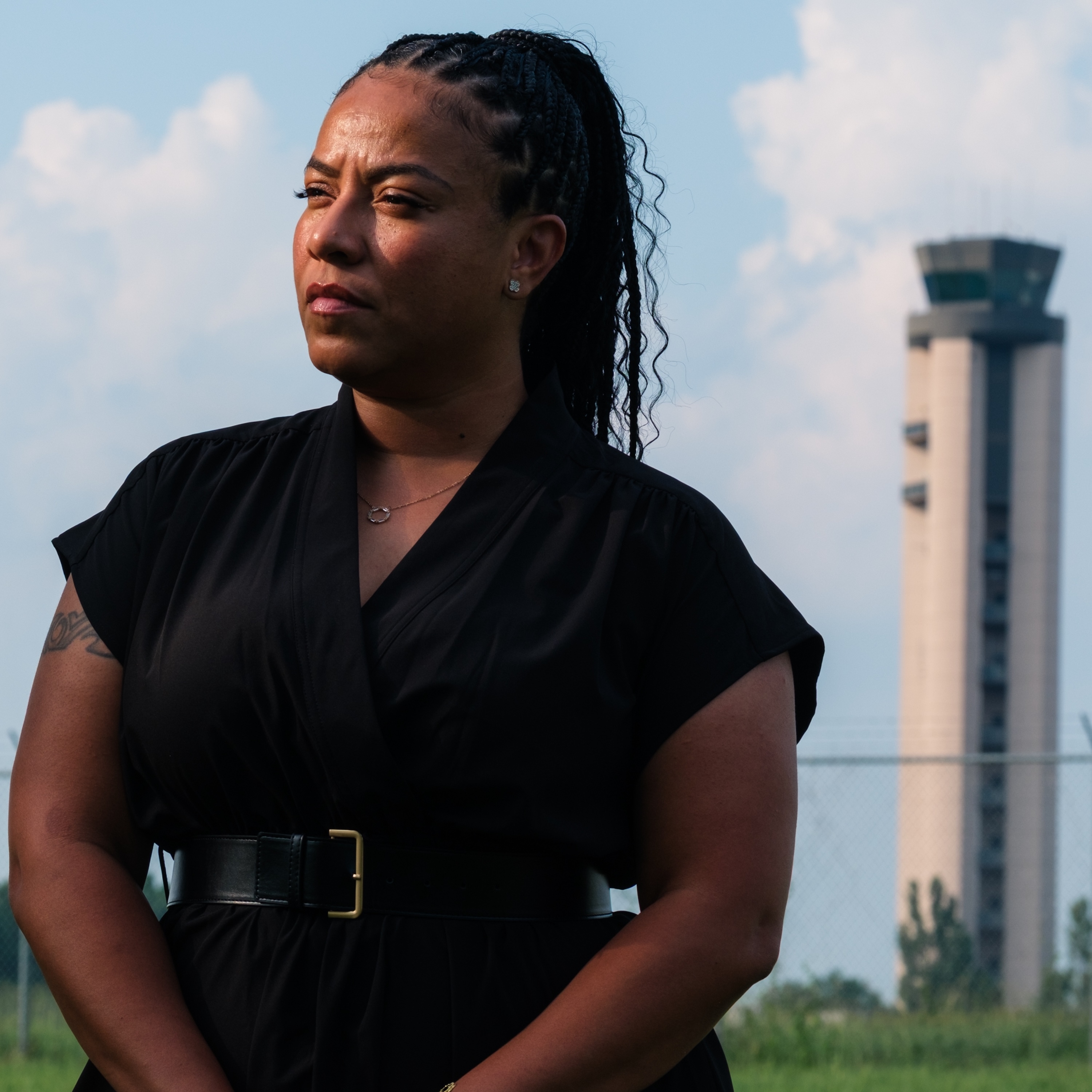
Post Reports
Inside the system burning out air traffic control trainees
00:34:07
There’s a severe shortage of air traffic controllers in the U.S. Why are so many people dropping out of training?
Loading summary
Transcript119 lines
- [00:03]
Dalton
November411 Dalton Echo point out approved.
- [00:09]
Emma Talkoff
When air traffic controllers are on the job, they have to be totally focused. I recently saw that firsthand. I watched controllers training at the Federal Aviation Administration Academy in Oklahoma City.
- [00:22]
Ian Duncan
Four or five tangle whiskey.
- [00:25]
Emma Talkoff
For hours at a time. Air, air traffic controllers watch these radar screens full of blinking dots. Each dot represents an aircraft full of people. Controllers are sometimes told to imagine their own family members are on board.
- [00:41]
Ian Duncan
Number 755 kilo. Turn right, heading to 150. Maintain.
- [00:45]
Emma Talkoff
They can't miss anything. They actually have to train their eyeballs to constantly move around the screens watching to make sure nothing goes wrong. There's a special name for this in the industry.
- [00:56]
Ryan Higgins
Everyone talks about developing the scan.
- [00:59]
Emma Talkoff
That's ryan Higgins, a 34 year old dad of four. Back between 2019 and 2021, he was in training to become an air traffic controller at the academy. He would watch how veteran controllers kept track of planes on the radar screen, how they developed their scans.
- [01:16]
Ryan Higgins
Everyone has their own method. Like a lot of people, it's like clockwise. Okay, I'm going to start up here and go around and make a full 360 and then do it over and over and over and over and over again. And who needs something? What is this plane doing? Just a lot of, it's just a lot of juggling. It's just you have to be very good at multitasking and just very quick to respond.
- [01:41]
Emma Talkoff
But in all the time that Ryan was in training, he never got enough practice to get comfortable with his own method. He never actually developed a scan.
- [01:50]
Ryan Higgins
I was kind of like probably more of like just winging it. Like, okay, have I looked at this guy in a while? No. Okay, what about over here? Like I think I was still perfecting mine.
- [02:06]
Emma Talkoff
Learning to be an air traffic controller is like learning another language. They have to speak in a very particular way. They don't just look at a screen, they develop a scan. They don't say 28, they say 2 8. And there's another term that trainees come to know and fear. A term for what happens if they can't hack it and fail training. That's called washing out.
- [02:31]
Regina Mendez Scott
Washed out was like the favorite word in a tower. Washed out. They already knew who was going to be washed out from the moment you plugged in. And I was on that radar as washed out. And in my head I'm not going to be washed out. Like I worked too hard for this.
- [02:48]
Emma Talkoff
That's Regina Mendez Scott, another trainee who spent years trying to get certified to be A controller. We're going to hear more later about how Ryan and Regina did in training and why they both say the system failed them. In fact, on one of Ryan's first days on the job, he made a mistake so bad he decided to quit.
- [03:08]
Ryan Higgins
It was definitely like a wake up.
- [03:09]
Emma Talkoff
Call from the newsroom of the Washington Post. This is Post reports. It's Tuesday, July 29th. I'm Emma Talkoff. I'm a producer for the show and I'm your host for today. There is a serious shortage of air traffic controllers across the country that can lead to flight delays and it can make flying less safe. This is not a secret. The FAA has said for years that they want to train more controllers. They've pushed to get more people to sign up, but a lot of them aren't making it through training. So the question is why? Today, transportation reporters Ian Duncan and Lori Aratani are taking us inside the system that's burning out hundreds of air traffic controller trainees every year. Ian, Lori, thank you both so much for joining us.
- [04:04]
Lori Aratani
Thanks for having us.
- [04:05]
Ian Duncan
Yeah, of course.
- [04:06]
Emma Talkoff
I understand there's a shortage of air traffic controllers. How severe is that across the country?
- [04:12]
Lori Aratani
Emma, there's been a shortage for decades. Right now the current estimate is that they are 3,000 controllers short of the number they need to be fully staffed. You know, I think a lot of people really started tuning into this issue after the mid air collision between American Airlines regional jetliner and Army Black Hawk helicopter. They collided earlier this year year in Washington, D.C. this mid air collision just above the Potomac river and 67 people were killed. Shortly after this accident, Transportation Secretary Sean Duffy pledged to increase the number of controllers. He launched a campaign which he called supercharging that air traffic controller workforce.
- [04:56]
Dalton
It's not just getting more butts in seats, right. And thinking about how you staff it. It's also making sure you get the best people, the best qualified so you reduce that washout rate.
- [05:08]
Lori Aratani
They are trying to encourage more people to do it. They're talking about, you know, they've raised the starting salaries. Right. There are bonuses if you make it through training. You know, at the end of June, Congress passed the big beautiful bill and as part of that there's about $12.5 billion that's going to go to modernizing the air traffic control system. But in recent weeks, Secretary Duffy has said he's probably going to need more than 30 billion to fix this. They've got a down payment on this, but if they really want to meet their deadline, they're talking about Making upgrades to the system and modernizing the system in three to four years before the end of the term. They're doing a lot of stuff to try and increase the number of controllers they're training, but it's a tall order, and we won't know for years whether these recent efforts have paid off.
- [06:00]
Ian Duncan
Yeah, there is this pretty deep shortage of air traffic controllers. We know that it's potentially a source of safety risks in the system. It causes delays when there aren't enough controllers to manage all the traffic. And so we wanted to understand, like, what does it take to actually take someone off the street and make them become a successful air traffic controller? And I think between us, what we found is that there are a lot of roadblocks and obstacles and problems in this system that are just going to make it really, really difficult to rapidly increase the number of controllers who are available to work every day.
- [06:37]
Emma Talkoff
Yeah, I want to talk through all those obstacles you just mentioned. Let's start with Lori. You and I recently got to see the first step in this process. That's the academy in Oklahoma City where air traffic controllers do their training. Laurie, tell me a little bit about what stood out to you from our visit. Like, what were your impressions of the academy?
- [06:57]
Lori Aratani
It was really interesting. I mean, one of the things you think about, you know, when we got there, you know, you go into the academy and it looks just like an ordinary building that you might see, multi story building you'd see in a college campus. You walk in, there's a little lounge area. There are vending machines with Cheetos, Fritos, you know, cans of Red Bull. But it's really when you go into some of these classrooms that you really feel like you're entering a different world.
- [07:24]
Ian Duncan
Falcon 18.
- [07:29]
Lori Aratani
You know, when you go to the airport, you see that giant tower above the airfield. So this was designed to basically simulate that environment. There are giant screens, and they look just like it's the same view you would get out of an airport tower, complete with airplanes to taking off and landing that students are trying to direct. You hear a lot of clicks and a lot of murmuring, and in some cases, you're hearing them speak in a language that you can't make sense of.
- [07:58]
Regina Mendez Scott
Princess and Tulum, Runway 28 left. Clear to land. Number two traffic. Malibu short line.
- [08:04]
Lori Aratani
As they're trying to direct it, instructors are critiquing, right? They're offering them feedback on how they're doing, what they're doing.
- [08:13]
Chris Wilbanks
You manage the pattern really well.
- [08:16]
Dalton
Keep that up.
- [08:17]
Chris Wilbanks
It's only for you, it's only I get busier.
- [08:24]
Emma Talkoff
I don't know if it felt this way to you, but to me being at the academy, it felt like this very well oiled machine. Like the students were very focused. It was a very serious, studious environment. I'm curious, what have you learned and what sense did you get about the challenges that they're facing at the academy?
- [08:42]
Lori Aratani
I think one challenge is finding enough qualified instructors. If you think about it, you know the best. And the instructors who are working here are all retired air traffic controllers. Well, if you've already got a shortage of controllers to begin with, you're probably going to have a shortage of folks who are able to teach new controllers, particularly if they hope to increase the number of students who are moving through the academy.
- [09:07]
Emma Talkoff
Yeah, for sure.
- [09:08]
Lori Aratani
I think another challenge is that a lot of the folks who come to the academy won't ultimately make it through the training.
- [09:16]
Dalton
So this is our local control position. So this is going to be the actual person that is clearing.
- [09:21]
Lori Aratani
We talked to Chris Wilbanks, vice president of Mission Support Services at the FAA Academy about how many students drop out or wash out as they call it.
- [09:31]
Dalton
You know, I'm not shy by sharing it. It's not something that super proud of. But 35% is our washout rate out here at the academy.
- [09:39]
Lori Aratani
So that's upwards of 500 people, you know, and part of it is just as people are going through the training, some people just, this job is not for them. You realize that airplanes run 24, 7, 365 days a year. And that means you're going to have time away from your family. You may work nights, you may work weekends, you may work holidays. It's also an incredibly stressful job. Right. When you think of the responsibility that these people have on their shoulders, that one mistake, one mistake, and there are hundreds of people on a flight, one mistake can be a terrible thing.
- [10:19]
Emma Talkoff
I think one reaction that people might have to this story and to hearing about the shortage is okay, but air traffic control is a really rigorous job. So like, shouldn't the training also be really rigorous? And maybe it's not a bad thing if people are being weeded out.
- [10:36]
Lori Aratani
I think that's a good point. You know, we talked to Chris about that. You know, is it possible that everyone who comes the academy, you know, is successful and moves on to become an air traffic controller?
- [10:47]
Dalton
This job's not for everyone. You know, we should not have a hundred percent success rate out here because just not everyone can do the job. But I Do think that we are losing people that would have had an opportunity to be successful if given that. Right. And so that's what we're focused on, is how do we increase that success rate, get more people in the field training and being successful at their facility.
- [11:13]
Emma Talkoff
There's Ian, this is where I want to pick up with you because you've been investigating the next phase of air traffic controller training after the Academy. First of all, what does that look like? What happens next for trainees?
- [11:25]
Ian Duncan
Yeah, so that's right. The Academy is about three to four months. It's kind of an initial burst of training. The candidates that are successful and get through the Academy, they get assigned to a facility. So that's either a tower at an airport or a big where they're using radar to kind of direct the planes in the middle of their flight. And that is where they get the really sort of extensive training to certify as a full time professional controller.
- [11:56]
Emma Talkoff
You and I both talked to a former trainee named Ryan Higgins about his experience at one of those centers. We heard Ryan a little bit earlier in this episode. So in 2019, he graduates the Academy. He's assigned to work in Oakland, California. So he packs up, moves there for the next phase of his training. Ian, what did Ryan tell you about his experiences there?
- [12:20]
Ian Duncan
So Ryan was assigned to a big center where the controller's job there is to kind of direct planes, usually at high altitude, over quite a wide area of territory. So this isn't like the airport tower that you might see at the airport. These are kind of more anonymous facilities. But they're a key part of the system. And when he got there, he realized that the training he was walking into was going to be quite different to what he experienced at the Academy.
- [12:46]
Emma Talkoff
Yeah, I was sort of surprised when he described what the environment was like at the center in Oakland. Here's some of what he told me about it.
- [12:55]
Ryan Higgins
It's very much a, like, hectic environment, I thought, like. I guess I thought it would be kind of like more of like a focused, quiet. Everyone's kind of locked in environments, almost like a more like professional kind of thing, when in reality it was very like boisterous. And people are kind of like cracking jokes and ribbing each other and ordering pizza and getting and taking orders for coffee. And it's just a lot of distractions.
- [13:28]
Emma Talkoff
What did you make of that, Ian? Did that surprise you?
- [13:30]
Ian Duncan
It did, yeah. I mean, you know, you played that sort of tape of the students at the Academy in the simulator, and it sort of sounds serious. And clicky, clacky, and they're all heads down, working. And you know what Ryan told me, what other trainees who I spoke to for this and current controllers said is like, it's kind of a wild environment. Like, these are big personalities, and they're all crammed in into this facility in sort of tight quarters, high stress. And so that comes out in a lot of that kind of like, lively behavior that you hear Ryan describing there. He also ends up finding himself sitting around with not much to do, a lot more than I think he expected. He has this long wait before he gets into the simulators to start that section of the training. And then just as that's getting going and he's doing quite well, the COVID pandemic starts, and the FAA sends him and the other trainees home for a year.
- [14:24]
Emma Talkoff
So he's kind of rusty at that point.
- [14:26]
Ian Duncan
Yeah, that's what he said. He said he felt like his skills had eroded. He's away for about a year. He's getting kind of work packets sent home, but he's not got his hands on anything. And that the skills he had been building had sort of faded pretty noticeably to him by the time he came back.
- [14:43]
Emma Talkoff
Okay, so it's now 2021. Ryan has been working to become an air traffic controller for years. At that point, he gets called back to the air traffic control center. After the pandemic, he finally gets to practice on the floor working with real live planes. How did it go?
- [15:00]
Ian Duncan
Yeah. So he gets through the simulators, and then you're on the floor of the facility sitting down with a trainer who's a current controller, and you're plugging in and you're starting to work and learn the ropes. For real? For real. And it's one of his first days there, and he screws something up.
- [15:23]
Ryan Higgins
I was pretty nervous, and I think I, like, deleted a plane from our scope on accident.
- [15:31]
Ian Duncan
He's trying to send a plane from one area to another, and instead he deletes some key information about this plane, and it is essentially then untrackable.
- [15:40]
Ryan Higgins
You can see it still, but it was just flying without any kind of information.
- [15:45]
Ian Duncan
And they kind of scramble to find this plane and make sure it's on track.
- [15:48]
Ryan Higgins
You're just scrambling, talking to other controllers in the area, like, do you see this guy? Do you see this guy?
- [15:54]
Ian Duncan
You know, in the end, no harm is done. But he says that he was left pretty rattled by that experience.
- [16:00]
Emma Talkoff
I feel like my heart rate is elevating just imagining being in that situation. Like first day on the job and you make a big mistake like that.
- [16:07]
Ian Duncan
Yeah. And, you know, he gets pulled over by the supervisor who sort of tells him, like, you can't do that sort of thing.
- [16:15]
Ryan Higgins
And I was already, like, kind of chafing under just thick work culture and the high cost of living in Oakland.
- [16:24]
Emma Talkoff
And.
- [16:27]
Ryan Higgins
I was like, I don't know if I really want to do this.
- [16:32]
Ian Duncan
He goes home, goes on leave, and he never comes back.
- [16:40]
Emma Talkoff
Ian, what did his decision to quit at that point kind of say to you about, like, the larger issues that you've been investigating in the system?
- [16:47]
Ian Duncan
Yeah, I think there's one way that you could look at this and say, here's a guy who couldn't hack it, and he screwed something up and he quit. And maybe that's a good outcome. But I think you have to kind of dig a level deeper into his experience and kind of understand his thought process a little bit.
- [17:04]
Ryan Higgins
One of my first days there, there was a guy being trained, and he was pretty far along, but the guy training him was just, like, letting him have it. It was like, what the F are you doing? What are you effing stupid? Like, it was like that for, like, 45 minutes. And I was like, okay, I get to look forward to that, I guess.
- [17:28]
Ian Duncan
And so he's kind of sizing things up. He's thinking, well, this facility is so understaffed. Like, what is actually working here going to look like if I complete my training? And so he said, like, I didn't want to come in to work every day and be trying to train, just being berated if I screw something up. And so he says, look, I don't think it was inevitable that I was going to fail here, but I sized everything up. And then I had this one experience that sort of broke the camel's back for me, and I decided to quit.
- [17:59]
Emma Talkoff
Is that kind of consistent with what you heard from other trainees?
- [18:01]
Ian Duncan
Yeah, absolutely. I mean, I'd spoke to a good half a dozen people who went through the system and didn't successfully complete their training. And I'd say almost everyone describes some instance of just having a pretty awful interaction with the trainers they were working with. The FAA actually surveyed trainees, too, a few years ago and found this was a pretty kind of consistent pattern, that the culture is just really kind of hostile. Can be really hard to break into trainers pretty dismissive in a lot of cases of the people that they're supposed to be bringing up to standard. One of the people I talked to had a really extreme story about just abuse and mistreatment at the hands of her trainers.
- [18:46]
Regina Mendez Scott
I walked into air traffic with the biggest smile. I was on cloud nine. Like, you couldn't tell me anything. Like, I got my dream job, my dream career. Like, I'm just the happiest woman on earth right now. And I walked in like, hi, family. Hi, atc. And when I say, that's literally what I said. I literally walked in and said, hi, atc, family. Unbeknownst to me, it's like, no, you're not our family.
- [19:14]
Emma Talkoff
That's Regina Mendez Scott. Back in 2008, she dreamed of becoming an air traffic controller. And she spent 15 years pursuing that dream, only to face a hostile culture that eventually drove her to a breaking point.
- [19:26]
Regina Mendez Scott
I started to see the writing on the wall. Like, holy crap there. I'm not gonna make it through here. I'm not gonna make it to ground.
- [19:38]
Emma Talkoff
After the break, what happened to Regina? We'll be right back.
- [19:54]
Chris Wilbanks
My name is Jacob Bogage, and I'm the Congressional Economic Correspondent at the Washington Post. I cover anything with a dollar sign in front of it in Congress. That means taxes, benefit programs like Social Security and Medicare trade. The Washington Post is personal to me. I grew up in this area. I grew up fighting with my brother for the sports page. So to be able to work at this institution when I can see outcomes of my reporting on really important issues, issues about the health of our democracy, the health of the most vulnerable people in this country. And I've seen policies change specifically because of work that I have done with so many of my talented colleagues in this newsroom. I tell people they should subscribe to the Washington Post because we covered the most powerful city in the world from the most powerful city in the world. This is what we live every day. Subscribers support this work. Learn more@washingtonpost.com subscribe I'm Jacob Bogage, and I'm one of the people behind the Post.
- [21:00]
Emma Talkoff
So, Ian, before the break, we were talking about Regina Mendez Scott. She's a former aspiring air traffic controller who you and I both spoke to. She was 30 years old in 2008 when she first graduated from the FAA Academy. Let's talk a little bit about what her experience was like after that.
- [21:17]
Ian Duncan
So Regina gets through the academy and gets initially to JFK airport in New York. You know, big, complicated airport. Difficult environment for trainees, but she feels like she's doing okay. But then she starts working with this controller who from afar, was someone that she had really, really admired. But then when she started to work with him, she felt like he was kind of playing favorites and wasn't really very invested in her.
- [21:46]
Regina Mendez Scott
And I never forget reading a flight plan. If you stumbled or. Or kind of like, stuttered or hesitated on reading a flight plan, the trainer will snatch me right out, snatch me right on out and tell you, go downstairs and hit the books.
- [22:00]
Ian Duncan
Regina would be training. She'd be, you know, in the tower, working. And any kind of small mistake, she says she was just pulled out, kind of reprimanded and sent down to kind of go back and study and made to feel like she wasn't measuring up.
- [22:15]
Regina Mendez Scott
When you're on edge and constantly belittled and taunted and get off position and you don't know, and you're never learning. You're never gonna learn. For me, I didn't. I didn't. I had to teach myself the little that I learned.
- [22:29]
Ian Duncan
Ultimately, she washes out from jfk. It's not totally unusual for people to have a hard time and fail at their first facility and move somewhere that's a little smaller, a little easier, potentially, and go on to certify and have this great career as a controller. But what happens with Regina is quite different. And this is the beginning of an odyssey for her through the fa.
- [22:54]
Emma Talkoff
Yeah. Wow. So what happened next?
- [22:57]
Ian Duncan
So she moves to a second airport, still in the New York area, smaller place. The second airport ends up being a really difficult experience. She alleges that she experienced sexual harassment while she was there, and that really just starts to wear her down.
- [23:13]
Regina Mendez Scott
I came to work on edge. I came to work nervous every day. I mean, I cried in a parking lot before I entered the facility. I left the building in the parking lot crying, because, mind you, there's no crying in air traffic. Gotta have thick skin. Remember that. There's no crying in air traffic.
- [23:28]
Ian Duncan
She says she's just trying to focus on her training, get certified. But it was really hard because of the harassment, the environment that she was in. So eventually, she leaves the second airport and is starting over again at a third tower. And, you know, moving airports like this isn't without a cost. When you go to a new facility, you're effectively back at square one, and you have to start your training over again. If you had certifications on particular positions at another airport, you can't bring those with you. You're beginning over.
- [24:03]
Emma Talkoff
Why do you think she didn't just walk away from this industry and decide to get a new job at some point?
- [24:09]
Ian Duncan
I think you heard it at the top when she was describing her real passion for this Job that she really wanted to stick with it.
- [24:17]
Regina Mendez Scott
I just envisioned, you know, that day that I would be in the tower. Like, oh, I'm a controller. I'm controlling traffic. I'm talking to pilots. I'm an important piece to the puzzle. So I just. That day couldn't come sooner where I needed to graduate and actually be in that position. It couldn't come sooner, so. But that's. That's just how I felt. It was just a high. It's a high that you. You cannot explain. Oh, I just. It was like, countdown. When is it my turn?
- [24:46]
Emma Talkoff
So, yeah, I asked Regina what she was thinking when she walked into that third airport to start her training over again.
- [24:54]
Regina Mendez Scott
Even at the third airport, I was still hungry for my position. Hungry for it, you know, gone. What I've gone through, and just. It's just everything. Like, I just, like, walked through fire. I still just wanted it so badly because it was more than just, you know, my career, for my family. I just felt like I needed to prove that I'm to myself. Like, I. I'm not as bad as they think. I'm not terrible. Why they. Why are they acting like I don't know anything, you know? So I was fighting all of that. I was fighting a lot of demons. I was just fighting that. And I'm like, I just need to get through this, and everything will be okay.
- [25:38]
Ian Duncan
Key context for this experience is that Regina is black, and this is a career that is dominated by white men. About two thirds of people who work in air traffic control are white men. And so she was facing, I think, some additional barriers that other trainees I spoke to probably didn't experience. And so the end of her story at this point, third airport is actually kind of laid out in an order by a federal administrative judge who examined what happened to her. She has stuff thrown at her. A trainer is slamming their fist down on the table and getting aggressive, and then just racist verbal abuse of. Kind of the worst kind that you can imagine.
- [26:27]
Regina Mendez Scott
I ignored a lot of the signs because I never experienced that. I never experienced blatant racism ever, ever in my life. You hear it sometimes.
- [26:36]
Ryan Higgins
You.
- [26:37]
Regina Mendez Scott
You even hear people verbalize certain. Say certain words, but it's never directed to you, but when it's directed to you on a blatant level, it. It hits differently for lack of words.
- [26:49]
Ian Duncan
The trainer called her the N word and the C word all in one.
- [26:53]
Regina Mendez Scott
Sentence that was like, I'm done. I'm done. I'm fighting for something you're never, ever, ever gonna give Me. Doesn't matter how great I am.
- [27:10]
Emma Talkoff
It's awful.
- [27:11]
Ian Duncan
Regina is eventually, essentially terminated, but instead of just walking away, she decides to fight. And so she appeals to a board that is designed to come of protect federal civil service employees. And she eventually gets to put her case before an administrative judge who issues an order in 2018 saying she'd been wrongly removed, that the abuse that she described and alleged had been corroborated, and ordering her to get her job back. She goes back briefly. She feels like, I think, that the same kind of patterns were starting to re emerge. And so she eventually leaves in 2020 as the pandemic is taking.
- [27:56]
Regina Mendez Scott
I just took a sick leave, and I never went back. I took sick leave and never went back because I already see the writing on the wall. I'm never gonna get it. I'm never gonna get it. These folks just. They're just running me through the wringer.
- [28:12]
Emma Talkoff
It's really sad to hear how much Regina went through just trying to get qualified for a job that she really wanted to do and had a lot of passion for. Ian, in your reporting, what have you learned about how widespread these problems are? Like, did you talk to other trainees who went through similar things?
- [28:33]
Ian Duncan
I would say that Regina's story is the most extreme story that I heard, for sure. But I think you hear in Ryan's story little bits of that. You know, not to the same degree, but certainly a pretty kind of difficult relationship with his trainers. And then other trainees, too, would share stories about just sort of being dismissed, it being a bit hostile. You know, it's a big system, but it came up consistently in the interviews that I did. There's some internal FAA research that I drew on that sort of suggests that this pattern is pretty widespread.
- [29:08]
Emma Talkoff
And has the FAA said anything about addressing those issues or any plans that they have to take that on?
- [29:13]
Ian Duncan
So we asked the faa, you know, what are you trying to do about this training system? Because the bottom line here is, one, obviously, people shouldn't be treated awfully, but two, are you losing candidates who could be air traffic controllers and who could help you address this shortage? Not because they can't do the job, but because the training they're getting isn't good or is abusive, and it's pushing them out. And so the FAA says, look, we are trying to improve the quality of instruction that people get. We want to speed up the training in the facilities so that people certify quicker. But they also came back and said, look, we're not going to lower standards under Any circumstances, this training has to be rigorous. It has to be tough because we need to keep people safe. And so they're trying to balance those two things.
- [30:05]
Emma Talkoff
How do you think Regina reflects on that period of her life now?
- [30:09]
Ian Duncan
Yeah, I mean, I kind of came to her several years after this had passed, and she has moved on, I think, in a lot of ways and found success in other aspects of her life and what she's done since. And so she was sort of ready to reflect on this experience.
- [30:31]
Regina Mendez Scott
I think I'm gonna forever love air traffic. Emma, it's weird to hear that because even when you say that, I think about my kids, right? I have two kids, by the way. I think about them and they say that all the time. Mom, I just feel so sad for you because you really see, this is the part I get emotional. Give me one second. Because my entire family knows how much I loved it. And even to this day, you know, like. And my kids say they feel sad for. Because you really wanted it so bad, Mom. Bet you there wasn't nothing you weren't going to do for your traffic.
- [31:13]
Emma Talkoff
Regina told me that she still thinks about what she went through every time she gets on a plane.
- [31:18]
Regina Mendez Scott
You know, we shouldn't fear flying. You know, look, I've been in air traffic for 16 years, Emma, and I. I get on the airplane like, you know, and. And that's because, you know, who's behind the scenes. You know, there are some great controllers I work with, controllers that just have that hunger and the love for it, you know, so I would never knock them, but those. Those idiots that are in there just for the. Check the box. So I'm a controller and, you know, you know, I'm seniority and yeah, we know the program is sucked, but this is what it is and we control it. You know, that's. That's the sad part. So. But if you can remove all of that from it, it really is a great career to have. But the training sucks. That's my biggest fear going thinking about air traffic in the masses.
- [32:11]
Emma Talkoff
Ian, Laurie, what are you both looking out for now as you continue reporting on this? What developments do you see coming along for the air traffic controller system?
- [32:22]
Lori Aratani
Right after we got back from Oklahoma City, I went to this ATC conference. It was like a bunch of the sort of players, industry groups and stuff. And one of the things they said that struck them is there have been a lot of efforts to fix the system. Right. One of the things folks in the industry said that is different this time around is that a there's real money, not piecemeal money. And that groups that might traditionally be in opposition, maybe the unions, want something different from the business aviation groups who want something different from the airlines. They see a different solution. They are all united in this push. They all are lobbying really hard to try and make this happen because they feel like this is a moment after all the fighting, all the efforts of the past, this is the moment when people are on the same page and they want to make it happen.
- [33:15]
Ian Duncan
I think the real question is the Trump administration says they want this to be a priority. They talk about supercharging the system. They're putting their money where their mouth is to some extent with bonuses. Is it going to work? And we're probably not going to know that because this training takes so long. The hole that they're in is so deep that it's going to take them several years to dig out of this. And so we'll be here watching and scrutinizing every step of the way. Are they really turning the thing around and making a difference, or is it going to be just this problem is too overwhelming for them to effectively deal with?
- [33:58]
Emma Talkoff
Ian Laurie, thank you so much for sharing your reporting with us.
- [34:02]
Ian Duncan
Yeah, absolutely.
- [34:03]
Lori Aratani
Thanks for having us.
- [34:05]
Emma Talkoff
Ian Duncan and Lori Aratani cover transportation for the Post. That's it for Post Reports. Thanks for listening. If you appreciate this reporting, subscribe to the Washington Post. There's a new offer for premium subscribers. It's a way for you to share the Post journalism with other people in your life. A premium subscription now comes with three extra accounts, three accounts that you can give to friends or family members. And if you subscribe now, there's a great sale happening. You can get your first year for just $3 every four weeks. After the first year, the price is $17 every four weeks and you can cancel anytime. There's also an even better deal if you pay for the whole year upfront. To see that and sign up now, go to washingtonpost.com subscribe. That's washingtonpost.com subscribe. There's also a link in our show notes. Today's show was produced by me and edited by Ariel Plotnick. It was mixed by Shawn Carter. Thanks to Christopher Rowland. I'm Emma Talkoff. We'll be back tomorrow with more stories from the Washington Post.
- [35:13]
Jacob Bogage
You listen because you know the power of good journalism and the Washington Post is there for you 24. 7. When you become a Washington Post subscriber, you get exclusive reporting you can't find anywhere else. You also get sharp advice columns, delicious recipes, TV and music reviews and so much more. Right now, you can get all of that for just one $4 every four weeks. That's for an entire year. After that, it's just $12 every four weeks. And you can cancel any time. Add to your knowledge and discover all the Post has to offer. Go to washingtonpost.com subscribe. That's washingtonpost.com subscribe.