← Post Reports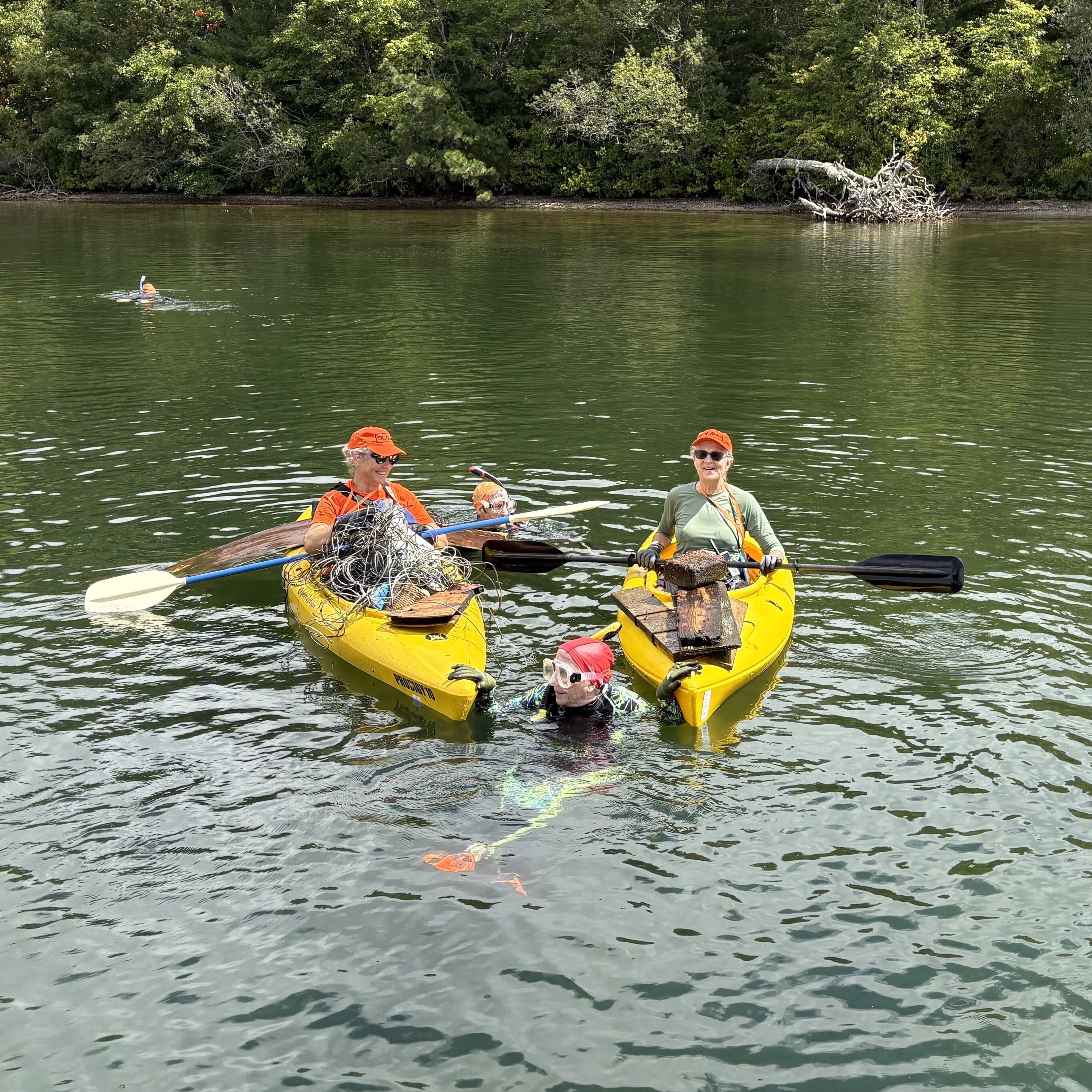
Post Reports
Is finding "flow" the key to happiness?
00:16:38
“There’s nothing like cold water, icky garbage and a little bit of danger to get you out of your head,” said Susan Baur, founder of the group Old Ladies Against Underwater Garbage.
Loading summary
Transcript53 lines
- [00:00]
Andy Staples
Hi, I'm Andy Staples from Andy and Ariane three. And another five star quarterback just entered the transfer portal. That's what college football is now, a non stop adventure. And we cover it every day at Andy and Ariane 3, whether it's the transfer portal, the college football playoff, the coaching carousel, you name it. And guess what? It doesn't stop even when the season ends. So join us every day, Monday through Friday. New episodes drop at 3pm wherever you get your podcasts.
- [00:31]
Martine
Hey there, it's Martine. I hope you're having a great holiday season today. I wanted to share an episode for my friend Maggie Penman. She's a reporter for the Optimist, which means she tells stories about inspiring people and things that are going right in the world. Earlier this year she did the story I loved about a possible secret to happiness. It called flow. Flow is this concept in psychology and it basically means getting in the zone. The people she talked to for this story find it in a very funny way, but there are all kinds of ways to find it. Cooking, knitting, doing yoga, playing a musical instrument. I personally feel flow when I'm taking tennis lessons, which I'm not very good. But that doesn't matter. I'm in flow. So whatever your thing is, I hope you're finding some time to do it this week and I hope you enjoy this episode.
- [01:31]
Susan Bauer
We are really going to be zigzagging. It's a fairly shallow plateau. We can get three of us, you know, 10, 12ft apart.
- [01:41]
Maggie Penman
Susan Bauer is holding court in a sandy parking lot across the street from a pond on Cape Cod.
- [01:46]
Susan Bauer
The area's been cleaned up before, but we know that there is a construction site of crap and we have not found that yet. So that's what we're really after.
- [01:56]
Maggie Penman
At 85 years old, she's tiny but strong. She's standing up straight and absolutely brimming over with energy. As she talks, she shifts her weight back and forth and gestures with her hands. A group of women are standing around her, listening intently, wearing bathing suits or wetsuits. Some of them have life vests on. There's an air of anticipation. And all of the women are between the ages of 65 and 85. They all have bright orange hats or T shirts on that say olog. It stands for Old Ladies Against Underwater Garbage.
- [02:35]
Susan Bauer
So this is John's Pond in Mashpee, and we are going to an area where we have cleaned it up before, but we know that there's more stuff there.
- [02:56]
Maggie Penman
I'm a reporter for the Optimist A section here at the Post where I write about the best of humanity, the things in the world that are going right. And today I'm bringing you to a cold, muddy pond in Massachusetts because we're going on a treasure hunt. This is not just a story about environmentalism or community or picking up trash. It's about why this activity, or something like it, is also so good for your brain. Because as Susan explained to me, these women reach a mental state psychologists call flow while they're picking up trash. This is the state of concentration you get in when you're fully immersed in a task. You're just totally present. And we'll talk about why finding flow might just be the key to happiness. Susan Bauer started Olog sort of by accident. She was retired, and she had begun swimming in the ponds near her home. And she just started noticing the trash. At first, it was almost comforting.
- [04:08]
Susan Bauer
When I first started swimming in ponds, I was so afraid of snapping turtles, so totally turned off by the slimy tendrils of water lilies and the mud, the consistency of yogurt that came up through my toes, that I loved seeing. The beer can, the cluster of golf balls, and, oh, thank God, an Adirondack chair, because. Because I knew exactly where I was.
- [04:36]
Maggie Penman
Basically, she was using the trash as landmarks to navigate this foreign underwater world.
- [04:44]
Susan Bauer
But as the years went by, I didn't need the garbage as much. And that's really the tipping point where I don't need a cell phone, I don't need the bottom of a bikini and six dog toys.
- [04:57]
Maggie Penman
So she started to pick this stuff up all the trash she could find underwater. At first, she did it alone, and then she made friends come with her. About seven years ago, she and a couple friends were out in the water diving for garbage, and one of them.
- [05:15]
Susan Bauer
Said, we're a bunch of old ladies against underwater garbage. And it stuck. We have had comments. You should never call yourself old. You should call yourself the Glitter Litter mermaid and, you know, like, no way. And it has actually really set the tone. It's been a very good name because it surprises people and it's funny. And we are. We are old, and we are against underwater garbage, and we do something about it.
- [05:47]
Maggie Penman
Since those early days, OLOG has gotten a lot bigger and more serious about their task, though not more serious about themselves.
- [05:55]
Susan Bauer
Then in 2023, we had tryouts, and we went from a group of five to a group of 21 overnight. And it was like, oh, what do we do with these? We've got to have dives that are predicted. Dives that have a calendar date and a time and a place. And we have to scout every pond that we clean up because you don't know whether it's a safe pond, whether it's got enough garbage.
- [06:19]
Maggie Penman
Now they have a group of 30 women who regularly go on dives and another 45 women on the wait list. Each dive is organized. There's a quote unquote beach boss. What does a beach boss do?
- [06:34]
Susan Bauer
I boss everybody around, organize them, tell them when they can go into the water. They can't come out of the water until I check you out. You just lost.
- [06:45]
Maggie Penman
You just boss, that's Mary Alice Moynihan. She's today's beach boss. She organized all the gear, charged up the walkie talkies. She checked swimmers in and out of the water to make sure everyone is safe and accounted for. Then there's the dive leader today, it's Sarah Spangler.
- [07:02]
Susan Bauer
So the pontoon boat is over there. That's where everybody's gonna start off. The direction that we're swimming is over to the right.
- [07:13]
Maggie Penman
There's two kayakers and five swimmers.
- [07:16]
Susan Bauer
But remember that the kayakers are keeping your eye on the swimmers and the swimmers are kind of once in a while keeping an eye on each other. So.
- [07:25]
Maggie Penman
And the kayakers hold on to all the garbage they find. This all might seem like kind of a lot, but the rules exist for a reason. Earlier this summer, the divers were doing a safety training and practice swimming.
- [07:40]
Susan Bauer
So everybody took off and we're swimming away, you know, as fast as we can and rip around this three quarter of a mile course. And what happened was that one of our absolute top three swimmers, triathlete, felt it was very difficult to breathe.
- [07:58]
Maggie Penman
At first she thought it was just her mask, but the kayaker who was with her was worried it was something more. So she helped the swimmer get to shore.
- [08:06]
Susan Bauer
She took herself to the ER and within 15 minutes they said, yeah, you are having a heart attack right now.
- [08:16]
Maggie Penman
On this particular day, the self proclaimed old ladies are going out on a pontoon boat. When they get to the part of the pond where they're looking for trash, they'll get out and swim or kayak. The boat driver is Mike Kanata. He's lived on this pond his whole life. So did you have any idea how much trash was in your pond?
- [08:37]
Susan Bauer
No. Although I'm probably guilty in my teens of placing some of it.
- [08:42]
Maggie Penman
Well, you're sort of correcting the karmic balance by helping now.
- [08:47]
Susan Bauer
Yeah, exactly. Trying to set my place in heaven. All right, hold on to your hat, ladies. We're gonna cover some ground, all right?
- [08:58]
Maggie Penman
Not all of the trash they find is recent. Sometimes they find things that have been hidden in the mud for decades. Beer bottles dropped after ice fishing expeditions, part of an old car once, a blue toilet that had become home to an eel. And baby doll heads. So many baby doll heads.
- [09:20]
Susan Bauer
A lot of baby doll heads. Something about little girls. They lose their baby doll heads.
- [09:29]
Maggie Penman
Today. There is a lot of bulky trash, a long coil from a makeshift anchor, pieces of wood that probably came from that construction site, one single woman's sandal, an old private property sign in a vintage font. Part of the fun, they tell me, is making up backstories for all of the stuff they find.
- [09:50]
Susan Bauer
It's an amazing thing to think about. Where did this garbage come from and how did it get in the pond and get there? You know, dog leashes and where did the dog go? It's an entire leash, but there's no.
- [10:05]
Maggie Penman
After about an hour of hunting, the women climb back onto the boat, soaking wet and totally exhilarated. They pour some tea, huddle in towels, talk about the stuff they found and what it could mean. These women have obviously done so much for their community, but after the break, we'll talk about what cleaning up the trash has done for them.
- [10:29]
Susan Bauer
I'm a retired psychologist, and what has fascinated me why does diving for trash in a pond make people so happy?
- [10:39]
Maggie Penman
We'll be right back.
- [10:48]
HelloFresh Advertiser
This new year, nothing hits like home cooking. HelloFresh brings back the joy of the kitchen with recipes that feel good and taste delicious night after night. HelloFresh brings out the joy of home cooking. I've always loved cooking at home, but it's the shopping part of it that used to stress me out so much. That's why HelloFresh is such a game changer. I remove the stress and get to focus on the fun part, the best part. There's no sacrifice in quality or options. Over 100 mouthwatering recipes each week, from seasonal favorites to global dishes like pad thai, chili and burrito bowls. And the bigger portions mean no one leaves the table hungry. By now you know how much I love the beef chili. Super easy to cook, as hearty as any chili I've ever had, and tastes so good. Best of all, zero minutes spent shopping. Go to hellofresh.com postfm to get 10 free meals plus a free Zwilling knife, a $144.99 value on your third box offer, valid while supplies last. Free meals applied as discount on first box. New subscribers only varies by plan.
- [11:49]
Andy Staples
Hi, I'm Andy Staples from Andy and Ariane three, and another five star quarterback just entered the transfer portal. That's what college football is now, a non stop adventure. And we cover it every day at Andy and Ariane 3, whether it's the transfer portal, the college football playoff, the coaching carousel, you name it. And guess what? It doesn't stop even when the season ends. So join us every day, Monday through Friday. New episodes drop at 3pm wherever you get your podcasts.
- [12:21]
Maggie Penman
You've probably figured this out by now, but Susan Bauer is not your typical 85 year old retiree. Like, for example, she will randomly quote the American philosopher William James in a casual conversation. When I asked her why diving for trash in a cold, muddy pond is so delightful that she has dozens of women over 65 on a wait list just hoping for the chance to do it, this is what she said.
- [12:47]
Susan Bauer
I think the answer is closest to the concept of flow. That's actually a technical term that means that you are immersed in a task. It could be rock climbing, it could be doing art. You are immersed in something so completely that you have no thought. You have no thought for your past, you have no thought for your future. You have no thought for your aches and pains. You have, as William James said, you break free from the cage of self and the relief, the happiness to get rid of yourself for a short period of time and you see the world in a new way.
- [13:26]
Maggie Penman
I hear some version of this from all the women who participate. They don't all quote William James, but they all talk about the feeling of being underwater and feeling free. They're not thinking about what they're cooking for dinner. They're not worrying about their creaky joints or their grandkids. And I wanted to understand this a little bit better. So when I was back on dry land, I did a little bit of research. Mihaly Csikszentmihalyi, the researcher who coined the term flow, believed it to be the key to happiness. He studied musicians and artists and heard from them that when they were doing their work, they totally lost themselves in it. It was like the art was just flowing effortlessly out of them. So much of our lives are spent worrying about the past or the future or feeling self conscious or anxious. And lots of research has shown that flow basically lets our brains take a break from that. And regularly experiencing flow can protect us from anxiety and depression and can make us more resilient. Okay, so flow is good for you. It's Fulfilling, and it can help with your mental health. So how do we find it? Richard Huskey is a professor at UC Davis, and he's been thinking about this exact question.
- [14:49]
Richard Huskey
Essentially, when we're talking about flow, people describe it commonly as being in the zone.
- [14:57]
Maggie Penman
You can technically reach a state of flow doing anything. But there are a few requirements.
- [15:02]
Richard Huskey
One of them is the thing that you're doing should have really clear goals. Another should have really immediate feedback. So you're getting constant reminders of how well you're doing at meeting those goals. And then it should require both a balance between the challenge of the task and your ability at the task. So those two things need to be really high, right? Like, I am an expert dishwasher, but it's a really low, challenging task. Task, right? That's not a flow eliciting experience. I'm not an ultra marathoner. The task is too difficult. My skills are too low. That's also not a flow eliciting task.
- [15:36]
Maggie Penman
Just a caveat here. I have not reached out to Richard's wife for comment on how good he is at dishwashing.
- [15:42]
Richard Huskey
You know, I mean, my wife and I would argue about how is best to load the dishwasher. I mean, obviously my approach is best.
- [15:49]
Maggie Penman
Anyway. Richard's point here is it can't be something too hard. You'll just be struggling and frustrated. But it also can't be too easy because your mind will wander. It has to be the right balance. But flow is something you can cultivate. When Richard was younger, he was an avid snowboarder, and he found Flo gliding down a mountain. But then he got hurt, which led him to finding Flo another way.
- [16:19]
Richard Huskey
I never found flow in yoga, and then I had to have knee surgery and I started up a yoga practice because I was trying to help rehab my knee. And then finally something clicked, right? So I say that because practice matters, find something that you're either already good at or that you have a commitment to practicing at that can help you build up the skills necessarily to start finding flow.
- [16:44]
Maggie Penman
So if you're interested in finding flow, Richard's advice is find something you like doing and want to do more of and then practice.
- [16:53]
Richard Huskey
The cool thing about flow is there's no one thing that you have to do to achieve it. If you look at the research on flow, you see it covers business, people at work trying to close deals, mountain climbers, extreme sports enthusiasts, musicians, painters. The earliest work on flow actually came out of these qualitative interviews with music composers. Csikszentmihalyi who developed the idea, would hear them describe it as if the music was just flowing out of their hand.
- [17:27]
Maggie Penman
For the old ladies against underwater garbage, that thing is diving for buried treasure, even if that treasure is a bunch of beer cans and baby doll heads. That's it for Post Reports. Thanks for listening. Today's show was produced by me and edited by Ted Muldoon, who also makes the show. Thank you to my editor, Alison Klein. If you love hearing stories from the Optimist, please let us know. You can leave us a review or send an email to podcastsashpost.com and you'll be hearing more of these stories from me and my Optimist colleagues on the weekend. Our team includes Rena Flores, Alana Gordon, Ariel Plotnick, Rennie Svirnovski, Sabi Robinson, Emma Talkoff, Shawn Carter, Peter Bresnan, Thomas Liu, Laura Benshoff, Colby Ikwitz, Alahia Zadi and Renita Jablonski. Our intern is Zoe Cummings. I'm Maggie Penman. Have a great weekend.
- [18:46]
Washington Post Advertiser
Think about why you listen to podcasts. It's like having a friend who makes you think or can help you wind down right? Well, the Washington Post has a lot of people you can turn to at any hour. You can read the most important and interesting stories. We can help you cook something delicious, give you advice on a tricky friendship. Rave about a movie or book that you shouldn't miss. When you become a Washington Post subscriber, you have a companion for whatever part of your day needs it most. Get it all for just $4 every four weeks. That's for an entire year. After that, it's just $12 every four weeks. Cancel anytime. Go to washingtonpost.com subscribe that's washingtonpost.com SL Subscribe.
- [19:27]
Andy Staples
Hi, I'm Andy Staples from Andy and Ariane three, and another five star quarterback just entered the transfer portal. That's what college football is now, a non stop adventure. And we cover it every day at Andy and Ariane 3. Whether it's the transfer portal, the college football playoff, the coaching carousel, you name it. And guess what? It doesn't stop even when the season ends. So join us every day, Monday through Friday. New episodes drop at 3pm wherever you get your podcasts.