← Post Reports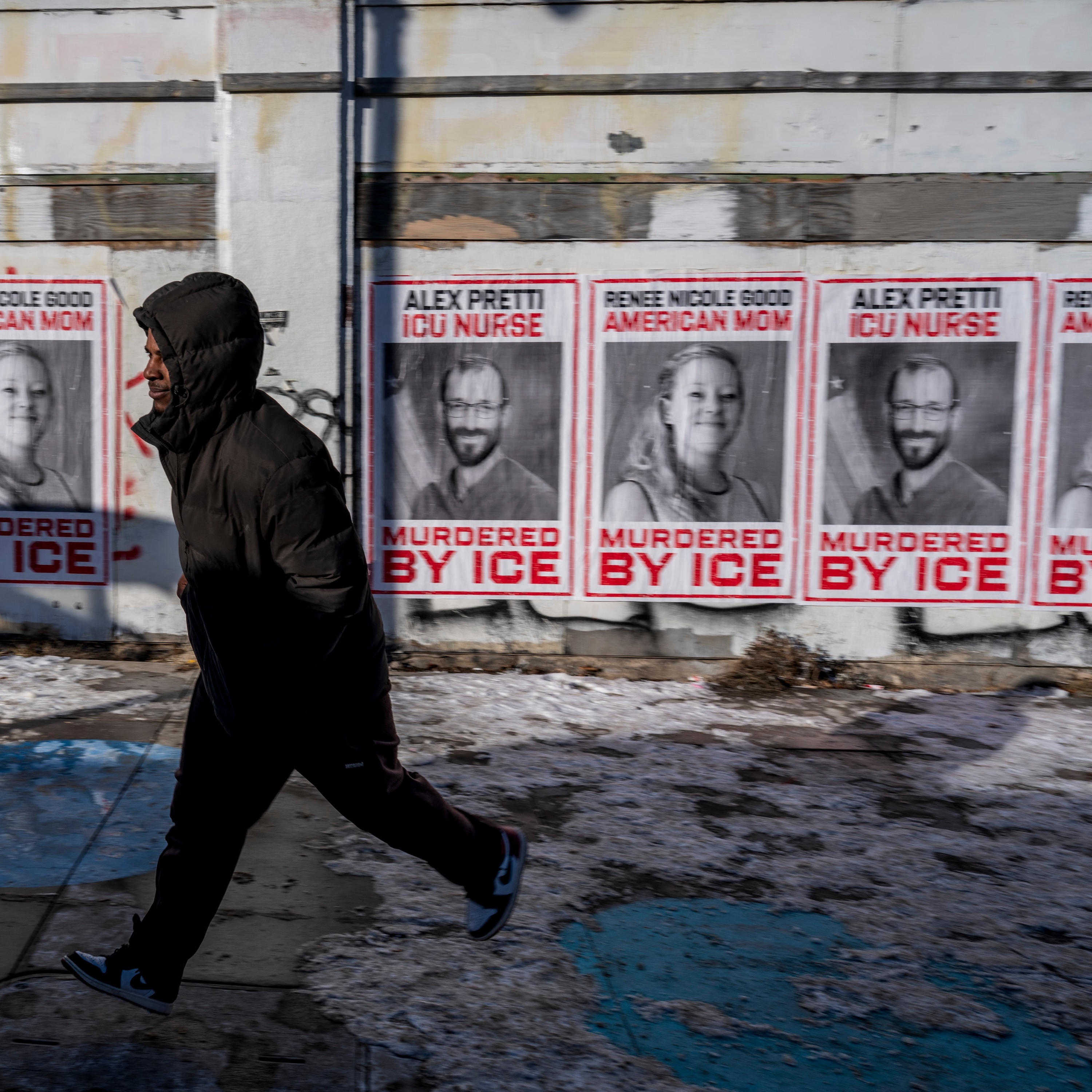
Post Reports
Is Minneapolis a turning point in Trump's presidency?
00:35:34
In the wake of Alex Pretti’s killing and bipartisan criticism of DHS, President Donald Trump appeared to soften his stance on immigration enforcement — somewhat. Meanwhile, Democrats in Congress see an opportunity to force changes to how ICE operates.
Loading summary
Transcript74 lines
- [00:01]
Colby Ekowitz
And did you guys happen to hear we have a new song from Bruce Springsteen, through the Winter's Ice and Cold.
- [00:08]
Dan Marika
It's very much in line with who Bruce Springsteen is as an artist. I thought what was interesting is how pointed the song was. He is directly writing about Trump, King Trump's private army from the dhs. He refers to him as King Trump in the lyrics.
- [00:24]
Naftali Bendavid
And it does pick up on a tradition that was bigger in the 60s and the 70s than it has been recently, where artists used to write more specifically about individual events that happened in the news. That's not something you see a lot now. And so the fact that Springsteen did that is, I think, a bit of a marker. And two dead left to die on snow filled streets. Alex Pretty and Rene Good or Minneapolis.
- [00:49]
Dan Marika
I hear your voice.
- [00:56]
Colby Ekowitz
From the newsroom of the Washington Post, this is Post Reports weekly Politics Roundtable. I'm Colby ekowitz. It's Friday, January 30th. Today we're discussing the latest fallout from Minnesota and how President Trump is responding. And we'll hear how Democrats in Congress are fighting back. With me at the table again is Dan Marika, co anchor of our politics newsletter, the Early Brief, and thrilled to have senior national politics reporter Naftali Bendavid. Guys, thanks for being here.
- [01:23]
Dan Marika
Thanks for having us.
- [01:24]
Naftali Bendavid
Thanks for having us.
- [01:24]
Dan Marika
Senior NATIONAL Wow. Congratulations on that.
- [01:27]
Naftali Bendavid
Not just senior, also national.
- [01:28]
Dan Marika
Oh, yeah, you got both.
- [01:31]
Colby Ekowitz
I want to start with the political fallout from the killing of Alex Preddy in Minneapolis over the weekend by federal law enforcement agents. So in the immediate aftermath of his death, there were Trump officials that came out disparaging him, calling him a domestic terrorist, saying he was brandishing a gun. But as we all know, we've seen videos of the incident from several different angles. The Washington Post has reported that that narrative is inaccurate. And that has really caused Democrats and Republicans to criticize the Trump administration. And Naftali, I wanna start with you because you reported this week on the response here in Washington, and you wrote that the Trump administration's handling of it and I quote, reflects a potentially significant shift in the dynamics of the Trump presidency. What did you mean by that?
- [02:16]
Naftali Bendavid
Well, I think one of the notable dynamics in the whole Trump presidency has been the way that Republicans tend to march in lockstep with whatever the administration says and whatever the administration does. So the fact that after the killing, there were a number of Republicans who criticized the way the agents behaved, who asked for investigations, who said that they were planning hearings, it was really something different than we've seen in the past, particularly when it comes to domestic policy. And let's not forget that immigration is sort of President Trump's signature issue. And so to have a number of Republicans really challenge and push back the way the administration conducted itself, I really think was notable and potentially an inflection point.
- [02:55]
Dan Marika
Yeah, it highlights the tightrope that Trump is walking here. You know, he ran, as Naftali points out, he ran on immigration. It was the bulk of the speech he gave when he came down the escalator in 2015 and announced his presidential aspirations. But if you look at the 2024 campaign, many of many polls afterwards showed that the main reason people voted for him was not immigration, it was the economy. People thought they were paying too much for goods, and their dollar wasn't going as far. And so you have this huge block of voters who backed President Trump because of the economy, and they are seeing these videos. This is breaking through in a way that other news events haven't. And they see the president, who's not necessarily focused on what they wanted him to be focused on when they elected him. And that's why he's in this tough moment, because his base, that has been with him for a decade, very much motivated by this immigration issue, but the swing voters, independents, people who may not have voted for Trump in the past, way more motivated by the economy. And that's where that tension is. And I think that tension is being felt in the way that Republicans in the Trump administration are responding to this.
- [03:58]
Colby Ekowitz
And we should also note that as we're talking here, and there's been another video of Preddy that has resurfaced. It's from about 11 days before he was shot and killed. He's running after an agent's car. He seems to spit on the car, kick out a tail light. Some people on the right are showing this video to suggest that he was an agitator. I don't think for a lot of people who see that video, they think that that means that he should have been killed. But I just wanted to put out there that that video exists. And so, to your point, Dan, people are angry and scared and confused. I think.
- [04:36]
Dan Marika
I think the way that it's broken through is kind of the story and the response. You know, I. Full disclosure, I'm a huge soccer fan, and I'm very excited for the World Cup. I listen to a lot of soccer podcasts, multiple soccer podcasts that have nothing to do with American politics. This week mentioned what was happening in Minnesota, because it's on everyone's mind. I Mean, that is a reoccurring theme throughout kind of popular culture right now, where forums that were not necessarily known to be political have been more political and have focused on what's happening in Minnesota right now.
- [05:07]
Naftali Bendavid
And what's so striking about that is that President Trump was extremely good at using non political forums when he ran. It really worked to his benefit, and he was able to motivate people who were not used to voting. Now that very thing is working again against him. And I think that's a dynamic he hasn't seen before. The other broader problem for the administration is I think, in a way, the Democratic message is this country's out of control. So in a way, this goes beyond immigration and even beyond ice. The Democratic argument is prices are out of control, our foreign policy is out of control, the president is chaotic, and now the clashes in the cities play into that message. So I think the reach of this goes beyond just the immigration and even just the issue of ICE itself.
- [05:49]
Colby Ekowitz
So I want to get to the White House and Trump's actual response, because immediately afterwards it did. You know, we had some stories that Trump was softening. You know, we saw Trump pull Greg Bovino, who was kind of running border patrol in Minneapolis out and send in Tom Homan, who is his kind of immigration border czar. And so people thought that that signaled that maybe Trump was gonna change his tune on immigration. He had this conversation with Minnesota Governor Tim Wa. He talked to Minneapolis Mayor Jacob Fry, who said that Trump had told him that they were gonna pull some people out. But now it seems like Trump is saying that's not really true and they're not gonna do that and that, you know, status quo. So I'm a little confused about where the White House is on this.
- [06:34]
Naftali Bendavid
Well, that does really highlight the conundrum that they're in, because they still need to keep their base motivated, and their base just wants to double down and even go further than they've gone so far. But a lot of centrist voters don't want that. And so Trump is trying. I walk that line. It was very interesting that Tom Homan, Trump's border czar, was dispatched to Minneapolis, and Greg Bevino, who's more of a combative, pugnacious type figure, was removed. And Homan's talking about a drawdown. And they're definitely sending conciliatory messages. But Trump has always survived by doubling down on his base. But that has relied on two things that I don't think are happening right now. One is the Democrats being unmotivated. They Nobody can say that's the case right now. And the other is that independent voters are willing to give him a shot. I don't think that's the case right now either. So the question is whether this long time strategy of just delivering a message to the base can work, particularly in the midterms.
- [07:30]
Dan Marika
And the interesting thing here is that Trump's base is somewhat come up in his image. Donald Trump is someone who is defined not only in his political life, but in his business life as a counterpuncher. He does not admit, you know, that there was an issue or he doesn't really admit mistakes, really ever.
- [07:46]
Colby Ekowitz
Yeah.
- [07:46]
Dan Marika
And his strategy is, as Naftali says, is to punch back. And the Republican base, which I don't think 10 years ago was defined by that, has been far more defined by that in this last 10 years because of the Trump effect, because of what he has meant to that base. And so they are looking for that as well. He has sort of brought them up in his own image. And so if he doesn't continue that image, that is equally as damaging as it could have been if it's more like a more traditional president.
- [08:14]
Naftali Bendavid
I mean, that's a great point. And another, I think, fascinating issue is the gun issue.
- [08:19]
Colby Ekowitz
Yes, thank you. I wanted to bring that up.
- [08:21]
Naftali Bendavid
Yeah. I mean, because that is affecting some people who are in his base. I think that the administration arguably made a misstep or at least weakened their position with some of his supporters by focusing so much on the fact that Alex Preddy had a gun.
- [08:34]
Colby Ekowitz
Yeah.
- [08:35]
Naftali Bendavid
And there was a lot of messages from the administration officials suggesting that maybe this was all justified or he brought it on himself, or at a minimum, he made things a lot worse and could be blamed for exacerbating the situation. Had a gun, but he didn't brandish the gun, he didn't withdraw it. He was disarmed before he was shot. That's what the videos show. And so plenty of gun rights supporters were very upset at the messaging from the administration that, well, the guy brought a gun. What can he expect?
- [09:01]
Colby Ekowitz
Yeah, I mean, right to carry is a huge central tenet right of a gun rights backers position, which is that you should be allowed to carry guns wherever you want to carry guns. And so for Trump and others in the administration to say, well, he kind of had it coming because he brought a gun to a protest really flies in the face of what Second Amendment supporters have been fighting for.
- [09:24]
Dan Marika
And you saw these groups push back against the President in a way that they haven't in the past, I mean, the president, he was asked by reporters outside of the White House about some of the conversation around Preddy being armed.
- [09:38]
Naftali Bendavid
You know, he can't have guns. You can't walk in with guns. You just can't.
- [09:42]
Dan Marika
These gun rights groups criticized him very pointedly for saying that. It was remarkable moment, because I don't think many groups like that, more conservative groups have criticized the president on not only just the gun issue, but just issues in general. And it highlights how out of step that conversation and that talking point was with kind of Republican orthodoxy on concealed carry weapons.
- [10:03]
Naftali Bendavid
There's also this fascinating counterpoint with something that people may remember from a few years ago, when a guy named Kyle Rittenhouse, he brought a gun to a racial justice protest in Kenosha, Wisconsin, and he ended up killing a couple people, actually a couple of the protesters. He was acquitted, we should say of murder. But he became a hero to conservatives and to gun rights advocates. And so to sort of, let's say, deify this guy who brought a gun to one protest, but then say that a guy who brought a gun to another protest kind of deserved what he got when he was killed, that's creating some real kind of cognitive dissonance, I.
- [10:38]
Dan Marika
Think, on the right, notably, Rittenhouse this week responded on Twitter by saying people should be allowed to concealed carry. So even he kind of took issue with the way that the administration was talking about the gun issue.
- [10:48]
Colby Ekowitz
I mean, I was going to say that the hypocrisy is great here, right? I mean, we also saw January 6th protesters with guns at the Capitol. And so, you know, and that was all forgiven. A lot of those people were given pardons by the president. So I do think, I wonder if gun rights advocates will. This will. They'll think like, well, maybe he's not on our side as much as he says he was when it's not convenient for him to be on our side.
- [11:15]
Naftali Bendavid
I mean, the way the politics usually work is when there's an enemy that you can vilify that brings people back to your side. And so my guess is when Republicans are running against Democrats and Democrats may have stronger gun control positions, these gun rights advocates are certainly not going to flock to Democrats and probably won't abandon Trump. But it's been really notable, this breach right now. And I think it's not a small thing. You talked about hypocrisy, But, I mean, let's say for the gun rights people, they're not being hypocritical. I mean, they're saying it Wasn't right, you know, to make this argument when Democrats made it, and it's not right when Donald Trump's making it.
- [11:48]
Dan Marika
This also gets to the point, I think you and I have talked about this before, is that Trump is incredibly mercurial. You know, he is surrounded by many people. Many of them have different perspectives. And oftentimes the president responds or talks like the last person who was in his ear. This is something that was well documented in his first term and as well in his second term. So all that we're talking about right now is, you know, he's kind of changed his mind. Maybe he softened. Does that change how he goes about immigration enforcement in the future? That could change in mere days. There's numerous things that could happen over the next few months that would shift his thinking on immigration, including just talking to somebody who thinks he's making a mistake. And does that mean that he, you know, ramps up the immigration enforcement? We just don't know with the president because he really does respond to the last person who speaks with him.
- [12:38]
Colby Ekowitz
The White House has definitely, though, made Homeland Security Secretary Kristi Noem kind of the fall woman for what happened in Minneapolis. Obviously, we also have Stephen Miller, who's kind of the architect of all of this ramp up of immigration enforcement. Will there be any consequences for Noem? I know people are calling for her to be fired. I've seen some Democrats say, I won't support anything until Miller is gone. What do you think Trump's gonna do about the people in his orbit?
- [13:05]
Naftali Bendavid
I mean, I do think that Kristi Noem is facing pressure, unlike what a Trump Cabinet secretary has faced in the past. Obviously, people like RFK Jr. And Pete Hegseth have faced pressure, but that was mostly from political adversaries and critics of the president. In this case, there are some Republicans calling for her ouster. And even some Republicans who aren't explicitly doing that are refusing to say when asked by reporters that they support her. So I think this is a new level of pressure.
- [13:31]
Colby Ekowitz
Yeah. I mean, and one example of that is Thom Tillis. We saw that from the senator from North Carolina, who he was being interviewed by a CNN reporter this week, and he was talking about his frustration with Noem and also with Homeland Security Advisor Stephen Miller.
- [13:44]
Naftali Bendavid
They're discrediting even these officers. They're going to make their job more difficult and more dangerous with this incompetent that I'm seeing out of Noem and out of Stephen Miller. The president called you a loser, I believe. I am thrilled about that. That Makes me qualified to be Homeland Security Secretary and senior adviser to the president. Trump, however, does have a history of standing by people who, you know, stand by him and who go out and fight for him. So I wouldn't necessarily count on anything happening to her. But I do think she's in hot water in a way that she and really any other Trump official has not been in the past. The other thing to mention is that if Democrats do retake the House in November, which I think is not unlikely, plenty of them want to impeach her. Now, it's unlikely she'd ultimately be removed by the Senate. But just as Republicans pushed to impeach President Biden's Homeland Security Secretary, Alejandro Mayorkas, over immigration, over immigration. I mean, you could see sort of a mirror image of that taking place should the Democrats retake the House in the fall.
- [14:39]
Dan Marika
Trump has had a remarkably stable second term when it comes to his Cabinet. Yeah, there haven't been the kind of comings and goings in the Cabinet, in his West Wings that were really the hallmark of his first couple years in the White House in his first term. Part of that is many people think he doesn't want to admit that he makes mistakes. And by firing Noem, he would be admitting that he may have made a mistake by nominating her. He likes to stick with people who stick by him. That has a limit. Of course, loyalty is largely a one way street with the president that he can be. He demands loyalty, but oftentimes he's also willing to throw someone who has been loyal to him under the bus if it serves his political interests. I really think predicting what the President is going to do and whether he's gonna fire someone is like, you know, predicting whether my 3 year old is going to enjoy the meal that I made him or demand a new one. Like it's a fool's errand. And that's why I think for Trump, it's very much a like day by day, sometimes hour by hour question.
- [15:40]
Naftali Bendavid
This reminds me a little bit of the moment in the first Trump administration when there was a huge blowup over the separation of children from par and you had images of kids being ripped away from their parents arms and there was a huge backlash. And I think what this kind of shows is that both sides tend to overread their mandates when it comes to immigration, which is a hugely emotional, hugely volatile issue. So Trump won the first time talking about immigration, had a very harsh immigration policy. Voters rebelled. Then President Biden won, promising a kinder, gentler, more humane policy that was followed by images of chaos at the border. Voters rebelled against that. Then President Trump ran again on immigration, and now here he is. So I think this is one of those issues in American politics that people feel all kinds of different things about. It's chaotic, it's emotional. Neither party has really been able to address it to the satisfaction of the public.
- [16:32]
Colby Ekowitz
It's so interesting, Naftali, because I actually spent a day this week at the US Conference of Mayors where I was talking to mayors from all over the country, big cities, small cities, Republican, Democrat, and they, to the person, take a really nuanced perspective on immigration, which is we need to secure our borders, but we need a pathway for citizenship for people that are here illegally and have lived here a long time. And I believe that that's probably where the majority of Americans are on immigration. Right. Something in the middle. And yet we're always pushed to the extremes on immigration. Right. You can either be for a secure border or you can be for a pathway to citizenship and allowing people to stay here in this country.
- [17:16]
Dan Marika
And that is quite the throwback to, I believe it was around 2013 where there was a Gang of Eight senators, including now Trump Secretary of State Marco Rubio, then the senator of Florida, who they struck a bipartisan deal on immigration. It passed the Senate, and then House Speaker John Boehner declined to take it forward. And so it just died in the House. There have been attempts before to get a bipartisan immigration deal done. Marco Rubio faced criticism from Donald Trump in the 2016 Republican presidential primary over his role in the Gang of Eight and bipartisan immigration agreement. And it really highlights how much the immigration argument has changed or conversation has changed since that moment.
- [17:59]
Colby Ekowitz
Yeah, I mean, immigration used to be something that Republicans had a much softer take on. I mean, President George W. Bush was a huge advocate of finding reforms to our immigration system that would help people find a pathway to citizenship, but that seems to not exist anymore in the Republican Party.
- [18:14]
Naftali Bendavid
I also think it's really, really to Congress's discredit that they haven't been able to solve this major social problem facing the country. I mean, presumably that's their job. And any number of times in the past, not just five years, but, like 20, they've come close. And there's been a, you know, bipartisan senators that were trying to do something, going Back to John McCain and Lyn Lindsey Graham. I mean, they've tried any number of times. This last time, I think it's fair to say President Trump sort of openly torpedoed it because he wanted the issue. He said that explicitly. But even without that, they've just been unable to come together because every time that they are close, people who are a little more to the political fringes make a huge issue out of it and it blows up. But arguably we're in this situation because Congress has been unable to do what people elect Congress to do, which is come up with comprehensive bills to solve large social problems.
- [19:03]
Colby Ekowitz
Yeah.
- [19:03]
Naftali Bendavid
Yeah.
- [19:04]
Colby Ekowitz
One more thing I wanted to note before we, before we take a break is Senator Susan Collins of Maine, who's up for reelection this fall. She's in a tough race. She's considered one of the most vulnerable. Republicans announced on Thursday morning that the administration is going to pull back agents in its ramp up of immigration enforcement activities in that state. She said that she had spoken to Homeland Security Secretary Kristi Noem and that Noem told her that they were going to end those advanced tactics. And I think that's so interesting because obviously, again, Collins is one of a handful of senators that will decide who controls the Senate in the fall. And I just found that really fascinating because something similar also happened in North Carolina where they ramped up and then quickly pulled back. And it seems to me that they're looking at states like Maine and North Carolina where they have really where the Senate can hinge on those races. And the Republicans in those states are saying, wait a minute, you don't want images from these states like you're seeing in Minnesota if you want to keep the Senate. Is that how you understand it?
- [20:11]
Dan Marika
I mean, Susan Collins entire political argument this cycle is, I am one of the most powerful Republicans in the Senate. You should reelect me to represent the state of Maine because I can deliver for this state as I've been delivering for decades. And this plays right into that. She is running as competence. She's running as someone who can deal with these issues and by bragging and by boasting this dwindling of enforcement in the Lewiston and Portland areas of Maine, that really fits into her argument. And there were thoughts that any kind of scenes like we saw in Minnesota, in Maine would directly impact her, would fire up a progressive base. Maine is a blue state. She has been kind of the oddity in that state and having the ability to win statewide. I spoke to a lot of Democrats this week, including one Seth Moulton of Massachusetts, Congressman who traveled to Minnesota to speak with protesters. He met with the aclu. He went to vigil sites and he told me that he wanted to be there to show support, but he also wanted to be there because he thinks Massachusetts could be next, that you could have enforcement activity in a city like Boston. And he wanted to be prepared to know what worked, to know what didn't work. It was a sign that Democrats are not gonna drop this. They want to be prepared if this comes to their state. And they know, frankly, that this is a political loser for many Republicans, even if it is traumatizing for local communities that this happens in.
- [21:34]
Naftali Bendavid
I do think it shows, too, that the White House is worried about losing the Senate. I mean, I think it's thought by strategists on both sides that Democrats will almost certainly retake the House and the Senate is sort of more of a long shot. But I think the way that they've acted in Maine in particular does show that they are worried. Beyond that, President Trump has, I think, needlessly antagonized a few senators, Thom Tillis, Bill Cassidy, others that were relatively loyal to him. And then he kind of turned on them for some small dissent. And I think he's made his own political landscape in the Senate more difficult than it had to be. But, yeah, I think that they're, I think they're pretty worried about the Senate.
- [22:07]
Colby Ekowitz
All right, guys, let's take a brief pause after the break. We're going to talk a little more about the Democrats response to what happened in Minnesota and the impact it could have on the midterms. We'll be right back.
- [22:28]
Ad Read Announcer
There's this moment every day right around 5pm where my brain just shuts down. Not because I don't want dinner, because I don't want to decide dinner. Before hellofresh, it was always the same thing. What do we have? What can I make? How long will it take? HelloFresh didn't magically turn me into a chef. It just removed the hardest part, figuring it out. The meals are already planned, the ingredients are already portioned, and the steps are crystal clear. Every week, HelloFresh offers over 100 recipes. So I'm choosing what sounds good, not what I can survive making. I've tried a lot of HelloFresh recipes, from their deli style turkey wraps to their street cart style chicken bowls. And they're all fantastic, though their buffalo chicken melts are quickly becoming a new favorite. Go to hellofresh.com posttenfm to get 10 free meals plus a free Zwilling knife. A $144.99 value on your third box offer valid while supplies last. Free meals applied as discount on first box. New subscribers only varies by plan. This is the year you Stop overthinking and start building the year your side idea becomes something real. Founder, creator, business owner. It all starts with one decision and that decision is launching with Shopify. Maybe it's a product your friends already asked to buy, a service you know you're great at or a brand that's been living rent free in your mind. January is your window before another year slips by. 2026 is when you turn the idea into income and Shopify is how you begin. Millions of entrepreneurs have already made the leap from household names like Heinz and Mattel to first time business owners just getting started. Choose from hundreds of beautiful templates that you can customize to match your brand. Create email and social campaigns that reach customers wherever they scroll in 2026. Stop waiting and start selling with Shopify. Sign up for your $1 per month trial and start selling today at shopify.com reports. Go to shopify.com reports. That's shopify.com reports. Hear your first this new year with Shopify by your side.
- [24:35]
Colby Ekowitz
So we mentioned, I think, Dan, you said Democrats are not about to let this go. It's going to be a huge part of their midterm messaging. Among their strategies, their short term strategies, is to refuse to vote for a bill that would fund the Homeland Security Department unless there's certain changes made to how ICE is operating. We're talking Thursday morning. Congress has until midnight Friday to vote on these funding measures or else there will be a partial shutdown of the government. There's a number of different agencies that are kind of wrapped up in this spending bill with Homeland Security. And so what that means is that those agencies wouldn't be funded. Before we get to the politics of that, what do Democrats want in this bill? What are they asking for?
- [25:15]
Dan Marika
They want some technical changes to the way that DHS and ICE and Border Patrol are kind of enforcing immigration laws in American cities. They want to end what they're calling roving patrols by requiring warrants in some cases and requiring ICE officials to coordinate with state and local enforcement. They want to create a uniform code of conduct for agents. There's been a lot of criticism about the way that some agents are conducting themselves opposed to others. And they want to have a uniform code of conduct and they want to use independent investigations to enforce that code of conduct. And I think really interestingly, they also want to enforce the use of body body cameras on immigration enforcement officials and not allow them to wear masks. One of the main criticisms of the way that ICE and Border Patrol have carried out their actions in these States is they are masked. You don't know who they are. They often come to doors without warrants, asking to come in, asking questions. And that has really invigorated the animosity towards ICE officials in these cities. And I think Democrats see this as a moment where they can use. They're out of power in Washington. They don't have the House, they don't have the Senate, they don't have the White House. They need kind of these leverage moments to do anything. We saw that in the last shutdown. We can talk about whether they actually got what they wanted to get, but they see this as a moment where they actually have leverage and can do something to make technical changes to the way that immigration enforcement is happening.
- [26:40]
Naftali Bendavid
Yeah, I think actually a lot of Democrats do see the last shutdown as a win for them, as a success. From a policy perspective, it clearly wasn't. I mean, they were pushing for an extension of these enhanced ACA subsidies. They didn't get that. But they made the point and sent the message to voters. I think that they're the party that cares about healthcare, at least that's the way a lot of Democrats see it. And now I think they're more than willing to do this again and show that they're the party that cares about having federal agents crack down on American citizens. I think the odds of them getting all the policy changes they're demanding are very small. But that doesn't mean they're not willing to have a shutdown for a few weeks to sort of help cement their identity heading toward the midterms.
- [27:20]
Colby Ekowitz
I do wonder the politics of this, though, and this seems to be something Democrats do a lot. Right. They're really focused on kind of technical changes that, like, don't really fit on a bumper sticker. And, like, is that going to. Are those changes going to be enough to placate the people who, again, are very, very angry about the enhancement of immigration enforcement that we've seen across the country?
- [27:42]
Naftali Bendavid
I mean, I think they're in a little bit of a bind for a couple reasons. For one thing, immigration just isn't a good issue for Democrats. And much as polls show that people are not happy with the way President Trump is handling it, there's no indication that they love the way the Democrats are handling it. So it's a little bit different from issues like the economy or healthcare, where the public really does support Democrats over Republicans in this. The second thing is, and this reminds me a little bit of the defund the police moment, but there are calls on the left to abolish ice. That's become a slogan, as in the defund the police episode. Party leaders on the Democratic side are not embracing that. But that doesn't mean Republicans can't and won't successfully try to tie them to it. So I think Democrats are walking a very careful tightrope. I think things like masks and body cameras do resonate. But I think you're right that it's hard for them to take a sweeping, clear cut position on immigration because they don't have one.
- [28:39]
Colby Ekowitz
Yeah. I mean, and the Democrats already kind of felt the wind at their back. The Senate, as we talked about on the podcast last week, is out of reach, but not impossible. But the House looks like it's definitely in reach and that the Democrats have a really good chance of winning back the majority there. And I'm wondering how the events of last weekend will only serve to improve their chances. Obviously, the midterms are still months and months away, but how much this issue, immigration, is going to be part of their messaging in winning back the House?
- [29:09]
Naftali Bendavid
Well, I think midterms are almost always about imposing a check on the power of the sitting president. And so I think the more the image is out there that President Trump is pushing things very far, is doing sweeping things, is responsible for chaos, the easier it is for Democrats to make the case that they are needed, if nothing else, to put some guardrails up, to put some boundaries up. I mean, let's not forget they're not running to retake the White House. They're not running to control Washington. They're running to put a check on the current administration. And so I think when you have things like what happened last week, that does bolster their case that a restraint is needed, that a check is needed. And so that bolsters the Democratic argument.
- [29:46]
Dan Marika
I think that's why the question that polls are asking now about has ICE gone too far? Is a really significant question because I think the main messaging going into the midterms is that Donald Trump has gone too far, that the chaos in American streets is Donald Trump's fault. And you've seen in these polls that a majority of Americans do think that ICE and immigration enforcement has gone too far. That is going to be a significant question going into the midterms if that keeps up. And Americans continue to think that going into the midterms, I think you will see some Democrats run on executive exactly what Naftali said, the chaos, not necessarily immigration or what their immigration plan would be, but on chaos in American streets and Putting the blame solely on Republicans and Trump.
- [30:30]
Colby Ekowitz
Yeah, and I just want to end, guys, because there was another event that happened this week that also broke through and kind of speaks to where we are right now in our kind of heated, divisive moment in our politics. Political violence has been a subject that we've talked about on the show and as we've seen time and time again over the last couple years. But you saw Congresswoman Ilhan Omar. She's a Democrat from Minnesota. She was having a town hall, and DHS Secretary Kristi Noem must resign or face impeachment. A man came up to her and sprayed her with a substance out of a syringe. We learned later it was apple cider vinegar. He was wrestled away by a security guard. But it was a really scary scene. I mean, he got right up to her. You know, Congresswoman Omar has blamed that attack on Trump's rhetoric against her and his attacks on Somali Americans in Minnesota. She is Somali American. I mean, what do you make of this moment and how it fits into some of these broader conversations we're having?
- [31:34]
Dan Marika
It does show how exposed some of these lawmakers are. They go to these events, and there is minor, very minimum security at some of these town halls for lawmakers. I do think it may change the way people campaign ahead of the 2026 midterms, 2028 presidential campaign. There's already been conversations about how lawmakers are going to have to shift how close they get and how regularly they are in contact with American voters. I think that's probably to the detriment of American voters that they can't get up close and personal with the folks who are asking for their vote. It does highlight that people do listen to the president's language. He has focused on Ilhan Omar for months, years even. And I think he continued to say that he thought very little of her. And it is tragic. We've seen people lose their lives in political violence moments last year, and you just, you have to worry that it could happen again this year.
- [32:25]
Naftali Bendavid
Trump specifically said that she had staged the incident, and other Republicans have said that, too. There's zero evidence to suggest that we should point out. But I think in the current moment, both sides are saying really awful things about each other and complaining that the other side is saying really awful things about them. So you have Democrats talking about Gestapo tactics and fascist Nazi tactics, and you have Republicans talking about rapists and murderers and calling Democrats Marxists and Communists. It's really overheated. And I think, in general, the country is at this sort of fever pitch of tension right now, I mean, I don't want to be alarmist, but between Trump pushing and pushing and pushing and a growing number of Democrats pushing back, you see it in the language that's being used where F bombs are dropped right and left. We've kind of gotten used to that. That used to be unthinkable in American politics. But that's just one sign of where we are. I Both sides are at a boiling point of rage, and we're all very fortunate that Ilhan Omer was not harmed. But legislators in Minnesota were gunned down and killed. Charlie Kirk was gunned down and killed. President Trump did suffer a couple assassination attempts. I think we're at a very dangerous moment right now. Both sides talk about needing to de escalate and tone down, but so far there isn't a lot of evidence that anybody's doing that.
- [33:38]
Dan Marika
And I have to wonder how that impacts. Impacts who decides to run for office. It's a big step to say, yes, I want to run for Congress. When you haven't done it before, you're not familiar with it, you're putting yourself in harm's way. And is that to the detriment? You mentioned how the Senate has it's a black mark on Congress that they haven't been able to actually address immigration for so many years. You have to wonder how much of that is obviously the politics of immigration, but also maybe just people who aren't well suited for politics are deciding to get into politics because they're the only ones who want to take the risk. And it has to worry you about the future of politics. If people are saying, no, I'm not gonna run because I'm worried about my personal safety, I mean, that is a tragic, scary situation to be in.
- [34:22]
Colby Ekowitz
Yeah. Naftali, to your point, there's been talk forever about how we need to tone down the rhetoric. We need to have a kinder, gentler version of our politics, but it's not happening. And does that happen when President Trump is out of the picture someday in the future? Or have we gone so far that there's no coming back? And I guess time will tell.
- [34:42]
Naftali Bendavid
I think it happens when and if voters show that that's what they want right now. Voters have responded in many ways to the most overheated, most dramatic, most vilifying rhetoric on either side. And maybe some of the incidents we've seen recently will really create something of a backlash and people really demanding more civil discourse. And if that happens, I think there's a chance that we can get out of the current cycle.
- [35:03]
Dan Marika
The biggest question of this, the biggest test of this is gonna be the 2020 year presidential nominating process. You are already seeing Democrats, Gavin Newsom, the California governor, among them, mimicking Trump's rhetoric to score political points, to kind of be the pit bull of the Democratic Party to fight back against Trump by using his own rhetoric, if that's what Democrats want. I think it's very difficult to see any kind of rhetorical moment shifting back a decade before Trump because Democrats will be co signing that they want something like Trump to be their nominee. It's a scary proposition because I think it limits the number of people who want to run for office. But it will be a huge test in 2028 to see where we go from here in this political moment.
- [35:47]
Naftali Bendavid
But you know, Democrats may not want that. And I'm thinking of Josh Shapiro in particular, the governor of Pennsylvania, who's taken a very different tack. He's presenting himself as somebody who is reasonable, who is competent, who gets things done as he says. But certainly he has not been spending his time going after Trump in the way that some of the other Democrats have. And so I think Democrats will have a really clear choice on whether they want somebo who fights back against Trump like Trump, or whether somebody who sets all that aside and governs in a different way.
- [36:16]
Colby Ekowitz
Yeah, that's a great point, guys. We're going to leave it there. Thank you for this great conversation.
- [36:20]
Dan Marika
Thank you.
- [36:21]
Naftali Bendavid
Thanks.
- [36:24]
Colby Ekowitz
Dan Marika is the co anchor of our politics newsletter, the Early Brief. Naftali Bendavid is a senior national politics reporter here at the Post. That's it for Post Reports. Thanks for listening. So here at the Roundtable, we want to hear from you. If you've got a question about politics that you'd like us to answer on an upcoming episode, share it with us. Write us an email or even record a voice memo. And you could hear your voice all here on this podcast. Send it to postreportswatchpost.com Also, if you want to watch this episode, we're on YouTube. You can find the video version of our Politics Roundtable on the Washington Post Podcast channel. We'll put a link to that YouTube channel channel in our show Notes. Today's episode was produced by Josh Carroll and Thomas Lu. It was edited by Martine Powers. Our mix engineer is Shawn Carter. Thanks also to our Politics editors. Our team also includes Ted Muldoon, Alana Gordon, Emma Talkoff, Ariel Plotnick, Dennis Funk, Rennie Siernofsky, Sabi Robinson, Laura Benchoff, Elahi Zadi and Rena Florida Flores. I'm Colby Ekowicz. Have a great weekend. The holidays may be over, but Smart Savings can still continue. Right now, you can unlock your first six months of access to the Washington Post for just 50 cents a week. After that, it's $14 every four weeks.
- [37:54]
Naftali Bendavid
Weeks.
- [37:55]
Colby Ekowitz
You can cancel anytime. You'll get unlimited access online and in our app to trusted journalism that helps you make sense of what's happening now and what's ahead. If staying informed is one of your goals for the year, this Post holiday sale is the perfect place to start. Go to washingtonpost.com subscribe and begin the year informed. That's washingtonpost.com subscribe.