← Post Reports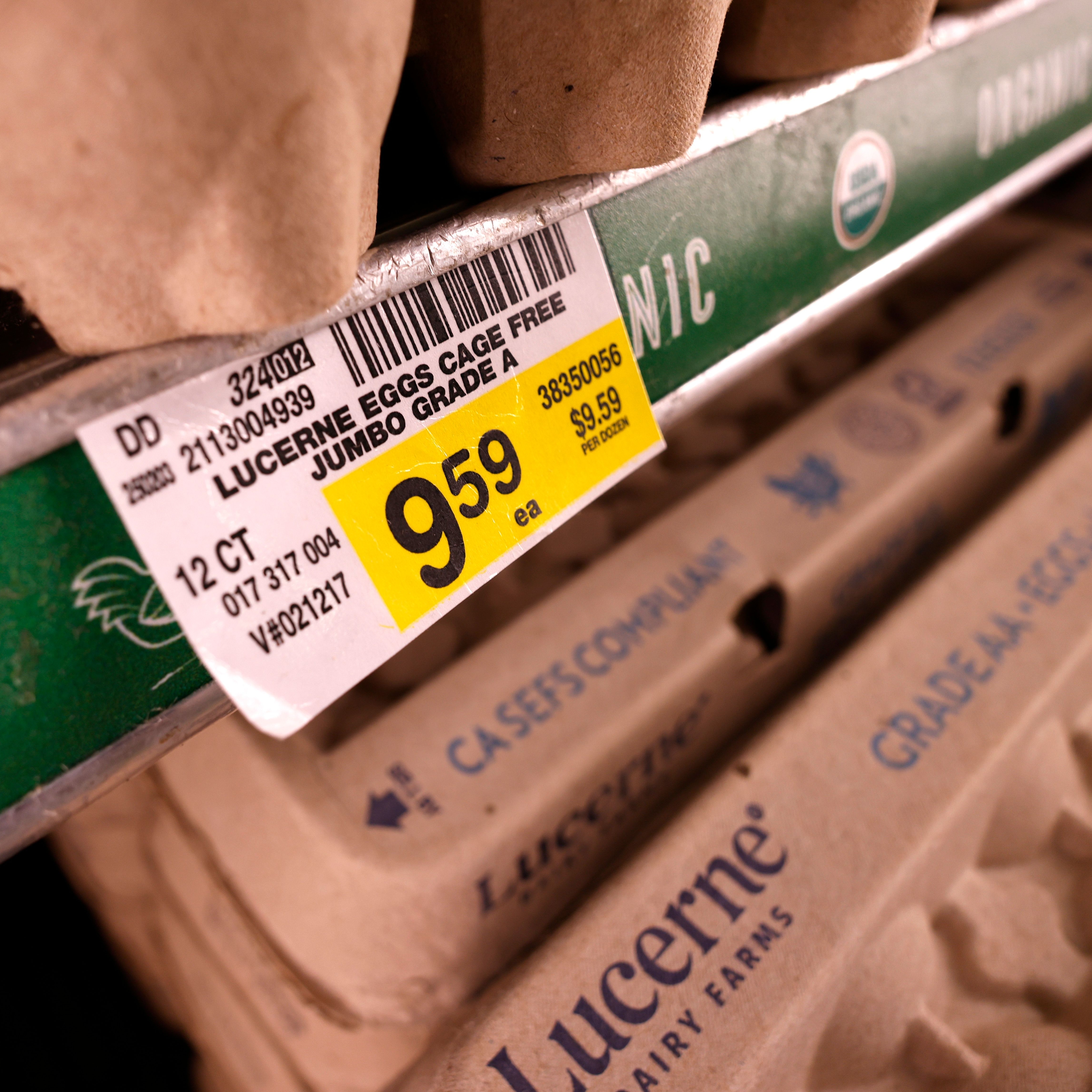
Post Reports
Is Trump leading us into a recession?
00:20:23
The White House is warning that short-term economic pain might be necessary as the administration implements its agenda. But how much patience will Americans have for high prices and slowing growth?
Loading summary
Transcript61 lines
- [00:00]
Narrator
And now a next level moment from ATT Business. Say you've sent out a gigantic shipment of pillows and they need to be there in time for International Sleep day. You've got AT and T5G so you're fully confident, but the vendor isn't responding and International Sleep Day is tomorrow. Luckily, AT&T 5G lets you deal with any issues with ease, so the pillows will get delivered and everyone can sleep soundly, especially you. ATT 5G requires a compatible plan and device coverage not available everywhere. Learn more@att.com 5G Network.
- [00:32]
Colby Ikowicz
Marcie Brown lives in Baton Rouge, Louisiana. She and her family have had to make a lot of changes to their lifestyle in the past couple months. They canceled streaming services, her husband has picked up extra shifts at work, and their daughters decide to live at home rather than live on her college campus. They've had to make all of these changes because of how expensive it's become to live.
- [00:52]
Marcie Brown
We usually buy our eggs in five dozen cartons, if that makes any sense. The flat's a five dozen, our box is a five dozen. And what I was paying $18 for three months ago, I paid $30 for this month.
- [01:07]
Colby Ikowicz
Marcy hasn't just been noticing the price of eggs going up, it's other things, too. It's now cheaper for her to buy shrimp than hamburger because the price of beef is up. Her coffee is almost double the price it was last year. And now that President Trump is proposing tariffs on Mexico and Canada, she's worried that it'll just get harder for her family.
- [01:27]
Marcie Brown
Look at how much produce comes into our country from Mexico. I mean, there's produce you can't even get American grown anymore. And you sit there and you say, oh, it's a tax on the country that gets passed on to the consumer. You just made it harder for the.
- [01:42]
Narrator
Little person to be able to afford something.
- [01:48]
Colby Ikowicz
Marcy didn't vote for anyone for president. She didn't like either candidate. But now, just months into Trump's presidency, she's worried that his policies are making her life worse.
- [01:58]
Abba Batrai
So it's still very early in President Trump's second term, but we're already starting to see changes ripple through the economy. We saw new tariffs go into effect last week. Some of those were pulled back, some of them weren't. There's a lot of uncertainty out there.
- [02:12]
Colby Ikowicz
That's my colleague Abba Batrai. She reports on the economy for the Post.
- [02:16]
Abba Batrai
And at the same time, Elon Musk's Doge Service has been laying off federal workers, cutting off funding Just, you know, shuttering entire agencies. And that's having real ripple effects as well. Over the weekend, President Trump declined to rule out the fear that we might fall into a recession soon. He's been saying that there's going to be a little bit of disturbance in the economy as he overhauls things and that Americans are just going to have to wait out the pain for a little while.
- [02:46]
Colby Ikowicz
From the newsroom of the Washington Post, this is Post Reports. I'm Colby IKOWICZ. It's Monday, March 10th. Today, the economic impact of Donald Trump's presidency so far. So, abba, just broadly speaking, what's been happening to the economy since Trump took office in January?
- [03:12]
Abba Batrai
Well, I'll preface this by saying that Trump came into office at a time when the economy was extremely strong. The picture has changed quite a bit, though, in the last few weeks. We're starting to see signs of weakness as businesses and households start to worry about uncertainty, especially over tariffs and what that means for prices. We're seeing consumers maybe say, hey, you know, maybe I shouldn't buy a car just yet. Maybe I should wait and see what happens, or maybe I should hold off on buying, you know, moving to a new house. Whatever the case may be, people are thinking twice about their decisions, and that's also happening at the business level. So businesses are holding off on hiring and investments until they have a better sense of where things are headed. We're also starting to see more economists worry about a slowdown in the economy. Some of them are thinking that gdp, which is a measure of the economy, might shrink at the beginning of this year. And that's a real departure from almost three years of very steady growth.
- [04:09]
Colby Ikowicz
And I remember for the Biden administration, it was so frustrating for them that the economy was showing all these strong indications, but Americans voters weren't feeling it. And that was something that President Trump really focused on in his election campaign. He made promises to bring down the cost of groceries and to lower inflation. So how is President Trump's administration doing on those things?
- [04:35]
Abba Batrai
So. That's exactly right. I mean, discontent over inflation and the economy is perhaps the biggest reason Trump won the presidency. I mean, Americans voted on that issue. And we heard him say over and over in his campaign that he was going to start bringing prices down on day one. That hasn't quite happened. If anything, a lot of people are expecting prices to go up as these tariffs take hold, and that's starting with groceries, which is a real pain point for a lot of people. Egg prices, as Marcy mentioned in the open have been rising. But there are other things like produce and dairy and, you know, everything else that people buy that are also going to be affected. And so those are real ramifications on a weekly basis for many families.
- [05:17]
Colby Ikowicz
Abba, I wonder how is the business community reacting to this? Because it does seem like the president has proposed all these tariffs and then he's pulled them back a little bit, and it's creating a lot of instability in the market. So is that affecting, you know, kind of CEOs and big business?
- [05:36]
Abba Batrai
Absolutely. I mean, uncertainty is never good for business. And we have just maximum uncertainty right now. You know, last week alone, we saw all of these new tariffs go into effect one day. The next day, auto tariffs were put on hold. The day after that, even more tariffs were put on hold. But it's not exactly sure which products are affected and which aren't. And so it's just a real guessing game for companies that are trying to figure out how much more they're going to have to pay on what items. So we've been hearing major, major retailers like Walmart, Target, Best Buy come out and say, well, if prices go up, we're going to have to pass that on to consumers. And that's sending a really worrisome sign across the economy.
- [06:18]
Colby Ikowicz
Yeah, and consumers were already feeling the strain of high prices. So, you know, when you've talked to consumers, when you've been reporting on this story, what are they telling you about what it's going to mean to them in their lives to see prices potentially go up even higher?
- [06:34]
Abba Batrai
Yeah, consumers are very tired. They already feel very stretched thin. They feel like they've sort of traded out everything that they could. And I think there's just a lot of fatigue at this point. At the same time, there's so much other uncertainty out there that I'm hearing more people who are worried that they or someone in their family might lose their jobs. You know, that even if they end up getting furloughed or just losing a couple of projects, that's going to really cut into their household income. And so they're having to manage all of that as well at the same time that they're worried about higher prices.
- [07:07]
Colby Ikowicz
And we heard from Marcy at the top talking about behavioral changes. How are consumers talking about how they're going to have to change their lifestyles, change their behaviors because of these higher prices, because of the threats of job losses?
- [07:20]
Abba Batrai
I've heard a lot of people who are preemptively pulling back, maybe canceling their streaming services or, you know, holding off on vacation, buying more in bulk. I've talked to some families that have stopped buying fresh fruits and vegetables altogether and are just moving to canned because it's cheaper. You know, it really feels like it did in the early days of the pandemic. There is all of this uncertainty out there. It's kind of a scary moment. We don't know what's next. Things might get better, they might get worse, but we also might be dealing with shortages and higher prices. One of the people I spoke to was Eric swick, who is 39. He's a chemist in the Chicago area, and he's really worried that prices are going to go up again. When he saw the news of new, new tariffs going into effect last week, he immediately texted his wife and said, we need to go to Costco.
- [08:10]
Eric Swick
I bought some canned meat, canned fruit, 25 pound bags of rice, flour, sugar, oats and beans. Anything that I thought was gonna potentially go up in price, but also things that would last.
- [08:28]
Abba Batrai
Then he's just playing it safe. He's cooking at home more. He's cutting back in other ways and just waiting things out.
- [08:36]
Eric Swick
And maybe, maybe it's some kind of PTSD that we all have where we'd rather anticipate it being worse, you know, and then being surprised that it isn't as bad, you know, prepare for the worst. And then, okay, I still have all this. It's like, I didn't waste my money. I still have, you know, this food that's not spoiling.
- [08:56]
Abba Batrai
And so I think it's just kind of feels like a waiting game for a lot of families right now as they try to figure out what's next.
- [09:04]
Colby Ikowicz
It's interesting, Abba, that you brought up the pandemic, because it occurred to me that we are in the week that everything kind of started to shut down five years ago. And so if people are kind of turning back to some of these pandemic level behaviors and practices, I mean, does that surprise you that people would take such dramatic steps?
- [09:24]
Abba Batrai
Not at all. I mean, I think we are in a very similar moment. And that memory of the pandemic is still very fresh in people's minds. They remember what it was like to go to the store and, you know, be worried about being able to get everything that they needed, not being able to afford things or not being able to find things on the shelves. And I think that's probably adding to some of their trepidation in this moment.
- [09:46]
Colby Ikowicz
Right, because it was only five years ago that we all lived through that.
- [09:49]
Abba Batrai
Exactly.
- [09:51]
Colby Ikowicz
Abba One of the things you mentioned is that economists are worried that GDP could shrink. Can you remind us what GDP means and what it means that it could fall?
- [10:00]
Abba Batrai
GDP is the biggest measure of the economy. It sort of sums up all the goods and services that are produced in this country. So if you are a shoemaker and you make and sell shoes, that counts. If you are a consumer who's buying, you know, a new TV or going to restaurants, going to the movies, all of that spending counts. It gives us a measure of how healthy the economy is. When GDP grows, that's generally considered a growing economy. And when GDP shrinks, that's an economy that's also shrinking. And that's what people are worried about right now, that the economy might actually be shrinking. And that can be a precursor to a recession.
- [10:41]
Colby Ikowicz
And so. So what causes GDP to go down? Is it the cuts to government spending that Doge is doing? Is it the tariffs? Is it kind of all of the above?
- [10:51]
Abba Batrai
It's all of the above. It's a very broad measure, but about 70% of GDP comes from consumer spending. So it's, you know, the everyday things that you and I are buying and spending our money on. If somebody get a little spooked and says, wait a minute, I'm not going to get my morning coffee or I'm not going to buy that car this week, that counts against gdp. Similarly, what businesses spend and invest in is also included in GDP as well as the government, and that includes federal spending and state and local spending, which actually makes up the bulk of government spending that goes into the economy.
- [11:25]
Colby Ikowicz
And isn't it true that Trump's administration have hinted that maybe they would change the way that government spending relates to gdp?
- [11:34]
Abba Batrai
Yeah. We have heard some Trump officials muse that maybe it's time to take government spending out of gdp, that they don't want it to be calculated in the final figure. But it's really unclear what that would mean. GDP is already reported in different components. You can already sort of factor out the government spending part of it and see that it really doesn't make much of a difference in the trajectory of economic growth. So it's just a different way of counting things. Not quite clear what might happen there.
- [12:08]
Colby Ikowicz
After the break, we'll discuss the most recent jobs report and why the stock market is responding so poorly to tariffs. We'll be right back.
- [12:27]
Michelle Singletary
My name is Michelle Singletary, and I'm the personal finance columnist for the Washington Post. When I was growing up, I was raised by my grandmother, who was such a masterful money manager, and I watched her handle her money and talk to me about it. And I like to think that I'm the reader's big mama. There's so much information about your money out there, a lot of it wrong or inappropriate. But when you pay for a subscription to the Post, you're paying for a skilled journalist who has had years of experience, who I hope that you can trust. Your subscription helps pay for my salary. It helps pay for the illustrators, the copy editors, all the people who are involved in putting together the material that you read that could help inform your life. I'm Michelle Singletary and I'm one of the people behind the Post.
- [13:27]
GoodRx Representative
Are you looking to take control of your health? Well, one way to do that is to check out Goodrx and stop overpaying for your prescription medications. With Goodrx you can find huge savings on your prescriptions for everything from GLP1 medications to remedies for your allergies and so much more. GoodRx is free and easy to use. Just search for any prescription on the GoodRx website or app, get your coupon and show it to the pharmacist. In some cases, you can save up to 80% at pharmacies near you. Best of all, GoodRx works whether you have insurance or not. And even if you have insurance, GoodRx could beat your co pay price. You've heard me say this a few times now, but I've been suggesting Goodrx to my friends. They raved at the savings and how easy it was to find discounts for their prescriptions. Next time you need a prescription, you should check out Goodrx too. For simple, smart savings on your everyday prescriptions, go to goodrx.com reports. That's goodrx.com reports.
- [14:27]
Donald Trump
For years and years I overpaid for wireless, but then I finally got fed up. The crazy high bills, bogus fees, and quote unquote free perks that actually cost more in the long run became too much. Then I switched to Mint Mobile and the savings I'm seeing are incredible. Say goodbye to jaw dropping monthly bills because Mint Mobile is here with premium wireless plans starting at 15 bucks a month. All plans come with high speed data and unlimited talk and text delivered on the nation's largest 5G network. You can use your own phone and current number with any Mint mobile plan. Get three months of premium wireless service from Mint Mobile for 15 bucks a month. Shop plans@mintmobile.com reports. That's mintmobile.com reports. Upfront payment of $45 for three month, 5GB plan required equivalent to $15 per month. New customer offer for first three months only, then full price plan options available, taxes and fees extra. See Mint Mobile for details.
- [15:27]
Colby Ikowicz
Okay, Abba, let's dive in on these recent job numbers that came out on Friday. What did we learn from them?
- [15:33]
Abba Batrai
We've learned that hiring has slowed a little bit this year. Employers added about 151,000 jobs in February, which was less than they did a year earlier and also less than people were forecasting. So there's been a little bit of a slowdown, but this is still very solid growth. It's not, you know, nothing's falling off a cliff. We're not seeing major job losses. Unemployment at 4.1% is still relatively low, and so there's not a lot of cause for alarm in the numbers yet. But the big caveat is that the numbers aren't necessarily showing us a full picture of what's happening out there. It's going to take a couple more months for all of that to show up.
- [16:11]
Colby Ikowicz
Yeah, I was going to ask, are these numbers able to reflect yet the cuts to the public sector, or is that going to show up in later job reports?
- [16:20]
Abba Batrai
So we're seeing a little bit of that. In February, we saw that the federal government cut 10,000 jobs. That's a small portion of what I think people are expecting longer term. And we're still waiting to see how this trickles through to other parts of the economy like contractors or consultants or nonprofits. We know that a lot of those folks who work in those industries have been furloughed or laid off as well. And it's not necessarily clear if that's showing up yet in the numbers.
- [16:50]
Colby Ikowicz
How do the proposals around tariffs impact jobs? You talked about people maybe having to lay people off in the private sector due to the tariffs. I guess we could also maybe see that be factored in in months to come.
- [17:03]
Abba Batrai
Yeah, that's absolutely right. Last week I talked to a number of businesses that rely on goods from Mexico and Canada, and they were. They were all worried. They're worried that they're going to be spending more on these goods. They're not sure how much of that they can pass on to their customers. And so it might mean that they're having to pay a bigger portion of that and they have to cut back in other ways, which could mean layoffs. It's still just a very fluid moment, and it's unclear. And that in itself can be a big deal in terms of, you know, business decisions. Deciding whether to hire someone, deciding whether to expand, deciding whether to set up a new office. I mean, I think all of those decisions could potentially be put on hold, and that has real implications for hiring. And I'll also note that the strong job market has been like a real pillar of the economy in the last few years. It's been driving a lot of the growth that we're seeing. And even if people are feeling crummy about grocery prices, in most cases they still have a job. And so that counts for a lot. They're getting paid. And if that starts to falter, then we could start seeing bigger signs of trouble for the economy.
- [18:12]
Colby Ikowicz
And how has the stock market responded to all of this, to the tariff proposals, to the federal workforce cuts? I mean, my memory is that the stock market was doing pretty well at the end of the Biden administration.
- [18:24]
Abba Batrai
Yeah, the stock market has been on a tear, but recently we've started to see it start tumbling. Investors are very worried. They don't like uncertainty. They don't like volatility. And the last few weeks have been one big bucket of uncertainty. We have a government shutdown that might happen at the end of this week. I mean, there's just so many looming questions out there. And you can tell as the stock market keeps flashing red that investors are just not very thrilled about the state of affairs.
- [18:52]
Colby Ikowicz
It occurs to me, Abba, that President Trump has always been very responsive to the stock market. He talks about the stock market, he talks about the Dow and where it is. And he really ran on, like we said earlier, strengthening the economy. Do you think that the some of these negative indicators are why President Trump pulled back or at least delayed the tariffs on Mexico and Canada over the weekend?
- [19:18]
Abba Batrai
You know, it might be. It's hard to tell. There are obviously ongoing negotiations. I've heard some economists muse that, yes, maybe the stock market sell off is one of the reasons the administration has decided to pause tariffs or sort of roll back certain tariffs. Tariffs, it's unclear, but what's very telling is that even when President Trump decided to pause some tariffs last week, the stock market didn't sort of change course. It stayed pretty downbeat. And I think that's because people are just unsure of what's going to happen. And the thought that tariffs could go into effect one day and maybe be rescinded the next is not very comforting either.
- [19:58]
Colby Ikowicz
Yeah. And if these job numbers, they continue to fall off, if the stock market tanks, if it really looks like we're heading for a recession, these are going to obviously be politically Very unpopular for the president and the Republicans that support him. Do you think that we could see him reverse course on some of these policies if things do continue to get worse?
- [20:24]
Abba Batrai
It's possible. So far, the administration has just kind of doubled down on their message. We heard President Trump over the weekend again say that this is just a little disturbance. This is a period of turbulence that people are going to have to roll with because he's making some major changes. He is cutting public spending, he's cutting the federal workforce. And people might feel some pain right now in terms of higher prices or job losses, but in the end, it's going to make the economy much better.
- [20:54]
Donald Trump
Are you expecting a recession this year?
- [20:58]
Marcie Brown
I hate to predict things like that. There is a period of transition because what we're doing is very big. We're bringing wealth back to America. That's a big thing. And there are always periods of. It takes a little time. It takes a little time. But I don't. I think it should be great for us. I mean, I think it should be.
- [21:21]
Abba Batrai
So what that looks like, what the timeline is is unclear, but I think that's what the administration and a lot of Trump voters that I talked to are holding out for. They're hoping for lower taxes. They're hoping a number of different changes that might materialize in the coming months.
- [21:37]
Colby Ikowicz
Yeah, I was wondering if the voters that you talk to are prepared to roll with it. Are they prepared to wait and feel some of that pain, hoping that on the other side of this is a stronger economy?
- [21:51]
Abba Batrai
The answers have honestly been all over the place. Some people said, yes, they are willing to roll with it, but only for a certain amount of time. There's only so many more months of higher prices they can endure. And they want to see some real action. They want to see their taxes go down. They want to see some sort of relief somewhere. And so I think, you know, they have a little bit of patience now, but I'm not sure how long it'll last.
- [22:17]
Colby Ikowicz
Abba, thank you so much.
- [22:18]
Abba Batrai
Thank you.
- [22:21]
Colby Ikowicz
Abba Batrai is an economic correspondent for the Post. That's it for Post Reports. Thanks for listening. Today's show was produced by Sabi Robinson with help from Rennie Svirnoski. It was mixed by Sam Baer and edited by Maggie Penman. I'm Cole Bjkowicz. We'll be back tomorrow with more stories from the Washington Post.
- [22:57]
Washington Post Representative
Think about why you listen to podcasts. It's like having a friend who makes you think or can help you wind down.
- [23:03]
Abba Batrai
Right?
- [23:04]
Washington Post Representative
Well, The Washington Post has a lot of people you can turn to at any hour. You can read the most important and interesting stories. We can help you cook something delicious, give you advice on a tricky friendship. Rave about a movie or book that you shouldn't miss. When you become a Washington Post subscriber, you have a companion for whatever part of your day needs it most. Get it all for just $4 every four weeks. That's for an entire year. After that, it's just $12 every four weeks. Cancel anytime. Go to washingtonpost.com subscribe. That's washingtonpost.com subscribe.