← Post Reports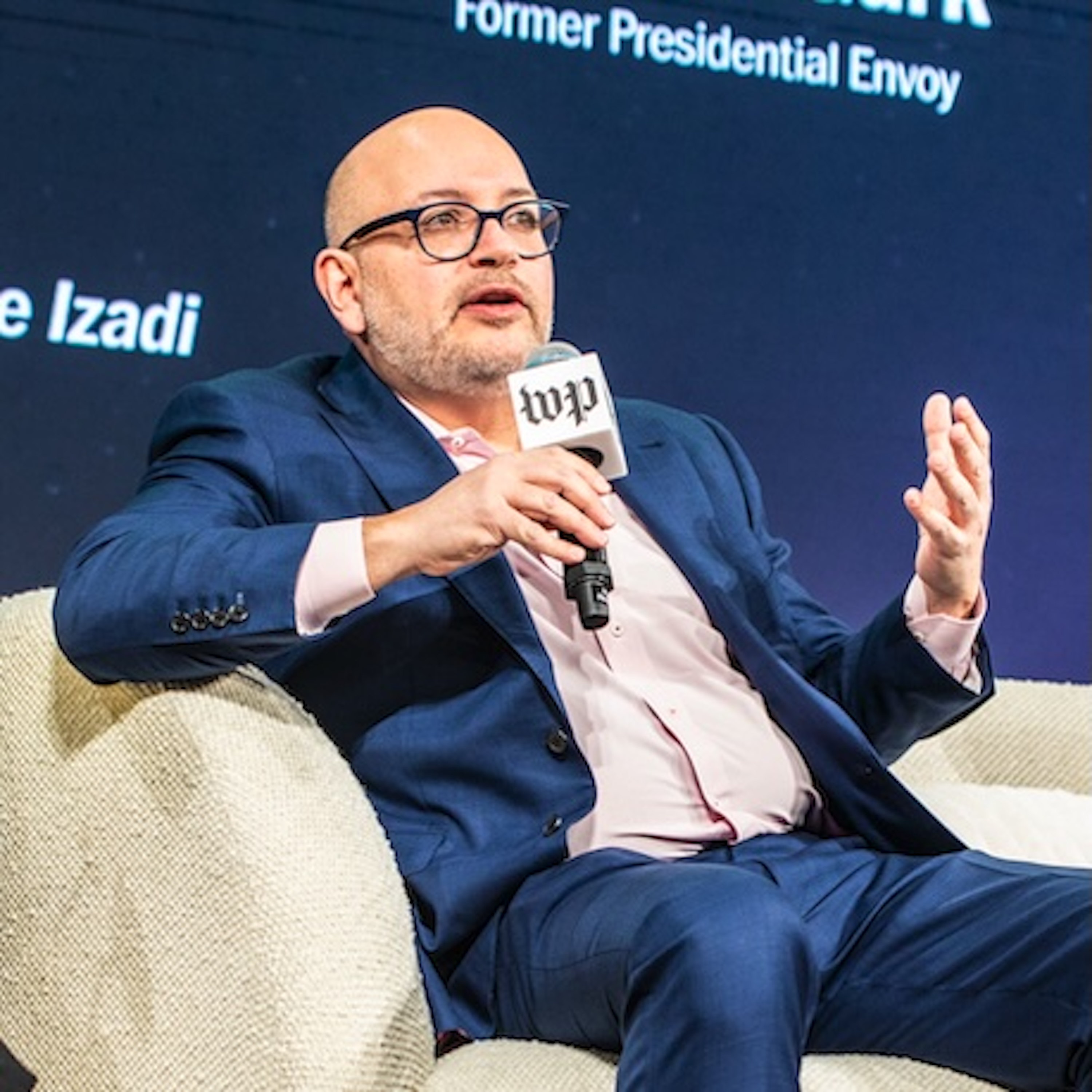
Post Reports
Jason Rezaian, Iran and the costs of press freedom
00:37:18
Ten years after being released from Iran’s worst prison, Washington Post journalist Jason Rezaian is now a committed advocate for press freedom. He reflects on life after his wrongful imprisonment and the events in Iran today.
Loading summary
Transcript79 lines
- [00:03]
A
Hi there, it's Ella Hay. Today I wanted to bring you something special for our weekend episode. Ten years ago this month, Washington Post journalist Jason Rezaian was freed from Iran's worst prison. He and his wife Yeganeh had been arrested at their home in Tehran and falsely accused of espionage. Yegi was released after 76 days. Jason was held for 544 days. Since then, Jason has dedicated himself to advocating for press freedom. He's now the director of the Washington Post's Press Freedom Initiatives. And this week I sat down with him and Yegi to talk about the reflections ten years after their wrongful imprisonment. We were also joined by Ambassador Brett McGurk. McGurk was the former presidential envoy who was integral to Jason's release. We recorded this before a live audience at the Washington Post on Thursday. It was a really moving conversation. We also spoke about what's happening in Iran today, the widespread anti government protests, what the US could do and what this could all mean for the future of Iran. Okay, here's the show. So I know there's so much to say and so many places to start this conversation, but really I want to just start here on reflecting on this anniversary. Jason, it's been 10 years since your wrongful detainment. I know you've been speaking quite a bit this month about this anniversary and this milestone. So what has this moment in time meant to you?
- [01:55]
B
Well, first of all, I want to reiterate thank you everybody for making the arduous journey today to come downtown. I really appreciate it. In thinking about all that's happened in the last 10 years in a kind of personal sense, I'm thankful, grateful, happy about where we are in our lives. But in terms of press freedom, it's much worse than when I was detained. In terms of hostages. There's only been more Americans taken hostage than than there had been in previous years. And the situation in Iran is devastating. So, you know, it's a very bleak time. But I'm also unrealistically optimistic and I know that there will be better days and we will all see them.
- [02:55]
A
Well, that unrealistic optimism has served you well, I think too, and was needed, right, Yegi, for you 10 years on now, you and Jason are both press freedom advocates and you are raising a child together. You have a family now for you. When you reflect on these past 10 years, what have you learned about, you know, speaking about optimism, hope and resiliency?
- [03:22]
C
Thank you so much, Alahia. Thank you to everyone who came on such a snowy cold day. 1. Well, as you heard, I'm stuck with a guy who is extremely positive and optimist. Sometimes it really hurts. And I always comment that he got that from his wonderful mom. And he's growing up, I think, in California, very different from how I was raised in Iran in the Middle east during the eight year war with Iraq. But let me tell you, Ella, first of all, from the very first moment that we were abducted at gunpoint in our apartment in Tehran until the day Jason was released, he never lost hope. And he was the one that sitting behind bars was giving me hope. At the same time, once we got out, we realized we can't let go of hope. It's all we had. Because giving up and giving in to repression, to violence, to losing many days of our lives was not an option. We wanted to make sure from the very first moment that we left Iran airspace that we can help make sure whatever happened to us does not easily happen to anybody else, whether journalists who are practicing just their job, or any American citizen who might be taken wrongfully.
- [05:25]
D
And.
- [05:28]
C
We had in this path, we had several really great role models. There are people in this room that if they gave up due to fear or their despair or the pain, many people like Jason wouldn't have been here today. So. Yeah.
- [05:48]
A
Yeah. And I mean, I think one of those people is sitting to your left.
- [05:52]
B
Yes.
- [05:53]
A
Ambassador, you led 14 months of secret negotiations with Iran to secure Jason's release. Now, that is in addition to the work you were doing, I believe you were the special envoy on the global coalition to counter the Islamic State, which in of itself sounds like quite the portfolio. And then in addition to that, you were working on Jason's case. So just from a personal level, what kept you going when you were working on Jason's case? Why was that, on a personal level, important to you to focus on and do that hard work?
- [06:30]
D
Wow. I'm so honored to be here and trying to keep emotions in check because we. So 10 years ago on the 16th, when I saw Jason, it was freezing cold. So it's very fitting. Freezing cold. And I had been working on it, and when you're doing hostage cases, you're failing until talking to the families, and I see Ali here and it's a failure until loved ones come home. And greeting Jason and Yeghe on the tarmac in Geneva 10 years ago as a diplomat was the most emotional thing I've really gone through, because until they were there and the story's been told, we won't get into all the details here, but there's A whole podcast that Chase and put together, you can listen.
- [07:25]
A
To, definitely listen to it.
- [07:28]
D
Until they were, like, out of Iran's airspace and we actually had an app on our phone tracking the plane. It was hard to believe I was actually gonna see them. So actually seeing them in person and now, 10 years later, I mean, we are friends. I mean, we were both fathers. We were not fathers back then. I mean, when my daughter grows out of some of her toys, I literally.
- [07:50]
B
Bring them to Thomas the Train.
- [07:55]
D
But I have to say, I spoke with Jason on his Freedom Day earlier this month. And every year that conversation is like, what do I say? Do I say congratulations? I don't know. But it dawned on me that that day I saw Jason on the tarmac. And this gets to Jason's point about where we are in the world. That was 10 years ago. A year ago, on January 16th, I was in Doha finalizing the hostage deal in Gaza with Steve Witkoff just before the inauguration a year ago. And it just struck me that same day, and two sides of the same coin of hostage taking and terrorism, and we'll get into what's going on in Iran now, but you're looking at two victims of that system that is never going to reform and never going to change. But what kept me going, honestly, we were trying to get about six or seven Americans out. We got all them out, and one of them stayed behind tragically, and we got them out just before October 7th, thank goodness. But Jason and the family, I mean, as you know, the whole family writ large, the direct family, Washington Post family, were warriors for Jason, to bring him home. And I was just grateful to be a small part of it.
- [09:17]
C
Yeah.
- [09:18]
A
I mean, the connection between the three of you is, like, profound. And you always have that anniversary to check in and toys to pass down. You know, it's been alluded to a few times. So I do think at this point. Let's talk about what's happening right now in Iran. For all three of you to be watching the situation unfold. You know, there have been waves, intense waves of anti government demonstrations in the past month, a brutal crackdown by the government. As best as we can tell, because of a communications blackout, it's been very challenging to get a full picture of what's going on in Iran. Jason, I know you're, you know, just like, from a personal level, given the experiences that you've had, the experience you had there, the experience you've had since then here advocating for press freedom, what has it been like for you to watch? What's unfolding in Iran right now?
- [10:13]
B
Well, I first want to say that going back to 10 years ago when I was released, obviously relieved, ecstatic, happy to have our lives back. But I have always been acutely aware that that was the sort of beginning of the end of international news coverage inside Iran. It's been on a fast decline and there's almost no coverage from inside Iran at this point, even before these protests a few weeks ago. So that's very disheartening. And it's also. Hugely disadvantageous to American interests, global interests, to not be able to understand what's going on inside that society. So it's been really, really, really saddening. And to watch the trauma unfold and the heartbreak and the massacre of people. And as you see these images coming forth on social media and knowing that there's not that much that we can do about it, it's a horrible situation.
- [11:24]
A
Yeah. And I think for a lot of people, the bits and pieces of information that comes out comes through personal contacts inside Iran. Yegi, I know that you still have family there. I think people probably have asked you many times, they've asked, you know, me and others, how, how is your family doing? And I think also for you, what is at stake here for Iranians in this moment?
- [11:46]
C
Well, as you said, the communications have been shut down, all versions of it. It's really mind blowing to think we are at in 2026 and it's impossible to pick up your cell phone or your landline and you cannot make calls to another country, but that's really what happens. And then people from inside couldn't call between the cities to each other or call anywhere outside the country. No calls was going through, let alone to Internet. And these Internet shutdowns are not new. The government has tried to do that many, many times, especially in the last decade. I'm sure everybody remembers the Woman Life freedom uprising in 2022, but this time it's much vaster. And also the repression and the violence and the bloodshed is nothing new. But in this scope so vast, to me it tells that the regime is at that's weakest. But these are not the kind of people that because they are weak, they're going to disappear. In fact, the opposite. They are at their weakest moment and they are willing to do anything they can.
- [13:11]
A
The regime, the regime is at its weakest moment and therefore the regime is willing to do whatever to do anything.
- [13:17]
C
Kill as many people as it gets to make sure that they hold on to their powers. And this is what is mind Blowing that at this time and age with such a vast bloodshed, there is no stop. And.
- [13:37]
A
Yeah, because I mean, like I said, it's hard to get a full picture, but a lot of human rights organizations are putting the number at least in the thousands killed.
- [13:45]
C
There's no information.
- [13:46]
A
We don't know for certain, but it looks quite dire.
- [13:49]
C
Yes, they obviously the regime does not issue any warning or any heads up about when the Internet will fully be restored. There are every time there is a two minute access for people, you see this massive floods of images and footages that are extremely graphic and horrible of civilians being violently killed comes out and that's all we have at this point. There is no real number, there is no exact estimate of how many people have been killed or injured. So it's incredibly sad. And the suffering is untolerable.
- [14:34]
A
Yeah. And it's so difficult to watch this. And Ambassador, I'm wondering for you, given your experience, I know that you've been worked on Iran, worked on this region across multiple administrations, Democratic, Republican, just in this moment, I know things, the situation is fast moving tomorrow. You know, we're talking Thursday evening. By tomorrow things could change. But as of this moment, I'm curious what your read is on what you think could happen because you know, President Donald Trump has said a few times, several times, he wants decisive, effective action. What do you anticipate? What does that mean? What do you think the US Will do when it comes to Iran at this moment?
- [15:15]
D
So look, first, I think, and looking back 10 years or even beyond, I mean, this system has to go. It is impossible. And like the dam has broken on this. So today the EU, I never thought I would see this. All 27 countries of the EU voted to designate the IRGC as a terrorist organization. That is a big deal. Having dealt with this issue when early in the Biden administration we had some talks to try to renew the nuclear deal Iran insisted on, well, you have to lift the designation of the irgc. Joe Biden said no and he was right to say that. But looking back 10 years ago, they had an opportunity. There's a nuclear deal, there's Jason's deal. And of course, I think predictably they didn't change at all. And I have to say what is happening now, I mean, we've seen blowback on American foreign policy decisions, but the blowback, the consequences of decisions that this system and the leaders have made over the last 10 years, but especially since October 7th, which I frankly lived through, I mean, they decided, Iran decided after that horrific day to Join in. They decided to join in. They turned on all their proxies around the region to attack Israel and they started attacking us. We came under massive attack in Iraq and Syria. Actually, Christmas Day, I remember Christmas Day 2023. It ties into a story with Jason because my daughter opened a gift I'd given her with a box of books about Thomas the Train, which Jason mentioned. And I hadn't realized I had been away so long. She had grown out of this and said, like, daddy, this is for Santa, brought this for you. Because I like Thomas the Train.
- [17:01]
B
You brought him for Jason's kid.
- [17:04]
D
So all the Thomas the Train stuff is now at Jason's house. But about half hour later that morning, I had to go to the White House because an Iranian drone attack in northern Iraq grievously wounded an American soldier. Fast forward to January 2024. We had three Americans killed in Jordan and Iran kept doing this. Largest aerial attacks against Israel in history. And they have continued to double down. And since I have to like when Joe Biden laid out a roadmap to end the Gaza war on May 31, Khamenei gave a speech. Four days later, the Supreme Leader, Ayatollah the Supreme Leader and praised Oct. 7 and said, the resistance is winning. So they kept it going. So what's happening now is a consequence of all of that. And I don't see a way out for them. And I think Khamenei, I wrote today in a column for CNN to do a column for cnn.
- [18:04]
A
Well, you can tell us here what you said. So people don't need to.
- [18:08]
D
Khamenei's decision after President Trump said help is on the way, they ordered a massive massacre. That is so shocking because to be.
- [18:22]
A
Clear, President Trump a few weeks ago, before was telling protesters, help is on the way. That's what you're referencing?
- [18:28]
D
Yes. And the Iranians decided to crack down in such a brutal. We don't know the full death count. I know experts looking at this who say it's in the tens of thousands. We actually don't know because nobody's there. It is a horrific, historic massacre that has shocked the conscience of the world. Led the decision in Brussels today. And now I think more likely than not is leading into a military confrontation and Iran is in its weakest position ever. So we can talk about what the military objectives should be. But I don't see a diplomatic off ramp. I cannot imagine anyone granting the type of sanctions relief they would demand right now. And so I think this is heading into a confrontation between the US And Iran. Yeah. Yeah. And my hope is that there's a military instrument of power there, but also to lift this communications blockade. Do everything you possibly can. We did some of this in the Women Life Freedom 2022 protests. It is going to be a long term process of a weakening system, eventually a secession crisis and hopefully finally the people there can actually chart the destiny of Iran because this system itself is never, ever going to reform or change. And if anyone's still hoping for that, they're just completely delusional.
- [19:54]
A
After the break, Jason explains why he's channeled his past experiences into protecting press freedom around the world. We'll be right back.
- [20:14]
E
The holidays may be over, but Smart Savings can still continue. Right now you can unlock your first six months of access to the Washington Post for just 50 cents a week. After that, it's $14 every four weeks. You can cancel anytime. You'll get unlimited access online and in our app to trusted journalism that helps you make sense of what's happening now and what's ahead. If staying informed is one of your goals for the year, this Post holiday sale is the perfect place to start. Go to washingtonpost.com subscribe and begin the year informed. That's washingtonpost.com subscribe.
- [20:53]
A
Jason, for you, as you watch what's happening and give given everything that was just shared by both Yegi and the ambassador, I mean, do you, it doesn't seem like do you think the regime could survive? I think the better question is what do you think could happen next? What would come next if the regime falls?
- [21:14]
B
Well, I think that's something that we have been talking around for many years, not just in the Iranian diaspora or even inside Iran, but also here in Washington and in European capitals. And I think that that's the hundred thousand dollar question and we should be thinking about how we can influence that moving forward. And you know, there are any number of people vying to be a future leader of Iran, but none of them are actually inside of Iran. So, you know, it gives me pause when I think that somebody who might not have been in that country for many decades thinks that they can magically, you know, parachute in and become the future face of a nation of 90 million people. So I think the fear that I and many others have is regime is terrible. And as Brett points out, it's not long for this world. I'm certain of that. I couldn't tell you what the expiration date is, but it's also not a guarantee that whatever comes next is going to be an improvement. And I think we need to work really hard to cultivate a better future for Iran. And we owe it to the people of Iran, who, as you know, are cultured, educated, worldly and really a part of human history. It's one of the oldest civilizations, as.
- [22:49]
A
Iranians like to point out.
- [22:50]
B
Yeah, exactly.
- [22:52]
A
We like to say we're one of.
- [22:54]
B
The three Iranians on the panel.
- [22:56]
A
We're kind of great. But I guess, okay, speaking, speaking to the optimism that you spoke to, I mean, you laid out some pretty dire stakes when you mentioned we need to affect and be a positive force towards some sort of reconstruction. What does that look like for you? What does that look like for you, Yegi? Like both of you, I'm wondering what you're thinking in this moment because this is such a profound moment for Iranians in Iran and also Iranians all around the world.
- [23:23]
B
Look, I think that there have been moments when we've really helped Iranian civil society over the last few years, 50 years, and moments when we haven't. All we have to do is look at right now that President Trump is about to send a second or third plane load of Iranian asylum seekers back to Iran. And that doesn't just happen. Right. You have to coordinate that. So that's not really a good look in terms of supporting Iranian dissent. I think we have to think holistically about how do we support these people inside the country and outside the country. And I don't think that we can look ourselves in the mirror as the United States and say we've always been on the side of the Iranian people, but I think we're getting there.
- [24:05]
C
Well, first and foremost for me, I want to make sure that as ambassador said, we control the bloodshed. It's been horrible to watch how people are suffering and how little help is there, obviously giving tools like the communications tools. If the Internet shutdown never happened in this scope, people could and would see what this regime is doing to ordinary civilians faster and quicker and that will hopefully is one way of putting end to this regime because they cannot hide who they are anymore. But you asked what's at stake. I think the unity of the country and make sure Iran does not get divided into multiple. Because it is a big country and there are multiple tribes and backgrounds.
- [25:10]
A
Ethnicities.
- [25:11]
C
Yeah, ethnicities.
- [25:12]
A
There's a concern about sectarian violence, like maybe what happened in Iraq.
- [25:16]
C
And at this point I would call it a civil war. It's been, been whatever happened earlier this month. It is a civil war of empty handed people who were peacefully protesting against a regime that is coming to face meet these people with bullets and war ammunitions. But I want to make sure that and I think the diaspora has a very important role in this making sure that we the disagreements for the future does not let to fights between the people inside to divide the country any more than this.
- [25:56]
A
Yeah. Ambassador McGurk, I know you're not in charge, but if you what do you think is one thing the US should be very cognizant of and consider at this moment that maybe is not at the forefront of at least the public discourse when we're thinking about Iran, whether that's, you know, thinking about how the regime might respond to anything. I'm just curious on as you're watching this all unfold.
- [26:26]
D
Whatever happens in the next week or two weeks. That's not it. I think there's a tendency especially in this administration to okay that now move on to the next. This is the start of a campaign. I don't mean military campaign, a campaign of using all instruments of our power to support the Iranian people who clearly, I mean I don't think there's a country in the world with a broader gap between its people and the system. And I remember sitting with an Iranian counterpart and they like to go off on all of our problems. So I guarantee if you were sitting with an Iranian diplomat now, they would be talking about Minnesota. Right, right. And you say that has nothing to do with what we're talking about now. But when you get into it and I said to an Iranian counterpart once, like look, you have lost your entire population, your youth, young population, they have no support for your system and your so called revolutionary system. And he said something to me very menacing, which is also true. And you see the pattern repeated. He said we have, he gave me a percentage like 40% of the population or something that was larger than it actually is. And we have all the guns.
- [27:39]
C
Yes.
- [27:41]
D
And just that is how they rule. It is not going to simply come apart. The system is going to hold on by brute force. And I think the United States needs to join with partners, Europeans, others on helping ensure Iranians can communicate, making sure our sanctions are actually effective on doing the kind of types of things you do in a long term campaign like this. Now I do think I'll just leave it at this because this is the issue of the moment. Is military force a part of that? And I given the massacre we just saw, I mean one parallel President Trump want to draw it was when Bashar al Assad used sarin gas on his population, killed about 700 people he fired in 2017. I was in the Trump administration at the time working on Syria 75 Tomahawk missiles as a deterrent to say, don't do that. So it wasn't regime change, but it was, don't do that. And Assad lasted another eight years, but he didn't use sarin gas again. So, like, there are things you can do, other levers to deter so that when the next protest start, and they will, the system is deterred from this type of violent crackdown. So it's going to be a. But it is going to require patience and discipline and rigor and thought and policy and using all kind of elements of our power that, you know, that's hard to do.
- [29:09]
A
Yeah. You know, Jason, earlier when we, you know, when we're first just talking about the situation in Iran, you brought up the idea of journalism within Iran. Yegi, you were an Iranian journalist in Iran. Jason, you were a foreign correspondent in Iran. And right now, we're in an environment where international reporting is under threat in many different ways. Right. Reporters all over the world dealing with authoritarian governments, American newsrooms and news organizations around the world cutting back on this type of reporting. You know, this is a conversation happening around the Washington Post. I don't know anything. You don't know anything. We're not in charge. But we're seeing foreign correspondents at the Post talking about the importance of that work. And I'm just wondering right now with this story in Iran and as it's unfolding for you, Jason, can you just speak to the value and the challenge of reporting on Iran? I mean, you mentioned it, but I don't know if everyone really realizes why there are so few. If not, there's hardly any foreign reporting inside of Iran.
- [30:11]
B
Yeah. And I see these posts on social media and people rightfully saying, cover us more from Iran. Yeah. And also Iranians in diaspora saying, why doesn't mainstream media do a better job of covering us? Well, we're not allowed to go there. I think we can probably count on one hand the number of visas that Iran has given out to independent foreign journalists in the last few years. And, you know, I never thought that that window into Iran was going to start closing as quickly and fully as it did. And now we see the fallout of that, and it's so difficult for us. First of all, and I want to give a shout out to my colleagues on the visual forensics team at the Washington Post. Do incredible work.
- [31:07]
A
Yes. And so for folks who don't know that visual forensics work is we don't have reporters inside of Iran, but videos are getting out. So these reporters are using that footage and being able to determine what exactly.
- [31:21]
B
Happened after going through very lengthy verification processes. Right.
- [31:27]
A
That is harrowing.
- [31:28]
B
There is a huge amount of material coming out of Iran right now, but verifying it, it's part of our responsibility. And, you know, I think that the truth is we can do that kind of work more quickly than ever before. A few years ago, when it started, it was incredibly expensive and it took a lot of time, and all of that's going to get easier and easier. But in the meantime, if we can't get our own eyes into these societies, whether it's Iran, China, Russia, and a growing number of other places. El Salvador, India. Right. You know, we are at a huge disadvantage in understanding the realities of some of the most consequential locations in the world right now. Yeah.
- [32:11]
A
And, Jason, finally, before we go, we're almost out of time, but I do want to ask you about this, because I know that you've said you don't want the captivity that you endured to define you, and you've moved forward in your life and you have been an advocate for helping to free other people, as we saw in the video earlier, and also telling other people's stories. So can you tell us all briefly about the new initiative you've launched here at the Post? It's the Press Freedom Desk. Why is this the area that you want to focus on now?
- [32:41]
B
So anytime a journalist or an American or any citizen of a democracy gets taken hostage, I'm, for better or worse, one of the first people that family's call, and they should be calling my brother first because he knows more about getting somebody out than I do.
- [33:02]
A
But, no, he wants you to field the calls is what he said.
- [33:05]
B
He doesn't want to take a call. But, you know, the. The. The problem now has evolved from journalists being arrested and held in prison to the fallout of that and us not being able to see into these societies anymore. So the impetus behind the Press Freedom Desk is to really figure out ways that we can arm people from these closed societies, from places where we don't have active bureaus or the ability to send people to and really help them tell stories in ways that are verifiable and that they can get out to people, because, you know, we're not in a position not to understand what's going on in these. These countries. You know, I talk about Iran, China, and Russia as the big three. Just imagine if those windows into those places were completely closed to us. That's what's about to happen. Unless we figure out more ways to. To open them back up.
- [34:12]
A
Yeah. And we're going to hear more from two members of the cohort in, I believe, the last segment and more about the work that you all are doing. Before we go, I do want to ask this other question. Jason and Yegi, you've both written about food, of these weighty issues, but also food, the importance of food, how food connects us, and that's work that you both are still doing to this day. I know that. Or today we're going to be serving something that has a personal connection to you, which is Azerbaijani baklava. It's from Shabbat bakery and cafe in D.C. so everyone will be able to have some later. So before we close, here's. This is a beautiful picture of this baklava. My mouth is watering.
- [35:01]
B
Jason, most exciting things so far.
- [35:04]
A
We like to end with the good stuff.
- [35:06]
B
Hold a piece for me.
- [35:07]
A
What is the story of the spaklava? What is your connection to it and what does it mean to you?
- [35:11]
B
First of all, I want to give another shout out to my friends in the food community. I see a few of them in the audience. Thank you guys for coming. So when I was taken out of solitary confinement, I was put into a larger cell with another man. And I learned very quickly, like within seconds that we did not have a common language. And he was from Azerbaijan, from the country of Azerbaijan. We ended up spending 15 months together and developed our own languages. But he was allowed to have periodic visits from his relatives. His mother would take a bus from Azerbaijan, which was about 14 hour bus ride every few weeks, and they would let her bring food for him. And the. The thing that sticks out in my mind are these incredible baked goods, right? And the baklava in particular. So fast forward. We were Both released in 2016, and a couple years later, he sent me a message saying that my niece is going to come to America to go to college and she's going to be studying in Washington dc. I said, well, we live in Washington dc. And she arrived along with her mother and paid Yegi and I a visit a few days after they got here. And we became fast friends. And we would invite them to all of our holidays, like Nowruz, like, you know, the Persian New Year, which they also celebrate. And they would always bring these spectacular baked goods, the baklava, the honey cake.
- [37:01]
A
I see Yeggy.
- [37:02]
C
Which we had enough in prison.
- [37:03]
B
Yeah, exactly. And Yegi kept saying to her, you know, you really need to open a bakery. You really need to open bakery.
- [37:11]
D
Ah.
- [37:12]
A
So you're the brains behind it.
- [37:13]
B
And she said, you know, it's my lifelong dream to open a bakery. And right in the middle of COVID they sent me a photograph one day of a shop front in Adams Morgan. And that's the baklava you're going to be eating tonight.
- [37:27]
A
Yes.
- [37:27]
B
Yeah. Yeah.
- [37:33]
A
A beautiful story. Well, unfortunately, we are out of time. Later on, you'll be able to have some of that baklava and hopefully carry the soul sweetness of this moment into the evening. So, please, one last round of applause for our panel here.
- [37:49]
B
Thank you.
- [37:59]
E
The holidays may be over, but Smart Savings can still continue. Right now, you can unlock your first six months of access to the Washington Post for just 50 cents a week. After that, it's $14 every four weeks. You can cancel anytime. You'll get unlimited access online and in our app to trusted journalism that helps you make sense of what's happening now and what's ahead. If staying informed is one of your goals for the year, this Post holiday sale is the perfect place to start. Go to washingtonpost.com subscribe and begin the year informed. That's washingtonpost.com subscribe.