← Post Reports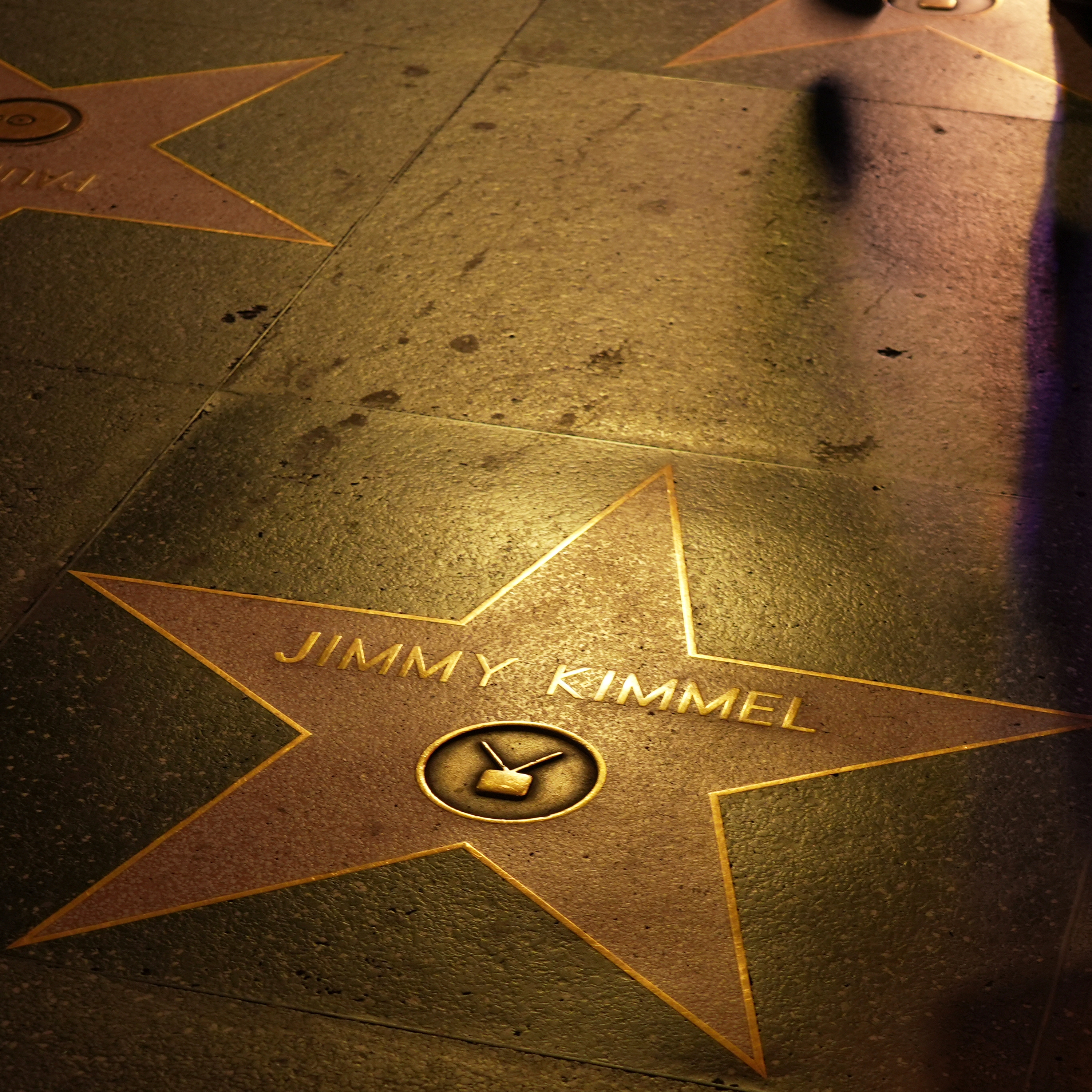
Post Reports
Jimmy Kimmel, free speech and the crackdown after Charlie Kirk’s death
00:22:52
Efforts to punish those critical of Charlie Kirk in the wake of his killing have reignited a debate about free speech and censorship in the United States.
Loading summary
Transcript83 lines
- [00:05]
A
What if we could reduce carbon emissions and strengthen the economy? At ExxonMobil, we believe both are possible. As a global leader in carbon capture and storage, we're empowering industries to reduce their emissions all through technologies that are creating job opportunities in America. How's that for a win? Win ExxonMobil, let's deliver.
- [00:31]
B
So, guys, I have a controversial hot take.
- [00:33]
A
Let's hear it.
- [00:33]
B
Robert Redford's best journalism movie, up close and personal.
- [00:38]
C
What in the world is that movie?
- [00:42]
B
I, I insist that you go home tonight and you find it streaming somewhere. It is a lovely love story about Robert Redford as a old news anchor who now runs a TV station in Miami. And he kind of plucks Michelle Pfeiffer out of obscurity and trains her up to be a TV anchor too, and.
- [01:02]
A
They fall in love. I'm assuming.
- [01:03]
B
I don't wanna spoil it for you.
- [01:05]
A
I remember watching on the President's Men as a, as a, as a young person and thinking, God, he looks so cool. Journalists are so cool.
- [01:13]
B
Like the coolest.
- [01:13]
A
And then I became a journalist and I realized there are very few journalists who look like Robert Redford at all.
- [01:24]
B
Today on the show, we're going to be talking about the efforts to punish critics of Charlie Kirk. And then later in the show, we're going to be talking about this debate over free speech and civility in our politics. So from the newsroom of the Washington Post, this is Post Reports weekly Politics roundtable. I'm Colby Yakovic. It's Friday, September 19th. I'm joined today by two fantastic guests that I'm so excited to welcome onto the show. First, we have the Post's chief political correspondent, Karen Tumulty. And we have Dan Marika, co anchor of our politics newsletter, Early Brief. Thank you both so much for being here.
- [01:56]
C
Thrilled to be here in my sixth week on the job as the Post chief political correspondent.
- [02:02]
A
Thank you very much for having me.
- [02:03]
B
And we should note, Dan, that Karen may be in this job for six weeks but is a veteran political reporter.
- [02:10]
A
She's belying her esteemed career at the Washington Post.
- [02:17]
B
So, you know, obviously we've covered on this show and we've covered extensively at the Post the killing of Charlie Kirk last week on a college campus in Utah. There were some developments in that story this week. Dan, can you just like bring us up to speed on what's happened?
- [02:31]
A
Yeah. So we now know that the alleged shooter is Tyler Robinson. He's a 22 year old. He now faces his seven different charges in the state of Utah, including aggravated murder. Prosecutors in the case very quickly made clear that they are going to pursue the death penalty in this case. Utah is a state where the death penalty is legal. The most revealing part of the case really came in court documents that were released earlier this week. And it got us into this mindset of, like, who Robinson was and even more critically, why he is alleged to have done what he did. Prosecutors said in the case that Robinson had confessed to people around him. We broke a story that on his Discord Channel, which is a site largely used in gaming and other avenues, that he had acknowledged that he was the shooter. And I wanna read this quote. Exactly. Cause they also said that Robinson's roommate, after the attack, found a note under his keyboard. And the quote here is, quote, I had the opportunity to take out Charlie Kirk, and I'm going to take it. End quote. And there's also allegedly texts between the roommate and Robinson. That's the legal news. There's also kind of the political news. You've also seen this outpouring of grief on the right and on the left. I mean, a lot of folks who vehemently disagree with a lot of what Charlie Kirk said on the left have come out and really grieved what had happened in Utah and grieved his killing. You also have this major memorial service that's going to happen on Sunday in Arizona at an NFL stadium in Arizona. It's really going to be kind of like the embodiment of the power that Turning Point has amassed over the last.
- [04:09]
D
His organization.
- [04:09]
A
His organization? Yeah. Turning Point USA, the organization he founded in 2012 to reach young conservatives in high school and in college campuses. It rallied around Donald Trump and then kind of rode the Trump wave up the conservative ranks. But the event in Arizona is really gonna be kind of this physical embodiment of the power that Turning Point had helped the Republicans amass over the last decade. You have President Trump speaking there, Vice President J.D. vance, a whole host of Trump Cabinet officials and members of the Trump White House. So it's really gonna be kind of this, frankly, obviously, a somber affair, but also a celebration of the work that Charlie Kirk and Turning Point have done over the last decade.
- [04:48]
B
You know, Dan, you bring up the politics of this moment, and something that we saw almost immediately after Kirk's death were these calls on the right to kind of call out people who might be criticizing Kirk. Maybe they were criticizing his policies and politics, in some extreme cases, even celebrating his death and calling for those people to lose their jobs. And then this week, ABC pulled Jimmy Kimmel's late night show off the air because he made some comments on his show, I think, in his opening monologue about Kirk. Let's listen to that.
- [05:19]
A
We hit some new lows over the weekend with the MAGA gang desperately trying to characterize this kid who murdered Charlie Kirk as anything other than one of them and doing everything they can to score political points from it. In between the finger pointing, there was grieving.
- [05:34]
B
So then after those comments, the Federal Communications Commission chairman criticized Kimmel on a podcast and said something like, we could do this the easy way or the hard way, which seemed like he was willing to take some kind of action after those remarks. And then we saw ABC pull Kimmel off the air. Karen, what do you make of this?
- [05:53]
C
First of all, I don't know what the standards are supposed to be for a late night comedian. He's not a journalist. But what he said, his implication that sometime that this accused murderer was somehow a part of the right and is just contradicted by all the available evidence. So I think that people should really be looking at this on a whole bunch of levels now. If ABC had suspended him. This is not a First Amendment issue. The First Amendment does not allow the government to crack down on your freedom of speech. But your employer has every right to. To set standards. And if you don't conform to them, they can take action. I mean, that is not First Amendment speech. And in this case, ABC was in a situation where a lot of its local affiliates were pulling Jimmy Kimmel off the air. So it would have been uncomfortable no matter what they did. But there was potentially a business financial argument to make for this. Where it becomes problematic is when the FC SEC chairman steps in and starts threatening punishment against some of these local affiliates, a lot of them, for keeping Jimmy Kimmel on the air. And that is where you do begin to sort of touch the First Amendment. Tripwire.
- [07:28]
A
People should know that Brendan Carr, the FCC chairman, has been very clear that he wants to use the power of the fcc.
- [07:35]
B
And the fcc, of course, is the federal government that regulates communications.
- [07:39]
C
It does not regulate networks. It regulates the local affiliate.
- [07:43]
B
Interesting. I don't think I knew that.
- [07:45]
A
Yeah, local broadcasters. Local broadcasters need licenses to broadcast and they basically regulate those licenses.
- [07:52]
B
Got it.
- [07:52]
C
Okay.
- [07:53]
A
He has been very clear that he is going to kind of stretch the powers of the FCC and use them in ways that they may not have been used before.
- [08:01]
B
I mean, and I think to Karen's point, that's what's problematic about this moment. And Kimmel is obviously an incredibly High profile example of this happening of people, at least in his case, temporarily or indefinitely losing their jobs. We dealt with a similar situation here at the Post last week where an opinion columnist was let go over some social media posts. But for the most part, these are regular people that are losing their jobs. What are these people saying that's getting them in trouble with their employers?
- [08:30]
A
I mean, it really runs the gamut for both who they are and what they're saying. I mean, you have people who are comm staffer for an NFL team, regular employees at companies like Nextdoor, an assistant dean at a Tennessee college, Media figures, including at msnbc. Matthew Dowd was fired for comments he made right after the shooting. Some folks are just noting that he had made controversial statements in the past that he had. He was very kind of proud of the fact that he would debate anyone. And at times that meant that he took positions that were notably controversial. And so people would note that he had taken X, y or Z position. And that would get them in trouble because it came in the wake of his killing. This is largely being driven by a conservative movement that, in the wake of Charlie Kirk's killing, has actively looked for people who are saying things about Charlie Kirk after he has passed away, including the Vice President of the United States, J.D. vance, who really, it does seem like, is trying to take the mantle of what Kirk stood for and run with it. Hosted his podcast from the White House following his death, saying that you shouldn't just call out these people, you should also call their employers.
- [09:39]
C
Could we just also point out that traditionally, conservatives, among the principles they stood for is that government shouldn't be interfering with businesses.
- [09:50]
B
That's the grand irony here, right?
- [09:52]
E
Yes.
- [09:52]
B
I was gonna play for us a small part of Vance's appearance. He guest hosted the Charlie Kirk show and like you said, Dan talked about the fact that people should be fired and targeted for criticizing Kirk.
- [10:06]
A
So when you see someone celebrating Charlie's murder, call them out in hell. Call their employer. We don't believe in political violence, but we do believe in civility.
- [10:16]
B
And before we talk about that clip, I also want to also play for us comments by Attorney General Pam Bondi. She went on the podcast of Katie Miller, who is the wife of Stephen Miller, a top advisor to Trump. And she went as far as to say that they could send law enforcement after people for, quote, hate speech. So let's listen to that clip.
- [10:34]
D
There's free speech and then there's hate speech. And there is no place, especially now, especially after what happened to Charlie in Our society, do you see more law enforcement going after these groups who are using hate speech and putting cuffs on people? So we show them that some action.
- [10:52]
B
Is better than no action.
- [10:54]
C
We will absolutely target you, go after.
- [10:58]
D
You if you are targeting anyone with hate speech.
- [11:02]
B
Karen, what do you make of JD Vance's comments, Bondi's comments?
- [11:08]
C
Hate speech is not illegal. So how. I mean, there are European countries where it is, but so how you send out law enforcement, I mean, there is, as the Supreme Court famously said, you know, there's a difference between, you know, speaking and yelling fire in a crowded theater. But, you know, I think that universities and businesses have every right to regulate hate speech. The government there is, I don't think, any precedent that the government steps in to do that, at least not in our country.
- [11:47]
A
Yeah, no, I mean, it's really that simple, is that hate speech really isn't a punishable offense because it is subjective. Inherently, it's subjective. What one person deems hateful speech may be completely normal to somebody else. And so something that subjective, you can't punish that as a First Amendment issue.
- [12:06]
B
I mean, Charlie Kirk is a great example of that. Right? I mean, a lot of the things that he said, people would characterize as hateful. And on one side of the aisle, on the other side of the aisle, he was speaking truth.
- [12:16]
A
And I think what is so interesting about what Pam Bondi said was the response to it. Democrats, of course, responded by slamming what she said and calling her out and noting that for so long, Republicans have been against cancel culture, against attacking people for hate speech, but conservatives also slammed her. The outcry from conservatives targeting Pam Bondi, who was a Trump administration attorney general, was striking. And these aren't just thinkers who are kind of never Trump Republicans. These are conservatives across the entire spectrum of the right saying that she was wrong on this issue. And in some cases, they actually used something that Charlie Kirk had written himself on Twitter. Now X and I want to read it. He tweeted at one point, quote, hate speech does not exist legally in America. There's ugly speech, there's gross speech, there's evil speech, and all of it is protected by the First Amendment. Keep America free. It is striking that in an effort to crack down on the kind of speech in the wake of Charlie Kirk's killing, that there are conservatives who are basically checking the Trump administration by using Charlie Kirk's own words.
- [13:23]
B
I mean, I should note that Bondi did kind of walk this back after she faced all that criticism and said, I meant we could use law enforcement to go after hate speech that crosses the line into, into violence. But it still strikes me that you have all these people on the right trying to effectively cancel people right for, for speaking out or, or commenting on Charlie Kirk's death.
- [13:46]
C
And violence is a crime, whether it's provoked by hate speech or not.
- [13:51]
A
And inciting violence is a, it can, can be punishable. Yeah. There have been many times over, even the last 10 years the, the, the time that Charlie Kirk was a prominent person in American politics where conservatives have worried about Democratic administrations cracking down on their speech, claiming that it is hateful. The flip here is kind of remarkable and I think it was one of the most remarkable moments in the wake of the tragic Kirk killing was the way that that kind of flip has happened and the irony there.
- [14:19]
C
And Dan, I think you've put your finger on what concerns a lot of conservatives because they do have long enough memories and they know that there may a day once again where there's a Democrat in the White House and that they are setting some precedents here that could actually be used against them.
- [14:40]
B
We're going to take a break here and after we're going to discuss how Congress and how Democrats have responded to the aftermath of Kirk's death. We'll be right back.
- [14:54]
D
Fall is in full swing, which means it's the perfect time to refresh your wardrobe with pieces that feel as good as they look. Luckily, Quince makes it easy to look polished, stay warm and save big without compromising on quality. Quince has all the elevated essentials for fall. Think 100% Mongolian cashmere starting at $50. Washable silk tops and skirts and perfectly tailored denim, all at prices that feel too good to be true. I've tried the cashmere and I can tell you nothing has ever felt so soft. And lately I've been eyeing their wool coats. They look designer but cost a fraction of the price. And the quality just as good, if not better because Quint's partners directly with ethical top tier factories. They cut out the middlemen so they can deliver luxury quality pieces at half the price of similar brands. Keep it classic and cozy this fall with long lasting staples. From Quint's, go to quints.com reports for free shipping on your order and 365 day returns. That's quinc.com reports. To get free shipping and 365 day return, quince.com reports to first responders every second counts. Firefighters, paramedics, law enforcement operators and 911 operators need to communicate instantly. And that's why FirstNet exists born out of the lessons of 911 and authorized by Congress, FirstNet is the only network built with and for first responders. It's a unique public private partnership with the FirstNet authority making sure America's first responders always have priority access, whether in the heart of a big city, a rural county or a remote territory. During natural disasters, major storms or large scale events, first responders know they can count on FirstNet to keep them connected, even when other networks are congested or unavailable. FirstNet is more than a network, it's a commitment to first responders, a promise that America's public safety always comes first. FirstNet built with AT&T. Learn more@firstnet.com Public Safety first.
- [16:59]
B
So returning to this question of policing speech, you saw Republicans in the House this week call for the censure of Representative Ilhan Omar. She's a Democratic congresswoman from Minnesota and basically they wanted to censure her over things that she had said on a, on a left leaning podcast related to Kirk. I mean, how common is it for a member of Congress to, you know, want to censure another member of Congress based on what they said? And also like, what exactly did Omar say that they find problematic?
- [17:31]
A
I mean, it was once quite unusual. I think it's become more usual over the last few years because of folks have used it as like a political weapon more than anything to punish people of the opposing party or the party in power has used it to punish people in the minority party. During an interview, Omar did express empathy for what had happened and especially noted Charlie, Kirk's wife and children that he left behind.
- [17:55]
E
It was really mortifying to hear the news, to see the video. You know, all I could think about was his wife, his children. That image is going to live forever.
- [18:10]
A
But she did say, you know, you can't quote, completely pretend that he was someone who just wanted civil debate. She basically raised questions about kind of his motives, I would say, in these kind of debate dialogues. You know, she called out his views on guns, on slavery, on George Floyd who was killed in Minnesota.
- [18:28]
E
Charlie was someone who was willing to debate and downplay the death of George Floyd in the hands of Minneapolis police.
- [18:37]
A
I think you called him a scumbag, right?
- [18:39]
E
Have no regard downplay slavery and what black people have gone through in this country by saying Juneteenth should never exist.
- [18:48]
A
She also reposted a video of somebody also criticizing Kirk. That was another thing that she did. The resolution, as you note, failed. And it failed because almost a handful of Republicans voted against it, I think, in large measure because of those concerns that we were speaking about, about the hate speech and kind of the slippery slope there. And if you do this to Ilhan Omar, what happens when Democrats control the House and how can they punish Republicans? I want to read what Corey Mills, who's a Florida Republican, said, quote, this is a First Amendment issue. We may not like or agree with what someone says, but that does not mean we should deny their First Amendment right. And that gets to the heart of what our conversation was earlier about. You know, he may view it as hateful, but it's a First Amendment issue.
- [19:31]
B
One thing I want to talk about is how Democratic Party leaders are handling this moment. This week we saw a couple of prominent figures like former President Barack Obama and Pennsylvania Governor Josh Shapiro. They tried to make the point that they condemned Kirk's killing, but they criticize Trump for turning up the partisan temperature rather than doing what presidents typically have done in moments like this and try to unify.
- [19:54]
F
I've noticed that there's been some confusion, I think, around this lately, and frankly, coming from the White House and some of the other positions of authority that suggest even before we had determined who the perpetrator of this evil act was, that somehow we're going to identify an enemy. We're going to suggest that somehow that enemy was at fault. And we are then going to use that as a rationale for trying to silence discussion around who we are as a country and what direction we should go. And that's a mistake as well. During moments like this, I believe we have a responsibility to be clear and unequivocal in calling out all forms of political violence and making clear it is all wrong. That shouldn't be hard to do. Unfortunately, some from the dark corners of the Internet all the way to the Oval Office want to cherry pick which instances of political violence they want to condemn.
- [21:24]
B
Can messages of unity break through right now?
- [21:28]
C
I think that the most uplifting moment last week was Utah Governor Spencer Cox. He immediately put his finger on this, that, you know, we are not going to solve our problems in this country until we can reach the point of having civil discourse with other people and especially having it with people we disagree with.
- [21:54]
A
I think it's really hard to say whether this will break through because we've had moments of violence like this before recently, and they have largely been not forgotten, but they have not had the impact that they would have had at a different point. The Minnesota shooting happens, and it's horrific and awful.
- [22:12]
B
The shooting of the. There's Two, you could be referring to the horrible school shooting and then also the shooting of the Democratic lawmaker.
- [22:20]
A
I was referring to the shooting of Melissa Hortman, the lawmaker in Minnesota. And it was awful and it got a ton of attention initially. But I think if you ask most Americans, that news had probably faded. And part of that is our news cycle that is so quick and moves from one thing to another. And part of it is that it didn't kind of create this moment of unity. And maybe the Charlie Kirk situation will be different, the awful killing of Charlie Kirk. But it's hard to know. I think the memorial service in Arizona is going to play a large role in how this is remembered and the speeches given there. If Donald Trump, if J.D. vance strike a more unifying tone, I think that would go a long way to doing that. But that's an if.
- [23:05]
C
I will be very surprised.
- [23:06]
A
Yeah, that's an if.
- [23:08]
D
Yeah.
- [23:08]
B
This is actually how I wanted to close our conversation was looking ahead to the memorial service in Arizona on Sunday where you have so many high profile people speaking. You've got Trump and Vance, you've got members of the Cabinet like Health and Human Services Secretary Robert F. Kennedy, Jr. You have defense Secretary Pete Hegseth. And to your point, this is an opportunity, right? There'll be a lot of people tuning into this service on Sunday. This is an opportunity where they could call for unity or they could call.
- [23:37]
C
People to the barricades or that.
- [23:39]
B
And so I wonder what you're watching for, what you're expecting on Sunday.
- [23:44]
C
Like I said, a call to the barricades and we saw that with Charlie Kirk's widow already.
- [23:49]
A
I mean, it's notable. I'm just gonna raise this that Spencer Cox is not speaking at Charlie Kirk's memorial service. If you look at the roster of speakers, it really is the kind of embodiment of the modern GOP at this event. It's the embodiment of the power that Turning Point USA and its political affiliates helped build. The factors are there that it's going to be more of like a Turning Point event, a celebration of Turning Point. And those Turning Point events are highly political affairs, for sure.
- [24:18]
B
Well, that's all the time we have today. But thank you both so much for being here. It was a pleasure having you both.
- [24:24]
C
It was great to be here. Thank you so much for having me on.
- [24:27]
A
Yeah, thanks for having me.
- [24:31]
B
Karen Tumulty is the Post's chief political correspondent. Dan Marika is the co anchor of our early politics newsletter, the Early Brief, if you like watching podcasts. You can also find this episode on YouTube. We'll put a link in our show notes to Washington Post's YouTube channel. Today's episode was produced by Laura Benchoff and Josh Carroll, with help from Ted Muldoon. It was mixed by Shawn Carter. It was edited by Rena Flores. Thanks also to Politics editors Dan Egan and Rachel Van Dogen. Our team also includes Alana Gordon, Ariel Plotnik, Rennie Stranovsky, Sabi Robinson, Thomas Lu, Zoe Cummings, Emma Talkoff, Shawn Carter, Peter Bresnan, Renita Jablonski, Elahi Ezadi and Martine Powers. I'm Colby Ekowicz. Have a great weekend.
- [25:28]
G
You listen because you know the power of good journalism and the Washington Post is there for you 247 when you become a Washington Post subscriber, you get exclusive reporting you can't find anywhere else. You also get sharp advice, columns, delicious recipes, TV and music reviews and so much more. Right now, you can get all of that for just $4 every four weeks. That's for an entire year. After that, it's just $12 every four weeks. And you can cancel anytime. Add to your knowledge and discover all the Post has to offer. Go to washingtonpost.com subscribe. That's washingtonpost.com subscribe.