← Post Reports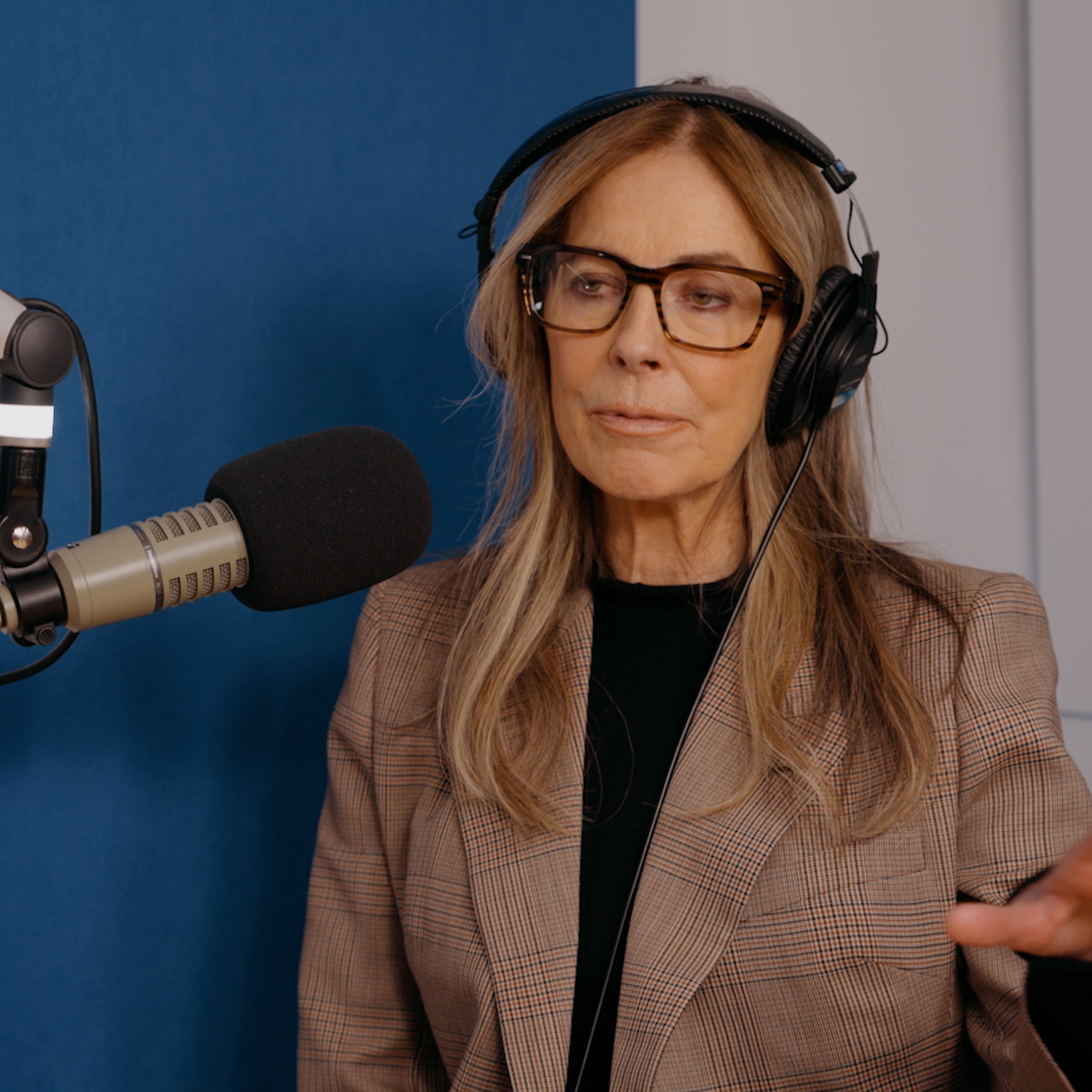
Post Reports
Kathryn Bigelow on ‘A House of Dynamite’ and the nuclear ‘elephant in the room’
00:24:18
“A House of Dynamite” imagines what might happen if the U.S. were targeted by a nuclear missile. Oscar-winning director Kathryn Bigelow explains why she decided to make this film at this moment.
Loading summary
Transcript107 lines
- [00:01]
Kathryn Bigelow
I mean, it really has been normalized. It's sort of the elephant in the room, and nobody talks about it anymore. And I thought, well, this might be interesting to kind of begin to dig beneath the surface of it. And lo and behold, you know, there.
- [00:14]
Elahe Izadi
Was a lot of material.
- [00:15]
Kathryn Bigelow
There's a lot of material, and it's terrifying, you know, like, to have 12,000 nuclear warheads, if that's. If the count is accurate. Nine nuclear countries, only three are members of NATO. I mean, that's a calculus that I think is. Is kind of heart stopping.
- [00:35]
Elahe Izadi
This is Kathryn Bigelow. She's been writing, producing, and directing films for the last 40 years. And much of her work grapples with power and the way the government wields it. Her 2008 film the Hurt Locker was set during the Iraq War, and it won the Oscar for Best Picture. Bigelow also won for Best Director, making her the first woman ever to win that award.
- [00:59]
Noah Oppenheim
Winning.
- [01:00]
Elahe Izadi
She went on to direct Zero Dark 30, the 2012 film about the search for Osama bin Laden. Now she's out with her first film in eight years, A House of Dynamite. The movie follows government workers and officials responding to a nuclear missile. They don't know who launched it, but they do know it's headed toward the.
- [01:21]
Noah Oppenheim
US Current velocity indicates the object will go suborbital. Current flight trajectory is consistent with impact somewhere in the continental United States. Oh, what's your level of confidence on that, Tony? It's not nar.
- [01:42]
Actor portraying President or military official
We're tracking it on multiple radar systems now, I'm told.
- [01:46]
Noah Oppenheim
Hi, Jerry. We have dual phenomenology on the track. 19 minutes to impact. Confirming DEFCON 2.
- [01:57]
Elahe Izadi
The film has struck a nerve. It was released a few weeks ago, and it quickly became Netflix most watched movie in the world. It racked up almost 22 million streams in the first three days. That's according to Netflix. And the movie has ignited a widespread conversation about how prepared the US Would actually be in the case of a sudden attack. From the newsroom of the Washington Post, this is Post Reports.
- [02:26]
Kathryn Bigelow
I'm Eli.
- [02:27]
Elahe Izadi
I'm Elahe izadi. It's Tuesday, November 11th. Veterans Day. Today, I sit down with the people who made A House of Dynamite, director Kathryn Bigelow and screenwriter Noah Oppenheim, who used to also be the president of NBC News. We talk about why they chose to make this film. In this moment, Catherine. Noah, thank you so much for joining me today in the studio. It's great to have you. Thank you, Katherine. I want to first start with you and just ask you, where did the idea for this film come from for you?
- [03:01]
Kathryn Bigelow
It was just a kind of what if? What would happen if a nuclear ICBM was headed toward North America? And then what would happen in the halls of power? What happens in the, you know, like the command and control protocol? And I was curious about what would go on and how. Where is the chain of command? How does it go up to the president? And a friend of mine, a colleague of mine, said, well, there's a screenwriter you should talk to who's basically a subject matter expert. His name is Noah Oppenheim.
- [03:32]
Elahe Izadi
Noah is right here.
- [03:33]
Kathryn Bigelow
That's how it began. Yeah.
- [03:35]
Elahe Izadi
So why was that a topic on your mind to begin with? What was the origin of that? Because I don't think that's something that most of us sit around and think about.
- [03:43]
Kathryn Bigelow
I've always been fascinated with national security. The whole sort of nuclear catastrophic potential was always sort of top of mind. And also I come from the era of Duck and Cover, where when I was very little, we had to hide under the desk in the event of a atomic bomb blouse. So I've always thought about it. And then recently, having done these pieces in National Security, Hurt Locker, Zero Dark Thirty, I naturally gravitated to this subject.
- [04:12]
Elahe Izadi
Noah, when you were presented with this notion of working with this acclaimed director on this topic and this story that she was, what was your entry point into it? Was this something that was also on your mind? And when Catherine says you were a subject matter expert, what is she speaking to there?
- [04:29]
Noah Oppenheim
I would have pretended to be a subject matter expert on almost anything for the opportunity to work with her. It's sort of the kind of phone call and introduction you dream about if you're a screenwriter. It's an issue I shared a passion for. I'd covered it as a journalist. I had been running NBC News when North Korea was sort of revealed to be a nuclear power. And I'd also long been passionate about the genre of films about nuclear war. Whether it's Dr. Strangelove or failsafe or even more kind of commercial pop fare like War Games. I just had always been deeply interested in the subject.
- [05:07]
Elahe Izadi
One thing Catherine, you alluded to is this sense of almost normalization. You mentioned you grew up in the era of Duck and Cover, where this threat was very front and present. But it seems like now we're in an era, or at least in the past few years, we've been in an era where this is just the hum in the background that no one is paying attention to.
- [05:25]
Kathryn Bigelow
If it's even a hum. I mean, it really has been normalized. It's sort of the elephant in the room and nobody talks about it anymore. And I thought, well, this might be interesting to kind of begin to dig beneath the surface of it. And lo and behold, you know, there.
- [05:39]
Elahe Izadi
Was a lot of material.
- [05:40]
Kathryn Bigelow
A lot of material, yeah. And it's terrifying, you know, like to have 12,000 nuclear warheads, if that's. If the count is accurate, nine nuclear countries, only three are members of NATO. I mean, that's a calculus that I think is. Is kind of heart stopping.
- [05:56]
Elahe Izadi
Why do you think that normalization has happened is part of it that to grapple with that reality every day is almost too much to bear?
- [06:05]
Kathryn Bigelow
I think that's a very good point. I think it could be. I mean, it's unfathomable to me that we're not in a process of denuclearizing the world, you know, and obviously it has to be a global embrace of that concept and effort. But. But it just doesn't seem to be.
- [06:25]
Noah Oppenheim
I think there was a perception with the end of the Cold War that somehow the threat had diminished. And in reality, we all know now that the world has only grown more complicated, volatile and risky. So, yeah, and now we've seen in a weird way in the last couple weeks even it's sort of being pushed back front and center, which we will.
- [06:45]
Elahe Izadi
Talk about in a little bit. And before we get there, I did want to bring up again, when I think about some of the other films that you've made more recently. The Hurt Locker that was set during the Iraq War, Zero Dark Thirty, about the search for Osama bin Laden. Also your film Detroit. A lot of your films are inspired by or seek to depict real life events. And I know you've spoken in other interviews about this inflection point between film and journalism. And we have Noah here, who used to run NBC News from that world in a previous life. And it strikes me that House of Dynamite is in some ways a much more theoretical and specific speculative film than your other films. How do you view this film within your body of work when you are thinking about I am depicting reality for audiences?
- [07:32]
Kathryn Bigelow
I think that's a good question. I think, yes, it's hypothetical. I mean, it hasn't happened yet, but nonetheless it's, you know, it's degree of accuracy and authenticity and credibility is extremely heightened and I would say on a par with those other movies. Hmm.
- [07:53]
Elahe Izadi
Noah, your experience you mentioned covering some of these stories. How did that experience inform your approach to Writing this screenplay.
- [08:03]
Noah Oppenheim
Sure. I think, you know, both Catherine and I share a journalistic approach to filmmaking in the sense that when we're building this. When we were building this story, we began by first speaking to people who'd had these jobs, been in these rooms, people who had served at the highest levels, the White House, the Pentagon, the CIA. And we just would ask them questions as if you were reporting out a news story. How would this unfold if a missile were headed our way? What steps would these various institutions within our government take? And then we'd get to the end of the conversation, and like a reporter, you'd say, well, who else should we talk to? Who else could shed some more light on this? And the other thing that I would say is sort of journalistic about the approach is, you know, Catherine's commitment these. These last, you know, couple decades to confront with her films real world issues, you know, and with this, it's an issue that is front and center in the headlines, as we see. And she's using her extraordinary storytelling powers to shed light on that and drive a conversation around it.
- [09:02]
Kathryn Bigelow
Well, I think film can be actually both entertaining and informational, you know, so there is an inflection point in the two for you.
- [09:11]
Elahe Izadi
When you think about that inflection point, does one have a hierarchy over the other, or do they go hand in hand?
- [09:17]
Kathryn Bigelow
I think they go hand in hand.
- [09:18]
Elahe Izadi
Noah, just to speak about the structure of the film, this idea of we're sitting with characters who. They intersect with one another throughout, but we're sitting with the same 20, 30 minutes played out from different perspectives. Why was that format. Was that format always baked in for you? And why was that format compelling to you? And why did you approach it that.
- [09:40]
Noah Oppenheim
Way from the very beginning? Catherine and I both felt it was important to tell the story in real time. And by the story, I mean the 18 minutes it would take from the launch of a missile in the Pacific Theater somewhere to impact in the continental United States. Because when we began our research process, one of the things that we found most terrifying was how quickly this would unfold, that it would be less than 30 minutes from that side of the world. If a Russian sub were to ever launch off our Atlantic coast, It could be 10 to 12 minutes. So you're talking about such a tight period of time for our government's decision makers to respond. And we wanted to convey that to the audience not abstractly, but in a very visceral way so they understand when those 18 minutes are over how quick that just was. And then obviously, 18 minutes is not the length of a feature film, so we wanted to provide multiple perspectives and hopefully increase the audience's understanding with each retelling. So you start on kind of the ground floor with the first responders, if you will, the young soldiers at Fort Greely who operate our missile defense system.
- [10:45]
Elahe Izadi
What is it, Sergeant? Clear radar acquired our object, sir.
- [10:50]
Noah Oppenheim
The watch officers in the White House. These people are the first to react, respond, and convene. The figures in authority.
- [10:58]
Narrator or voiceover
Current flight trajectory is consistent with impact.
- [11:00]
Noah Oppenheim
Somewhere in the continental United States. They have no power over what going to then unfold. The next telling is the commander of StratCom, the deputy national Security Advisor. These folks have a little bit more influence, and they're invited to give advice.
- [11:14]
Actor portraying President or military official
We're tracking them now, aren't we? Yes, Mr. President, we are. It's just that blinding a DSP satellite, it could indicate that we've been compromised.
- [11:23]
Noah Oppenheim
And then the last telling is in some ways the most important telling, which is the President of the United States, who in our country is a nuclear monarch and has sole authority to make this decision.
- [11:33]
Elahe Izadi
Can you speak a little bit more about how you both ensured the accuracy of this film? Because really, what you're doing, you are taking viewers into rooms that none of us really get to go in except for a handful of people.
- [11:44]
Kathryn Bigelow
Well, that was part of what ensured the accuracy. We were able to see these environments, speak to the people that work there, actually encourage some of those people to become our tech advisors and work with us on the set every single day we were shooting.
- [11:58]
Elahe Izadi
So who do you mean, people who used to work in these spaces? What are some examples?
- [12:03]
Kathryn Bigelow
Like General Dan Karbler, General Doug Luke, and there were other people as well. So they were there on the set every single day or with me at the monitor, too. So it was a very carefully monitored shoot for accuracy. And we were invited to the battle deck at stratcom, to the White House situation room, able to spend a little bit of time in there. And so my production designer and I would go in and, you know, just replicate it to within an inch of its life.
- [12:39]
Elahe Izadi
So you were able to visit these places?
- [12:41]
Kathryn Bigelow
Oh, yes.
- [12:42]
Elahe Izadi
Was that during the previous administration?
- [12:44]
Kathryn Bigelow
Yes, during the Biden administration.
- [12:46]
Elahe Izadi
During the Biden administration, since the release of this film, there's been some. You know, there's been some percolating news out there about the accuracy or a pushback about it. Bloomberg News reported that the Pentagon's Missile Defense Agency had released an internal memo which told recipients to prepare to, quote, address false assumptions Provide correct facts and a better understanding about the weapons depicted in the movie. How do you respond to that? You're gonna toss it to Noah the journalist?
- [13:14]
Noah Oppenheim
Well, it's not really a debate between us as filmmakers and the Pentagon. It's a debate between the Pentagon and the wider community of experts. The specific thing that they're pushing back on is the efficacy of our missile defense system. And we spoke to a ton of people who work in that field who study that. And frankly, the testing statistics are publicly available. And you know, it is unfortunately the case that those tests have demonstrated a roughly 60% accuracy.
- [13:45]
Elahe Izadi
I think you all gave them a better accuracy.
- [13:48]
Noah Oppenheim
Some people told us it was more like 55 or lower. And of course those are carefully scripted tests where they know exactly when the missile is going to come, where, what, and they can control the conditions. Now that being said, this is not for lack of trying. The people who work in missile defense, including some of our consultants, are, are really good at their jobs, working really hard to solve this problem. But one of the questions that we wanted to open a debate around and which the Pentagon has now engaged in, is is it possible to build an impenetrable shield? Is that really the way to keep us safe? Or are there other levers we should be pulling, like non proliferation and denuclearization.
- [14:23]
Kathryn Bigelow
Reducing the nuclear stockpile?
- [14:26]
Elahe Izadi
Catherine, one theme that it seems like has been constant throughout your body of work is depictions of violence. And in fact your very first, I believe your student film was precisely about. About this. And I'm sort of struck by how when we think about the violence in this film, it was more in a theoretical, off camera way. The violence that each character is just imagining in their minds and you sort of see it play out on their faces when they think about a potential nuclear strike. How were you thinking about violence as a theme since it has been something that has been thought.
- [15:02]
Kathryn Bigelow
I don't think about it. You don't.
- [15:04]
Elahe Izadi
Oh, great. Can you tell me that you don't think of it? Yeah, tell me more about that.
- [15:07]
Kathryn Bigelow
I don't. There's not more to say. I don't think about it from a violent standpoint of violence or lack of violence.
- [15:14]
Narrator or voiceover
I see.
- [15:14]
Elahe Izadi
That's so fascinating because one of the scenes that stood out to me was this recreation of the battle of Gettysburg. There's a scene that takes place there.
- [15:23]
Kathryn Bigelow
Okay. A launch.
- [15:25]
Elahe Izadi
I'm Jake, I'm sorry, I'm off to today.
- [15:29]
Kathryn Bigelow
Okay.
- [15:29]
Actor portraying President or military official
Anna, where are you? What the hell?
- [15:31]
Elahe Izadi
Gettysburg.
- [15:33]
Actor portraying President or military official
Anna, please. This is real.
- [15:38]
Elahe Izadi
That was obviously a moment in History of extreme division and violence. I'm curious about why it was used in the film and in that moment as well. Without giving away too much, obviously.
- [15:49]
Kathryn Bigelow
Well, really it had to do with proximity to Ravenrock. And then the battle reenactment was happening right about the time we were. And so we scrambled, got together and shot it.
- [16:01]
Elahe Izadi
Can you explain, for those who haven't yet seen the film Raven Rock, what that is?
- [16:05]
Kathryn Bigelow
Raven Rock is a nuclear bunker in Pennsylvania. It's located in Pennsylvania, and it's a place where you, if you were a designated individual with respect to the government, it is a continuity of government location. And you would be spirited away to Raven Rock to live out whatever the shelf life or half life of the nuclear situation.
- [16:34]
Elahe Izadi
Yeah, it's sort of like when we think about State of the Union, the Designated Survivor, except a lot of people.
- [16:39]
Kathryn Bigelow
A lot of people. And for decades and decades. And I didn't. I did not go inside there. I can't imagine it's terribly accessible. Yeah, accessible or wonderful to spend decades in.
- [16:53]
Elahe Izadi
So it was just happenstance that this recreation was happening at this place? Or can you explain a little bit more about the disappearance?
- [17:00]
Kathryn Bigelow
Well, Noah, you can talk about it. He'd written about it in the script.
- [17:02]
Elahe Izadi
Oh, okay.
- [17:03]
Kathryn Bigelow
Yeah. Noah, not the reenactment, but the Gettysburg Memorial. Oh, that.
- [17:07]
Elahe Izadi
That was always part of the story.
- [17:10]
Actor portraying President or military official
Yeah.
- [17:10]
Noah Oppenheim
I think for two reasons. One is we wanted to illustrate the fact that if an event like this were to happen, that it is likely that all of the necessary decision makers and experts and advisors would be scattered in some way. Like, you know, these. These crises don't happen at a perfectly convenient moment in time. And so, you know, in the film, a woman who's a subject matter expert on North Korea happens to be, you know, on her day off with her little boy visiting video, visiting Gettysburg.
- [17:38]
Elahe Izadi
Because these are people, too.
- [17:39]
Noah Oppenheim
These are people, too. Everyone who holds these jobs have family lives and other things competing for their interest and emotion. And that was an important piece of the story, which is these aren't robots. And these institutions ultimately consists of normal people doing the best that they can in very difficult circumstances.
- [18:00]
Elahe Izadi
After the break, how Catherine and Noah feel about the US Possibly restarting nuclear testing for the first time in decades. We'll be right back.
- [18:20]
Narrator or voiceover
Doesn't it seem like fall always feels like a reset? Whether it's the after school activities, busier routines, or shorter days, finding time to cook is pretty much impossible. That's why I love Factor. No matter how crazy the day gets, their chef prepared, diet, friendly meals make it easy to get everything done while still enjoying something comforting and delicious. There are so many great things about Factor, especially their wider selection of weekly meal options, including premium seafood choices like salmon and shrimp at no extra cost. From more choices to better nutrition. That's why 97% of customers say that Factor helped them live a healthier life. My personal favorite Factor meals have been the garlic butter and mushroom chicken thighs, Pomodoro herb salmon and chimichurri shredded pork. All amazing and all things I would never have had time to make before. Factor eat smart@factormeals.com post 50 off and use code post 50 off to get 50% off your first box plus free breakfast for one year. That's code post 50 off@factormeals.com for 50% off your first box plus Free breakfast for one year. Get delicious ready to eat meals delivered with Factor offer only valid for new Factor customers with code and qualifying Auto renewing subscription purchase if you're like me when you were young, you used to dream of being anything. An athlete, the president, an astronaut. But as you get older, your dreams change, focusing less on running the world and more on how you can take your skills and ideas and turn them into something real. Instead of dreaming of going to space, maybe you start dreaming of owning your own business. And if you do, you'll need a website, a payment system, a logo, and a way to advertise to new customers. It can all be overwhelming and confusing, but thankfully that's where Shopify comes in. Shopify is the commerce platform behind millions of businesses around the world, including 10% of all E commerce in the US from household names like Mattel to brands just getting started. And that's because Shopify is there for you from day one with beautiful ready to go website templates to match your brand style. So turn those dreams into Sign up for your $1 per month trial and start selling today at shopify.com reports go to shopify.com reports shopify.com reports.
- [20:40]
Elahe Izadi
In some ways when I viewed this film, it felt like a film in a way about the US Government being stress tested in the most high stakes way possible, both with the stakes and the amount of time within which to make a decision. Because you know the film we're following the same 20 to 30ish minutes over and over. And it's also coming out at a time when our government institutions are being stress tested in frankly previously unthinkable ways. Right as of this taping, right now the government is still shut down and I'm Struck that the federal workers overseeing the US Nuclear stockpile are on furlough. Obviously, neither of you knew that that would be happening unless you have access to some technology that we don't have. But given the current moment that we're in and your film coming out in this moment, how are you. Are you processing this work in a different way now than you were when you were thinking about it and making it and on set?
- [21:40]
Kathryn Bigelow
I don't think necessarily different. I mean, when we talked about it from the very beginning, we talked about it as a warning. You know, this is something that could be very important to know about and again, trying to move the needle toward, you know, reducing the nuclear stockpile. And so I don't think that agenda has shifted at all. If not, it's perhaps become more important.
- [22:03]
Noah Oppenheim
I mean, one of the things I think we hope the movie does is show the extraordinary work that these public servants do. The folks who work in the White House situation room, at StratCom, at FEMA, inside all these government agencies, they are doing their best every day, for the most part, to keep us all safe. And they're doing incredibly important work. And I think we both wanted to honor that with their portrayal in the film. And obviously, anything that kind of stresses them even further is something we should all take seriously.
- [22:34]
Elahe Izadi
Going back to where we sort of began this conversation, thinking about this hum in the background, the normalization. What strikes me by what you just described, Noah, and what we see in the film is that in some ways, you know, I'm watching the fictional president say, I only got one briefing on this.
- [22:51]
Actor portraying President or military official
I had one briefing when I was sworn in, one. And they told me that's the protocol.
- [22:56]
Narrator or voiceover
They told me the same thing.
- [22:58]
Elahe Izadi
And I'm thinking, oh, wait, is there also a normalization among the people who are responsible for these decisions?
- [23:05]
Kathryn Bigelow
I mean, it certainly looks that way, perhaps. I mean, it just doesn't feel like it's top of mind. I think it was. But, I mean, there are whole generations that don't understand that there are nuclear weapons out there and nine nuclear countries and only three are members of NATO. And that's a very, very terrifying calculus, in my opinion.
- [23:25]
Noah Oppenheim
And that lack of preparation was something that came up in our research process. Was a very senior, you know, former government officials. Katherine asked, how often does the president rehearse for this? And he said, pretty much never.
- [23:38]
Elahe Izadi
Well, and to bring it back to this moment, President Donald Trump recently announced that, you know, he was gonna order nuclear tests to resume on equal footing with China and Russia. And then Russia came out and said they're gonna begin looking at nuclear testing. How did you receive that news when you heard it?
- [23:52]
Kathryn Bigelow
Well, it's shocking, surprising.
- [23:56]
Elahe Izadi
Well, in some ways, again, it makes the film to me feel a little even more urgent and relevant, frankly, like this idea that we were living in the hum. And normalization. I mean, this is coming back up again.
- [24:08]
Noah Oppenheim
It's one of the dangers of normalization is that there used to be a taboo around speaking about the use of these weapons. Even the mere mention or consideration or contemplation of their use used to be off limits because it was deemed to be escalatory. And I think both of us would like to see the world get back to a place where, you know, the use of these weapons would be so unthinkable that it's not even, you know, it's not even theorized.
- [24:38]
Actor portraying President or military official
Right.
- [24:40]
Elahe Izadi
So I want to ask both of you, what is the next conversation, the next question that you hope people will have after engaging with this film? Noah, I'll start with you.
- [24:49]
Noah Oppenheim
How do we make the world safer?
- [24:51]
Kathryn Bigelow
Yeah. I mean, we live, it seems like, in a house of dynamite. And not just how can we get the dynamite out of the walls, but it's a very combustible environment. Do we want to live in that space? You know, a movie is basically a question posed to an audience, and the audience has the ability to make an answer. And it's provocative, but it's hopefully thought provoking.
- [25:19]
Elahe Izadi
Well, thank you both so much for making time and joining us today.
- [25:22]
Narrator or voiceover
Really.
- [25:22]
Kathryn Bigelow
Thank you. Thank you.
- [25:25]
Elahe Izadi
Kathryn Bigelow and Noah Oppenheim's film House of Dynamite is out now on Netflix. We reached out to the Pentagon for comment on how the film depicted the US Missile defense system. They told us they were, quote, not consulted in the production of this film.
- [25:41]
Noah Oppenheim
And.
- [25:41]
Elahe Izadi
And it does not reflect the views or priorities of this administration. They added that the missile defense system, quote, remains a critical component of our national defense strategy, ensuring the safety and security of the American people and our allies. That's it for Post Reports. Thanks for tuning in. If you want to watch this interview, you can, because we filmed it. You can find it on our YouTube channel, Washington Post podcasts on. We'll also include a link in our show notes. Today's show was produced by Peter Bresnan and Josh Carroll with help from Emma Talkoff. It was edited by Rena Flores and mixed by Shawn Carter. I'm Elahe Izadi. We'll be back tomorrow with more stories from the Washington Post.
- [26:40]
Actor portraying President or military official
Think about why you listen to podcasts. It's like having a friend who makes you think or can help you wind down right? Well, the Washington Post has a lot of people you can turn to at any hour. You can read the most important and interesting stories. We can help you cook something delicious, give you advice on a tricky friendship. Rave about a movie or book that you shouldn't miss. When you become a Washington Post subscriber, you have a companion for whatever part of your day needs it most. Get it all for just $4 every four weeks. That's for an entire year. After that, it's just $12 every four weeks. Cancel anytime. Go to washingtonpost.com subscribe that's washingtonpost.com subscribe.