← Post Reports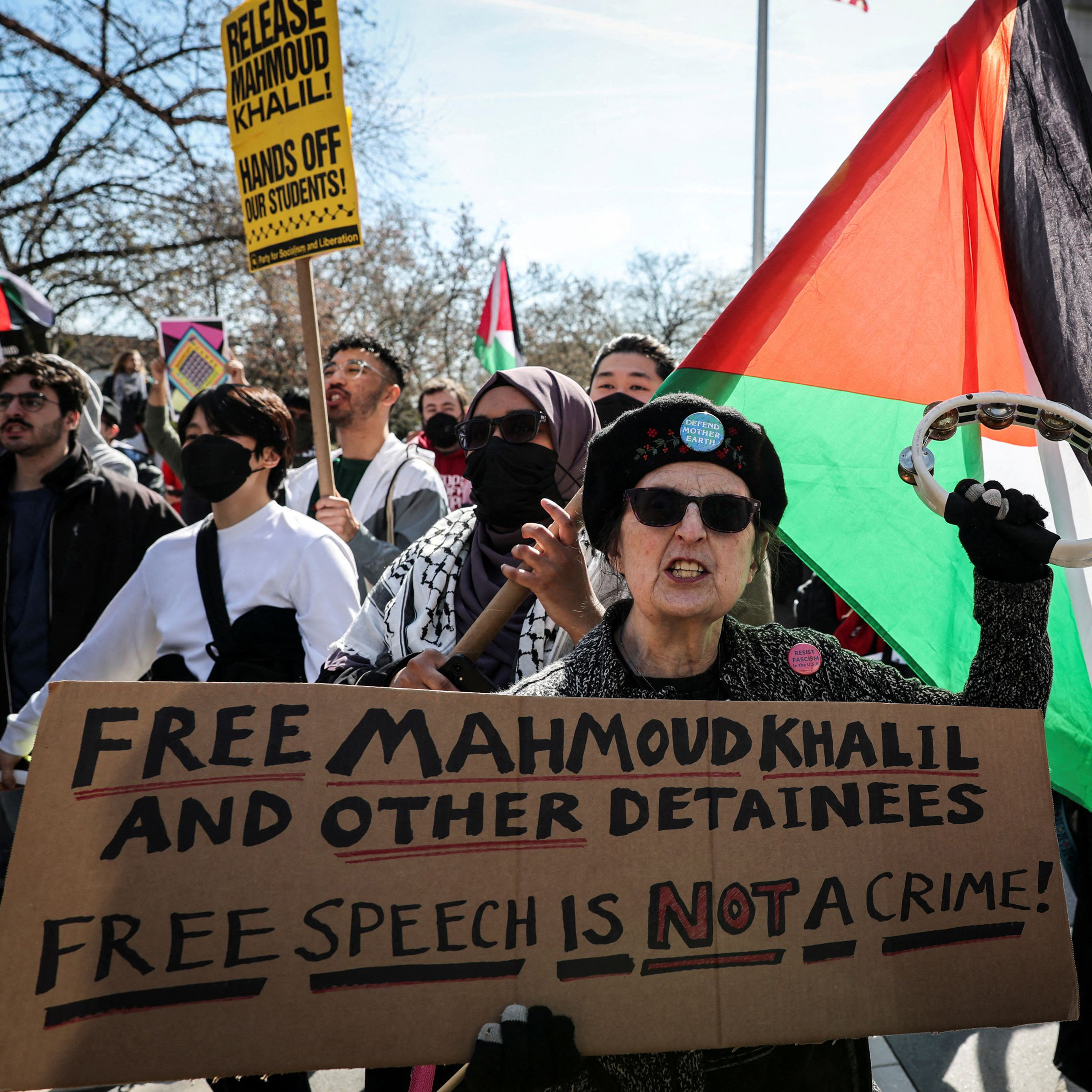
Post Reports
Know your rights: Protesting and traveling in the U.S. as a noncitizen
00:25:55
Can noncitizens protest? Should you leave your phone at home when flying into and out of the United States? Post reporters walk us through the gray areas being used by the Trump administration in its effort to crack down on immigration.
Loading summary
Transcript81 lines
- [00:03]
Colby Ikowicz
In New York last month, ICE detained a green card holder who got his master's at Columbia University. His wife, who's American, recorded video of the arrest.
- [00:16]
Heather Kelly
Okay, okay.
- [00:16]
Colby Ikowicz
He's not resisting.
- [00:17]
Maria Luisa Paul
He's giving me his phone. Okay, I understand. He's not resisting.
- [00:26]
Colby Ikowicz
In Boston last week, masked officers in plain clothes detained a Tufts University student from Turkey. You may have seen this video. These people surround her in the street. She panics and screams. Both were in the country legally, and both are now facing possible deportation, seemingly for their political speech supporting pro Palestinian campus protests. Their cases are part of a sweeping Trump administration crackdown on foreign nationals. Here's Secretary of State Marco Rubio talking about this effort, which the administration said has already led to more than 300 visas being revoked. Every time I find one of these lunatics, I take away their visas.
- [01:10]
Heather Kelly
You're saying it could be more than 300 visas?
- [01:12]
Maria Luisa Paul
Sure.
- [01:12]
Colby Ikowicz
I hope.
- [01:13]
Maria Luisa Paul
I mean, at some point, I hope we run out because we've gotten rid.
- [01:16]
Colby Ikowicz
Of all of them, but we're looking every day. From the newsroom of the Washington Post, this is Post Reports. I'm Colby IKOWICZ. It's Tuesday, April 1st. Today we talk about the gray area of immigration law and First Amendment protections. Reporter Maria Luisa Paul will explain what the risks are for noncitizens. And later, we hear from technology reporter Heather Kelly about whether you should lock down your phone if you're traveling to the US Whether you're a citizen or not. Maria, hi. Thanks for being here.
- [01:57]
Maria Luisa Paul
Thank you for having me.
- [01:59]
Colby Ikowicz
Maria, before we get into the specifics of the actual law, tell me about the arrests and the detentions that got you started asking the question, like, what are a non citizen's First Amendment's rights?
- [02:10]
Maria Luisa Paul
Well, there's sort of been a trend over the last couple of months. I think the first big case that was brought to the public's attention was that of Mahmoud Khalil. He is a. He was a Columbian student who is married to an American citizen, and he has a green card. And one day I showed up and arrested him and told him that his status had been revoked. The basis for this, according to the government, was that he was doing activities that followed Hamas. I think Trump even called him a radical foreign pro Hamas student. But what Mahmoud Khalil was doing was that he kind of emerged as the sort of public face of the protests that swept over the country last year because he was a negotiator between the university administration and the students. And he was one of the few people who would give press conference and, you know, show his face without being masked.
- [03:11]
Heather Kelly
Once again, our movement here, when they tried to clear it last week, we prevailed. If they want to once again bring NYPD or any law enforcement, we will prevail. Our movement is not only this encampment, it was not the encampment. Our movement is very, very large, and we will have our own ways in order to make sure that our voices are heard.
- [03:37]
Maria Luisa Paul
Then we saw last week a Tufts student, Rumisa Ostrich, and it's kind of like the same pattern. They say that she was pro Hamas or supported Hamas. The only thing that we've been able to find was that she co offered an op ed for the student paper with like four other students criticizing the university's response to the pro Palestinian movement. And then you have the case of Badr Khansari. He was a Georgetown scholar from India who was married to a US citizen who has Palestinian heritage. And he was just walking into his home in Virginia and he was detained by immigration enforcement officers. Same thing. They told him that his visa was revoked and now he is in a detention center. He's been accused of supporting Hamas, but there's not a lot of evidence, as far as we can tell. And his attorneys have said that his free speech is being violated.
- [04:30]
Colby Ikowicz
And in his case, was there social media posts that they found that they claimed were pro Hamas?
- [04:36]
Maria Luisa Paul
Yes. That's sort of like the big evidence that the government is showing to allege that all of these people were pro Hamas or, you know, constitute some type of national security threat. It seems to be basically their family connections, their protesting activities, or their social media posts.
- [04:55]
Colby Ikowicz
And so we've got a case of someone who was a public face for protests, someone who wrote an op ed, and someone who maybe made some posts on social media. I would think those things would be protected by the First Amendment. So what exactly does the First Amendment protect here?
- [05:18]
Maria Luisa Paul
So the First Amendment, at its most basic level, what it does, is protect people's right to speak freely, publish their views, protest without feeling that the government is going to persecute you.
- [05:30]
Colby Ikowicz
So does that only apply to US Citizens then? Like, does the First Amendment also protect non citizens?
- [05:37]
Maria Luisa Paul
Here's where it gets a little bit tricky. Because the First Amendment is supposed to protect everyone who is in the United States. All of these constitutional protections apply to non citizens, citizens, people who have entered lawfully, people who have entered unlawfully. That part has been well established by the Supreme Court in different cases, like even back in 1953 where they ruled that any alien who had entered lawfully had these protections and then they expanded that to just basically anyone and everyone. However, it becomes a gray area when you throw in the context of immigration, because immigration, it's a little bit separate from criminal and civil penalties. It's kind of like its own ball game. And the federal government has broad discretion to deport anyone.
- [06:30]
Colby Ikowicz
So even though there's a protection in the Constitution over speech, if they say it's an immigration case, they can. Does that supersede the Constitution?
- [06:42]
Maria Luisa Paul
So it's not very clear because the Supreme Court has given really mixed opinions. Like for example, during the McCarthy era, they deported a lot of non citizens who they said were tied to communism and the Supreme Court said that was lawful. But then in other cases, they have said no, you can't deport them based on free speech alone. Kind of like this really tricky area where there's not a lot of precedent.
- [07:07]
Colby Ikowicz
So is it in those earlier cases when they were allowed to be deported, can they deport them over speech issues when it seems like there's a national security threat? Is that the kind of deciding factor?
- [07:20]
Maria Luisa Paul
That's what the government is basically alleging. Right. They are citing a statute from 1952 from the Immigration and Nationality act, which states that the Secretary of State has these really broad powers to deport a noncitizen if they have reasonable ground to believe that this person would have a potentially serious adverse foreign policy consequence for the United States.
- [07:43]
Colby Ikowicz
And that's what we saw Secretary of State Marco Rubio do in the case of Mahmoud Khalil. Right. They were able to intervene and revoke his green card because of that statute.
- [07:53]
Maria Luisa Paul
Yes, but here is where the attorneys. And this is why it's becoming kind of like this big legal fight, because the attorneys are saying you can't just do that based on free speech alone. Like, you're not. What's your proof that this person represents a big foreign policy threat? Like, you're not accusing them of financing Hamas, you're not accusing them of being like members of the organization. You're just saying that based on their social media post and an op ed or their family connections or something like that, that they are.
- [08:28]
Colby Ikowicz
So if you're a non citizen and you attend a protest and you're detained, do you have the same, like due process rights as a citizen would?
- [08:36]
Maria Luisa Paul
Well, the legal experts I talked to said that you do have due process rights. However, there's, there's a certain iffiness or murkiness if you know you're detained by immigration authorities and not criminal ones. You know, like any Citizen, you have the right to remain silent. You have the right to request an attorney. You have the right to refuse a search. The police can't come and arrest you because you wrote something online that they disagreed with or that they didn't like.
- [09:08]
Colby Ikowicz
Yeah.
- [09:09]
Maria Luisa Paul
However, when you add that in the immigration proceedings, it can get a little bit more fuzzy, especially because you don't really have the same protections in immigration law in the immigration court that you would have in a criminal court. Like, for example, you don't have the right to an attorney. Like, the government doesn't have to give you one. The judges who preside over immigration proceedings are not under the judicial branch, they're under the executive branch. And so they could have, you know, this fear that if they rule against the policies of the government, that they could be on bench, basically.
- [09:46]
Colby Ikowicz
So the way that some of these individuals have been detained, just to be clear, is using immigration law, and that's how they've been able to get around some of the other laws that we have in this country that are supposed to protect them.
- [10:02]
Maria Luisa Paul
Yes, and that's what the. That's the case that the government is making as to why they have the authority to do this. But then, you know, we will see what the courts say about that.
- [10:12]
Colby Ikowicz
So any of the people that have, you know, we've talked about, or others who have been detained on similar rationales, have they been able to make a legal case and avoid or leave detention?
- [10:24]
Maria Luisa Paul
Well, there's the case of Yanshu Chung. She is a Columbia University student who came to the United States at the age of seven from South Korea, and she sued the Trump administration last week to avoid deportation. Basically, her case is a little bit different because she participated in this pro Palestinian protest last year. She was arrested at one point, but then ICE agents started showing up at her parents home looking for her. They searched her dorm in Colombia, and basically what she did was sue the administration. And a judge in New York actually issued a temporary restraining order bucking from detaining her or transferring her outside of the district, which is something that we've been seeing in other cases.
- [11:11]
Colby Ikowicz
I see. So a judge in New York may be more favorable to the arguments of some of these individuals attorneys.
- [11:21]
Maria Luisa Paul
Yeah, they might be. At least this federal judge in New York, when issuing this restraining order, said that there was no grounds to detain or try to deport her because she's no foreign policy threat.
- [11:34]
Colby Ikowicz
Right. So, Maria, after all this reporting that you've done on this, what advice are legal experts giving to non citizens who want to continue to exercise their First Amendment's rights. They want to participate in political protests. They want to write op eds or for noncitizens who are worried that maybe doing those things in the past are going to lead to ICE showing up at their door.
- [11:58]
Maria Luisa Paul
Well, they said that the number one thing you should do is be prepared and have a plan. And that's just about being cautious, like having a loved one know exactly where you are at all times, giving them your attorney's information and numbers so that they can contact them. Also before going on a protest, maybe talking with an immigration attorney to know if it would be a good or bad idea. I mean, because when you have different statuses, you might have different risks when going to a protest. But overall, they said that be cautious, but don't feel that you shouldn't be able to do it because it's within your rights.
- [12:42]
Colby Ikowicz
That's interesting. That was gonna be. My next question is like, are any experts suggesting, you know what, just don't do it. Like, the risk of exercising your First Amendment rights is too great at this point where we are right now in our country and that you should just be silent or go underground or not voice your opinions?
- [13:02]
Maria Luisa Paul
I mean, it's scary to think of that suggestion. But we've been seeing some immigration experts say that they're saying that this might not be the time for non citizens to protest, which is pretty scary to think about. But what some of the experts I talked to said was at the end of the day, the First Amendment is when of the cornerstones of democracy here. It's what makes the American system what it is. It's what allows you to voice your opinion without, without and limits government's power. And so if that starts eroding, then democracy starts eroding.
- [13:48]
Colby Ikowicz
Maria, thank you so much for joining us.
- [13:50]
Maria Luisa Paul
Of course. Thanks for having me.
- [13:54]
Colby Ikowicz
After the break, technology reporter Heather Kelly walks us through how to lock down your devices if you're traveling to the US or planning to leave and come back into the country. We'll be right back.
- [14:20]
Unnamed Advertiser
Think about why you listen to podcasts. It's like having a friend who makes you think or can help you wind down right? Well, the Washington Post has a lot of people you can turn to at any hour. You can read the most important and interesting stories. We can help you cook something delicious, give you advice on a tricky friendship. Rave about a movie or book that you shouldn't miss. When you become a Washington Post subscriber, you have a companion for whatever part of your day needs it most. Get it all for just $4 every four weeks. That's for an entire year. After that, it's just $12 every four weeks. Cancel anytime. Go to washingtonpost.com subscribe. That's washingtonpost.com subscrib.
- [15:05]
Colby Ikowicz
Hey Heather, thanks for joining us.
- [15:07]
Heather Kelly
Thanks for having me.
- [15:09]
Colby Ikowicz
So, Heather, before we get into your advice to listeners as a tech reporter, tell me what have you been hearing about that's happening at airports that's really been concerning to you?
- [15:17]
Heather Kelly
We have been hearing a lot more reports from travelers coming into the United States that agents are asking to see their devices, their iPads, their laptops, their smartphones. This is especially sort of increasing for people who aren't legal permanent residents or who aren't citizens. And there are some reports from people who are U.S. citizens of being asked to look at their phones. And people are generally pretty concerned about that.
- [15:40]
Colby Ikowicz
So wait, so if I'm at the airport, can they actually like go through my phone? Do they have the right to do that?
- [15:45]
Heather Kelly
They do. There is a little exception to the Fourth Amendment at major ports of entry. They have every right to ask to look at your phone and you have every right to tell them, no, thank you, I don't want you to look at my phone.
- [15:56]
Colby Ikowicz
And is that true? You mentioned it's happening to US Citizens and like foreign nationals and people without legal protected status. So does that true across the board no matter what your nationality is?
- [16:08]
Heather Kelly
Yeah, it applies to anybody coming into the United States. If you're crossing on foot, you know, boats, major airport, they can always ask to see it. The idea is that it's increased security to prevent terrorism or somebody coming into the United States with ill plans.
- [16:22]
Colby Ikowicz
So then an agent takes your phone. What are they going to be looking for? Are they trying to see if you're like planning a terrorist attack? What are they checking?
- [16:30]
Heather Kelly
It's pretty broad. And the main reason they're looking actually isn't terrorism. It's seeing if your plans for coming into this country match up with what you've just told them. So say you're coming in on a quick visa for a vacation and you're like, no, I'm not here to work. And they look at your smartphone and it's clear that you're coming into the country for a job. So they're looking for mismatches like that mostly. But now under this administration, we're seeing a lot more broader searches of looking for things like sentiment, which is very vague, things that could be construed as being anti American, which of course, like what does that mean it really depends on the person looking or the administration at the time.
- [17:05]
Colby Ikowicz
Right, right. And so, Heather, you mentioned if they ask to see my phone, I can say no. So do you have to unlock your device if an agent asks?
- [17:16]
Heather Kelly
No, nobody has to unlock their device if an agent asks. However, the repercussions are much different depending if you are a US Citizen or if you are a legal resident, a green card holder, or a visitor. So your status is really going to change how you answer that question. If you're a US Citizen, they cannot legally deny you reentry into your own country. They can delay you. They can make your day miserable. They can take your devices and keep them for weeks or even a month. I've heard some reports, and eventually they do send them back to you. But if you are not a US Citizen, they can deny you entry if either they find something on your device or you refuse to let them look at it, and they have some sort of reasonable suspicion that maybe they shouldn't let you in, that you're hiding something.
- [18:04]
Colby Ikowicz
And so let's say, okay, I've agreed to unlock my device, what happens then?
- [18:11]
Heather Kelly
So there's two kinds of searches they can do. There's a basic search and an advanced search. Now, a basic search is just the guy or gal there, they pick up your phone and they scroll through manually. You've unlocked it for them. They're just seeing, you know, what anybody who looks at your phone could see some text messages, emails, maybe the last things you had on Facebook. You are disconnected from the Internet when they look, but it'll show whatever is cached. So something that you were looking at earlier. Now, an advanced search is when they do have some reasonable suspicion, they can't just do it for anybody. And what they do is they connect it to their own computers and they copy all of the data off of your phone. Or they use their computers to do a much more thorough, fast search using their software that they have. And then there's another kind of search. If they do take your phone, they do have other options to try and crack into your phone or to try and get more information off of it.
- [18:58]
Colby Ikowicz
That would be in the case of, I've said I won't unlock my phone for you, and they take the phone and then they find a way to break into it.
- [19:05]
Heather Kelly
Exactly. And a lot of times they're not using, like these, you know, really intense. A lot of them come from Israeli companies. The software for cracking open iPhones that you see in the news, sometimes they can do much Subtler things like just get what's off your SIM card because that's not always protected, depending on your phone. So it could be pretty minor. Or if they're really suspicious and they really want to invest the money in it, they could theoretically try and crack into your phone completely.
- [19:31]
Colby Ikowicz
So, Heather, let's say they do this advanced search. They have reasonable suspicion about you, and they put all of your data on their own equipment. What then happens to that information? Do they get to keep it? Is it safe? Like, what. What are they doing with it?
- [19:48]
Heather Kelly
So they are able to save it to these government databases for up to 15 years, and those databases can be searched between agencies. So, like, one law enforcement agency might be able to tap into this one if they're looking for something specific. And that data is eventually deleted, but after a long period of time. And I cannot say how safe anything in government databases is at the given time. But, you know, they will say that it's encrypted and secure. But right now, obviously, there's a lot of technological change going on with government databases, so it's a little more up in the air. If you just do a basic search and it's some person looking at your phone with their eyes, what they're going to do is they're just going to write down their observations afterwards, and those are also saved in these databases. So even if nobody connects it with a computer, you know, a description of maybe some weird photos you have could live on.
- [20:35]
Colby Ikowicz
Right. I was just going to say, so, like, all of your text messages and your photos could maybe be held by the government, potentially. How many people would have access to that?
- [20:46]
Heather Kelly
I mean, a lot less now that we've had massive layoffs. But a lot of people will have access to that database. I mean, you probably need a reason to. It's not like anybody can search it. But you did bring out, like, an interesting point is I think people aren't worried because they're. They're doing something bad for the most part. They're worried because that's private information. Like, there's a lot of stuff that is totally okay and normal, and I still don't want it to end up in a government database. And I think that's the position a lot of people travel even going to find themselves in.
- [21:12]
Colby Ikowicz
Totally. Heather. I was thinking, like, I don't necessarily need, you know, strangers reading the conversations that I have, like with my best friend.
- [21:20]
Heather Kelly
Oh, no, no. That should live for a week only and disappear forever.
- [21:24]
Colby Ikowicz
There are ways to protect yourself. Right. So if you really don't want to share your data with border patrol officers. What can you do, maybe ahead of traveling, to mitigate that risk?
- [21:37]
Heather Kelly
Well, the first thing you should do is think about what it is you don't want to share and also decide if you are willing to give them your phone. Are you willing to be completely inconvenienced maybe for a day or weeks by not having your phone on you? If you are willing to say, you know what, no, you can't look at my phone, what you're going to do is you're going to change it to passcode only. There are more legal protections for information in your head, in this case a passcode, than there is for biometric information, which is like they, they would have better luck getting you to open it with a fingerprint or a face id, but it's much harder to compel you to tell them a password. So that's why we always use passcodes when we're traveling with our phones.
- [22:13]
Colby Ikowicz
So interesting, because I always thought of like the facial recognition being the most secure way to protect my phone. But you're saying in this instance it's actually having like a really complicated password.
- [22:23]
Heather Kelly
Yeah, it's just don't use the four digit one, use a six digit one. You know, don't make it your birthday. That's, that's the best advice for that one. And then if you are, you know, okay, giving your device to them, you're going to look through and you're going to see, you know, what do I have here that would be really sensitive. One of the easiest things to do is just delete that app. If you're, you know, in some really weird Facebook groups, just temporarily delete the Facebook app. It's easy enough to download again when you get there. Your text messages, you can't exactly delete the text message app. So maybe look through. If there is something really specific you want to get rid of, you can do that. They have to disconnect your phone from the Internet when they're doing this. So they're not going to be able to look at stuff you have saved in the cloud. Probably not going to be able to see Slack conversations unless some are cached. One trick is to restart your phone before you go through and that should clear a lot of the cached information and have less information stored on your device. One thing I wouldn't do, and experts sort of recommend against, is you might think, well, I'll just back the whole thing up to the cloud. Travel with this fresh phone that has a couple Phone numbers and block blast, and then I'll reinstall everything when I get there. That is sort of a red flag for anybody working for Border patrol. They're going to see that, and they're going to be like, that's convenient. It's, you know, a standard iPhone. So you're just going to be drawing a little more attention to yourself. So, you know, clean it up, but don't make it too clean.
- [23:37]
Colby Ikowicz
Interesting. I guess the same would be true of, like, taking a burner device or like, a different phone with you when you travel.
- [23:43]
Heather Kelly
Yeah. I mean, a lot of us have, you know, old smartphones lying around, so that actually isn't, you know, a terrible idea. If you just want to install some things on it, make it look loved and used, and try traveling with that. But if you have your other device on you, they can ask to look at that too. So you'd have to leave the other one at home and use that for your whole trip.
- [24:01]
Colby Ikowicz
I mean, Heather, I know that what they're looking for, what they say they're looking for, is, you know, connections to maybe a terrorist organization or you're, you know, suggesting some kind of harm to America, but people that are maybe just texting with friends that are critical of the Trump administration, who are critical of Elon Musk and Trump, and should they be worried? Like, are they gonna start looking for people who are anti Trump and consider that anti American?
- [24:29]
Heather Kelly
I think the people that need to worry about that situation, at least right now, can't predict the future. It might expand to more people are people visiting on visas or who just aren't citizens, people who have a lot more at risk. Because right now, what we see is the Trump administration specifically going after, say, student visa holders who have participated in protests. So if you have anything, you know, mildly political and you, you know, you're on a visa that you really need to keep, you might want to carefully consider what's on your phone. If you're a U.S. citizen and you have, you know, some anti Trump things, as long as it's not anything that could be construed as like, planning an attack, you should be fine. I mean, that's. That's going to be a lot of American citizens.
- [25:14]
Colby Ikowicz
Sather, is there any other advice that you would give people traveling across the border?
- [25:18]
Heather Kelly
Definitely. I would say if somebody does ask to look at your device, make sure you put it into airplane mode first. Legally, they're supposed to make sure it's disconnected from the Internet, but it's much safer if you just go ahead. Take that step before you hand it over to them. If you are planning on not handing over your devices, I would keep a list of important phone numbers or information you might need. Just sort of plan for that worst case scenario. And if there's devices you don't need to be traveling with, just leave them at home.
- [25:45]
Colby Ikowicz
Heather, thank you so much. This has been illuminating.
- [25:48]
Heather Kelly
Thanks for having me.
- [25:54]
Colby Ikowicz
Heather Kelly is a technology reporter at the Post. You also heard from general assignment reporter Maria Luisa Paul. That's it for Post Reports. Thanks for listening. If you're looking for the latest updates on the big news of the day, check out our morning news briefing. The seven we bring you seven stories you need to know about every Weekday morning by 7am you can listen to it wherever you get your podcasts. Today's show was produced by Rennie Svirnofsky. It was mixed by Shawn Carter and edited by Maggie Penman. Thanks to Yoon Hee Kim and Nick Bowman, Emma Talkoff, Sabi Robinson and Jenna Johnson. I'm Colby Ikowicz. We'll be back tomorrow with more stories from the Washington Post.
- [26:45]
Unnamed Advertiser
Think about why you listen to podcasts. It's like having a friend who makes you think or can help you wind down right? Well, the Washington Post has a lot of people you can turn to at any hour. You can read the most important and interesting stories. We can help you cook something delicious, give you advice on a tricky friendship. Rave about a movie or book that you shouldn't miss. When you become a Washington Post subscriber, you have a companion for whatever part of your day needs it most. Get it all for just $4 every four weeks. That's for an entire year. After that, it's just $12 every four weeks. Cancel anytime. Go to washingtonpost.com subscribe that's washingtonpost.com subscribe.