← Post Reports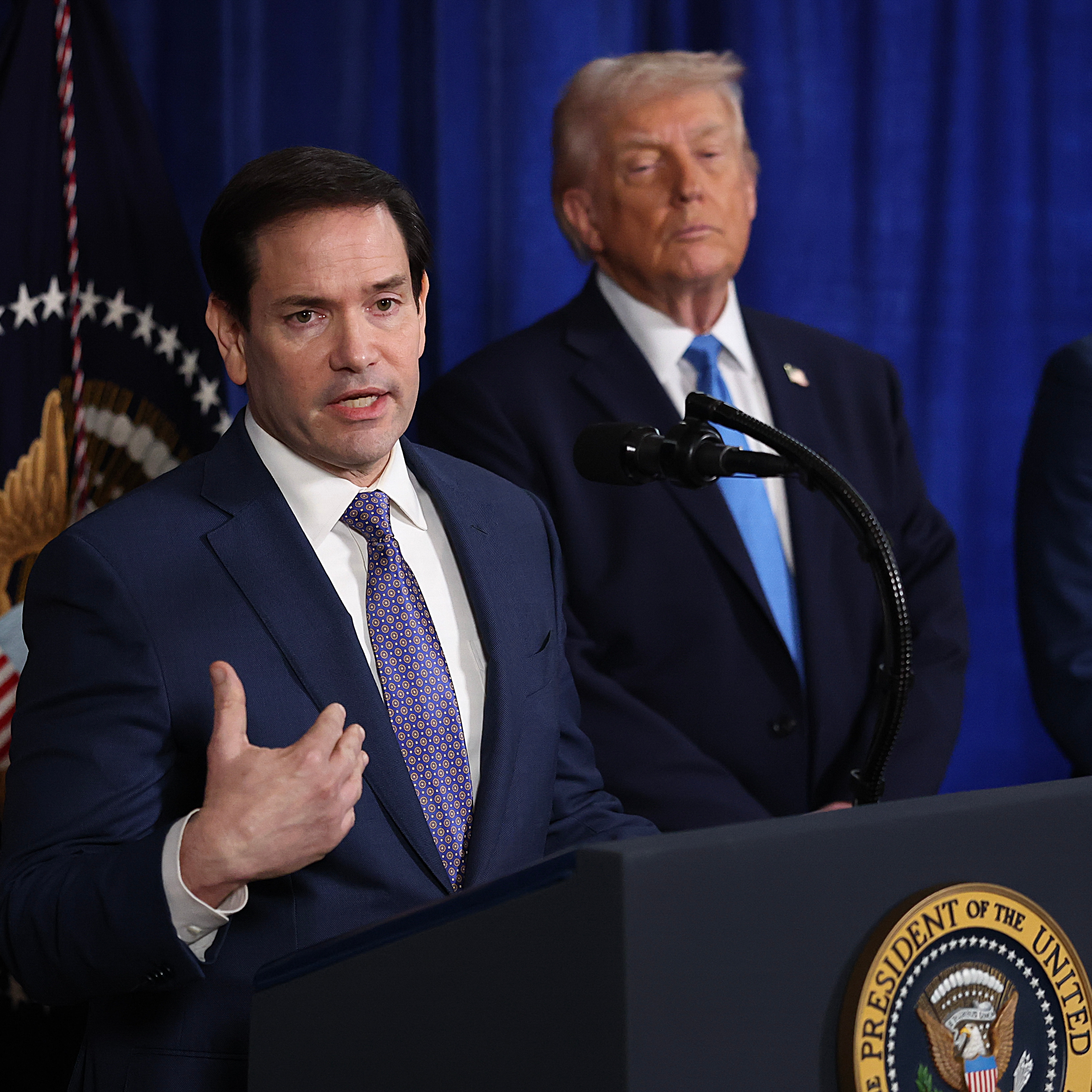
Post Reports
Marco Rubio, the Viceroy of Venezuela
00:26:36
Secretary of State Marco Rubio has pushed for regime change in Venezuela for over a decade. What happens now that the U.S. has removed its leader?
Loading summary
Transcript63 lines
- [00:00]
Odoo Advertiser
Running a business is hard enough. Don't make it harder with a dozen apps that don't talk to each other. One for sales, another for inventory, a separate one for accounting. That's software overload. Odoo is the all in one platform that replaces them all. CRM, accounting, inventory, E commerce, hr. Fully integrated, easy to use, and built to grow with your business. Thousands have already made the switch. Why not you try Odoo for free@odoo.com that's odoo.com.
- [00:32]
Martine Powers
Marco Rubio has worn many hats in this administration. He's the Secretary of State. He's the President's acting National Security Advisor. He's the acting Archivist of the United States. And now he's also the Viceroy of Venezuela. John, I didn't even know viceroy was a thing. Like, what is a viceroy and how did we end up having one?
- [00:58]
John Hudson
Yeah, so it's sort of a colonial era term meaning an official that rules over a colony on behalf of a sovereign or a king.
- [01:07]
Martine Powers
I was gonna say, I feel like I've heard the term Viceroy in like Pirates of the Caribbean or something.
- [01:11]
John Hudson
Yeah, it's been somewhat cheekily applied to Rubio. In this case, it's not his official title, but it is emblematic and representative of the extraordinary event that we have just seen take place in which the United States bombed a foreign country, apprehended its leader, and now the President of the United States says it's going to run the country with the help of Marco Rubio.
- [01:41]
Martine Powers
From the newsroom of the Washington Post, this is Post Reports. I'm Martine powers. It's Tuesday, January 6th. Today, I'm talking with my colleague, State Department reporter John Hudson, about the man at the center of US Actions in Venezuela right now, Secretary of State Rubio. On Saturday, as President Donald Trump held a press conference about the arrest of Nicolas Maduro, I was struck by how standing right over his shoulder, his literal right hand man was Rubio. And Rubio was there to make the sell, justifying this aggressive action to the American public.
- [02:20]
Marco Rubio
I want to be clear about one thing. Nicolas Maduro had multiple opportunities to avoid this. He was provided multiple very, very, very generous offers and chose instead to act like a wild man. Chose instead to play around. And the result is what we saw tonight.
- [02:36]
Martine Powers
So now I'm talking with John about how Rubio got to this moment. His decade long push for regime change in Venezuela, his evolving relationship with Trump, and what happens now that Rubio is apparently running the show. John, thank you so much for joining us.
- [03:02]
John Hudson
It's great to be here.
- [03:03]
Martine Powers
So, John, you have reported that Marco Rubio was, in your words, central to mastermining this ouster of President Nicolas Maduro. What does that mean? Like, how did he mastermind this?
- [03:17]
John Hudson
Yeah. So, you know, ever since Trump came into power, he has been talking to aides, he's even said publicly, he's talked about his desire to strike drug cartels. And Marco Rubio, as the Secretary of State and also his national security advisor, has played a key role in helping push Trump to consider the consequences of where he might strike a drug cartel, either by land or by sea. And obviously, for those familiar with the war on drugs, some of the countries that you might think of first and foremost would be places like Mexico, places like Colombia, the countries that are major contributors to the drug war. Of course, if the United States were to strike an important ally like Mexico, that would have huge ramifications. And so Rubio, aware of those, was a key person encouraging Trump to do the strikes where they ended up happening, which was in a number of boats outside of Venezuela. For Rubio, that achieved a couple of things. One, you don't have this huge, chaotic rupture with a key neighbor in the form of Mexico. And two, it ramps up military pressure against Maduro, who Rubio has long angled to oust from power.
- [04:41]
Martine Powers
Well, let's talk a little bit more about that. This point that, sure, it's about the war on drugs generally, and this is a way to tackle the infiltration of drugs into the US but specifically that Rubio has long had this profound in trying to basically change the political situation in Venezuela. Talk more about that. Why is Rubio so invested in what's going on in Venezuela, and how has that played out over the course of his career?
- [05:06]
John Hudson
Yeah, I mean, central to Rubio's thinking about Venezuela is his identity as a Cuban American and his experience of his parents, who left Cuba in the 50s before the communist takeover, and Rubio's upbringing. In republican Florida politics, Cuba is seen as the ultimate evil of socialist government in Latin America, as hostile to civil liberties, political rights. It's a dictatorship that has had an iron grip over the island for decades. And that Venezuela, which supports Cuba through shipments of oil, is seen as a key country propping up Cuba. And so, you know, if the Venezuelan domino falls, so too might the Cuban domino in the hopes of many in Florida republican politics.
- [06:04]
Martine Powers
And just to understand, what does Venezuela get out of that relationship?
- [06:08]
John Hudson
Yeah, I mean, basically, they have a quid pro quo relationship whereby the Cuban government provides medical resources and security detail for Maduro himself. I've been told by US Officials, in fact, that some of the security guards that were killed in the US Operation were Cubans. And in return, the Venezuelans offer cheap and discounted or in some cases free oil to the Cubans. So they have a quid pro quo relationship.
- [06:39]
Martine Powers
So then, given that Rubio has expressed in the past his desire to see a different future for Venezuela, obviously the boat strikes were happening over the summer, but how did he finally convince Trump to basically say, no, we need to go in there and to take out Maduro?
- [06:54]
John Hudson
Yeah, it's really interesting because Rubio's goals for Venezuela, for Cuba, he's a big believer in using US Military power to oust leaders and bring in a democratic process. Those are not arguments that prevail over Trump. Trump was ultimately persuaded because he saw two major factors in Venezuela. One, it sits on some of the world's largest oil reserves, and it has been a major exporter of migrants to the United States and elsewhere. And so, ultimately, Trump saw a few things. He saw the opportunity for oil companies, US Oil companies, some of whom have had their assets appropriated by the Venezuelan government, and he saw the possibility of curbing migration to the United States. Suffice it to say that there are experts that raise doubts about both of one, how lucrative this could be for the United States or U.S. oil companies, companies who may not even want to enter an unstable environment like this. And then second, it's very possible that Venezuela could become more unstable following Maduro's ouster, which is often a key contributor to more migration outside of Venezuela. And so you could see that situation becoming even worse.
- [08:18]
Martine Powers
Obviously, there have been a lot of criticisms about how this attack played out and the fact that it happened at all, and also the fact that Congress wasn't alerted to this beforehand. And Rubio has really been in the position of being like the defender in chief, I guess, after Trump, of why this was justified, why this was necessary. Tell me about what he said and how he is justifying this capture of Maduro and this attack on Caracas.
- [08:49]
John Hudson
Yeah, so I spoke to Rubio after Trump's press conference announcing the capture of Maduro. Mr. Secretary, John Hudson here, you said at the presser today that the military operation, it wasn't possible to share with lawmakers because. And I asked him if he regretted what he had said to Congress a few weeks ago, which was that, you know, he would seek their permission and their approval for military action or action against Venezuela.
- [09:17]
Marco Rubio
And he said, I think what lawmakers were asking me about and what everybody thought was that the United States was going to conduct military strikes for military purposes, that we would be invading Venezuela, that we would be conducting missile strikes against them for purposes of military operation. This was not while this operation was conducted by the military, this was a law enforcement operation.
- [09:36]
John Hudson
In response to that, I said, look, a lot of people will look at what happened. They'll see that the US Bombed Venezuela, they seized its leader and that they now claim to be running it as a major military action, full stop. And he said simply that the military actions like hitting anti aircraft machinery were necessary so that the law enforcement officers could swoop in and grab Maduro and haul him off to New York.
- [10:06]
Marco Rubio
When you go in to grab a fugitive in a country where even though he's not the legitimate president, he has military like forces protecting him. These guys have SAMs and they have shoulder fired rockets and they have things that pose a threat to our forces coming in and out. We're not going to get the helicopter shot down either on the way in or on the way out. And so we had to protect our force by suppressing those threats. And that's what the mission was focused on yesterday. And it involved both kinetic and non kinetic activities that are unique to the United States. And that's what we did. And I think evidence of it is the fact that no American lives were lost, no American equipment was lost, and both Nicolas Maduro and Celia Flores were arrested and removed from the country safely. And you know, they're both safe and they'll both be facing justice.
- [10:50]
John Hudson
I think a lot of people are going to, you know, see that and say that really doesn't justify not seeking approval. And you know, almost any military action can be justified under such a large loophole that he's pointing to. But I think the argument that you heard from him is also going to play out in court as well as the administration seeks to pursue its indictment against Maduro.
- [11:18]
Martine Powers
And then of course there's the criticism of the fact that Congress was not kept abreast of this, that the administration didn't get authorization from Congress. And Rubio actually addressed that in that first press conference that he did with President Trump.
- [11:33]
Marco Rubio
We call members of Congress immediately after. This was not the kind of mission that you can do congressional notification on. It was a trigger based mission in which conditions had to be met night after night. We watched and monitored that for a number of days. So it's just simply not the kind of mission you can call people, hey, we may do this at some point in the next 15 days. But it's largely a law enforcement function. Remember, at the end of the day, at its core, this was an arrest of two indicted fugitives of American justice, and the Department of War supported the Department of Justice in that job. Now, there are broader policy implications here, but it's just not the kind of mission that you can pre notify because it endangers the mission.
- [12:07]
Martine Powers
So let's come back to this idea of Rubio as viceroy. What do we know about what his leadership will look like? Is he going to, quote, unquote, run the country, in Trump's words, or is his leadership and guidance here going to be a little less formal in terms of what we've heard from Rubio himself?
- [12:27]
John Hudson
Yeah, it's a great question. I mean, what we can divine so far from his statements is that his view of exerting influence is gonna come in the form of threats of violence that the United States might wage another attack, might fly into Venezuela again, and essentially it will exert influence over the existing government. Rather than installing his own people, he's going to exert influence and do that by either threatening violence or threatening economic penalties. He has said and mentioned that the quarantine of Venezuela continues. The seizure of ships carrying oil, the key lifeblood of Venezuela, will continue as he sees fit. And the hope for Rubio and the Trump administration at large is that they can dictate to the Venezuelan government what they want to see, because they've already shown that they're willing to use spectacular force. And maybe that will be enough to see that Venezuela governs itself in the way that the United States wants.
- [13:34]
Martine Powers
And what do they want to see? And specifically, what does Rubio want to see? What are his goals for how this all plays out in Venezuela going forward?
- [13:43]
John Hudson
The goals that Rubio has spelled out is that Venezuela conducts itself in the way that it wants to. And some examples would be, you know, not having diplomatic alliances with countries we don't like, like Iran and Hezbollah. I think it's very, very clear from talking to officials that the priorities that Trump has are very different. Trump is very laser focused on the oil. That's very important to him. He's laser focused on Venezuela not be a net exporter of migrants. And those are going to be two important things that they watch for very closely. And you have to assume that Rubio as a quite a faithful implementer of Trump's agenda. He's going to be watching that very closely.
- [14:34]
Martine Powers
After the break. More with John, and we'll talk about the big question is Rubio setting his sights on Cuba next. We'll be right back.
- [14:52]
Quince Advertiser
Are you thinking of starting the year with a wardrobe refresh? If so, Quince has you covered with luxe essentials that feel effortless and look polished. They're perfect for layering, mixing and building a wardrobe that lasts. Their versatile styles make it easy to reach for them day after day. Quince has all the staples covered from soft Mongolian cashmere sweaters that feel like designer pieces without the markup to 100% silk tops and skirts for easy dressing up to perfectly cut denim for everyday wear. Their wardrobe essentials are crafted to last season after season. And like everything from Quinn's, each piece is made with premium materials in ethical trusted factories, then priced far below what other luxury brands charge. You know by now how much I love my cashmere sweater and also that I was planning to give it as a gift to all my friends for the holidays. Well, for the first time in I don't know how long, I got rave reviews for my gifts this year. All thanks to Quinn's. The words, they all kept repeating. So soft. Refresh your wardrobe with Quince. Don't wait. Go to quince.com reports for free shipping on your order and 365 day returns. Now available in Canada too. That's qu-I n c e.com reports to get free shipping and 365 day returns. Quince.com reports running a business is hard.
- [16:05]
Odoo Advertiser
Enough, so why make it harder With a dozen different apps that don't talk to each other, one for sales, another for inventory, a separate one for accounting. Before you know it, you are drowning in software. Instead of growing your business, this is where Odoo comes in. Odoo is the only business software you'll ever need. It's an all in one fully integrated platform that handles everything CRM, accounting, inventory, E commerce, HR and more. No more app overload, no more juggling logins. Just one seamless system that makes work easier. And the best part, Odoo replaces multiple expensive platforms for a fraction of the cost. It's built to grow with your business whether you are just starting out or already scaling up. Plus, it's easy to use, customizable and designed to streamline every process so you can focus on what really matters running your business. Thousands of businesses have made the switch, so why not you try Odoo for free@odoo.com that's o d o o.com.
- [17:07]
Martine Powers
I want to come back to your description of Rubio's personal story. The fact that his parents were emigrated from Cuba and were part of the anti communist Cuban community in South Florida. So given that, there's this question of, okay, well, if Trump is now willing to go into countries and take out leaders that he believes are working against the US if it happened in Venezuela, maybe it could happen in Cuba, too. And maybe Marco Rubio is pushing in the direction of this happening in Cuba. If this is such a big part of his personal story. What do you make of that? Do you think that there's a world where Rubio is advocating for more serious military action in Cuba next?
- [17:56]
John Hudson
Yeah, I mean, it's a great question. I mean, this would be the grand prize and something Rubio would see as a signature achievement. He has wanted regime change, change in Cuba for as long as he's been a politician. Trump was asked about this directly on Air Force One, and he said, no, this isn't going to be our goal to impose a regime change effort in Cuba. He thinks that Cuba is simply going to fall apart and crumble as a result of the actions that he's taken. Unclear if that will happen. I mean, that's based on the assumption that if Venezuela is no longer sending free or discounted oil to Cuba, that Cuba's economy, grip on the island will crumble and new leadership will take over. I think many people have doubts about that. Cuba has survived a lot over many decades. The Cuban regime, despite the United States viewing it as a chief adversary and pressuring it in many different ways. But the specter of major changes in Cuba and more aggressive US Policy towards Cuba is certainly something that everybody is looking at.
- [19:08]
Martine Powers
And I mean, Rubio said during that first press conference about the capture of Maduro that Cuba should be concerned.
- [19:15]
Marco Rubio
Suffice it to say, you know, Cuba is a disaster. It's run by incompetent, senile men, and in some cases, not senile, but incompetent nonetheless. It has no economy. It's in total collapse. And by the way, you know, they were, you know, all of the guards that helped protect Maduro. This is well known, their whole spy agency, all that were full of Cubans. I mean, they basically, it's amazing. This poor island took over Venezuela in some cases. One of the biggest problems that Venezuelans have is they have to declare independence from Cuba that tried to basically colonize it from a security standpoint. So, yeah, look, if I lived in Havana and I was in the government, I'd be concerned at least a little bit.
- [19:51]
Martine Powers
So, John, I just want to talk a little bit more about this moment and what it means for the Rubio, Trump relationship, because, I mean, Rubio is someone who for a while was known as one of Trump's biggest rivals, vocal opponents. I mean, I know that basically you can pick out so many people in the administration who are former Trump opponents who said mean things about him in the past. But Rubio in particular, you know, used to call him dangerous to a con artist.
- [20:21]
Marco Rubio
I bet you you all know you all have friends, you all have friends that are thinking about voting for Donald Trump. Friends do not let friends vote for con artists.
- [20:31]
Martine Powers
And now is so much in the Trump fold. And I wonder if you think that this. That convincing Trump to go into Venezuela and take out Venezuela's leader, if that was Rubio's long game in all this, like, why he was willing to kind of play ball with Trump, why he wanted to become Secretary of State under Trump, was to make something like this happen.
- [20:55]
John Hudson
I think it absolutely was his long game. I think in many cases, in his job as Secretary of state, national security adviser, there have been things that Trump has pushed for that make him deeply uncomfortable that are antithetical to the Rubio that we know. I mean, examples. Rubio has cultivated a career as one of the most prominent Russia hawks in the United States Congress when he was a senator. Trump says flattering things about Putin all the time. Rubio fashioned himself through many, many years in Congress as a prominent defender of democracy and human rights. Trump has said that those issues should be far on the periphery when it comes to the core interests of the United States. And so Rubio has sort of husbanded his resources and his political capital within Trump's circle to really focus on the issues Rubio cares most about. And there are few more important than getting rid of socialist leaders in Latin America. This is the. The ultimate prize for him. So if he has to sit down and meet with the Russians, if he has to watch as US Foreign policy engages with people he'd never imagined they would engage with, like Hamas and other terrorist groups, he's going to swallow that. And as we've seen since the start of this administration, he's going to swallow that willingly and gleefully in order to implement the things that he really cares about. And this is a huge bureaucratic victory for him, especially if you consider that a core selling point of Trump's presidency was to be against regime change, against foreign intervention. This is a massive foreign intervention and a regime change effort that just happened before our eyes.
- [22:51]
Martine Powers
Yeah. And it speaks to the extent to which it seems like Rubio is really wielding influence Successfully. Like he really has Trump's ear in this.
- [22:58]
John Hudson
Absolutely. This doesn't happen without Marco Rubio. And Marco Rubio is gonna be essential to the next phases of this. You already saw him being the key interlocutor with the new, recently sworn in interim president, Delsey Rodriguez. He's got on the phone with her. Whether or not Trump has accurately described Rubio's conversations with her, we don't know. Trump has depicted those as very amenable, very cordial discussions with which she said she's willing to work closely with the United States. Her public remarks have accused the United States of being a colonial power abusing a smaller Latin American country. But this is just in the early phases of this relationship. But they're gonna be leaning on Rubio's Spanish proficiency, his knowledge of leaders in the region, and maybe his relationship with the Venezuelan opposition, which I'm sure we're gon talk about a bit more today as well.
- [23:57]
Martine Powers
Well, yeah, let's talk a little bit about that, because there is this question that we posed in Monday's episode of Post Reports about why the opposition in Venezuela is not. Doesn't seem to be taken seriously by the Trump administration right now. You have Maria Corinna Machado, who is this in many ways beloved figure by a large portion of the Venezuelan public, that her party won the election that took place a couple years ago, that she just won this Nobel Peace Prize that been seen internationally as like a legitimate alternative to Maduro. And yet it seems like Trump's not really interested in her. And it sounds like Rubio isn't either. Why is that?
- [24:39]
John Hudson
Yeah, I mean, put this in the category of things Marco Rubio has to stomach in order to get what he wants. You know, in a world where you have a President Rubio, I don't think anybody doubts that after a regime change effort like this took place, the first thing that he would do was fly Machado into the country and hold elections as soon as possible. The paving the way for her to become the next president of Venezuela? That's not happening. There's different reasons that people assess why that is. Obviously, it's because Trump doesn't want it to happen. Is it because she accepted the Nobel Peace Prize award, making Trump envious with rage and being opposed to that, that that could be the reason it also really? Absolutely. We've heard from familiar with the matter in a story published yesterday, who said that that was absolutely a factor in Trump's mind, and he was enraged by that. You also have to consider other potential factors Trump's signature is a light footprint when it comes to taking military action and doing a massive sort of regime change effort. That includes rooting out all of Maduro's officials. That just wasn't in the cards in this operation. And if you're not gonna do that, then you do have be open to the idea that you're gonna just be dealing with a rump Maduro administration with Delsey Rodriguez now assuming leadership roles.
- [26:12]
Martine Powers
Huh. One last question. You mentioned that this was a huge achievement for Rubio and also how this would be playing out politically in a world where Rubio was president. Do you think this is part of him making the case to run for president in a few years, that this will be one of the captain's feather of, you know, I promised that we were going to be hard in Venezuela and look, we made it happen. And this is, you know, who I would be as president if you were to vote for me.
- [26:46]
John Hudson
I think there's no question that if Marco Rubio was assembling a LinkedIn profile for presidency, this would be the top bullet point that he would put in.
- [26:56]
Martine Powers
Especially, you know, as a former senator from Florida, as a person who would be looking to win Florida. There are a lot people of Venezuelans in Florida who are very pleased about this.
- [27:04]
John Hudson
Absolutely. Anti Cuba, anti Venezuela sentiment is sort of built into the DNA of any Florida politician, especially a Republican politician in Florida. It's so central to their identity and what they view as like a just cause. And so we should expect that to be a really important building block for him as long as things go well. I mean, I have to stress that it's too early to tell if things are all going to go well, that.
- [27:35]
Martine Powers
There is a world where this could blow up in his face.
- [27:37]
John Hudson
Absolutely. There's no guarantee that this is going to be a stable and secure Venezuela. What they've left in the post Maduro wake, it could cause even more poverty and hardship, more migration. The very thing that Trump was trying to prevent could be accelerated. And there's absolutely no guarantee that that oil companies are going to start seeing green dollar signs anytime soon. And what is a very unstable and unsure bet at this point in time.
- [28:08]
Martine Powers
John, thank you so much for explaining all this.
- [28:11]
John Hudson
Thanks for having me.
- [28:16]
Martine Powers
John Hudson reports on the State Department for the Post. That's it for Post Reports. Thanks for listening. Today's show was produced by Rennie's Friends. It was mixed by Sam Baer and edited by Rena Flores. Thanks also to Ben Packer and Andy de Grandpre. The kind of inside reporting about our government and the power players in it. That insight is what you get when you have a subscription to the Washington Post. Right now, you can access the Washington post for just $2 every four weeks. That's for the first six months. After that, it'll cost $12 every four weeks. Cancel anytime. You'll get get unlimited access to trusted journalism that helps you understand the world around you. Go to washingtonpost.com subscribe again. That is washingtonpost.com subscribe I'm Martine Powers. We'll be back tomorrow with more stories from the Washington Post. Hi, I'm Susan Glaser.
- [29:24]
John Hudson
I'm Jane Mayer. And I'm Evan Osmos. And we host the Washington Roundtable from.
- [29:28]
Martine Powers
The New Yorker's Political Scene podcast. For me, this is the water cooler. This is a wonderful chance to sit down with two of the smartest colleagues in the country and, you know, just kind of compare notes. Now that's so true because first of all, we are actually friends in real life. But I can't wait till Fridays to hear what you guys think. Everybody sees the headlines, but you guys fill in the gaps.
- [29:53]
John Hudson
I also think, though, occasionally we get somebody to come on, and I'm always smarter for it. If you get a great historian who can tell you about a presidential election.
- [30:00]
Martine Powers
50, 60 years ago, often it can.
- [30:02]
John Hudson
Help you understand about what's happening today.
- [30:05]
Martine Powers
So if you're looking for weekly insights into what's going on inside the Beltway, please join us every Friday on the Washington Roundtable, part of the New Yorker's.
- [30:15]
Quince Advertiser
Political scene podcast.
- [30:19]
Martine Powers
At Charmin. We heard you shouldn't talk about going to the bathroom in public, so we decided to sing about it.
- [30:25]
John Hudson
Charmin Ultra strong. You can use less better than the rest. Charmin Ultra Strong Booty pass the clean text shaman with texture it's the best. Study up, teach a lesson on fresh your booty pass the clean test. Yes sir.
- [30:41]
Martine Powers
Charmin Ultra strong Charmin Ultra strong with diamond weave texture cleans better than the leading one ply brand so you can use less. Enjoy the go with charming.