← Post Reports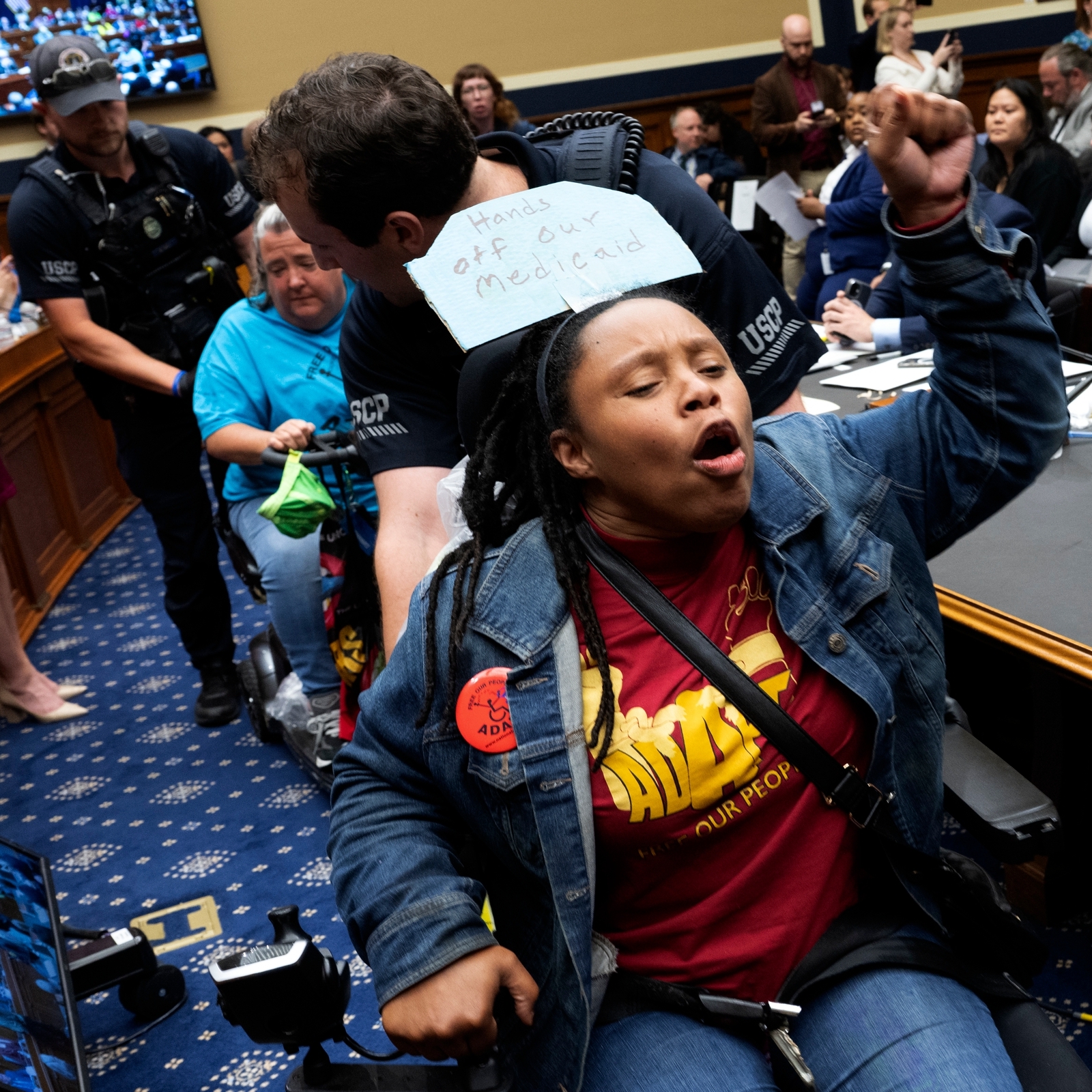
Post Reports
Millions rely on Medicaid for health care. Will Congress cut it?
00:28:38
President Donald Trump’s One Big Beautiful Bill could mean drastic cuts for Medicaid. What would that mean for the millions of people insured by the program?
Loading summary
Transcript77 lines
- [00:03]
Elahe Izadi
Before we start the show, I want to say a quick thank you for being a listener and to explain a little bit more about why my colleagues and I hope you also subscribe to the Washington Post. The Post newsroom has published more than 100 scoops so far this year, exclusive stories reported by our newsroom, holding power to account and keeping you informed. That's what drives our work. And it's the kind of work that you support as a subscriber. If you're not one already, this is a great time to take the step. Our Memorial Day sale is happening right now. You can unlock your subscription for just $2 every four weeks for a whole year. And after that it's just $12 every four weeks. You can cancel anytime. Hit pause right now and go to the subscription link in our show notes or go to washingtonpost.com subscribe in a few minutes. You'll have more of what's happening in the world right at your fingertips. This offer is good for a limited time, so really don't wait. We're so excited to welcome you as a subscriber. Okay, here's today's show. Last Tuesday at 6 in the morning, Katie Corkin, her husband and two of her kids left their home in Amy, Louisiana and flew to Washington, D.C. it was not an easy trip. Her 18 year old, Connor has multiple disabilities. He's non verbal. He can't move on his own. He's in a wheelchair.
- [01:37]
Katie Corkin
Connor weighs about 100 pounds. His wheelchair is 100 pounds. It does not break down. So you have to like they have to put it underneath the plane and people don't understand how frightful that is. Like I'm giving these airport workers his legs and it needs to work when we get to Washington, D.C. they arrived.
- [01:55]
Elahe Izadi
And went straight to the U.S. capitol that afternoon to sit in on a House committee hearing reviewing Medicaid. Medicaid is a government run health insurance program for those with low incomes or disabilities.
- [02:08]
Katie Corkin
And it literally changed his life and it saved his life because we were in and out of the hospital so much.
- [02:16]
Elahe Izadi
Corkin says Medicaid was essential for college. He needed a lot of help that they weren't otherwise able to get.
- [02:23]
Katie Corkin
His health improved drastically. He has a nurse that can sit with him during the day and he has a worker that comes in in the evening so that I can do stuff with my other boys. And it literally changed our way, our life in every way.
- [02:38]
Elahe Izadi
More than 80 million people in the US are on Medicaid. Low income families, children, adults, those with disabilities. Another person who came to Washington for this Medicaid hearing was 41 year old Josie Badger. She traveled from Western Pennsylvania and she has a condition that causes muscle weakness and progressively makes all movements harder, including breathing and talking.
- [03:02]
Fennet Neerupil
I am able to live at home.
- [03:06]
Hannah Jewell
I am able to be a foster mom.
- [03:08]
Fennet Neerupil
I'm able to be here today, all because of Medicaid. They pay for my ventilator, my wheelchair, my nursing, my personal care, attendance. Every part of my life is affected by Medicaid. And I don't want to just survive on the couch.
- [03:28]
Hannah Jewell
I want to thrive and be a full citizen.
- [03:33]
Elahe Izadi
She and others showed up because right now, parts of Medicaid are on the chopping block. As part of President Donald Trump's sweeping tax and immigration agenda, Republican lawmakers have been proposing billions of dollars in cuts to health care. They say it's necessary to cut waste, fraud and abuse in the system. And Republican leaders have drafted a Medicaid proposal that could affect coverage for millions of people. That proposal is working its way through Congress right now. And as part of what Trump has called his big, beautiful bill. Here's Fennet Neerupil, a national health reporter for the Post.
- [04:11]
Fennet Neerupil
We're on the precipice of one of the biggest changes to the Medicaid program in decades. And that can have far reaching implications for Americans.
- [04:23]
Elahe Izadi
From the newsroom of the Washington Post, this is Post Reports. I'm Elahe izadi. It's Wednesday, May 21st. Today we'll speak with my colleague Fennet about America's largest public health insurance program. We'll talk about the high stakes politics around Medicaid in this moment and we'll dig into its uncertain future. Hi, Fennet, how's it going? So I know there's a lot going on right now about Trump's big, beautiful bill that Republican leaders want to get passed. And this hearing that happened on Capitol Hill from last week, it was part of the run up to this moment. So I want to hear more about it. It sounds much more contentious than these procedural committee hearings typically go. Fennec, can you tell me what happened?
- [05:16]
Fennet Neerupil
This was the House Energy and Commerce Committee, which ironically is actually the major health committee on the Hill. And so this was a hearing that looked at the changes that Congress wants to make in order to achieve big spending cuts. Republicans want to extend major tax cuts from the first Trump administration. And these are tax cuts that by and large affect wealthy people. And Medicaid is one of the biggest sources in the federal budget that they can target in order to achieve the kind of big savings and big federal spending cuts. And because Medicaid is the biggest source of these cuts, there is really inflamed passions here because it is the health program that serves some of the most vulnerable people in America. And when that kind of program is on the chopping block, you get people coming out and really worried about their health and their lives. The chair. The chair will advise the audience that disruption of a congressional business. The Hill, the Capitol was packed with people who came out from across the country to make it clear to members of Congress that they don't want Medicaid to be cut. Multiple Democratic lawmakers talked about their constituents who they believed would be affected by Medicaid cuts. That included Troy Carter, a Democrat from Louisiana. Simply put, this is cruel, inhumane and wrong. There was a lot of pushback from Republicans. The people who are legally eligible for Medicaid are not going to lose their Medicaid. At one point, Alabama Republican congressman Gary Palmer challenged the notion that people would lose their Medicaid. We've all got family members, friends, we've got people in our districts. We all know these stories. People that are depending on Medicaid and you will not lose your Medicaid. And as he was defending the Medicaid cuts, there were people who were pushing back and shouting over him. And it's hard to hear, but one person even shouted, you will kill me. You will kill me. It was just one of the most contentious issues that I've seen on the Hill, at least when it comes to healthcare.
- [07:25]
Elahe Izadi
Oh, wow.
- [07:25]
Fennet Neerupil
But I think Medicaid in particular stands out because it does affect some of the most marginalized people in society. You're talking about low income people, people with disabilities, children, pregnant women. It really taps into a nerve when you're talking about healthcare for groups like that.
- [07:45]
Elahe Izadi
Later on, I want to dig into the exact details of this proposal, but before we get there, I want to share this story. It's a little embarrassing. On the Washington Post website, we have this quiz about Medicaid and our colleague Jenna Portnoy made. And it basically tests your basic knowledge of the program. So I went into this, like, very confident. It's like I'm informed. I know what's going on. I took this quiz and I did very poorly. I'm too embarrassed to say how poorly I did.
- [08:10]
Fennet Neerupil
And I probably shouldn't admit this, but I also struggled with that quiz a little bit, even as a healthcare reporter. So don't be embarrassed.
- [08:18]
Elahe Izadi
A lot of, okay, that makes me feel so much better. But I know now that you're very well read and that you can kind of run through some of the biggest misconceptions. And also, what do we need to know about Medicaid?
- [08:33]
Fennet Neerupil
Just at the very basic level. Medicare and Medicaid started in the 1960s, and it responded to a big problem in the United States where there were a lot of people, people who just weren't getting access to health care. It was a generation ago that Harry Truman said, and I quote him, millions of our citizens do not now have a full measure of opportunity to achieve and to enjoy good health. President Lyndon B. Johnson signed it into law in 1965. We're taking such action 20 years later. Medicare serves older adults and senior citizens. Medicaid is meant more for younger people who are disabled or low income, particularly children.
- [09:28]
Elahe Izadi
So Medicaid, how many people roughly were covered by Medicaid last year?
- [09:33]
Fennet Neerupil
About 83 million people were covered by Medicaid last year. And so it is the biggest insurer in America.
- [09:43]
Elahe Izadi
Okay. And so how does it work?
- [09:44]
Fennet Neerupil
So Medicaid is interesting. It's not like Medicare, which is primarily a federal program. Medicaid is a state and federal partnership. So that means the bulk of the money comes from the federal government, but it's actually the states, each individual state that administers Medicaid programs. So the federal government has a lot of basic rules for Medicaid, what kind of services should be covered or what kind of services must be covered, I should say, and what kind of people should qualify for Medicaid. But then the states really deal with a lot of the basics of how Medicaid works in action. So the states do have some leeway of deciding eligibility rules and what services can and can't be covered. And so that's what happens is you have this program that can really vary state to state, but the money is coming from the federal government. So the decisions that Congress makes will have big implications for how Medicaid actually works in action.
- [10:41]
Elahe Izadi
Yeah, I remember covering sort of the years following the Affordable Care act passage in 2010.
- [10:48]
Fennet Neerupil
Yes.
- [10:49]
Elahe Izadi
And how states were deciding whether to opt in to expanding Medicaid. And like, there were a lot of red states who were like, we're not gonna expand. And this was like a huge political issue at the time.
- [11:01]
Fennet Neerupil
So the Affordable Care act, or Obamacare as it's known as, the goal of that law was to expand health coverage for the poorest Americans and the low income Americans. Medicaid was going to be expanded. So that was a big sea change that came as a result of the Affordable Care act that for the first time you had health insurance available for people who don't have a lot of money and who don't have children or other forms of disabilities. And states had the option to decide whether or not to expand Medicaid to include low income adults, and the vast majority chose to do that. All but 10 states have expanded Medicaid.
- [11:40]
Elahe Izadi
When we say low income, is there a number that you can give? Like, what does that mean?
- [11:44]
Fennet Neerupil
Sure. Under the expansion of the Affordable Care Act, Medicaid can cover adults with incomes up to 138% of the poverty line. So that can vary depending on the state. But according to kff, which is a health policy group, the exact numbers would be something like about 16,000 annually for an individual or about 27,000 for a family of three.
- [12:11]
Elahe Izadi
Fennet, is there anything else we should know about who generally right now is covered under Medicaid that maybe we wouldn't expect?
- [12:19]
Fennet Neerupil
I mentioned earlier that Medicare usually covers the health insurance for senior citizens. I actually, maybe I shouldn't confess this, but I only learned a few months ago that Medicaid is actually what pays for nursing home stays because Medicaid is the benefit that kicks in when senior citizens run out of money and need long term elder care.
- [12:39]
Elahe Izadi
You know, in that quiz, one of the really interesting things that also stood out to me too is how much like children's hospitals rely on Medicaid funding as well. So it just makes me think about how, like, even if you're not on Medicaid, there being a lot of Medicaid dollars available could impact the healthcare that you receive because it could stress out the system.
- [13:00]
Fennet Neerupil
And I think for a lot of the healthcare system, you really depend on Medicare and Medicaid because as we mentioned, there are tens of millions of people who use these programs. So especially for places like rural hospitals where there aren't a lot of people with money and there are a lot of people who don't have health insurance, you really need a program like Medicaid to keep a steady stream of income coming to those hospitals and to keep the lights on.
- [13:30]
Elahe Izadi
After the break, we dig into one of the most contentious debates around Medicaid adding a work requirement. We'll be right back.
- [13:49]
Michelle Singletary
My name is Michelle Singletary, and I'm the personal finance columnist for the Washington Post. When I was growing up, I was raised by my grandmother who was such a masterful money manager, and I watched her handle her money and talk to me about it. And I like to think that I'm the reader's Big Mama. There's so much information about your money out there, a lot of it wrong or inappropriate. But when you pay for a subscription to the Post, you're paying for a skilled journalist who has had years of experience, who I hope that you can trust. Your subscription helps pay for my salary. It helps pay for the illustrators, the copy editors, all the people who who are involved in putting together the material that you read that could help inform your life. I'm Michelle Singletary and I'm one of the people behind the Post.
- [14:48]
N/A
Allergy season doesn't wait, and neither should you. Luckily, with Goodrx, you can get ahead of allergy symptoms and save money doing it. GoodRx helps you find big savings on the meds you need, like popular allergy relief for as little as $15 so you, your family and even your pets breathe a little easier. Using GoodRx is free and easy. Just search your prescription on the GoodRx app or website, compare prices at nearby pharmacies, and then show your coupon at the counter. That's it. You can save at over 70,000 pharmacies across the country, including CVS, Walgreens, Walmart, Publix, Kroger and more. And here's something extra. With GoodRx rewards, you earn points every time you use a coupon, points you can redeem later for gift cards and more. GoodRx isn't insurance, but it works whether you have it or not. In fact, it could even beat your insurance copay. So don't let allergy season slow you down. Visit goodrx.com reports today. That's goodrx.com reports there's an efficient way.
- [15:51]
Hannah Jewell
To get caught up on a lot of news. It's called the seven from the Washington Post. It's a newsletter and podcast. Whether you're reading or hit play, you get seven stories you need to know, and you can consume it all in just a few minutes. The 7 is out every weekday morning by 7:00am Eastern. I'm Hannah Jewell, I'm one of the writers and I host the show Find the seven Podcast wherever you're listening. The newsletter link is waiting for you in the show notes.
- [16:23]
Elahe Izadi
So Fennet, now let's talk about what is actually in this proposal that House Republicans have advanced.
- [16:31]
Fennet Neerupil
As of last week, there was $625 billion in Medicaid cuts that were passed out of the House Energy and Commerce Committee.
- [16:40]
Elahe Izadi
And I'm sorry, when you give me that number, is that like a yearly number? How over how long of a period of Time is that I should clarify.
- [16:47]
Fennet Neerupil
This is over a decade.
- [16:48]
Elahe Izadi
Over a decade.
- [16:49]
Fennet Neerupil
So Medicaid still is going to cost trillions of dollars over the next decade. So the $625 billion cut is really more about controlling the rate of growth.
- [17:00]
Elahe Izadi
I see.
- [17:00]
Fennet Neerupil
But this cut to Medicaid would mean that we're controlling how much it increases. But still, that's going to have implications for how many people can get health care. Because the way that they're trying to reduce the cost of Medicaid is by reducing enrollment in Medicaid.
- [17:17]
Elahe Izadi
Okay, so talk to me about that. How are they planning to reduce enrollment in Medicaid?
- [17:22]
Fennet Neerupil
There are three big proposals that would reduce Medicaid spending, and the biggest one is by imposing work requirements. The idea being is that if you're an adult without physical or mental disabilities, you need to work, train for a job, or be in school in order to get Medicaid benefits. So under the proposal working its way through Congress, in order for a non disabled adult to get on Medicaid, they need to be spending at least 80 hours a month working, training for a job, doing community service or being in school. And then the other two big forms of Medicaid savings come from repealing some regulations that were meant to make it easier to enroll in Medicaid and to do eligibility checks. And then there's another very convoluted issue regarding a tax that's used to finance Medicaid. I'm happy to explain it, but the short answer to that one is that it can result in states having less money to operate their Medicaid programs.
- [18:26]
Elahe Izadi
I want to talk about the work requirement piece of it. What is the argument for adding a work requirement specifically?
- [18:35]
Fennet Neerupil
Yeah, the argument that Republicans are making is that Medicaid is not meant to be as far reaching as it is now. Medicaid, when it first debuted, was supposed to be for the most vulnerable in society, which is why it historically has been for pregnant people, for children, for people with disabilities. And they say this idea of Medicaid being for working age adults who could work, that's going too far. So they're saying that Medicaid traps people into poverty by letting them have something like health insurance when they're not working and they're making low wages.
- [19:10]
Elahe Izadi
Oh, like trapping people in the sense of if I make more money, then I don't qualify for this benefit anymore.
- [19:15]
Fennet Neerupil
It kind of gets to the broader Republican conservative philosophy on the safety net that you shouldn't be giving people too many benefits when they're low income. You should be incentivizing people to work. And if you give too many, any benefits to someone who's not making a lot of money, you're dissuading them from getting a job. I see Robert F. Kennedy Jr. Who's the secretary for Health and Human Services, even made this point in a Senate hearing this week. Remaining people who are affected are able bodied male workers, males who refuse to get a job. I will say social science researchers say there's a lot of fundamental problems with this kind of thinking, but that is the overarching philosophy here, which is that Medicaid dollars be going to people who could work and who could be making money to pay for their own health insurance.
- [20:09]
Elahe Izadi
Are there any examples around the country, given that a lot of Medicaid is, you know, state run, where a work requirement is already in place?
- [20:17]
Fennet Neerupil
So right now, the only state in the United States that has work requirements for Medicaid is Georgia. And Georgia is one of those holdout states that didn't expand Medicaid to low income adults, but it did did apply for a waiver that let it operate this program where people with low incomes could get Medicaid, but it was on the condition that they work or train for a job.
- [20:40]
Elahe Izadi
Fennet, did you talk to anyone in Georgia about how this work requirement implementation went and how it impacted their lives?
- [20:49]
Fennet Neerupil
One person I spoke to was Heather Payne. She's a 52 year old former travel nurse and she really embodies what's at stake with work requirements because she did work. She was a nurse who would.
- [21:01]
Elahe Izadi
I mean, she worked in healthcare.
- [21:02]
Fennet Neerupil
Yeah, she was a nurse who worked in hospitals in Georgia and elsewhere. And she stopped working because she suffered a series of strokes.
- [21:11]
Heather Payne
The strokes weren't caught right away. So I spent a couple of months just wondering what was wrong with me, you know, like, why are you having all these problems, Heather? I fell down the stairs, you know, a couple of times and was still having headaches.
- [21:34]
Fennet Neerupil
So because Heather was a travel nurse, that meant that she worked on contract. So she's not a full time employee who has health insurance around, around the clock. And so when she had her strokes, she was in between contracts. So she was caught at a time that she didn't have health insurance when she had a major medical crisis. And then that put her out of work and made it hard for her to get health insurance instead. And Medicaid ultimately wasn't an for her because of the way that Medicaid is structured. In Georgia.
- [22:04]
Heather Payne
When you're a contract worker, your coverage can Come and go like that. And so I kind of. It just. All this happened to happen. You know, it's Murphy's Law, right? In one of the few times of the year when I managed to not have insurance, I also managed to have strokes because I. That's the way the universe works, right?
- [22:32]
Fennet Neerupil
She's pursuing a master's degree to become a nurse practitioner. But she says she's caught in this bind where even though she's trying to get insurance and she's trying to get back into work, she can't qualify for Medicaid because of the requirements and because of some of these bureaucratic issues.
- [22:50]
Elahe Izadi
But she's in school. Doesn't that qualify her for Medicaid?
- [22:53]
Fennet Neerupil
It's supposed to, but Georgia says that in order to qualify under the schooling exception, you need to be receiving 11.5 credit hours per semester. Under Heather's full time program, she only gets nine credit hours. So even though she is in a full time program to be a nurse practitioner, it doesn't meet that bar to get her Medicaid. To be clear, Heather says she does have health insurance now because her school requires her to get it. The problem is, she says it's very expensive, it's not a good insurance plan, and because there's no subsidies, she had to tap student loans in order to pay for for it. And that adds to her debt and takes away from other basic school needs.
- [23:37]
Heather Payne
You know, sometimes it feels like I tripped and fell and then I pick myself back up again and someone is sticking out their foot and trying to trip me again. You know, I'm. I feel like I'm doing what everyone says you're supposed to try to do. I'm trying to put myself back in a position where I can work and be productive again.
- [24:08]
Fennet Neerupil
One of the things that I've been hearing is that Georgia is a cautionary tale for the rest of the country. Because as Congress has been discussing this whole Medicaid work requirement issues, you'll often hear Republican lawmakers saying that, oh, able bodied men who are sitting in their mom's basement playing video games shouldn't be getting Medicaid. But what you hear from Medicaid researchers is that's not a big group of people. The reality is that is the people who are receiving Medicaid but don't work are more often going to be people like Heather, people who want to be working, who are trying to make ends meet. But for whatever reason, they have a legitimate reason for not working. When you just look at the very basic enrollment numbers, only 12,000 Georgians have been able to receive Medicaid of the roughly 50,000 people the state had initially hoped to enroll. And so one of the things that you'll hear advocates talk about when you're talking about work requirements, is it. Is it really a work requirement, or is it a work reporting requirement? Because as Georgia rolled out this program, there were technical glitches that came up with the website that people were supposed to use to submit their documentation to prove that they were working or doing something else to meet the requirements to qualify for Medicaid. And then the state also didn't have enough staff to process all of these applications.
- [25:36]
Elahe Izadi
So that was the experience in Georgia. And I want to put that into the national context, and I want to go back to the politics of Trump's big tax bill. So we started out this conversation talking about that contentious Medicaid hearing on Capitol Hill. And Fenne, I want to know, how have Republicans been trying to sell these changes to Medicaid?
- [25:59]
Fennet Neerupil
One of the big arguments that House Republicans are making is that their proposals are for Medicaid are actually better for vulnerable Americans because they say in order to still have Medicaid decades from now, it needs to be fiscally sustainable and it needs to be financially solvent. So their argument is that people with disabilities are more likely to. To continue to have access to Medicaid if you focus on getting people without disabilities who could work off of Medicaid. And they also really take umbrage the idea that they're going after Medicaid for people with disabilities, because there's nothing in the Medicaid proposal that says explicitly, we're not gonna cover Medicaid for people with disabilities anymore, or they're gonna give states less money. But the concern here is, what are they? The indirect impact's gonna be because when you're tinkering with how Medicaid is financed and when states are ultimately gonna get less money for their Medicaid programs, the states are gonna have to decide how to fill those gaps. And so the concern here is that when states are dealing with the ramifications of Medicaid cuts, then they can make decisions that result in fewer people with disabilities having access to Medicaid.
- [27:17]
Elahe Izadi
So based on what you're describing, it sounds like Democrats are, by and large, very much against making any changes, or at least these changes to Medicaid, and Republicans are united in wanting changes. Is that basically it?
- [27:34]
Fennet Neerupil
I would agree on the first part, that Democrats, by and large, are united on protecting Medicaid. As is, there is more divisions within the Republican caucus. So, you know, you have the fiscal conservatives who want to really drive down spending. But the midterm elections are coming up in 2026, so there are a lot of moderate Republicans or other Republicans in vulnerable seats who have really tough reelection campaigns ahead. And they've been balking more at the idea of cutting Medicaid. So there are divisions within the Republican caucus where there is just general agreement that we should cut spending and Medicaid is a good source of savings. But just how far are you going to go? Because there is a political price to be paid if you're going to go after Medicai. And Trump himself has been making this point repeatedly. And just this week he met with Republicans in Congress and told them explicitly, do not f with Medicaid. But he is still expressing openness to going after work requirements or rather adding work requirements and going after waste, fraud and abuse. But we are still talking about cuts here. It's just, how are you gonna advertise them? How are they gonna be described to the American people?
- [28:48]
Elahe Izadi
So, Fennet, where does this proposal in Congress go from here?
- [28:51]
Fennet Neerupil
So House Speaker Mike Johnson has said that all of Congress, so the Senate, too, needs to advance this to the president's desk by July 4 because there is a mid July deadline before the US hits its debt limit. So we are up against the clock here trying to do this massive, sweeping restructure to federal government and this massive spending cut of trillions of dollars in a matter of months.
- [29:20]
Elahe Izadi
Fennet, thank you so much for joining and spending time explaining all this. I really appreciate it.
- [29:25]
Fennet Neerupil
Of course. Happy to.
- [29:29]
Elahe Izadi
Fennet Neerupil is a health reporter for the Post. That's it for Post Reports. Thanks for listening. And remember, if you want to show your support for the show, please subscribe to the Washington Post. We've got a great deal going on for Memorial Day. Subscribe by following the link in our show Notes. Today's show was produced by Alana Gordon and Rennie Srinofsky. It was mixed by Sean Carter and edited by Rena Flores. Thanks to Lenny Bernstein and Ozzie Peybara. I'm Elahei Izadi. We'll be back tomorrow with more stories from the Washington Post.
- [30:11]
Hannah Jewell
There's an efficient way to get caught up on a lot of news. It's called the seven from the Washington Post. It's a newsletter and podcast. Whether you're reading or hit play, you get seven stories you need to know and you can consume it all in just a few minutes. The 7 is out every weekday morning by 7:00am Eastern. I'm Hannah Jewell. I'm one of the writers and I host the show Find the seven Podcast Wherever you're listening. The newsletter link is waiting for you in the show notes.