← Post Reports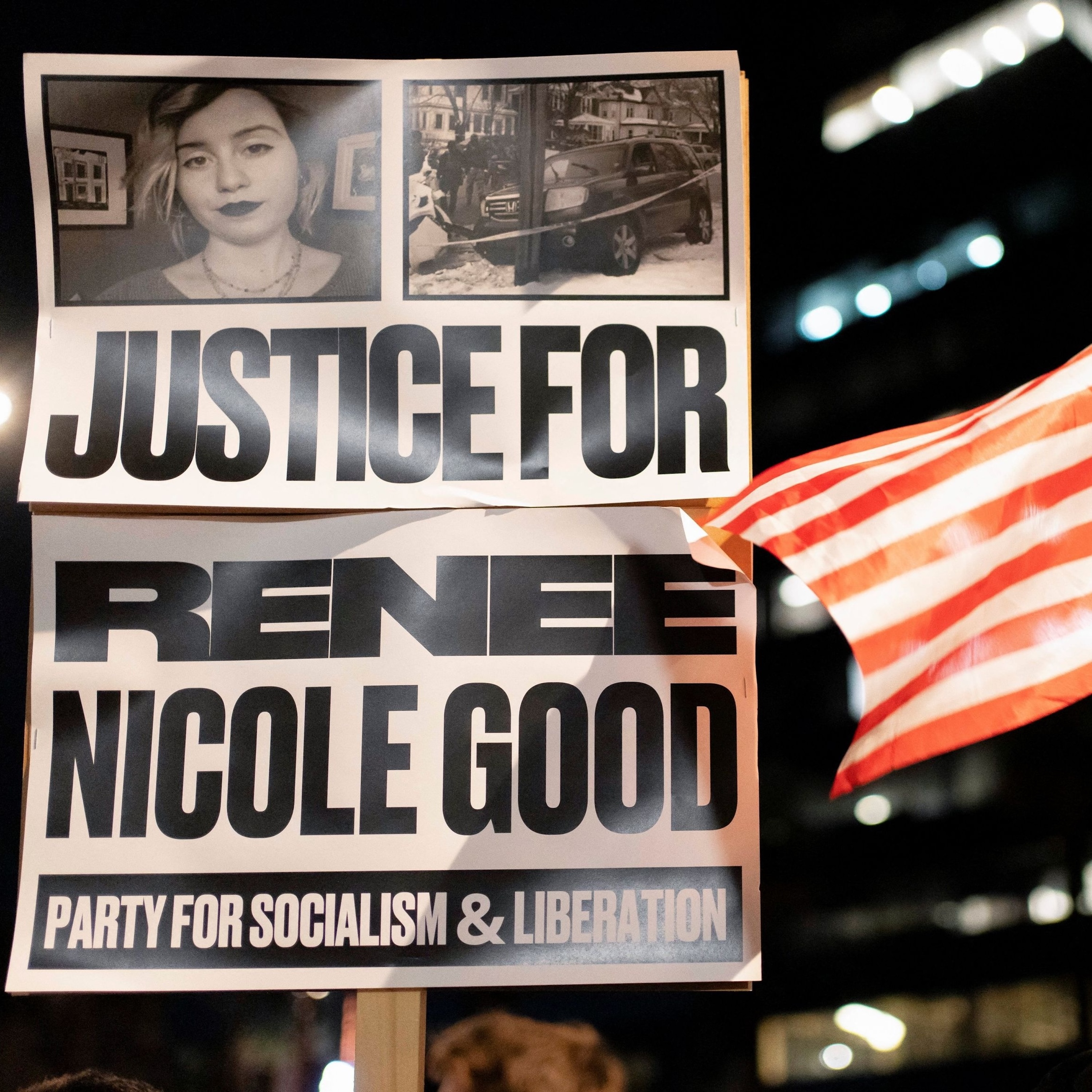
Post Reports
Minneapolis ICE shooting, Tim Walz and 'America First' after Venezuela
00:33:40
The fallout from Wednesday’s ICE shooting in Minneapolis, why the ouster of Venezuelan President Nicolás Maduro has led to renewed talk of buying Greenland, and the fallen star of Minnesota Gov. Tim Walz.
Loading summary
Transcript71 lines
- [00:01]
A
I would move to Greenland. I think it's cold.
- [00:04]
B
It's very icy, right? Yeah. Because you know what I learned in the Mighty Ducks? Greenland is covered in ice and Iceland is very nice. Did you know that from the Mighty Ducks?
- [00:15]
A
No. Okay.
- [00:16]
B
Just me.
- [00:16]
C
No. I also signaled at you. Yes.
- [00:23]
B
From the newsroom of the Washington Post. This is Post Reports weekly Politics Roundtable. I'm Colby ekowitz. It's Friday, January 9th. We'll begin today discussing the political fallout from the shooting of a Minneapolis woman by an ice agent. And then we'll stay in Minnesota to talk about Governor Tim Walz, the former vice presidential candidate who has decided not to run for reelection this week amid a major scandal in his state. We'll also discuss the latest on President Trump's ambitions in Venezuela and what it means for his ambitions around the world in places like Greenland. And we'll talk about why Defense Secretary Pete Hegseth is targeting Democrat Mark Kelly. Back with me at the table is Dan Marika, co anchor of our politics newsletter, the Early Brief, and thrilled to have with us at the table Michael Birnbaum. He is a White House reporter for the Post. Guys, thanks for being here.
- [01:13]
A
It's great to be here.
- [01:14]
C
Thanks for having us.
- [01:17]
B
Guys. I want to start with the tragic news out of Minneapolis. We saw on Wednesday A woman, a 37 year old named Renee Nicole Goode. She's a mother. She was killed by an ICE agent in her car. I wanna note we're taping this on Thursday morning. So this is a story that is continuing to unfold. We're continuing to cover. We don't know how it's gonna play out, but we've already seen, you know, we've seen protests and we've seen reactions from both political parties. And I wanna talk a little bit about that, specifically how this has already been divided along partisan lines. Dan, what have we seen so far?
- [01:55]
A
Pretty quickly after this happened, there was video on social media of it. It wasn't full video. There were different angles, but you saw people kind of rush to the video and in many ways see where their political ideology lined up. Obviously, the ICE actions in the United States are supported by Trump's base, by the Republican Party generally. And so you saw President Trump quickly take to truth Social, saying that he saw the and castigating the woman who was killed in the car and defending the ICE agent. And the exact opposite happened from Democrats nationally and also in Minnesota, where the mayor of Minneapolis came out very forcefully and blamed the ICE operation in the state for what happened, said that the administration was trying to spin what happened and then used some pretty colorful language to tell ICE to leave the city, that he leads to ice, get the out of Minneapolis.
- [02:54]
D
We do not want you here. Your stated reason for being in this city is to create some kind of safety, and you are doing exactly the opposite.
- [03:03]
A
It really has become a bit of a political Rorschach test in some ways where, and we've seen this happen with other instances of tragedies like this that happen, where how someone or how a politician or political party sees a video largely falls or tries to, you know, comports with and how they view what is happening in that region. And that is certainly what has happened here. The New York Times had an interview with President Trump on Wednesday when the shooting happened. They pushed him on what his response was. It was interesting that he, when he was showed the video and was told that there didn't seem to be an instance where the ICE agent was run over by the car. He didn't really have an explanation for it and just said it was a terrible scene and he didn't want to have have that happen. There's this dynamic where he's being forced to kind of reckon with the video as it is.
- [03:55]
B
Right. And we should note for those who maybe haven't seen the video, it's a woman sitting in, I think it's a Honda Pilot. She's kind of blocking a street where there are some ICE agents and it seems like they approach the car. She starts to drive away. An ICE agent shoots directly into the car.
- [04:16]
A
We have reported, based on the video, that the car was very clearly the wheels were turned away from the agent when the agent fired the shots.
- [04:24]
B
I mean, Michael, obviously Trump's immigration raids in cities all over the country have been quite controversial. In his first year in office, ICE has increased its presence in Minneapolis. What does it say about this moment? Like, is this moment a tipping point for that larger conversation around, around immigration and deportations?
- [04:45]
C
Well, it certainly does feel like this is a big moment and something that's going to catalyze a lot of protest, a lot of discussion, perhaps even more polarization in an extremely polarized time. ICE has been conducting these raids around the country, but especially in Democratic cities over the course of the last year. And that's been paired with the military deployments in the street of US Cities, National Guard and other troops being deployed, sometimes for immigration enforcement, sometimes just for law enforcement. What Democrats have said this whole time is that this kind of tremendous display of federal force in again, largely Democratic cities is both inappropriate, not a good use of federal power. In the case of military, largely unprecedented, and ultimately that it's going to lead. When you put a bunch of heavily armed agents, federal agents, into the streets of cities, sometimes those arms are going to go off and hit people. And so particularly this is Minneapolis. This is where George Floyd was killed in President Trump's first term. There are a lot of tensions here. And as Dan was saying, this does feel like a moment where, depending on which side of the political spectrum you fall on, you see something very different.
- [06:24]
A
It is worth noting that President Trump's ICE actions, while promised throughout his 2024 campaign, are largely unpopular with many voters. Based on polling in 2025 last year, I mean, there was a Gallup poll that only 35% of Americans approved of how Trump was handling immigration. And obviously, the way he' handling immigration is largely defined by these ICE raids. It's certainly the most public way that he's handling immigration. And you have to wonder that a lot of people don't sit on the news. They're not on Twitter at all days. They're not engaging with content as much as probably reporters do. But this breaks through, and this is all over the place, and the video is out there. You do have to kind of wonder that a moment like this, could it make what was already a relatively unpopular program being pushed by the Trump administration, could that. Could it make it more unpopular? Even if it does break down along.
- [07:15]
B
Partisan lines, and does it benefit him? I've been wondering politically that he is, at this point, really doubling down on it being the woman's fault, that she's kind of the bad actor in this storyline and that the agent was defending himself, defending his life. There'll be an investigation. We will learn more about this in the coming days and weeks. But the fact that he was so quick to blame the woman who is now dead, a mother of three, is that gonna backfire at all?
- [07:46]
C
I mean, it's a little hard to say. I think it's clear his reflexive defense of this ICE agent, his blaming of the woman. If you look at the video, our colleagues, our Washington Post colleagues have found, you know, the agent was not standing in front of the vehicle at the moment that he shot the. The driver. There were moments when he was standing in front of the vehicle. If you are predisposed to be sympathetic to these ICE raids, you're probably going to say, well, you know, this is an unfortunate moment, but the driver was at fault. But as Dan says, these are not especially popular among voters. If you're not very excited about them in the first place, but you haven't been paying much attention, this will probably break through.
- [08:36]
B
Yeah. Well, we'll continue following the story here at the Washington Post and on Post reports. I want to shift to another story in Minnesota that is political in nature and that is Minnesota Governor Tim Walls. Everyone got to know Tim Walls during 2024. He was Kamala Harris pick to be her vice president. They introduced him to the nation, the world, as this kind of folksy dad.
- [09:00]
A
Former football coach.
- [09:01]
B
Yeah, former football coach. He was like an everyman. His star was rising among in Democratic politics. And now he is not running for reelection because there's this major scandal that happened in his state and Republicans are trying to put the blame on Walls. Dan, explain this scandal to us.
- [09:17]
A
So it's a welfare scandal involving the misuse of Medicaid funds, particularly in the way that they have been used for childcare and food bank centers. And Walls and other Democrats have accused the Trump administration of trying to politicize something that and, you know, really using kind of racist, anti immigrant overtones because the food banks and the childcare centers are run by Somali immigrants, of which there are many in the Minneapolis St. Paul area. And so Walls said that he was not going to run for reelection and continue to fight for his constituents in Minnesota, including Somali immigrants. And I think at one point he said that any time he spent focused on a third term, this would be his third term as governor, would be time not spent on defending Somali immigran and other folks in Minnesota for that matter. Walz has said that the buck does stop with him. He has acknowledged numerous times, I think in December that fraud did happen and that it was worth investigating and that the people of Minnesota deserve to know where their taxpayer dollars are going. But it's worth noting, this is something that he has said they are investigating as well. Amid all of this focus from the federal government and the Trump administration, it is a remarkable fall for Tim Walls. I mean, there was a point where he was kind of the prototypical rural House member Democrat where people would, you know, when they would talk about Democrats struggling to win in rural areas, they would look to him because he represented a swath of southern Minnesota that was largely rural south of Minneapolis.
- [10:50]
B
And I think that was part of his appeal to the Harris campaign.
- [10:53]
A
Absolutely. Then he runs for governor, he wins. He's a governor of a large state. His stock rises in large part because he was somewhat of an attack dog for Democrats around the Trump campaign. And that I think got the attention of Harris as well. And so she selects him over other probably better known Democrats that she could have selected. And then again, he was the attack dog for the Harris campaign as well. He was often the one delivering the most pointed, vicious attacks against the president that gave him a lot of credibility on the left and it made him an enemy on the right. And so when Harris loses and he goes back to being governor of Minnesota, that kind of antipathy on the right followed him back to Minnesota. And I think you saw he was a target of right wing media, of right wing actors, of the president himself in numerous occasions. And so the fact that he went from somebody who was lauded as a House member, a rising governor, someone who was even getting 2028 presidential speculation, to not running for a third term, it's a pretty remarkable shift for a once Democrat rising star.
- [11:59]
B
I mean, what do you make of the fact that Trump has really focused on this story like he's out there on truth social slamming Tim Walls attacking the Somali American community in Minneapolis?
- [12:12]
C
Well, it fits into a lot of his favorite issues. I mean, one favorite thing is slamming Tim Walls. Another is particularly this focus on Somali immigrants. You know, this is something that dates back to his first term. He clearly does not like the country. He's talked about Somalia and other countries in quite denigrating profane language that we can't use on this podcast. And he also really doesn't like Ilhan Omar, who, you know, is a representative from Minnesota and a member of the Somali American community. And so this is a moment where he can talk about fraud. He can talk, he can hit Democrats, he can hit Somali immigrants. And it's kind of a perfect storm of a lot of his issues. And, you know, in terms of the fraud, you know, it is a meaningful scandal.
- [13:17]
B
Sure.
- [13:18]
C
And so he's been very happy to jump on it.
- [13:22]
B
And so they're blaming Tim Walls because he was the governor at the time this fraud happened. I mean, is there anything to suggest that Tim Walls is implicated in this fraud, that he allowed this to happen?
- [13:33]
A
Implicated, no. But that he was the governor, the leader of the state at the time, that there was this fraud happening? I think is the attack against him, that he didn't audit enough, didn't check enough? But it's worth noting that this is something that didn't just crop up under the Trump administration. This is something that happened and was investigated under the Biden administration as well.
- [13:54]
B
And that Walls himself was investigating in the state.
- [13:57]
A
Yes, absolutely. Yes, absolutely. But it is a pot issue for all the reasons that were mentioned and the fact that there are few things that Donald Trump enjoys more than taking down somebody who's been incredibly critical of him. And this is an example of that for sure.
- [14:11]
B
All right, guys, well, let's pause here. And after the break, we're going to talk about President Trump's moves in Venezuela, what it means for Greenland. And then we'll also talk about Pete Hegseth and his focus on Democratic Senator Mark Kelly. We'll be right back.
- [14:35]
E
Are you thinking of starting the year with a wardrobe refresh? If so, Quince has you covered with luxe essentials that feel effortless and look polished. They're perfect for layering, mixing and building a wardrobe that lasts. Their versatile styles make it easy to reach for them day after day. Quince has all the staples covered from soft Mongolian cashmere sweaters that feel like designer pieces without the markup to 100% silk tops and skirts for easy dressing up to perfectly cut denim for everyday wear. Their wardrobe essentials are crafted to last season after season. And like everything from Quince, each piece is made with premium materials in ethical trusted factories, then priced far below what other luxury brands charge. You know by now how much I love my cashmere sweater and also that I was planning to give it as a gift to all my friends for the holidays. Well, for the first time in I don't know how long, I got rave reviews for my gifts this year, all thanks to Quints. The words, they all kept repeating, so soft. Refresh your wardrobe with Quince. Don't wait. Go to quince.com reports for free shipping on your order. And 365 day returns now available in Canada, too. That's Q-U-I-N-E.com reports to get free shipping and 365 day returns, quince.com reports.
- [15:51]
B
So we earlier in the week covered extensively the massive news that the US captured Venezuelan President Nicolas Maduro and his wife. In fact, Michael, you were our guest on that show with our host Martine Powers on Monday. Obviously, this is another story that continues to play out. The fallout from it continues and will continue in the weeks and months and years ahead because the US is continuing aggressive actions related to Venezuela. It didn't just stop with the capture of Maduro. In fact, the US seized two Russian oil tankers. What is that about? How is that related? What do we know about the US's plans going forward, Colby?
- [16:32]
C
I mean, this is just one expression of raw American power after another. Trump seems to have gotten into a certain kind of groove here. What we saw Wednesday was in fact this kind of extraordinary confrontation around a Russian flagged oil tanker transporting Venezuelan oil. At this point, the tanker had gotten to the North Atlantic, actually not that far from Greenland, another target of Trump's desires at the moment. Essentially, Trump deposes Venezuelan President Nicolas Maduro on Saturday in an extraordinary overnight raid and is talking a lot about oil. So they are going to continue to put pressure on Venezuela's oil industry. They want that oil for the United States. They made it very clear. Trump has said if the new Venezuelan leaders, who are more or less like the old ones, except maybe pro American, don't allow US Oil industry access, they're going to reinvade and redepose. And that oil blockade and those seizures of those Russian ships is an element of that. But I'm just going to say, like Trump separately is trying to make nice with Russian President Vladimir Putin. He's been very accommodating to Putin over the last year. They are engaged in peace talks in Ukraine. This seizure of Russian flagged ships is an extraordinary confrontation with Moscow. It's not coherent. It's not part of it does not appear to be a sort of broader part of a strategy about engaging with Russia or dealing with Venezuela. It is something that is going to make people in Moscow sweat. And in fact, it is a major confrontation with another nuclear power, given the extent to which the Kremlin had requested the United States allow these tankers to pass through. It's really a fascinating moment.
- [18:32]
B
Yeah. And you mentioned Greenland as part of the rest of his foreign policy. After he deposed Maduro, he started talking again a lot about wanting to take over Greenland. And I wonder, now that we've seen what he did in Venezuela, does it make it more likely that we could see him try to seize Greenland by force?
- [18:54]
C
So Greenland, a Danish territory, it is part of the Kingdom of Denmark. Denmark is a close US Ally. Fellow NATO member suffered disproportionately in Afghanistan, fought along the United States in a NATO action after September 11, 2001. They are astonished that Trump is talking about taking Greenland, whether by force or coercion of some sort. They say if you want a bigger military presence there, you can have it. If you want US Investments in critical minerals, you can do it. There's nothing standing in your way. Trump and his allies have said we just want to have Greenland. And the things that the Danes are offering are not enough. It's really an extraordinary moment. The Danes are the technical term is freaking out. And Danish Prime Minister Mette Frederiksen has issued multiple statements over the last couple of days saying this is an issue that would split NATO. It would be incredibly damaging. And yet the White House is pushing forward. It seems they've threatened military force. Secretary of State Marco Ribio told Congress on Monday. This public pressure campaign is really part of a strategy to encourage Denmark to sell Greenland to the United States. Denmark says it's not for sale, and the Greenlanders would have a say anyway. But is this extraordinary moment where Trump really wants this thing and it has kind of revived a little bit out of nowhere. This was something he talked about very early in his term. A year ago it had quieted down and it has suddenly come back roaring to the fore.
- [20:55]
A
What's interesting about both of these, I mean, this has got to be the first time that Venezuela and Greenland have been in the same geopolitical conversation, maybe ever. But what's interesting is that a lot of this is an echo of Trump's first term. In the first term, there were books written afterwards that said that Trump had talked about toppling Maduro and taking over the oil in Venezuela that he had. I mean, he was very. There was a very big scoop in the first term by the Wall Street Journal about him coveting Greenland. When the news broke that he had speculated and had desired buying Greenland, I think it was cast as the biggest real estate deal he could make. The response from Denmark and from Greenland was basically mockery. I mean, Greenlandic officials called him a circus. You had, I think even Frederiksen, even the current prime minister of Denmark, mocked the proposal. A former prime minister said that it was April, must have been April Fool's Day. So you had this kind of mockery of Trump for even suggesting it. You look at how different that is now. I mean, the Maduro action happens and it kind of shows that there are no longer empty threats from this administration. And they will take audacious action if.
- [21:59]
B
They want to, because he feels more emboldened, because he feels like there's no guardrails. He can do these things now.
- [22:06]
C
Well, in the first term, he had a crew of both domestic but also especially foreign policy advisors who were much more traditional and spent a lot of time holding him back. Now he has foreign policy advisors who are dedicated to enabling him and facilitating his impulses in all number of ways. And also he is a second term president, probably not running for a third term, probably. And he's in legacy building mode. What better legacy than to expand the territory of the United States? Redraw the maps. Redraw World history. That's a good way to assure your immortality and write yourself into history books.
- [22:53]
B
His own doctrine.
- [22:54]
A
I mean, I've been thinking about this in a way that Donald Trump doesn't speak very fondly of his predecessors. I mean, think about Joe Biden, Barack Obama, George W. Bush, even Republicans. He castigates them roundly. You think about the presidents who he lauds. They're folks from the 1800s who are best known for expanding the size and power of the United States. Obviously, James Monroe with the Monroe Doctrine, he joked this weekend calling it his version, the Donroe Doctrine. But even he was the first president to visit Andrew Jackson's home in Tennessee during the first term since Ronald Reagan. Jackson, famous for expansion of the west and the Trail of Tears and a whole host of things. A very controversial president. But then you think about William McKinley. He renamed Denali the mountain in Alaska back to its name of Mount McKinley. He moved a portrait of McKinley in the White House to a more prominent position. McKinley is famous for Puerto Rico, Guam, the Philippines, expanding the size of the United States. So for a guy who doesn't like his predecessors, the predecessors he does like, have the same worldview as him. They just were President, you know, 150, 200 years ago.
- [24:04]
B
That worldview being make America as big as possible.
- [24:07]
A
Yeah. I mean, and it's the way that this comports with the idea of making America great again and this America first vision. I mean, there's this inherent tension with this slogan, make America great again. Well, when was America great? Maybe for Donald Trump, America was great in the 1800s, but it was expanding its power and its influence across the Western Hemisphere. Now, I'm not sure that his supporters see it that way. I mean, many of the reasons, many of the, of his voters flocked to him because he was anti interventionalist, because he spoke out about stuff like the Iraq War that he criticized kind of the foreign policy views, especially in 2016, of Hillary Clinton, who was far more traditionalist view of foreign policy. Former secretary of state. But you have seen his administration rush to cast what happened in Venezuela as America first because they know that he ran on something different. He ran as an anti interventionalist. He ran as focused on domestic issues. So there's this kind of question hanging out there of how does this fit in the America First October?
- [25:05]
B
Well, that's a question I had for you, Dan, because again, like you've said, the whole MAGA movement is about America first. And his whole campaign was about lowering inflation costs and the economy and Making life better for Americans. And yet we've seen him in his first term really focused on things episodes around the globe. And I do wonder how Americans will respond to that and how that might even impact the 2026 midterms if Americans are feeling like the president is distracted by things around the world and not making their lives better.
- [25:38]
A
I mean, you see in the way that Trump responded that he said that Venezuela, they were going to take the oil of these seized tankers and that he was going to control the money that came from that and that he was going to use it for the American people. So that he's taking this foreign policy issue and trying to kind of translate it into real money terms for the United States. Because he knows very well that this election in 2026 will be decided not on foreign policy. Right. Not on what happens in Venezuela. It will be decided on whether the price of eggs is higher, whether people feel like the money that they make goes as far as it had in the past.
- [26:12]
C
Well, at the same time, I mean, you see the president and his top advisors, Stephen Miller, in particular his deputy chief of staff, who has been very, very focused on immigration, painting Venezuela as an anti drug action and as an anti immigration action, they say that Venezuela has been funneling drugs to the United States, not especially accurately, but that it has also been both a source of migration to the US and also a sort of way country on the way to the United States. So by imposing a pro US Leader on the country, they say they can reduce the flow of drugs, address those drug issues and reduce migration, potentially also send a bunch of Venezuelans from the United States back to Venezuela. So they are trying to cast this as essentially a domestic issue.
- [27:12]
B
Yeah, I want to end, guys, on this story that really struck me this week, and it's related somewhat to Venezuela because Senator Mark Kelly, the Democrat from Arizona, along with several other members of Congress who are also retired military, retired intelligence, they put out this video back in November that basically said to service members and people in the intelligence community, you don't have to follow unlawful orders. I'm Senator Alyssa Slotkin.
- [27:38]
D
Senator Mark Kelly.
- [27:39]
B
Representative Chris d', Aluzio, Congresswoman Maggie Goodlander, Representative Chrissy Houlihan.
- [27:44]
D
Congressman Jason Crow. I was a captain in the United States Navy, former CIA officer, former Navy, former paratrooper and Army Ranger, former intelligence.
- [27:53]
B
Officer, former Air Force.
- [27:54]
D
We want to speak directly to members of the military and the intelligence community who take risks each day to keep Americans safe.
- [28:01]
B
We know you are under enormous stress and pressure right now. Americans trust their military.
- [28:06]
D
But that trust is at risk. This administration is pitting our uniformed military and intelligence community professionals against American citizens like us. You all swore an oath to protect.
- [28:16]
B
And defend this Constitution.
- [28:18]
D
Right now, the threats to our Constitution aren't just coming from abroad, but from right here at home. Our laws are clear. You can refuse illegal orders.
- [28:27]
B
You can refuse illegal orders.
- [28:29]
D
You must refuse illegal orders.
- [28:31]
B
And in that case, they were referring to the bombing of these boats off of Venezuela, these boats that were allegedly bringing drugs into America and were killing everybody on board last year. So what happened after that is that the Trump administration was furious and called them traitors and treasonous and seditious. And this week, Defense Secretary Pete Hegseth took an action against Mark Kelly that was pretty unprecedented. Michael, what happened?
- [29:03]
C
Well, as you said, Mark Kelly, senator from Arizona, has been involved in saying very prominently he himself is a veteran. He's been saying, you don't have to follow illegal orders. And he's been now demoted or the administration, Pete Hegseth has initiated proceedings against him to reduce his rank and reduce his military pension. Seditious behavior, which is what Trump has accused Mark Kelly of, is, as Trump said in his true social post at the time, seditious behavior is indeed punishable by death. Those are very serious charges against a military veteran. And Kelly has said this is ridiculous, absolutely unjustified. One of the first lessons taught to everyone entering the military is that you follow lawful orders, but not unlawful ones. This is a moment where as so many elements of American life are becoming politicized in a way that they hadn't before. The military has traditionally steered clear of political affairs. Presidents have historically been careful about separating service members from political activities, campaign style, rallies, other things, not always successfully. But this whole back and forth is a kind of extraordinary shift in how what hasn't been a political element of American life is becoming super politicized.
- [30:51]
B
It does seem like it's part of the kind of retribution campaign by the Trump administration. You say something I don't like, you're my political enemy. We're gonna go after you in whatever ways that we can. And in this case, Pete Hegseth, I guess, has the authority to do this to demote de rank Mark Kelly. But I wonder ultimately how big of a deal it is for Kelly himself. Yes, he loses this ranking, but it certainly elevates his profile even more than it already was.
- [31:20]
A
I would imagine if you could give Mark Kelly a little bit of truth serum, that the attention he is receiving at this moment and the way that Democrats are flocking to him around this. There's probably a silver lining there for him. He is somebody who is well regarded in the party and is widely speculated to be a topic Democrat considering running for president in 2028. And as we've seen in past cycles, the greatest way to get your name up in a primary field that is going to be incredibly crowded on the left is to be a target of Donald Trump. So any money that he is losing by being demoted or losing some of his pension will probably be 100x to in his campaign account from donations from Democrats who support him. And in a weird way, the Trump administration doing this is somewhat elevating him to a status that he wouldn't have had in the primary field in 2028. So there is that part of it as well. I mean, I think for Mark Kelly, he's a very proud veteran as well. I would imagine this hurts because of the service that he gave to the United States and the fact that he was proud of his military service. But you're absolutely right. I mean, there's this dynamic here that this was a part of the country that wasn't politicized for decades and is now clearly being politicized under Pete Hegseth, who, it is worth noting CNN reported last year had made similar comments about following lawful orders before he was the defense secretary.
- [32:57]
B
There was for such a long time deference given to people who served in the military and a certain respect and a gravitas to that that seems to be go, maybe even started back in 2015 when Donald Trump mocked the late Senator John McCain's military service. And it's suddenly become okay over the last decade to question someone's service or question someone's loyalty to America.
- [33:21]
A
It gets back to something we talked about earlier in the podcast about Trump, is that the base of the Trump pyramid is are you a friend or an enemy? And if you are an enemy, if you've said bad things about him, if you've opposed him in different ways, which is the case with McCain, which is the case with Kel, the case with others, it really doesn't matter what else you've done, you are his enemy. And he's going to use whatever ways he can to get after you. He's shown that in his decades and political, in his decade in political life. And, you know, at some point it can't be surprising. This is kind of who Donald Trump is.
- [33:54]
B
Yeah. Well, let's leave it there, guys. Thank you so much for joining me today.
- [33:57]
A
Thanks for having us.
- [33:58]
C
Thanks, Colby.
- [34:01]
B
Dan Marika is co anchor of our policy the Early Brief. Michael Birnbaum is a White House reporter for the Post. If you would like to watch this episode, we also taped it so you can find that at Washington Post podcast's YouTube channel. We'll add a link to that in our show. Notes Today's episode was produced by Josh Carroll and Thomas Lu. It was edited by Martine Powers with help from Rena Flores. Our mix engineer is Sean Carter. Thanks also to our Politics editors. Our team also includes Ted Muldoon, Ilana Gordon, Emma Talkoff, Ariel Plotnick, Rennie Srinovsky, Sabi Robinson, Laura Benchoff and Elaizadi. I'm Colby Ekowicz. Have a great weekend.