← Post Reports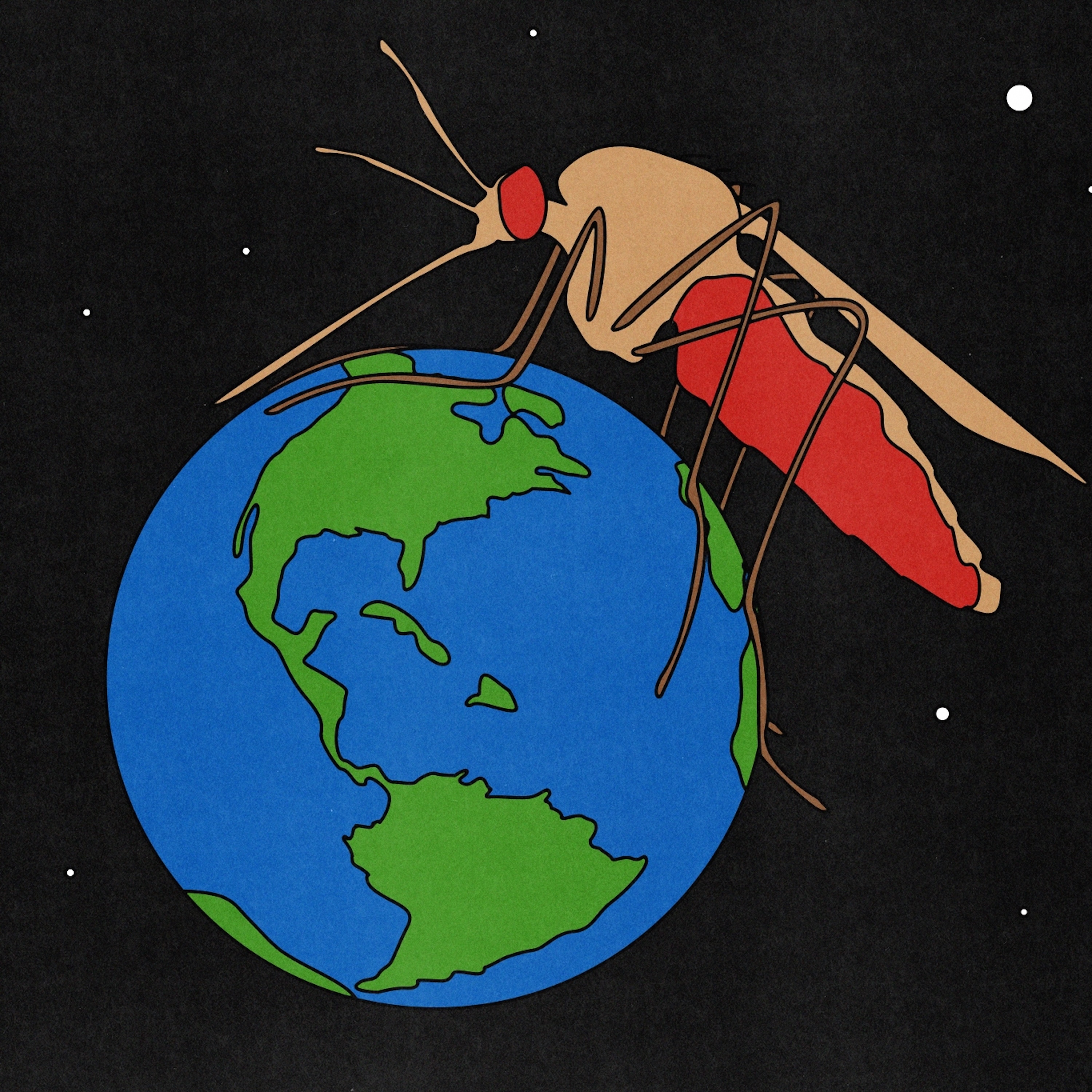
Post Reports
Mosquitoes are deadly. Should we kill them all?
00:16:24
Disease-carrying mosquitoes kill more people annually than any other animal. Scientists have developed a genetic technology that could wipe them all out. But should we mess with nature in this fashion?
Loading summary
Transcript61 lines
- [00:02]
Colby Ikowicz
It's my least favorite part of summer, and it might be yours, too. You're enjoying a backyard barbecue with friends and family, and then suddenly you've been bit by the summer evening's nemesis, the mosquito. And what it's left you with is an itchy red welt that honestly can ruin your good time. But mosquitoes, they're not just a nuisance. They carry and spread lethal diseases like malaria and West Nile virus. They kill more people each year than any other animal. So when I heard that there might be a way to rid the world of mosquitoes, my immediate thought was like, well, obviously we should do it. We should kill them. We should kill them all.
- [00:49]
Dino Grandoni
I was surprised by this possibility that we might actually be able to get rid of all the mosquitoes in the world that carry malaria. And I discovered this huge, raging debate about whether or not we should actually try to do that.
- [01:04]
Colby Ikowicz
From the newsroom of the Washington Post, this is Post Reports. I'm Colby ekowicz. It's Thursday, July 24th. Today I talk to climate and wildlife reporter Dino Grandoni about the science of eliminating mosquitoes and why eradicating an entire species raises complicated bioethical questions. Dino, hey. Thanks for being here.
- [01:33]
Dino Grandoni
Oh, thank you for having me on.
- [01:35]
Colby Ikowicz
To me, a world without mosquitoes. That sounds amazing. I would love to be able to sit out on a summer night and not worry about getting bit. But this is more than just like my inconveniences. There'd be some enormous worldwide benefits, right, to getting rid of mosquitoes.
- [01:51]
Dino Grandoni
Mosquitoes aren't just a nuisance when, you know, we're sitting around during the summer. They spread some of the worst diseases that any person can get. That includes stuff like West Nile virus and dengue fever. And probably at the top of that list is malaria.
- [02:03]
Colby Ikowicz
And that kills what?
- [02:05]
Dino Grandoni
It kills more than half a million of people a year, mostly in Africa.
- [02:09]
Colby Ikowicz
I mean, that's a crazy number to think about.
- [02:11]
Dino Grandoni
Yeah. And it's crazy to think that it might be in our capacity to do something about that.
- [02:15]
Colby Ikowicz
And isn't it actually, like, getting worse? The problem is actually getting worse. Right. Climate change is giving rise to even more of these mosquitoes in some of these places.
- [02:25]
Dino Grandoni
Yeah. As the world gets warmer, it becomes more habitable for mosquitoes, and that's a problem for humans.
- [02:33]
Colby Ikowicz
Dino, I am incredibly intrigued by this idea that we could eradicate all mosquitoes and, like I said, would frickin love it. So talk me through, like, how, how would that work? Like, how would it work to actually get rid of all the world's mosquitoes.
- [02:48]
Dino Grandoni
Well, really you have to get deep down into the mosquitoes at a cellular level where scientists have figured out a way of tinkering with the genes of the bug in order to do this. So scientists have discovered this way of altering the genetics of a mosquito so that the males, they're fine, they can fly around, they can do their thing, but the females have been rendered infertile. Basically they've non functioning ovaries. They grow these mosquitoes in the lab. And really the secret sauce that these scientists have added to this genetic change, it's called a gene drive. And basically it works like this. Under the normal rules of inheritance, a gene has about a 50, 50 chance of being passed along to the next generation. But with a gene drive, scientists are able to rig that coin flip and ensure pretty much that a trait gets passed along to the next generation. So with a gene drive, scientists are able to spread this trait from one generation to the next and then out to basically every single mosquito, which will cause the population to crash because none of the females can breed.
- [04:01]
Colby Ikowicz
So wait, Dino, so how then does you know when they're doing this? How do you, I mean, how many mosquitoes are there in the world? Millions of mosquitoes. Like how do you.
- [04:09]
Dino Grandoni
Oh, there's trillions.
- [04:10]
Colby Ikowicz
I mean, how do you change the genes in every mosquito? Like where does this even begin?
- [04:17]
Dino Grandoni
Well, you release several hundred, let's say, or several thousand, you release some, and those mosquitoes breed with the wild mosquitoes and then are able to pass along this trait to those mosquitoes and to the next generation of wild mosquitoes and so forth, until the idea goes it would spread to the species entire population. And really what gene drives do is they allow us humans to be able to override the normal rules of inheritance that we learned from Charles Darwin, where you have this advantageous trait. Under the normal rules, this advantageous trait would spread across the population. But here we're actually trying to figure out a way of spreading in disadvantageous trait for the mosquitoes.
- [04:56]
Colby Ikowicz
So are we talking eradicating like all mosquitoes here?
- [05:01]
Dino Grandoni
Yeah, scientists today are focusing on the types of mosquitoes that carry malaria. But there's a potential here to use this technology on all sorts of mosquitoes if we want to.
- [05:11]
Colby Ikowicz
I mean, besides this new technology, which is obviously a pretty extreme measure for addressing malaria carrying mosquitoes, I mean, are there other things available to us to prevent this disease?
- [05:24]
Dino Grandoni
Scientists and doctors are doing a lot right now to try to combat malaria. They're developing and deploying insecticides to try to kill the bugs. They're putting up netting to prevent the insects from biting people. They're deploying drugs to treat people who get sick with it. And there's even a vaccine that they're distributing. But a lot of this stuff is really, really hard to scale up to the level of actually eradicating the insects and the level of actually getting rid of this disease for good. But this gene drive technology, it holds that promise.
- [05:56]
Colby Ikowicz
Yeah. To that end, have you spoken to anyone who's, like, excited at the prospect of this, who talks about the benefits of it?
- [06:03]
Dino Grandoni
Yeah. I spoke with a man named Paul Ndebele. He grew up in Zimbabwe, but he works today as a bioethicist at George Washington University.
- [06:12]
Paul Ndebele
I grew up in the Zambezi Valley, an area that has got lots in terms of wildlife.
- [06:20]
Dino Grandoni
Mosquitoes that carry malaria are rampant there. He's lost nephews, nieces, uncles, aunts, many extended family members to this disease.
- [06:30]
Paul Ndebele
And of course, when some of the family members die from malaria, it becomes something that is, you know, traumatic.
- [06:38]
Dino Grandoni
This is an awful disease that manifests in all sorts of ways. Joint pain, high fever, a sickness that can progress within days of a bite. I think maybe the scariest situation for him, though, was when his son got sick when he was about 7 years old. After his son got bit, he started to hallucinate. And this is a common symptom of malaria because malaria can affect your brain. When he was in this condition, when he was hallucinating, he climbed out of a window on the ground floor in the middle of the night, and Paul and his wife were really scared and they took him and rushed him to the hospital. Thankfully, it was in time, though, and they got him the treatment that he needed.
- [07:17]
Paul Ndebele
But I'm imagining for people who live far away from hospitals or clinics or people who live in areas where the clinics are poorly equipped, they don't have the right drugs for malaria, then that would be something else.
- [07:32]
Colby Ikowicz
So then what does he, as a bioethicist, say about the possibility that we could, you know, get rid of mosquitoes and in turn, potentially free the world of malaria?
- [07:43]
Dino Grandoni
Yeah. So Paul sees a lot of excitement around using some of this latest technology in communities that are affected by malaria, that are hit hard by them, including.
- [07:52]
Paul Ndebele
In Africa, they are seeing people that are dying every day, they are seeing people that are dying every week. And for them, they want to ensure that there are efforts to reduce the number of mosquitoes that are flying out there and at the end of the day, reduce the number of people that die as a result of malaria.
- [08:15]
Dino Grandoni
So the people I've talked to who are working in Africa, they know how real malaria is. They have their own questions. Of course. I've talked to people who try to combat misinformation around some of these mosquitoes where there's some fears that being bitten by a genetically engineered mosquito will somehow affect them or render them sterile. That's not the case.
- [08:35]
Colby Ikowicz
Oh, fascinating.
- [08:36]
Dino Grandoni
So there's a bit of misinformation that some of these scientists working in Africa have to combat. But there are a lot of people really excited on the continent for this. And with Paul, he's really excited, too, and interested in this idea, but he recognizes that not everyone's on board with moving forward with this sort of thing in the wild.
- [08:57]
Colby Ikowicz
After the break, the argument in favor of letting mosquitoes live and whether humans should be allowed to modify Earth's entire ecosystem. We'll be right back.
- [09:19]
Jessica Contrera
I'm Jessica Contrera, and I'm a reporter at the Washington Post. Every day at the Post, we are trying to make sure that we are holding our powerful institutions accountable. For the last two years, for me, that has meant looking at child sexual abuse by members of law enforcement all across the country. We identified at least 1800 police officers who have been arrested for crimes involving child sexual abuse from 2005 through 2022. That number, figuring out that this is happening and figuring out how it's happening, it never would have been possible without the time and resources it takes to do an investigation like this. And when you subscribe to the Washington Post, that's the kind of work that you're supporting, making sure that powerful institutions are held accountable by the taxpayers who pay for their work. Subscriptions support this work and the people behind it. I'm Jessica Contrera, and I'm one of the people behind the Post.
- [10:20]
Colby Ikowicz
So do you know, we just talked about, like, how absolutely devastating mosquitoes are and how many people they kill. And there seems to be, at least in my estimation, a pretty strong case for getting rid of them. But how controversial is this proposal to take out an entire species?
- [10:38]
Dino Grandoni
Yeah, there are a bunch of people speaking up for the mosquito in favor of the mosquito. First off, there's this practical ecological concern about how much we actually know of the role mosquitoes play in the ecosystem. What happens to all the different animals, like for frogs that eat mosquitoes and rely on them as a source of food, if we somehow got rid of that insect? There's also this question of, like, what might replace the mosquitoes if we got rid of all the malaria carrying ones, would some other insect step into that ecological niche and wreak its own havoc, spread some new disease that we don't even know about? And some scientists bring up the fact that what we were just talking about before, there are effective ways of combating malaria. Netting, insecticides, drugs that, like, might do the trick without us having to wipe out an entire species. And beyond all these practical concerns, there's this idea that species have some sort of intrinsic value, that it's not really our place as humans to try to pluck one entire species off the face of the earth. That's not our job, and we should try to do it. There's some people who make that kind of ethical argument.
- [11:47]
Colby Ikowicz
Right. So for people like me, who sees no value in a mosquito, there might. Who am I to say, right, that mosquitoes might not be here for some reason?
- [11:58]
Dino Grandoni
Yeah. I mean, there's even a. We're talking about science here, but there's even, like a religious argument that some people can make about God created these species. What right do we have to take them out? You know, the idea, you could look back at tradition like the story of Noah. He was asked to put every single species on Earth on his boat. He didn't give us the space to choose which ones we did or not.
- [12:22]
Colby Ikowicz
Did Noah put two mosquitoes on the ark?
- [12:25]
Dino Grandoni
I didn't read that in my Bible, but maybe he did.
- [12:28]
Colby Ikowicz
Yeah, maybe he did. I'm struck by your point, too, that, you know, maybe something could follow in its wake, that nature has this ability to kind of adapt and outsmart even our best efforts. Right. And that maybe there could be some real unintention, unintended consequences beyond just kind of the ethical question of, like, we shouldn't be messing with nature. Like, how big of a concern is this with scientists?
- [12:52]
Dino Grandoni
The scientific community has had long discussions about the ethics and whether we should be eliminating a species, because that's a really big deal, interfering with the natural world. So recently, Arizona State University and the Hastings center for Bioethics, this research institute in New York State, brought together a group of bioethicists to discuss the potential pitfalls of intentionally trying to tinker with nature and render a species. Exciting. Extinct in this way. And they came to a stance, and that was basically that full deliberate extinction might be acceptable on occasion, but it should be only done in extremely rare cases. So they were sounding a real note of caution here.
- [13:30]
Colby Ikowicz
I mean, one could, I would imagine, make the argument that a bug that kills as many people as A mosquito kills might be one of those kind of rare exceptions.
- [13:44]
Dino Grandoni
Oh, there's plenty of people making that argument, and it's a hard one to combat. And I'm not sitting here trying to. We're talking about mosquitoes here, but really we're talking about more than that because this sort of gene giant technology can be applied to other sorts of insects and other sorts of creatures in general. And there's this question, this ethical question of a slippery slope. If we're able to do this with this one insect, can we do it with some other pests that we don't like?
- [14:07]
Colby Ikowicz
Is there something else that they could do to kind of alleviate the harm that mosquitoes cause that wouldn't go quite so far as fully trying to get rid of them?
- [14:15]
Dino Grandoni
So there actually might be a compromise here where instead of targeting the mosquito itself, we could target the real cause of malaria. And that would be this tiny microscopic single celled plasmodium that's inside the mosquitoes and that, when transferred to us humans, causes malaria potentially. We could create a gene drive that targets that organism, that plasmodium, rather than the mosquito itself.
- [14:41]
Colby Ikowicz
Huh. So in that case, you wouldn't be killing like all the mosquitoes, you would just be killing their ability to spread malaria. So how far along is that kind of research?
- [14:52]
Dino Grandoni
That's a little bit behind the research into targeting the mosquitoes themselves, but it's an option and it's one that scientists are considering.
- [15:00]
Colby Ikowicz
So do you know who would even get to decide whether or not this gene drive technology moves forward? Like, who would have to approve it? Who ultimately gets the say in, okay, we're going to eradicate all mosquitoes.
- [15:12]
Dino Grandoni
So, yeah, that's one of the really fraught things about this right now. Researchers with target malaria, which is one of the big groups doing some of this research, have approached governments in Africa, including in Uganda and Burkina Faso, about actually releasing some of these animals into the wild. But of course, animals don't know the borders that we draw on a map. And these mosquitoes could easily fly over them and do their thing in countries that perhaps haven't approved this sort of technology. So all this adds an extra layer of difficulty to this whole task.
- [15:44]
Colby Ikowicz
I came into this conversation thinking we should 100% kill mosquitoes. I'm not sure that you've convinced me that we shouldn't. I still maybe think that we should. But, you know, we've asked, you know, the can we? It sounds like maybe we can and should we. That's up for debate. Will we like how likely that this actually happens.
- [16:03]
Dino Grandoni
So the scientists I've been talking to, part of this group called Target Malaria, they want to start releasing these within the next five years. So we're talking about something potentially that could happen within our lifetimes.
- [16:13]
Colby Ikowicz
Wow.
- [16:13]
Dino Grandoni
But trying to eradicate all mosquitoes, not just the malaria carrying ones, but the other species that don't carry malaria, that's a gigantic undertaking. There are more than 3,000 different species of mosquitoes and each one of them might have to have its own particular gene drive. And even trying to get rid of one species, you know, even with the gene drive, it's still going to be really, really difficult to do.
- [16:38]
Colby Ikowicz
Well, Dino, thank you so much. Thank you for coming and teaching me all about this. It's fascinating.
- [16:43]
Dino Grandoni
Oh, thank you so much.
- [16:48]
Colby Ikowicz
Dino Grandoni is a climate and wildlife reporter at the Post. That's it for Post Reports. Thanks for listening. Today's episode was produced by Tadeo Ruiz Sandoval. It was edited by Ilana Gordon with help from Ariel Plotnick and Maggie Penman. It was mixed by Sam Behr. Thanks to Marisa Bellack. I'm Colby Ikowicz. We'll be back tomorrow with more stories from the Washington Post.
- [17:28]
Sally Jenkins
I'm Sally Jenkins and I'm a sports columnist and feature writer for the Washington Post. My job entails pulling the curtain on really big sports events at what is going on in locker rooms, what's going on in the stadium tunnel, most importantly, what's going on in the minds of the athletes that I cover. I think that we have an instinct that sports are really important in some primal way. We pay a lot of money for them, we build really big stadiums for them. And I think that athletics really gets us in touch with aspiration and teach something very, very important about accountability, about self determination. And so my job is to really make those links explicit for readers and users. Subscriptions support this work and the people behind it. Find out more@subscribe.washingtonpost.com I'm Sally Jenkins and I'm one of the people behind the Post.