← Post Reports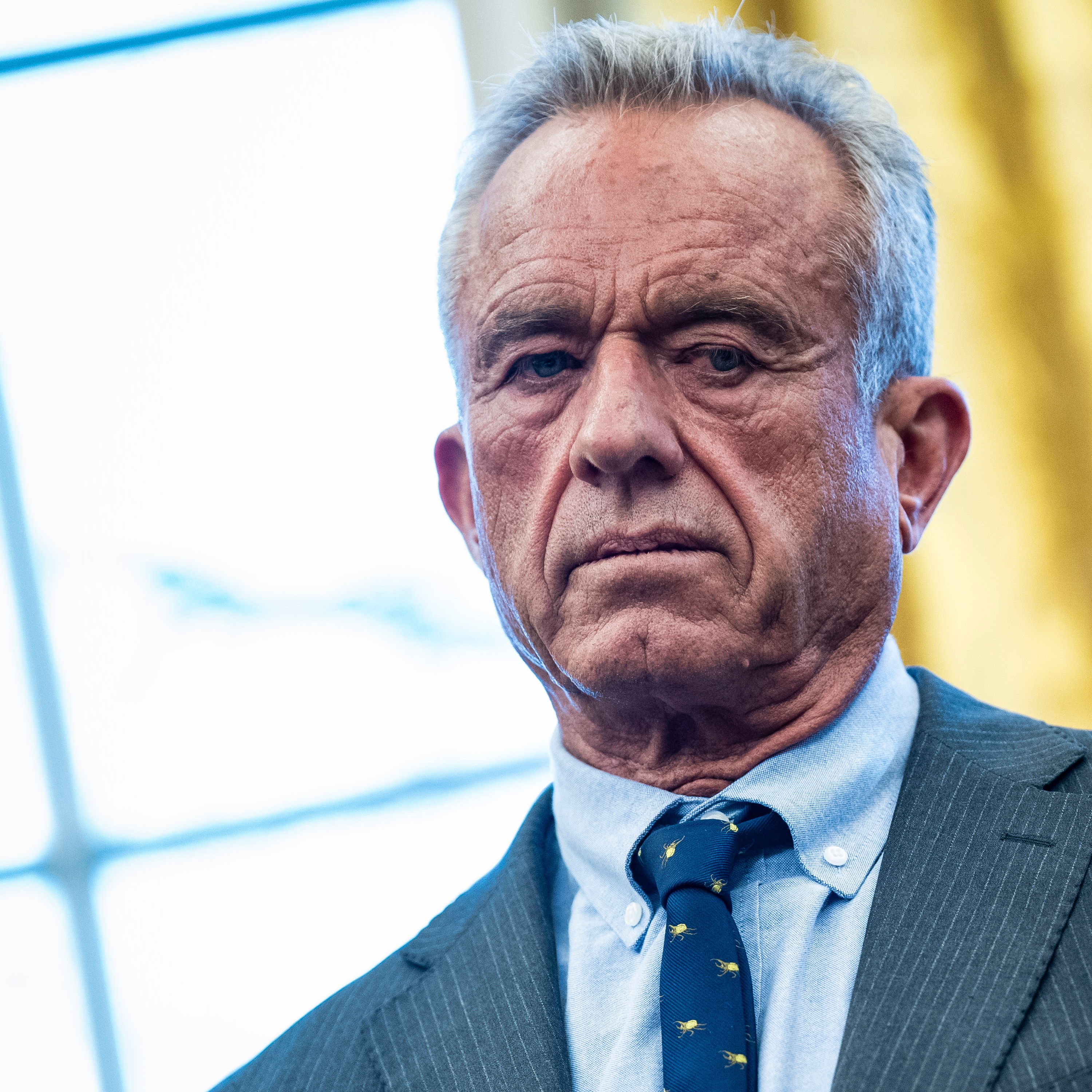
Post Reports
RFK Jr.'s imprint on covid vaccines and public health
00:28:14
U.S. Health and Human Services Secretary Robert F. Kennedy Jr. recently changed vaccine recommendations for pregnant women and children. Today, what those recommendations say now and how his personal beliefs are shaping the agency he oversees.
Loading summary
Transcript91 lines
- [00:02]
Colby Yakowitz
Before we start the show, I want to say a quick thank you for being a listener and to explain a little more about why my colleagues and I hope you subscribe to the Washington Post. The Post newsroom has published more than 100 scoops so far this year, exclusive stories reported by our newsroom, holding power to account and keeping you informed. That's what drives our work. It's the work that you support as a subscriber. If you're not one already, this is a great time to take that step. Our Memorial Day sale is still going on for a few more days. You can unlock your subscription for just $2 every four weeks for a whole year. After that, it's just $12 every four weeks. You can cancel anytime. So hit pause right now and follow the link in our show notes or go to washingtonpost.com subscribe in a few minutes, you'll have more of what's happening in the world right at your fingertips. This offer is good for a limited time, so really, do not wait. We're so excited to welcome you as a subscriber. Now here's the show.
- [01:04]
Lauren Weber
Do you have your computer on silent?
- [01:06]
Lena Sun
I did have my computer on silent. She's constantly nagging me about the put.
- [01:09]
Lauren Weber
Your computer on silent.
- [01:10]
Lena Sun
Put your phone on silent.
- [01:11]
Lauren Weber
I'm just making sure in, like, all.
- [01:14]
Colby Yakowitz
Situations, like in meetings and stuff, too, or just in.
- [01:18]
Lena Sun
It's a funny thing. Like, and then if I have a tech problem, I stand up and say, lauren, can you come over here, please?
- [01:22]
Lauren Weber
That is a nice inflection of how that goes. No, it's usually like, lauren, can you mix this?
- [01:28]
Lena Sun
Are you on deadline? Even if you're on deadline, just come over here. I just need you for two seconds.
- [01:31]
Lauren Weber
Nina and I could probably write like 80 more stories if we didn't sit next to each other, but it's fine.
- [01:40]
Colby Yakowitz
From the newsroom of the Washington Post, this is Post Reports. I'm Colby Yakowitz, a politics reporter, Post Reports host, and now moderator of our weekly politics roundtables. It's Thursday, May 29th. I am thrilled to be joined this week by Lena Sun, a national reporter focusing on health at the Post. Hey, Lena.
- [02:00]
Lauren Weber
Hi.
- [02:01]
Colby Yakowitz
And equally as thrilled to be joined with health and science accountability reporter Lauren Weber.
- [02:06]
Lauren Weber
Hello. Hello.
- [02:11]
Colby Yakowitz
So I'm talking with you both today because some of the biggest news in Washington this week came from Robert F. Kennedy, Jr. The Secretary of Health and Human Services. And so this roundtable will be a little different than normal because we're going to focus our entire conversation on health policy Issues like Kennedy's new COVID vaccine guidance. And then we'll talk more broadly about his Make America Healthy Again movement and how that is reshaping and politicizing health policy. So let's start with the news this week, Lena. There were changes to the official government recommendations about who should get a COVID vaccine. What exactly did RFK Jr. Announce this week?
- [02:52]
Lena Sun
So on Tuesday, he posted a 58 second video on X. Hi, everybody. I'm Robert F. Kennedy Jr. Your HHS secretary. And I'm where he said the government unilaterally would no longer recommend the COVID vaccine for healthy kids and for healthy pregnant women. I couldn't be more pleased to announce that as of today, the COVID vaccine for healthy children and healthy pregnant women has been removed from the CDC recommended immunization schedule. That is a big change because the current recommendation, which comes from the Centers for Disease Control and Prevention, which is the organization that makes official public health guidance, says anyone six months and older should get a COVID vaccine annually.
- [03:36]
Colby Yakowitz
So he's contradicting the cdc.
- [03:37]
Lena Sun
Correct. And also he did it unilaterally with no advance warning to the cdc. Normally, when you get a vaccine recommendation, it goes through this very long established, rigorous scientific process with public hearings and dates and people talk about here's what the vaccine does, here's how many people got sick, here's what the public benefit could be. Benefit risk analysis. We recommend xyz. It's a long process. Starts with the FDA approving the vaccine and the CDC making the recommendation. He just threw that all out the window.
- [04:13]
Colby Yakowitz
I mean, how big of a deal is it that he would just go about this and just make this decision without going through those protocols?
- [04:21]
Lena Sun
Well, it's a big deal because it creates incredible confusion, Right? If you go on the CDC website, the official recommendation hasn't changed. It still says as of yesterday afternoon, this is the recommendation that everybody 6 months and older, and especially because pregnant women, you're getting that protection for the babies, right? So that early time after the baby is born, it can't get a shot. That's why it's six months and older. Also, kids do get Covid. In April, the CDC's vaccine advisory committee did a whole presentation on COVID vaccine because they are already thinking about what should they do with the COVID vaccine recommendation. This year, about 4.3% of COVID hospitalizations occurred in children. About 150 kids died from COVID and most were under 4 years old. And here's the other key statistic. About 50% of the kids under 4 who were hospitalized or died from COVID were otherwise healthy. So, yes, you know, kids are generally healthier than your average person. But the folks most at risk are at the two age spectrums, 65 and older and the really young ones. And a disproportionate number of children who died from COVID were less than six months old. And the only way these kids could have been protected from COVID would have been if their mothers had been vaccinated during pregnancy, because those babies would have been able to get their protective antibodies through the mom.
- [06:02]
Colby Yakowitz
Yeah.
- [06:03]
Lena Sun
So just on the face of it, the data does not support this recommendation. And the confusion it creates means you, the parent of a kid, let's say you want to get your kid vaccinated in time for the fall or for summer camp, you're not sure what you're gonna do. And also when you do this, it creates anxiety about whether your shots will get covered by insurance.
- [06:25]
Colby Yakowitz
Yeah, I wanna unpack all of that. I'm wondering, Lauren, he makes these claims in the video that, you know, these two groups, healthy children, pregnant women, don't need the vaccines.
- [06:35]
Lena Sun
Last year, the Biden administration urged healthy children to get yet another Covid shot, despite the lack of any clinical data to support the repeat booster strategy in children.
- [06:47]
Colby Yakowitz
What can, what do we know about the efficacy of the COVID vaccine here in 2025?
- [06:52]
Lauren Weber
Well, we know it is safe, effective, and as Lena laid out, there's a fair amount of reason that experts have promoted it in the past. And I think what something I want to take a step back with and talk about here too, is that this is happening against the backdrop of Robert F. Kennedy Jr. Having previously said, falsely said, quote, that the COVID vaccine is the deadliest ever made. So, you know, there's a lot of question considering history of anti vaccine activism and the fact that factions of the Maha movement, the Make America Healthy Again movement, have been pushing against the COVID vaccine. You know how much this has to play in this decision.
- [07:28]
Colby Yakowitz
Yeah, I mean, I know that there's other countries, right, that have said it's okay for children and pregnant women not to get.
- [07:35]
Lena Sun
Right. I mean, so there is truth to the fact that the United States is, I think it's the only developed country that has a universal recommendation that everybody 6 months and older get a COVID vaccine. The UK doesn't have it, Australia doesn't have it. The WHO, the World Health Organization, does not recommend it. So that is true when folks say, look, other places are not recommending it, but you know, the United States and other places are not the same. In England, there's universal health coverage. Right. So one reason why they would go and say we recommend this broadly is to encourage access and not create barriers and make it easy for everybody to get a shot. Otherwise, you're there at the pharmacy and you're trying to say, well, I have a medical condition and the insurance may not pay for it. Those all create barriers to vaccine uptake, which is not great anyway.
- [08:28]
Colby Yakowitz
Yeah. I mean, the numbers of people that get the COVID vaccine already are super low from what I read in your stories.
- [08:34]
Lena Sun
Yeah.
- [08:34]
Colby Yakowitz
I mean, the ramifications for parents and for pregnant people who still want to get the vaccine. You made the point that, like, maybe insurance will stop covering it if it's not recommended by the CDC or, like, will doctors have it? Will there be enough of a supply? Like, how worried should people be that they're not gonna have access to a COVID vaccine if they want it?
- [08:54]
Lena Sun
I think there is a lot of concern because of this confusion. I think if you have the means and you have insurance, you're gonna go and get it. Right. This is always gonna benefit those wealthier households. But if you don't have insurance, you don't have time to go get the shot. It's gonna cost you. And so it puts many more people at risk. RFK has said we only want to give it to people 65 and older. That's what the FDA said, 65 and older and people with medical conditions. But let's say you're a healthy adult or healthy kid, you're going to go visit Grandma. Right. If you don't have Covid, it's less likely that you're going to pass on Covid to Grandma. Or let's say you are a health care provider or somebody taking care of somebody in a nursing home. Those people are very frail. So inherent in all of the things that the Trump administration has said, there's internal contradictions in what they're proposing as well. So that accounts for the confusion.
- [09:57]
Colby Yakowitz
Yeah. And Lena, you wrote about, too, the fact that. And you mentioned that the CDC didn't even know this was coming. Can you talk a little bit about how the CDC even found out that RFK was gonna make this announcement or make these recommendations.
- [10:12]
Lena Sun
He put out that tweet on Tuesday on x at about 10:15 in the morning, and people started noticing it and they started calling around. They called their bosses, they called the leadership. That's how they found out.
- [10:24]
Colby Yakowitz
Wow.
- [10:25]
Lena Sun
And he does have the authority to do this.
- [10:27]
Colby Yakowitz
So that's interesting though. So the Health Secretary can unilaterally change guidance for vaccines without going through.
- [10:38]
Lena Sun
The Health Secretary has the authority to do that.
- [10:42]
Colby Yakowitz
That's a lot of power.
- [10:42]
Lena Sun
It's a lot of power, but he does have the authority to do that. But what he did is the first time. It's unprecedented that a health Secretary has unilaterally overruled the organization that has a long established record of making vaccine recommendations on the Access for Kids. There's one point that we haven't mentioned, which is that's, you know, if you have private pay insurance, under current law, insurers are supposed to cover whatever vaccines are recommended by the ACIP. That's the CDC's vaccine advisory panel.
- [11:17]
Colby Yakowitz
Okay.
- [11:18]
Lena Sun
So whatever they officially recommend, insurers have to cover that with no out of pocket cost to you. That's for your private pay people. Separately, there's a program called Vaccines for Children which covers underinsured uninsured kids. It's half the kids in the United States. I think that program. I don't think he can muck around with that program because it is a direct requirement from Congress that acip, this vaccine Advisory panel takes the vote. And if they vote, it goes in. I don't think he has the authority to yank it out.
- [11:51]
Colby Yakowitz
Yeah. I mean, Lauren Lena brings up the fact that, you know, he's had so much mixed messaging on vaccines and this has been a point of contention for, you know, during his confirmation hearings and people were worried about this. Right. Can you talk a little bit more about his kind of double speak on vaccines and how it's been confusing for the American public?
- [12:11]
Lauren Weber
Yeah. I mean, on several instances, Robert F. Kennedy Jr. Will go out and say things like, or tweet the MMR vaccine stops the spread of measles. But then he'll tweet a post that promotes anti vaccine doctors and alternative therapies that scientists say don't have evidence. He'll say things like, you know, we recommend vaccination, but the vaccine has problems. He said that on Dr. Phil, the measles vaccine is considered safe and effective and experts believe it does not have problems. I mean, he even said in front of Congress very recently that, you know, don't take medical advice from me. I mean, he, he kind of toes this line of speaking on both sides of the fen. And that's what a lot of public health experts and vaccine watchers have deemed doublespeak. They think he's kind of trying to appeal both to the folks that support him, that are against vaccines and to the majority of the American public, which does support vaccination. So that statement was quite striking from that point. And I mean, and he said it again, he said it again on CNN with Kaitlan Collins. And he said, look, I'm not a doctor. You should listen to your doctor. But a lot of the things that he often recommends are not things that doctors say. They go against medical and clinician guid. So it's fascinating to see, you know, the statements that he makes.
- [13:26]
Colby Yakowitz
Yeah. After the break, we're going to look more broadly at RFK Jr. S Make America Healthy Again movement and its impact on health policy beyond vaccines. We'll be right back.
- [13:48]
Michelle Singletary
My name is Michelle Singletary and I'm the personal finance columnist for the Washington Post. When I was growing up, I was raised by my grandmother who was such a masterful money manager. And I watched her handle her money and talk to me about it. And I like to think that I'm the reader's big mama. There's so much information about your money out there, a lot of it wrong or inappropriate. But when you pay for a subscription to the Post, you're paying for a skilled journalist who has had years of experience, who I hope that you can trust. Your subscription helps pay for my salary. It helps pay for the illustrators, the copy editors, all the people who are involved in putting together the material that you read that could help inform your life. I'm Michelle Singletary and I'm one of the people behind the Post.
- [14:48]
Unknown
Running a business means staying ready for anything, especially at checkout. One customer forgets their wallet, another one wants to tap their phone, and someone else just wants to get out of the door fast. That's why more and more businesses are using Square. Square makes checkout easy. Customers can tap, swipe or dip, and it even works offline. No wifi, no problem. Everything just works right when you need it to. And it's not just for retail stores. You'll see Square at farmers markets, boutiques, yoga studios, coffee carts, and even pop up galleries. Whether you're selling in person, online or both, Square keeps up from one location to 10. It's designed to grow your business. There are no long term commitments and you get all the tools you need to take payments, manage inventory and stay organized. Square keeps up so you don't have to slow down. And right now, you can get up to $200 off Square Hardware at square.comgoreports. that's sq U-A-R-E.comgoreports. run your business. Your way with Square, we hear it all the time. There's a growing concern about kids, mental health and the role technology plays in their daily lives. Screens are everywhere and young people are spending more time on them than ever. It's a staggering reality, but for many parents, not a surprising one. One company tackling this issue is Gab with a solution called Tech in Steps. A gradual, age appropriate approach to introducing technology. Protect your kids with phones and watches designed just for them. Here's how it works. GAB devices have no social media, no Internet browser, and are tailored to different stages. For younger kids, the Gab Watch 3e offers GPS tracking, safe zones and limited calling and texting. Tweens move up to a starter phone and teens have access to a more advanced device with parent controlled apps and a premium camera. All with safety at the core. We recently got the watch 3e for our kids. It's been a great way to keep them connected and safe when they're out. To learn more and see current offers, visit gab.com reports that's G A B B.com reports terms and conditions apply so.
- [16:47]
Colby Yakowitz
Lena Lauren, we've been talking here about vaccines, but RFK Jr. He oversees the entire Health and Human Services department. That's obviously the department that deals with all of the federal government's health policy. So how has RFK Jr been I guess reshaping the department?
- [17:06]
Lauren Weber
I think it's fascinating. You know, one of his allies said to me, look how many people in the American public could ident who the last couple HHS secretaries are. It's really stuck with me. I mean, honestly, I mean I know who they are, cuz I'm a health reporter for the Washington Post. But name the last three. But I feel like in general a lot of people would have no idea. I think that RFK Jr. Has really created a movement around him and a lot of it. While we've talked a lot about vaccines, a lot of the Make America Healthy Again movement really revolves around food and around chronic disease and it has a lot of juice. There's a lot of populist interests. There's a lot of people that feel like corporations and are taking advantage of people and we are not as healthy as we should be. There's a lot.
- [17:57]
Lena Sun
Completely. Yeah.
- [17:58]
Lauren Weber
And I think it's fascinating to see how he's managed to tap into this populist anger around what people feel like is their kids getting the short end of the stick to really rise to a position of prominence that again, you typically see an HHS secretary command that kind of megawatt attention.
- [18:17]
Lena Sun
Yeah, well, he's a huge personality and as Lauren said, so many people feel like they've been ghosted by the medical system. Right. So all your interactions, whether it's an insurance claim or not being able to get the right prescription at the pharmacy or not feeling heard, and he's brought that with him and people feel like they're being heard. And he's very good at putting out messages on social media, despite the fact that, as experts have pointed out, they are being economical with the truth.
- [18:53]
Colby Yakowitz
Well, what is he actually doing about those problems, though? The issues of access to insurance, access to health care, disparities of health?
- [19:03]
Lauren Weber
I mean, that's a great question. I mean, he just put out this massive report called the Maha Report, which looked into the underlying causes of chronic illness for children in the United States. It did not mention gun violence, which is the leading killer of children and teens. It did not get into how expensive health insurance is. It did not address a lot of those questions that you are saying. A lot of what he has focused on has been other topics, which in fairness, a lot of experts have said good nutrition requires more of a focus. I mean, that's. It's not something that shouldn't be focused on. But what is fascinating is, is that he says a lot of things about how big corporations and big pharma are ruining the system, but has not necessarily tackled, you know, healthcare pricing. To the extent. I mean, Trump has put out an EO on drug pricing, but it has not been as focused as much as this look at nutrition, vaccines and environmental causes has been.
- [19:58]
Lena Sun
And there's a lot of inherent contradiction if you wanna make America healthy again, that you don't cut the programs at the CDC that help people stop smoking. Smoking is the leading cause of death. Yeah, Full stop drowning is the leading cause of death in children one to four. He wiped out the entire CDC injury prevention program. There is no office on smoking. If you're worried about lead poisoning for your kids, he wiped out the lead office. Milwaukee is facing a crisis in its schools with public schools and testing for kids. They couldn't get any help from the CDC because those experts had been laid off.
- [20:36]
Colby Yakowitz
But why, why is he. Why did he kill those programs?
- [20:39]
Lena Sun
I am not sure he knew that he killed those programs.
- [20:43]
Colby Yakowitz
This is a Doge thing. This is a. Elon Musk.
- [20:46]
Lauren Weber
Well, when asked in front of Congress, he said he couldn't speak about it because of a current lawsuit, but he also somewhat implied in front of Congress that he had a mandate to cut programs and a promise to reinstate and has reinstated some folks under some of these programs. But he's also said in other interviews that he was unaware of some of these layoffs. So.
- [21:06]
Colby Yakowitz
How much is this Maha report that came out that, Lauren, I know you wrote about? How much is it rooted in science?
- [21:13]
Lauren Weber
That's a great question. We found in speaking to experts about it the day the report came out that there was a fair amount of stretching the edges of science on it. There's a lot of what Kennedy does, experts will constantly say, is that he'll take a kernel of truth of science and then take it 10 steps further than what it can say. And you've seen him do this with vaccines, and in the Maha report, you saw him do it with a couple other different, different topics. And there was a report that came out just this morning from Notice, which is a online news outlet laying out how several of the citations in the Maha report don't exist, appear to be fabricated. They went to the authors of the studies listed and they said they had not written such studies. But there's a lot of question of if he is basing these claims about some of these things in science and whether or not government policy is being structured around that. I mean, his past history, especially when it comes to vaccines, seem to suggest it does not.
- [22:10]
Lena Sun
And, you know, Lauren knows this better, but he will often cite studies and, you know, there are studies and then there are studies. Right, right. There are ones that are rigorous, that are in well established, peer reviewed journals. You can see that the confidence interval for whatever they're talking about is strong. You know, he keeps linking vaccines to autism that is such a, well debunked, long established science that there is no link between vaccines and autism. But then he cited a study that is, you know, not. It's not a good study. This administration, they just pulled the funding for a contract with Moderna, which was going to make bird flu vaccine. And hhs, his HHS said it was not scientific and not grounded. This is the same technology that brought us Operation Warp Speed that led to the vaccines that saved so many lives.
- [23:07]
Colby Yakowitz
It reminds me a little bit of when My daughter turned 18 months and my husband and I were having a debate over whether or not she should be allowed to start watching Sesame street, whether screen time was bad for an 18 month old. And both of us were able to go online and find like a study that confirmed our position on that. Right. I was like, elmo's fine. And he was like, we should wait till she's two to let her watch tv because anyone can find, like, to your point, Lyna, a study to confirm the thing that you already believe. But is it actual science? I don't know. But. But screen time is actually addressed in the Maha report, right?
- [23:42]
Lauren Weber
It is addressed in the Maha report. And I spoke to the American Academy of Pediatrics chair on screen time, who said that while the report made some good points, it was a little bit more flash whiz bang than it was based in an actual proven science. She said, more than anything, it reflected the anxiety that American parents have over screen time.
- [24:03]
Colby Yakowitz
Yeah.
- [24:03]
Lauren Weber
And less so what actually had been scientifically recommended when it comes to. So it did not necessarily have a prescription yet, but in August, we're supposed to get kind of the sequel to this, which we'll say more directly.
- [24:16]
Colby Yakowitz
So this report was just, here's all the things that are wrong, but not necessarily how to fix them.
- [24:21]
Lauren Weber
Yes. And in saying all the things that are wrong, some of the things it said seem to overstate what is wrong.
- [24:26]
Lena Sun
And also, it's the perspective of, we're just gonna focus on chronic disease. You know, he has always said, we're gonna give infectious diseases a break and focus on chronic disease. And infectious disease. And chronic disease. They are inextric linked. Right. Also, the virus is not gonna say, hey, Kennedy said we could have some time off.
- [24:47]
Colby Yakowitz
Yeah, we're not gonna infect anyone right now.
- [24:48]
Lena Sun
We're not gonna infect anybody in the United States. We are just going to infect people in other places. As if a virus cannot hop on the plane and get here in 36 hours.
- [24:57]
Lauren Weber
But it is fair to say that there is a lot of interest around addressing chronic disease. Chronic disease is a massive cost to the American healthcare system.
- [25:05]
Lena Sun
Yes, I agree. I agree.
- [25:06]
Lauren Weber
You know, many experts are thrilled that he's looking at it more closely. What starts to al. Is when they dig into what he has to say, and it seems to twist or misrepresent or not be based in what they believe.
- [25:19]
Colby Yakowitz
Yeah. I mean, when he talks about chronic disease, he talks a lot about, like, ultra processed foods. Right. Believing that these type of things lead to cancer and heart disease. And to your point, Lauren, there is probably some truth to that, right? I mean, my father had colon cancer. I have stopped eating red meat because of that. Like, I do understand there's correlations between food and chronic disease.
- [25:39]
Lena Sun
Oh, there's. But definitely. Right. I mean, you know, cancer and red meat and your diet and processed food and increasing fiber and vegetables, those always have been tenets of basic good health. Practices. Right. But if that is really the goal of this administration, then I just don't understand some of the cost cutting measures you do for the programs that would be there to address these.
- [26:03]
Colby Yakowitz
Where is he on, like, traditional cancer treatments? Has he spoken about this?
- [26:07]
Lauren Weber
I don't think he's spoken directly about cancer treatments. He has promoted a fair amount of alternative therapies, not only for measles, but for a variety of things. I mean, he had a famous tweet before he took office on promoting sunshine, hyperbaric chambers, supplements and other items. So it remains to be seen. You know, he seems to really enjoy promoting alternative medicine. And it's always fascinating, experts will say to me that he does promote so many of these alternative methods because he says he wants to be grounded in gold standard science. And, you know, if you look at vaccines, those are some of the most studied medical products that exist. But then he'll often promote these regiments, these treatments, these alternative therapies for measles that do not have not been studied, that do not have scientific evidence to justify some of their promotion. And it's fascinating to see how and what he chooses to support.
- [27:00]
Lena Sun
And doesn't he oppose those weight loss drugs for obesity?
- [27:05]
Lauren Weber
He does. He and the Trump administration have come out again against weight loss drugs like Ozempic. The Biden administration, on the way out, had to kind of put a floater idea of Medicare and Medicaid expanding access to those which would have cost, you know, a lot of money for the United States government. But he has said he's opposed to those. He feels, he feels very strongly that Americans should be on less medication and should be healthier. All fair things to say, but a lot of physicians have been worried that that is keeping some Americans from their full level of health.
- [27:34]
Lena Sun
Health.
- [27:35]
Colby Yakowitz
So one thing I've thought about, and this is not a new thought, I'm not an original here, but President Donald Trump is maybe one of the least healthy people. He doesn't believe in exercise. He eats McDonald's for many of his meals, drinks Coca Cola, drinks a lot of Coke.
- [27:51]
Lena Sun
Didn't he have a special button installed so he could ask for the Coke.
- [27:54]
Lauren Weber
He did in his first administration? I will say he has recently lost weight, apparently, but yes.
- [27:59]
Colby Yakowitz
And yet, like, he picked RFK to be a JJ's secretary. He seems to have won favor with the Maha base. Are there any signs of tension among, like Trump's MAGA base and then these MAHA supporters?
- [28:13]
Lauren Weber
So some of the, the Maga Maha infighting has really shown its face during the announcement that Casey Means is Trump's new nominee for surgeon general. Now, Casey Means, who some would call a wellness influencer. She is a physician who currently has an inactive medical license who promotes a lot about good nutrition and other wellness ideas. You know, Kasey Means exemplifies a fair amount of the Maha movement, and a bunch of MAGA supporters really didn't care for that. You know, Laura Loomer, who's a big Trump supporter, tweeted out some fairly negative critiques of her, calling her, you know, an influencer, saying that she wasn't following real medicine, and so on and so forth. There's also just some tension within the Maha base itself. It's kind of a big tent, so to speak. You've got a fair amount of people that are really into nutrition. You've got folks that are into alternative therapies. You got folks that are frankly, you know, vaccine skeptical or anti vaccine. And so to keep everybody happy in that big tent is a challenge. And we'll see how that plays out going forward.
- [29:20]
Colby Yakowitz
Well, thank you both so much. I hope you'll come back. This was a great conversation. So, Lena, Lauren, thank you.
- [29:26]
Lauren Weber
The double L's struck in. It was good.
- [29:28]
Lena Sun
Thanks, Colby.
- [29:29]
Colby Yakowitz
Thanks, guys. Lena sun is a national reporter focusing on health at the Post. Lauren Weber is a health and science accountability reporter for the Post. Today's episode was produced by Laura Benshoff with help from Alana Gordon. It was mixed by Sam Behr. It was edited by Lucy Perkins. Thank you to Lenny Bernstein. I'm Colby Ekowitz. We'll be back tomorrow with more stories, stories from the Washington Post. There's an efficient way to get caught up on a lot of news. It's called the seven from the Washington Post Post. It's a newsletter and podcast. Whether you're reading or hit play, you get seven stories you need to know and you can consume it all in just a few minutes. The 7 is out every weekday morning by 7:00am Eastern. I'm Hannah Jewell. I'm one of the writers and I host the show Find the seven Podcast. Wherever you're listening, the newsletter link is waiting for you in the show notes.