← Post Reports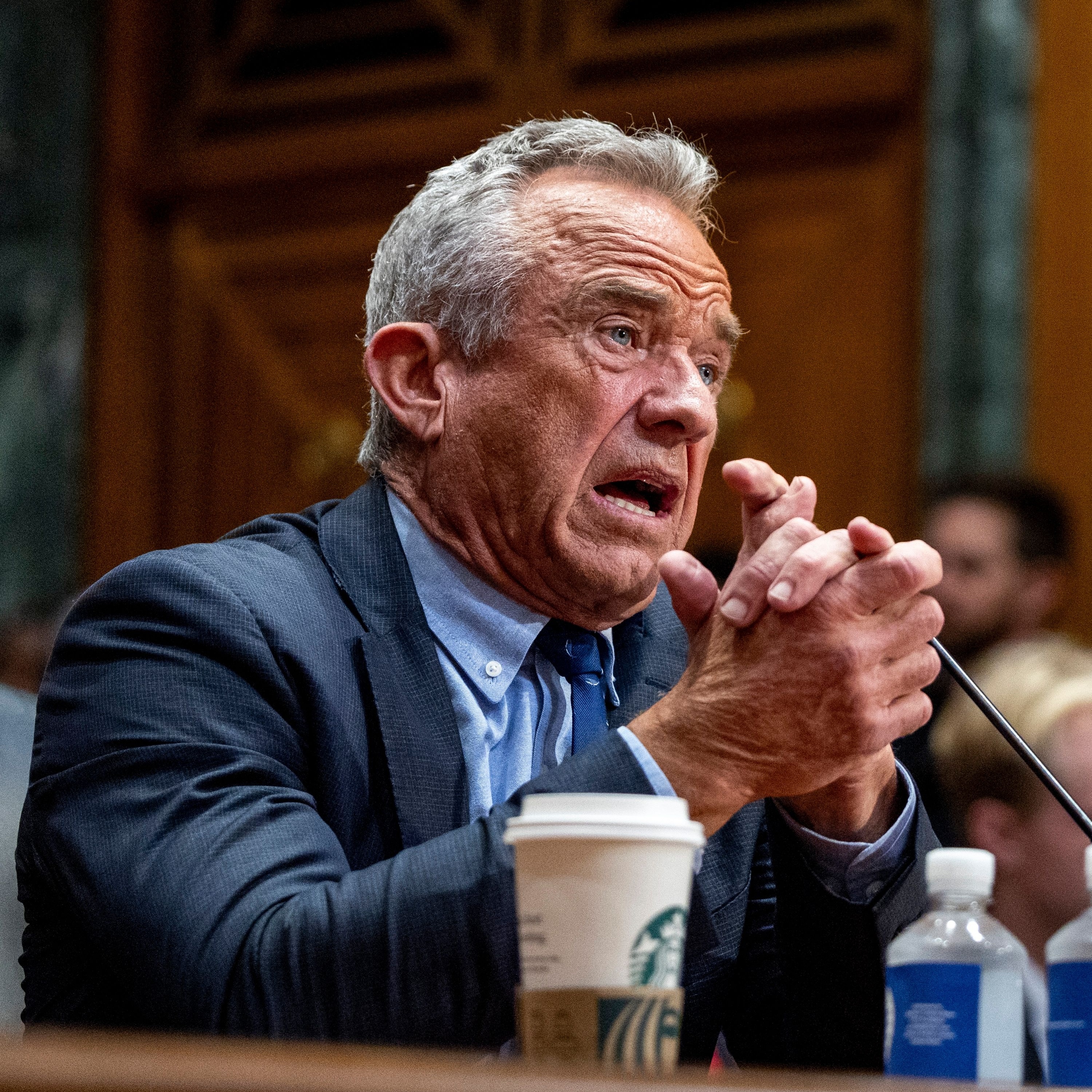
Post Reports
RFK Jr.'s showdown with the Senate
00:20:13
HHS Secretary Robert F Kennedy Jr. is facing fire from both sides of the aisle. Plus, red and blue states are splintering on vaccine policy.
Loading summary
Transcript66 lines
- [00:00]
LifeLock Advertiser
Sometimes an identity threat is a ring of professional hackers. And sometimes it's an overworked accountant who forgot to encrypt their connection while sending bank details.
- [00:09]
Colby Ekowicz
I need a coffee.
- [00:10]
LifeLock Advertiser
And you need lifelock because your info is in endless places. It only takes one mistake to expose you to identity theft. LifeLock monitors hundreds of millions of data points a second. If your identity is stolen, we'll fix it, guaranteed, or your money back. Save up to 40% your first year@lifelock.com specialoffer terms apply.
- [00:32]
Robert F. Kennedy Jr.
Thank you, Chairman Crapo, and thank you, Ranking Member Wyden. The invitation will appear before the committee today.
- [00:40]
Colby Ekowicz
This morning on Capitol Hill, Robert F. Kennedy Jr. Appeared before the Senate Finance Committee. He was there to answer questions about his overhauling of the nation's largest health agency, the Department of Health and Human Services, or hhs.
- [00:54]
Robert F. Kennedy Jr.
Under President Trump's leadership, we at HHS are enacting a once in a generation shift from a sick care system to a true healthcare system that tackles the root causes of chronic disease.
- [01:09]
Colby Ekowicz
RFK Jr. S tenure has been mired in controversy since he took office in February. He's pursued an agenda based on the growing Make America Healthy Again movement. He has restructured departments, cut staff, and most recently upended the Centers for Disease Control and Prevention, or cdc.
- [01:26]
Robert F. Kennedy Jr.
We are the sickest country in the world. That's why we have to fire people at cdc. They did not do their job. This was their job to keep us healthy.
- [01:37]
Colby Ekowicz
The White House recently fired its newly appointed director, Susan Menaras, who then accused RFK Jr. Of, quote, weaponizing public health for political gain and restricting access to vaccines despite the scientific evidence. As this hearing got underway, Democratic Senator Ron Wyden of Oregon grilled RFK Jr over the changes he's made to vaccine policies. He and other Democrats called on him to resign.
- [02:03]
LifeLock Advertiser
It is in the country's best interest.
- [02:05]
Robert F. Kennedy Jr.
That Robert Kennedy step down.
- [02:07]
LifeLock Advertiser
And if he doesn't, Donald Trump should.
- [02:09]
Robert F. Kennedy Jr.
Fire him before more people are hurt by his reckless disregard for science and the truth. I also would like to.
- [02:15]
David Ovalle
The hearing was, as expected, very contentious.
- [02:18]
Colby Ekowicz
David Ovalle is a reporter with the Washington Post's health and science team.
- [02:22]
David Ovalle
You had one senator refer to RFK as the charlatan.
- [02:26]
Robert F. Kennedy Jr.
You're so wrong on your facts.
- [02:28]
David Ovalle
You're interrupting me. And sir, you're a charlatan. That's what you are. And he is, you know, sparring back with them and saying that they're, you know, not being truthful and making things up. As the Democratic senators sort of repeatedly called for him to no longer be the secretary of hhs.
- [02:49]
Colby Ekowicz
From the newsroom of the Washington Post, this this is Post Reports. I'm Colby ekowicz. It's Thursday, September 4th. Today I speak with David about Robert F. Kennedy, Jr. The chaos at the CDC and what went down in this highly contentious hearing. And later in the show, we'll explore how, given the upheaval at the federal level, some states are forging their own path when it comes to vaccines. David, hello. Thanks for joining me.
- [03:20]
David Ovalle
Thank you.
- [03:21]
Colby Ekowicz
So, David, before we get into the kind of meat of this hearing, what changes have really stood out to you under RFK Jr. S leadership at HHS?
- [03:30]
David Ovalle
Well, like with many federal agencies, there have been tremendous cutbacks in terms of staffing, in terms of grants, in terms of just general focus and priorities. Right. I mean, staffing is a huge deal, of course. And then I think the one that probably the topic that gets the most attention, and probably rightfully so, is the changes on vaccine policy. Right. I mean, this was the big deal coming into his potential appointment as HHS secretary is whether he was going to stick to his anti vaccine rhetoric, whether he was going to try to limit and restrict access to vaccines. I mean, this was a big deal, particularly for the Republican senators who many of them ultimately, most of them ultimately ended up voting to confirm him. So everyone was watching to see what was gonna happen with his moves on vaccines. And I think a lot of people have not been surprised by a lot of the moves that he's made in terms of upending vaccine policy.
- [04:32]
Colby Ekowicz
Yeah. David, remind us what some of those are.
- [04:35]
David Ovalle
Well, the FDA last week went ahead and approved the latest COVID vaccine booster, but restricted it to only certain people with certain conditions. Right. So that sort of caused a lot of confusion about access to vacc. HHS has also canceled a lot of research into MRNA vaccines, which are sort of the underpinning technology of the vaccines that were developed under President Trump during his first term. And then we have, of course, the purge of a key committee that votes on vaccine recommendations. And in a move that really was unprecedented, Kennedy went ahead and fired all of the people, citing conflicts of interest, and then replaced them with a lot of people who are his allies and with people who have had anti vaccine statements in the past. So with that backdrop, everything kind of came to a head last week when the new CDC director who had only been in place a few weeks, Susan Menarez, she was suddenly fired by the White House. And it was later revealed, and she claimed that Kennedy and his allies had been Pressuring her to basically rubber stamp rolling back of vaccine recommendations that were going to happen, that could happen at a meeting coming up in a couple of weeks. She was also pressured to fire some staff and Kennedy today admitted that, and so she resigned. So that resignation sparked a huge upheaval at the agency, which has already been beleaguered for years, but particularly within the last six, seven months. And you know, that kind of sparked like three top level career civil servants, high level leaders within CDC to resign. So it's been this sort of polarizing thing that's really kind of taken off of our issues about vaccines.
- [06:24]
Colby Ekowicz
So, David, let's, let's get to this morning and this hearing. It was a highly anticipated appearance by the secretary because of all these changes that you've been mentioning in scientific leadership and in vaccines. What were some of the tensest or most dramatic moments?
- [06:39]
David Ovalle
Kennedy was very adamant that changes at CDC were necessary and that, you know, he didn't back away from some of his remarks that he's made in the past about CDC being alleged corrupt and manipulating data and sort of mishandling the entire COVID pandemic and sort of their guidance and everything that to do with that. So he did not back down from any of that. And so there was a lot of tense exchanges about that and CDC's role and the vaccinations and then him talking about the firing of the CDC director. And there's kind of this exchange where he says, well, I fired, you know, she was fired because she was not honest.
- [07:18]
Robert F. Kennedy Jr.
No, I told her that she had to resign because I asked her, are you a trustworthy person? And she said no.
- [07:26]
David Ovalle
And Elizabeth Warren, the Democratic senator from Massachusetts, was sort of incredulous. So I'm sorry, but this is not what she has said publicly.
- [07:35]
Robert F. Kennedy Jr.
She has said, I'm not surprised about that.
- [07:39]
David Ovalle
So you're saying she's lying?
- [07:40]
Robert F. Kennedy Jr.
Yes. Every conversation I had with her that.
- [07:44]
David Ovalle
Were witnesses and pointed out, well, just a month ago you were saying she was, you know, beyond reproach when you were lobbying for her to be named CDC director. So there's a lot of, a lot of back and forth about that. And as is, you know, a lot of it went along party lines. But even some of the Republican senators were, you know, raised a lot of valid points and a lot of critiques about everything going on with vaccines.
- [08:07]
Colby Ekowicz
Yeah, I was going to say that, you know, Democrats had some of the spiciest moments, it seems, but there were plenty of Republicans that were critical of the changes that RFK Jr has made. Did any of those stand out to you?
- [08:20]
David Ovalle
Bill Cassidy, who was sort of considered the pivotal vote, who is a senator from Louisiana, Republican. He's also a doctor, and he has openly talked about the importance of vaccines and why he supports them. And so his exchanges were really, I thought, compelling. And he talked about the fact that people can't get Covid vaccines. And it feels like the agencies are pretty much effectively denying access to them.
- [08:47]
Robert F. Kennedy Jr.
Pharmacists are requiring a prescription now, even for patients over 65, creating a huge headache. I submit these for the record, without objection.
- [08:54]
David Ovalle
I would say effectively, we're denying people vaccine.
- [08:57]
Robert F. Kennedy Jr.
Senator Catwell, you're wrong.
- [09:00]
David Ovalle
And so I think senators have not lost sight of the fact that, you know, these things have saved a lot of lives. And the public is certainly paying attention to this as a topic.
- [09:09]
Colby Ekowicz
Senator Cassidy was specifically interesting because he ultimately supported RFK's nomination, but he had some, like, noted trepidation about it, a lot of it around these vaccines, vaccine issues. And so, you know, you said Democrats are calling for Kennedy to resign. Do we have any sense of whether or not Cassidy or other Republicans will now call on RFK to resign?
- [09:30]
David Ovalle
No, I have not seen any indication that that's in the works.
- [09:34]
Colby Ekowicz
What was RFK's demeanor during the hearing? How was he answering these questions?
- [09:40]
David Ovalle
He seemed pretty agitated, and he seemed pretty feisty when it came to answering questions. I mean, he was very, very blunt and saying, you know, no, I think you're lying on this. No, that's wrong. You're making.
- [09:51]
Robert F. Kennedy Jr.
I have no idea. And I never said that you're making it up. I'm twisting. Yeah, you are. Secretary, you are being dishonest right now.
- [09:59]
David Ovalle
RFK has really just fallen back on. You know, these changes are needed. We are returning. He kind of flips it on his head, right? We are returning to gold standard science, and we want transparency. And of course, his critics say he's doing the exact opposite of that, but he. Those are kind of the points that he keeps hammering home. And, you know, the administration thinks he's being successful with it. And, you know, the Make America America Healthy Again movement has gotten a lot of popularity, and I think they're still kind of riding with that.
- [10:29]
Colby Ekowicz
So what should our main takeaway be from this hearing?
- [10:32]
David Ovalle
I think one of the main takeaways is that despite a lot of the controversy and the turmoil that Secretary Kennedy has unleashed on the nation's health agencies, he's still in place. There's been no indication that he's going to be replaced or stepped down or the Trump administration is losing any confidence him and in fact, the Trump administration was cheering on his appearance and they said they championed it and said he was doing a great job and prepared wonderfully. And I think what that means is that the nation can expect a lot more changes in our health system, whether it's vaccines, whether it's on food policy, whether it's on funding and staffing and the size of the federal government and its health agencies. So I think we're sort of at a precipice of transformational change, whether you think it's good or whether you think it's detrimental to public health. Change is coming.
- [11:32]
Colby Ekowicz
After the break, how a changing CDC is playing outside of the federal government and the growing divides in the states. We'll be right back.
- [11:55]
Washington Post Subscriber Ad
You listen because you know the power of good journalism and the Washington Post is there for you 24 7. When you become a Washington Post subscriber, you get exclusive reporting you can't find anywhere else. You also get sharp advice, columns, delicious recipes, TV and music reviews and so much more. Right now, you can get all of that for just one $4 every four weeks. That's for an entire year. After that, it's just $12 every four weeks. And you can cancel anytime. Add to your knowledge and discover all the Post has to offer. Go to washingtonpost.com subscribe. That's washingtonpost.com subscribe.
- [12:40]
Colby Ekowicz
So, David, you're actually in Florida, hundreds of miles away from this hearing, and there's a big public health story unfolding there as a result of r leadership and the upending of the cdc. So I want to play an excerpt from a press conference on Wednesday. Florida's surgeon general, Joseph Latapo, spoke against vaccine mandates for kids to attend school.
- [13:02]
LifeLock Advertiser
Every last one of them, every last one of them is wrong and drips with disdain and slavery. Okay, who am I as a government or anyone else? Or who am I as a man standing here now to tell you what you should put in your body?
- [13:23]
Colby Ekowicz
So what exactly was he saying there?
- [13:27]
David Ovalle
So the Florida surgeon general announced that the state would be doing away with vaccine mandates. And of course, the biggest part of that is mandates for school children. Right. And this would be a very monumental thing because this would be the first state in the union to do so. Every state in the union and DC has requirements for school children to have certain vaccines. So this is like huge breaking news. I mean, this is a big deal. And this is a direct outgrowth of the anti vaccine movement that has really been galvanized by Everything that went on during the pandemic, and then, of course, under the leadership of Donald Trump and Robert F. Kennedy, Jr. So it's kind of culminated in this. You know, the Florida Department of Health can't take away all of those vaccine mandates unilaterally. They actually would require the legislature to remove some of those sort of the ones that have been around for a long time, things like polio. And so, you know, whether they do that remains to be seen. But, you know, either way, the move to try to end them all is a pretty big deal.
- [14:33]
Colby Ekowicz
Yeah, David, I mean, we're not just talking like the COVID vaccine here. We're talking. You mentioned polio, there's rubella, mumps. These are diseases that we just don't hear about much in this country anymore because of the fact that we have these vaccines. And now they're saying you won't have to mandate any of those vaccines in order to send your kid to school.
- [14:53]
David Ovalle
Yeah, and that's, of course, very alarming for pediatricians, for school officials, for teachers, and, you know, for parents. And, you know, look, the debate over mandates for schools has been around for decades, I mean, even going back to the 1800s. Right. But the debate most recently, I'd say within the last 30 to 40 years, has always been about the level of exceptions. Most states now have some sort of exemptions, whether it's religious or medical. If you don't want to get it, there's a way to get out of it. Right. But what this does is just removes the mandate themselves completely. And I think that a lot of public health advocates fear that there's going to be a lot of outbreaks of things that really disappeared, you know, decades ago.
- [15:38]
Colby Ekowicz
I know that there has been a backlash to vaccines in recent years and has been growing in the anti vax movement. But overall, like, what is support for vaccines like? And specifically support for school vaccine requirements.
- [15:50]
David Ovalle
You know, despite the fact that there is a pretty loud and vocal minority online and in many spaces that is very vaccine hesitant and vaccine skeptical, I think think there's still broad support for vaccine mandates for schools. Right. So Washington Post and KFF just did a poll conducted in July and August that showed that people overwhelmingly support school vaccination requirements. And these are parents of all political backgrounds. So in Florida, 82% of parents said that public schools should require vaccines for measles and polio with some health and religious exceptions. So I think the support is still pretty robust.
- [16:30]
Colby Ekowicz
It's so interesting, David, because, you know, you have this going on in Florida. But then on the other side of the country, you have a number of states that are doing everything they can to shore up access to vaccines. What's going on there?
- [16:43]
David Ovalle
So, for example, you know, this kind of big contrast, right? We have three blue states, Washington, Oregon and California, that announced on Wednesday, the same day as Florida making its announcement, these three states announced that they were forming a coalition to make shot recommendations to counter what they claimed is the Trump administration's destruction of cdc. Right. So there's all this sort of counter action going on to try to ensure that people still have access to vaccines and that, you know, one of the big things that we haven't mentioned today is that insurers will still cover vaccines, because if vaccines are cheap or they're free, a lot more people are going to take them versus if you have to go through the mission of getting a prescription and it's not covered. You know, that makes things a lot more complicated for uptake. So I think there is a growing movement and I think that's sort of, gosh, it kind of speaks to the polarization, not just of vaccines, but of a lot of different policies going on.
- [17:37]
Colby Ekowicz
In this country now to see states, you know, becoming more active in setting their own vaccine and public health policies. You know, I wonder, like, is, are we going to have a situation where there's no longer a national standard and there's this kind of piecemeal approach to public health, Right?
- [17:53]
David Ovalle
So remember, the states all regulate the practice of medicine, but the federal government is really important for kind of setting those recommendations and those guidelines and sort of setting the broader standards to ensure that there is uniformity and that care looks pretty similar from state to state. And what we're seeing now is a fracturing of that. And yeah, it's going to be interesting to see how it plays out over the next three plus years if we're just going to see, you know, just 50 separate little countries with their own separate little health systems. And I think that's very frightening for a lot of people.
- [18:28]
Colby Ekowicz
So what else is going to be on your radar now as you kind of pay attention to what's happening down there in Florida where you are, and also here in Washington with RFK and the cdc.
- [18:39]
David Ovalle
I'm really interested to see how, particularly in Florida, how these moves play out with your average person, because a lot of people kind of broadly professed to not liking vaccines or thinking there's too many vaccines, but don't necessarily want the mandates, particularly for these old conditions that have long since disappeared or believed to have disappeared, gone. Right. So I'll give you an example. I interviewed a mother at the local library here in a little town of Miami Springs, and she summed up the complicated attitude of many people have with vaccines, right where she said, look, I think a lot of vaccines, there's too many of them. You know, I don't want to give my kids the HPV vaccine. I don't want to give my kids the coronavirus vaccine. But oh, by the way, you know, my baby son, when he was an infant more than 10 years ago, almost died of whooping cough because he got it before he was vaccinated. So, you know, she saw the benefit of it. I think it's a complicated relationship and it's one that we are still all trying to figure out as a society in this age of, you know, do it yourself research and misinformation. It's gonna be a challenge.
- [19:47]
Colby Ekowicz
Well, David, thank you so much for your reporting on this and for coming on on such a busy. I appreciate it.
- [19:52]
David Ovalle
Thank you. Appreciate it.
- [19:57]
Colby Ekowicz
David Ovalle is a reporter with the Post's health and science team. There is so much confusion right now about vaccines. Post Reports wants to know what questions do you have about vaccines as we enter the fall and winter season, we'd love to answer them on a future episode. So you can send a voice memo or a message to postreportshpost. That's it for Post Reports. Thanks for listening. This journalism, David's reporting and insights, that's what you support when you become a Washington Post subscriber. If you don't yet subscribe, the Washington Post's Labor Day sale is still happening. It's a great time to subscribe. You can get our core subscription for $20 for an entire year. This is billed as a single 20 payment for the first year, then renews at $120 per year thereafter. And you can cancel anytime. Go to washingtonpost.com subscribe that's washingtonpost.com subscribe there's also a link in our show notes. Today's show was produced by Lana Gordon with help from Sabi Robinson and Rena Flores. It was mixed by Sam Baer and edited by Peter Bresnan. Thanks to health editor Fennet Neerapil. I'm Cole Bjkowicz. We'll be back tomorrow with more stories from the Washington Post.
- [21:33]
LifeLock Advertiser
Think about why you listen to podcasts. It's like having a friend who makes you think or can help you wind down right? Well, the Washington Post has a lot of people you can turn to at any hour. You can read the most important and interesting stories. We can help you cook something delicious, give you advice on a tricky friendship. Rave about a movie or book that you shouldn't miss. When you become a Washington Post subscriber, you have a companion for whatever part of your day needs it most. Get it all for just $4 every four weeks. That's for an entire year. After that, it's just $12 every four weeks. Cancel anytime. Go to washingtonpost.com subscribe. That's washingtonpost.com subscribe.