← Post Reports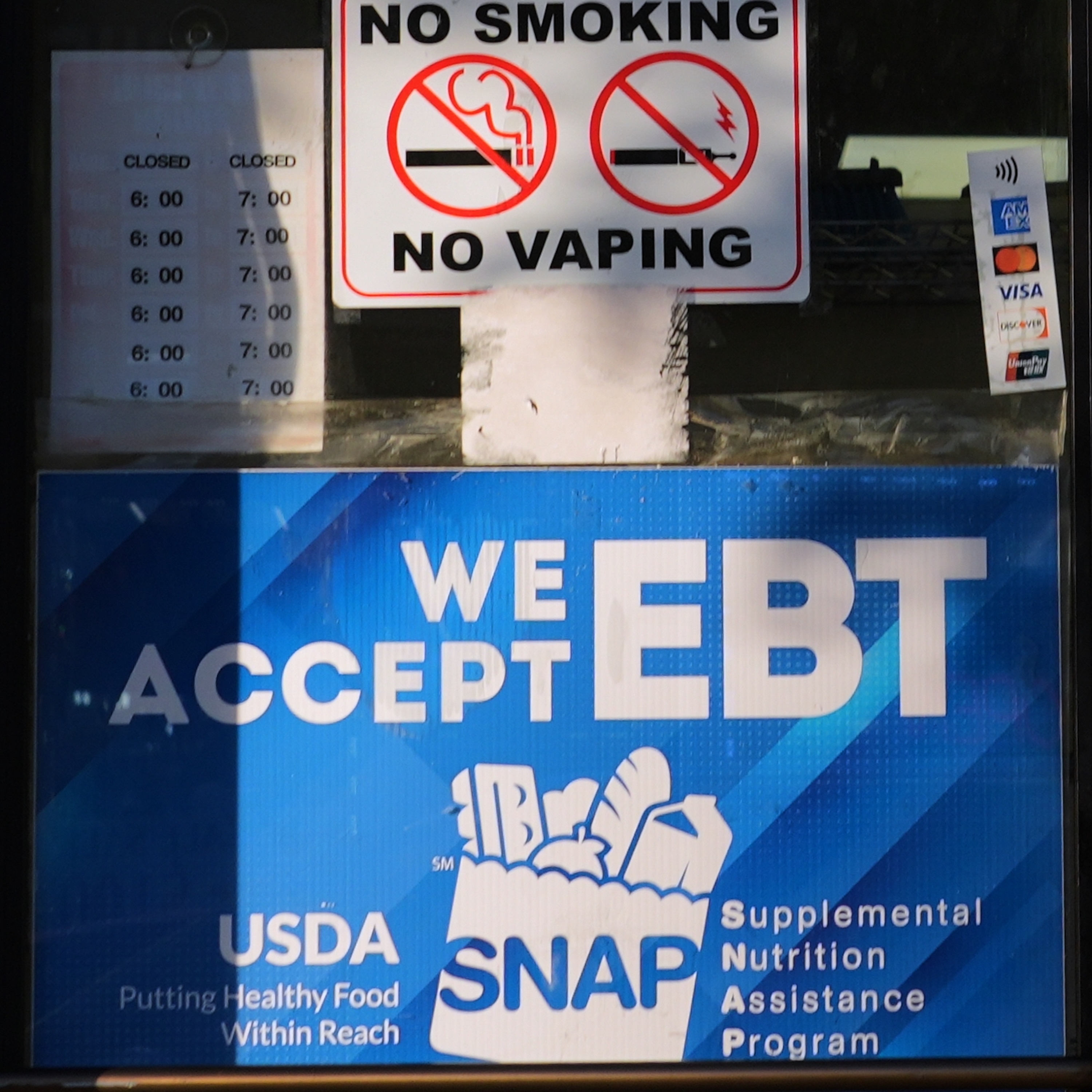
Post Reports
Stretching a food budget, when SNAP's uncertain
00:19:17
SNAP benefits ran out over the weekend. Now, hungry Americans are looking for support both in their communities and online.
Loading summary
Transcript75 lines
- [00:03]
Chanstin
Oh, I know they love chips.
- [00:06]
Cole Bjowicz
Early Monday, Post reporter Molly Hennessy Fisk met 59 year old Paula Jones. Paula was with her 2 year old granddaughter at a family dollar in Houston, Texas.
- [00:16]
Heather Kelly
And so what were you shopping for today?
- [00:20]
Chanstin
What do you call this coffee? Tide Pods and chips.
- [00:28]
Quince Sponsor
And with Snap, you just cover that.
- [00:30]
Chanstin
Snap will cover like chips and also a cold coffee.
- [00:35]
Cole Bjowicz
Paula told Molly that she makes $12 per hour. In her job as a customer service representative, she relies on SNAP benefits to buy her groceries. That's the federal program for food assistance formerly known as food stamps. And these SNAP funds usually allow Paula to stock up for the month.
- [00:53]
Heather Kelly
So what would you normally, normally get at the beginning of the month?
- [00:56]
Chanstin
Oh, bread, eggs, milk, chicken, fish, vegetables, all the things that we like to.
- [01:03]
Heather Kelly
Eat, like staples like the basics. Basics, because you're getting like the foundation of your diet.
- [01:12]
Cole Bjowicz
But those funds didn't come in for Paula over the weekend like they normally do. SNAP technically ran out of money over the weekend because of the Trump administration's refusal to release the funding during the federal shutdown. There are ongoing legal battles to fund the program. Right now, as of Monday afternoon, it looks like half the money will be made available for snap. But as people anxiously wait for full SNAP payments to resume, they're turning to community resources like food banks for support. And some have turned to another source for help, online influencers.
- [01:46]
Heather Kelly
So we're seeing on sites like YouTube, Instagram and TikTok that a lot of creators are taking what's normally, you know, general food content and they're trying to scale it to the issue at hand is people having enough food for the next month, the next two months. And there's a lot of creators who have maybe suffered from food insecurity themselves who've been on snap, and they're giving really practical advice on how to make ingredients last.
- [02:11]
Cole Bjowicz
From the newsroom of the Washington Post, this is Post Reports. I'm COLBYAKOWICZ. It's Monday, November 3rd. Today, technology reporter Heather Kelly explains the current state of the country's landmark food assistance program and how online content creators have become a lifeline for people trying to figure out how to feed their families. Heather, thanks so much for joining me.
- [02:38]
Heather Kelly
Thanks for having me.
- [02:39]
Cole Bjowicz
So for our listeners who haven't been following this very basic what is snap?
- [02:46]
Heather Kelly
So SNAP stands for the Supplemental Nutrition Assistance Program. It's a program that's about 60 years old, run by the federal government to give people money to help them afford groceries to feed themselves and feed their families. It's also sometimes called Food Stamps or referred to as ebt, which is actually the debit card that the money goes on. And it's how around 42 million Americans sometimes cover some of the food every month. It is a government program that helps low income families and individuals buy groceries at grocery stores.
- [03:15]
Cole Bjowicz
And on average, how much might a person get in SNAP benefits?
- [03:19]
Heather Kelly
So According to the USDA, it's about $187 a month for people on Snap, or about $332 a month per household that they are using to cover groceries. Obviously, if you've purchased groceries in America recently, you know, that's not exactly enough. But it is a real sort of a fallback fund for these people in need. And it's also often used with things like food pantries, with other government programs, state programs, even far more local programs to feed a family.
- [03:48]
Cole Bjowicz
Last week, two federal judges ordered the Trump administration to use other available government funds to ensure people don't lose these benefits. We're not sure how these court orders will ultimately play out, but today the Trump administration agreed to partially fund snap. And there was a discussion in our Politics roundtable last week about the politics around using this funding, the politics of funding snap, et al, the fight in Congress over all of this. But I really want to talk about the people affected and this funding that the administration seems to have agreed to, is it enough?
- [04:23]
Heather Kelly
There will likely not be enough. And what's also interesting is even if it does get fully funded, there's been this uncertainty sort of laid out there where people who have depended on these SNAP benefits haven't been stopped before. So this is sort of a first time for a lot of these people where they're thinking, oh, I need to plan ahead in case this stretches on till December and I have to go through this whole thing again. So it's created this real sort of panic mindset among people who do rely on the SNAP program that goes beyond just whether or not we can fund it for this one month.
- [04:52]
Cole Bjowicz
Right. Because even if they extend some funding for the month of November, if the government stays closed, if it doesn't reopen soon and this fight over funding continues, like what's going to happen?
- [05:06]
Heather Kelly
So what I think you'll see is a lot more pressure going on. Sort of these emergency backups we have like food pantries and food kitchens, and these places tend to be extremely active around the holidays, which are also coming up at the end of this month and in December. So there's just going to be increased demand on these already sort of maxed out systems, people trying to get food. I've talked to some parents for my reporting that have said one of the first things you do is you make sure your kids get fed first and that moms will skip a couple meals here or there. So you'll really see people stretching things as far as possible, trying to make sure their kids are fed, trying to make sure, you know, their elders are fed and things like that. And a lot of strain on public resources that were not meant to be a first line resource here.
- [05:54]
Cole Bjowicz
After the break, how influencers are stepping in to help Americans put food on the table. We'll be right back.
- [06:12]
Quince Sponsor
The holidays are coming up, which means the air is getting crisper and comfort becomes the best gift of all. And that's where Quint's comes in, delivering layers that last. Their sweaters, outerwear and everyday essentials feel luxurious, look timeless and make holiday dressing and gifting a breeze. That's because quince has it. $50 Mongolian cashmere sweaters made for everyday use. Denim that literally never goes out of style. Silk tops and skirts that add polish and down outerwear built to take on the season. Perfect for gifting and maybe even better for upgrading your own wardrobe. You've heard me talk about the Mongolian cashmere sweaters before and now is when they really shine. Next on my list are the Italian wool coats, designer cuts with quality that rivals high end brands but without the high end markup. Because Quince works directly with ethical top tier factories, they skip the middlemen and can pass the savings on to you, sometimes as much as 50% less than similar brands. Step into the holiday season with layers made to feel good, look polished and last. From Quince, perfect for gifting or keeping for yourself. Go to quince.comreports for free shipping on your order and 365 day returns. Now available in Canada too. That's quince.com reports to get free shipping and 365 day returns. Quince.com reports you listen because you know.
- [07:34]
Heather Kelly
The power of good journalism and the Washington Post is there for you 24 7. When you become a Washington Post subscriber, you get exclusive reporting you can't find anywhere else. You also get sharp advice columns, delicious recipes, TV and music reviews and so much more. Right now you can get all of that for just $4 every four weeks. That's for an entire year. After that, it's just $12 every four weeks and you can cancel anytime. Add to your knowledge and discover all the Post has to offer. Go to washingtonpost.com subscribe that's washingtonpost.com subscribe.
- [08:21]
Cole Bjowicz
So, Heather, you've had some reporting on this rise of online influencers on places like TikTok and YouTube trying to help those who are struggling, you know, who are facing the loss of their SNAP benefits. And you've reached out and talked to some of those influencers. What have you been noticing? What are they saying?
- [08:44]
Heather Kelly
I am seeing so much activity in different groups, both things in local communities and broader sort of these online creators who maybe used to make regular food content or, you know, just talk to young people about classic adulting tips and they're all turning towards, hey, here's what to do if you don't have enough food to feed your family this month. Here's how to stock a pantry. Here's why you should buy frozen vegetables if you know your produce is generally gonna go bad, like fresh broccoli and things like that.
- [09:10]
Quince Sponsor
Freeze it.
- [09:11]
Heather Kelly
Buy the frozen bags. These are like a dollar. Okay, I'm not kidding. This one thing was like two dollars. I've seen tips on how to navigate a food bank. If you've never been to one for the first time, you know, many people don't know that you you usually have to register, but it's pretty easy and quick. To those of you who have never been to a food bank or a food pantry before, let me explain what it's like so you're not as freaked out. First of all, nobody there is going to be judging you. Everyone there is either in the exact same situation you are or they are.
- [09:38]
Chanstin
There to help you.
- [09:39]
Heather Kelly
There will probably be a waiting room. You take a number. When the number is called, you go up, you have your id. You're seeing a lot of very practical advice, and a lot of it is coming from people who have been in the situation who have learned from having food insecurity or from being on SNAP themselves in the past.
- [09:55]
Cole Bjowicz
Yeah. So tell me about some of the content creators you spoke with.
- [09:58]
Heather Kelly
Yes, I reached out to a number of people kind of putting up these posts, especially one with really lively comment sections who have big followings. I talked to one woman named Natalie Reedus, who is an entrepreneur. She works in real estate, but she said in her words, she's been broke in the past and she wanted to sort of pass some of that knowledge on.
- [10:18]
Chanstin
So I have been in the real estate industry for over two decades and during the housing market crash of 2008, that is when I really, really struggled. And I remember going to the grocery store to buy food and deciding to buy food instead of paying the light bill and I brought the groceries home, put everything, and two hours later my lights were cut off. And so like, you know, being a mom and making that decision, that was the decision that I needed to make.
- [10:50]
Heather Kelly
And she'll do a post where she says you only have $10 this week and she'll break down exactly what you need to buy at the grocery store to keep your family fed for that whole week.
- [10:58]
Kiki Ruff
If I had $50 and I needed to feed my family, these are the things that I would be buying. First thing would be rice. Right now, this week at Kroger, there's a five pound bag of rice for 2 99. That's the first thing I'm going to buy. Next thing I'm going to buy some beans. I always buy my beans at Dollar Tree because you can get either a 12 ounce bag or 16 ounces.
- [11:12]
Heather Kelly
One post is, you know, beans and rice is a really nutritionally complete meal that doesn't require paying for meat. Here's how to make it taste different with just some small changes for three nights in a row.
- [11:22]
Kiki Ruff
And I also do the same thing with chicken. If I have a pack of chicken breasts, then I may go ahead and cook all of the chicken at one time. I may slice some to use for fajitas and then I may cube some to use like in casseroles or, or any other type of dish. Like you can cook one thing but cook it different ways or add the seasonings to it after you've got everything cooked and then flavor it for fajitas or for a casserole or for chicken spaghetti or for whatever else you're going to do and that'll cut down on your prep time.
- [11:49]
Cole Bjowicz
What other advice did Natalie have for her viewers?
- [11:52]
Heather Kelly
So Natalie talked about shopping really strategically and making sure that your dollar goes as far as possible.
- [11:58]
Chanstin
So the most important thing is to shop the sales. So different grocery stores have different things on sale every single week. And so if they have a really good sale on chicken this week, it may be beef next week. Or if they have a really good sale on oatmeal this week, it may be rice next week. And so you've got to pay attention to the local circular papers for your sales.
- [12:19]
Heather Kelly
She also talked about being really practical and single minded about your grocery list.
- [12:23]
Chanstin
And I map out what I'm going to purchase before I even go to the store because that's what allows you to feed your family, provide enough and then also stay within budget.
- [12:35]
Heather Kelly
Another person I spoke to was Kiki Ruff and she's also been on food stamps in the past when she had to drop out of college for a brief period of time.
- [12:43]
Chanstin
When I had access to snap, they only gave me $40. And that's, that's what, just a little bit over a dollar a day. So stretching that $40amount became like a necessary gain for me. A really unfortunate life. Tetris where I had to figure out how I was going to make this work.
- [13:05]
Heather Kelly
And she was working full time then, but she was making less than the limit and she had to have help from food assistance and she really learned how to cook and she's sharing all of her skills also on TikTok and Instagram with her followers, hoping that it helps them stretch food a little bit further.
- [13:20]
Chanstin
I started making tiktoks related to recession cooking back in about February, March. Today we're going to turn some beans into burgers.
- [13:31]
Heather Kelly
If this is your first time being poor, I'm Keke Ruff and I don't know when it became a luxury to have protein, but we're going to work on that today because we don't have any other choices now, do we? Okay, so good news.
- [13:42]
Chanstin
A lot of my recipes are duped. So I've got like a pop tart dupe. I've got a really popular Hamburger Helper dupe, which I'm not going to lie, it's Max. It's so good. I've got a Mac and cheese dupe. Bagels and cream cheese are my favorite thing to bake.
- [14:00]
Cole Bjowicz
And Heather, what has the reaction been like to these videos?
- [14:03]
Heather Kelly
Everybody said there's. First of all, there's just been more traffic to these posts which shows that, you know, there's sort of an organic interest in it. Their comment sections are super interesting. They're filled with people sharing their own tips from their, you know, own current or past experiences with food insecurity substitutions that are less expensive flavor tips, things for kids. And they're also kind of inspired to help in their own communities. So they're also getting DMs from people who are really upset that they're in this situation, who feel maybe guilt for their families and they're reassuring them one on one. They're kind of turning into influencers and part time therapists, which is an extremely interesting turn.
- [14:41]
Chanstin
I just want them to know wherever they are, whatever they're doing, they deserve to eat and they are loved. They may not know it, they may not feel it, they may feel discarded, they may feel discouraged, they may feel like they don't have choice but they still deserve a meal and to know that they are loved.
- [15:00]
Cole Bjowicz
And you, you talked to some of the people, you know, to some of their followers, right, directly?
- [15:06]
Heather Kelly
I did, yes.
- [15:06]
Cole Bjowicz
Who are actually about to maybe experience this insecurity. What did, what did they have to say?
- [15:12]
Heather Kelly
So I talked to one young mother named Chanstin who is on Snap.
- [15:17]
Chanstin
My name is Chanstin, I'm 22 years old. I'm a mom of a two year old little girl and a six month old little boy. And I live in Iowa, a pretty low income area in a food desert.
- [15:29]
Heather Kelly
She's also on wic, which is the benefit for women with infants and children because one of her children is under a year old and she is planning ahead. She's following Kiki Ruff and some other creators.
- [15:41]
Chanstin
I found the recipe for taco soup on there and that can feed us for a good four days.
- [15:46]
Heather Kelly
She last week went to the store and she got as much as she could.
- [15:49]
Chanstin
So I've been buying a lot of like canned goods and a lot of like canned meats. And I have a deep freezer I got on Facebook Marketplace that we have pretty full of like chicken and pork and stuff.
- [16:01]
Heather Kelly
She got bread to put in the freezer because if it's sliced you can take out one slice at a time and then you don't, you know, run the risk of the bread going bad too soon. And she's, she's really, you know, worried about what happens next, but she wants to make sure she's in as good of a position as possible to make sure her two young children are fed.
- [16:21]
Chanstin
For myself, I'm, you know, as a mom, you're gonna, you're gonna like do what you need to do for your kids. But I'm more scared about having formula for my son who is 6 months old and a $28 can of formula last a day and a half in our house because he eats quite a bit.
- [16:41]
Heather Kelly
Chancen has already started looking other places as a way to get extra food for her family. She's looking to food pantries, but her biggest concern is getting formula for her youngest child who is just now starting solids. And formula is very expensive when you don't get it through a lot of these government programs.
- [16:59]
Chanstin
We have a food pantry that's about 31 minutes away from us that we frequent often, but they're only, I'm only allowed to go to the food pantry twice a month and they're only allowed to give out one can of formula per time you go. And when we're Using, like when we're using like 15 cans of formula a month, it's kind of a lot.
- [17:24]
Cole Bjowicz
So formula. My understanding was that formula is usually something that you get through the WIC program, which is something you mentioned earlier. Is the WIC program also at risk of losing funding?
- [17:34]
Heather Kelly
So it's another thing that's still unclear, but what you're seeing is a lot of this uncertainty with the SNAP program is spreading to other programs. People are saying, oh, if this could suddenly come to a halt, what about the benefit that gives me formula for my babies? And so people like Shanson are also worried about stocking up on formula, stocking up on anything these young children would need, like baby food just for that.
- [17:55]
Cole Bjowicz
Worst case scenario without snap, you know, and I'm actually seeing this on my social media too. I feel like my Instagram stories are filled with people giving advice on how to help, right? Like how to donate, how to send food to people that might need it. But the people that need the help, how do they know where to turn? Who are they turning to for additional assistance?
- [18:21]
Heather Kelly
I think what I'm seeing online is I'm seeing a lot of people again in online communities, in neighborhood groups on Facebook and buy nothing groups, which have organically sort of started filling this niche. People are posting, hey, I can afford to feed my family this month. I would love to help out a family that's gonna be missing SNAP benefits. And there's these giant threads where they're getting matched with people in need. There's people organizing food drives near me. There is a woman organizing in the Safeway parking lot. A way to get free food that maybe isn't available to the pantry, a way to get gift cards to feed families. So you see a lot of really organic activity just coming from regular people, not even local governments, just people who really want to help and really feel this deeply.
- [19:04]
Cole Bjowicz
You know, Heather, I think people will hear about the kind of private, organic, community based assistance and help that is, you know, emerging in the absence of the government doing its job. But the fact that they have to do this at all, like, says a lot about, I think, where our government is right now.
- [19:29]
Heather Kelly
It's interesting because it is, you know, it is inspiring to see this many people stepping up and wanting to help. But it's really organic for these things to start out big with a lot of concern. But you do, you know, you lose interest over time, you'll lose funding over time. If this stretches on for a while, food banks will likely start to get fewer donations and then you're sort of left in a difficult position again. So it's also how much can individuals on Facebook really do to feed 41 million people across the United States? And is that the job of people who live in these communities and want to help their neighbors? And it's just sort of unclear how sustainable that is. How long will the government shutdown be going on? How long will people need this sort of community effort to help keep their kids fed? And will we be able to do that for the long run?
- [20:22]
Cole Bjowicz
Heather, thanks so much for sharing your reporting with us.
- [20:24]
Heather Kelly
Thank you for having me.
- [20:30]
Cole Bjowicz
Heather Kelly writes about the ways technology affects everyday life, from family to finances. You also heard excellent reporting from Molly Hennessey Fisk in Texas. That's it for Post Reports. Thanks for listening. If you're looking for the latest updates on the big news of the day, check out our morning News briefing. The seven we bring you the seven stories you need to know about every Weekday morning by 7am you can listen to it wherever you listen to podcasts. Today's show was produced by Rennie Siernofsky. It was edited by Ariel Plotnik and mixed by Sean Carter. Thanks also to Mariana Alvaro, Jen Liberto and Yunhee Kim. I'm Cole Bjowicz. We'll be back tomorrow with more stories from the Washington Post.
- [21:26]
Kiki Ruff
Think about why you listen to podcasts. It's like having a friend who makes you think or can help you wind down right? Well, the Washington Post has a lot of people you can turn to at any hour. You can read the most important and interesting stories. We can help you cook something delicious, give you advice on a tricky friendship. Rave about a movie or book that you shouldn't miss. When you become a Washington Post subscriber, you have a companion for whatever part of your day needs it most. Get it all for just $4 every four weeks. That's for an entire year. After that, it's just $12 every four weeks. Cancel anytime. Go to washingtonpost.com subscribe that's washingtonpost.com subscribe.