← Post Reports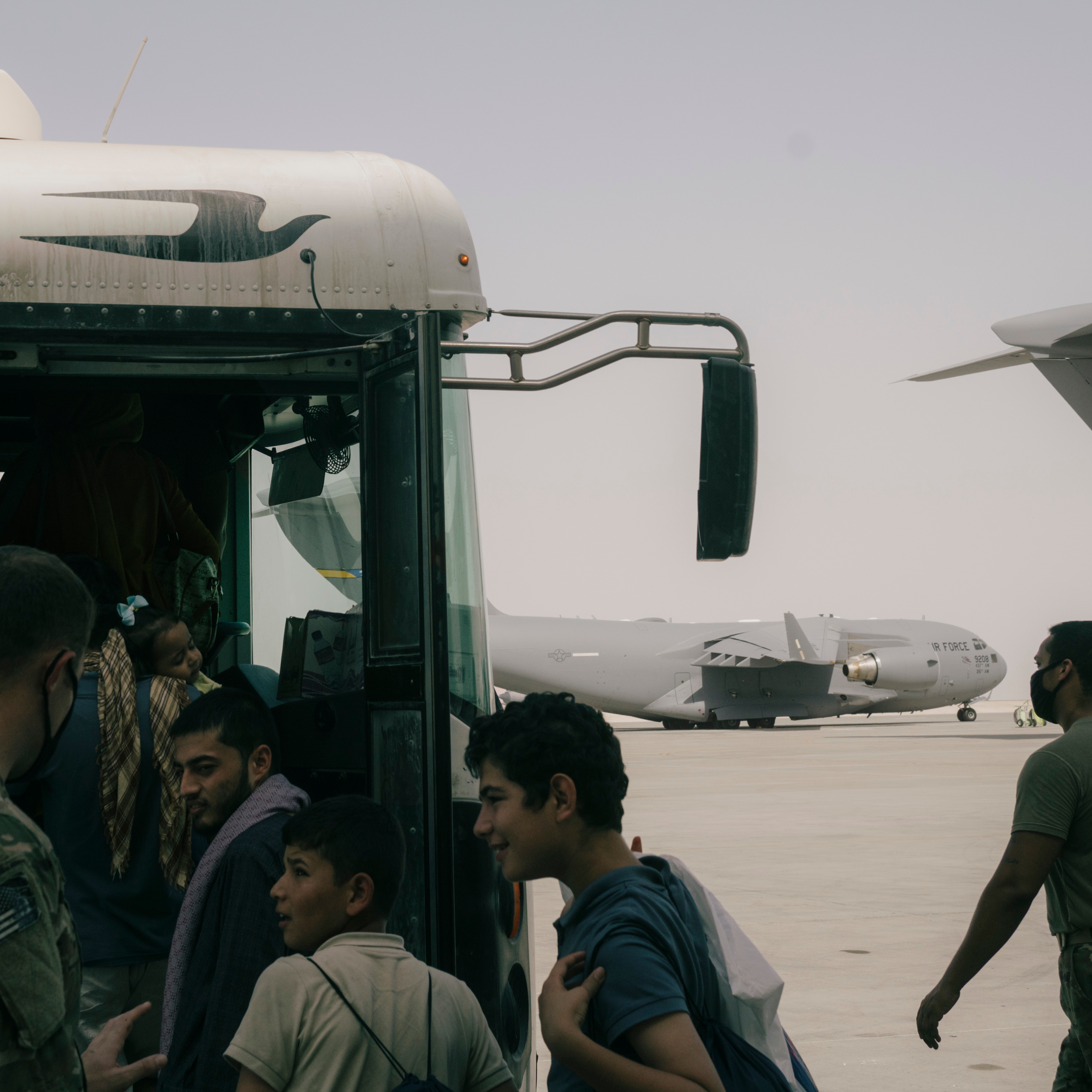
Post Reports
The Afghans at risk of deportation
00:27:58
The Trump administration is moving to end deportation protections for wartime allies who fled to the United States after the fall of Afghanistan. Veterans say the U.S. government is betraying a sacred promise.
Loading summary
Transcript71 lines
- [00:03]
Elahe Izadi
As of next week, thousands of Afghan immigrants could be deported from the United States. Some of these Afghans had helped the US Military either directly or indirectly during the war in Afghanistan. Others were instrumental in human rights work or they worked for the country's U. S. Backed government. But then came August 15, 2021. That's the day Afghanistan's fragile government fell and the US left suddenly in a chaotic withdrawal.
- [00:37]
Abby Hausleenner
As US forces were withdrawing, the Taliban swept back into Kabul and had took control of the capital city while US Forces were still at the airport. And that set off a massive panic.
- [00:51]
Elahe Izadi
Abby Hausleenner is a national security reporter. She says that this panic was especially acute for these Afghans who had helped the Americans or supported their causes. They knew they'd be the main targets of the Taliban. Many of them were supposed to have special immigrant visas to come to the.
- [01:10]
Abby Hausleenner
U.S. you had people who were eligible for these visas, former interpreters, people who had been waiting and waiting and didn't have these visas yet. There were people who had the visas in hand and were had yet to actually have a flight scheduled. There were various other people who worked for the Afghan government or the afghan military or NGOs or whatever who were terrified of the Taliban. And all of these people together tried to get into the airport. It was chaos.
- [01:40]
Elahe Izadi
Hanifa Girouw was one of them. She had worked closely with the US And Afghanistan, doing human rights work and working toward a peace deal. She remembers the day four years ago when Kabul fell.
- [01:54]
Hanifa Girouw
I left the office, leaving behind everything. And just for a moment, everything was replaying in my mind and all the. All the hopes we had that we, our generation, would at least see a different Afghanistan. I remember my parents would be telling us the stories of how regimes would change in the past in Afghanistan and how dark the first era of the Taliban was. And we were really determined that we will change the situation in Afghanistan this time and we will not let Afghan people, particularly Afghan women, to be faced with a same dark era again. But at that moment, I realized that a darkness is coming back.
- [02:53]
Elahe Izadi
Hanifa could not get on a plane. She went to her sister's house to hide from the Taliban.
- [02:59]
Hanifa Girouw
They came to my home on August 16th. I wasn't at home luckily, but they took my father and brother. They detained them for 24 hours. That whole week was very challenging, traumatizing, and, yeah, it's quite difficult to even remember. And anything could happen.
- [03:25]
Elahe Izadi
Eventually, Hanifa managed to get out on a US Military plane. She went from Kabul to a US Military base in Qatar, then to a base in Germany, and then to a military camp in Virginia. In the chaos of it all, Hanifa hadn't been able to apply for a Special Immigrant Visa. Neither had thousands of other Afghans like her. Some of them, like Hanifa, ended up with humanitarian parole status. But many others were given this other blanket protection called Temporary Protected Status, or tps that let them enter the US Legally and stay. But starting next week, the US Government will remove that protection. Hanifa says that could be a death sentence.
- [04:14]
Hanifa Girouw
They will kill and go after all the Afghans who stood alongside the US in this long 20 years war.
- [04:24]
Elahe Izadi
From the newsroom of the Washington Post, this is Post Reports Weekend.
- [04:29]
Abby Hausleenner
Eli.
- [04:29]
Elahe Izadi
I'm Elahe izadi. It's Saturday, June 28th. Today, Abby explains why the Trump administration is moving to revoke protection for AFGHANS in the U.S. and why this is infuriating military veterans who say their country is betraying a sacred promise. Thank you, Abby, for taking time to join me today.
- [04:57]
Abby Hausleenner
My pleasure.
- [04:58]
Elahe Izadi
Abby. You and I are here to talk about Temporary Protected Status for Afghans. First, just what is Temporary Protected Status, or tps?
- [05:08]
Abby Hausleenner
So TPS is sort of a blanket designation that the US Government can give to a country. Basically, it's a recognition that a certain country is too dangerous for its nationals who are currently in the United States to be forced to return to. And so we've seen over the years the has given TPS status to places that are in the midst of wars or have just experienced earthquakes or, you know, hurricanes or really sort of massive disasters that have made living there unsustainable for a particular period of time.
- [05:47]
Elahe Izadi
And Afghanistan is one of these countries that received nationals from Afghanistan, received tps, who gave that to them and when.
- [05:54]
Abby Hausleenner
That's right. So after the US withdrew from Afghanistan in 2021, you know, in the process of doing, the US evacuated tens of thousands of Afghans to the United States, gave them a temporary status to stay here for a couple years.
- [06:09]
Michael McCaul
Operation Allies Refugee, which I announced back in July, has already moved 2000 Afghans who are eligible for special immigration visas and their families to the United States.
- [06:22]
Abby Hausleenner
And then on top of that, President Biden gave Afghanistan TPS status. And that just meant that any Afghans in the United States could not be deported to Afghanistan.
- [06:34]
Michael McCaul
We're also expanding refugee access to cover other vulnerable Afghans who worked for embassy U.S. non governmental agencies or U.S. non governmental organizations.
- [06:46]
Abby Hausleenner
And that was based on the fact that the Taliban, whom the US had been fighting for years, had taken control of Afghanistan, and it was deemed not a safe place. It was in the midst, still is, of just a massive economic and humanitarian crisis as well.
- [07:01]
Elahe Izadi
So now walk me through exactly what the Trump administration has decided to do with Afghans who are here with this temporary protected status.
- [07:13]
Abby Hausleenner
So this spring, the Trump administration decided to end TPS for Afghanistan. And what that does is it means that Afghans are now deportable under US Law as of when that will start in July.
- [07:27]
Elahe Izadi
And so who exactly then would be affected by this move? Like, do we know how many people could be affected by this?
- [07:34]
Abby Hausleenner
So the administration has said, you know, in theory, right, people who have legal permanent residence here, what we know as green card holders, you know, would not be affected. Immigration advocates say, you know, in theory, people who have pending asylum applications should not be affected, or pending special immigrant visa applications. Those are the. Those are for the Afghans who worked directly for the US Government in Afghanistan. But there's a whole lot of uncertainty. The people who would be affected are those who don't have a clear immigration status. So that means, for example, Afghans who might have been human rights advocates or teachers or former employees of the Afghan government that was backed by the United States, former members of the Afghan armed forces, these are all people who might have been evacuated here in 2021 or found their way here as evacuees afterward who are not eligible for the special visas for those who work directly with the United States and so might be trying to get asylum, might be trying to apply for other visas, say they have family here, who knows? Those are the folks who could be deported and who they and their advocates and attorneys say would be very vulnerable to some sort of retribution or extreme danger should they return.
- [08:58]
Elahe Izadi
Are there any estimates as to how many people could lose their legal status here?
- [09:02]
Abby Hausleenner
Immigration groups and advocates for the Afghans say it could be in the thousands.
- [09:07]
Elahe Izadi
In the thousands. So what about people like Hanifa? She has asylum. Is she safe?
- [09:15]
Hanifa Girouw
I don't know. I have the fear, to be honest. The fear is always there, especially seeing the current changing policies. It keeps me awake in iti. It is is fitting, to be honest.
- [09:34]
Abby Hausleenner
So if Hanifa has been granted asylum by the US Government, then she should be protected, in theory, because that would make her a legal permanent resident.
- [09:43]
Elahe Izadi
You keep saying, like, in theory. Why, why that caveat?
- [09:47]
Abby Hausleenner
Well, it's a caveat that we probably wouldn't have been using much a few years ago, but we've seen in the past few months the Trump administration pursue immigration policies at times that seem to be in direct defiance of court orders. And so, you know, immigration advocates, I think, are very skeptical that they can rely on this administration to uphold the law.
- [10:13]
Elahe Izadi
It sounds like what you're suggesting here, too, is that there might be one thing on paper, but once it's implemented, there are all these unknowns, given recent history in recent actions by the administration that suggests that things could go in a way that is completely unanticipated.
- [10:29]
Abby Hausleenner
Exactly. And just we've seen a demonstrated willingness to defy the courts.
- [10:37]
Elahe Izadi
We're talking so much right now about the, like, nuts and bolts of this policy. But what's also standing out to me is the idea that Afghanistan was given blanket TPS in an acknowledgement at the time that conditions there were terrible, very bad under Taliban rule for many people, not just the people who were working directly for the US Government, but all sorts of other people in civil society. So what justification is the Trump administration giving now for revoking tps?
- [11:13]
Abby Hausleenner
So the Secretary of Homeland Security, Kristi Noem, said that basically the administration is claiming that conditions in Afghanistan have improved and so that it no longer meets the standards to apply tps. Obviously, regional experts, national security experts, immigration advocates, and so on say that is fundamentally not true. We have not seen any indication that Afghanistan is any safer now for the folks who were evacuated who fled than it was a few years ago. There has been systematic targeting at times of, you know, people who worked for the U. S. Backed Afghan government, people who worked for the United States, you know, minority and women's rights activists.
- [12:02]
Hanifa Girouw
They only see every individual who have arrived to the US as one of their partners and allies who stood with the US against the Taliban. So they see them as enemies. Basically. They already killed many of those who were left in Afghanistan, and now deporting them back means sending them to death.
- [12:24]
Abby Hausleenner
And so it is very much still a very dangerous place to be, especially if you are someone who has associated with the United States. And Afghan advocates, you know, point out that for all of the people who have now spent time here, that's every single one of them.
- [12:46]
Elahe Izadi
After the break, Abby explains why so many Afghans who supported the US have struggled to get the legal status here that was promised to them. We'll be right back. I think it's important to take a step back in time to really understand why so many Afghans here have TPS and not other kinds of special visas. And we've touched on this a little bit, but I do think it's helpful to just root ourselves back. Even before the chaotic US Withdrawal from Afghanistan. In what ways did AFGHANS Help the U.S. government during the war?
- [13:38]
Abby Hausleenner
Well, in every war zone, the United States depends heavily, essentially on local. On citizens of the country that they are in to help them to survive and to wage that war. So in Afghanistan, you know, that means they had interpreters they would not. U.S. troops, U.S. diplomats, et cetera, would not have been able to communicate with the local population without interpreters at their sides at all times. And that means people, Afghans, who were risking their lives on a daily basis to do that. The embassy and US Military bases in the country ran with the help and work constantly of local nationals. Everything from, you know, trash collectors and housekeepers to construction workers and, you know, bureaucrats, paper pushers, you know, all sorts of different jobs. And then you also had, you know, the US invaded Afghanistan in 2001 after the, you know, in response to the September 11th terrorist attacks. You know, in the 20 years that followed, the United States poured, you know, billions of dollars into trying to rebuild an Afghanistan with a government that was, you know, pro democracy and favorable to U.S. interests. And so the government that came into existence was heavily supported from its inception. The politicians, the infrastructure, supported by the U.S. government. And so those folks also are just sort of intrinsically tied to America.
- [15:22]
Elahe Izadi
One thing that stands out to me in what you're saying is there are Afghans who risk their lives to do this sort of work. Why? Why did they risk their lives to do this sort of work?
- [15:33]
Abby Hausleenner
Well, I think I've heard, you know, a range of things. For a lot of people, you know, this was a job when you, you know, in a war zone, and the economy in a. In a war zone is inherently not a great economy. It's hard to do business and. And to go to school and to have a job. And so for a lot of people, especially those who already had some English skills, this was the way to go. You know, this was a way to make money, to support, you know, in some places, this was the only real job around. And then there were others who, you know, really thought that the Americans were there to help their country, to help rebuild it, to make Afghanistan into a stable. Into a stable place with a stable government that could thrive. And they believed in that, and they. They did these jobs because they thought they were helping to rebuild their country.
- [16:29]
Elahe Izadi
And is it like this sort of agreement that if you do these sorts of jobs, we will also protect you?
- [16:34]
Abby Hausleenner
Certainly in the case of people who worked for the U.S. government, yes. The U.S. government made a commitment to people who served as interpreters or who worked in the embassy or on bases, that they would. That if they. If people came to work for the U.S. the U.S. would protect them. That the U.S. valued these people, they were essential to the U.S. mission, and that they would therefore be entitled to these Special Immigrant visas that would give them and their families a permanent refuge in the United States.
- [17:06]
Elahe Izadi
So then there was the withdrawal in August 2021. It was very chaotic. Just talk me through what that meant for people who did do this sort of work that would have qualified them for Special Immigrant Visas. But, you know, they were caught up in this moment.
- [17:22]
Abby Hausleenner
Well, let's rewind a little bit. Even before that, the Special Immigrant Visa program had been pl. Plagued by just crazy delays. You know, people would wait well over a year, sometimes years, to get these visas, sometimes being killed while they were waiting. You know, the. The. The program was heavily backlogged when this evacuate, when this withdrawal took place. And then the Biden administration was pretty heavily criticized for the way it carried out the withdrawal. And that was in large part because they failed to plan and failed to execute on evacuating these essentially hundreds of thousands of people who were eligible or potentially eligible for these special visas.
- [18:11]
Michael McCaul
The State Department did not even request an emergency evacuation until after Kabul was surrounded by the Taliban. As a result, the airport was not secured until August 17, two days after Kabul fell. As the saying goes, if you fail to plan, you plan to fail, and fail they did.
- [18:36]
Elahe Izadi
Yeah. That clip is from a House hearing on the withdrawal. That's Texas Republican Congressman Michael McCaul speaking. And we should say Biden did respond to some of those criticisms.
- [18:47]
Michael McCaul
I know there are concerns about why we did not begin evacuating Afghan civilians sooner. Part of the answer is some of the Afghans did not want to leave earlier, still hopeful for their country, and part of it because the Afghan government and its supporters discouraged us from organizing a mass exodus to avoid triggering, as they said, a crisis of confidence.
- [19:14]
Abby Hausleenner
Not only did they fail to evacuate masses of people who were vulnerable early and in sort of a organized fashion, but the US Government also really failed to plan for the Taliban's very swift seizure of power in the country.
- [19:31]
Hanifa Girouw
It was a time of chaos, terror, and uncertainty in the Afghan capital of Kabul. The scenes of crowds massed outside Kabul's airport, desperate for a flight out, shocked.
- [19:41]
Abby Hausleenner
People around the world. And what happened was the people who, you know, those who ultimately made it inside the airport and made it onto these evacuation planes, in many cases, it had nothing to do with how long they had served the US Government or whether they had or not. It was luck. It was, you know, it was sheer luck of managing to make it somehow into the airport at the right time. And so that is how we ended up with, you know, this. This population of tens of thousands of evacuees, some of whom were Special Immigrant Visa eligible and some of whom were not and therefore came to, you know, depend, be dependent on tps, on these other avenues to be able to stay well.
- [20:26]
Elahe Izadi
And I also, talking about the chaos of that moment, would imagine just even getting your paperwork together, like the logistical element of it. Can you tell me a little bit about that?
- [20:36]
Abby Hausleenner
I'm glad you raised that. Yeah. So that's a major issue. One of the huge burdens in the SIV process is you have to show through this incredible amount of documentation and references that you are who you say you are, that you did this job serving the US Government in the way that you did. And the embassy, U.S. government and military actually told people, people in this SIV pipeline to destroy their documents during the evacuation as they were trying to make their way from various parts of the country, from Kandahar, from Mazar Sharif, etc, to the Capitol to try to escape. You know, the. The US Government feared, I think, correctly, that if these people were caught with this documentation, this proof of being associated with the Americans, that they could be executed by the Taliban. And so people destroyed these documents. They traveled to the airport with nothing. You also had the embassy burning documents, burning proof that these people worked there in, in an effort to protect them, you know, from the Taliban. But the result is, you know, you have lots of people in the US who are SIV eligible who are now still struggling to prove their case because their documents are destroyed. Maybe the unit they worked for or maybe the company, the US contractor they worked for is no longer in existence. Maybe they've lost touch with the soldiers they worked with and they can't track them down. It can be extremely difficult to try to piece this together now, especially if you don't have, you know, a dedicated and very, very skilled attorney working for you.
- [22:17]
Elahe Izadi
Yeah. And so then it sounds like a lot of people who. Because one argument is, well, if you did work directly for the US Government, you shouldn't be affected by revoking TPS because you're eligible for this other type of visa. But based on everything that you're explaining, it sounds like there are people who would be eligible, but because of all these complications, they aren't getting it and therefore they're reliant on tps.
- [22:40]
Abby Hausleenner
Yes, exactly. That's one of the big, I think, misunderstandings that you hear between sort of what the administration is saying now and the reality on the ground as it's being relayed by attorneys and by Afghans themselves who are caught in this process.
- [22:57]
Elahe Izadi
You know, as we're talking about Afghans who helped directly or indirectly, the US government or even the armed forces during the 20 year war. I remember during the fall of Kabul, there were a lot of veterans groups, American veterans groups, who were coming out speaking on behalf of these Afghan evacuees and actually were organizing evacuation flights and trying to get people out, their former, like, colleagues on the ground. Abby, how are these military veterans now feeling about the Trump administration revoking TPS for Afghanistan?
- [23:28]
Abby Hausleenner
These veterans groups are furious. You know, a lot of these folks, you know, there are folks who got involved in the evacuation at the time and are still involved. So for the past, you know, four years, they have continued working, trying to get Afghan interpreters and others out of Afghanistan because, again, there were thousands who were left behind trying to help resettle the people who are here, trying to get legal services to the people who are here. You know, this has been sort of a continuing effort, and a lot of them are very angry.
- [24:02]
Elahe Izadi
Why? Tell me about their anger.
- [24:04]
Abby Hausleenner
A lot of veterans of this war were angry at the way the withdrawal played out. To begin with, there was this sense of betrayal that they were betraying America's Afghan allies by not protecting them. And there is that sense now. There's a sense of betrayal and shame, I think, for a lot of people. And they feel like their country has an obligation to uphold its promise.
- [24:32]
Elahe Izadi
Tell me more about that obligation and the promise, not just even in the context of Afghanistan, but I'm wondering, what message does this send going forward?
- [24:42]
Abby Hausleenner
Well, certainly advocates for the Afghans, and, you know, I'm including in that lawmakers who have been who, you know, supported the evacuation efforts. You know, they would say this sends a terrible message to allies and adversaries abroad that this says that, you know, if you come and work for the Americans in a war zone, the US Is not going to have your back. You cannot depend on the US to evacuate you if you face danger for that service. And, you know, people, U.S. military commanders will say that's a. That's a huge problem because they can't do their mission on overseas battlefields without local help. It just can't be done.
- [25:33]
Elahe Izadi
So, Abby, TPS for Afghans is set to expire in July. What should we expect next to happen?
- [25:40]
Abby Hausleenner
That is a big unknown. You know, we have seen, you know, the administration has implemented a very aggressive policy of, you know, trying to round up people who are deportable who do not have legal status and deporting them as quickly as they can. And so I think the expectation from a lot of people is that Afghans will be targeted if they are deemed deportable. And so we could start seeing, you know, mass deportations of Afghans.
- [26:16]
Elahe Izadi
And so how are advocacy groups and lawyers representing Afghans preparing?
- [26:23]
Abby Hausleenner
They are moving frantically to try to lodge asylum applications for people who don't have them, to try to appeal for people who don't have appeals going so that, again, in theory, people can't be deported if they have pending application. And then you also have veterans groups who are, you know, calling Congress and lawyers calling Congress, calling their lawmakers, you know, trying to get as much information from the Department of Homeland Security as they can for their Afghan clients, trying to tell lawmakers, this is a big deal, please stop it. And, you know, some folks who are saying, you know, we're going to try to fight this, we will physically show up to try to block ICE agents from taking, you know, Afghan allies away.
- [27:15]
Elahe Izadi
Well, Abby, thank you so much for taking time to explain all this.
- [27:19]
Abby Hausleenner
I'm glad to be here. Thanks.
- [27:26]
Elahe Izadi
Abby. House loner, covers national security. That's it for Post reports. Thanks for listening. Today's episode was produced by Rennie Srinofsky. It was edited by Maggie Penman and mixed by Shawn Carter. I'm Elahe Izadi. We'll be back Monday with more stories from the Washington.
- [27:48]
Abby Hausleenner
Sam.