← Post Reports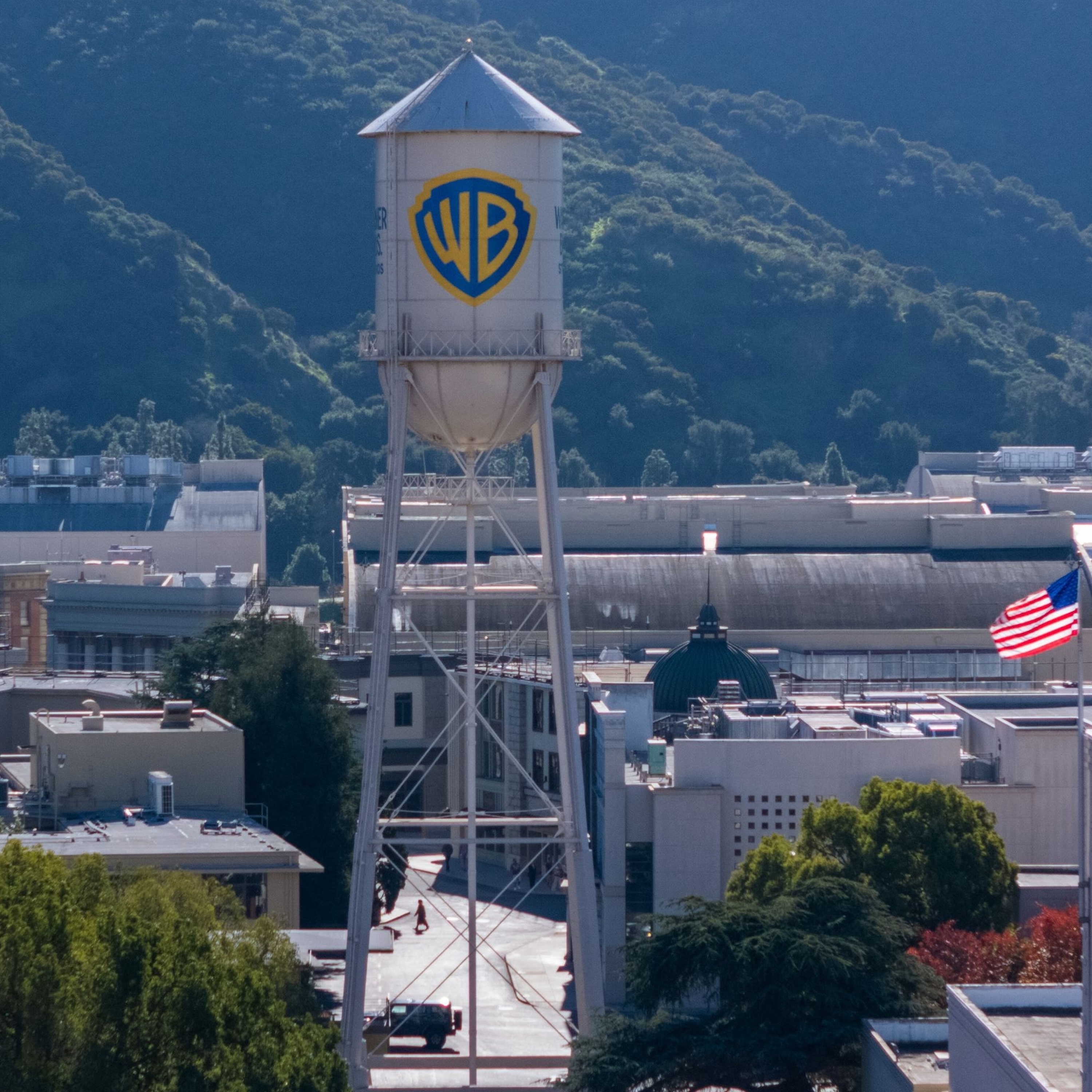
Post Reports
The battle for Warner Bros.
00:18:27
Netflix and Paramount Skydance are in a bidding war over Warner Bros. Discovery. What could a potential deal mean for the future of the entertainment industry?
Loading summary
Transcript64 lines
- [00:00]
A
This podcast is supported by Pharma. Did you know that America is the only country in the world where half of every dollar spent on brand medicines goes to entities that don't make them? It's true. Learn more ATP h rma.org Middlemen.
- [00:18]
B
Wow. It has been a long time since I have done this.
- [00:22]
So for those of you who don't know my voice, I'm Martine Powers, one of the hosts of Post Reports. And this week I am back from maternity leave. I'm so exc to be here, back in the newsroom, back having conversations with my colleagues on the reporting and back with all of you listeners returning to a job after some time away. I think a lot of people can relate to this, can feel kind of like, okay, what is it that I do now and how am I supposed to do my job? How should I be doing it better? And that's one of the reasons why I want to ask you for some help. Me and the rest of the podcast team are trying to learn more about our audience, how and why people listen to us and how they think we can be better. So we've got a new survey that we're running for a limited time and we would love to hear from you. It shouldn't take more than a few minutes to complete and to do that, you go to washingtonpost.com podcastsurvey again, that's washingtonpost.com podcastsurveY when you're done, you can enter to win a $100 gift card. Also know that we read all the responses and what you tell us we will really be taking to heart. So Once again, that's washingtonpost.com podcastsurvey thank you so much and here's today's show.
- [01:51]
I love movies and when I think about my best movie watching experiences over the past couple of years, a few stand out. I think about the thrill of seeing sinners in imax.
- [02:03]
C
We got us a proud man, y'. All.
- [02:05]
B
The hot pink, joyful spectacle that was Barbie.
- [02:09]
C
Hey, Barbie.
- [02:12]
B
The first movie that I got a babysitter so that I could see it in theaters one battle after another, which blew my mind.
- [02:18]
C
You know what freedom is? What? No fear.
- [02:21]
B
Go. It turns out these movies have something in common. They were all made by Warner Brothers Discovery. They've had a great huge run of blockbuster hits and now there is a massive showdown for ownership of the company.
- [02:37]
On Friday, Netflix announced it planned to buy Warner Bros. Discovery. But before the purchase went through, another titan entered the arena. Paramount Skydance. It launched its own bid to one up Netflix. So my question is, what does this all mean for my ability to watch the movies and TV shows that I care about?
- [03:01]
From the newsroom of the Washington Post, this is Post Reports. I'm Martine powers. It's Wednesday, December 10th. Today, I'm talking to media reporter Scott Nover about the battle for Warner Bros. Discovery and what it means for the shows and movies we love.
- [03:23]
Scott, thank you so much for being here.
- [03:25]
C
Thanks for having me.
- [03:26]
B
So I really want to get into how all of this will affect what I can watch at home, on tv, at movie theaters. But I also think that the story is so fascinating because it's just like a crazy corporate drama with hostile takeovers and negotiations and deals. Just explain to me where did this start?
- [03:48]
C
Sure. So to understand this deal, you have to understand that for a few months, there's been an intense bidding war over the Warner Brothers Discovery property.
- [03:59]
B
And to be clear, that property is what? Like, Warner Bros. Discovery is what?
- [04:03]
C
I mean, this is Warner Brothers. It's one of the most legendary film studios and brands in the country's history. Their library has things like Harry Potter, the DC Comics, superhero movies, and a bunch of old classics like Casablanca. They have any HBO show you can imagine, and that includes Game of Thrones, the Sopranos, you name it. There's a lot here. And it's home to HBO Max, which is a streaming rival to Netflix. So big deal. And Netflix, Paramount, Skydance, and Comcast, which owns NBC Universal, have been bidding for this property for months, and there's been multiple rounds of bids. And on Friday, Warner Brothers decided to go with Netflix, who bid $83 billion.
- [04:56]
B
Wow.
- [04:57]
C
Yeah.
- [04:57]
B
So it seemed like that was all, like, agreed upon, right, that Warner Brothers Discovery wanted to become part of Netflix. Netflix wanted to buy this property. But then Paramount comes into play.
- [05:08]
C
Sure. So on Monday, Paramount, Skydance, one of the losing bidders, but perhaps the most tenacious, mounted what's called a hostile takeover or an unsolicited bid to buy the.
- [05:21]
B
Company, which you're going to have to explain to me, because when I think of a hostile takeover, the only thing, yeah, it's very dramatic. It sounds like, I don't know, like paratroopers coming in like the dark of night to take over this company. And also, like, what I know about this comes from succession, which I will point out is an actual HBO show relative.
- [05:38]
C
Directly proving my point, but yeah.
- [05:41]
B
So hostile takeover means what?
- [05:42]
C
Well, any big deal involving a publicly traded company needs to be okayed by its shareholders. And while the Warner Brothers Discovery board of directors may have signed off on Netflix being the buyer, the shareholders get a vote. And so Paramount Skydance is going directly to the shareholders, bypassing the board and saying, here's more money. It's all in cash. We're going to buy the whole thing. And Paramount's bid, it says, is worth $18 billion more in cash. That's a lot of money.
- [06:20]
B
Interesting. So even if people at Warner Brothers Discovery are like, ooh, it feels like the vibes are better with Netflix, that for shareholders, if they can make more money by being bought by Paramount, then they're going to say yes to Paramount.
- [06:33]
C
And many financial experts would say that the company and the company's board have a fiduciary duty to maximize shareholder profit. They're supposed to go with the deal that is best for shareholders and that usually means more money.
- [06:48]
B
So in some ways, this story is kind of a like insider y Hollywood corporate drama. But one thing that's notable here is that President Trump has talked about this deal and says that he might have some opinions on whether one of these deals go forward.
- [07:04]
C
Yeah, it's become very political very fast. Before we get into that, maybe it's best to figure out the fault lines here.
- [07:13]
B
Yeah.
- [07:16]
C
David Ellison, who runs Paramount Skydance is the son of Larry Ellison, who is not only one of the world's richest people from Oracle.
- [07:26]
B
Right.
- [07:26]
C
He's a. Yeah, he's the co founder of Oracle, but he's also a noted Trump ally and friend. And you know, he's a lot of the money behind Skydance, which took over Paramount this summer. And they own cbs, Paramount Pictures, a lot of things. And so part of Paramount's bid to Warner Brothers was that they could quickly get regulatory approval, presumably because they're cozy with the White House, because this is.
- [07:50]
B
Something that would actually need federal approval because these companies are so large.
- [07:54]
C
Right? Yeah. So the Department of Justice or the Federal Trade Commission would weigh in on the antitrust implications and if they had a problem, sue to block it. Paramount represents a more conservative company, a more Trump friendly company, and one that is actively backed by Jared Kushner, the.
- [08:16]
B
President'S son in law.
- [08:16]
C
The president's son in law and former advisor who is listed as a financial backer in the SEC disclosures that Paramount Skydance filed the other day. And so not only has David Ellison taken over Paramount Skydance and installed a conservative opinion journalist in charge of CBS News and Bari Weiss, but he's kind of flaunting his connections to the administration and the Trump family in this bid. But in recent weeks, Ted Sarandos, who runs Netflix, has also met with Donald Trump. And Trump was praising him the other day. Mr. Trump, I did. I met with Ted. I think he's fantastic. I think he's. In the history of Hollywood. Hollywood has really been almost, you could say, nothing like what he's done. Donald Trump has found himself in the middle of this deal that now pits two rivals against one another for a third rival. And he said in remarks on Sunday at the Kennedy center that he plans to be involved in the process. And he also warned that Netflix could have a problem because of its huge market share already.
- [09:30]
B
So it seems like there is this kind of political bent here, but it also feels like some of Trump's questions about what this deal would mean either for Paramount or for Netflix, that they're like valid questions about what the stakes of this could be for regular people.
- [09:46]
C
There are valid questions. I think there's another question of whether the president himself should be involved. Or this is something that an independent Justice Department or Federal Trade Commission would evaluate on its own on the merits, without the President and putting his finger on the scales. I think that you could argue that there are major antitrust, anti monopoly concerns for either deal. Either you have Netflix buying one of the biggest rivals in the streaming landscape, or you have Paramount Pictures and Warner Brothers Studios, two storied Hollywood studios, two of the big ones combining. And there are traditional economic analyses that regulators can do. But the President has seemed very keen to be personally involved in the process.
- [10:44]
B
After the break, how these deals could affect the people who make TV and movies and what it might mean for your wallet. We'll be right back.
- [11:04]
A
In America. Half of every dollar spent on brand medicines goes to entities who don't make them. While middlemen like PBMs and 340B hospitals drive up costs. BioPharma is investing $500 billion in new infrastructure and manufacturing here at home and helping patients buy medicines directly at lower prices. Tell Washington to end middlemen markups and put American patients first. Visit phrma.org Middlemen.
- [11:40]
B
Okay, so, Scott, I want to dive more into what happens if one of these deals goes through. So let's start with the one where Netflix buys Warner Brothers Discovery and then Netflix owns HBO and HBO Max and the DC Cinematic Universe. I mean, all that stuff. What would that mean? How do things change? Because Netflix is now the owner.
- [12:04]
C
We don't know if they're going to merge HBO Max and Netflix. Should this deal go through? And if so, we don't know when that would be. But who knows? Eventually, you would assume that that's where this is going, is that two of the biggest streamers are in either controlled by the same company or become the same entity entirely. We have a very similar situation with Disney plus, owned by Disney, and Hulu, which used to be owned by a number of different major companies, but now is entirely owned by Disney. So you're seeing bundles. You can now bundle your Hulu and your Disney plus and your ESPN and all that. So it could be something that is much more similar to that or could be one combined product.
- [12:51]
B
So it sounds like there are potential opportunities here for sure, if Netflix does make this deal. But also, what are the risks to consumers? I mean, having Netflix own all this stuff, I'm thinking, especially, like, price point, we already feel like we're paying too much for streaming services. And it seems like every few years, Netflix raises prices. And is this a way for them to have more of a lock on the market and have, you know, less competition to deal with?
- [13:19]
C
Yeah. Antitrust critics would tell you that fewer players in the market means higher prices for consumers. That's something that regulators are supposed to be looking at. And this combines major players in Hollywood in streaming. And so there could be price hikes if Netflix owns more of the market. And that pain point that consumers always have that they're paying too much for TV and movies could go up, and then it could also affect the people that are actually making movies and television in Hollywood. If the streaming giant owns one of the biggest studios or two more studios are combined in the other scenario, what does that mean for actors, for writers, for directors, for showrunners, for extras, for technical staff?
- [14:06]
B
Their negotiating power could go down because there's only one place to do the work that they do.
- [14:12]
C
And traditionally, the studios bargain against them. But here, if there's fewer studios, are they just bargaining against Netflix?
- [14:23]
B
Yeah. Yeah. But then I'm also curious, what would this mean for me as someone who enjoys going to the movies? I mean, Netflix has become sort of synonymous with the alternative to going to the movies. Right? Like, why spend all that money to go out to a movie theater when you can just, like, sit at home and watch Netflix?
- [14:41]
C
Right.
- [14:41]
B
And does this. Would this deal be like a death knell for the movie theater industry?
- [14:48]
C
Yeah, that's a really good question. And Netflix has kind of outwardly disdained movie theaters in the past. In an interview in August, Ted Sarandos, the head of Netflix, called the movie theater approach, quote, an outdated concept. He said, if you're fortunate enough to live in Manhattan and You can walk to a multiplex and see a movie. That's fantastic. Most of the country cannot. In its press release announcing the deal, Netflix said that it's going to keep the Warner Brothers studio and its theatrical release schedule as is. But for how long? The movie theater business isn't thriving as it once was, and a lot of that is due to Netflix. And so how do they keep that balance of letting people sit at home on their couch? But also, at least let's some of these big pictures that they've just acquired run in theaters for a while before they hop to the small screen.
- [15:45]
B
Well, I wonder, like, Paramount is another big studio, if it buys up all this stuff from Warner Bros. Discovery, like, what would be the same and what would be different if Paramount ends up winning this?
- [15:56]
C
Paramount has a bigger studio. They have Paramount Pictures. The thing that's really different is that Paramount's bid is for the entire company. It's for all of Warner Brothers Discovery, and that includes CNN and a bunch of other cable channels. Now, Netflix's deal does not include those. Does not include CNN and would be spinning those off. And so you might see more of an antitrust problem in combining or having a same owner of CBS and cnn, which is in the TV news market, in the digital news market. So as media companies get bigger, these markets all kind of seem to blur and they kind of do everything. And so we're left wondering kind of what the implications are of that other market as well.
- [16:45]
B
So what's going to happen next in all of this? And when are we going to find out whether the hostile takeover is effective and who is going to win out in this?
- [16:55]
C
Yeah, I think it's going to take weeks and months to figure out what's next. But I wouldn't be surprised if Netflix makes a better bid and improves its offer, because right now Paramount Skydance is bidding above them and promising a smoother regulatory track. And it's possible that Warner Brothers Discovery shareholders would want Netflix to at least improve its offer. On Monday with news of Paramount's hostile bid. Warner Brothers stock went up. So I think shareholders at least are anticipating that this might benefit them because at least we have multiple bids to choose from and we can go with the higher bid.
- [17:32]
B
So it seems like Netflix might up the ante here.
- [17:34]
C
I think that's true. Or at least match Paramount.
- [17:37]
B
Yeah, but then there's this other question of the federal government having to approve that. And how quickly would that become clear? Like, which of any of these deals would Trump and the government give a thumbs up to?
- [17:53]
C
Yeah, it's not clear. Trump has maintained that he is going to play this fair and square, but he has said that he's going to be involved. On Monday, Trump made a remark and he was like, neither of these people are my friends. And he was referring to David Ellison and Ted Sarandos of Paramount and Netflix, respectively, and kind of dispelling the idea that, you know, he's putting his finger on the scales. But everything that we know is that the DOJ is very likely to challenge a Netflix deal, and it's uncertain whether they would challenge a Paramount deal. So Paramount could have a point, but I don't think anything is certain right now.
- [18:38]
B
Scott, thank you so much.
- [18:39]
C
Thank you for having me.
- [18:43]
B
Scott Nover is a media reporter for the Post. That's it for Post Reports. Thanks for listening. And don't forget to fill out our listener survey. You can find that@washingtonpost.com podcastsurvey Today's episode was produced by Emma Talkoff. It was edited by Ariel Plotnick and mixed by Shawn Carter. Thanks to James Graff. I'm Martine Powers. We'll be back tomorrow with more stories from the Washington Post.
- [19:16]
A
In America, half of every dollar spent on brand medicines goes to entities who don't make them. While middlemen like PBMs and 340B hospitals drive up costs, BioPharma is investing $500 billion in new infrastructure and manufacturing here at home and helping patients buy medicines directly at lower prices. Tell Washington to end middlemen markups and put American patients first. Visit phrma.org middlemen.