← Post Reports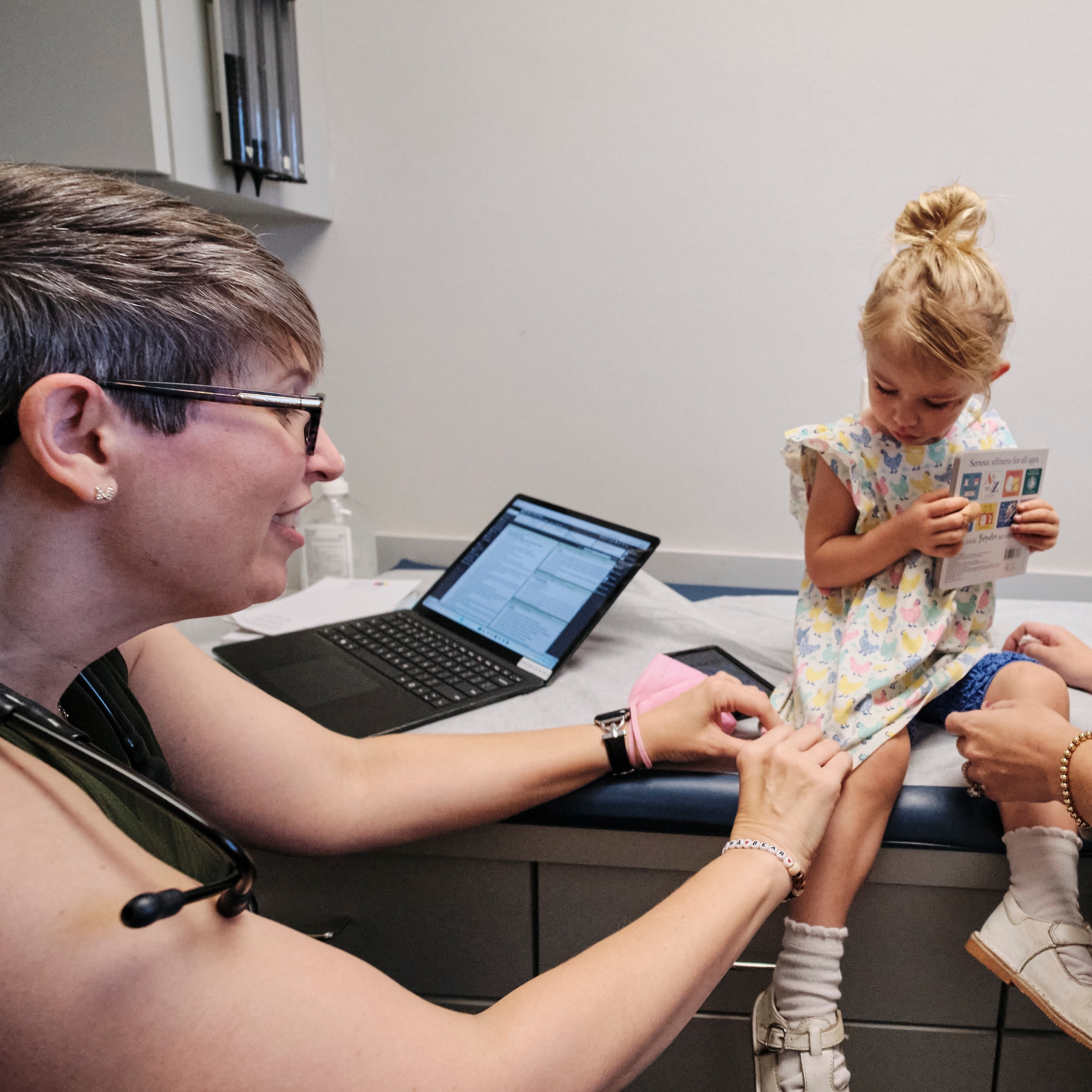
Post Reports
The biggest shift yet in U.S. vaccine policy
00:25:53
An influential advisory panel has recommended dropping the hepatitis B vaccine at birth. This doctor is already seeing the consequences.
Loading summary
Transcript70 lines
- [00:00]
PhRMA Announcer
This podcast is supported by Pharma. Did you know that America is the only country in the world where half of every dollar spent on brand medicines goes to entities that don't make them? It's true. Learn more at p h rma.org Middlemen.
- [00:17]
Martine Powers
Nola Jean Ernest is a pediatrician working in the Wiregrass region of Alabama, which.
- [00:23]
Dr. Nola Jean Ernest
Is the southeast corner of Alabama, where I like to say we don't have interstates and we don't have children's hospitals. So the pediatricians in this area really are the frontline experts in kids health for all of the children.
- [00:42]
Martine Powers
In her work, Dr. Ernest encounters a lot of skepticism around childhood vaccines, and she sees it as her job to convince her patients that vaccines are safe and effective. But recently, even in the last week, she has noticed a change in how some parents are thinking about the vaccine for hepatitis B, which for decades has been recommended for all newborns in the.
- [01:06]
Dr. Nola Jean Ernest
US in the past, declining the hepatitis dose vaccine at birth was pretty rare. We would come up against it one or two times a year. In the last six months, it has become increasingly common. But this week, all of the newborns that I have seen this week in my clinic declined the birth dose of hepatitis B.
- [01:32]
Martine Powers
It's no secret that Health Secretary Robert F. Kennedy Jr. Is on a mission to reshape childhood immunization in the US and so far he's been pretty successful. He's directed the CDC to publish language suggesting that there might be a link between vaccines and autism. He's replaced every member of the vaccine advisory panel with his own picks. Now that panel has recommended dropping the universal birth dose of the hepatitis B vaccine for newborns. Health reporter Lena sun says that new leadership at the CDC are expected to approve that change and that it could have major impacts on patients and doctors around the country.
- [02:18]
Lena Sun
This will be a substantial change to the childhood immunization schedule, maybe the most substantial in decades. And it would just be the opening salvo for Robert F. Kennedy, who has always wanted to upend the childhood vaccination schedule to continue going down this road next year.
- [02:45]
Martine Powers
From the newsroom of the Washington Post, this is Post Reports Martineau. I'm Martine powers. It's Thursday, December 11th. Today why the US government is poised to stop recommending the hepatitis B vaccine. Lena sun talks through how this change came about and what the implications of it could be. Then, in the second half of the show, we talk more with Dr. Earnest about how in the wake of these shifts, she is trying to make the case to patients that vaccines matter. Lena, thank you so much for being here.
- [03:25]
Lena Sun
It's always a pleasure to be with you, Martine.
- [03:27]
Martine Powers
So, obviously, we're here to talk about vaccines, which have been very top of mind for a lot of people during this first year of the Trump administration. President Trump has been elevating vaccine skeptics to positions of power, and there are clear consequences of that. As I understand it, last week there was this massive development when it comes to kids and vaccines and hep B. Can you explain to me what happened here?
- [03:53]
Lena Sun
So we're talking about the childhood immunization schedule, which anybody who's had a kid or a grandchild knows it's a schedule of when kids are supposed to get what vaccines at what age, and there's a certain number of doses. And the current schedule is set up this way because it's designed to protect children from serious infectious disease as soon as possible and when they are most vulnerable. So that gives you optimal protection by spacing these vaccines effectively. Last week, Vicki Pebsworth. No conflicts of interest? I vote yes.
- [04:29]
Patient or Family Member
Malone? No conflicts of interest? Yes.
- [04:33]
Lena Sun
An influential vaccine advisory panel recommended that newborns no longer get the birth dose of hepatitis b vaccine.
- [04:44]
Patient or Family Member
The DFO has transcribed. 8 votes yes and 3 votes no. The motion passes.
- [04:53]
Lena Sun
And so this vote basically upended a long standing practice for over 30 years that babies get this vaccine at birth. And the reason babies get it is that it offers decades of protection against this very contagious virus that can cause very serious illness.
- [05:10]
Martine Powers
Yeah, I want to talk a little bit more about that just so people understand. I mean, it's funny that I just had a kid and I vaccinated my kid for hep B and do not know what it is. And I think a lot of people don't know what it is. What is hep B? How does it become contagious? What happens when people are infected?
- [05:27]
Lena Sun
Hepatitis B is a virus, and it's a bloodborne virus, and it's primarily transmitted in the blood. So when a mom gives birth to a baby, it's in the blood. It can pass to the baby. It also can be in the vaginal fluid. So the reason the birth dose is given is because that's like the primary way you can get it. And, you know, every child who is born, you know, gets the shot. That's been the current recommendation. But you can also get the virus through contact with just the teeniest tiny bit of blood on a toothbrush or a nail clipper. Because it's a sneaky virus. It can stay infectious on surfaces for up to seven days at room temperature. So transmission is more likely from an open sore or wound to open skin on the baby, where blood can enter, you know, through cuts or sores, on a caregiver's hand, Coming in contact with a baby's cut or a rash. So the reason you give the birth dose is sometimes moms don't get screened or tested for hepatitis B. Sometimes those tests are done too early in pregnancy, and then you might get infected later. And sometimes the results are not correct. So you miss some babies. And this way, this is the safety net to. To get the babies.
- [06:45]
Martine Powers
And what happens if a baby does get hepatitis B? I mean, is it something that they can just like, is there a cure for it?
- [06:53]
Lena Sun
No. For babies who get infected, they're the most vulnerable. For this virus that causes disease as an adult, it's easier to fight it, but there's a 90% chance if you get infected as a baby that you will go on to develop lifelong disease. And it can cause serious liver disease, liver transplant needed, cancer, death. And more than 2 million people in the United States have hepatitis B. About 50% do not know they have it. Which is why you want to give the baby the birth dose. Because if it's living in a household with other people who don't know they have hep B, they can get infected with a caregiver or somebody else in the household.
- [07:37]
Martine Powers
Well, then let's talk a little bit more about what's changing here. What is the argument from the folks in the federal government who are intending to change this recommendation and say that a birth dose is not necessary? What are they saying of their rationale here?
- [07:54]
Lena Sun
Well, it's not a lot of data, and there's not really strong evidence behind their rationale, which is they think that there might be risk and kids don't need that many shots. And let's take into account parents who have felt like their decisions have not been taken into account. Right now, the hepatitis B vaccine is recommended in three doses at birth. The second one is, I think, one to two months. And the third dose is six to 18 months. It sort of depends as you get older. Cause it's sometimes in a combination shot. The third dose is what gives you full protection, gives you 95% protection.
- [08:41]
Martine Powers
So what is it that they're proposing to change?
- [08:44]
Lena Sun
So right now, it's very simple. Every baby gets a shot. Newborn birth to 24 hours. What they're proposing to change is, well, we only just want to give this shot to babies who are high risk. So if the mother Tests positive. In other words, if she has hepatitis B infection, obviously the baby should get the shot. And if we don't know what the status of the mom is, obviously we should give the baby the shot. Okay, that's, that's clear. That doesn't change. What they're saying is, let's say the mom tests negative, doesn't have any sign of hepatitis B infection. They're saying those babies are not at risk. You don't have to get it, that parents can talk to their doctor. And if you decide to get it, you should wait until you're about the baby's two months old.
- [09:32]
Martine Powers
When you describe that to me, that sounds reasonable, right? Like, if I'm about to give birth, if you know that I don't have hepatitis B, then why vaccinate my baby right when they're born? What's the harm waiting a couple months?
- [09:46]
Lena Sun
The test may not be good and somebody in your household may have hepatitis B and doesn't know it because they.
- [09:54]
Martine Powers
Weren'T tested, because they weren't the person.
- [09:55]
Lena Sun
Who was pregnant, or they have hepatitis B, or the baby comes in contact with a caregiver who lives in a different household and maybe she never got tested and she's carrying hepatitis B and is infected. So it's not a lot of kids. It's a small percentage, but that's why this is a safety net. And I should say that the CDC vaccine panel members, the ones who voted on this change, have argued that there's little evidence that there's widespread transmission in this way to justify vaccinating all newborns.
- [10:26]
Martine Powers
What are the potential implications of this long term? If you have more families in the country choosing to delay their baby's hep B vaccine by a couple months or potentially not giving it at all, you.
- [10:41]
Lena Sun
Risk the increase in hepatitis B infections and other serious consequences like death for the babies. For the most vulnerable segment of the population. The reason why the universal birth dose was put in Place in 1991 was exactly to cover all babies, because before that, women were screened, and then they only gave the vaccine to kids who are at, you know, high risk. That didn't work because they still had infections. They put this universal birth dose policy in place in 1991, and if we could show a graph, it would show that the infections of hep B just plummeted. If you don't have that anymore, you're going back to the old days where kids are going to get infected. The more kids who get infected, the more kids are going to be getting serious disease. Get hospitalized and potentially die.
- [11:35]
Patient or Family Member
Yeah.
- [11:35]
Dr. Nola Jean Ernest
Yeah.
- [11:36]
Martine Powers
So the stakes here are very high. Yeah. Lena, thank you so much for explaining all this.
- [11:43]
Lena Sun
Sure. Anytime.
- [11:47]
Martine Powers
After the break, we'll hear again from Dr. Nola Jean Ernest about what it's like right now for pediatricians on the ground and how she feels pushing back against the government's own messaging. We'll be right back.
- [12:11]
PhRMA Announcer
In America, half of every dollar spent on brand medicines goes to entities who don't make them. While middlemen like PBMs and 340B hospitals drive up costs, BioPharma is investing $500 billion in new infrastructure and manufacturing here at home and helping patients buy medicines directly at lower prices. Tell Washington to end middlemen markups and put American patients first. Visit phrma.org Middlemen at the beginning of.
- [12:45]
Martine Powers
This episode, you heard from Dr. Nola Jean Ernest, who practices in southeast Alabama and is also one of our reporter Lena sun sources. So after the news broke about this likely change to the vaccine recommendations, we called her up during her lunch break to get her reaction to this news.
- [13:03]
Dr. Nola Jean Ernest
Hearing this news was rather frustrating. And the reason why it is frustrating is because it wasn't built on new data. So there was no new evidence presented that would clarify why we're making this change or how we would go about making this change. And instead it shifts the burden of having these conversations about birth dose vaccination of hepatitis B to the pediatricians in the community. In our community, there are not enough birthing hospitals. And so we do not cover at all of the hospitals where children are being born. Instead, they are seen by hospitalists there or by the neonatologist that's on call there. And so if those conversations aren't happening at the time of birth or if the family declines the vaccination at the time of birth, then the conversation gets pushed to the newborn visit, which increases the burden on community pediatricians.
- [14:08]
Martine Powers
Well, I want to talk more about those conversations that are happening between doctors like yourself and new parents. So just to be clear for you, are you still recommending to your patients that they get their babies the Hep B vaccine at birth?
- [14:24]
Dr. Nola Jean Ernest
Absolutely. And I've actually been working on a post for my own social media account today to be clear to my family that their doctor that they trust still recommends birth dose vaccination against hepatitis B.
- [14:39]
Martine Powers
And how often are you coming up against skepticism from patients about this vaccine or people coming in and saying, you know, like, I feel like I've heard stuff and I don't know if I want to do this for my baby.
- [14:54]
Dr. Nola Jean Ernest
In the past, declining the hepatitis dose vaccine at birth was pretty rare. We would come up against it one or two times a year. In the last six months, it has become increasingly common. But this week, all of the newborns that I have seen this week in my clinic declined the birth dose of hepatitis B.
- [15:16]
Lena Sun
Really?
- [15:18]
Dr. Nola Jean Ernest
Five newborn families that all refused.
- [15:20]
Martine Powers
Wow. And they said it was in reaction to this most recent change.
- [15:25]
Dr. Nola Jean Ernest
They did not actually say why. They just said, we don't understand why it's necessary, which is the rhetoric that the politicians are using. And so then we had a conversation about why it's necessary. And all but one chose to get it in my office, which is a little bit late. You know, I'd rather than got it in the hospital. But luckily we were able to start all of those babies within the first week of life.
- [15:52]
Martine Powers
I find that so fascinating. Like in those moments when you have new parents and they're saying, look, I don't think that I'm gonna give my baby the Hep B vaccine. What do you say to them then? Like, how does that convers play out?
- [16:04]
Dr. Nola Jean Ernest
So usually we ask. Well, first of all, I always start the conversation with reminding parents that it is always their right to refuse medical advice or medical care for their child. I don't want parents to feel like they are being forced into something. But then I also try to explain that my role in our relationship is to give them the best advice possible for their child. And so I usually ask then for permission. So can I tell you why? I strongly recommend that we start this hepatitis B series now, since you did not do it at birth. And then we talk about what hepatitis B is, why babies can still get it, even though they may not be having sex or sharing needles, which is one of the pieces of misinformation that families hear and how horrible the disease can be for children if they are exposed to it early in life.
- [17:06]
Martine Powers
It's interesting because we have gotten a little perspective on this conversation from the other side. So, as you know, earlier this year, reporter Lena sun and one of our producers, they talked with patients of yours, specifically Andrew Zburenko and Johanna Vargas Barenko, who have been seeing you for many years. And they talked about how they came to see you after their baby was born earlier this year, and that they were really worried about getting their newborn vaccinated.
- [17:35]
Patient or Family Member
Our only concern was one of the vaccinations that we actually heard a lot of rumors about. There was hepatitis B.
- [17:41]
Dr. Nola Jean Ernest
Basically, I heard that they are linked to autism.
- [17:48]
Martine Powers
And so they had these new worries. They hadn't had with their older daughter. And they'd seen some videos on social media warning against vaccines. They talked about where they heard some of this stuff from.
- [18:00]
Patient or Family Member
It was. It was mostly social media, TikTok, YouTube, all that stuff. And it was in both Spanish and English. One of the main concerns about the hepatitis B was actually containing heavy metals and being a little bit too early to actually put that vaccine on a newborn, given the fact that that is the type of vaccination that can be taken later on in life, like when the kid reaches teenager years and stuff like that. So, yeah, that was our main concern.
- [18:28]
Martine Powers
But then they said that they came to you about this and that they asked you about these vaccines. They asked if you could explain if vaccines are safe, and they decided to have their kid get this vaccine after talking to you. And this is how they remember that conversation.
- [18:44]
Patient or Family Member
She actually explained to us the concept of having heavy metals in the vaccine and the reason why it contains some type of metal and the vaccine. And she started by pulling her little laptop and she looked at the periodic table on Google and she showed us that the one metal that that vaccination has is the aluminum. And aluminum is one of the lightest metals in the whole periodic chart. And the reason why that vaccine has that type of metal is to actually create an immune response in the blood. So that way the body can absorb and create the antibodies. Right. So that's the reason why it has. But she went in detail explanation, you know, the research backed up by 20 years and all that stuff, you know, and the fact that, you know, it's safer in these smaller amounts. That's the reason why, you know, they give like small shots instead of the whole dosage in a spacing of months. Right. So yeah, she, she did explain us in detail.
- [19:37]
Martine Powers
So, Dr. Ernest, I'm curious what your reaction is, hearing this and hearing what, what these patients were able to kind of take in from that conversation.
- [19:52]
Dr. Nola Jean Ernest
It actually makes me very happy that the family remembered all of those details from our conversations. Sometimes you wonder if they are actually hearing what you're sharing. But the concern about heavy metals is not a new one. But at the same time, the concern, especially around hepatitis B vaccination has been shifting. So one day it may be hepatitis B, one day it's exposing a baby too early, and another day it's simply that why do we give vaccines at all for something that is sexually transmitted? So a concern that this is not an infection they're going to be exposed to. And the conversation continues to change and we have to be able to address all of those points.
- [20:43]
Martine Powers
It's interesting for me hearing that tape because I think that it's easy in this moment to think of people as either pro vaccine or anti vaccine, or that there are just like two camps in this country, but from at least what it sounds like here, there is an opportunity to persuade people or educate people or to like have real conversations that might influence people's actions about this kind of stuff.
- [21:11]
Dr. Nola Jean Ernest
Absolutely. There is room for conversation with most families. Very few families present to our office entirely against vaccination for their child. They may have some misunderstanding about how the vaccine schedule is designed or what are the ingredients in the vaccine and their safety. And often if we address those concerns, we can convince a family to vaccinate a child, at least mostly on the normal schedules, sometimes with some minor changes, and protect their child early on against diseases that could cause them harm at an early age. So, absolutely, we do see a lot of room for having conversations with families.
- [22:00]
Martine Powers
What is it like for you in this moment to have to be the voice that is pushing back essentially against what the government is recommending?
- [22:08]
Dr. Nola Jean Ernest
Yeah. As a professional in any career, it would be nice if the government had your back. And you know, in the past we could point to the CDC recommendations and say, you see, even our own government agrees with what I'm telling you. But the truth is, even without that, for our families, it's really my voice that matters the most. And one of the hardest things for pediatricians is that especially with birth dose vaccination, families don't hear my voice until they're already in my office after their child has been born.
- [22:59]
Martine Powers
I see. Because when you're in the hospital giving birth, you're with your OB and that like the pediatrician doesn't come in until a little later, past the point of when you would usually give this birth dose.
- [23:09]
Dr. Nola Jean Ernest
Right. And in rural America, the pediatrician that comes in is usually not going to be your pediatrician because we can't all staff the few birthing hospitals we have. And so you may have a conversation with a pediatrician.
- [23:26]
Martine Powers
Not the one you know and trust.
- [23:27]
Dr. Nola Jean Ernest
Right, not the one you know and trust. And so that kind of defers the responsibility to me. And if I try to put out information for my patients online, you know, where they might see that information before they have that baby, then that is often met with that larger, truly anti vaccine community where you get flooded with anti vaccine messages. And it's really hard for our voice to break through that noise.
- [24:03]
Martine Powers
So, Dr. Ernest, when you think about the number of patients who are coming in with these kinds of concerns about the Hep B vaccine, about other vaccines. Like, what has this all been like for you, seeing these concerns, talking through people with these concerns and this kind of new question about hepatitis B and children, Children.
- [24:25]
Dr. Nola Jean Ernest
It's a little scary. You know, as pediatricians, we really are the experts in child health. But like any expert, you are most an expert in the things you do every day. And I take care of strep and flu and colds in kids every day. You know, I diagnose rashes every day. I have never treated a case of hepatitis B. I know of one case in our community in a child, but I have never myself treated a case of hepatitis B. And so if I had a concern that a child had exposure or symptoms, I would have to rely heavily on our infectious disease colleagues. And remember, we practice in the wiregrass where there are no interstates and no children's hospitals. So our closest infectious disease colleagues are a three hour drive for our families.
- [25:21]
Martine Powers
Dr. Ernest, thank you so much for speaking with me.
- [25:25]
Dr. Nola Jean Ernest
Absolutely.
- [25:31]
Martine Powers
Doctor Nola Jean Earnest is a pediatrician in Alabama. Lena sun covers public health for the Post. We are so grateful to have you as a listener. And now we want to learn more about your listening habits and how you think think we can be better. We've got a new survey that we're running for a limited time and we would love to hear from you. It shouldn't take more than 10 minutes to complete. And to do that, you go to washingtonpost.com podcastsurvey again, that is washingtonpost.com podcastsurveY when you're done, you can enter to win a $100 gift card. So one more time if that got your attention, that is washingtonpost.com that's it for Post Reports. Thanks for listening. Today's episode was produced by Alana Gordon. It was mixed by Sam Baer and edited by Peter Bresnan. Thanks to editor Fennet Neerapil. I'm Martine Powers. We'll be back tomorrow with more stories from the Washington Post.
- [26:43]
PhRMA Announcer
In America, half of every dollar spent on brand medicines goes to entities who don't make them, While middlemen like PBMs and 340B hospitals drive up costs. BioPharma is investing $500 billion in new infrastructure and manufacturing here at home and helping patients buy medicines directly at lower prices. Tell Washington to end middlemen markups and put American patients first. Visit phrma.org middlemen.