← Post Reports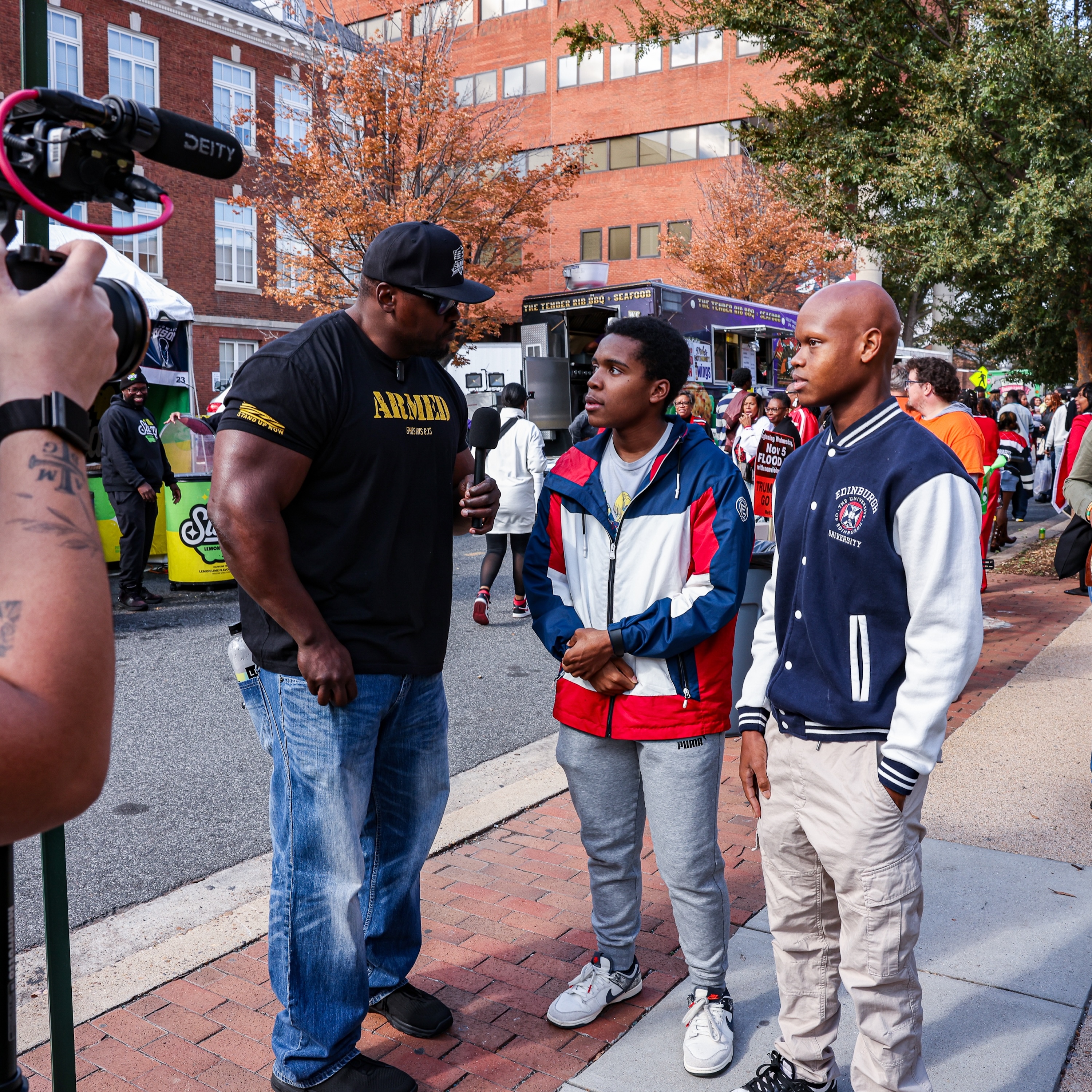
Post Reports
The conservative group courting young Black voters
00:20:21
A conservative group tied to Charlie Kirk’s Turning Point USA showed up for homecoming this year at Howard University, a historically Black institution in Washington, D.C. How that visit went and what it says about national politics.
Loading summary
Transcript66 lines
- [00:02]
Colbykowicz
In 2024, more Black voters shifted to Donald Trump. This trend has emboldened Republicans to try and broaden their party's base. And there's one group in particular that is actively working to win over more young black voters. It's called Blexit. That's a merging of the words black and exit. Their goal is to persuade black people to leave the Democratic. A few weeks ago, Blexit showed up at Howard University, a historically black College in Washington, D.C. it's overwhelmingly liberal and counts former Vice president Kamala Harris among its alumni. Blexit planned their visit for Howard's homecoming, which is a huge week long celebration of black culture and pride. So some students were upset that a conservative group use the event to spread their politics.
- [01:01]
Summer Johnson
Unsettling. I feel unsettled.
- [01:02]
Refuse Fascism Member
They're trying to divide us.
- [01:04]
Colbykowicz
They're trying to make a stand on absolutely nothing.
- [01:07]
Refuse Fascism Member
But we have to pay attention because.
- [01:09]
Samantha Sherry
They'Re here on Howard's campus.
- [01:13]
Colbykowicz
So can Blexit swing young black voters to the right? From the newsroom of the Washington Post, this is Post Reports. I'm colbykowicz. It's Monday, November 17th. Today we talked to features reporter Samantha Sherry about how Howard students responded to Blexit on their campus. And later, I asked national politics reporter Sabrina Rodriguez whether the shift among black voters to the Republican Party will last. Sam, hi. Thanks for being on the show.
- [01:45]
Samantha Sherry
Hi, Kobi. Thanks for having me.
- [01:47]
Colbykowicz
So before we hear more about what was going on at Howard's homecoming this year, I want to understand a little bit more about Blexit. What is it?
- [01:58]
Samantha Sherry
So Blexit, it basically is this grassroots movement that is meant to promote a black exit from the Democratic Party. It was founded around 2019 by Candace Owens and Brandon Tatum. Who are these black conservative commentators?
- [02:18]
Colbykowicz
Yeah, let me, I want to play this clip of Candace Owens talking about her, like, ethos around Blexit.
- [02:24]
Candace Owens
Look, it is the black and Latino exit from the lies of the left, from the victim narrative. And it's time for us to come together and realize that we are a part of the American picture. And for too long, we've been taken advantage of, we've been abused, we've been used. We're constantly force fed this fearful narrative.
- [02:44]
Samantha Sherry
So a lot of what they talk about is this emphasis on like the nuclear family, this exit from victimhood mentality and this idea of, you know, economic independence and kind of pulling yourself up by the bootstraps and things like that.
- [03:03]
So in 2023, Blexit ends up merging with Turning Point USA. Basically, these groups since then have been very closely aligned, sharing staff members as well. And on their website, it says that Blexit has about 40,000 members.
- [03:23]
Colbykowicz
It sounds like they have a pretty similar mission to Turning Point, because Turning Point, founded by Charlie Kirk, who was shot and killed on a college campus in September, Charlie Kirk's whole goal was to go onto college campuses and kind of recruit younger conservatives.
- [03:39]
Samantha Sherry
Right.
- [03:40]
Colbykowicz
Is Blexit's goal then to go on to, you know, historically black college campuses and do the same thing?
- [03:46]
Samantha Sherry
Yes, exactly.
- [03:48]
So with Blexit, for a few years.
- [03:50]
Now, they have been doing, like, this tour of historically black colleges and universities to recruit those members. Something that Blexit representatives have talked about is that desire to start chapters, very much like there are Turning Point chapters on predominantly white institutions campuses. So, yes, a lot of it is to then reach urban campuses is also kind of how they term it and promote a lot of these conservative values that they have.
- [04:23]
Colbykowicz
So what was their plan for this visit to Howard, and what was the reaction from the Howard community when they found out they were coming?
- [04:30]
Samantha Sherry
So this tour of, like, HBCUs that Blexit was doing, they had called it the Educate to Liberate Tour and named some HBCUs that they planned on going to, including Hampton University and Tennessee State University. And, you know, after they had promoted this, students and alumni from these schools, you know, started commenting and just expressing their outrage.
- [04:59]
And that is what kind of prompted Howard in particular to send this email out to students to tell them not to engage and to advise them not to engage with anything that would sort of cause this campus controversy during homecoming. They didn't put Blexit in the name, but that was, you know, the implication was any sort of group or people who may be an agitator, don't let them get in the way of the celebration, basically.
- [05:29]
Colbykowicz
So what has the Blexit campaigning on campuses looked like? Like, what did it look like when you were there and saw them at Howard?
- [05:38]
Samantha Sherry
So it has been really covert in a way. When Blexit came to campus, they had brought a representative, is this tall, like, very muscular man named Steven Davis, and he terms himself as a contributor to Blexit. I noticed he wasn't wearing any sort of Blexit, like merchandise or anything to kind of identify him with the group. So he was in, like, just a black T shirt with, like a Bible verse on it. But he still came with, like, a videographer. And it was Only usually, like after their interviews that he, you know, sometimes would identify himself as part of the organization.
- [06:22]
Colbykowicz
So this tour, it sounds like it was like kind of hyped up as this big event. But what you're describing, it sounds like what they did was just have a Blexit representative kind of quietly go around campus and ask students questions like, what was he even doing? It doesn't sound like he was antagonizing students. Was he even trying to argue with them about politics?
- [06:47]
Samantha Sherry
So I think what it seems like in terms of lexit's different strategy was this idea of let's just get people to take the mic and actually talk to us. So let's just go with a low level question, something that will get people in the proverbial door or the metaphorical door. He was asking about how black people could, like, uplift the community through entrepreneurship, through financial leadership. He would approach students just saying like, hi, you know, my name's Steven, and, you know, kind of leading with these kinds of questions.
- [07:30]
Ralph Nix
When it comes to the political divide, right, left, you know, especially within the black community, Liberal, conservative, how do we come together and have the conversations necessary to. For a common goal and a common cause?
- [07:41]
Colbykowicz
But they didn't know at this point that he was part of the Blexit group. They just thought he was some guy with a video camera.
- [07:47]
Samantha Sherry
Correct?
- [07:48]
Colbykowicz
Okay.
- [07:48]
Samantha Sherry
Yeah. With a lot of them, he didn't go into any details about if they were familiar with Blexit, like, oh, this is a conservative organization, or little if no mention of Candace Owens or Charlie Kirk or basically any of the big names that could be associated with the group.
- [08:07]
Colbykowicz
While you were on campus, you talked to students about how they felt about having Blexit there. What did they say?
- [08:15]
Samantha Sherry
So there were definitely students who felt disturbed. One student that I had talked to was Summer Johnson.
- [08:24]
Summer Johnson
I think it hurts, especially like thinking about it from their perspective is very strategic. You're coming to one of the biggest events at Howard and getting people riled up. And I don't think it was the best way for them to come now.
- [08:38]
Samantha Sherry
She, you know, had seen the blexit, like, representative and the videographer. And, you know, not having talked to them, she wasn't 100% sure who it was, but she was like, is that maga? And, you know, she was very upset that they were there, especially during homecoming.
- [08:59]
Colbykowicz
Were there protesters? Were people trying to resist Blexit being there?
- [09:04]
Samantha Sherry
Yes. So there was one group called Refuse Fascism. They came with, you know, posters and bright orange shirts, and they were very anti Trump, you know, organization. And basically they were like, blexit needs to go. I talked to Ralph Nix. He is a member of Refused Fascism, and he talked a lot about, like, what they were doing on Howard's campus.
- [09:28]
Ralph Nix
That day, and for them to be here and spreading their hatred, because that's what it is. It's pure hatred. And I know they have black representatives that came with them, but they are a minority of black society.
- [09:43]
Colbykowicz
And you talked to a couple students who said they had positive interactions with the Blexit rep that day. One of those people that you spoke to was Sam Mahmoud Alhassan, and he said that, you know, he thought it was good that Stephen was out there talking about economic independence issues.
- [09:58]
Sam Mahmoud Alhassan
I believe what he's doing is good. Like the awareness that he's spreading, I believe that's a very good awareness that should be spread more about financial literacy, about entrepreneurship, the black community. I believe that's a very good thing that he's spreading.
- [10:14]
Colbykowicz
Okay, so at the end of all of this, Blexit comes to Howard's campus, has these conversations with students. Did you get the sense that any of the students that you talk to feel swayed by those conversations?
- [10:27]
Samantha Sherry
I don't know if it would be swayed, but definitely, I feel like it confirmed, I guess, some interest people had already had. So some people who had talked to them had already been very supportive of supporting black businesses or this idea of entrepreneurship as a way to advance black communities and uplift them. So when I had talked to some of these students who had talked to Blexit, if I had said, oh, this is who Blexit is. This is who you were talking to. They were like, that's okay, because I talked about things that I really do believe in in terms of the importance of economic independence within the black community.
- [11:20]
Colbykowicz
Sam, thanks so much for coming on the show.
- [11:21]
Samantha Sherry
Thank you.
- [11:25]
Colbykowicz
As part of the post reporting on the Howard visit, some of our colleagues spoke with Pierre Wilson, the senior director of Blexit. According to Wilson, Blexit has a presence on 21 college campuses. Seventeen of these, quote, unofficial clubs were formed because of these tours. He sees that growth as proof that the outreach is resonating. After the break, we talked to national politics reporter Sabrina Rodriguez about what Blexit's appearance at Howard tells us about the black vote in America. We'll be right back. Sabrina, thank you so much for being here.
- [12:16]
Sabrina Rodriguez
Thanks so much for having me.
- [12:17]
Colbykowicz
So, Sabrina, I want to take a little step back here. And understand how this story of blexit coming to Howard fits into the larger political landscape, because you closely followed Black voters throughout 2024. What do we know about Howard? Black voters responded in the last presidential campaign.
- [12:38]
Sabrina Rodriguez
I mean, I think, Colby, there's an important key context here, which is black voters are considered the backbone of the Democratic Party. You'll hear, you know, Democratic leaders frequently say that on the campaign trail, say that when they're courting black voters. And black voters, you know, have been a very reliably Democratic voting bloc. So in 2024, they still overwhelmingly voted for Kamala Harris for the Democratic nominee. But we did see that Trump made significant inroads. So when we look at what the numbers were in 2024, it went from 8% of Black voters backing Trump in 2020 to roughly 15% backing him.
- [13:22]
Colbykowicz
So almost doubling.
- [13:23]
Sabrina Rodriguez
So doubling, doubling in support. Again, those are small numbers, you know, when you look at the grand scheme of things. But there's no question that he successfully made inroads with them.
- [13:35]
Colbykowicz
Why do you think that is?
- [13:37]
Sabrina Rodriguez
I think one of the things that we saw in the 2024 election was so much frustration over the economy, so much frustration and feeling, not just amongst black voters, but, you know, Latino voters, Asian voters, white voters. I mean, voters at large. There was a lot of frustration about feeling like, who is listening to me? Who is actually going to address my economic concerns? So we saw that Trump's campaign made a very concerted effort to go to areas with high populations of black voters and really try to engage with them and say, okay, you've been voting reliably Democratic throughout your life for generations. Do you feel that your life has gotten better? And he kind of just raised that question with the community. Do you feel that Democrats actually listen to you when they're in office? They show up a lot on the campaign trail, but are they actually making your life better? And I think his focus on the economic message, his focus on, you know, questioning whether Democrats had actually delivered for these communities created an opening. Granted, again, it's not some massive shift, but enough to get some people thinking, hmm, maybe I do need to think twice about my vote.
- [14:51]
Colbykowicz
When you talked to Black voters in 2024, did they express that to you? Did you meet voters on the campaign trail who were saying things like, what have the Democrats done for me? And maybe I should consider voting for Republicans?
- [15:04]
Sabrina Rodriguez
Absolutely. I remember distinctly in 2024, heading to an event in the Atlanta suburbs that was being hosted by Congressman Byron Donalds and Congressman Wesley Hunt, two black Republicans who are, you know, staunch, all allies of President Trump, and they were hosting events in heavily black areas to try and bring out people and have a conversation. And it was very much targeting specifically black men. And this event was at a cigar lounge, I still remember to this day. And they just started a conversation and they opened that conversation, admitting openly, I know we're not gonna sway all of you. I know that we might not even sway most of you. But we want you to be thinking about what it is that Democrats have done for you. We want you to have a different introduction to the Republican Party. Maybe you think of the Republican Party as one that's not racially diverse, that doesn't look out for black people, but them by themselves merely being there, they were trying to show that, you know, there was more diversity in the party or that there was more open mindedness in the party than maybe a lot of people thought. And I think you saw in those conversations some people being a little bit open to making that shift. I think one thing as well that Republicans really seized on was this perception that Democrats focused too much on social issues, that Democrats maybe spend too much time on DEI on, you know, diversity and inclusion initiatives.
- [16:28]
Colbykowicz
That which you would think that black voters would bethat'd be something they'd be supportive of.
- [16:32]
Sabrina Rodriguez
Absolutely. But I think for some folks, there was a feeling about, you know, there's so much time slicing and dicing the population, and in the end you're actually dividing people by doing that instead of bringing people together. Certainly there's a lot of people that push back on that and don't think that, you know, there's plenty of evidence that shows that DEI programs have really helped elevate certain communities. But for some people, there was a feeling like this focus on DEI really divides the community and that the focus on certain social issues, particularly abortion rights, was one that there was just too much focus on and not enough on how again, do you lift communities? How exactly do you like, focus on improving the economy when that's what so many people were really worried about last year and really coming out of the, the COVID years?
- [17:18]
Colbykowicz
Do you get the sense that this shift that we saw in 2024 could be a permanent one, that Republicans going into next year's midterms that they'll continue to siphon off black voters who, like you said, have overwhelmingly been loyal to the Democratic Party for decades and decades?
- [17:36]
Sabrina Rodriguez
I mean, I think from reporting this year that I've done as well as my colleagues and then polling as well, that we've seen nationally, it is not a given by any means that black voters who backed Trump in the election are now suddenly staunch Republicans or MAGA or are gonna go and vote Republican again. I think it created that opening where people are paying more attention. If you voted for Trump, maybe you have a little more open mindedness about who you'd vote for, but it's certainly not a guarantee. And we've seen in a lot of polling that there is, particularly amongst voters of color and black voters specifically, a lot of disappointment with how the Trump administration is handling itself and a lot of concern that he's not doing enough on the economy, he's not actually doing enough on the things they voted for him for. Exactly. Like there's a feeling of the thing that we gave you a chance on. We don't really feel like you're improving our lives. Things are still getting more expensive. And therefore, hmm, am I gonna go and vote for you again?
- [18:40]
Colbykowicz
You know, that brings me back to this blexic group because you had these conservative activists, they go to Howard, which, you know, we should note, is where Kamala Harris had planned to give her victory speech and ultimately gave her concession speech in last year's election. So they're there and they're trying to recruit black students to vote Republican. Many Howard students were not happy about having them on campus. Are young black voters, is that really a demographic that you think is available to Republicans?
- [19:12]
Sabrina Rodriguez
I mean, I think if you talk to some Republican strategists, they certainly think that young black voters is an area that they can make improvements. I think there's a feeling that young black voters don't necessarily have that affinity, that long standing relationship with the Democratic Party. They don't have that association with Democrats and the civil rights movement. So Republicans look at specifically young black voters a sort of like, ripe opportunity. One thing I've consistently heard from these groups and from activists trying to do this work is again, like, you can't win anyone if you don't show up. You can't change any minds if you don't start a conversation. So at a minimum, for them, this is sort of that opening to, you know, maybe they overwhelmingly had a negative reception at Howard University, but it just shows them trying. And that's something that Republicans had not necessarily done in the past. So I think that creates again, just that conversation going that may not translate into votes, but shows some type of efforts, some type of engagement that just hasn't happened in the past.
- [20:26]
Colbykowicz
That's so fascinating. Sabrina, thank you so much for that. Analysis.
- [20:29]
Sabrina Rodriguez
Yeah, thanks so much for having me on.
- [20:35]
Colbykowicz
Sabrina Rodriguez is a national politics reporter for the Post. Earlier in the show, you heard from Samantha Sherry, a features reporter for the Post. That's it for Post Reports. Thanks for listening. If you love the show, help other people discover it by leaving a rating on Spotify or a rating and review on Apple Podcasts. Today's show was produced by Zoe Cummings, Sabi Robinson and Rennie Svirnovsky. It was edited by Erica Plotnik and Laura Benchoff and mixed by Sean Carter. Thanks to editors Haben Khaladi and Sean Sullivan. I'm Colbykowitz. We'll be back tomorrow with more stories from the Washington Post.
- [21:21]
Refuse Fascism Member
You listen because you know the power of good journalism and the Washington Post is there for you. 20. When you become a Washington Post subscriber, you get exclusive reporting you can't find anywhere else. You also get sharp advice columns, delicious recipes, TV and music reviews and so much more. Right now, you can get all of that for just $4 every four weeks. That's for an entire year. After that, it's just $12 every four weeks and you can cancel anytime. Add to your knowledge and discover all the Post has to offer. Go to washingtonpost.com subscribe that's washingtonpost.com subscribe.
- [22:05]
VRBO Advertiser
With savings over $390 this shopping season, VRBO helps you swap gift wrap time for quality time with those you love most. From snow on the roof to sand between your toes. We have all the vacation rental options cover covered. Go to VRBO now and book a last minute week long stay. Save over $390 this holiday season and book your next vacation rental home on VRBO. Average savings $396. Select homes only.