← Post Reports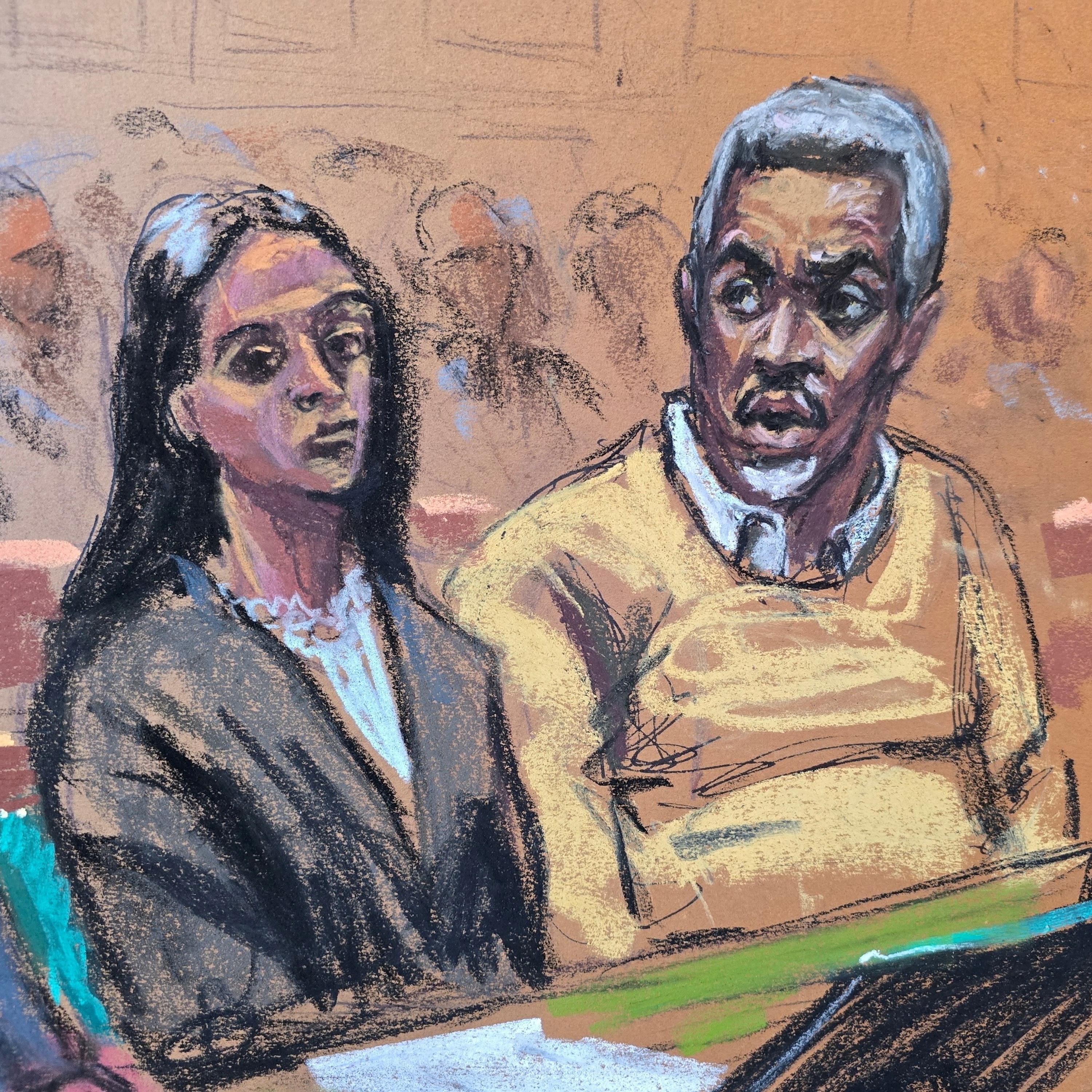
Post Reports
The Diddy Trial: Sean Combs’s 4-year sentence
00:20:37
Sean “Diddy” Combs has been sentenced to 50 months in prison. Today, how we got to this sentencing and what could be next for Combs.
Loading summary
Transcript59 lines
- [00:01]
Constellation Advertiser
At Constellation, we bring the energy powering America's growing economy every minute, every day. As the nation's largest producer of clean and reliable American made energy. Constellation is wherever you are.
- [00:19]
Reporter Peter Bresnan
Where are we and what just happened?
- [00:21]
Reporter Shaina Jacobs
We are less than a block away from Manhattan Federal Court where Sean Diddy Combs was just sentenced to 50 months in prison.
- [00:30]
Elahe Izadi
That's reporter Shaina Jacobs speaking with producer Peter Bresnan. They went to the federal courthouse in Manhattan on Friday for the conclusion of the criminal case of Sean Diddy Combs. In July, a jury found Combs guilty on two counts of transportation to engage in prostitution. He faced a maximum of 20 years in prison, 10 years for each count. But on Friday, we found out his actual prison sentence. The judge sentenced combs to 50 months, a little over four years. That includes the year or so he's already served. His defense team wanted him to get 14 months with time served. The prosecution wanted to see a sentence of more than 11 years. Combs spoke in the courtroom before hearing his fate. He said he was a changed man and quote, I hate myself right now. I've been stripped down to nothing.
- [01:26]
Reporter Shaina Jacobs
He was very ready to speak. He's been wanting to defend himself and express himself the whole time. That was quite clear. He was very passionate. It was, it was definitely a moment that a lot of people in that room waiting for this verdict were waiting for.
- [01:48]
Elahe Izadi
After the judge delivered the sentence, he spoke sternly to Combs. He said the abuse revealed during the trial, quote, is not something Mr. Combs, you will ever be able to wash away. How would you describe the outcome for Combs?
- [02:03]
Reporter Shaina Jacobs
Sean Combs clearly was disagreeable, disappointed. He appeared just despondent and appeared to have lost hope. Just his visual expression after the verdict was read. It's certainly not what he was hoping for, but it's also not what prosecutors wanted. Nowhere close to what prosecutors wanted. It's pretty standard for anyone convicted of a crime to appeal. But considering he and his lawyers still maintain his innocence, he is very widely so his reaction seemed to reflect on, you know, what he's facing in the next few years. It was, it's not, it's something that's very disappointing to him. Even if it may have been more disappointing, it could have gone in the other direction.
- [02:55]
Elahe Izadi
From the newsroom of the Washington Post, this is Post Reports. I'm Elahe izadi. It's Saturday, October 4th. Today, Sean Combs sentencing. For months this year, our team brought you weekly conversations about Combs trial. He's also known as Diddy Puff and Puff Daddy. If you haven't listened to that series that covers the ins and outs of what happened in the courthouse, you can go back and do that. It's called the Diddy Trial, and we've included a link to it in our show. Notes Combs was hugely influential for decades, and that influence was felt both in the music industry and popular media. But in recent years, many people came forward with sex abuse allegations against Combs, including some of his former partners and employees. He's denied these allegations. Then last year, federal prosecutors charged him with three different crimes and a trial started in May. During the trial, I regularly spoke with Shana and Style reporter Ann Brannigan. So going to leave Shayna at the courthouse and turn now to Ann. She joins me today to recap how we got here to this sentencing and what could be next for Combs. Hey, Ann, great to see you today.
- [04:23]
Reporter Peter Bresnan
Good to see you, Eli.
- [04:24]
Elahe Izadi
And let's rewind back to Combs conviction and talk about the charges he was convicted of. Can you remind me what those charges were?
- [04:35]
Reporter Peter Bresnan
Right. So he was convicted of two counts of transportation to engage in prostitution. So these were acts that involved two of his ex girlfriends, Cassie Ventura and an anonymous woman we met at the trial who went by the alias Jane. And what he was charged of is that he would pay male escorts to have sex with his ex girlfriends. These were the most strict of the charges that he faced. And he was convicted for essentially transporting those male escorts across state lines in order for them to participate in these sex acts, which we came to know as freak offs.
- [05:13]
Elahe Izadi
Yeah. And I remember as you were covering this trial, the testimony of these two women was just very detailed and very harrowing.
- [05:24]
Reporter Peter Bresnan
It was one thing that they asserted was that these were not consensual, that they felt coerced or frauded into participating in these acts. And because they weren't consensual, the government argued that this in fact, amounted to sex trafficking.
- [05:40]
Elahe Izadi
But Combs was ultimately not convicted of sex trafficking. And we also know he was found not guilty of racketeering conspiracy. So, Anne, can you remind me, what was the racketeering conspiracy charge all about?
- [05:55]
Reporter Peter Bresnan
So the government had essentially argued in their charging documents that Combs, with a small inner circle, had conspired to do a number of these illegal activities. Sex trafficking was one of them. But they also accused Combs and his people of conspiring to commit acts of arson, of forced labor, of kidnapping. And so that element was about Combs allegedly using his business as a criminal enterprise.
- [06:31]
Elahe Izadi
And the jury did not find him guilty of those charges. Why was the government not successful in securing the sex trafficking and racketeering conspiracy charges?
- [06:41]
Reporter Peter Bresnan
So there are a number of reasons why. And from the outset, there were quite a few legal experts who believe that this might be overreach, that the, you know, how could the government prove all of these allegations? And throughout the trial, Combs legal team argued that his ex girlfriends were actually willing participants in these acts. So trying to undermine the sex trafficking allegation by showing communications in which these women appeared to express enthusiasm for these freak offs, they even planned them, according to some of the records that they showed. And Cassie Ventura and Jane did testify that they felt very conflicting things about Combs, that they felt compelled to do these freak offs in part because they loved him. And so there was this element of consensual relationship that the defense hammered home apparently pretty successfully. And they also were not able to bring forward any of the alleged co conspirators to the stand, which could have undermined their case as well. So their case really rested on lower level former employees who expressed a lot of mixed feelings themselves about some of the things that they were asked to do. And many testified that they didn't believe that they were doing anything illegal at the time.
- [08:06]
Elahe Izadi
Yeah, and I remember at the time when you were here talking with me regularly every week, we were really eyeing these racketeering, conspiracy and sex trafficking charges because those charges carried much more weighty sentences. What, what were those sentences again? Can you remind us?
- [08:23]
Reporter Peter Bresnan
Oh, he could have been in prison for the rest of his life.
- [08:25]
Elahe Izadi
Oh, yeah, that's right. That's one of the reasons why I feel like so many people were paying such close attention to this trial to begin with because of that possibility of a life sentence. And at the time, I remember Combs team was feeling very positive because it felt like they notched a win here. Combs did not get that verdict. But since then and since the sentencing, like in the time in between, I know that his team has been pushing to throw out the conviction he did get, like throw it out entirely. And for there to be a new trial, I would imagine this is something defense attorneys do all the time. It's clear now that this attempt wasn't successful. But what was their argument?
- [09:10]
Reporter Peter Bresnan
So because overturning a conviction requires such a heavy burden on the defendant, they were really throwing a lot of stuff at the court. So one of the main arguments was that these acts that Combs was convicted of, they don't actually count as prostitution at all. So some of the ways that they argued this was, they argued that it was actually commercial voyeurism, which is based on this idea that, oh, he was only watching these freak offs. He didn't participate. Now, there was also another level here because so many of these freak offs were filmed that they were also arguing that he should be considered something akin to an amateur pornographer. And, and pornography is protected speech. And so his conviction on the Mann act, they said, could be interpreted as a violation of his First Amendment rights.
- [10:07]
Elahe Izadi
Oh, my gosh, I had no idea they were trying to argue First Amendment rights here. That's fascinating. And how did the judge respond to those arguments?
- [10:19]
Reporter Peter Bresnan
So the judge does this very systematic line by line kind of deconstruction of the defense's argument. And he says, like according to Combs argument, he would narrow the definition of prostitution, quote, almost out of existence. And he points out that the reason why this as a legal argument doesn't really hold a lot of water is that take the example of going to a brothel and paying, you know, the host or the madam for sexual. That would technically not count as prostitution under the defense's argument, which to the common person and to most, I think legal professionals just is not an argument that makes a whole lot of sense. And this is where it gets kind of graphic and lewd. But he points out that Combs was pleasuring himself while doing this. So that does suggest that there was a purpose of sexual gratification, that it was personal and not like some expression of speech that he was engaged in. He denied the motion to overturn this conviction or give a new trial because he found that, you know, there was plenty of evidence here to suggest that Combs did in fact violate the Mann act and that these reasons that he gave just didn't hold water.
- [11:47]
Elahe Izadi
After the break, the status of Combs, other legal troubles, and whether he can make a comeback. We'll be right back.
- [12:08]
Constellation Advertiser
At Constellation, we bring the energy powering America's growing economy every minute, every day. As the nation's largest producer of clean and reliable American made energy, Constellation is wherever you are.
- [12:26]
Washington Post Promo Announcer
Think about why you listen to podcasts. It's like having a friend who makes you think or can help you wind down right. Well, the Washington Post has a lot of people you can turn to at any hour. You can read the most important and interesting stories. We can help you cook something delicious, give you advice on a tricky friendship. Rave about a movie or book that you shouldn't miss. When you become a Washington Post subscriber, you have a companion for whatever part of your day needs it most get it all for just $4 every four weeks. That's for an entire year. After that, it's just $12 every four weeks. Cancel anytime. Go to washingtonpost.com subscribe. That's washingtonpost.com subscribe.
- [13:12]
Elahe Izadi
You know, a few other interesting things have happened since the trial and verdict, and one that stood out to me is that there are all these reports coming out that Combs team was trying to appeal to President Donald Trump, convince him to issue Combs a complete pardon. What happened there?
- [13:33]
Reporter Peter Bresnan
So there was a lot of discussion about this, as you said, like during the trial. So Trump was asked during the trial whether he would consider pardoning Combs. And one of Combs lawyers confirmed in August that they had in fact approached the White House about a potential pardon on these charges. Now, to be clear, the president seemed ambivalent at best about pardoning Combs. Trump noted that he and Combs used to get along until Trump entered into politics. And Combs has been quite critical of Trump as a president, which he doesn't.
- [14:09]
Elahe Izadi
Like, as we know.
- [14:10]
Reporter Peter Bresnan
Yes. So it came up when he was asked about a pardon again. Okay. And Trump pretty much indicated that he was unlikely to pardon Combs.
- [14:19]
Elahe Izadi
Okay. I want to talk about this other element now, and that is the civil lawsuits that were filed against Combs in even before this trial began. Can you remind us about those? Because I feel like those kind of get lost in the mix when there was so much focus, I mean, rightfully so, on the criminal trial, because that carried time in prison.
- [14:42]
Reporter Peter Bresnan
Right. So this is a chapter of Combs life that is sure to extend for the next few years just dealing with the civil cases. So over the past, you know, it's been almost two years and he's faced more than 80 sexual assault lawsuits with accusations stretching all the way back to the 90s until the present day. Yeah. So literally there was another lawsuit filed by a celebrity stylist who used to work for his company, Bad Boy, and who testified at the trial. What the lawsuit alleges is basically a lot of the stuff that this person, Deontay Nash, testified about during the federal trial. He talked about being physically assaulted, allegedly by Combs. He talked about witnessing battery and being intimidated. And so there are still lawsuits being filed against Combs.
- [15:36]
Elahe Izadi
So there's a chance that Combs, even if he was not convicted of some of these crimes, and he wasn't even charged in some of these cases, he might have to pay civil penalties as these lawsuits continue? We don't know yet.
- [15:49]
Reporter Peter Bresnan
We don't know Yet. But we do know that his team has been pretty defiant about and, you know, has been insistent on his innocence the entire time. And you could really get a sense that after this partial acquittal that he got back in July, that they really kind of like, their case was invigorated. Their case against all of these assault claims was invigorated, because now they can point to this partial acquittal and say, look, he was found by a jury to be not guilty of these allegations.
- [16:22]
Elahe Izadi
And he's now suing people himself.
- [16:24]
Reporter Peter Bresnan
Yes. So he has filed his own defamation lawsuits, including against NBC and News Nation, for unsubstantiated claims related to these cases. I see NBC News, in response, has filed a motion to dismiss that case, and News Nation has not responded publicly to Combs lawsuit.
- [16:45]
Elahe Izadi
So, Ann, since it's been some time since this trial concluded, and you've just had a little time to, like, survey how the broader culture kind of took in everything they heard and also the verdict, how has the music industry responded?
- [17:01]
Reporter Peter Bresnan
The music industry's response has been really interesting to me in how muted it has been. And there's a couple different ways that you could sort of look at this. Right. He wasn't embraced by his peers, and supporting him was seen as, like, a pretty fringe stance. So you might remember a big kind of celebrity surprise during the trial was Kanye west showing up and advocating. Were trying to advocate for Combs.
- [17:29]
Elahe Izadi
I completely forgot about this.
- [17:31]
Reporter Peter Bresnan
Oh, yeah, Kanye West, I think he appeared in the courthouse. He never made it into, you know, the actual courtroom, but he wanted to support Combs. He was working with Combs son on some music, but his support was, like, again, pretty fringe. You weren't really seeing a lot of the people that he used to work with really advocate for him like that.
- [17:51]
Elahe Izadi
Yeah, like, he had so many famous friends. I mean, he was famous for having these big parties and having so many connections, and those people were all. So have we heard anything from them since?
- [18:02]
Reporter Peter Bresnan
We haven't really heard them weigh in. And it's important to know that it wasn't as though they've denounced him either, which is, you know, if you think back to sort of the height of the MeToo movement, where we saw a lot of people sort of weighing in and denouncing people who were accused of these really heinous, like, sexual abuses, we didn't see that either. I remember being told by survivor advocates, actually, that the real test of how the music industry has responded to this is less about how they respond to Combs, but about how they would treat somebody like Cassie Ventura if she decided to continue making music? Would they embrace her if she were to make a comeback?
- [18:46]
Elahe Izadi
I wonder what comes next for him? Like, is Combs going to be viewed as a pariah in the industry, even if he got this partial conviction, partial acquittal, is he, once he serves his time, going to make a triumph? And he wasn't just a musician. We've talked about it. He was a mogul. He had multiple businesses. What's on your mind? Like, what do you think is next for him?
- [19:07]
Reporter Peter Bresnan
So, as my colleague Jeff Edgers reported, very unlikely that he resumes this really kind of almost hallowed place that he held in the industry prior to all of these accusations, prior to the criminal trial. But I personally doubt that he will lay low.
- [19:30]
Elahe Izadi
Why do you doubt that?
- [19:32]
Reporter Peter Bresnan
It's in part because of how we saw him conduct himself during the trial. And you could see this person who was very active in his defense, who was not a passive defendant by any means. He was clearly somebody who his lawyers deferred to. So this is somebody who has been seen as a leader and as a boss for a very long time, and it seems like it's a really big part of his identity. Something that I thought was interesting that we saw in the court filings from his defense was that he's actually teaching courses, apparently at the Brooklyn Detention center, where he's been for the last year.
- [20:09]
Elahe Izadi
On what?
- [20:10]
Reporter Peter Bresnan
So apparently he's been teaching a course called Free Game with Diddy.
- [20:15]
Elahe Izadi
Free Game with Diddy.
- [20:16]
Reporter Peter Bresnan
Mm. Where he's sort of teaching lessons, like, giving lessons from his experiences. And, you know, he was somebody who really into, like, these inspirational mantras that also came out during the trial.
- [20:30]
Reporter Shaina Jacobs
Right.
- [20:31]
Reporter Peter Bresnan
He's presented himself as a really devout Christian. And, you know, something that his lawyers have been saying is that he's been an inspiration to other inmates. And so you have this person who has this charisma, this power over people, and that doesn't just go away. It's been such a big part of his life, this ability to reinvent himself. And there's no reason to believe that he won't try to once his sentence is done, once this entire ordeal is put to bed.
- [21:04]
Elahe Izadi
Well, Anne, thank you so much for taking time and joining me and reminding us of what happened. And this concludes the era of you and I talking about this trial.
- [21:14]
Reporter Peter Bresnan
Maybe.
- [21:15]
Elahe Izadi
Maybe. We'll see. Take care.
- [21:17]
Reporter Peter Bresnan
Thank you.
- [21:20]
Elahe Izadi
Anne Brannigan is a style reporter for the Post. That's it for Post Reports. Thanks for listening. Today's show was produced by Sabi Robinson and Peter Bresnan. It was edited by Rena Flores and mixed by Shawn Carter. Thanks to Carla Spardos. I'm Elahe Izadi. We'll be back Monday with more stories from the Washington Post.
- [21:55]
Constellation Advertiser
At Constellation, we bring the energy powering America's growing economy every minute, every day. As the nation's largest producer of clean and reliable American made energy, Constellation is wherever you are.
- [22:10]
Washington Post Subscription Announcer
You listen because you know the power of good journalism. And the Washington Post is there for you 24 7. When you become a Washington Post subscriber, you get exclusive reporting you can't find anywhere else. You also get sharp advice, columns, delicious recipes, TV and music reviews and so much more. Right now, you can get all of that for just $4 every four weeks. That's for an entire year. After that, it's just $12 every four weeks. And you can cancel any time. Add to your knowledge and discover all the Post has to offer. Go to washingtonpost.com subscribe that's washingtonpost.com subscribe.