← Post Reports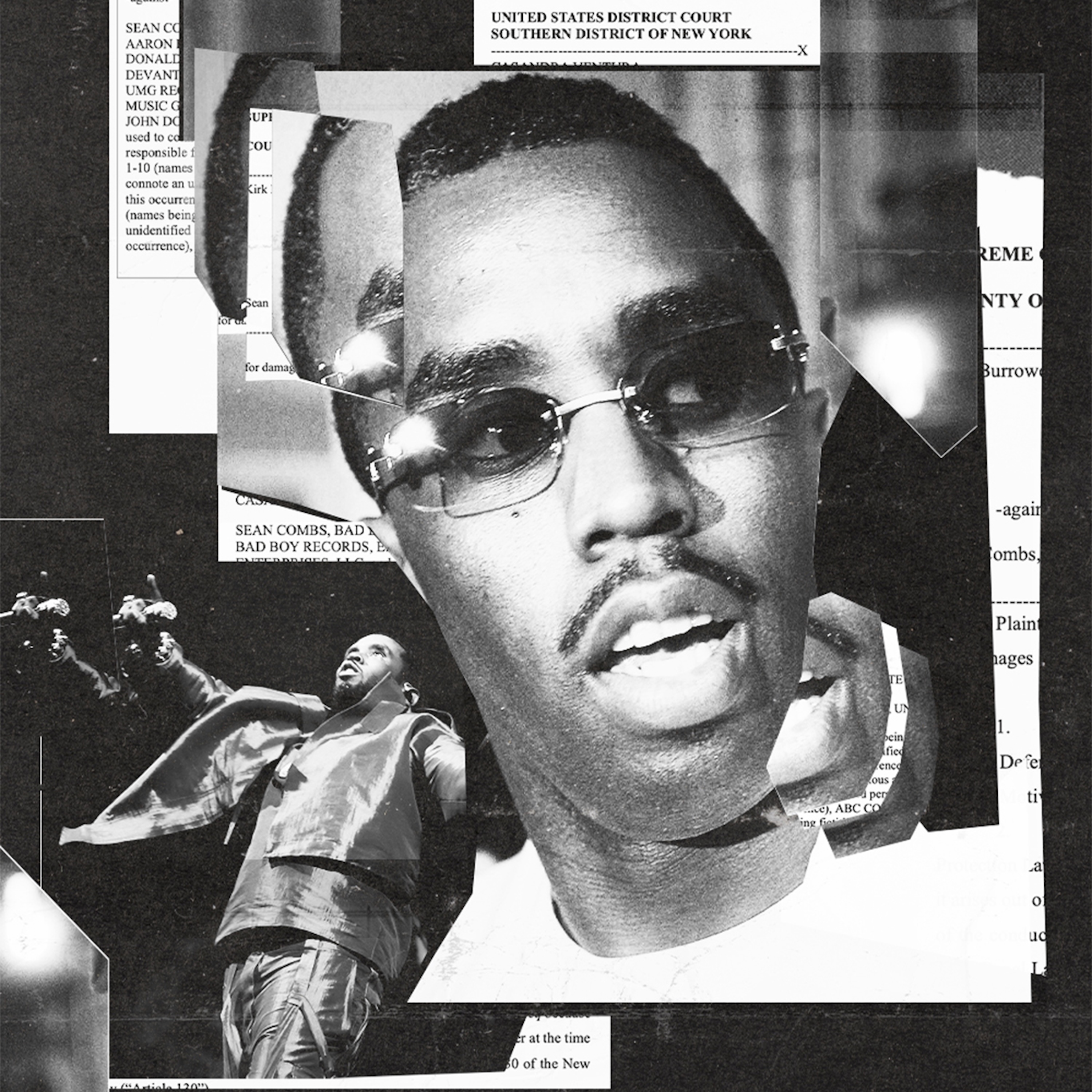
Post Reports
The Diddy trial: Who will decide Sean Combs’s fate?
00:34:16
The trial of Sean “Diddy” Combs began this week. We take a look inside the courtroom at Combs and the other key players — and how the jury who will determine Combs’s future is getting chosen.
Loading summary
Transcript108 lines
- [00:03]
Elahe Izadi
How you doing this fine morning?
- [00:05]
Anne Brannigan
I'm doing good. How are you doing?
- [00:07]
Elahe Izadi
Tired?
- [00:08]
Anne Brannigan
Yeah. No, you gotta, you gotta wake up early to catch the Diddy trial.
- [00:14]
Elahe Izadi
That's audio producer Savvy Robinson and reporter Anne Brannigan. They were in line at 7am on Monday outside the federal courthouse in Manhattan. They were there because this week kicked off the start of a big trial, the the trial of music mogul Sean Combs. He's the producer also known as Diddy, Puff and Puff Daddy. He's charged with racketeering, conspiracy, sex trafficking and transportation to engage in prostitution. Combs has pleaded not guilty to the charges. If convicted, he could be sent to prison for life. Jury selection started this week. This is a celebrity trial, so interest is high. Some people got to the courthouse the night before and slept in small tents. Some were even paid to hold a spot in line for reporters to make sure they got into the courtroom.
- [01:07]
Anne Brannigan
An enterprising lady with a big sign advertising her services.
- [01:12]
Elahe Izadi
So, yes, who has a hat that says Hashtag Line Dudes on it. Lawyers for government witnesses also showed up to watch this crucial process unfold. You're. Here's Lisa Bloom, one of those attorneys. We as attorneys are also looking at everything that's happening in the courtroom and we're all trying to kind of suss each other out. I find it to be a really fascinating dynamic during jury selection. There were content creators, a subway conductor, someone in a free Puff T shirt. But this isn't just a circus playing out in gossip headlines. This is an important federal case playing out, playing out in our criminal justice system, one that could change how we see the music industry.
- [01:57]
Anne Brannigan
And this is an interesting part of New York. So this is a part of the Federal Plaza complex. And so a couple buildings down you have queues up for, say, the immigration, the immigration building where they process a lot of the immigration cases. So, yeah, a lot of lines that mean different things. But this line is to see what happened to jury selection for Sean Combs.
- [02:22]
Elahe Izadi
From the newsroom, the Washington Post, this is Post Reports. I'm Elahe izadi. It's Friday, May 9th. Today we're continuing our coverage of the trial of Sean Combs. We expect it to take eight weeks. We'll be bringing you episodes most Fridays. And we should note we're going to be discussing sex and violence in this coverage. If you haven't been keeping up with this case, our episode from last Friday catches you up on everything you need to know about the charges against Combs and, and what led to this moment in today's episode, we're going to talk about what went down in this first week of the trial jury selection. Ann is the culture reporter covering the trial for the Post. While outside the courthouse is a spectacle, Ann takes us inside the courtroom to share what goes into picking a jury for such a high profile case. Ann also tells us about the key players in this trial. The attorneys, the judge, and of course, Sean Combs himself. And hello. How's it going?
- [03:32]
Anne Brannigan
It's going, going pretty good. It's been an interesting week.
- [03:35]
Elahe Izadi
And one of the reasons why it's really great having you on the show is because this trial is not being live streamed. Like, there's no video. There's no way for, like, me to be watching the proceedings. So you're, you're eyes and ears in the courtroom. And I want to start with the major players in this trial. Like, I know everyone is focused on Sean Combs and we will get to him, but I want to start actually with the person who is basically guiding this entire process and running the courtroom, and that is the judge who is the judge in this trial.
- [04:06]
Anne Brannigan
So the judge presiding over this trial is Judge Arun Subramanian. And like you said, it's really worth spending a bit of time talking about him since judges in federal trials in particular, just real, tremendous power and influence over how the entire process goes. So a little bit of background about the judge.
- [04:26]
Elahe Izadi
Thank you to President Biden for giving me the opportunity to serve my country.
- [04:31]
Anne Brannigan
He was nominated a few years ago to the Southern District of New York's federal court by President Joe Biden.
- [04:38]
Elahe Izadi
The one unifying quality, I think, of a great judge is to treat every case like it's the most important case.
- [04:47]
Anne Brannigan
And this court is considered, you know, one of the most important and active federal courts in the entire country. He was also the first South Asian judge to sit on the bench here. As far as his legal background goes, he graduated from Columbia law school in 2004, and he has clerked for the former Justice Ruth Bader Ginsburg. One thing that stands out about him, which I, you might not expect from a judge, especially at a court that's this sort of prestigious right, is his.
- [05:18]
Elahe Izadi
Relative youth, which also makes me think, like, he's probably very familiar with the music of Shaun Diddy Compton.
- [05:26]
Anne Brannigan
Right? Right. Like he'll have more of a reference point certainly, than a lot of maybe even the jurors who sat before him. This. And he really brings a unique flavor to the federal court in a lot of ways. So after he was confirmed, he was also the first judge in SDNY history to host a karaoke event. And apparently it's a big hit with everybody.
- [05:53]
Elahe Izadi
So I like that. That's like in the Guinness record, like, first karaoke event.
- [05:57]
Anne Brannigan
Yes.
- [05:57]
Elahe Izadi
Like, I didn't know I needed to.
- [05:59]
Anne Brannigan
Reach for that goal, but a very accomplished man indeed.
- [06:02]
Elahe Izadi
Yeah. But like, what's his demeanor in the courtroom? Does any of that come across?
- [06:07]
Anne Brannigan
I'd say certainly. So I think he's somebody who really seemed to prioritize making the jurors, the prospective jurors comfortable. So, you know, telling them to speak into the mic because his hearing was horrible. Right. So a bit self deprecating. He took great pains, I think, to give very clear instructions and also very much prioritizing efficiency throughout the whole process.
- [06:34]
Elahe Izadi
And is this the most high profile trial he's presided over?
- [06:38]
Anne Brannigan
Yes. So he's only been sitting on the bench for a couple years, and I would say this is by far the most high profile case he's been involved with.
- [06:46]
Elahe Izadi
So now I want to learn more about the two sides of the lawyers, the two sets of lawyers. And let's start with the prosecution. Who are the attorneys arguing this case on behalf of the government?
- [06:58]
Anne Brannigan
So one thing notable about this team, it's a group of Assistant U.S. attorneys, and most of them are women. The one we're most familiar with is Maureen Comey. She is the daughter of former FBI Director James Comey, if you recognize that name.
- [07:15]
Elahe Izadi
Yeah, James Comey. That's a name I haven't heard in a while. He was part of the 2016 presidential election cycle because he came out and talked about Hillary Clinton's use of a private email server before election day. So it's kind of become this flashpoint in national politics. So his daughter Maureen is now part of the prosecution against Combs.
- [07:36]
Anne Brannigan
Yeah. And she's a veteran of the Southern District of New York. She's probably best known for an experience that's really quite recent, and that's in helping to secure a conviction against Ghislaine Maxwell for conspiring with Jeffrey Epstein to sexually abuse underage girls.
- [07:54]
Elahe Izadi
Wow, that's like a really high profile case.
- [07:56]
Anne Brannigan
Exactly, exactly. So no stranger to big cases, can.
- [08:02]
Elahe Izadi
You tell me now about the lawyers for Sean Combs? Who are the main people we should be watching and paying attention to who are part of his defense team?
- [08:10]
Anne Brannigan
Yes. So we have a team on Combs side who is used to the spotlight for sure. So starting with the lead counsel, who's Mark Antony Agnifillo. He's a veteran criminal defense lawyer. And he's represented a few other big names. The leader of the sex cult nxivm. And this is a little bit of a blast from the past, but if you remember Farmer Bro Martin Scarelli, among many others. And he's accompanied here with Tenny Garagos, who's a lawyer who works with Agnifolo. But you might know her best from her dad, who's a famous defense lawyer who's advising unofficially on the case. And his name is Mark Garagos. Somebody who's gotten a lot of shine recently and who was recently added to Diddy's team is Brian Steele. He's a fairly last minute addition, but the reason why he's so recognizable is because he was Young Thug's attorney. So Young Thug is a Georgia rapper who was charged with racketeering. And it was a very high profile trial, involved a lot of people, a lot of Young Thug's associates and made history. Probably not for the best reasons. It made history because it was the longest trial in Georgia state history. It lasted two whole years.
- [09:40]
Elahe Izadi
Wow. Yeah.
- [09:41]
Anne Brannigan
And so we've had a lot of Brian Steele in the press because of that trial.
- [09:51]
Elahe Izadi
Yeah. And we should note in that case you brought up, Young Thug ended up pleading guilty to some charges, including a gang charge, and he pleaded no contest to violating Georgia's racketeering laws. So obviously, both sides of this trial with Sean Combs have some pretty high profile lawyers and lawyers with a lot of experience. And the public is going to get to know them more as this trial proceeds. But then there is the main person at the center of this trial, and that is Sean Combs. So, Ann, tell me about what he's been like in the courtroom.
- [10:29]
Anne Brannigan
So his demeanor has been really interesting to see. Let's start with his appearance. So I'm very familiar with Combs from my childhood and like the image of him as this flashy guy, wealthy. I remember at one point he was referred to as like shiny suit man. And this is a very different look that we've seen in the courtroom from him. He was much more modest. If you've seen the courtroom sketches, you'll note that his hair has grown out a bit and it's quite gray. So he has this gray goatee, this gray hair that's grown out a little bit. He looks like he could be your uncle going to church. He's wearing a navy, a dark navy sort of pullover with a white collared shirt. He wore that on back to back days, Monday and Tuesday. He had these big Thick reading glasses that he would put on occasionally to read from an iPad. And, you know, there's a bunch of computer screens in front of that defense table. And, yeah, he would pull it on, like, pull those glasses on and just peer into those, like, documents, like, throughout the proceedings. Now, there's been a lot of reports, you know, that he seemed a bit nervous on that first day.
- [11:53]
Elahe Izadi
What was your impression? Was he nervous on that first day?
- [11:56]
Anne Brannigan
So I didn't see him in the morning, but in the morning, he had apparently asked for a bathroom break because he explained to the judge that he was a bit nervous. But then, say by Tuesday and Wednesday, this was somebody who appeared much more comfortable. He was very engaged with the jury selection process. There was, you know, in front of him, profiles of the prospective jurors that were going in front. He was very intently looking through information about them. He was relaying a lot of information to his attorneys. It seemed as though they were deferring to him more so than the other way around.
- [12:37]
Elahe Izadi
Like, it was like Sean Combs, the producer emerging.
- [12:40]
Anne Brannigan
Exactly. The guy who's used to being the boss, I think the Persona that we're all a bit more familiar with.
- [12:47]
Elahe Izadi
Mm, yeah. That's fascinating. And was there anyone else who was sitting in the courtroom throughout this week that stood out to you?
- [12:55]
Anne Brannigan
The people who made it into the courtroom tended to be a lot of press, but also some attorneys. There were attorneys there who were representing witnesses who will be testifying for the government. So also attending is a person I mentioned before, Mark Garagos. He's the father of Tenny Garagos, who's sitting on Combs defense team. He is not an official part of that team in the sense that he's not trying this case, but he is acting as an advisor on this case. He was sitting, watching the proceedings, and he actually got into a little bit of trouble this week because he said outside of court, he was talking about the prosecution, and he referred to them as a six pack of white women, which the judge actually ended up kind of chastising the defense for in private.
- [13:50]
Elahe Izadi
Oh, wow. Like, this made headlines and got to the judge and he reprimanded them.
- [13:54]
Anne Brannigan
Yes, because he said this publicly. I believe it was a TMZ podcast. Wow.
- [13:59]
Elahe Izadi
Well, even that judge is listening to tmz, so it just gives you a window into how this trial, it feels like, is gonna be playing out in the public eye just as much as it is in the courtroom.
- [14:10]
Anne Brannigan
Exactly. And this is something that was very front and center throughout the jury selection process. In ways that interesting and sometimes unexpected.
- [14:23]
Elahe Izadi
Let's take actually a pause there. That's a great place to stop. And when we get back, we will talk about how jury selection played out. We'll be right back.
- [14:47]
Natalie Allison
My name is Natalie Allison, and I'm a reporter at the Washington Post. I cover the White House. I have covered Donald Trump for the last several years on the campaign trail, and now I'm reporting on him back in power. I am talking to his advisors and his staff and trying to get answers on not only what they're doing, but why they're doing it, the strategy behind it, and who's involved in making the decisions. Recently at the Washington Post, I was part of our team that was unpacking how Donald Trump's tariff plan came together. We talked about the deference that his advisor showed him in his decision making, which is a lot different than last time around when people were pushing back. And this time, Donald Trump is surrounded by loyalists. When you subscribe to the Washington Post, you support this kind of journalism. Learn more@washingtonpost.com subscribe I'm Natalie Allison, and I'm one of the people behind the Post.
- [15:40]
Unknown
USAA knows dynamic duos can save the day, like superheroes and sidekicks or auto and home insurance. With usa, you can bundle your auto and home and save up to 10%. Tap the banner to learn more and get a'@usaa.com bundle restrictions apply.
- [15:56]
Christina Quinn
You don't know me yet, but I bet we have something in common. We all wish we were better functioning humans. Maybe figure out how to sleep better, have more meaningful relationships, cook more, that search for practical knowledge. It's my job at the Washington Post. I host a podcast called Try this. Every episode is like an audio class, and we learn together. Hi, I'm Christina Quinn. Now you know me. Check out Try this wherever you're listening.
- [16:30]
Elahe Izadi
So, Anne, now I want to get into how jury selection in this trial actually works. But generally speaking, in a criminal trial, what is the thinking behind selecting a jury?
- [16:41]
Anne Brannigan
Right. So let's start with the basics. And the basics here include the numbers. The goal is to seat 12 jurors that will sit for the entirety of the trial, which is a long trial. It's expected to last about eight weeks. There will also be six alternates. So in case anything happens to those 12 jurors, there can easily be a replacement. And those six alternates will also be there for the entire time. The most important part here is that they are able to be impartial with minimal connections to the case. And little pre existing bias. And these are the people who are Combs peers, and they will decide whether or not he is guilty of these crimes that he's alleged to have committed.
- [17:30]
Elahe Izadi
So how is it going in this trial? Break down some of the numbers for me and how it's been going.
- [17:36]
Anne Brannigan
So we know that at least 300 people were called for jury duty. And in the first round, they were given an initial questionnaire that had at least 28 questions on it. And so from that 300, the defense and prosecution whittled the number down to jurors who would sit in front of the judge and then be asked additional questions. Those were additional questions that the judge asked personally, which is what we saw throughout the week. But they were also given questionnaires that they received the day that they showed up to court. And there was also a list of people and places, and they were asked if they personally knew of any of the subjects on that list.
- [18:20]
Elahe Izadi
So who were some of the names on that list?
- [18:23]
Anne Brannigan
We started off with a little bit of a bang, actually, because the People in Places list, we learned very early on, included some really big names. The very first name we hear is Michael B. Jordan.
- [18:37]
Elahe Izadi
What?
- [18:38]
Anne Brannigan
Yes.
- [18:39]
Elahe Izadi
The actor who's in the really blockbuster big movie right now, Sinners.
- [18:43]
Anne Brannigan
Yes.
- [18:45]
Elahe Izadi
So what does that. Does that tell. What did that tell you? Like, is he part of this case?
- [18:50]
Anne Brannigan
Well, it was unexpected. We knew that there were celebrities sort of connected to Combs based on the lawsuit allegations that came up about, you know, against Combs. And to be clear, those are separate processes from this federal case. But he wasn't a name that showed up before. And so that took, I think, people a little bit by surprise. But to be clear, we are not entirely sure at this moment what those names mean in connection to this case. So there were some names on there who we could expect could potentially be witnesses, but other people who are maybe sort of more loosely connected to witnesses in this case or just a little bit more loosely connected to the case that either the prosecution or defense will present.
- [19:39]
Elahe Izadi
Okay, so just because Michael B. Jordan's name is on this list, this questionnaire, doesn't mean, like, he's gonna be a witness. It could just be he talked to someone. He was. We have no idea.
- [19:49]
Anne Brannigan
Exactly. Okay. It's at this point, you know, probably a bit unfair to speculate too much about what any single connection could be.
- [19:57]
Elahe Izadi
Right? Okay. That's really helpful to know. And we should say our team reached out to Michael B. Jordan's representatives, and they haven't publicly commented on this case. And one thing, you did mention, this idea, this ultimate goal of seating an unbiased jury is just really fascinating to me because how can you accomplish that in such a high profile trial where a lot of the allegations have been publicized via civil lawsuits in the media? And also at the center of the case is someone who is this pop culture figure. He has been for years. He's been behind so much music and entertainment that a lot of people consume. So what kinds of questions where potential jurors ask to suss out potential bias or opinions they already have about this man?
- [20:47]
Anne Brannigan
Right. So as you mentioned, this is uniquely difficult. It's a uniquely difficult case, even for a celebrity case. Right. Because there was so much information about the charges that were out there and a lot of, like, extra information because of the lawsuits. And then, of course, we had that CNN video of Diddy appearing to assault his girlfriend at the time, Cassie Ventura. That was widely seen.
- [21:12]
Elahe Izadi
Yeah, that was the big story when this surveillance video aired and after Ventura had settled that lawsuit against Combs. And we should say that Combs apologized to Ventura after that video came out, but his team has now claimed that the video had been manipulated.
- [21:30]
Anne Brannigan
So this is something that Judge Subramaniam really acknowledged at the start of the week, that it was unlikely that they could sit a jury who had never heard of Combs and who had not seen any coverage of this case. So the emphasis here then isn't on getting people who know nothing about Combs, because that would be unrealistic. But it's more about the jurors ability to be impartial and to have seen those things, but be willing to sort of set them aside and to focus instead on what is presented to them over the course of that eight weeks of the trial and to obey the judge's instructions.
- [22:08]
Elahe Izadi
That's really fascinating. Like, even having seen that video didn't disqualify potential jurors.
- [22:14]
Anne Brannigan
Not at all. I would say quite a few people brought it up. In fact, there was one juror who said, I think almost everyone saw this video and the reactions were really interesting because you had some people who said that they saw it but didn't think anything of it.
- [22:30]
Elahe Izadi
I mean, does that raise a flag, though? Like, if they saw this video and didn't really have much opinion of it, does that indicate a bias in the other direction?
- [22:39]
Anne Brannigan
It could. And it's something that I was wondering myself as I was watching the questioning. You know, if you get somebody who can see that kind of video, which is explicit in the violence depicted and not be moved by it, then what does that say about that person? Now, jurors did have a number of sort of reasonings they gave for this. You know, you had quite a few people who said that they simply, you know, don't pay attention to celebrity news or that they saw it and they were shocked and disturbed by it, but that they felt that they could put.
- [23:14]
Elahe Izadi
It aside, like, consider the evidence in the case. I see.
- [23:19]
Anne Brannigan
Yeah.
- [23:19]
Elahe Izadi
Yeah, yeah. Were there any other questions that kind of indicated to you either, like, how difficult it is to seat a jury or how this trial will proceed?
- [23:32]
Anne Brannigan
So something that was really stressed, and I think that the judge especially stressed, was that jurors would need to be able to commit eight weeks of their life to this trial.
- [23:43]
Elahe Izadi
And something that's a long time.
- [23:45]
Anne Brannigan
It's a long time.
- [23:46]
Elahe Izadi
Let's be real. For people with jobs and stuff. Yeah, yeah.
- [23:50]
Anne Brannigan
And so there were, you know, some of the things that they screened jurors for was like whether sitting for eight weeks, would that cause you a financial hardship, where there are medical reasons why you couldn't sit for the trial. So, for example, there was one prospective juror who had Crohn's disease and initially felt like he could serve for eight weeks, but then the judge kind of questioned him a bit more, and it turns out that in order for this person to serve for eight weeks, they would need to take frequent bathroom breaks. So once an hour. And that just simply would not do that. Cannot.
- [24:24]
Elahe Izadi
Pretty disruptive.
- [24:25]
Anne Brannigan
Exactly. It would have slowed down the trial way too much to do that. So that gives us a sense of just sort of, like, the intensity and the commitment that is going to be required of these people. So what I didn't expect, but that showed up sort of like, throughout the jury selection, was just how much levity there was during this process. So there were some really funny moments. For example, this one person who was really, you know, a habitual and I would say, enthusiastic marijuana smoker, he volunteered this information, the questionnaire, did not ask about it. He volunteered this information, and over the course of the questioning between him and the judge, he made quite clear that he might have a difficult time sitting for eight weeks not smoking any weed so that he could focus on this trial. And as you would expect, he did not proceed further into the jury pool.
- [25:29]
Elahe Izadi
And then what about the substance of the case itself? I know we've been talking about how it's kind of this interesting vibe given the seriousness of the allegations. I mean, at the heart of this trial are allegations around sexual Misconduct and sex trafficking. And I'm wondering how that all came up in the questioning.
- [25:50]
Anne Brannigan
So that also came up frequently. One of the questions on the questionnaire was whether or not people had any sort of relationship to law enforcement, whether they had any experience with sexual assault or knew somebody who had experience with sexual assault, whether they've been a victim of a crime. All trying to get at whether there was any sort of predisposition or bias that could make them a biased juror. And something that we can deduce based on the questions that were asked throughout the jury selection process is that these jurors are going to have to both see and discuss evidence that is graphic, both in a sexual and violent nature. And there were a few jurors who were very upfront about their inability to do that, including one older woman who said that when she was in high school, when a reference of oral sex came up, she fainted. This person, of course, was found not suitable to serve on this jury.
- [26:55]
Elahe Izadi
It's interesting, though. You know, we were talking about, like, what the judge has been asking and making sure that this is an impartial jury. But obviously the prosecution and the defense, they are trying to, I would imagine, pick a jury that will more likely deliver an outcome that they want. So during this process, what did you learn about how each side is going to argue their case based on how they were going through jury selection?
- [27:21]
Anne Brannigan
Both teams are going to want people who are going to be a little bit sympathetic to their side. So we saw the defense being particularly concerned about people who might be overly sympathetic to law enforcement or who might be inclined to side with victims of sexual assault because of their own personal experiences or because of their work. And for their part, the government was concerned about people who might have an anti law enforcement bias. For example, there was a lot of back and forth about one particular juror who had had some run ins with the law, including an incident where he put an officer in a chokehold. Now, the prosecution wanted to excuse that juror, and the defense argued successfully that he should continue to remain in the jury pool.
- [28:09]
Elahe Izadi
Interesting. What about race? Did race at all come up during the jury selection process?
- [28:15]
Anne Brannigan
So, not directly. A lot of times. Now, we did see in questioning from the judge where if there was an experience a juror had of, say, you know, my son was the victim of a crime. He was assaulted by three people when he was a student at this university, we did see the judge ask, well, what was the race of the perpetrators? Might that make you biased against black people, for instance? Because in that specific example, the assailants of this particular juror's son were black, were three young black men. So it was something that came up occasionally. Something that I'm very curious about is to see sort of what the final makeup of this jury is going to be because of some of the statements that Combs defense has made before alleging that, say, the prosecution is being perhaps overly eager in their pursuit of Combs in part because of his race. Now, I think recently they said that they would not be making this argument in court during the trial, but you could certainly see them sort of favoring potential jurors of certain racial backgrounds, certainly feeling that young black men might be more sympathetic to Combs. Now, we don't know if that will, in fact, be true. Right. But we could see them sort of wanting to have more of those jurors continue to the next round of the process.
- [29:56]
Elahe Izadi
So, Anne, you and I are talking Thursday afternoon. What do we know by now and how do we expect this jury selection, seating the jury to proceed from here?
- [30:05]
Anne Brannigan
They narrowed the pool down to 45 people going into Friday. Now, this pool of 45 people, I thought was notable for their diversity. So we had a wide range of life experiences, ages, education, where they got their news. We had people who are not interested in the news and only get it from YouTube or Word of mouth. And you had people who, you know, had signed up for every newspaper you could possibly name, including ours. And there was also quite a range in terms of people's familiarity with Combs. So quite a few people made it to that pool of 45 who were hip hop fans and people who had no familiarity with him at all.
- [30:52]
Elahe Izadi
The final number, as you said before, is 12 jurors plus six alternates. How many does each side get to pick?
- [30:59]
Anne Brannigan
So it's really much more about how many each side gets to take out. Right.
- [31:04]
Elahe Izadi
Okay.
- [31:04]
Anne Brannigan
The defense has 10 of those. So that means they can strike 10 people from the jury, no questions asked. You know, just.
- [31:11]
Elahe Izadi
I see.
- [31:12]
Anne Brannigan
We don't want them delete buttons.
- [31:14]
Elahe Izadi
They get 10 delete buttons.
- [31:17]
Anne Brannigan
Right, right. But then on the prosecution side, they have six. So a total of 16 between the two of them strikes that they can use to take people out of the jury pool.
- [31:29]
Elahe Izadi
Got it. So looking ahead to next week and what's next, we think the jury will be finalized Monday morning. But what else?
- [31:39]
Anne Brannigan
So we have on Monday opening statements. Right. And this is when each side, they're not going to argue their case, but what they're going to do is they're going to give a very detailed presentation of what they expect to show over the course of the next eight weeks. So, you know, saying, you know, this is who you're going to hear from. This is what we're going to prove to you. You know, this is some of the evidence that we have. We know that that will take up a good chunk of time on Monday. But the prosecution is also, based on what they said on Wednesday, they are ready to start digging into their case. Day one, they say they have three witnesses that they would like to put before the court on Monday. We don't know their names yet that will be released Monday morning. But they said that at least one of those witnesses they expect they will question for multiple days. So we know it's going to be a big witness.
- [32:39]
Elahe Izadi
Wow. Well, we will have to leave it there. Ann, thanks so much for taking the time to join us and explain all this, and I'm looking forward to talking to you about everything that happened in the next week.
- [32:49]
Anne Brannigan
Thank you so much.
- [32:56]
Elahe Izadi
Anne Brannigan is a reporter for the Style section of the Post. You also heard audio producer Savvy Robinson in this episode. She contributed reporting from New York and also produced this show. After we wrapped up our conversation, Ann and Savvy brought us some new developments from the courthouse, a preview of the important witnesses who could testify next week against Combs.
- [33:19]
Anne Brannigan
We know one of the witnesses may be a male escort. Right. And that their third witness, of what they hope will be their third witness Monday, will be sitting and, you know, giving testimony possibly for the rest of the week. The expectation is that it could be Cassie, in no small part because she was seen in New York City this week, also looking very pregnant.
- [33:46]
Elahe Izadi
Okay. Wow. Monday is going to be a big day. Yes, listeners, if you have any questions about the trial, what you're hearing about, what a specific charge is all about, what does this evidence all mean? Anything? Let us know. We can try to answer them in future trial episodes. Send an email or a voice memo to postreportsoshpost.com that's it for Post Reports. Thanks for listening. Today's show was edited by Rena Flores and mixed by Shawn Carter. Thanks to Carla Spardos and Shaina Jacobs. Have a great weekend. And remember, if you love the show, help other people discover it by leaving a rating on Spotify or a rating and review on Apple Podcasts. We really appreciate it. Our team includes Martine Powers, Colby Ichowitz, Maggie Penman, Ted Muldoon, Lucy Perkins, Alana Gordon, Ariel Plotnick, Rennie Svenofsky Emma Talkoff, Peter Bresnan, Laura Benshoff and Renita Jablonski. I'm Elahei Izadi. We'll be back Monday with more stories from the Washington Post.
- [35:03]
Unknown
USAA knows dynamic duos can save the day, like superheroes and sidekicks or auto and home insurance. With usaa, you can bundle your auto and home and save up to 10%. Tap the banner to learn more and get a'@usaa.com bundle restrictions apply.