← Post Reports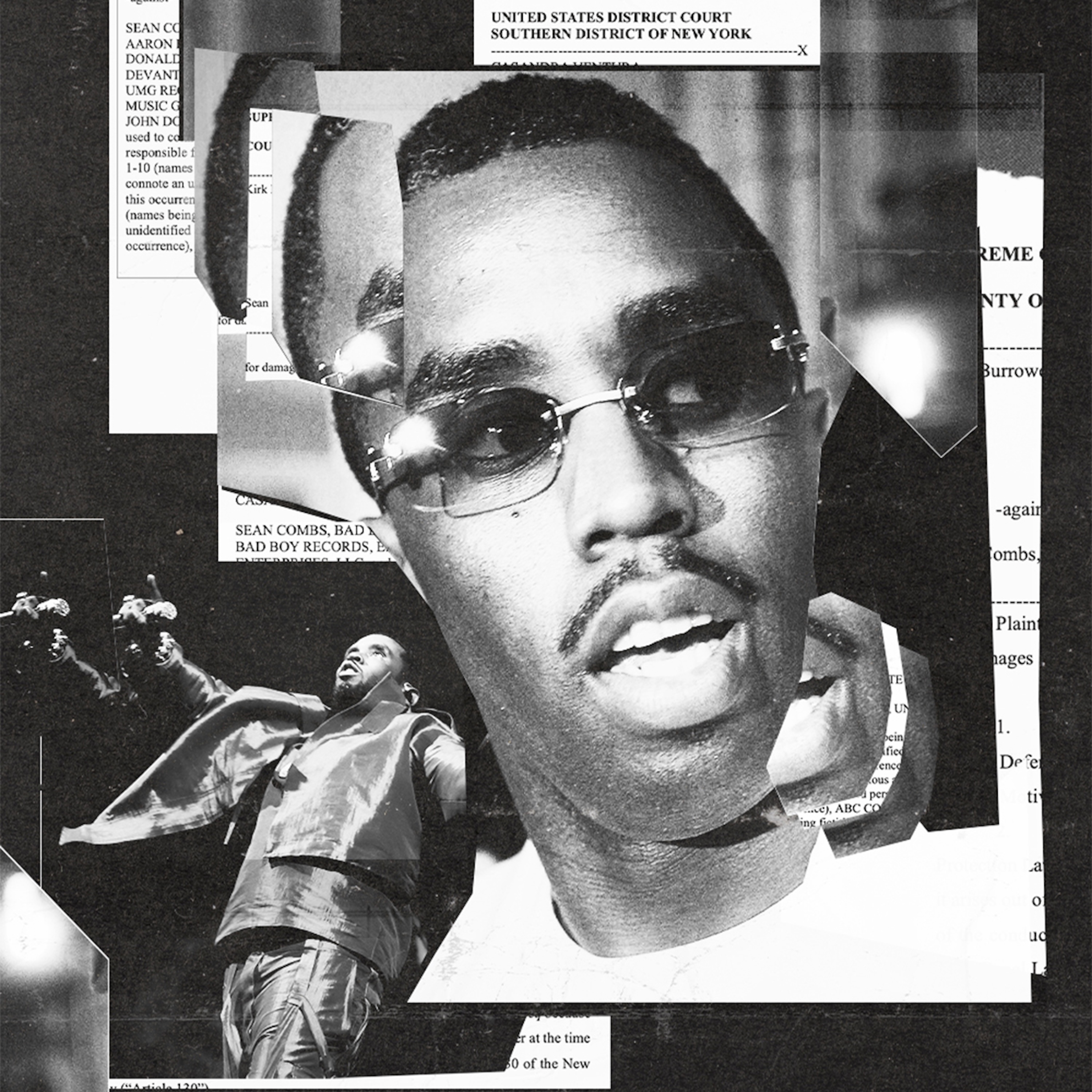
Post Reports
The Diddy Trial: Why is Sean Combs being tried like a mob boss?
00:25:06
A breakdown of the charges that Sean “Diddy” Combs is facing and how the government has built its case so far.
Loading summary
Transcript54 lines
- [00:03]
Elahe Izadi
Before we start the show, I want to say a quick thank you for being a listener and to explain a little bit more about why my colleagues and I hope you also subscribe to the Washington Post. The Post newsroom has published more than 100 scoops so far this year, exclusive stories reported by our newsroom, holding power to account and keeping you informed. That's what drives our work. And it's the kind of work that you support as a subscriber. If you're not one already, this is a great time to take this step. Our Memorial Day sale is still happening. You can unlock your subscription for just $2 every four weeks for a whole year. And after that, it's just $12 every four weeks. You can cancel anytime. So hit pause right now and go to the subscription link in our show notes or to washingtonpost.com subscribe in a few minutes, you'll have more of what's happening in the world right at your fingertips. This offer is good for a limited time, so really, do not wait. We're excited to welcome you as a subscriber. Now here's the show. Just a warning. We will be discussing sex, sexual assault, drugs and violence in this episode. Now we're speaking on Friday morning and you were in court this week. We heard from former employees of Combs and other alleged victims. And so I'm just wondering out of all of that, what really stuck out in your mind from the testimony this week?
- [01:50]
Ann Brannigan
What stuck out to me was how much of this week's testimony really corroborated stuff that Cassie Ventura had said on the stand.
- [02:01]
Elahe Izadi
This is audio producer Savvy Robinson and reporter Ann Brannigan. They've been reporting from the federal courthouse in Manhattan where Sean Diddy Combs is on trial. The music mogul is charged with five criminal counts of racketeering, conspiracy, sex trafficking and transportation to engage in prostitution. He has pleaded not guilty. If convicted, he could face up to life in prison. At the end of this third week of testimony, Sabi and Anne reflected on the people who took the stand and how their testimony compared to that of the government star witness Cassie Ventura. Ventura is a singer and Combs ex girlfriend and she had talked about years of abuse, including she says, being forced to participate in freak offs which were days long sex parties with male escorts.
- [02:54]
Ann Brannigan
So we had a few people, a couple personal assistants who used to work for Combs. One celebrity stylist who was employed through bad boy talk about instances of physical violence that they witnessed Cassie Ventura experience. We had the celebrity stylist, a man named Deontay Nash talk about Cassie not wanting to go to a freak off. They also spoke quite a bit about the sort of force and coercion they personally felt as employees of Combs. So this ranges from physical and sexual abuse in the case of Mia, Mia being a pseudonymous and, you know, she relayed a few instances, but she made clear that there were more and that she couldn't remember all of them. But the celebrity stylist and another assistant named Capricorn Clark also talked about intimidation, you know, physical assaults they experienced at the hands of Sean Combs. All three of them talked about repercussions they feared if they ran afoul of his wishes and of the professional rewards, if they remained loyal and did the things that he wanted them to do.
- [04:22]
Elahe Izadi
I think one of the things that really stood out to me this week that we also saw from former employees that have testified before is just how complicated this relationship with Combs is, how they were talking about the affection they had towards him, the love they had towards him. And I wonder, like, what impression that's left on you.
- [04:46]
Ann Brannigan
I found it really striking because we're talking about racketeering, conspiracy. And so these employees and their accounts and their recollections are incredibly important to either corroborate or undermine the government's case and to lay out this picture of what it was like to work for Sean Combs, a man who they describe as an icon, as an authority figure, as somebody they loved and respected but very clearly feared. Right. And they described a range of ways that he would punish them. Right. Mia described, you know, being put on leave without pay for going to a party with Cassie Ventura, a party at Prince's house. And so it's this really complicated relationship where there's this reverence, but also this fear. And we're seeing a condensed version of what is years of experiences like in this environment.
- [05:55]
Elahe Izadi
From the newsroom of the Washington Post, this is Post Reports. I'm Elahe izadi. It's Friday, May 30th. Today we're continuing our coverage of the trial of Sean Combs, also known as Diddy Puff, Puff Daddy. We'll be bringing you episodes most Fridays if you haven't been keeping up with this case. Our latest episodes go over the testimony from big witnesses the government is calling, including Combs ex girlfriend Cassie Ventura. But in today's episode, I wanted to do something a little different. Anne and Sabi already caught us up with the major takeaways from trial this week. But for the rest of the episode I'm turning to another colleague of mine, federal courts reporter Shayna Jacobs. Even before this trial started, I've had a lot of questions about the specific charges being brought against Combs, like why is he being charged with racketeering, conspiracy? Isn't that usually something the Mafia gets? Or why isn't he being charged with some of these other things that have come up, like assault? As the trial has gone on, I keep coming back to these questions. So today I thought it'd be helpful to take a step back and really unpack the legal framework around Combs trial so we can really understand the testimony we're hearing.
- [07:18]
Shayna Jacobs
Foreign.
- [07:23]
Elahe Izadi
Thank you so much for joining me today.
- [07:26]
Shayna Jacobs
Thank you for having me.
- [07:28]
Elahe Izadi
You are someone who's been covering the justice system for a while. You've covered many federal trials for the Post, and today I wanted to take some time to go over the charges in this case and also ask you about how both the government and defense side are doing in terms of proving or disproving these charges so far. So, Shayna, I thought we could start with the racketeering conspiracy charge. This is one we've talked about on the podcast already, and we broadly understand it as it's illegal to have an enterprise or organization conspire to commit a bunch of illegal acts. But this is a pretty complicated charge and a lot of the testimony seems to be speaking to it. So I'd love to do a bit of Racketeering 101. So first, Shayna, just what does racketeering encompass?
- [08:22]
Shayna Jacobs
It's a broadly encompassing law that covers a wide range of criminal activity from, as we see now, you know, sex trafficking, forced labor type allegations to classical organized crime, the mob, the mafia, sort of street gangs, drug gangs. I mean, it runs the gamut. Prosecutors have over time figured out how to apply it to a variety of just criminal networks that are organized in some fashion. And in this case, that organization starts with Sean Diddy Combs and it encompasses the people surrounding him, from his employees to people who are just supporters in his network. The the theory is that they are all working to serve him and to carry out, in this case, his sexual desires, but to carry out his criminal activity for him, with him and for him.
- [09:18]
Elahe Izadi
And I feel like I keep hearing about racketeering charges in the news over the last few years and a lot of different types of cases, like there was Donald Trump in Georgia and also the rapper Young Thug and his associates of his record label also in Georgia. And, and I'm just hearing racketeering being used in all these different situations, is racketeering being used more broadly now?
- [09:42]
Shayna Jacobs
There is a sense that it is being used more broadly now. It is a quite invaluable tool for the government because of how creative you could get with it and because of how broad, because of how encompassing your case can be. So you can bring in a wide variety of people, you can bring in a wide variety of crimes. In some cases, you don't even need to really prove the crimes beyond reasonable doubt. So if you have an organization of some type, whether it is a mafia or gang or whether it is, you know, people in an inner circle of a. Of an influential person, you can bring it there if you want to.
- [10:25]
Elahe Izadi
Oh, that's really fascinating. So it's this idea that there is a network of people who are charged with tasks that enable criminal activity.
- [10:34]
Shayna Jacobs
Yeah. And it's about the agreement, too. The government's going to try to show that there's an agreement among these people to support criminal activity is really where this is going.
- [10:45]
Elahe Izadi
And so, Shayna, in this case, it's racketeering conspiracy. Right. How is that different from charging someone with just racketeering? What's the difference?
- [10:55]
Shayna Jacobs
So, I mean, I think the racketeering conspiracy is more about the agreement in the organization. You've got to establish that the system was in place, as opposed to everyone involved was beyond a reasonable doubt, doing everything that you're accusing them of. Of course, you're still accusing them of these things, but it's just a slightly different standard.
- [11:15]
Elahe Izadi
I see. So it's like you just have to prove that they agreed to do this rather than it was established and operating.
- [11:23]
Shayna Jacobs
That is generally the case. Right. You, you're, you're, you are proving that this agreement existed. They do not have to fully prove the criminality itself. In reality, the jury needs to see that criminality was happening. How else will they know that there was an agreement to carry out criminality? So that's, I mean, in practice, the government is going to try to show that, and that's clearly what they're doing here. I mean, the violence, the sexual abuse, the rape, the drugs. So, you know, they have to really support the conspiracy and that and the agreement with evidence of criminality.
- [12:01]
Elahe Izadi
So this is the part I don't always understand when we're talking about racketeering charges. It's also referred to as rico. Why is it that Combs would be charged with this racketeering or racketeering conspiracy, but not the criminal activity itself? Like, I'm not seeing charges against Combs for arson, assault, drugs, all these other things. But if the government is saying, look, he had an enterprise to enable criminal activity, why aren't they charging him with the criminal activity itself?
- [12:31]
Shayna Jacobs
Well, they are. That's, I think, what the sex trafficking and the prostitution charges are about. So they are, they are supporting it. They may not be charging with absolutely everything. You know, I don't know exactly what, what their thinking was, but it's possible they just went with what they were, you know, completely sure about. There's a very nuanced analysis that goes into it. So it could be that they don't feel they approve certain charges, certain counts, or it could be that this is strategic. This is like, let's give the jury, you know, the most concise sample of things. Also, if the top charges carry a stiff enough sentence, and that's what you're going for, you don't really need to pile on.
- [13:13]
Elahe Izadi
I see, I see.
- [13:14]
Shayna Jacobs
I mean, you're gonna get a significant prison sentence on the top count, most likely in any case. So, I mean, there's not necessarily a need to, to have so many more conviction counts on top of it.
- [13:26]
Elahe Izadi
And so how exactly do prosecutors successfully argue racketeering conspiracy?
- [13:33]
Shayna Jacobs
Well, I think you bring in all of these people, like they're doing now, who are talking about what others did to enable Sean Combs. I mean, you bring in, you know, for instance, Capricorn Clark, his former personal assistant, also had worked for him in several other capacities over the years, who says she was kidnapped by Combs in that during various confrontations, threatening violence. So, I mean, she's helping to establish that there's people in his circle who are supporting and enabling his crimes. You know, for instance, some of the male escorts who testified, they're talking about the violence that they witnessed. So, I mean, there' sit's very nuanced at times, but you're trying to show things like coercion, both in a sexual and non sexual capacity, and you're trying to establish this layer below what's happening at the top.
- [14:30]
Elahe Izadi
Because so far, the testimony that we've been talking about on the show and the evidence, it's prosecutors attempting to paint this picture that Combs is sitting atop one person used Combs Kingdom, you know, this idea that he's directing and everyone, his employees and others are deferring to him and carrying out all these tasks and activities on his behalf.
- [14:50]
Shayna Jacobs
Right, like a mob boss, essentially.
- [14:53]
Elahe Izadi
Yeah. And as just a reminder, we are still on the part of the trial where the government is presenting their case and the Defense will have an opportunity to call witnesses and dig in further beyond just cross examining the witnesses the government is calling. But based on what you've seen so far in the courtroom and during this trial, Shayna, how do you think the defense will try to counter this narrative that Sean Diddy Combs, you know, was top of this enterprise or had people agree to commit acts of criminality on his behalf or enable criminality?
- [15:25]
Shayna Jacobs
I think a big part of it is to try to show that there was no criminality happening. That is where in the defense opening statements we heard, while the conduct involved in the case may have been domestic violence, it didn't amount to sex trafficking and it certainly didn't amount to racketeering conspiracy that centered on sex trafficking and prostitution. Those things were consensual. The women who are part of the case were there for freak offs voluntarily, with consent breaking down. That is, I think, a big part of their strategy. And if you can interfere with the idea that there was any crime happening, you have less of a burden breaking down whether there was an organization or not. Because if they're not, if there are no crimes happening, there's no organization to support it. So, I mean, you know, cast doubt on some of these accounts. Some of these things happened 20 years ago. It is people's memories, as we know, are not always, you know, so solid. So, I mean, that's one of the things they may go after. You know, they may try to show that these people were just. If they were doing anything at all, if they were really threatening victims on Combs behalf, if they were really setting fire to. To people's cars or whatnot, that they were acting on their own or that they just didn't do it at all.
- [16:46]
Elahe Izadi
Oh, and that the car thing is referencing the car explosion that rapper Kid Cudi, whose real name is Scott Muscody, testified about, and we talked about the car explosion on last week's episode.
- [16:57]
Shayna Jacobs
Yeah. The defense is likely gonna argue whether Muscati's car was set on fire or not. It had nothing to do with Combs. And that they can't pin it to Combs or any of his associates. It depends on how the evidence is going to shake out. They have to see what these people are going to say and how it's going to play before they can commit to a defense is generally how it works.
- [17:20]
Elahe Izadi
Oh, interesting. So as the trial proceeds, the defense, they may have gone into this trial with a very specific strategy, but they'll have to be nimble and adjust as the trial proceeds.
- [17:28]
Shayna Jacobs
Yeah, I mean they have a tremendous amount of evidence. But what happens in the courtroom is not always predictable. So this is a very organic process. They're reading these people and they're reading how it's playing to try to put together the most effective defense. At the end of this, they are also probably trying to decide who's going to testify for them. I mean, Maybe they have 10 witnesses on deck. And depending on how the government's case shakes out, they may call 1 or they may call 10 or they may call none. Yeah, it's totally fluid.
- [18:02]
Elahe Izadi
Racketeering, conspiracy. Is it usually pretty hard to win a conviction on a racketeering conspiracy or just racketeering charge?
- [18:12]
Shayna Jacobs
The reason it's such, such an intimidating case for Combs and anyone else in his situation is because it's pretty broad. I mean, there are a lot of options for the government to establish that there were agreements to commit certain, certain crimes. You don't again, you don't have to prove the crimes. So it's probably considered pretty, you know, a pretty favorable situation for the government.
- [18:44]
Elahe Izadi
After the break, Shayna and I talk about the other major charge in this trial, sex trafficking. We'll be right back.
- [19:04]
Sabi Robinson
Allergy season doesn't wait, and neither should you. Luckily, with Goodrx, you can get ahead of allergy symptoms and save money doing it. GoodRx helps you find big savings on the meds you need, like popular allergy relief for as little as $15 so you, your family and even your pets can breathe a little easier. Using GoodRx is free and easy. Just search your prescription on the GoodRx app or website, compare prices at nearby pharmacies, and then show your coupon at the counter. That's it. You can save at over 70,000 pharmacies across the country, including CVS, Walgreens, Walmart, Publix, Kroger and more. And here's something extra. With GoodRx rewards, you earn points every time you use a coupon, points you can redeem later for gift cards and more. GoodRx isn't insurance, but it works whether you have it or not. In fact, it could even beat your insurance copay. So don't let allergy season slow you down. Visit goodrx.com reports today. That's goodrx.com reports.
- [20:04]
Shayna Jacobs
We hear it all the time. There's a growing concern about kids, mental health and the role technology plays in their daily lives. Screens are everywhere, and young people are spending more time on them than ever. It's a staggering reality, but for many parents, not a Surprising one one company tackling this issue is Gab with a solution called Tech in Steps, a gradual, age appropriate approach to introducing technology. Protect your kids with phones and watches designed just for them. Here's how it works. GAB devices have no social media, no Internet browser, and are tailored to different stages. For younger kids, the Gab Watch 3e offers GPS tracking, safe zones and limited calling and texting. Tweens move up to a starter phone and teens have access to a more advanced device with parent controlled apps and a premium camera, all with safety at the core. We recently got the watch 3e for our kids. It's been a great way to keep them connected and safe when they're out. To learn more and see current offers, visit gab.com reports that's G A B B.com reports. Terms and conditions apply.
- [21:08]
Elahe Izadi
Sheena, let's talk about the sex trafficking charge against Combs. What is the definition here and why are prosecutors charging Combs with this?
- [21:18]
Shayna Jacobs
It is a bit of a broad definition. There has to be elements of interstate commerce. So you've got to sort of have the traveling part of it, which Cassidy Ventura at least went all sorts of places with Sean Combs in the US Included. So the other element is that he would have forced her into this conduct through any really any sort of threatening behavior or physical force or abuse or coercion. Especially in recent years. It is pretty widely viewed. It can be psychological manipulation. It could be physical abuse. It's often both. So those are things that the government is going to be trying to establish is the coercion and the methods that were used to force Cassie Ventura and the other victim into unwanted sexual activity.
- [22:17]
Elahe Izadi
So does it have to involve the exchange of money?
- [22:20]
Shayna Jacobs
It does have to involve some commercial aspect. So there's a couple of aspects of sex trafficking that the government has to establish. The commercial aspect and also the coercion, the force and the manipulation. And the judge is gonna have to explain to the jury what a commercial sex act entails.
- [22:43]
Elahe Izadi
So, Shayna, the defense so far has suggested in their arguments that, you know, Combs was maybe like a bad boyfriend. He may be guilty of domestic violence, but not sex trafficking. Just first of all, could Combs be charged with domestic violence?
- [23:01]
Shayna Jacobs
I don't believe so. Domestic violence is typically a state. You know, it would be assault. And I mean, some states probably have specific domestic violence laws, but generally statutes of limitation for things like assaults are a few years. So it sounds like any state where a domestic violence related case could have been brought against Sean Combs, there would be, you know, an unlikely case for that. He and Cassie Ventura ended their relationship and 2018. So that was quite some time ago. And it does seem like there is no real option for a state domestic violence case. Also probably harder to prove that, considering how old it is, if you were to try to do it that way.
- [23:51]
Elahe Izadi
Shaina, you've covered a lot of trials before, and I'm wondering, as you're watching this trial unfold, does this one remind you of any others you've covered before? How does this one sit with your experience thus far?
- [24:03]
Shayna Jacobs
In some ways, it reminds me of the Harvey Weinstein case, which was not sex trafficking, but it did involve a system of people around him who allegedly enabled him to have unwanted sexual encounters with various women. And the coercion aspect, the powerful, very, very powerful and very famous person and the, you know, still people who feel, potentially feel inferior to him given his clout, his power, his fame, his money. It is also kind of similar to a couple of cult cases I followed.
- [24:47]
Elahe Izadi
Cult cases.
- [24:48]
Shayna Jacobs
Yeah. Yeah.
- [24:50]
Elahe Izadi
So this. This trial is making you feel like, as you're watching witnesses testify, like they were. They had a. A deep devotion to Sean Diddy Combs.
- [24:57]
Shayna Jacobs
Absolutely. It's very clear from the testimony of some of the employees that this was much more than a job for them. This was an identity for them. And, I mean, some of these systems worked essentially seven days a week, all hours of the day. This was their life. And there's all sorts of ways in which they described justifying some of what they did for him. So justifying situations they were in, whether they are technically part of the conspiracy or not, they were not. Probably not good situations for anyone. So, yeah, there's a deeper devotion than just people who are people who are in a professional setting. It's deeply unprofessional in a lot of ways.
- [25:47]
Elahe Izadi
Wow. Well, Shaina, that's so fascinating. Thank you so much for joining us and taking time to thank. Explain all this.
- [25:53]
Shayna Jacobs
Thank you. Thank you for having me.
- [25:59]
Elahe Izadi
Shana Jacobs is a federal courts reporter for the Post. You also heard style reporter Anne Brannigan and audio producer Sabi Robinson in this episode. Sabi contributed reporting from New York and also produced this show. If you want to catch up on our other episodes about this trial, you can find a link to a Spotify playlist in our show notes. That's it for Post reports. Thanks for listening. Today's show was edited by Rena Flores and mixed by Shawn Carter. Thanks to Carla Spardos. If you're finding this coverage of the Combs trial valuable Help other people discover our show by leaving a rating on Spotify or a rating and review on Apple Podcasts. We really appreciate it. Our team includes Martine Powers, Colby Ichowitz, Maggie Penman, Ted Muldoon, Lucy Perkins, Alana Gordon, Ariel Plotnick, Reni Stranovski, Emma Talkoff, Peter Bresnan, Laura Benshoff and Renita Jablonski. I'm Elahe Izadi. We'll be back tomorrow with more stories from the Washington Post. Summer's heating up and your snack game should too. Get My Mochi Ice Cream the ultimate summer snack. My Mochi is creamy ice cream cream wrapped in sweet dough for a bite sized treat that'll make you feel joyfully chilled. Whether you're beachbound or backyard hanging. My Mochi hits the sweet spot with fun texture and bold flavors like strawberry, mango, birthday cake and cookies and cream. Summer snacking just got an upgrade. Look for the purple box of My Mochi at walmart or visit mymochi.com to find a store near you.