← Post Reports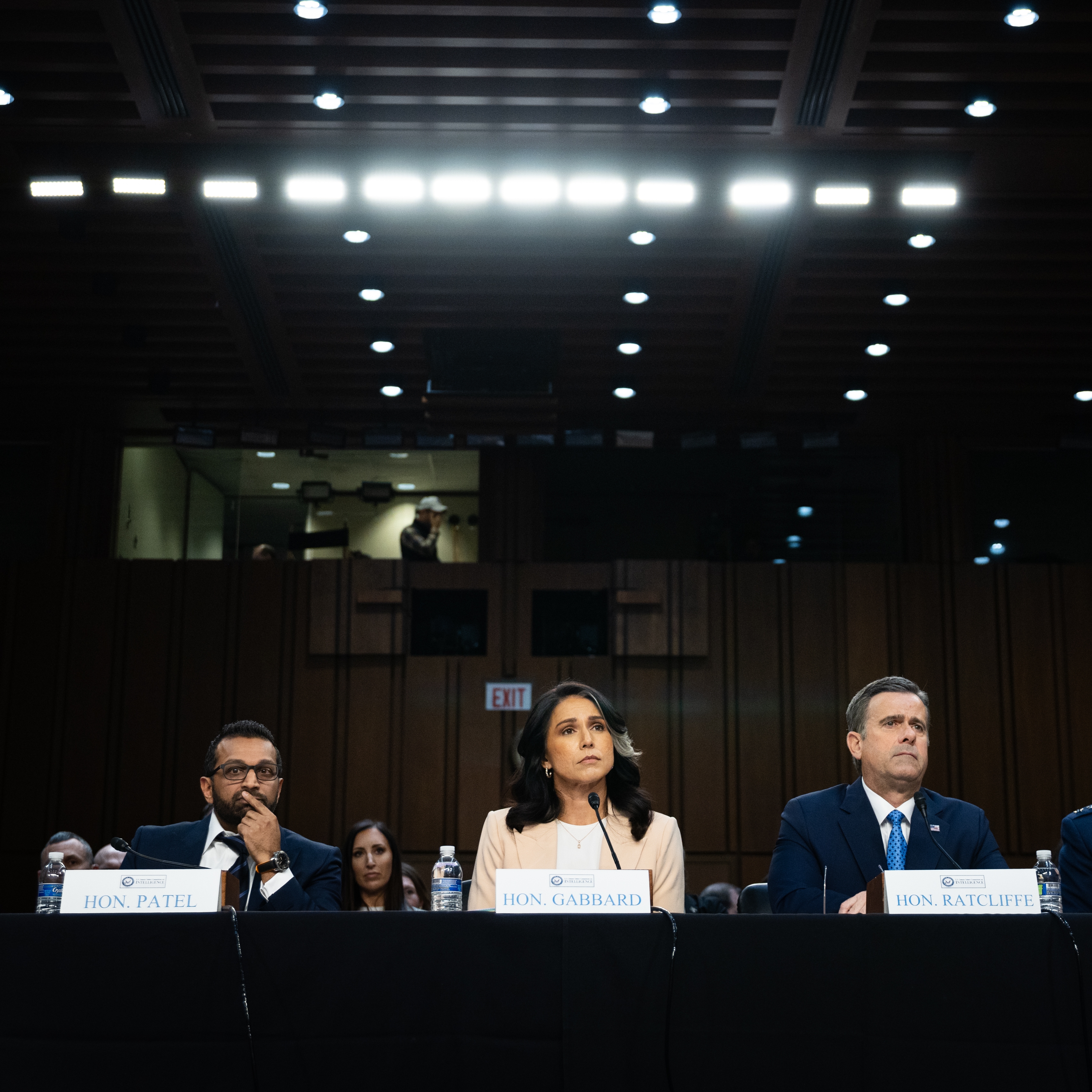
Post Reports
The fallout from the Signal leak
00:28:29
Top Trump administration officials used a group chat on the Signal messaging app to discuss highly sensitive military plans – and accidentally added a journalist to the text thread.
Loading summary
Transcript75 lines
- [00:00]
Narrator
And now a next level moment from ATT Business. Say you've sent out a gigantic shipment of pillows and they need to be there in time for International Sleep day. You've got AT and T5G so you're fully confident, but the vendor isn't responding. And International Sleep Day is tomorrow. Luckily, AT&T 5G lets you deal with any issues with ease, so the pillows will get delivered and everyone can sleep soundly, especially you. ATT 5G requires a compatible plan and device. Coverage not available everywhere. Learn more@att.com 5G Network.
- [00:33]
Colby Ekowitz
On Monday, a bombshell report revealed that top Trump administration officials had discussed military plans, highly sensitive plans, in a group chat. They were using Signal, an unclassified app, and they mistakenly included a journalist from the Atlantic. This highly sensitive text thread quickly drew criticism from Democrats and broadly from intelligence experts. Today, the extraordinary group chat took center stage at a previously scheduled hearing of the Senate Intelligence Committee.
- [01:07]
Tom Sytsima
And that wasn't a huge mistake. That wasn't a huge mistake. They characterized this is an embarrassment. This is utterly unprofessional. There's been no apology. There has been no recognition of the gravity of this error. And by the way, we will get the full transcript of this chain and your testimony will be measured carefully against its content.
- [01:31]
Colby Ekowitz
That's Democratic Senator Jon Ossoff of Georgia grilling Director of the CIA John Ratcliffe. Ratcliffe was in front of the Senate Intelligence Committee today along with Director of National Intelligence Tulsi Gabbard and Kash Patel, the director of the FBI. They were pre scheduled to appear to give a global threat assessment. It's something that happens every year. But instead, this routine congressional hearing became a must watch event. From the newsroom of the Washington Post, this is Post Reports. I'm Colby ekowitz. It's Tuesday, March 25th. Today, I'm joined by two national security reporters from the Post to unpack this scandal. Dan Lamoth covers the US Military and Pentagon.
- [02:17]
Dan Lamoth
Hey, how you doing?
- [02:19]
Colby Ekowitz
And Abby House, loner who is on the Hill where she has just covered this committee hearing.
- [02:25]
Abby House
Hello.
- [02:30]
Colby Ekowitz
So before we get back to the hearing, let's start with the basics of this bombshell story by Jeffrey Goldberg, the editor in chief of the Atlantic. The title of the article was the Trump Administration Accidentally Texted Me its war Plans. So, Dan, who was in this group text chat?
- [02:50]
Dan Lamoth
So it was kind of a who's who of senior national security officials in the Trump administration. Defense Secretary Hegseth, Secretary of State Rubio, the National Security Advisor, Mike Waltz. And somewhere in the neighborhood of about 15, 16 other people. Seemingly pretty much everybody but the president at the highest levels of the government.
- [03:09]
Colby Ekowitz
Yeah, Vice President Vance as well, right?
- [03:11]
Dan Lamoth
That's right.
- [03:12]
Colby Ekowitz
And how did Goldberg explain why or how he was added to this group text?
- [03:18]
Dan Lamoth
I mean, it really comes down to the usage of Signal, which is a encrypted, unclassified network that is commonly used in pieces of the government for specific applications. It's also commonly used by journalists because there is some encryption there. In this case, Goldberg says that Mike Waltz reached out to him. He didn't think much of it. He covers national security. It would not be unreasonable to think that maybe the national security advisor had a steer for him, had a tip for him, had a gripe for him, so he accepted the invitation. Then a couple days later, on Thursday, March 13, Goldberg says he received an invitation to a group on Signal, Basically the senior members in the government discussing a forthcoming operation against the Houthis, a militant group that's based in Yemen and that has been launching a series. Series of attacks on Navy ships and commercial ships in the Red Sea over the last year or so.
- [04:17]
Colby Ekowitz
Abby, can you walk us through what they were actually discussing on this text thread?
- [04:24]
Abby House
Well, what makes the text thread so kind of serious and astonishing is that they were talking through the strategy and then the detailed plans for a series of airstrikes on the Houthi rebels in Yemen. And the defense secretary and the national security advisor provided, ultimately, in that chat before the attack took place, provided the details of what they would target, what weapons they would use, the sequencing of those strikes. This is all according to Goldberg, who exercised quite a bit of restraint and did not publish details that he thought were most certainly classified. And so all of this was inadvertently shared with Goldberg in this text chain. And so that is how he says he learned about these strikes on the Houthis and exactly what would be hit two hours before the strikes actually were carried out.
- [05:26]
Colby Ekowitz
And there's this incredible scene in that article where he's, like, waiting in a parking lot at the exact time that they said these attacks were gonna happen. And then the attacks do, in fact, happen when they said they were going to on the text thread.
- [05:38]
Abby House
Right. And that's when he says he realizes that this definitely real, because he remarks at different points during this experience that, you know, he found it hard to believe that such reckless behavior as to be communicating this kind of information over signal, over a messaging app, and also to accidentally include someone in that who, you know, you haven't verified, a journalist, in this case, that he had Trouble believing that it wasn't just sort of a scam, that it was actually real at first, and then clearly it was real. Precisely what they had talked about was carried out.
- [06:18]
Colby Ekowitz
Dan, Abby, for those who haven't had a chance to read the story, I was hoping we could maybe share some of the actual exchanges that were in this thread.
- [06:26]
Abby House
Okay, so there's this really interesting exchange where the Vice president sort of suggests that the President Trump might not have the right position or the right take on how to proceed or whether to proceed with these airstrikes. And that's really notable because in public, Vance makes an effort not to deviate from Trump. He says, I am not sure the President is aware how inconsistent this is with his message on Europe right now. There's a further risk that we see a moderate to severe spike in oil prices. I am willing to support the consensus of my team and keep these concerns to myself, but there is a strong argument for delaying this. A month doing the messaging work on why this matters, seeing where the economy is, et cetera. So later in the chat, Pete Hegseth, the Defense Secretary, responds to what Vance has said and writes, vp, I understand your concerns and fully support you raising with POTUS important considerations, most of which are tough to know how they play out. Parentheses economy, Ukraine, peace, Gaza, et cetera. I think messaging is going to be tough no matter what. Nobody knows who the Houthis are, which is why we would need to stay focused on, one, Biden failed and two, Iran funded. So what they're doing here is they're talking about the messaging, how they want to portray these strikes.
- [08:10]
Dan Lamoth
I think there's two pieces here that really struck me as compelling and striking. One is that you've got the Vice President of the United States of America voicing concerns about the plan that appears to have been already sort of baked in. And the idea that basically despite there having been apparent previous conversations, you still don't have the vice president on board. And then the second piece is really this discussion of Secretary Hegseth rolling out some level of detail on the strikes before they happened. It's hard to see a way where that is not sensitive, likely classified. And I think the question that's unresolved here is if this information on an operation that had not yet occurred at that point was shared, how is that not violating protocols, concerns, things that would be an issue here, Simply something that is sent too sensitive to be in a space that is not basically fully 100% secure.
- [09:09]
Colby Ekowitz
Yeah, I mean, it's like being inside the situation room where these conversations normally take place.
- [09:16]
Abby House
Exactly. And that's actually something that Democrats have been hammering Trump officials on today, saying, you know, at some point, why didn't it occur to anyone to have this conversation in the Situation Room as opposed to over signal?
- [09:37]
Colby Ekowitz
After the break, we'll discuss the security risks of talking about military plans in a group chat. We'll be right back.
- [09:52]
Tom Sytsima
My name is Tom Sytsima and I am the food critic for the Washington Post. I think a lot of great restaurant meals are like great books, films or concerts. You don't necessarily need them to live, but don't they make life more worth living? I see myself as sort of a reader advocate, going in there, spending the Post money, coming back and giving you the green light, yield sign or a stop sign. I like to be seen as sort of the best friend who happens to eat out a lot more than they do. I eat in about 10 restaurants a week and I like creating memories for people and helping them create memories, whether those are first date, a 50th anniversary, grandma's 90th birthday, if you have special needs, whether they're dietary or otherwise. When you subscribe to the Washington Post, you support this kind of journalism. Learn more at subscribe.washingtonpost.com I'm Tom Sytsima and I'm one of the people behind the Post.
- [10:53]
Advertiser
Are you looking to take control of your health? Well, one way to do that is to check out Goodrx and stop overpaying for your prescription medications. With Goodrx, you can find huge savings on your prescriptions for everything from GLP1 medications to remedies for your allergies and so much more. GoodRx is free and easy to use. Just search for any prescription on the GoodRx website or app, get your coupon and show it to the pharmacist. In some cases, you can save up to 80% at pharmacies near you. Best of all, GoodRx works whether you have insurance or not. And even if you have insurance, GoodRx could beat your co pay price. You've heard me say this a few times now, but I've been suggesting Goodrx to my friends. They raved at the savings and how easy it was to find discounts for their prescriptions. Next time you need a prescription, you should check out GoodRx too. For simple, smart savings on your everyday prescriptions, go to goodrx.com reports. That's goodrx.com reports.
- [11:53]
Narrator
And now a next level moment from AT&T business. Say you've sent out a gigantic shipment of pillows and they need to be there in time for International Sleep day. You've got AT and T5G so you're fully confident, but the vendor isn't responding and International Sleep Day is tomorrow. Luckily, AT&T 5G lets you deal with any issues with ease. So the pillows will get delivered and everyone can sleep soundly, especially you. ATT 5G requires a compatible plan and device coverage not available everywhere. Learn more@att.com 5G Network.
- [12:25]
Colby Ekowitz
So Dan, Abby, like in the most basic terms, why does it matter that these officials were having these conversations on signal? What are the security risks of using SIGNAL in this way?
- [12:39]
Dan Lamoth
Yeah, I mean, I think the most immediate, obvious one is that it's hard to have full accountability on who might be in your group. Has any bond been added that you're not sure of? Does somebody have full control of their own account? In this case, you've got Jeffrey Goldberg, who apparently went by the initials J.G. and I think that made it a little easier for Trump officials to not really be sure who it was and just assume it had already been vetted. Clearly it was not. The second piece is there are concerns about whether or not you can get into these chats, whether or not through hacking or other means, a foreign adversary or something like that could somehow access these communications which are sensitive. No doubt after the fact, but before the fact, before these operations occurred, when you have American pilots over dangerous territory, you have the possibility of anti aircraft weapons being moved into strategic locations. That's where the concerns become more grave.
- [13:40]
Colby Ekowitz
Yeah, Dan, I mean, what could have happened if this information fell into the wrong hands?
- [13:45]
Dan Lamoth
I mean, I think there are several possibilities. One is that you're worried about the shoot down of an American aircraft and lives being lost in the process. I think there are other lower level concerns, such as these targets that you're going after, these militant leaders that you're going after have a heads up and simply move so you're not able to effectively target them. So you look at the ramifications like you really do need some level of secrecy and care in how you handle this, particularly in the moment.
- [14:15]
Colby Ekowitz
Abby, you mentioned earlier the situation Room. I mean, when you're making these plans and having these debates, how are they supposed to be communicating these with each other?
- [14:25]
Abby House
Well, all classified or sensitive information is supposed to be discussed inside, you know, a special room or what's known as a scif, which stands for Sensitive Compartmented Information Facility. That's what the situation room is, where the room is especially Set up so that people cannot essentially, so that people cannot eavesdrop, people cannot record what's going on in there, and that maintains some level of protection of the information that's exchanged. As Dan, and as critics have pointed out, exchanging this kind of presumably classified information over a separate third party messaging app is just inherently risky.
- [15:09]
Colby Ekowitz
Does that violate a law? Are there laws around, like how you share classified information?
- [15:15]
Abby House
Well, yes, there is. Classically the Espionage Act. And in fact, journalists and government officials who have intentionally leaked information to journalists have been charged under the Espionage Act.
- [15:30]
Dan Lamoth
Yeah, I mean, I think the notable piece there, particularly with this administration, they have very recently come out very forcefully saying that they will crack down on how classified information is handled, how sensitive government information is handled, made the case that they will use polygraphs, that they will investigate fully leaks that have appeared in the media. Certainly they didn't expect this story to emerge, but it kind of shows that on one hand that they're shaking their fist at the way some information has gotten out, and on the other hand, didn't seem to fully have their own information security buttoned up.
- [16:07]
Colby Ekowitz
And Dan, it seems like obviously this wasn't, as far as we know, an intentional leak to Goldberg to a journalist, but it was seemingly careless. Is being careless illegal?
- [16:19]
Dan Lamoth
The short answer is yes, in the right circumstances, absolutely. There are cases that I have covered in the past where individuals handled classified information not to hand it over, but simply the way they handled it. Moving documents from their secure server to their Yahoo address comes to mind. As one example, things like that where it didn't get out, no one was really the wiser. In some cases they have self reported. In some other cases, it just emerges through conversation or otherwise. And those have actually resulted in courts martial, reduction in rank in the military. There are real disciplinary issues that come up, and that is something you've heard from critics over the last day, including not only Democrats, but a number of veterans who in most cases I think would be pretty sympathetic to the Trump administration. They look at it and say, I couldn't get away with this.
- [17:10]
Colby Ekowitz
I remember a time when a government official using a private email account mattered very much to Republicans. Can you remind us what those other examples are of times that Republicans were upset about the private use using a private account to conduct official business and how those compare now to this signal chat issue?
- [17:33]
Abby House
Right. I think you're referring to the infamous Hillary Clinton private email server. So that was. This is back when Hillary Clinton was Secretary of State under President Obama, Although this sort of came out later in the run up to the 2016 election. You know, the FBI found that Clinton had used a private email server, had conveyed sensitive information on private emails over a private email server that she had at her House. And Republicans really were outraged about this. They said this was a huge security breach. They investigated the matter. They were, you know, some called for Clinton to be, you know, to face criminal consequences or to be removed from the presidential race. So people were very serious about it, and they called it reckless and careless and dangerous. And I actually asked the Republican chairman of the House Foreign Affairs Committee, Florida Representative Brian Mast, about this last night. He has been a prominent spokesman for the administration in the House. He's certainly a MAGA Republican. And Mast, you know, when I asked him about the signal episode, he sort of downplayed it, said it was a one off, tried to say it really wasn't a big deal because anyway, nothing bad happened and the military operation against the Houthis was a success, so what's the big deal? And I pressed him first on why he didn't think that revealing these kinds of details of a planned attack in advance of the attack posed a threat to American national security. Whereas, you know, certainly he and others in the party had said that the Clinton private email server situation was a grave threat to national security.
- [19:37]
Colby Ekowitz
I'd say there's a damn big difference.
- [19:40]
Abby House
Between that and communicating classified military information. You went to university messaging app.
- [19:45]
Dan Lamoth
You went to university via cell phone.
- [19:47]
Colby Ekowitz
I did. Where? Which one?
- [19:48]
Abby House
University of Michigan.
- [19:49]
Colby Ekowitz
All right. I grew up in Michigan, Grand Rapids, other side of the state. But makes me think that you're probably an intelligent person to realize the difference between having a server and this take care.
- [20:00]
Abby House
And I said that I really didn't, and I was hoping he could explain, and he hopped in an elevator and seemed quite annoyed and disappeared.
- [20:09]
Colby Ekowitz
Well, it makes me think too that one of the leading voices on the Hillary email story was Trump himself attacking her on her emails. So, Dan, what has Trump said about what happened?
- [20:27]
Dan Lamoth
It came in two waves so far. The first piece on Monday, as the story broke a couple hours later, he distanced himself from it, basically said he didn't know anything about it.
- [20:38]
Abby House
I don't know anything about it.
- [20:39]
Dan Lamoth
I'm not a big fan of the Atlantic.
- [20:41]
Abby House
To me, it's a magazine that's going out of business. I think it's not much of a.
- [20:44]
Colby Ekowitz
Magazine, but I know nothing about it.
- [20:47]
Dan Lamoth
The second piece today, in an interview with NBC News, he kind of defended Mike Waltz, acknowledged that Mike Waltz had made a mistake by creating this group. But Kind of threw his confidence behind him, made it clear that Mike Waltz would survive this.
- [21:03]
Colby Ekowitz
So that brings us to this morning, which was this hearing on Capitol Hill before the Senate Intelligence Committee. Abby explained to us, what does this committee normally do?
- [21:14]
Abby House
So the Senate Intelligence Committee is responsible for guiding, in some sense and largely in providing oversight of US Intelligence matters. So basically, the operations of its spy agencies, and they consider budgeting for the spy agencies. But what we had today was actually previously scheduled annual hearing on worldwide threats. This is when once a year, the top representatives of the country's intelligence agencies under any administration come before this committee and they give their public assessment of the gravest national security threats facing the United States. And so this whole spectacle over the signal leak played out the day before this scheduled annual hearing. And so the scandal that erupted over it ended up really kind of hijacking the hearing. You know, it was clearly the top issue. We had a couple of just really remarkable exchanges between Democratic senators and, you know, these top intelligence officials who were involved in the signal chat. For example, at first, Tulsi Gabbard, the Director of National Intelligence, wouldn't even say whether she was involved in the signal chat.
- [22:42]
Dan Lamoth
Senator, I have the same answer. I have not participated in any signal group chat or any other chat on another app that contained any classified information.
- [22:50]
Abby House
And then later, she sort of shifts her narrative to saying that there was no classified information in the text chain. And several Democrats, including the top Democrat on the committee, Senator Mark Warner, pressed her, okay, well, if nothing was classified, then please release the full transcript of these signal messages.
- [23:15]
Dan Lamoth
So, yes or no, would you approve that for public release? I don't feel I can answer that question here because of the nature of this hearing, because of the nature of a private discussion that took place between individual leaders in our government.
- [23:35]
Abby House
You know, some of these senators, you know, pointed out, but, you know, you are the Director of National Intelligence. You know, what do you mean you can't discuss whether these things were or were not or should have been, you know, should have been classified. You know, you are involved in classification. How do you not know that, Dan?
- [23:57]
Colby Ekowitz
I feel like one of the defenses I keep hearing from the administration that we heard at this hearing today from Ratcliffe and Gabbard is that the information shared on the signal chat wasn't classified. But how do they determine that it was or wasn't classified? Can you kind of walk us through that and whether that defense holds water?
- [24:18]
Dan Lamoth
Yeah, I think that's kind of a magic question here that's not resolved. You've kind of got the original sin here of the creation of the group, which appears that it was Mike Walton's staff. Then there's the other issue of information about airstrikes and a military campaign appearing here in some great level of detail prior to that actually being carried out. They're saying no classified information was included. And I think there needs to be some serious scrutiny of how they can make that claim. There's a nerdy phrase here that came up a couple times. Original classification authority. Basically, there are a handful of senior officials in the government. President Trump is one, Secretary Hegseth is another, who basically get to make the call on whether certain things are classified for them to say, now, none of this was classified. The questions that leads me to are, when was it classified? Did you declassify it? Did you go through a typical process to acknowledge that there were threats or concerns about certain information being in a public space, or was it more on a whim? And we haven't really heard anything of substance on that from Secretary Hegseth yet. He was asked on Monday evening as he landed in Hawaii, what do you have to say about this story?
- [25:38]
Abby House
Why were those details shared on signal? And how did you learn that a journalist was privy to the targets, the types of weapons used?
- [25:46]
Dan Lamoth
I've heard I was carrying characterized. Nobody was texting war plans. And that's all I have to say about that.
- [25:52]
Tom Sytsima
Thank you.
- [25:55]
Dan Lamoth
And his initial approach was to attack the Atlantic, very much like President Trump, and to say that there were no war plans in this group that had been shared. And the semantics of war plans, like, was it a formal war plan? I would think it's actually possible. It was not. But the bottom line is you still had relatively specific information about a future operation. Future ops are usually very sacrosanct in the military. You protect them until they occur in particular. So if you had details about which aircraft, which weapons, at what times, those are things that alarm a lot of people to hear that that might have been out in any kind of public space prior to the actual engagement.
- [26:38]
Colby Ekowitz
Yeah, I mean, is there a sense that anyone will pay a price for this?
- [26:42]
Abby House
So that's an interesting question. I mean, judging by the hearing we watched this morning so far, there isn't much indication that there will be serious consequences for the people involved. Now, the Republicans control the House and Senate, so that gives them the authority to call hearings, to launch investigations. And so far, I have not heard from any Republicans, you know, about any intention to do that.
- [27:13]
Colby Ekowitz
And Dan, what about inside the Pentagon? I've seen a lot of chatter about how Pete Hegseth should be held responsible for this since he is the head of the military. What are you hearing from officials within the Pentagon about this breach?
- [27:27]
Dan Lamoth
Yeah, I actually think the most likely outcome is that there will be no penalty in terms of someone being forced to resign or something like that. But in the Pentagon, I think there is significant damage here to Secretary Hegseth's reputation. This is somebody who came in pounding the table, demanding accountability, accountability for the fall of Afghanistan, accountability for the way that the Biden administration handled policies on Covid and policies on diversity and things like that. And, you know, he's been pretty loud about how, you know, if people made mistakes, they need to be held accountable. So to have this so directly undermine that message, I think is kind of enduring. Likely at this point. This is something that's going to already come up every single time we have another accountability discussion about someone else in the Pentagon. Anytime he tries to hold somebody accountable in the Pentagon. And I think it's going to be very hard for him to shake culturally.
- [28:27]
Colby Ekowitz
Dan, Abby, thank you so much for joining us.
- [28:29]
Abby House
U.S. thank you for having us.
- [28:31]
Dan Lamoth
Thank you.
- [28:32]
Colby Ekowitz
Dan Lamoth covers the US Military and Pentagon for the Post. Abby Housloner is a national security reporter for the Post. Later Tuesday, President Trump addressed the signal debacle during a televised meeting with US Ambassadors. Trump suggested the White House would investigate. He said, quote, certainly we'll look at this, but the main thing was nothing happened. The attack was was totally successful, referring to the military strike in Yemen. He also defended his national security advisor, Michael Walz, who allegedly added Jeffrey Goldberg to that signal chat. He said Waltz didn't need to apologize for it and that inadvertently adding Goldberg was, quote, just something that can happen when using the technology. That's it for Post reports. Thanks for listening. And one more thing before you go. I want to tell you about a Post story that I immediately texted to my mom last night. If you're one of the more than 15 million people who has shared your DNA with 23andMe, the popular genetic testing service, my colleague Jeff Fowler urges you to delete your data. Now, Jeff has a new column this week explaining that the company is going through bankruptcy and warns that if 23andMe goes under, your genetic data won't be safe. He helpfully offers a step by step guide on how to delete your information from the site. You can read Jeff's column@washingtonpost.com DNA Today's episode was produced by Sabi Robinson and Ted Muldoon, who also mixed the show. It was edited by Lucy Perkins with help from Peter Bresnan. Thanks also to Ben Pauker. I'm Colby Ekowitz. We'll be back tomorrow with more stories from the Washington Post.
- [30:31]
Narrator
Welcome, ladies and gentlemen, to Mario's Bistro.
- [30:35]
Colby Ekowitz
The special tonight is the beef carpaccio. With the Venmo Debit card, you can turn the the basketball game tickets your friends paid you back for into a romantic dinner that you can earn up to 5% cash back on. Use your Venmo balance to pay for the things you love to do. Visit Venmo Me Debit to learn more. The Venmo MasterCard is issued by the Bancorp Bank N.A. pursuant to license by MasterCard International, Inc. Terms apply. DOSH cashback terms apply.