← Post Reports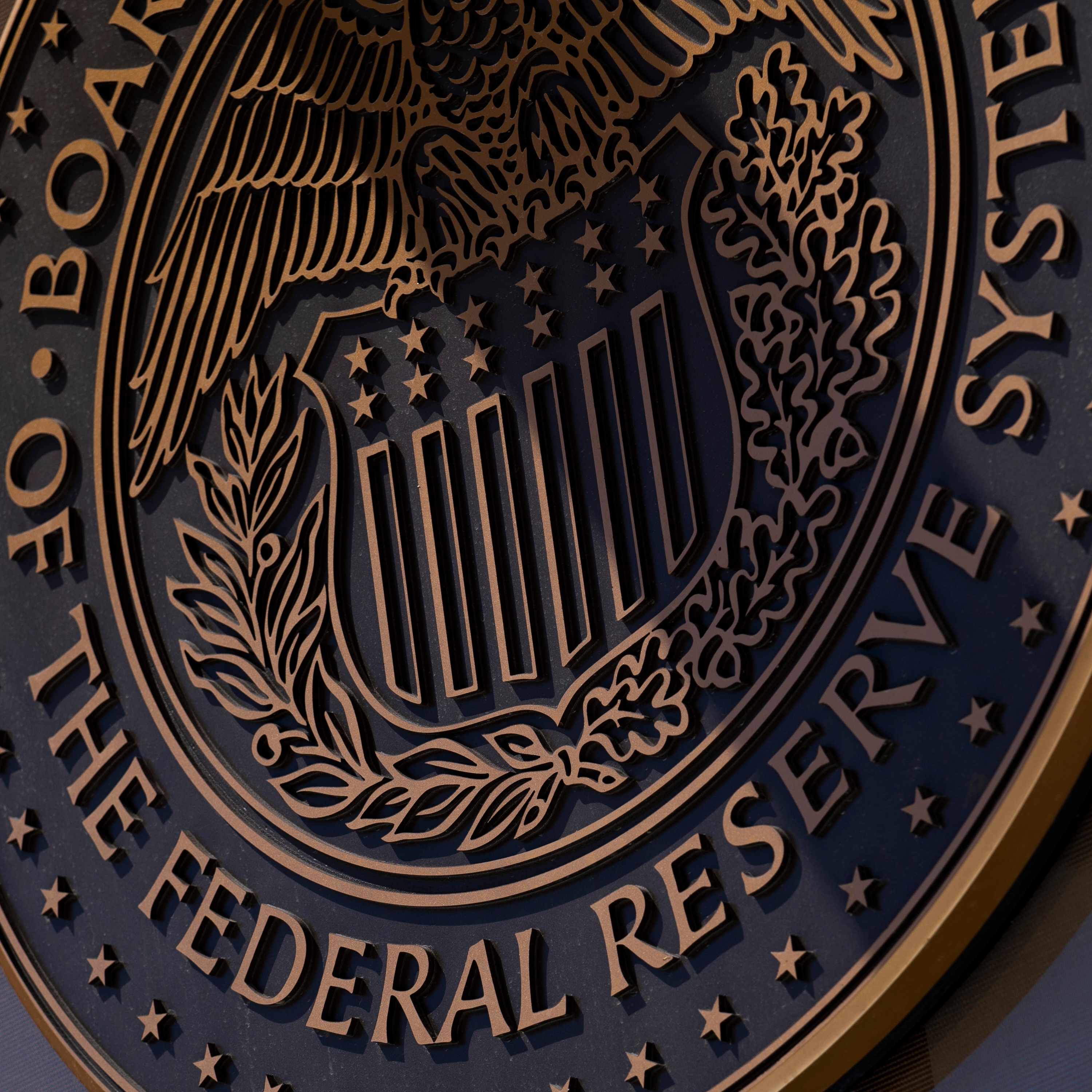
Post Reports
The Fed is expected to cut rates. Here's why.
00:21:45
Ahead of the Federal Reserve’s expected cut to interest rates, we explain how the U.S. economy is doing.
Loading summary
Transcript47 lines
- [00:00]
Asma Khalid
America is changing and so is the world.
- [00:04]
David Lynch
But what's happening in America isn't just the cause of global upheaval. It's also a symptom of disruption that's happening everywhere.
- [00:12]
Asma Khalid
I'm Asma Khalid in Washington, D.C. i'm.
- [00:15]
David Lynch
Tristan Redman in London. And this is THE GLOBAL story.
- [00:19]
Asma Khalid
Every weekday, we'll bring you a story from this intersection where the world and America meet.
- [00:24]
David Lynch
Listen on BBC.com or wherever you get your podcasts.
- [00:32]
Asma Khalid
The economy has been, well, weird these last few years. There was the pandemic that caused a recession. Then there was really high inflation. These days, the economy has gotten better, but to many Americans, it still feels kind of unstable.
- [00:50]
David Lynch
If the economy were a car that we were driving down the highway, it would still be motoring along. Things would be good. But there's a warning light on the dashboard.
- [00:59]
Asma Khalid
David lynch covers trade and globalization for the Post.
- [01:03]
David Lynch
And the warning lights are that on both jobs and inflation, there are reasons to worry.
- [01:12]
Asma Khalid
These warning signs are expected to drive a big policy change. Tomorrow, the Federal Reserve, the U.S. s central bank, is expected to lower interest rates. From the newsroom of the Washington Post, the this is Post Reports. I'm Colby ekowicz. It's Tuesday, September 16th. Today we talk to David about how the economy is doing, and he explains why the Federal Reserve is taking action, something President Donald Trump has been pressuring the Fed to do for months. David, hi. So thrilled to have you back on.
- [01:53]
David Lynch
Happy to be here.
- [01:54]
Asma Khalid
David, help me understand the economy right now. So to continue with your car metaphor, you mentioned there are two warning lights going off on two big economic indicators, job growth and inflation. So to start, why are these two things worrisome right now?
- [02:11]
David Lynch
Well, job growth over the last four months has been pretty anemic, just an average of 29,000 jobs a month. By comparison, in December last year, 323,000 new jobs were created. Inflation is nowhere near as bad as it was at the worst of the post pandemic economy under Joe Biden when it hit 9.1%, I think. But it's been ticking up ever since April, steadily a tenth of a percent at a time and is now at about 2.9% a year. And some prices are really noticeably higher. Things at the grocery store that you'd see every day, eggs, coffee, ground beef. And so consumers don't like that.
- [02:52]
Asma Khalid
So let's break each one down a little bit. So let's start with unemployment and the job numbers. How hard is it to find a job right now?
- [03:01]
David Lynch
Well, what Americans are telling pollsters is that they're very pessimistic about their chances of finding work. Even if you're fortunate enough to have a job, trying to move to a better job is quite vexing at the moment. There just isn't the normal or customary dynamism in the labor market that we've grown used to. There are reasons to expect unemployment to continue ticking up a little bit over the next few months. You know, it's still quite low by historical measures, 4.3%. But it's been coming up a bit. And you don't want it up, you want it down. And it's partly because of demographics. We've got an aging society. And it's also partly a reflection of the President's crackdown on immigration because over the 2019 to 2024, I think period, migration into this was responsible for 88% of the growth in the labor force. Oh, wow. So the new bodies that we were putting to work were coming from somewhere else. And now the President's crackdown on illegal immigration, it has undeniably sealed our southwestern border. And the human flow that was coming across under the previous administration has dried up to essentially nothing. And that that means there are fewer bodies that we can put to work. They're not here spending money and driving demand. If you've got fewer people coming into the country, producers and consumers. Right. Imagine 10 guys come in from Mexico and they get jobs on a construction site. So they're workers, they're earning money. Well, they've got to go out to eat, they've got to go buy clothes. Well, you've subtracted that part of demand, too. If they're not here, they're not spending at the restaurants, they're not buying the clothes at Walmart. So that's a missing link.
- [04:56]
Asma Khalid
You brought up immigration. So let's talk a little bit more about other Trump policies that might be driving this jobs picture. What else is making it harder for Americans to get jobs or keep jobs?
- [05:09]
David Lynch
Well, tariffs have been the story of the year in a lot of ways. And of course, remember that a tariff is just a fancy word for a tax that the government puts up on imported products. And initially back to April, when the President on his so called liberation Day, rolled out these historic tariffs. April 2, 2025, will forever be remembered as the day American industry was reborn, the day America's destiny was reclaimed, and the day that we began to make America wealthy again. Markets went crazy for about a week and the fears were this was going to lead to an immediate price spike. And turmoil in the markets and who knows what in the economy. And it hasn't played out to be as dire an outcome, at least initially, as many folks anticipated. But one area that's interesting, given the president's focus on it, is manufacturing. President Trump is intent on bringing about a manufacturing renaissance in this country, and that's certainly what his tariffs are aimed at encouraging. And yet manufacturing employment is down by 41,000 since February. That's not the direction you want to go. The other area that's a function of government policy is federal government employment, which is down about 97,000 over the course of the year. Of course, that reflects the Elon Musk led Doge Initiative, the Department of Government Efficiency, which led to layoffs. And state government employment is down a little bit as well. And that's an area to keep an eye on, because one consequence of the president's signature tax legislation is going to be tougher times for state governments, and they are required to balance their budgets, unlike the federal government. So if the state governments find themselves, as they will in the wake of this legislation, with additional financial responsibilities for some health and social programs, that's likely to lead to additional layoffs there.
- [07:17]
Asma Khalid
David, let's switch gears now and talk about inflation. How bad is it right now? You said it's starting to tick up. I mean, I thought that inflation was starting to ease after prices had risen so much during and after the coronavirus. So what's going on there? Why are they ticking back up again?
- [07:34]
David Lynch
Yeah, well, you're right. They have definitely eased over where we were a couple years ago, remember, during the supply chain disruptions of the pandemic, we just couldn't get our hands on the stuff we normally get our hands on. And as a consequence, prices spiked. At the same time, the Biden administration had ramped up spending on a lot of programs that helped make that recovery from the pandemic recession a much faster and more robust recovery than what followed the 2008 crisis. It took six years after 2008 to get employment levels back up to where they had been. It took only two years in the pandemic. So that was a big success. But we paid for it a little bit with higher prices. Fast forward. So, yeah, it's come down quite dramatically. But then it started going back up again from April. And I think of the public's reaction to inflation a little bit like having a bad bruise on your shin. You know, if you've got a bad bruise on your shin, inevitably it feels like you'll start bumping that leg into everything you pass, and you may just hit it a glancing blow, but because it's already, already bruised, boy, it hurts like hell. And I think that's how people are now about prices. 3% inflation, which is around where we are, 2.9%, but call it 3%. 3%'s a hell of a lot better than 9. But people, everything seems expensive because people still remember, gee, my favorite six pack used to cost $9. Now it costs $12. What the hell happened? Right? And that kind of reaction, and it takes a long time to get away from that.
- [09:16]
Asma Khalid
Then. What has the Trump administration said about the state of the economy right now? Some of the things you've mentioned, like tariffs, for instance, are some of the President's signature policies that were supposed to turn the economy around.
- [09:28]
David Lynch
And I think the White House would also say, look, this is early days. We, the White House told you that we were going to change the economy. And the President did promise that. He promised that his tariffs would incentivize domestic production, more manufacturing, and this was gonna take time. And Scott Besant, the Treasury Secretary, said the economy would have to go through what he called a detox period as we weaned ourselves off a reliance on the public sector for creating jobs and got the private sector energized. So their view would be, you know, this is still the preseason, and next year you're gonna see the payoff. The President himself has said six months to a year from now. Two things I would say about that. A, it could be true. B, even if it is true, one thing we learned, I think, from the Biden experience was telling people to be patient with things they don't like is not a great political strategy. The Biden administration spent a lot of time talking about inflation being transitory, being the function of the supply chain problems during the pandemic. And even to the extent that that was largely correct, people don't like being told that if you're unhappy in the moment, you'll be okay in six months or a year from now. And we're starting to see these concerns pop up in the polls. Fox News had a poll late last week, and 52% of the people responding said that they think the Trump administration policies have made the economy worse, not better. The midterm elections are just 14 months away, and that kind of atmosphere, that kind of environment could be lethal in a political sense, and certainly not one that the White House wants to carry into November 26th.
- [11:20]
Asma Khalid
After the break, how these job and inflation numbers are driving the Fed to make a big change this week. We'll be right back.
- [11:39]
Quince Ad / FirstNet Ad Voice
Fall is in full swing, which means it's the perfect time to refresh your wardrobe with pieces that feel as good as they look. Luckily, Quince makes it easy to look polished, stay warm and save big without compromising on quality. Quince has all the elevated essentials for fall think 100% Mongolian cashmere starting at $50, washable silk tops and skirts and perfectly tailored denim, all at prices that feel too good to be true. I've tried the cashmere and I can tell you nothing has ever felt so soft. And lately I've been eyeing their wool coats. They look designer but cost a fraction of the price and the quality just as good, if not better. Because Quint's partners directly with ethical top tier factories. They cut out the middlemen so they can deliver luxury quality pieces at half the price of similar brands. Keep it classic and cozy this fall with long lasting staples from quints, go to quince.com reports for free shipping on your order and 365 day returns. That's quinc.com reports to get free shipping and 365 day returns. Quince.com reports to first responders every second counts. Firefighters, paramedics, law enforcement operators and 911 operators need to communicate instantly. And that's why FirstNet exists. Born out of the lessons of 911 and authorized by Congress, FirstNet is the only network built with and for first responders. It's a unique public private partnership with the FirstNet authority making sure America's first responders always have priority access, whether in the heart of a big city, a rural county or a remote territory. During natural disasters, major storms or large scale events, first responders know they can count on FirstNet to keep them connected. Even when other networks are congested or unavailable. FirstNet is more than a network. It's a commitment to first responders, a promise that America's public safety always comes first. FirstNet built with AT&T. Learn more@firstnet.com PublicSafetyFirst.
- [13:44]
Asma Khalid
So David, as we've discussed already, you know, President Trump ran on improving the economy. That's why a lot of people voted for him in 2024. But again, everything that you've laid out so far, the economy is not improving very much. So what do experts who follow these indicators say is gonna happen in the economy?
- [14:04]
David Lynch
Yeah, in general, I think the expectation is for continued growth. There are some people on Wall street, as there always are, who anticipate a recession. And just a reminder that a Recession is when we have two quarters in a row where the economy shrinks rather than grow as we'd like it to. Now, this year, we had a bad first quarter, but we had a good second quarter. And by the end of the year, some of the economists that I've been talking to expect that we'll be growing at an annual rate of around 1.5%, which is good, but not great. Now, if it were to slow much below that, you'd be in a position where it might not feel all that different from a recession. In other words, it wouldn't be great.
- [14:49]
Asma Khalid
I mean, one thing that Trump has said about, you know, how he could rev up the economy maybe more quickly, is for the Federal Reserve to cut interest rates. So before we get to whether or not they're going to do that, can you just explain briefly how does that help the economy if the Fed were to do that?
- [15:06]
David Lynch
Yep. So think of the interest rate as the price of money.
- [15:13]
Asma Khalid
Okay.
- [15:13]
David Lynch
Okay. Everything in the economy has a price. My phone, my glasses, your laptop. Money has a price. If you need money as a consumer, you want to get some money to go buy something, you can go to the bank and take a loan, and you'll pay the bank a price for that money. And that price is the interest rate.
- [15:32]
Asma Khalid
Right. Most commonly with a mortgage, probably with.
- [15:36]
David Lynch
A mortgage, with an auto loan, home equity loan. And so when the Fed cuts itself main, what's called the policy rate, but we'll just call it the interest rate, that affects the price that banks charge or credit card companies charge consumers for money and charge businesses for money. So that makes it easier for you to get a loan. It makes it easier for a business to get a loan so that they can expand and then hire some people. So you think of that being replicated all across the country. Lots more consumers going out borrowing money that they then turn around and spend at a business. A business decides, hey, I've got a successful restaurant. Maybe I'd be even more successful if I extended my patio. So I go to the bank and I borrow some money, and I do that. Now I hire some more guys so they have more money to spend. So the hope is that you make money cheaper and more available, and that will encourage more economic activity. More, more jobs will be created, more wealth will be created. That's the theory of the case.
- [16:40]
Asma Khalid
And why has the Federal Reserve not done this yet?
- [16:42]
David Lynch
Well, the Fed has two main responsibilities. What's called the dual mandate. Congress gives them this. Congress set up the Fed. Congress says, these are your two Goals. You've got to worry about full employment, making sure everybody who wants a job's got one. And you've got to worry about price stability. Meaning what? The Fed defines that as is 2% annual inflation. So every year prices go up 2%. That's okay, and we can live with that.
- [17:11]
Asma Khalid
And we're a little bit above that right now. Right?
- [17:13]
David Lynch
We're at about 2.9 at the moment and probably headed a little bit higher. And that makes it hard for the Fed because you would say you've got the labor market weakening. So if all you had to worry about was the labor market, this would be a slam dunk to cut interest rates because the labor market's weakening. So let's make money more available so people create more jobs and that'll help the labor market. The problem is you still gotta worry about prices. And prices are already running a little bit too hot. So if you're encouraging more economic activity, you're gonna have more demand for stuff and demand will push prices up higher. That's why the Fed has hesitated. Now the Fed, as recently as last month, Fed Chairman Jay Powell emphasized that it looks like the balance of risks is changing in a way that makes the labor market the bigger concern at the moment. I think the Fed realizes that prices are still rising more quickly than they'd like to see. But some of that they think is probably related to the tariffs. And that won't, in the Fed's view, necessarily keep prices going up and up and up. It'll be kind of a one time thing and we'll get through that, we'll get to the other side and it'll normalize. So they're focused for the moment on the labor market, but they can't forget entirely about prices. So they're not going to go hog wild on cutting rates. The market expectation is that tomorrow at the conclusion of their two day meeting, they'll probably cut interest rates by a quarter of a percentage point. They may cut again in October, they may not. But most people expect them to cut again at least one more time before the end of the year.
- [18:59]
Asma Khalid
Okay, so like you said, the Federal Reserve, they're meeting this week and this is where they're going to decide whether they're going to raise lower, keep rates the same. And you're saying they're expected to cut rates maybe a little bit. And what would that little bit of a cut door? It doesn't seem that much.
- [19:16]
David Lynch
It doesn't seem that much. But I say all the time life has lived at the Margin marginal impacts across a $30 trillion economy over time can eventually make some difference. And this is not going to be the full cut. As I said earlier, they're expected to move two or three times before the end of this year, if all goes according to plan, and then additional cuts again next year. So this is the beginning of what's expected to be a continuing process.
- [19:49]
Asma Khalid
Is the idea, David, that if you do just a little bit at a time, it should maybe slow inflation, slow the price increases, or maybe you do it a little bit at first and see what that does to the prices and then.
- [20:01]
David Lynch
Okay, it's more that you don't, you know, you'd rather, if you're going to take a shot at tequila, you should do them one at a time and space them out, not guzzle the whole bottle.
- [20:11]
Quince Ad / FirstNet Ad Voice
Yes.
- [20:11]
Asma Khalid
Okay. I mean, Trump has been asking the Federal Reserve to do this for what, months now? Right. And so if the Fed does decide to slash rates this week as expected, is it going to look like they're caving to pressure from the White House when they're supposed to be? Right, this independent entity that's not cowed by political pressure.
- [20:33]
David Lynch
That's right. The central bank is supposed to be and generally has been independent of direct, explicit political influence. President Trump has disregarded that norm as he's disregarded many norms and has been calling for a 3 percentage point cut in rates. So not a quarter of a point, but three points, which there is no economist outside the White House who I'm aware of who supports that. That would be the sort of action that if alien invaders from Mars landed and disrupted our economy, you'd probably do a 3 percentage point cut. And it's also in conflict. The president sort of simultaneously says the economy's in great shape and we need what would be emergency level rate reduction. The sentiment in the investor community is sufficiently supportive of a rate cut that going by a quarter of a point this week would not be seen as a response to political influence. Because I think the Powell led Fed has generally hewed to looking at the data and acting on the data. There are plenty of people on Wall street who say, okay, look, we're seeing lots of signs of weakening in the labor market. You've simply got to respond to that. So I don't think if it's just a quarter of a point, even if it's a half a point, I don't think it'll be viewed as a political move.
- [22:01]
Asma Khalid
So, David, to sum all this up, we might see a slight rate cut this week. Inflation is a little bit higher than we'd like, but not crazy. The job market is eh. Could we expect more growth in the coming months if in fact we are getting these cuts?
- [22:18]
David Lynch
Yeah, the cuts work with sort of, I think the phrase is long and variable. Lags is the customary term. And what that means is it just takes a while. Think of this as like medicine for the economy. You know, if you've got a really bad sinus infection and you start taking antibiotics, you don't instantly feel better. Right. It takes some time for the medicine to get in there and do its work. Same thing with this making the money more available, less expensive. It takes time for that to filter through the economy, for consumers to notice, for businesses to notice, and eventually that starts to have effects. But it'll be months to a year before a rate cut is fully 100% working its magic.
- [23:11]
Asma Khalid
David well, thanks so much as always for coming on and explaining this to us. Appreciate it. David lynch covers trade and globalization for the Post. He also just wrote a fascinating new book. It's called the World's Worst how the Globalization Gamble Went Wrong and what Would Make It Right. We'll put a link to his new book in our show notes. That's it for Post reports. Thanks for listening. If you're looking for the latest updates on the big news of the day, check out our morning News briefing. THE Seven we bring you the seven stories you need to know about every Weekday morning by 7am you can listen to it wherever you listen to podcasts. Today's show was produced by Laura Benshoff with help from Lucas Trevor. It was mixed by Sam Baer and edited by Ariel Plotnick. Thanks to Jen Liberto. I'm Cole Bickowicz. We'll be back tomorrow with more stories from the Washington Post.
- [24:20]
Washington Post Subscription Promo Voice
You listen because you know the power of good journalism and the Washington Post is there for you 24 7. When you become a Washington Post subscriber, you get exclusive reporting you can't find anywhere else. You also get sharp advice, columns, delicious recipes, table TV and music reviews, and so much more. Right now, you can get all of that for just $4 every four weeks. That's for an entire year. After that, it's just $12 every four weeks. And you can cancel anytime. Add to your knowledge and discover all the Post has to offer. Go to washingtonpost.com subscribe. That's washingtonpost.com subscribe.