← Post Reports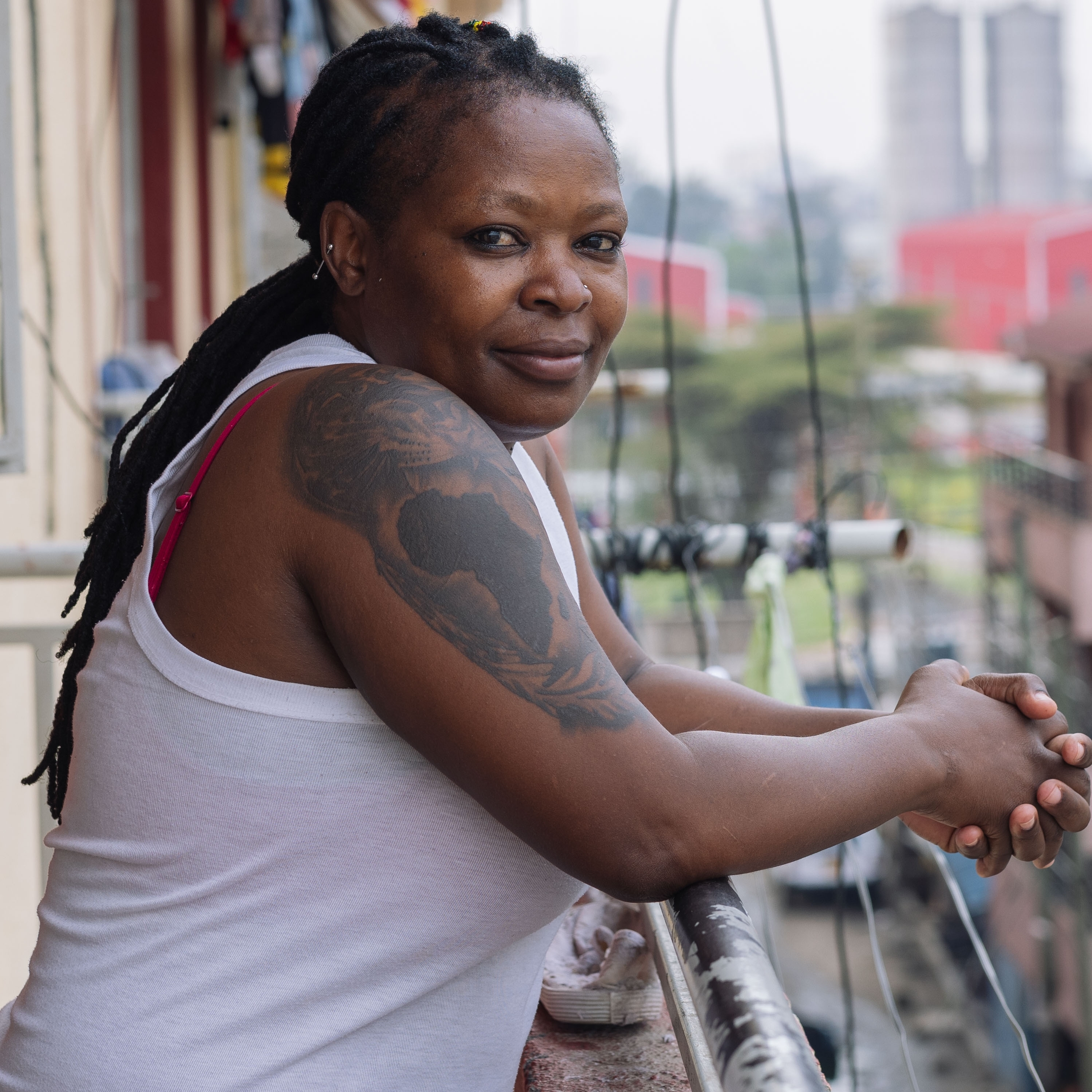
Post Reports
The global fight against HIV/AIDS, in chaos
00:31:14
Shakeups in U.S. foreign aid have upended the global fight against HIV/AIDS — one of the world’s most serious infectious diseases — and the lives of mothers and children living with HIV.
Loading summary
Transcript104 lines
- [00:00]
Cascade Natural Gas Representative
Cascade Natural Gas believes a warm home, hot water and natural gas energy should be available to everyone. That's why Cascade established the Oregon Low Income Bill Assistance and Energy Discount Programs. These programs provide income qualified applicants a discount on their monthly bill and if needed, help with past due balances. Qualifying for assistance is easy by calling Cascade or any of our partner community action agencies. Get complete bill assistance info@cngc.com help.
- [00:34]
Colby Ekowitz
So we're sitting here and Mary, you've just taken your kids to school. You've been trying to get them to school like, but they keep coming back. What is the issue?
- [00:42]
Mary
The issue is that I don't have the school fees, the money they want.
- [00:46]
Katherine Horold
This is Mary. She's a former sex worker in Kenya. She's speaking with the Post Nairobi correspondent Katherine Horold. They're talking about her current financial situation and why she doesn't have enough money to pay school fees for her kids.
- [01:00]
Mary
I don't have a job right now, so I have to struggle here and there to find the school fees. But the issue here is money.
- [01:08]
Katherine Horold
She lives in the capital Nairobi. And Catherine says that until recently, Mary had been working in HIV outreach in her community.
- [01:16]
Colby Ekowitz
She's one of the people that has been trying to change things for the better. She has been trying to educate her community about the dangers and about the treatment, how to protect yourselves, what to do, how to live positively. That's what she calls it.
- [01:30]
Katherine Horold
Mary's work received funding from USAID, the U.S. agency for International Development, which delivers billions of dollars of life saving food, water and medical aid to people around the world.
- [01:43]
Colby Ekowitz
You know, she was just scraping by. She got about $100 a month stipend from this program that she worked for doing HIV education outreach. You, you know, they were hanging on by their fingernails, but they were hanging on.
- [01:57]
Katherine Horold
But then everything changed when President Trump took office in January, just suddenly, there was nothing there.
- [02:05]
Colby Ekowitz
They were just tumbling through thin air.
- [02:11]
Katherine Horold
On his first day in office, Trump signed an executive order pausing nearly all foreign aid. And pretty immediately, the money Mary and her family relied on stopped coming. On top of that, there were also disruptions to an HIV AIDS program that Mary and millions of others have relied on called pepfar, which stands for the President's Emergency Plan for AIDS Relief.
- [02:33]
Colby Ekowitz
This is globally recognized as one of the most successful health programs in the history of the world. And you know, it's been winning. And now we're definitely going to see some more victories by the disease. And that has already happened because of some of these interruptions.
- [02:51]
Mary
That's the Thing it is a death sentence.
- [02:56]
Katherine Horold
From the newsroom of the Washington Post, this is Post Reports. I'm Colby IKOWICZ. It's Monday, April 7th. Today, the Legacy of the U. S. Led fight against hiv, aids, its uncertain future under the Trump administration, and the life and death consequences for people like Mary. And just a warning, this episode includes references to sexual violence and assault. So please take care while listening. Katherine, hello.
- [03:29]
Colby Ekowitz
Hi there.
- [03:30]
Katherine Horold
You've been spending time with a woman named Mary in Kenya. And I should say that we're only using Mary's first name to protect the identity of her kids and their HIV status. And we just heard a little bit about what she's going through. But can you tell me more about her and why we're hearing from her? What is her backstory?
- [03:46]
Colby Ekowitz
So Mary is a hustler, and Mary is somebody who loves kids.
- [03:53]
Mary
I have eight kids. Four of them are not mine, they're not biological. I adopted them from their mother when she passed away.
- [04:02]
Colby Ekowitz
And Mary's somebody who cares about her community.
- [04:04]
Mary
I am an activist also. I advocate for the rights of sex workers and young women and women. I fight for their rights. So me and community, we are very connected.
- [04:13]
Colby Ekowitz
And she's a woman who has managed to build a life for herself and her family despite all these knocks that life has given her.
- [04:23]
Mary
My mom used to be a sex worker.
- [04:25]
Colby Ekowitz
Her mother was a sex worker who was murdered when Mary was 2 years old. She was raped when she was 13 and had her first child. She went on to have several more children. And then when a colleague of hers, a friend of hers, was murdered by a client, she ended up taking home those four children from the woman's funeral because nobody else wanted them. So she's always trying to help people.
- [04:50]
Mary
I have a lot of issues going on. I tackle them.
- [04:54]
Colby Ekowitz
She lives in a two room apartment with all these children, except for one who's at boarding school. It's pretty cramped, but, you know, you can see how much care she takes there. She set up a reading corner for them. She has a sign on the bathroom door, you know, sternly exhorting everybody to keep it clean. She's got a pile of school shoes in the corner for them. And the thing I love the most is she's got a little poem from her kids, tape top next to her mirror with a rose, a plastic rose. And I really like that.
- [05:25]
Katherine Horold
What does the poem say?
- [05:27]
Colby Ekowitz
It says, thank you for your parenting and we believe in you and we love you.
- [05:31]
Katherine Horold
Oh. So Katherine, you and Mary, you both live in Kenya, and I Want to try to understand the region a bit better. What is the situation like there and what stands out to you about Mary's neighborhood in particular?
- [05:47]
Colby Ekowitz
So Kenya is the most stable and prosperous country in East Africa and is also America's closest ally in Africa. Kenya is a country of a lot of contrasts. There's obviously these extremely high end luxury lodges where people come to look at rare animals and go on safari. But there's also neighborhoods in Nairobi like the one that Mary lives in where, you know, there's no paved roads just outside her house. The kids have to pick over puddles of sewage to get to school. It's very dangerous at night. You know, when her. Her gas ran out recently when she was trying to cook her kids a meal, and she had to venture out into the night with her pot to try and cook it on a neighbor's stove. It's really dangerous because there's gangs that hang around out there and there's not a lot of economic opportunities. So a lot of the women and some of the men do resort to sex work just to pay the bills, to feed their, um. A lot of the people doing the sex work are actually mothers trying to feed their children. So it's very common.
- [06:50]
Katherine Horold
And we heard Mary describe herself earlier as an activist and an advocate for sex workers and for women. What exactly does she do to support them and the community?
- [06:59]
Colby Ekowitz
She set up an organization called the Knight Nurses. And when she first saw me writing that down, she said very firmly, that's Knight with a K, because she's a fighter.
- [07:08]
Mary
I do empower female sex workers to negotiate and to get justice.
- [07:14]
Colby Ekowitz
Basically, she's the person that the sex workers call when they have a problem, if they've been arrested, if they're being held hostage by a client, which happens quite often if they're being robbed or threatened.
- [07:26]
Mary
And some of them sometimes are being arrested illegally. We also do follow up.
- [07:31]
Colby Ekowitz
The police call her when they find a body because they get murdered quite often. So everybody knows Mary. And several times while I've been with her, people have phoned her just asking for money, you know, to feed their kids or, you know, somebody needed a policeman bribed after they got arrested. Women needing health care for an emergency situation, you know, her phone never stops ringing.
- [07:57]
Katherine Horold
And I know she also does a lot of work in HIV prevention and care. I imagine HIV is pretty prevalent there where she is.
- [08:08]
Colby Ekowitz
Yes. So a lot of the sex workers have hiv and some of their older children do as well. But in recent years, most of the HIV positive mothers have managed to get medication that stops them from passing it on to their younger children. One of the children that Mary cares for has hiv, but Mary's been very effective at getting her medicated and supported with food.
- [08:34]
Katherine Horold
Yeah. Tell me a little bit about the medications that exist now for HIV that kind of helps keep HIV at bay and that are these life saving treatments.
- [08:45]
Colby Ekowitz
So HIV stands for the human immunodeficiency virus and that's a virus that attacks the body's immune system. And hiv, if left untreated, eventually develops into acquired immunodeficiency syndrome. And that's the most advanced stage. It makes a person much more vulnerable to infection. So really simple diseases, even the common cold, can kill you off. So the first line of medication, the antiretrovirals, which are usually called ARVs, those cost about 15 cents a day and they're very cheap, very widespread, and they can suppress the viral load so effectively that people don't pass the virus on anymore.
- [09:32]
Katherine Horold
And is it the type of medication that you have to take every day at the same time? It's like very important that you stay on a schedule.
- [09:40]
Colby Ekowitz
It is super important that you stay on a schedule because otherwise the medication can cease to be effective. You might have to go onto a different drug regime which is much more expensive or the virus can come back very quickly. So any break in this drug regimen is of great concern to people. HIV is transmitted through things like sex. It can be through mother to child when you're giving birth. But one of the great successes is that these drugs prevent mother to child transmission. And so that means if you're pregnant and you know you're HIV positive, they can give you drugs so that your baby can be born healthy.
- [10:23]
Katherine Horold
So there's been lots of pretty effective efforts to prevent and treat HIV AIDS in sub Saharan Africa by Mary and many, many others. And a lot of that has been through this program we mentioned earlier called pepfar. How did that get started?
- [10:39]
Colby Ekowitz
I mean, around the year 2000, you had a generation of people that were dying and so many more were infected. But when PEPFAR was created, you know, this immediately started driving down deaths. The US launched PEPFAR in 2003. It was the President's Emergency Plan for AIDS Relief. And that was the single largest public health initiative by any nation in the world aimed at a disease. Seldom has history offered a greater opportunity to do so much for so many. It was a bipartisan program that was introduced by George W. Bush. This comprehensive plan will prevent 7 million new AIDS infections, treat at least 2 million people with life extending drugs and provide humane care for millions of people suffering from AIDS and for children orphaned by aids. And he really drove it forward and he called it a work of mercy. And that's really what it has been. It's saved people from becoming orphans. It's saved people from dying. It saved people from becoming infected because there was more testing and then there's more drugs available to the point where now, you know, the number of deaths, those numbers have dropped dramatically. And in Kenya, we had, I think, more than 150,000 people dying of AIDS the year that PEPFAR was founded. And then by 2023, that had dropped down to 20,000 deaths. So you've seen this program have an enormous impact. And one of the most amazing things is that the increases in testing and treatment were driving down death and infection rates so low to the point where HIV could be eliminated as a public health threat for most of the world by 2030. So, yes, there would still be people dying, there would still be people being infected, but really they were getting towards, you know, they were aiming towards 95% of people detected and 95% of people on treatment. And when you reach that point, you've really got the disease under control.
- [13:09]
Katherine Horold
After the break, how major disruptions to PEPFAR and other US Support are already affecting the global fight against hiv. We'll be right back.
- [13:30]
Robin Caban
I'm Robin Caban, and I'm the senior critic at large for the Washington Post. I write about politics and race and the arts. You know, there's so much information and misinformation coming at people. And for me, a critic's job is to really cut through that and attempt to direct people towards what is of value. Subscribers are definitely the most engaged, and they're the ones that I feel like I'm most often having a conversation with people who are really engaged in our culture and engaged in civic life in a way that can be really transformative. When you subscribe to the Washington Post, you support this kind of journalism. Learn more at subscribe.washingtonpost.com I'm Robin Givhan, and I'm one of the people behind the Post.
- [14:31]
Colby Ekowitz
I'm Molly Roberts. And I'm Drew Goins. Each Friday on Impromptu, we talk through the questions. We can't stop thinking, do we need to rethink how much we drink? Why are companies really asking workers to come back to the office? Does boycotting a business actually work? Should we quit social media? We're here when the news gets personal and the headlines hit home. Join Molly and me every Friday On Impromptu from Washington Post Opinions. Find impromptu wherever you get your podcasts.
- [14:59]
Cascade Natural Gas Representative
Cascade Natural Gas believes a warm home, hot water and natural gas energy should be available to everyone. That's why Cascade established the Oregon Low Income Bill Assistance and Energy Discount Programs. These programs provide income qualified applicants a discount on their monthly bill and if needed, help with past due balances. Qualifying for assistance is easy by calling Cascade or any of our partner community action agencies. Get complete bill assistance info@cngc.com help.
- [15:34]
Katherine Horold
So Katherine, this all brings us to the current moment. President Trump takes office and issues a series of directives that upend foreign aid, including an executive order within hours of taking office. What exactly did that order do and what was the thinking behind it?
- [15:49]
Colby Ekowitz
So that executive order put a 90 day freeze on nearly all global aid, including PEPFAR. And President Trump said that the reason for that freeze was they wanted to make sure that American taxpayers money was being spent properly. And there were a lot of allegations that were made that were never really substantiated or turned out to be completely false. Like this allegation that the USAID spent $50 million on condoms in Gaza. We identified and stopped $50 million being sent to Gaza to buy condoms for Hamas. 50 million. And you know what's happened to them? They've used them as a method of making bombs, which was completely untrue, but was repeated by members of the administration for weeks after it was thoroughly debunked.
- [16:43]
Katherine Horold
Yeah, I remember that. And then there was that moment where Elon Musk, the head of the Department of Government Efficiency, which we all know as doge, was asked about this because he had promoted that exact false claim on X.
- [16:54]
Mary
Well first of all, some of the things that I say will be incorrect and should be corrected. So nobody's going to bat a thousand. I mean any, you know, we will make mistakes, but we'll act quickly to correct any mistakes. So you know, if the. I'm not sure we should be sending $50 million worth of condoms to anywhere, frankly.
- [17:14]
Katherine Horold
So Katherine, getting back to your reporting in Kenya, what exactly has been happening on the ground there as a result of this shakeup in foreign aid and PEPFAR funding?
- [17:23]
Colby Ekowitz
Clinics were shut, doctors were sent home, people distributing the medicine were sent home. Outreach workers stopped going to schools or places where there were vulnerable people.
- [17:37]
Katherine Horold
I mean did they make any exceptions to the funding freeze?
- [17:41]
Colby Ekowitz
So there has been efforts to restore some of this programming. On January 28th, the US Secretary of State said that life saving programs should continue. The US Secretary of State issued a waiver on the Pause for life saving humanitarian assistance. During the 90 day period of review, the White House Press office said in an email to the Post that programs serving 85% of people who benefit from PEPFAR were up and running again and that payments had been made to unblock, quote, the most critical bottlenecks. But that's not what my reporting found. Some big programs are still frozen, like those supporting HIV positive orphans, and others are struggling to restart because so many of these programs are interconnected. So some USAID PEPFAR programs were frozen and then were given a waiver because they were considered life saving. But the people that were supposed to distribute the money had been sent on Le. Some NGOs were granted waivers for some work, but then the other people that they were working with didn't get waivers. So you might have a clinic that was authorized to open, but nobody being paid to go there. It's been so sudden and so unpredictable that nobody has any idea what's going to happen next.
- [19:10]
Katherine Horold
Okay, so let me make sure I'm understanding. So, first, the Trump administration froze nearly all, all foreign aid. Then Secretary of State Marco Rubio issues some exemptions, including for certain HIV and AIDS work. But even when some of that funding was, in theory, restored, there was so much damage to the other parts of the system that it was basically already paralyzed.
- [19:32]
Colby Ekowitz
The problem was, by then, the payment mechanism had been dismantled. So while you might be granted a waiver to continue your work that would exempt you from this funding freeze, there was no way to pay you. There was so much confusion over their implementation. Sometimes you might get a waiver, for example, to open a clinic, but not one to pay the staff that were supposed to be coming there or provide the medicine. It was a bit like putting an ax through the bottom of a boat and then saying, well, you're welcome to use this boat to cross the river. It just doesn't really work like that. You're going to sink halfway across. And unfortunately, that's what was really happening.
- [20:09]
Katherine Horold
So, Katherine, let's go back to Mary. What has changed for her since the Trump administration put the freeze on this funding?
- [20:20]
Colby Ekowitz
Well, most of her income came from doing this outreach to vulnerable communities.
- [20:26]
Mary
All of us who are told not to go back to work, so we are not working. It just stops there.
- [20:33]
Colby Ekowitz
So obviously her income stream has been cut. She can't pay the rent. She's been in hiding for the landlord for the last two months. Her kids have been thrown out of school because she can't pay their school fees. I've walked with her to school in the mornings and seen the teachers turn them away. She is struggling to feed them. You know, she might be able to make a meal just of porridge sometimes. And the HIV positive girl that she cares for has really been struggling because she's scared of dying.
- [21:07]
Katherine Horold
So is she not on her medications currently? Is she able to take them?
- [21:11]
Colby Ekowitz
So she is on her medications, but if you're used to getting three months of medication and then suddenly with no.
- [21:20]
Mary
Warning, they tell you now she was given one month. Now it is like a death sentence to the children and the women who are taking the RVs.
- [21:29]
Colby Ekowitz
The Americans have stopped funding this program. And you can only have a month. And then you get down to your last couple of days, you might be scared. And I know that they have been SC that if you go to the clinic for your refill, that refill isn't gonna be there. Because this was so completely sudden that there's been no opportunity for the government to plan and get extra funds to cover this kind of medication. Nobody knows how much that they actually have left.
- [21:56]
Katherine Horold
That sounds like a harrowing situation to be in for Mary.
- [22:02]
Colby Ekowitz
I think it's particularly scary for her. Cause she's always really done her best to protect her children. And this is something that she can't protect them from. And she's around, you know, from clinic to clinic, you know, trying to wheedle or beg or cajole doctors into giving her extra pills.
- [22:20]
Mary
It is a tough situation because when you're going to other facilities to seek for the medication, they're telling you they are not welcoming people. Other new people, they have all refused.
- [22:33]
Colby Ekowitz
Because of this nationwide directive to kind of ration the medicine for now. Her 15 year old daughter is at boarding school across the country and she had to send her with only one month's worth of medicine, which obviously was running out. And so the girl stopped concentrating in class. Her teacher, who was the only one who knew her status, called Mary and said, you know, your daughter isn't doing any work now. And she says she's afraid of dying. So Mary had to find a way to get her some pills in Nairobi. And then how did you send it?
- [23:11]
Mary
With a bus.
- [23:12]
Colby Ekowitz
So that's more extra money?
- [23:14]
Mary
Yes. You have to. Yeah, you have to pay.
- [23:16]
Colby Ekowitz
And she managed to send them to her on a bus, which was an extra cost. But she had to confide in another teacher at the school. She didn't want the girl's status to be disclosed. There's a lot of stigma around hiv. And that teacher told other teachers and one Day, when the girl was not concentrating in class, one of her teachers said to her in front of her entire class, the teacher called her, and.
- [23:40]
Mary
She was not hearing the teacher calling her name.
- [23:42]
Colby Ekowitz
So she just said, why aren't you concentrating? Are you thinking about your HIV medication in front of all the other students?
- [23:49]
Mary
And it is so harmful.
- [23:54]
Colby Ekowitz
So now all the people in her school know about this.
- [23:57]
Mary
The classroom, of course, now the school, I believe, because gossiping is allowed.
- [24:02]
Colby Ekowitz
Wow. So now everybody knows her status, and.
- [24:06]
Mary
She'S totally devastated because everybody knows now you're living positive you're going to die next.
- [24:13]
Katherine Horold
Yeah. God. So the situation that Mary's facing, how common is this across Kenya? Have you been talking with other people who are also facing these similar challenges?
- [24:26]
Colby Ekowitz
Yes, unfortunately, so many parents and children are facing these kinds of challenges. I went with Mary to a clinic in her neighborhood, and we met a couple of ladies there. One, her name was Florence, and she was the cleaner there. And she and her eldest daughter are HIV positive because when her eldest daughter was born, she didn't get that medication that stops you from passing it onto your babies. Her three youngest are HIV negative, and she said her eldest daughter had been trying to comfort her by saying, you know, Mom, I know things are really tough right now and you've lost your job, but at least you know, if I die, you won't have to pay for food for me or for school fees, so you won't have to worry about that. And that's how she's trying to comfort her mom.
- [25:16]
Katherine Horold
I can't imagine, as a mom, like, hearing your child say that.
- [25:21]
Colby Ekowitz
She started to cry when she was saying that. Then she was saying, what can I tell her? I can't tell her it's gonna be okay because I don't know if it's gonna be okay or not. And this woman is still turning up to clean the clinic for free. She's been there for the last two months cleaning the clinic for free just to kind of get away from her kids and get a little bit of a headspace, and nobody's paying her, and she doesn't have anything to bring home for food.
- [25:47]
Katherine Horold
So what are some of these women doing now? Are they doing anything to make money?
- [25:53]
Colby Ekowitz
Well, some of them are trying to go back to what they know best, which is sex work. I met this lovely lady called Tammy in a clinic with Mary.
- [26:03]
Mary
I told her that I'm HIV positive.
- [26:05]
Colby Ekowitz
And she asked us not to use her full name because there's still a lot of stigma about living with HIV in Kenya. And she didn't want to be identified and she didn't want her children to be identified as well. She's 37.
- [26:20]
Mary
My work was dealing with the community like a field officer was talking with ladies and people who living with hiv. My work was mobilizing them to pick their drugs. Yeah.
- [26:32]
Colby Ekowitz
So how is your situation right now?
- [26:35]
Mary
Menstruation right now? I'm trying to. I had a lot of stress. Menstruation now is not good. I don't know if I will survive.
- [26:43]
Colby Ekowitz
She said that she had tried to go back to sex work and she couldn't get a client and then she couldn't go back home because she couldn't face her children to tell them that she had nothing to feed them.
- [26:53]
Katherine Horold
If these clinics aren't there, if people like Tams and Mary can't do the outreach that they've been doing, are we expecting to see the rates of HIV increase again?
- [27:04]
Colby Ekowitz
So there has been some modeling by UNAIDS that shows if all PEPFAR funding is cut, that the death rate will spike higher than it was 20 years ago, that it will be the worst it has ever been in terms of deaths and infections. It's active in 55 countries around the world. It supplies life saving medicine to more than 20 million people right now, including 560,000 children. So if PEPFAR was permanently halted, UNAIDS estimates that there would be an additional 6.3 million AIDS related deaths, 3.4 million AIDS orphans, 350,000 new HIV infections among children, and 8.7 million new adult infections by 2029. So that's just in the next four years. It doesn't look like all PEPFAR funding is gonna be cut. So hopefully, you know, we won't see it go that high. But, but we know certainly that it is going to jump now. How far it's going to jump, we just don't know.
- [28:17]
Katherine Horold
So, Catherine, has there been a push to restore these funds? Has there been any outcry that these funds have been cut?
- [28:26]
Colby Ekowitz
So, yes, I mean, there's been strong bipartisan support for pepfar. A lot of health advocates and a lot of lawmakers from both sides of the aisle have spoken out in support of it. And I think that's the reason why some programs did get waivers. We've also seen legal challenges to this executive order. The AIDS Vaccine Advocacy Coalition filed a lawsuit on February 10 against the Foreign aid freeze. The problem is, you know, these lawsuits have seen a lot of temporary stay orders, you know, that might last for a week. It's not really clear what's going to happen next. So basically the sort of the chaos continues and nobody knows what's gonna happen week to week.
- [29:12]
Katherine Horold
Katherine, I know that the Post has also reported that since the legal challenges you mentioned were filed, the Trump administration has moved to formally close usaid. And so I imagine there's likely going to be more challenges and more uncertainty. I think there might be some people listening who will wonder why is it the US's responsibility to maintain these programs and support these families across the globe? Does the Trump administration have a point, you know, that the US should scale back its support around the world?
- [29:39]
Colby Ekowitz
So I think that's a very broad question. So to what extent do we as humans have the responsibility to help other humans? This was perhaps one of the most important global health fights of our time and it was one of the most shining examples of American soft power, one of the greatest public health victories, you know, on par with the eradication of smallpox. I think one of the things that Mary's story also has shown us is that when you give somebody just a tiny little bit of help, like a little bit of respite, they can go a long way towards making their community and their country a better place. You know, so Mary had this little stipend and a little bit of food, and as a result of that, she was able to set up an organization that helped 700 people. She actually ran for local office as a local councilor in the last election and she lost. But she is out there organizing demonstrations, teaching people how to fight for their rights, trained herself as a paralegal. And the way that she was able to do that was with just a tiny little bit of help from the American government. And Kenya was well on its way to getting the disease under control. And now it might not be. The disease is going to cross borders. Sex workers are going to sleep with tourists. People whose medications are interrupted might develop drug resistant strains of the disease and pass that on. And those strains are much, much more expensive to treat. So the problem is that when you have a deadly disease, it does threaten everyone and it doesn't respect borders. And that's what Mary told me.
- [31:33]
Mary
HIV is not for African only. HIV is not for Kenya only. You should understand that.
- [31:44]
Katherine Horold
Katherine, thank you so much for joining us.
- [31:47]
Colby Ekowitz
Thank you.
- [31:50]
Katherine Horold
Katherine Horold is a Nairobi correspondent for the Post. That's it for Post Reports. Thanks for listening. If you're looking for the latest updates on the big news of the day, check out our morning news briefing. The Seven. We bring you the seven stories you need to know about every Weekday morning by 7am you can listen to it wherever you listen to podcasts. Today's show was produced by Ilana Gordon. It was mixed by Shawn Carter and edited by Lucy Perkins. Thanks also to Jesse Mesner Hage and Jen Amer. I'm Colby Ekowitz. We'll be back tomorrow with more stories from the Washington Post.
- [32:50]
Robin Givhan
Think about why you listen to podcasts. It's like having a friend who makes you think or can help you wind down right? Well, the Washington Post has a lot of people you can turn to at any hour. You can read the most important and interesting stories. We can help you cook something delicious, give you advice on a tricky friendship. Rave about a movie or book that you shouldn't miss. When you become a Washington Post subscriber, you have a companion for whatever part of your day needs it most. Get it all for just $4 every four weeks. That's for an entire year. After that, it's just $12 every four weeks. Cancel anytime. Go to washingtonpost.com subscribe. That's washingtonpost.com subscribe.