← Post Reports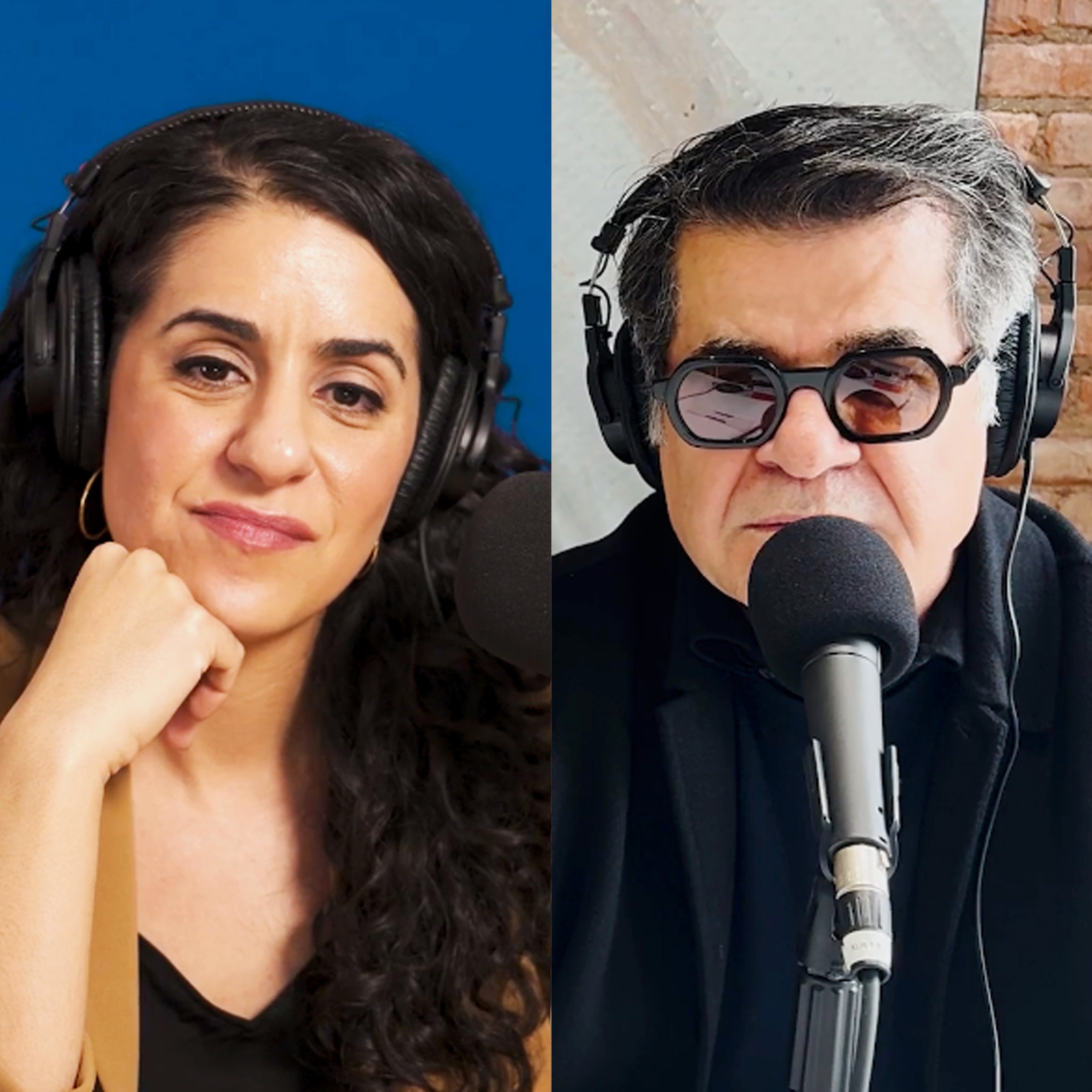
Post Reports
The Iranian director who risked his freedom to make his Oscar-nominated film
00:26:14
A conversation with legendary Iranian filmmaker Jafar Panahi on his latest Oscar-nominated film “It Was Just an Accident” and on being jailed and censored for his art.
Loading summary
Transcript38 lines
- [00:00]
A
I've been really looking forward to discussing your film. It was just an accident. But first, you've been making films for decades. You've been recognized on the international stage as a stalwart of Iranian cinema. You've also faced many obstacles, including imprisonment, house arrest, filmmaking bans, now a new prison sentence. In the face of all of these challenges, why are you so compelled to continue to make films?
- [00:35]
B
Because I know no other work.
- [00:41]
A
This is Jafar Panahi speaking to me through his Persian translator, Sheydha Dayani. I've been really eager to speak with Panahi. He's an acclaimed filmmaker who's been jailed and censored for his art in his home country of Iran. At one point, the the government banned him from making films for 20 years. It didn't stop him. Panahi is facing a new prison sentence in Iran after the release of his latest film called It Was Just an Accident. The film is about a group of former political prisoners who kidnap a man they suspect was their torturer, but they aren't completely sure it's him. Panahi did not have official permission to make this movie, so he had to shoot it in secret in Iran. Since the film's release, authorities in Iran have accused Panahi of propaganda activities against the system. They sentenced him to a year in prison. His lawyer is appealing. But while this film is being repressed back home in Iran, it's being seen and celebrated all over the world. On Thursday, it was nominated for two Oscars for Best International Feature Film and Best Original Screenplay. The film It Was Just an Accident was inspired by Panahi's and other Iranians real life experiences. In 2022, Panahi was imprisoned after he inquired into a fellow filmmaker's arrest. Tens of thousands of Iranians have been arrested and many tortured and some even killed in recent years, the result of harsh crackdowns by the Islamic Republic to anti government demonstrations. In recent weeks, those demonstrations and state violence have reached new levels. From the newsroom of the Washington Post, this is Post Reports. I'm Elahe izadi. It's Thursday, January 22nd. Today, my conversation with legendary filmmaker Jafar Panahi about his latest film, It Was Just an Accident. We talk about why he's willing to take such grave risks to make his art and why he's planning to return to Iran, no matter the consequences waiting for him there. I wanted to say hello and congratulations on your film. I connected with Panahi while he was at the film company Neon's New York City Office and we spoke earlier in the month, before Thursday's Oscar nominations and before the most recent developments in Iran. I want to now ask you a little bit about how you and your crew made this film. Because it was not sanctioned. Our audience should know that in Iran, the government has to sign off on a film project in order to get proper approvals. But you made your film in secret in Iran. Can you, without endangering anyone, share a little bit of how you were able to make this movie underground?
- [03:58]
B
You have to think about the fact that people who work with me or with films like this know what they're getting themselves into. They are very well aware of the challenges and of the prices that have to be paid, and they have accepted them. People who work in these types of underground films, they really don't need to be explained why they're there or what happens in the film. They tend to think to themselves that when the society decides to pay a price for something, they will do it collectively. For instance, women decide to leave their homes and take to the streets and protest the compulsory hijab. And as they go, and as they're still limited and still go, our crew members and actors also think that they would be doing the same sort of resistance, and why wouldn't they participate in a social movement?
- [04:56]
A
And I also understand, because I've read a little bit about how you were able to make this film. Some of the strategies that you used included, for instance, using a small crew to not attract a lot of attention. And I'm wondering if you can speak a little bit to the specifics of how does someone make a movie underground without the government really finding out?
- [05:21]
B
It might seem very difficult when you look at something from outside, it might seem almost impossible, but when you live somewhere, you will find the ways around all the challenges and difficulties, and you will really find a way how to escape certain limitations. When they put a lot of pressure on you, you also find a way on how to deal with that pressure and how to tolerate it. As we say in Persian, they throw you out the door, you come back from the window. So you will find the way. In order. And this is not just true about Iran. When you look at the history of the arts as a whole, you will see that there were places and periods in which there were many challenges, but art continued to exist because people found ways to exist to create it. We could even find easier examples. There are places in the world that are getting bombarded every day, but people still find a way to survive.
- [06:34]
A
Is there one example you can Provide as to how this film was made under these circumstances that you're describing that you are used to. You've made other films underground and in secret.
- [06:51]
B
Well, every film has its own challenges and circumstances, and you cannot have a formula that fits all. For instance, when we were making this is not a Film, they had given me a sentence that banned me from making films for 20 years. So I said, I am going to make a film and say, this is not a film. Or when they say I cannot make a film, I'm going to hide three cameras in a taxi and drive the taxi without anyone noticing that I'm filming and start telling a story.
- [07:30]
A
Yeah. And that was this 2015 film, Taxi.
- [07:35]
B
So it's really not difficult. You just have to find the way of how to do something.
- [07:44]
A
So you were in New York City at an awards ceremony when the news came out of authorities in Iran handing down a sentence of one year in prison for you and also a travel ban. Your lawyer is appealing this. You've been charged with engaging in, quote, propaganda activities against the state. I know you've said you plan to go back once the Oscars campaign is over. Why? And people are wondering, aren't you worried for your safety?
- [08:15]
B
To be honest, if they were to tell me that we're done with the campaign today, I would return exactly tomorrow. And the reason is that I know the place, I know the country, I know its people, the language, and the culture very well. And I don't know the language and the people and the circumstances outside Iran as well as I know what is going on. I have the sense of being alive a lot more there than I do here. I know how to enjoy life better over there than I do here. And when we went to Cannes and premiered the film, the same question was asked. Why are you going back to Iran? Aren't you scared? But I did go back to Iran because I'm from there, and that's where I know how to do things and how to live.
- [09:12]
A
When you made this film, did you anticipate that you would receive a punishment like this? And if so, why did you make it anyway?
- [09:23]
B
Not just about this film, but for every film that I made without a permit, I knew that there will be challenges and there will be consequences, and I continue to make them because I had accepted the price that I need to pay. And this is not just me. Everyone who works there and makes films without wanting to go under the censorship has accepted the challenges and the prices that need to be made. A lot of filmmakers are working this way a Lot of filmmakers, as we speak, are banned from leaving the country. Someone like Mohammad Nourizod is a documentary filmmaker, and he is in prison at the moment, and he's been in prison for years. Ali Ahmad Zodeh was making a film when his set was raided, and they took everything. And he still has to make payments of all the equipment that he had he was working with and were taken and confiscated. So these challenges are there. It's very difficult, but people have accepted that this is how things are, and people are still making films. You see that all these filmmakers are being suppressed, but the next day someone else comes and someone else starts making their films.
- [10:39]
A
Yeah, I just think people are astounded to hear the story, your story, and also these other stories that you're sharing and wondering, where do filmmakers and artists find their sense of strength and courage? Where do they call upon? What do they rely upon to push them to continue to do this work?
- [11:03]
B
When you are in pain and you have the sense that you need to speak, speak up, you don't have to have a particular sense of courage or extra energy. It is that pain and it is that suffering that automatically gives you the energy to go forward, and it is the circumstances that will dictate to you. You have to continue working in order to live. You have to have a motivation, and making films is the motivation that allows us to continue living.
- [11:40]
A
After the break, more of my conversation with filmmaker Jafar Panahi about his latest film. It was Just an accident and what an Oscar would mean to him. We'll be right back. Your films often focus on ordinary people. You often have non actors playing characters who are navigating everyday life, including repressive social forces. I know in previous interviews you've described yourself as a social filmmaker, not a political filmmaker, even though you yourself have publicly spoken about political matters. So why are the stories of everyday life the ones that you've committed your career to telling?
- [12:33]
B
Let's first have a definition of what it means to be a political filmmaker. When we have that definition, then it becomes clear why I call myself a socially engaged filmmaker. As far as I'm concerned, a political film means a partisan film. And it is a film that divides people and characters into good and bad. And in that division, people are either good because they belong to a political party or ideology, or if they are not bad, they don't belong to that political party or ideology. Socially engaged films do not really look at people based on their ideology or their thought as good or bad. Therefore, in socially engaged films, you will not see the film judging characters from the beginning. For instance, in this last film, you will see the character of the interrogator with a family. He's living his life. He even gets upset by hitting a dog. And throughout the film than his other aspects show themselves. But even at the end, you still allow that same character to say what he has to say, to say what happened, that he ended up where he did.
- [14:10]
A
I do want to now talk a little bit more about. It was just an accident. As mentioned, it's received many international accolades. And for listeners and viewers to know that this film follows a group of people from all walks of life who also happen to be former prisoners. And they end up kidnapping a man they believe is their former interrogator and tormentor. Except they aren't sure it's him because they were all blindfolded during those interrogations. Why is this the story that you wanted to tell right now?
- [14:50]
B
Because I lived in that particular time of history and in those particular circumstances, and I thought that I need to speak up about it. As we just discussed, I am a socially engaged filmmaker. So I get all my inspirations and the stories that I want to make from my society, from my circumstances, and from the context of in which I live. Then they remove me from my original living situation and they place me in another condition, meaning the prison. And I spend seven months there. And of course, those seven months are going to impact me and they're going to have an influence on me. So I keep thinking about what it is that I need to do, and I keep feeling the burden on my shoulder. And it's a burden that gets heavier by the day. And I have to do something about it. So I have to say, this is not a film that I wanted to make. The making of this film was sort of forced on me. It was put on me because this is the time that I went to prison. And therefore this is the time that I thought I need to make this film. If I had gone to prison 10 years ago, perhaps I would have made this film 10 years ago.
- [16:08]
A
Hearing you talk about your process, it's almost like filmmaking is your primary language. And you had to speak your language about what you experienced. And also the experiences of those who were imprisoned with you, what they went through.
- [16:30]
B
You can think of it as a profession, you can think of it as motivation. You can think of it as what you said being language. Filmmaking has all of these.
- [16:41]
A
You know, on the surface, this film seems to be about vengeance and forgiveness. But I know in other interviews you've said that the vengeance and forgiveness question are merely plot devices to keep the story moving. And actually the question at the root of this film is whether the cycle of violence will continue or stop. There's actually a scene where two of the characters, Hamid and Shiva, they're in the van and they debate how to treat this man they've kidnapped. They aren't sure it's their former interrogator. Hamid, the hot headed one, basically says, the man hasn't confessed, but on the grave of my mother, I swear I can get him to talk fast. We can move on with our lives. Shiva, the other survivor, said, how by using their methods. Hamid shoots back describing how they were treated in prison, saying, they hung us upside down for three days to get a name. We didn't see the light of day for three months. And you feel bad for them. Shiva says, no, but. Because they resorted to violence, we should too. How will this cycle ever stop? Why was this the question that mattered most to you?
- [18:12]
B
Because governments with such nature will never last. And there will be an ending point to all of them. And so the question that I had in mind was, what is going to happen afterwards? Is this going to continue? Is this cycle of violence going to bring itself into the next generation, next future, or is it going to be cut? And my question and my vision was about after the state or the government falls.
- [18:48]
A
That's so fascinating because that does feel like the question that's often missing when people are talking about turmoil in all kinds of contexts. Including Iran.
- [19:01]
B
Yes, because people tend to think of history periodically and they think of what's happening only in that particular time period. And they don't see, they tend not to see beyond it. Especially if you think about all the events that are happening in other countries, for instance, in this country, you want to think, what is it going to happen if the same events keep happening in the future?
- [19:30]
A
Yeah, yeah. You know, your films, including this one, they really make me feel like I'm in Iran as I'm watching it. It's remarkable. And you made this film after the Women Life freedom protests sparked by Mahsa Amini's death in police custody after being arrested for allegedly improper hijab. That refers to the strict dress codes in Iran that the country enforces on women. I was struck when I watched this film by how we see women in public without hijab or very loose hijab. Was that a choice that you made? How did you think about how you depicted women in this film?
- [20:13]
B
Yes, because socially engaged films show what Happens on the realistic level of the society. So for instance, before the Women Life Freedom movement, if I were to show women on the streets without hijab, I would not be showing the entire truth. And after the Women life freedom movement, if I were to not show women who don't have their headscarves on, I would again not be showing the entire truth. So socially engaged films are showing, or need to be showing the realities as they occur.
- [20:53]
A
I do want to ask you about humor. Some might hear the premise and the story of this film, think it's very dark, we're talking about very weighty themes. But there is humor in this film. For instance, this running gag with bribes, like the security guards asking for bribes. And did you think specifically about needing to incorporate humor into this film? Because my own experience is that humor is a part of Iranian culture even when things are very heavy and difficult.
- [21:27]
B
Yes, as you mentioned, there is humor in everyday life. There are painful things happening. And at the same time, people have smiles on and people do have their humor ongoing. And whichever of these elements you take away from a film, it deprives it of its realistic sense. But the reality is that I did want humor to be part of this film up until the last 20 minutes of the film. And I wanted to have humor so that the viewers could more easily follow the story and they could come up until the last 20 minutes. And in those last 20 minutes, I wanted them to experience that absolute silence and then be able to look at the story from another perspective. I want there to be some pressure on them so that it would let them go through certain senses and sentiments within. I wanted there to be a whole revolution within the viewers so when they leave the theater, they would still be thinking about the film. Plus, it really depends on where you see the film. Certain things in the film are funny in one place and they're not at all funny in another place. For instance, an Iranian viewer might not laugh at a certain scene in my teeth seem totally ordinary to them, But a non Iranian person might find it very funny. And I remember myself watching the film elsewhere outside Iran with certain audiences, and they would really laugh at certain points that I didn't understand why they're laughing.
- [23:15]
A
So it was just an accident. Has won many awards already. It received the top prize in Cannes. It's in the Oscars conversation. We're speaking early January before the Oscar nominations come out. But it's a favorite. And filmmakers are often asked, what does it mean to win such awards or to be nominated even for an Oscar, given everything We've discussed the difficult circumstances to make this film, the consequences you're facing, but also the story that it's telling. What does it mean and what would it mean for you for this film to be recognized in the Oscars?
- [23:56]
B
Well, of course, any success for any film is a very good sign for the filmmaker because a filmmaker makes films in order for the films to be seen and viewed. And success of a film brings curiosity for the audiences to go and see that film. And of course, that would be the best gift for a filmmaker for their films to be seen, because that's why filmmakers make films and for the films to be critiqued, for the films to be reviewed and for the filmmaker to know their weak points and their strengths and to assess themselves. It's not that the film will only be praised, but it's that different tastes of different viewers will come together and some will say, this doesn't have any value. And some will say, no, this is a very good film. But the filmmaker is able to bring all those viewpoints together and with their own beliefs and with their own perspective on cinema. Learn something from each of those reviews and continue working.
- [25:16]
A
Thank you so much. Thank you, Shayda Merci.
- [25:22]
B
Of course.
- [25:26]
A
Jafar Panahi is an award winning Iranian filmmaker and he was joined by his translator, Shaida Dayani. That's it for Post Reports. Thanks for tuning in. And if you want to watch this interview, you can because we filmed it, you can find it on our YouTube channel, Washington Post podcasts or we'll also include a link to that in our show. Notes Today's show was produced by Lucas Trevor, Joshua Carroll and Sam Baer, who also mixed it. It was edited by Ilana Gordon and Peter Bresnan with help from Rena Flores. Thanks to Neon for providing clips and photos from the film. It was just an accident. I'm Elahe Izadi. We'll be back tomorrow with more stories from the Washington. Wallet. Feeling light after the holidays, recovery starts with TikTok Slash and free Pick products, share the link and watch the price drop to zero. Download TikTok, search/free and start slashing today.
- [26:30]
C
Coffee Genius Here, most people see a busy cafe, but I see precision at every step thanks to Genius. From global payments transactions, instant inventory, precise operations in sync. Absolutely. Genius. From sold out crowds worldwide to managing the morning rush, genius keeps operations running smoothly.
- [26:51]
A
One Portado.
- [26:52]
C
Flawless pour, perfectly timed. Just beautiful. Big league reliability for any business. That's genius.