← Post Reports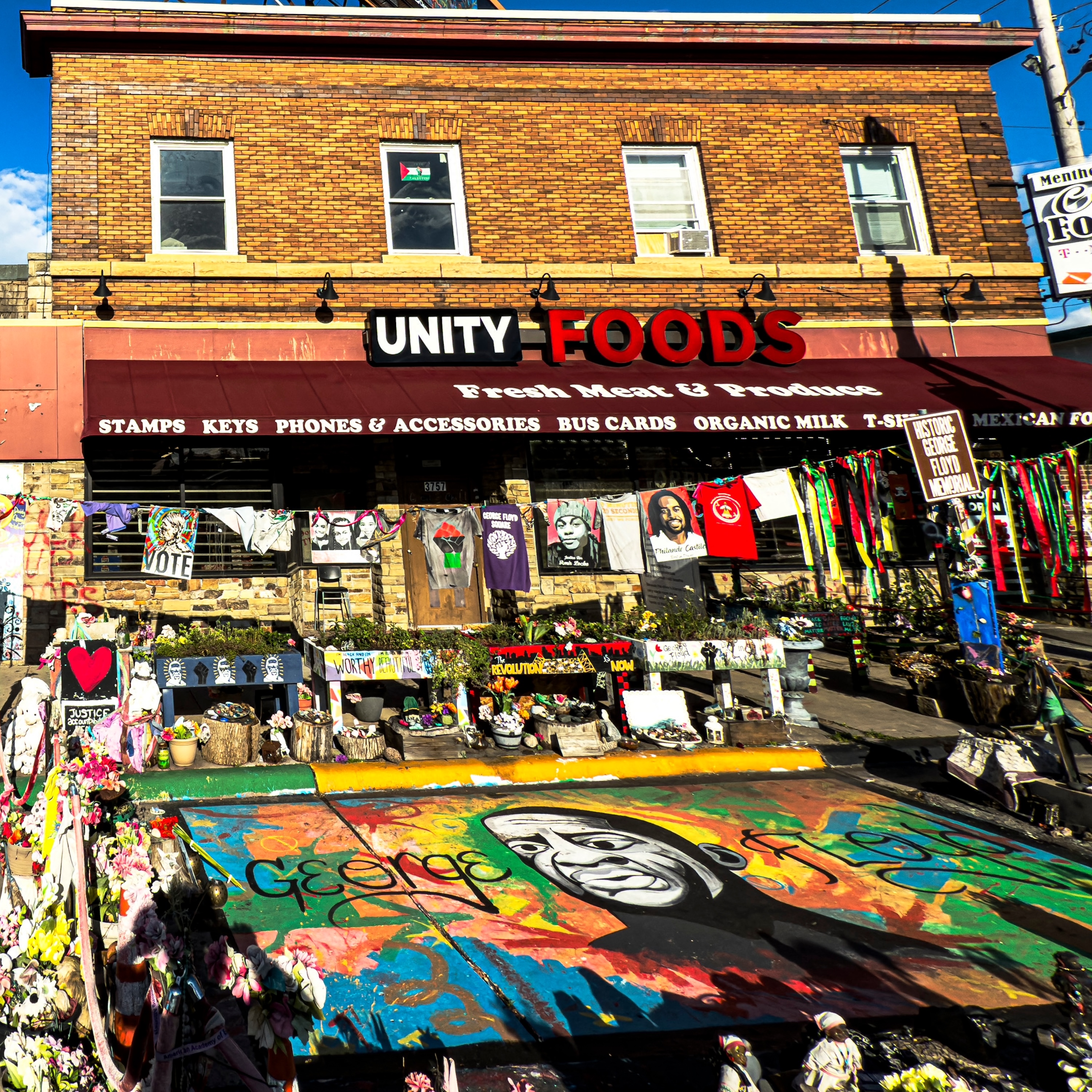
Post Reports
The life of George Floyd, revisited
01:05:37
Five years ago, a man named George Floyd was murdered by police officers in Minneapolis. A lot has — and hasn’t — changed since then. Today, we wanted to share an episode about who Floyd was, before he became synonymous with a movement.
Loading summary
Transcript232 lines
- [00:01]
Narrator
Building a business may feel like a big jump, but on deck small business.
- [00:04]
Ella Hay
Loans can help keep you afloat. With lines of credit up to $100,000 and term loans up to $250,000, OnDeck lets you choose the loan that's right for your business. As a top rated online small business lender, OnDeck's team of loan advisors can help you find the right business loan.
- [00:20]
Narrator
To fit your needs.
- [00:21]
Ella Hay
Visit ondeck.com for more information. Depending on certain loan attributes, your business.
- [00:25]
Narrator
Loan may be issued by Ondeck or Celtic Bank.
- [00:27]
Ella Hay
Ondeck does not lend in North Dakota. All loans in amount subject to lender approval. Hey there, it's Ella Hay and this is Post Reports Weekend. Five years ago, a man named George Floyd was murdered by police officers in Minneapolis. A lot has changed since then, and a lot hasn't changed. Floyd's murder sparked massive protests for racial justice around the country. There were calls for police reform, reparations, closing the racial wealth gap. But just five years later, it seems like the pendulum has swung back the other way. President Donald Trump is dismantling diversity and inclusion initiatives. Just this week, the Justice Department said it was abandoning police reform deals it had with Minneapolis and Louisville cities where there were high profile killings by police officers. In light of all of this and on the anniversary of George Floyd's death, I I wanted to share a really.
- [01:27]
Martine Powers
Special episode of Post Reports.
- [01:29]
Ella Hay
It was made in the fall of 2020, and it's called the Life of George Floyd. My co host, Martine Powers, and our colleagues here at the Post looked at who George Floyd actually was. His name had become synonymous with the movement, but he was also a person and his story can tell us a lot about being black in America. I hope you find this episode as revealing and moving as I did.
- [01:57]
Narrator
I just want to say, man, that I got my shortcomings and my flaws and I ain't better than nobody else. But man, the shootings that's going on, man, I don't care what hood you from, man, where you at, man? I love you and God love you, man. Put them guns down, man. That ain't what it is, you know. God bless, man, and y' all hold your head up, man. You got parents out here sending plates, man, trying to bury their kids, man. Think about it, man. Love y' all.
- [02:25]
Martine Powers
When I heard this recording of George Floyd a couple weeks ago, I realized that it was actually the first time that I'd ever heard his voice. I mean, not his voice in the awful video that captured his death, but just him talking in A regular way.
- [02:41]
Narrator
Good Floyd.
- [02:43]
Ella Hay
Good Floyd.
- [02:44]
Martine Powers
And of course, I've heard his name so many times chanted at so many protests over the last four months, and I've seen his face everywhere, but I haven't actually heard him. And it feels like that embodies one part of the tragedy of George Floyd's death. There is the tragedy of how he died, the horrible image of a police officer kneeling on his neck. There is the tragedy of what his death represents, so many other unarmed black Americans killed by police, and the system of racial injustice that allows it to happen. But then there's the simple tragedy of the fact that this guy named George is both infamous at this point, but still not really known at all by anyone except the people who encountered him during his life. That the symbol of George Floyd has somehow overshadowed the actual person. A person who was complicated and had big ambitions and also fell short of those ambitions and was deeply loved by a family with a complicated history of their own. And we wanted to tell that story, the story about this one man and his family and the forces of systemic racism that shaped their experiences over the course of more than a century. To do that, a team of reporters at the Post have been diving deep into Floyd's life, getting the most three dimensional picture yet of who this man actually was. And they've been talking to the people who knew him.
- [04:11]
Angela Harrelson
He truly was gentle. And he joke a lot.
- [04:14]
Narrator
Floyd would crack so many jokes in class. He was just a big dude, but he had a great big heart. He would literally give you the shirt off his back. You know, I saw him give the tennis shoes off his feet. No matter what kind of shoes he got on. He gonna dunk. He can be barefooted.
- [04:29]
Ella Hay
He gonna dunk on you.
- [04:30]
Narrator
He led me, and now I'm who I am today because of him.
- [04:37]
Martine Powers
When you start to piece together all these memories, you get a fuller picture of who this man was. But you also get a fuller understanding of why his story has mattered to so many people.
- [04:50]
Ella Hay
One of the reasons George Floyd has become a rallying cry across the country for racial justice protests is not because his experience was so unique, but in part because his experience and the experience of his family are so common.
- [05:05]
Martine Powers
That's reporter Tolu Olurinipa.
- [05:07]
Ella Hay
If you ask the question, why did George Floyd come into the world poor? Why are millions of other people who look like George Floyd poor? White families have 10 times the wealth of the typical black family. And that is something that, according to scholars, has been built up over time.
- [05:24]
Martine Powers
George Floyd's story begins in 1973, when he was born in North Carolina. But to answer that question of why he was born poor, you have to go a lot further back.
- [05:34]
Angela Harrelson
My name is Angela Harrelson. I live in Minneapolis, Minnesota. I am George Floyd's aunt. His mother is my sister.
- [05:43]
Ella Hay
Floyd's family had spent more than a century in North Carolina.
- [05:47]
Angela Harrelson
Well, my great grandmother named was Larcenia Stewart. And that is who George Floyd's mother is named after, Larcenia Floyd. And Larcenia was married to my great grandfather, whose name is Hilary Thomas Stewart. Now, Hillary Thomas Stewart, he was born a slave, and he did not become a free man and get his free papers until he was eight years old.
- [06:15]
Martine Powers
The arc of Floyd's family is so similar to that of so many Americans. They were formerly enslaved people who became free after the Civil War. And they were left to try to figure out how to build a life and a future.
- [06:30]
Ella Hay
After the Civil War, he started working on the farms, the tobacco farms of North Carolina.
- [06:37]
Angela Harrelson
By the time my great grandfather got the age of 21, he bought his first property, and he accumulated over 500 acres of land. And my great aunt Manny, she's passed away now, she said that my grandfather did pretty well in that time. They used to call them the rich niggers. That's what they referred to our family was.
- [06:58]
Ella Hay
But shortly after he became successful, he lost all of that land to white settlers.
- [07:05]
Angela Harrelson
When I hear the land was stolen from him, the story was he couldn't read and write through deception and fraud of the white officials, taxes and things. He didn't have a chance. He did not have a chance.
- [07:20]
Ella Hay
He was not literate. Back in the 1800s, it was not legal for African Americans to learn how to read, especially during the slavery period. And he was not able to fight back in the courts.
- [07:32]
Angela Harrelson
Who are you gonna fight? You complain to people. They just take the land away. So all the land was stolen. So that legacy is gone.
- [07:43]
Martine Powers
Obviously, none of this is surprising per se, but when you talk about the idea of, you know, his family had 500 acres of land, like, that's a lot. That's a real form of wealth. And the idea that it could just be, like, snapped away from them and snapped away from their descend is just. It's really galling to wrap your head around.
- [08:06]
Ella Hay
Yeah, it is pretty galling. And it was not a unique experience for, you know, successful farmers who are African American to find their wealth targeted by those who did not want to see them doing well.
- [08:19]
Angela Harrelson
Well, you know, a lot of black people own a lot of Land people don't realize that they own a lot of land that they work for, but because they could not fight the white power, they didn't have a chance of hell keeping it back. Then who are you going to run to?
- [08:33]
Ella Hay
The United States Commission on Civil rights, back in 1982, did a report that looked at the decline of black farmers from the Civil War all the way through the 20th century. And they found a pattern. As soon as black farms become successful, become profitable, they become acquired by white farmers, in many cases through legally questionable means, especially early on after the Civil War. And that was a common experience.
- [09:01]
Martine Powers
And for families like George Floyd's family, the only clear way to make a living was through a different system, one that didn't look all that different from slavery. It was a system known as sharecropping.
- [09:13]
Ella Hay
So essentially how the system worked was a white farmer or a white landowner would allow an African American family to become a tenant farmer on the farm, living on the farm, working on the farm. And at the end of the harvest, the family would have to deliver much of the harvest to the landowner. And the tools for the work, the resources, the seeds, often came from the white landowner at a price that had to be paid at the end of the day by the black family that was working the farm. That made it very difficult for the black family to escape debt or create any kind of wealth accumulation.
- [09:49]
Martine Powers
That system continued through the late 1800s and the early and mid-1900s, all the way through to the time that Angela and her sister Cissy were born.
- [09:57]
Angela Harrelson
Now, my mother and my father and my grandfather, they spent their lives being, most of the time, sharecroppers. That's what my mom did. And we worked in those tobacco fields, in the corn fields, and that's how most of us was able to pay for our school clothes. If you did not work, you did not have a place to stay. So we always knew that we had to work. To stay in that house, even though it was an old raggedy shack, wasn't worth anything. We had the outhouse, we had a little electricity, but that's all that we had. That's all that we knew.
- [10:35]
Ella Hay
They were able to work the land, but they had to share the harvest with the landowner. And anytime there was a dispute or if the landowner decided to change their wages or change the rules, they didn't really have much legal recourse.
- [10:50]
Angela Harrelson
And we were cheated a lot of the times. There was one time that they thought they would do my father a favor and let us have some extra tobacco to help the family throughout the year. So my father said, you know what they gave us? This is extra money, so we're going to work really hard.
- [11:08]
Ella Hay
Well, guess what? They did.
- [11:10]
Angela Harrelson
My brother later told me and told me they set the tobacco barn on fire. Our tobacco that we put in extra, it was set on fire and the sharecropper owner got the insurance money for it. So we were out again.
- [11:25]
Ella Hay
When you do look across the statistics, African Americans in the country continue to suffer from poverty at inflated levels, from lack of wealth at an inflated level compared to white Americans. And Floyd's experience is not unique in that way. It's an experience shared by millions of Americans, millions of people who look like him who have struggled to try to make ends meet, even in the 21st century.
- [11:53]
Angela Harrelson
So it was very frustrating. And that's why I think my parents never own anything. It's not like our family didn't try because our great grandfather, Hillary Thomas Sr. He did try. But here's the thing. We try. We get knocked down. We try, we get knocked down.
- [12:14]
Martine Powers
They tried, they got knocked down. That was the story of the Floyd family experience in the Jim Crow South. That's what made it nearly impossible for them to buy a home.
- [12:24]
Angela Harrelson
Do you know we didn't have any money for a down payment? None of us never even heard of a down payment back in those days.
- [12:29]
Martine Powers
You know, that's what confirmed to them again and again that they were in fact second class citizens.
- [12:35]
Angela Harrelson
I grew up with the mindset, okay, you don't enter a white person front door. You always had to go into back.
- [12:44]
Martine Powers
Door and trying and getting knocked down. That was basically the story of George Floyd's grandmother's attempts to get her children a quality education.
- [12:53]
Angela Harrelson
My mother was so determined because she wanted more than anything for all her kids to graduate with a high school diploma, because she never did. So her vision for us was getting a high school diploma.
- [13:08]
Martine Powers
But that vision was difficult to achieve. Even as late as the 1970s, right around the time that George Floyd was born, when schools in North Carolina were supposed to be desegregated, people were getting.
- [13:20]
Angela Harrelson
Used to the idea. Still, there were school teachers that said, before they teach a black person, they will quit. And they did.
- [13:28]
Martine Powers
And it wasn't just like an inconvenience for George Floyd's mom and aunts and uncles. It was this constant trauma from racism, this low hum of fear and weariness that could get triggered by something as simple as waiting for the school bus.
- [13:43]
Angela Harrelson
There was one incident in the 70s that they wouldn't let us ride that School bus. One particular day we walk and the school bus passes by and they had signs up there saying, this is the white train, not the soul train. And we like, well, I guess we gotta turn around and go back.
- [14:03]
Martine Powers
The school bus saga was actually a long, drawn out thing that paints a pretty clear picture of what it was like to be a black kid in North Carolina at the time and how George Floyd's family tried to rise to meet that racism.
- [14:17]
Angela Harrelson
But by then it was the worst thing because when we finally did get a chance to ride the school bus, they threw trash at us, they called us name, and the worst thing, they would not let us sit down. They took their feet and put their feet in the empty seat so we couldn't sit down. And the meanest thing was that bus driver, he would drive around those curves as fast as he could. And you know why he did that? So we could fall and lean on them. Me and my twin sister held on for dear life. But my friend James Rowe, he accidentally fell. It was just a little bit. He couldn't help it. And that stood. That guy stood up and he took his hand and just hit him as hard as he could. You could even see the print. There was a student and the bus driver was laughing and I froze and I was scared. Tears ran down poor James eyes. We were scared to death. And so we told our mother about it and she said, you guys just gonna have to fight. And we're like, how are we gonna win? And see, my mother attitude was that you're going to graduate. But that day came that we are where we had to get on that bus. And my mother walked with us to make sure we got on that bus so we couldn't come back. So anyway, I remember looking back and she had her hands nodding her head. I'm like, oh my God. So the only way to go was forward.
- [16:15]
Martine Powers
George was born just a few Years later in 1973, at a time when it was unclear whether his experience as a black kid in the south would be all that different from the experience of his mom and his aunts and uncles.
- [16:29]
Angela Harrelson
See, they live with us on and off a little bit. Because when I was in, oh, how about like 16? George is probably like four or five, I'm thinking. So he was running around there with no shirt on, just mischievous. And he would always around his mom. He was a mama's boy, to be honest. But he was the cutest thing. And me and my sister swore he looked like Flip Wilson when he was young. And he, you, you too young to know about Flip Wilson. Do you know Flip Wilson? He was a comedian that wore this wig and always said, what you see is what you get.
- [17:02]
Narrator
Look all you want. What you see is a lot more than what you're gonna get.
- [17:07]
Angela Harrelson
You know, we used to tease Perry, Perry, what you see is what you get. He didn't know what he talking about, but he would imitate it. What you see is what you get.
- [17:17]
Ella Hay
It was so funny.
- [17:19]
Angela Harrelson
So anyway, but Sissy was, oh, she was the life of the party, you know, because she was so sweet. She end up meeting a young man and that's how they moved to Houston.
- [17:36]
Martine Powers
In 1977, Cissy Floyd moved George and her other children to Houston. She wanted to put the tobacco fields behind her, start a new life in Texas. But the fact that her parents were poor and her grandparents were poor meant that she was poor too. And when she arrived in Houston, the most obvious place for a poor, poor woman with three children to find housing was Cuny Homes.
- [17:57]
Travis Cainz
CUNY Homes is a housing project sort of smack dab in the middle of third Ward. It's what once was one of the poorest communities in Houston. Now it's rapidly gentrifying.
- [18:09]
Martine Powers
That's reporter AR Elise Hernandez, who picks up the story of George Floyd's life in Texas.
- [18:16]
Travis Cainz
Around the time that Cuny Homes was built, around a half century ago, it was built primarily for, you know, low income workers who were part of the industries at the time, you know, railroad workers and other types of low income industries. The families who live there have been there for, you know, two or three generations. And though it feels like a family because so many people have been there for so long, it's beset by all kinds of problems. And while the world around it sort of changes and rents go up, Cuny Homes remain sort of this haven for folks who can't get out of perpetual.
- [18:54]
Narrator
Poverty, you know, and this, this is his land. You know, this is where the streets that he walk, he raised up on. You know what I mean? This is his neighborhood.
- [19:03]
Travis Cainz
So I'm standing outside the blue Store, the Scott Mart, which is a convenience store right near Cuny Homes with Travis Cainz. He considers himself an older brother of George Floyd.
- [19:14]
Narrator
I am the closest, one of the closest friends that he had.
- [19:17]
Travis Cainz
They grew up together, they played basketball together, they went to school together.
- [19:21]
Narrator
Man, we met when he was like 6 years old and we was a kid when they first got to, you know, from North Carolina.
- [19:27]
Ella Hay
We.
- [19:27]
Narrator
I've been over there ever since. I helped them move in.
- [19:30]
Travis Cainz
So what was George like, growing up, was he a lot like his mom?
- [19:34]
Narrator
Well, he was smart, energetic, athletic. He loved, you know, being around music, he loved being around sports. He loved being around his friends. He's just a normal kid.
- [19:48]
Travis Cainz
He had very fond memories of George's mother, in particular, Ms. Sissy. Tell me about Larsenia. What was she like?
- [19:57]
Narrator
Beautiful, heart, giving. Couldn't change the food or whatever or any kind of advice you could get. You can get it from Ms. Larsen. You know what I mean? You can get it from Miss Sissy. If it's food in that house, you're not gonna go hungry. People, other people put food in the house for her to cook. So, you know, she fed a village. Put it to you like that. That one lady fed a village.
- [20:28]
Travis Cainz
George was super close to his mother. His mother was his guiding light, his wisdom, her pride. And as the big brother of the family, George felt a lot of responsibility to set an example for his younger brothers and sisters about, you know, how to manage this life.
- [20:47]
Martine Powers
And part of how to manage this life was getting used to having cops around you all the time.
- [20:52]
Travis Cainz
Growing up, police were everywhere in George's life. You know, going to the corner, he'd see a patrol car pass by, walking to school, Cops harassing them and asking what was in their book bags. And they were just going to school, right?
- [21:06]
Narrator
Picture yourself. You have a craving for ice cream. Late night. Say you go to the store to get some ice cream, just a pint of ice cream. Just because you have a craving for ice cream, you know, like, you can regular get in your car, go to the store, 24 hour store, you get your ice cream. You come out the store, you pull out the driveway, anything. And you get stopped by the cops just to be in stop. Threw down on the ground. Car tore that same pint of ice cream, threw on the ground. That's what we went through.
- [21:37]
Travis Cainz
There was always an aura of suspicion around who they were, where they grew up, and whatever they were doing, you.
- [21:44]
Narrator
Know, you're automatically suspect.
- [21:46]
Martine Powers
And there was a reason why the residents of Cuny Homes were constantly dealing with police. Why just walking around the neighborhood meant that you were a potential suspect of a crime.
- [21:56]
Travis Cainz
Third Ward was a place where a cop could easily sort of, you know, make their numbers, right? At that time, there were sort of twisted incentives for police departments to get federal grants based on the number of arrests that they made. And Third Ward, because of all the drugs that were moving through, not just Third ward, but through the community in Houston in general, making arrests, there was really sort of just Low hanging fruit. But what was crime like around here growing up? Was it, was it as bad as everyone says it was?
- [22:25]
Narrator
Yeah, yeah, it was rough. Yeah, it was, it was rough. I mean, because you could look outside your door and see a lot of going on. Fights, murders, everything. It's the hood, you know, I mean, like, it's the ghetto. It's nothing that we haven't seen. We've seen from extortion, we've seen bad cops. Police brutality was like normal, you know what I'm saying? Like that, that was, that's, that's like, it's like really normal, you know what I'm saying? We seen killings that we can't even talk about because we were scared to talk about it, you know what I'm saying? Because if you talked about it, you know what I'm saying? You know, when you go up around here, you know, you, you see and you don't see, you know, and to live a long time, you keep your nose on your face, you understand what I'm saying? You keep your nose out of other people's business and that's why you lived a long time. That's how you survive. That's one of the reasons I survived. That's the main reason.
- [23:27]
Travis Cainz
George at this time was sort of a driven young man. He was involved in sports. He was super gifted athlete both in basketball and football. George was a big kid from very young. He grew to be six' six, six' seven, you know, 200 plus pounds. He's just a machine of muscle. He was light on his feet and, you know, had these long arms that were just suited for athletics. And at the time, he was encouraged by people in his community into sports because that was the only way out, or at least that was sort of the perceived way. And he was determined to play professionally in college and beyond.
- [24:10]
Martine Powers
George Floyd attended Jack Yates High School, two blocks down from CUNY Holmes. He played basketball and he played football.
- [24:18]
Narrator
Man, this is probably the best, probably the best play he ever made while playing field black Arthur. Yeah. Yeah, that was a hell of a catch. That was a catch, man.
- [24:26]
Martine Powers
Last month, some of Floyd's old classmates and his football friends met up back at Yates. They were there to talk about who George Floyd was and what he was like.
- [24:35]
Narrator
My name is Vaughn Dickerson, graduate of Jack James High school, class of 1993. My name is Herbert Mouton, Jack Yates, class of 1993. My name Is Jonathan Veal, class of 1993. My name IS Gerald Moore, friend of George Floyd, class of 93. Jack Yates Senior High School.
- [24:52]
Martine Powers
For students attending Yates, sports were a huge deal, especially back in the 80s and 90s when von Dickerson and George Floyd went there.
- [24:59]
Narrator
This was the initial field, but it was the field of dreams. It was at that point in time we were the most sought after high school in Texas, which was the best high school football program in Texas. And the basketball program was very elite. Also. Yates was so important. Where today is game day Friday, the band will be marching out from here and going to the stadium. They would block traffic and everybody from inside Third Ward would be marching behind the band. So when everybody hit a band, all the Third Ward would come out and just follow the band and they'll march down that street and they'll go into the stadium and then the football players would come out and they'll walk. They were able to walk and it was just like being in the hall of Fame at that time. It was like, wow. If you. And we were freshmen, we were like, man, that's us, it's us.
- [25:50]
Ella Hay
They call it Marching Motion, a halftime.
- [25:53]
Narrator
Marching band of Jack Gates High School in Houston.
- [25:56]
Martine Powers
But for the record, when George Floyd got to Yates, what he really wanted to do was play basketball.
- [26:01]
Narrator
Well, we all thought it was basketball. We love basketball. But he had to play football because they weren't gonna let you walk this hallway and be six' six and think you just finna go play basketball. So back then, Coach McGowan, he used to be so hands on and so into the program that if you looked like you could play football, you had to come out here and put some pads on. If you could play, you had to play. It wasn't no one, no alternatives. The level of intensity was so great. It made me nervous and it scared me. I came to practice in the summertime and I saw all the dudes out here and I didn't show up for another week.
- [26:38]
Martine Powers
Just for context, this is Gerald Moore.
- [26:40]
Ella Hay
Sideline is Moore cuts back inside and he's gonna have another distance drop like.
- [26:45]
Martine Powers
Former NFL running back Gerald Moore.
- [26:47]
Narrator
Ah, it was eight. Hell, it's hot. You don't want to be out here, coaches riding you and you don't forget you. You with the best of the best. We had a lot of guys go pro. You dealing with number division one guys. So every day it's like two pit bulls. You're going at it, you're going at it, you're going at it. You know, Floyd not being a really aggressive guy and he had to play tight end and defensive end and defensive end. So he Played both ways. It was all enough. He didn't want to player, but. So he was kind of forced into. He's got a forced. It was too physical for him. Yeah, he gave a level of stability. You had to pay attention to him. He's the biggest guy on the field. So even if he didn't get the ball, he was a threat because he was so big. They used to call him Tree Branch. The opposing team would call him Tree Branch and tease him and say, watch out for Tree Branch. Watch out for Tree Branch. So because his arms were so long and he would do his best, but blocking is just not his game. Floyd didn't like to block. He's a basketball player. So the tight end, we run a play, it's called 14, and it's a play where I get the ball. On a dive play, Floyd is supposed to release outside and block the strong safety. He never really made it to block the strong safety. And I would always have to either run over the strong safety or make the strong safety miss. But I would notice every time I was score a touchdown, George would be in the end zone before I got there, almost every time. And I was like, is he down there getting blocks or what is he doing? So after a couple of games, I noticed it kept happening. And I'm like. I said, what's going on? And he said, well, you scoring touchdowns? I want to be in the paper, too. Every week there will be a photo in the Chronicle or the Post at that time of whoever scoring touchdowns. So he wanted to get in the end zone to be able to get in the photo, too. So he would always be there with his hands raised. He would be running on the side of me. I was like, okay, I guess that makes sense.
- [28:46]
Martine Powers
Yates was a legendary place to play football, but the reality was that they often played schools from wealthier communities that had a lot more money. So football became a way to kind of stick it to them. A place to even the playing field.
- [29:00]
Narrator
For us at that time. Coming out the ghetto and when the playoffs hit, Coach McGon, he's always telling, hey, guys, it's the rich against the poor. Yeah, it's the rich against the poor. Was that a motivator? Yes. Yeah, it is. Yeah, it is. The rich against the poor. Now that I'm older, I can see this school was an outlet for us. I'm just about to say get away from your reality. Right? When Florida went home, you got to realize Florida is going into the projects. You have to think about where Flora came from. Florida was in Survival mode, you know, Floyd was carrying a lot. He had a poor family, a single mother household. It's seven, eight people in the house. You got. I know it was days Florida went home. They probably ain't had no food or nothing, but he never complained. He never showed it. I know it was days he came to school with no lunch money, you know, he never complained. He never showed it. He was out here every day running, practicing like it was nothing wrong, you know, but we know. Cause we go to the house and we know we pouring like, man.
- [29:55]
Martine Powers
And as much as everyone remembers George Floyd being a smart, hardworking kid, under the circumstances, it could feel inevitable that school would take a backseat to sports, because it had to.
- [30:07]
Narrator
Our goal was just to pass, pass and get on the football field. And we, and I, and I back then, for a young black male, and it's sad to say, our way I was sp.
- [30:16]
Angela Harrelson
Sports.
- [30:17]
Narrator
Other than that, it was drugs to us. It wasn't no other way out the ghetto. It wasn't no other ticket out. You idolize the drug dealers when you stepped off the corner because they had the Cadillacs, the cars, the jewelry, and you're like, wow, man. And then because you didn't have nothing, then when you get here, it's sports. You got the University of Miami after Colorado, Michigan, after these guys, the Dukes in North Carolina didn't come to us for no grades. They came to us because we were good. And they were like, who.
- [30:42]
Angela Harrelson
Who is this?
- [30:42]
Narrator
Who is this? What grade are they in? Da da, da. Because we were so talented. They weren't worried about no books. They looking who can boost their basketball program to get them and keep their jobs going.
- [30:51]
Martine Powers
So this was the gamble. If you were a tall, athletic black kid in the third ward in the 90s, you poured your focus and your ambition into sports because people told you you were good at it. They told you you were made for it, and they told you that it was the only way out. But if you didn't turn out to be that lucky star recruit, you were left struggling to even pass the test, to graduate.
- [31:16]
Narrator
It was people who had 2.8, 2.9 GPA, but they just couldn't pass the test. And Floyd got caught up in that boat. We all graduated. And then he was like, man, I'm going back. I'm a pass it, et cetera. And he ended up getting it and going to South Florida.
- [31:43]
Travis Cainz
So George was in college in Florida and then later Kingsville, Texas, around 1996, 1995. He wasn't having much success in the college courses that he was taking or in athletics, in the field, he just wasn't getting the opportunities that he had hoped for. Drawn back to Houston, maybe like a couple months after he arrived back In Houston in 1995, he got his first felony conviction for cocaine delivery, selling drugs. Tiny, tiny amount, less than a gram. But this state jail felony essentially put him in a position where he served 10 months for that. It was supposed to be. It was initially designed to put him in a local, you know, sort of county jail or jail that was close to home and provide some kind of rehabilitation services. That never happened. The state never funded those programs. And so those state jails now today have some of the highest recidivism rates in the country. And so this is the system that George was going into with that first felony.
- [32:46]
Martine Powers
That the idea that this was going to be a program that was going to be able to get him back on the right track and to rehabilitate him, but that it ended up just being prison and nothing more helpful.
- [32:55]
Travis Cainz
Exactly. That was the folks who were rewriting the Texas penal code at the time. That was their vision that this would be sort of an alternative to, like, a higher level or higher degree felony that would take you to state prison. Instead, you'd go to, like, a local jail, and you'd be in some kind of program that will help you get back on your feet. That never happened. And so he came back to a situation where he couldn't get a job. He didn't have access to financial aid, which is if he wanted to go back to school, he probably couldn't afford it. He had court fees to pay for that would accumulate over time. So he was already sort of being buried by the choice that he made, of course, but also by a system that makes it really hard to try and live your life after this thing has happened to you.
- [33:41]
Martine Powers
And so how did that play out for him from there? The fact that he had this one felony conviction, how did that lead to others?
- [33:48]
Travis Cainz
Well, so he couldn't get a job, and he didn't have much opportunity, many opportunities to do other things. So he got in trouble again for selling drugs. A couple more times. He fell in with folks who were committing crimes as well. I mean, he tried to, you know, work with local rappers. He was a part of sort of the. The rap scene that was developing in Third Ward at the time.
- [34:13]
Narrator
Man, it's going down on sand.
- [34:17]
Travis Cainz
In fact, George's voice is on the, like, tracks of a bunch of these albums.
- [34:21]
Narrator
Say Watch me Lay Low Ever coming high I'm a real g st except for low I.D. watch me raise up in my drop.
- [34:32]
Travis Cainz
Top seat He, I think, saw it more as a hobby. I haven't heard from any of his friends that it was actually his aspiration to become a rapper. But because George really, you know, he didn't have any money, he didn't have anything else going for him, he made choices to engage in certain behaviors that led him to several convictions. And sometimes there are questions as to whether, you know, he even committed the crime. For example, in 2004, he was busted on another sort of cocaine, less than a gram of cocaine, by an officer who is now fired from hpd, Gerald Goins, and who prosecutors are now reviewing all of his cases to see whether they are, in fact, legitimate, because he was accused of fabricating evidence in a lot of those cases. George, in 2004, I believe, was one of the people that he arrested for a $10 drug buy. So there, you know, even in George's sort of record, there are some questions as to whether some of these charges were, in fact, legitimate.
- [35:35]
Martine Powers
And the fact that he kept going back to jail, kept getting arrested, kept getting put in prison, what was your sense of the reaction from the people who knew him at the time or from his family or even from his mom? Like, were they surprised to see that?
- [35:49]
Travis Cainz
I get the sense that they were surprised and not surprised in the sense that, like, that it just didn't compute with George's personality, particularly. He got charged with theft and was accused of pointing a gun at someone early on, I think, in 1998. And in that case, you know, Travis specifically told me that, you know, they couldn't believe it, right, that that was, you know, something that George would do. It just didn't. It didn't fit his personality.
- [36:16]
Narrator
You know, when you called me, hey, man, Mulls, what you think, big brother? What you think? Like, you know what I think? I think, man, if you had, you know, you was around in any type of way, you know, I know he didn't run in and do all that. You know what I'm saying? What they say he did, but you was in the mix, you know what I mean? If you was in the mix, go ahead, take what you can get and come on home.
- [36:43]
Martine Powers
In 2013, George Floyd got out of prison for the last time. And by that point, he felt like he was done with it. He hated prison. It made him claustrophobic. And. And the portrait that we have of George Floyd at this time is really complicated. Despite his personal struggles, he still maintained a Good reputation in the community.
- [37:04]
Travis Cainz
George commanded a lot of respect in cuny homes. He sort of represented this person who had gone through a hell and came out the other end and had lived to tell the story. And so he advised a lot of young guys. He played on the basketball courts, and in cuny homes, he got involved with, like, a church ministry. He sort of fashioned himself into a role model who could talk about, you know, the ugly parts of life, but also encourage people to try and overcome and to figure out ways to triumph despite, you know, the circumstances. And he already was, you know, had built this reputation, you know, towering reputation of sorts from his athletic exploits. Like, people still talk about George's performance in the st. Championship game and, you know, and how gifted he was. So he already had a platform in cuny homes. And as an adult, he sort of built on that as someone who, you know, who could advise and offer wisdom.
- [38:04]
Martine Powers
This was all part of the complexity of George Floyd's life in Houston. In one way, he had this visible, enriching public life. He was a mentor and a community builder and a guy who was just willing to help other people. But in his private life, there's also evidence that he continued to struggle.
- [38:22]
Travis Cainz
Throughout the reporting of this series, there was a question that came up constantly, and that was about George's relationship with drugs. If you asked his family and friends, they would tell you that it was inevitable, right, that growing up in 3rd Ward in CUNY homes, that, you know, drugs would become a part of your life. But they would say, you know, but he wasn't an addict, and he was a casual drug user. However, from court records and from the fact that he was enrolled in drug treatment programs in Minnesota and had been offered drug treatment programs while he was still in Houston, there seems to be more to the story and that George did use drugs fairly regularly. Regularly. But again, it's something that we haven't been able to untangle completely.
- [39:11]
Martine Powers
At the time, there just weren't a lot of places for people with addiction issues in the third ward to find help. Rehab and treatment centers were chronically underfunded in Texas, and the opportunities for help were even fewer for people with criminal records. So it seemed like George Floyd was kind of out of luck. But then something happened to him that changed the course of his life, and it happened outside the corner store next to cuny homes.
- [39:38]
Ella Hay
So as he's hanging out at the.
- [39:42]
Martine Powers
Blues store, that's reporter Robert Samuels.
- [39:45]
Ella Hay
One day, one of his friends drives up in this nice rental suv, and the friend's Name is Aubrey Rhodes.
- [39:53]
Narrator
My name is Aubrey Rhodes. I want to Florida homeboys from the neighborhood.
- [39:59]
Martine Powers
Like a lot of people in the Third Ward, Rhodes had been struggling with drugs.
- [40:03]
Narrator
Well, then I was in the street of Third Ward, man, I was going through a lot of crisis in my life. I'm saying, you know, so I went to the penitentiary. I got out of jail then I wanted to change my life.
- [40:14]
Martine Powers
Then one day, Rhodes had left to make that change out of state.
- [40:18]
Ella Hay
And Aubrey Rhodes steps out of the car. He's looking a little pudgier than he used to look. His skin is more vibrant. He's less jaundiced.
- [40:30]
Narrator
So me and Floyd had a one on one talk. He said, man, where you at? I say, man, I'm in Minneapolis, man. I'm saying, I'm getting my life together in Minneapolis.
- [40:37]
Ella Hay
Aubrey tells him, I found a job and I got off drugs.
- [40:41]
Narrator
So that when he said, man, get me up there.
- [40:44]
Ella Hay
And Aubrey Rhodes gives him the phone number of a pastor named Johnny Rylee.
- [40:49]
Angela Harrelson
Okay, my name is Pastor John Riles.
- [40:52]
Narrator
Well, our church is in the Third Ward community now.
- [40:57]
Ella Hay
Johnny Riles, he's sort of well known in the neighborhood.
- [41:00]
Narrator
We come here in 1999. 99. And we found this old building, and my wife and I took this old building and remodeled it. We did most of the work to it.
- [41:10]
Ella Hay
And he tells this story about moving to the Third Ward and just sort of being shocked by the amount of crime there was in the place. He realized that his mission, more so than having a bricks and mortar church, was to find ways to stop the shooting and all the drugs that were going on in the Third War, to.
- [41:36]
Narrator
Rescue people and help build or rebuild people's lives. Most of our. But the people that we service here in this area are people that have great need. There was a lot of high school dropouts, people that were on drugs and alcohol, people coming out of prisons. There was a lot of homeless people and still are that needed help.
- [42:00]
Ella Hay
And so he starts trying to hook up people from the Third Ward with different rehabilitation services so they could lead healthier and more productive lives.
- [42:11]
Narrator
And that's where we started our ministry of partnering with people all over the United States. Minneapolis is just one of the locations that we found partners.
- [42:22]
Ella Hay
So one day, George Floyd comes and meets Johnny Rawls in his church.
- [42:28]
Narrator
And when we met him, he was a very delightful guy. He's very respectful, especially to me as a minister. Had a strong desire for change.
- [42:39]
Ella Hay
And Pastor Riles, he has an intake form and they start going over certain questions. His history with drug use, his history with the criminal justice system, his work history, his education. Pastor Riles concludes that George Floyd doesn't need a simple fix.
- [43:02]
Narrator
I thought that George and he wanted a change. He wanted to change environment, clean slate, you know, new start, fresh start, new beginning.
- [43:12]
Ella Hay
He suggests that George Floyd leave Houston and go to a nine month program at the Salvation army in Minneapolis that's pretty all encompassing. It teaches work skills, it has some rehabilitation services, it teaches life practices.
- [43:33]
Narrator
That city has a heart for people. It really has the heart to help people rebuild their lives. I mean, they're willing to invest their resources in folks.
- [43:45]
Martine Powers
And what's your sense of how George Floyd was feeling as he was facing the prospect of moving to a completely different part of the country where he didn't really know anyone to, to kind of start a new life?
- [44:00]
Ella Hay
So from what his friends and family say, George Floyd had a typical reaction. Whenever a big change in your life is looming, you know, there's a part of you, you wake up one day that says, yes, I want to do this. And then you wake up another day and you say, but this is such a big change. And then something happens in the world and it gives George Floyd inspiration. You know, the matchup by now for.
- [44:30]
Narrator
Super bowl li, the New England Patriots and the Atlanta Falcons.
- [44:35]
Ella Hay
The super bowl is played in Houston, and the next year we are pleased to announce that Super Bowl LII in.
- [44:43]
Narrator
2018 will be played in Minnesota.
- [44:48]
Ella Hay
And so George Floyd concludes that he's going to follow the Super Bowl. So the Sunday after the super bowl in Houston, he gets on a bus and he goes to Minneapolis.
- [45:19]
Martine Powers
Allergy season doesn't wait, and neither should you.
- [45:22]
Ella Hay
Luckily, with Goodrx, you can get ahead.
- [45:24]
Martine Powers
Of allergy symptoms and save money doing it. GoodRx helps you find big savings on.
- [45:29]
Ella Hay
The meds you need, like popular allergy relief for as little as $15, so you, your family, and even your pets.
- [45:36]
Martine Powers
Can breathe a little easier.
- [45:37]
Ella Hay
Using GoodRx is free and easy. Just search your prescription on the GoodRx app or website, compare prices at nearby pharmacies, and then show your coupon at the counter.
- [45:47]
Martine Powers
That's it.
- [45:48]
Ella Hay
You can save at over 70,000 pharmacies across the country, including CVS, Walgreens, Walmart, Publix, Kroger, and more. And here's something extra.
- [45:57]
Martine Powers
With GoodRx rewards, you earn points every.
- [46:00]
Ella Hay
Time you use a coupon. Points you can redeem later for gift cards and more. GoodRx isn't insurance, but it works whether you have it or not.
- [46:07]
Martine Powers
In fact, it could even beat your insurance copay. So don't let allergy season slow you down.
- [46:12]
Ella Hay
Visit goodrx.com reports today. That's goodrx.com reports.
- [46:19]
Narrator
Building a business may feel like a big jump, but On Deck small business.
- [46:23]
Ella Hay
Loans can help keep you afloat. With lines of credit up to $100,000 and term loans up to 250,000, OnDeck lets you choose the loan that's right for your business. As a top rated online small business lender, Ondeck's team of loan advisors can help you find the right business loan.
- [46:39]
Narrator
To fit your needs.
- [46:40]
Ella Hay
Visit ondeck.com for more information. Depending on certain loan attributes, your business.
- [46:44]
Narrator
Loan may be issued by On Deck or Celtibank.
- [46:46]
Ella Hay
On Deck does not lend in North Dakota. All loans and amounts subject to lender approval.
- [46:55]
Martine Powers
George Floyd arrived in Minneapolis in February of 2017. He gets off this Greyhound bus and he has a familiar face to greet him.
- [47:04]
Narrator
Well, it was a cold day. I'm saying he had called, called me on the phone, said he was on the bus when he got the Minneapolis. He called me. I'm saying, where you at? I'm saying, so I was walking over, we walked over there from Salvation army to the Greyhound bus station.
- [47:17]
Ella Hay
So George Floyd steps off the bus in a sweatshirt and a couple layers of clothes. And George Floyd's first words in Minneapolis.
- [47:26]
Narrator
He had told me, boy, it's cold out here. I said, yeah, man, you had to get some changes. I'm saying, that's how I changed my life.
- [47:33]
Martine Powers
And Floyd was really hopeful that moving to Minneapolis was the change that he needed. But that change didn't end up coming from the program that his pastor had found at the Salvation Army.
- [47:43]
Narrator
Once we took him over there, he didn't like that program. Then I said, man, I got another spot, man. You want this? This is a good spot for you, man.
- [47:49]
Martine Powers
Instead, Floyd started to hear about this other program, one that was tailored to people like him.
- [47:56]
Ella Hay
The name of the program is Turning Point, and that program is geared specifically for African Americans to help heal African Americans and more specifically, African American men.
- [48:11]
Martine Powers
This program specifically speaks to black history and culture. They talk about systemic racism and how that affects the ability of black people to recover and heal. They talk about stuff like segregated housing and microaggressions and how that can affect your health.
- [48:26]
Ella Hay
They take a toll on our physical selves. They raise cortisol levels due to the increase in stress. And those raised levels and heightened levels of inflammation make black people more susceptible to things like diabetes and hypertension and Heart disease. Two of the three things that George Floyd had.
- [48:50]
Martine Powers
Racism makes you sick. And what makes it worse is that services like Turning Point that address racism specifically are hard to find and chronically underfunded. A major way that you can see this is in how the federal government has reacted to public health crises. In the last 40 years, there have been two drug epidemics in this country. The crack epidemic in the 80s and the opioid epidemic that's unfolding now. The crack epidemic predominantly affected black communities. And when it came to federal dollars for things like drug treatment, prevention and education, it elic virtually no funding from Congress. Compare that against the opioid crisis, which also affected white people, that has received billions in funding for those same services.
- [49:35]
Ella Hay
And so what that meant was that there is less of an incentive for psychiatrists, for mental health professionals, for public health experts, for research to actually delve into ways to treat black people who show mental health issues and show substance abuse issues.
- [49:57]
Martine Powers
So George Floyd landed in one of the few treatment centers specifically geared toward black people. And it was there that he started opening up. He talked about how disappointed he was that he never became a professional athlete. He was now in his 40s with children of his own, looking for answers and a sense of purpose. And if sports were not going to define his future, what would?
- [50:22]
Ella Hay
So when George Floyd leaves Turning Point, things start going pretty well for him, and he's excited about his progress. He gets a job, a security job at the Salvation Army. He gets another one at this Latin nightclub called Conga. The owner of Conga owns rental properties around Minneapolis, and he rents to George Floyd this really nice townhome in a really tony part of town. It's near a lot of big, sprawling single family homes. It overlooks sparkling waters.
- [51:04]
Martine Powers
And for the first time, George Floyd was living in the white part of town. He told his friends that he'd never encountered police officers before, like the ones in this neighborhood. Police officers who smiled and waved at him. It was very weird. And George was living with a roommate, a friend that he'd met at Turning Point.
- [51:22]
Ella Hay
And that friend's name is Eric Cornley. And everyone calls his friend Big E. And everyone calls George Floyd Big Floyd. And they bond because their trajectories are kind of similar. They're both two large black dudes, hence Big Floyd and Big E. They bond over the fact that they both played sports and had some time in college. They both came from another place to Minneapolis to heal. And so their friendship was based on the idea that they were on this similar journey. Together that there were two large black guys who moved to a incredibly white state to learn how to become better black men. So Big Floyd and Biggie, they move into this three bedroom townhome with this nice basement where they put all this workout equipment in. But because they want to look out for each other, they take their mattresses and they put them next to one another in the dining room so they could sleep near one another. And George Floyd begins to feel really good about his life. And his family back in Houston, they're hearing these stories and they're saying, go on, George. You're doing so well.
- [52:43]
Martine Powers
And what happens after that?
- [52:46]
Ella Hay
So In October of 2017, George Floyd comes into the house and he smells something amiss. Something smells really foul. He looks for Big E, his roommate, and can't find him. So he walks downstairs to the basement, and there's Biggie passed out on the floor, unconscious.
- [53:13]
Martine Powers
Oh, my gosh.
- [53:14]
Ella Hay
So then George Floyd, he cleans him up and he calls the cops. He calls the police, and paramedics come, and it turns out that Biggie had a drug overdose and he died.
- [53:32]
Martine Powers
Oh, that sucks.
- [53:34]
Ella Hay
Yeah.
- [53:35]
Martine Powers
What kind of effect did that have on George Floyd?
- [53:39]
Ella Hay
So everyone who knew George Floyd in Minneapolis, they talk about this instance as really messing him up. Because it was the first episode in Minneapolis that seemed like an episode that he would have faced in Houston. And he saw himself in Big E. They were two guys on the same sort of journey. And he begins to wonder, well, if this can happen to my friend, what might happen to me? And he begins to realize that some of the issues that he thought he could run away from in Houston would follow him in Minneapolis, us.
- [54:33]
Martine Powers
So how did life continue on for him from that point? I mean, it sounds like he was on a positive trajectory, and then not so much.
- [54:43]
Ella Hay
He continues at this job where he's very well respected. He gets a girlfriend who. Who he becomes really close with. He finds two new roommates who try to make the place more tranquil by putting up African art everywhere. But those who know him talk about this constant slingshot where it feels like every time he started to take a step toward a life he wanted, something would happen that would draw him back, and he had to try and find a sense of fortitude to continue going. For example, he begins to dream about becoming a truck driver. His brother is a truck driver. It's a very popular job in Texas, and he thinks it could allow him to get some financial freedom to help improve his life, but also improve the life of his family back home. So he tries to take the tests for the permit. Then he can't get the permit at first because he owes fees back in Texas that prohibit him from getting a license. Then he can't complete all the training to get the full commercial driver's license because he has to work. And he can't find a regular 9 to 5 job that would allow him to work and then go to get this trucking license because of his arrest record. And his friends say the only jobs that would give George Floyd a chance are the jobs that looked at his big, intimidating stature and said, yes, that's the type of person I want. A big black man.
- [56:42]
Martine Powers
So basically being a bouncer.
- [56:43]
Ella Hay
Yeah. So he found jobs as a bodyguard. He found jobs lifting heavy things. He found jobs intimidating people and kicking them out of nightclubs. But he couldn't find a steady 9 to 5 job. And because those jobs worked at night, he was really tired in the day, which precluded his ability to be able to get that cdl. Now, the other thing had to do with his own financial stability. He had some kids back home, and he owed child support. And so even when he got these checks, they would be pretty paltry. And so he's spinning his wheels a lot to try and get his life together, to get some sort of sense of stability. But there are all these challenges that from his past that he can't fully move past. So about a half year after Biggie dies, George Floyd gets a phone call, and he hears his mother, Larsenia. Cissy Floyd has also died. And he felt more isolated and alone than he had ever felt before. And then there was also this economic toll that George Floyd, even though he lived in Minneapolis, he still kind of prided himself on being the man of that house in Houston. He was the oldest boy, and he was known to send money and clothes back home. And so George Floyd felt this real scramble to be able to get his finances together. So he could not only build up his life, but provide some stability to the people back home who now had to take care and play a bigger role in raising these grandchildren that Cissy Floyd was raising. Now his friends talk about that after his mother died, they saw another change in George Floyd. His new roommates talk about him just being in his room for hours and hours instead of being downstairs on his plush couch watching ESPN on the big screen. And sometimes they'd hear him reciting these Bible verses to himself, and sometimes they just hear him cry. And his roommates would have to knock on the door and say, george, you gotta come Out. You gotta come eat. And so after George Floyd's mom dies, life doesn't get easier for him. He's consumed with trying to get the cdl. His co workers at the nightclub, they talk about him being less reliable. Coming to work on time became less frequent. There was an incident where he was sleeping at the nightclub. The owner says he was still one of the best workers, even though he started to slip a little bit. And his roommates and his friends began to feel that he was showing serious signs of depression. And they tried helping him with it. But they also knew something else, because a lot of them had gone through the program at Turning Point, and they also knew that these sorts of conditions, the continual specter of death, the feelings of uncertainty, the economic instability, those are prime conditions for a person to begin to relapse or to increase their dependency on drugs.
- [60:36]
Martine Powers
And so that's what happened.
- [60:37]
Ella Hay
Well, some of them began to worry about it. But when George Floyd died, they did find fentanyl and methamphetamine in his system. And the sad truth of it is that for the people who knew him, although no one will say they knew George Floyd to have a drug issue, they weren't surprised to see those things in his system, because the conditions of his life created a scenario in which a number of people, black, white, criminal record or not, would start to depend on opioids. And so he fell into a crisis, another crisis that was much larger than him.
- [61:29]
Martine Powers
And that's where George Floyd was at in his life when on Memorial Day.
- [61:33]
Ella Hay
I see your hands.
- [61:36]
Martine Powers
He went to Cup Foods, and a cashier thought that they noticed a counterfeit 20 and called police.
- [61:43]
Ella Hay
Step out of the vehicle and step away from me. All right, step out and face away.
- [61:48]
Narrator
Step out and face away. I'm not gonna shoot you.
- [61:52]
Ella Hay
Step out and face away.
- [61:59]
Narrator
I just lost my mom. Step out and face away. Step out and face away.
- [62:07]
Martine Powers
The lawyers who are defending the police involved in George Floyd's killing, they say that Floyd died because of a drug overdose and that they needed to subdue him because he was acting erratically. Floyd's attorneys and his friends and loved ones find that allegation ridiculous.
- [62:25]
Ella Hay
They say it didn't have much to do with his behavior, because when George Floyd was confronted by the cops, he was respectful. He said, yes, sir. No, sir. He asked them not to go into the police car because he was claustrophobic. But then there's also something that I think is really important, and this is the part that resonates with all of George Floyd's Friends and so many black people, and specifically black men, were taught that your body, your very presence, is so easily criminalized. And so you see these arguments, again, that are so familiar to black people in this country, that aggressive steps needed to be taken to subdue this man.
- [63:25]
Angela Harrelson
I'm being honest with you. It is very exhausted because they come with you with this mentality that you're dangerous. You're already a criminal, you're already convicted. And they have that. The police have this runaway slave mentality. That's what they have when they stop brown and black people. They're stopping them as though they are runaway slaves.
- [63:52]
Martine Powers
Angela, George's aunt, still lives in Minneapolis, and she still feels like there's this fundamental unfairness in how his death has been characterized.
- [64:01]
Angela Harrelson
When they tried to assassinate his character because of his chemical dependency and that he was this and he was that, and he. It's like. It's like they're justifying why he deserved to die, you know, And I think that's wrong. I'm not saying nobody in the family never said Perry was the same. Nobody. At least I'm not saying it. I never said he never went to prison. No one ever said any of that stuff. At least I can say I'm not saying it. But he was a human being. And so I want to ask these people that. Saying that, did he really deserve to die like that?
- [64:38]
Ella Hay
No. One thing that is true about people who have gone through rehabilitation programs like this is there's a lot of talk about purpose. And one of the things the leaders at Turning Point try to remind folks is that God had a purpose for George Floyd, that his death provided an opportunity for the world to see things that they previously could not see. And that's a gift to the world. But for the friends and family of George Floyd, sometimes it feels like an incredibly cruel gift.
- [65:24]
Angela Harrelson
Lord, I just feel robbed and just let you know you don't have all the time in the world. You can't even guarantee next 30 minutes. I just thought we had all the time. People said, why can you guys do this together? Because we honestly thought that we had all the time in the world. And now here I am, Minnesota, and he's not here. He's everywhere, but he's not here. He's on somebody's wall. He's on somebody's billboard. You know, he's in the newspaper, but he's not here. He's here in spirit, but he's not here. But I do miss him because we had so much things to do.
- [66:34]
Martine Powers
This episode was made possible by a huge team of reporters and editors here at the Post. Thanks to Aralise Hernandez, Tracy Jan, Laura Meckler, Tolu Olorunipa, Robert Samuels, Griff Witte and Cleve Wootson. The story was produced by Ted Muldoon and Leena Muhammad. Ted Muldoon also contributed reporting and wrote the music through. It was edited by Maggie Penman and me. And a very special thank you to the friends and family of George Floyd for being so generous with their time and their memories. This episode is part of a project called George Floyd's America. To read more of the reporting and to see photos and video from George Floyd's family and community, find a link in our show notes and@postreports.com.
- [67:42]
Narrator
You don't.
- [67:42]
Travis Cainz
Know me yet, but I bet we.
- [67:44]
Ella Hay
Have something in common. We all wish we were better functioning humans.
- [67:49]
Travis Cainz
Maybe figure out how to sleep better.
- [67:50]
Ella Hay
Have more meaningful relationships, cook more that search for practical knowledge. It's my job at the Washington Post.
- [67:57]
Travis Cainz
I host a podcast called Try this.
- [68:00]
Ella Hay
Every episode is like an audio class and we learn together. I'm Christina Quinn. Now you know me. Check out Try this wherever you're listening.