← Post Reports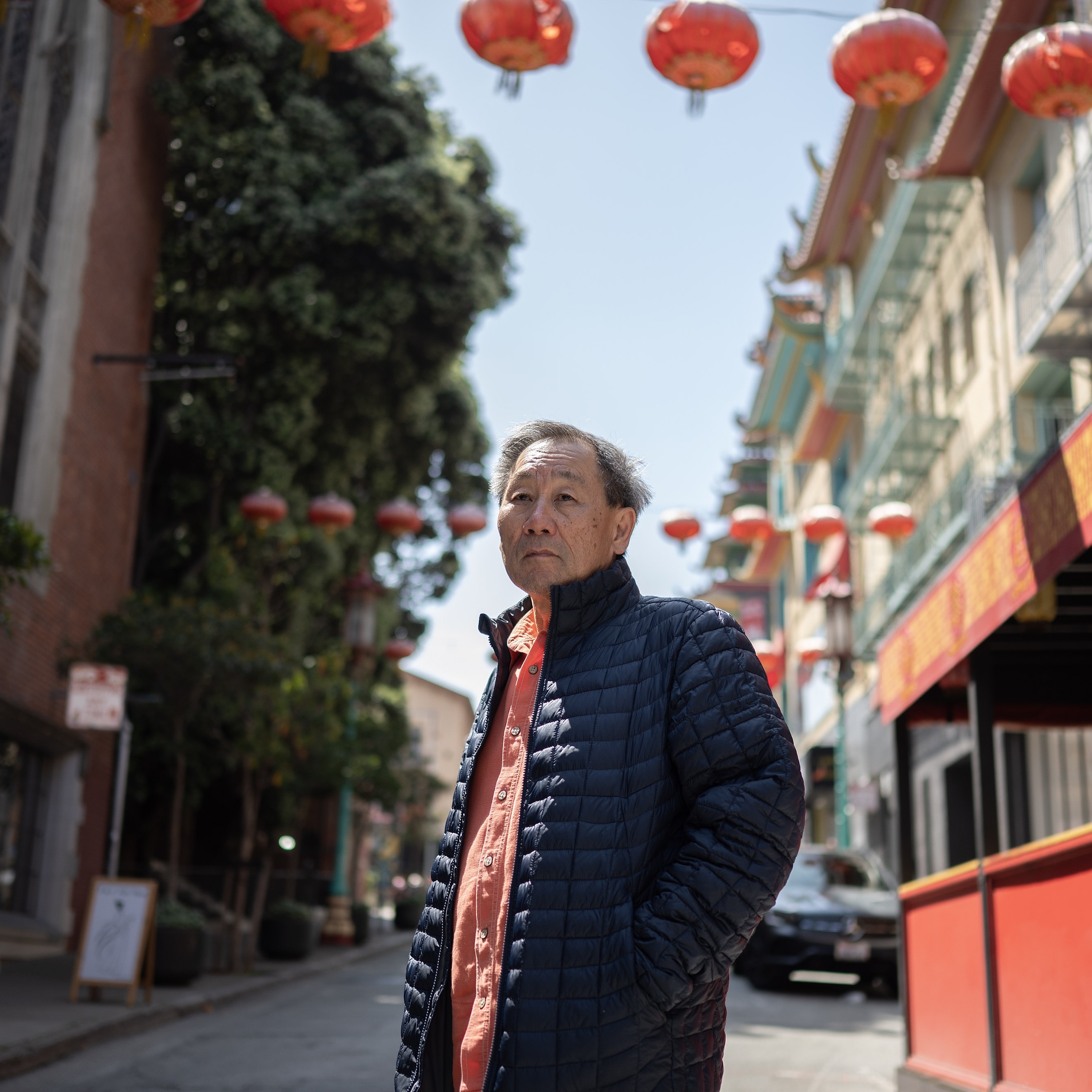
Post Reports
The little-known history of birthright citizenship
00:21:23
The Supreme Court is scheduled to hear oral arguments Thursday about birthright citizenship. Today we explore the history of this constitutional right and meet the man who has become an unlikely spokesman for saving it.
Loading summary
Transcript62 lines
- [00:03]
Norman Wong
So let's have Norman Wong, our special guest. Let's give him a hand. Hello. My name is Norman Wong. I'm the great grandson of Wong Kim Ark. Wong Kim Mark was born in the USA.
- [00:23]
David Nakamura
Norman Wong is a 75 year old retiree. He lives near San Francisco. And recently my colleague David Nakamura went out to California to meet him.
- [00:33]
Elahe Izadi
He wasn't really like an activist. He was a carpenter. He sort of did odd jobs in building maintenance. And he suddenly become, once Trump was in office again, this sort of accidental activist who is now called upon to sort of be the public face of the campaign to sort of save birthright citizenship.
- [00:49]
David Nakamura
That's because Norman's great grandfather had a huge role in defining birthright citizenship. He here he is telling that story at a recent panel on immigration.
- [00:59]
Norman Wong
Like my great grandfather, I too was born American in the same city, San Francisco, more than 75 years after him. We are both Americans, but unlike him, my citizenship has never been challenged.
- [01:19]
David Nakamura
Birthright citizenship is something lots of Americans take for granted. It's been settled law in the United States for more than 100 years. Basically, if you're born on US soil, you are American. It doesn't matter where your parents are from or what their immigration status is. But President Donald Trump wants to change that. On the first day of his second term, he signed an executive order that would reinterpret the 14th Amendment and restrict that right.
- [01:47]
Norman Wong
This next order relates to the definition.
- [01:49]
Elahe Izadi
Of birthright citizenship under the 14th Amendment.
- [01:52]
Norman Wong
Of the United States.
- [01:53]
David Nakamura
That's a good one.
- [01:54]
Elahe Izadi
Birthright.
- [01:55]
David Nakamura
That's a big one. This executive order is now coming before the Supreme Court on Thursday, which is why Norman is speaking out now, because for him, this is also about protecting his great grandfather's legacy.
- [02:10]
Norman Wong
What kind of nation are we to be with stateless children born to no country? Do this. I say no.
- [02:30]
David Nakamura
From the newsroom of the Washington Post, this is Post Reports. I'm Elahe izadi. It's Wednesday, May 14th. Today I talk with immigration reporter David Nakamura about the little known case that helped establish birthright citizenship in the US and the new case before the Supreme Court tomorrow. Hi, David. Thanks for joining me.
- [03:01]
Elahe Izadi
Hi, thanks for having me, David.
- [03:03]
David Nakamura
I'm so looking forward to talking to you about this because you found this living connection to 127-year-old Supreme Court case that helped define birthright citizenship. And you this connection comes in the form of Norman Wong. Can you tell me more about Norman and his great grandfather?
- [03:21]
Elahe Izadi
What's interesting is he tells me that he didn't know really about his connection to somebody named Wong Kim Ark, who didn't even really know of growing up.
- [03:28]
Norman Wong
I knew nothing of him when I was growing up. Never heard the name. My father never talked about anybody in his family.
- [03:37]
Elahe Izadi
His father spoke Chinese, went back to Hong Kong quite a bit, worked on a cruise ship, and didn't explain a lot about his past. And, you know, sometimes families did that. Right. And so he said he. He didn't know until, you know, he was in his 50s, around the 100th anniversary of the Wong Kim arc decision, when there was some hoopla about it. Some Chinese newspapers and others, local papers wrote about his dad.
- [03:57]
Norman Wong
And he pulled out these articles and pictures and stuff. And I, I guess was all in Chinese, that's why. And I couldn't read any of it. And he just kind of explained the best he could, Wong Kim Ark and Birthright. And so it was a big deal.
- [04:15]
David Nakamura
Yeah, I mean, I think a lot of people can relate to the idea of you don't really know what happened with your grandparents or your great grandparents, like your family doesn't really talk about. But the fact that this man's relative was actually instrumental to establishing this constitutional right is. It's just kind of remarkable to think about. So tell me a little bit more about who Wong Kim Ark was. Let's start there.
- [04:35]
Elahe Izadi
Sure. Wong Kim Ark was a child born in the United States in San Francisco to two parents who were immigrants from China and never became citizens. And he was born around 1870, and he became sort of a cook. His parents had been merchants, but, you know, he was squarely born in the United States, worked in Chinatown in some of the Chinatown restaurants in San Francisco. But his family did go back and forth to China, like many immigrant families did. And he went back and forth with them a number of times. And ultimately he was stopped upon trying to re enter. He was an adult by this time, and he had been visiting his family sort of ancestral village where his parents had returned to. But he was stopped in 1895 by U.S. customs authorities and made to stay essentially in a jail on a steamship in San Francisco Bay.
- [05:22]
Norman Wong
He wasn't permitted to disembark from the ship. They kept them on on a boat for five more months while he fought in district court.
- [05:33]
Elahe Izadi
And they said, no, you. You are not permitted at this time. There was a lot of anti Chinese sentiment in the country, including in Congress, which had passed laws prohibiting Chinese laborers from coming in under the Chinese Exclusion Act.
- [05:44]
Norman Wong
Chinatown, San Francisco was under a lot of pressure. The Chinese there were subjected to quite A bit of violence, not all of it truly documented.
- [05:54]
Elahe Izadi
And so that set the stage for him to challenge his inability to get in as a United States citizen. And ultimately that that led to this court hearing.
- [06:00]
David Nakamura
And then tell me about how that court case before the Supreme Court went. I mean, he was someone who was a cook. So it's kind of remarkable that, that he was able to have this case go before the supreme court.
- [06:12]
Elahe Izadi
Right. The U.S. government was essentially looking for a case to sort of test this. There were people, opponents against birthright citizenship. Some of the lower courts, there had been some victories among Chinese Americans who had, like I said, won some lower court decisions. But ultimately there was some pressure on the US Government to take a case and try to get to the Supreme Court to sort of go against the idea that the Chinese would be allowed in under birthright citizenship. They were considered threats to the country culturally, not a good fit for the United States. So there were essentially restrictionists who wanted to challenge this. And ultimately it backfired because, yeah, Wong Kim Ark was a poor cook. He was not that well educated, but he was essentially helped by the Chinese American community in the San Francisco area that kind of came together and said, we're going to fight. And they had had experience in these other cases of banding together, raising money, and essentially hiring white lawyers, prominent ones, to defend them.
- [07:04]
David Nakamura
Wow, that's fascinating. So the US Government, I mean, it kind of feels like a parallel to today in some ways that the US Government wanted to, or there were people who wanted to unravel birthright citizenship. And this case went before. And what did the court ultimate.
- [07:21]
Elahe Izadi
There were three really prominent white lawyers, and they were making the case that essentially the 14th Amendment, that was, of course, ratified by Congress in 1868 in part to grant citizenship to freed black Americans who had been slaves and their descendants who had been denied that. And they made the case that, of course, this extended to Chinese Americans who were born here. You know, it took three years to wind through the court, and ultimately the high court ruled 6 to 2 in favor of Wong Kim Ark and established his citizenship.
- [07:48]
Norman Wong
And we've had it squared away for 127 years. Now we want to undo it because we want to go after certain peoples. Well, we're going to start to unravel citizenship as we know it.
- [08:01]
David Nakamura
Well. And as Norman is saying here, this precedent granted citizenship for so many people born in this country. And now it appears like the Trump administration is trying to change that. And I think that starts with, as we talked about, the Executive Order that Trump signed in January. So, David, just in basic terms, can you describe what that order meant?
- [08:24]
Elahe Izadi
Sure. What Trump's trying to do with his order is to prohibit birthright automatic citizenship to the children of two undocumented immigrant parents, as well as children born in the United States to any foreigner who's here on a temporary work, student or tourist visa. And what him and his supporters are saying, his administration is arguing in court, is that this citizenship clause of the 14th Amendment, which is pretty short, says that birthright citizenship should be granted those born on US Soil who are subject to the jurisdiction of the US Government. And it's essentially its laws. And they're saying, look, you know, if you're an undocumented immigrant, you came in illegally, you're not fully under the US Jurisdiction, you can't be drafted into the military, for example. And so you don't necessarily, you haven't really pledged full allegiance to the country. This is sometimes considered somewhat of an archaic and previously considered something of a fringe legal theory, but it's been championed by conservatives, some of whom now work in the Trump administration. And Trump flirted with the idea that he would do this in his first term, but he was focused on other immigration type issues this time. As we know, he came out early in his administration with a number of executive actions related to immigration. And this was one that I think is trying to sort of set a tone and, you know, be another discouragement to those immigrants who might come in part because they hope that their children can be full Americans. You know, this idea that what Trump calls derisively birth tourism and anchor babies, he calls them in very derisive terms, which evidence does not support that. This is the idea why most immigrants are coming. They're looking for economic opportunity, but that's why the Trump administration is doing this.
- [09:57]
David Nakamura
After the break, David breaks down what we need to know about the case going before the Supreme Court tomorrow and how the outcome could have repercussions beyond birthright citizenship. We'll be right back.
- [10:21]
Natalie Allison
My name is Natalie Allison, and I'm a reporter at the Washington Post. I cover the White House. I've covered Donald Trump for the last several years on the campaign trail, and now I'm reporting on him back in power. I am talking to his advisors and his staff and trying to get answers on not only what they're doing, but why they're doing it, the strategy behind it, and who's involved in making the decisions. Recently at the Washington Post, I was part of our team that was unpacking how Donald Trump's tariff plan came together. We talked about the deference that his advisor showed him in his decision making, which is a lot different than last time around when people were pushing back. And this time, Donald Trump is surrounded by loyalists. When you subscribe to the Washington Post, you support this kind of journalism. Learn more@washingtonpost.com subscribe I'm Natalie Allison, and I'm one of the people behind the Post.
- [11:15]
Elahe Izadi
You probably have an app for music, but do you have an app for radio, you know, for what's happening right now, an app for breaking news that'll change your daily routine, an app that starts your morning with what you missed last night, you can throw on Friday night for a guaranteed party every time. Yeah, there's an app for all that. It's the iHeartRadio app, the app that lets you listen to thousands of live radio stations along with podcasts and a whole lot more. Download the number one radio app, the iHeartRadio app today.
- [11:54]
David Nakamura
So then how did this case end up before the Supreme Court? What happened after Trump signed that executive order? What. What sort of legal fight did that trigger? And how did it end up in the Supreme Court?
- [12:04]
Elahe Izadi
A coalition of states led by Democratic governors and state attorney generals filed suit the day after Trump signed this. Two different groups, actually, of Democratic states split off and did their own separate lawsuits in two different circuit jurisdictions on both sides of the country. But they weren't the only ones. Interest groups, civil rights groups, immigrant rights groups have also filed suits. I think in total, we've counted at least eight different lawsuits challenging Trump's executive order on birthright citizenship alone. And three of those have now reached the point where federal judges in different jurisdictions, each separately in their own cases, issued nationwide injunctions that essentially bar the Trump administration from moving forward at all with preparing to or potentially implementing this ban on birthright citizenship. And so the Trump folks have appealed. But then they said, you know what? We're being stopped. On our broader agenda even beyond immigration, for federal spending and cuts to other areas, these judges have stopped us too often. So essentially, they asked the Supreme Court to take this birthright citizenship case and rule that the judges have exceeded their authority by stopping this nationwide, that they should limit their injunctions to maybe the plaintiffs in the cases or to the states that sued. But let the administration move forward. The Trump administration is hoping to win this case and get more freedom out of many of their initiatives that have been blocked by these judges. So it's a bit confusing, but essentially, Trump wants freedom to go ahead and move beyond these injunctions, at least in some places of the country.
- [13:33]
David Nakamura
Okay. So basically, the court could be taking up this broader idea of injunctions which play out with this birthright executive order. But it is possible that the justices could weigh in on some level on birthright citizenship itself, Right?
- [13:48]
Elahe Izadi
It is possible. You know, this is an unusual court hearing to sort of have this sort of fairly quickly on the calendar. And, you know, the Trump administration wanted to get one of these cases about these injunctions up to the court. And this birthright case is such a prominent case, they move quickly on it. You know, again, you know, we talked about, you know, sort of Wong K. Mark's day, the government moving too quickly and essentially losing that case. Right. And backfiring. We'll see. With the Trump administration, I think there's a lot of pressure on the judges. It's interesting if they somehow some of the judges are sympathetic, and there is a lot of legal scholarship around this injunction question as to, like, should a single judge be able to nationwide ban the administration or temporarily ban them from moving forward on any particular area. But, you know, I think legal scholars look at the birthright question as pretty lock solidly part of US Law. So it's an interesting dynamic for the justices and whether they're willing to sort of take on the narrow issue of the injunction and even rule favorably for Trump, that could then rebound onto allowing them to move forward and ban birthright citizenship.
- [14:47]
David Nakamura
What is the counterargument for why this is not constitutional?
- [14:50]
Elahe Izadi
Yeah, you know, defenders and supporters of birthright citizenship make the point that, you know, even if you take Trump's arguments at face value, that they're wrong, that essentially that undocumented immigrants are subject to the jurisdiction of the US Government, they can be arrested, they can be charged with crimes, they can be deported. And so people are saying that this is not a valid reason to deny something that's been part of the US System for over a century. Well over a century. And so, I mean, legal experts say that they think this is essentially a bad case for the Trump administration and because there's been constitutional law that goes back to this Supreme Court decision.
- [15:25]
David Nakamura
So thinking about the Supreme Court as it hears arguments on Thursday around this case, what would happen if the court sides with the administration around, just even with the injunction question, even if they don't really touch the constitutionality of birthright citizenship, what could happen to birthright citizenship?
- [15:42]
Elahe Izadi
You know, essentially, the Trump administration in the president's executive order said, look, there would be a certain number of days, I think 30 days or something, where the relevant cabinet secretaries of DHS, of, you know, Social Security, other relevant areas that deal with newborns and citizenship questions, would have to come up with, you know, essentially guidelines for moving forward to implement the order. And even that was stopped under these things. Technically, they're not supposed to be moving forward and even planning for this. So it could be that they let them move forward on some of the planning, could be that they let them, you know, sort of take other kind of steps to sort of preliminarily, you know, get ready to implement the order. But again, that constitutional question is still being litigated. These nationwide injunctions were only temporary as the question of the constitutionality of this order are litigated. You know, if somehow, though, they fully do grant the administration their argument and rule in their favor. You know, it's possible, like I said, that in some states, Republican led states that are not part of these lawsuits, it's possible they could try to move forward and implement this ban.
- [16:39]
David Nakamura
Like just in those states, like, let's pick a state. And just like in, I don't know, I'm just making this up. Like Alabama or South Carolina or whatever. Like no birthright citizenship for people under these circumstances.
- [16:50]
Elahe Izadi
Correct.
- [16:51]
David Nakamura
So if they were born there, then you wouldn't be a citizen.
- [16:53]
Elahe Izadi
Well, now you're bringing up a lot of great questions of which.
- [16:55]
David Nakamura
Oh, thank you.
- [16:56]
Elahe Izadi
Yeah. A lot of my sources don't have the best answers, although many of them are flabbergasted at how that would work. A couple things that, you know, listeners should be aware of if they're not, you know, clear on this is, you know, Trump's order deals with children born after the order takes effect. Not any. It doesn't retroactively. If you're born to two undocumented parents and you've been a citizen your whole life, it does not affect you. Okay. Number one, how do you then implement it? Right. How does the hospital deal with the paperwork for the children? What state do they belong to? What country? I should say, you know, people make the point, these would be stateless kids. Right. And so they're born here, but they, you know, their parents may be from another country, but haven't been there in a long time. Like whose jurisdiction do they fall under? And so that's a huge question on your question. Right. If they, the idea is that the administrators, they limit these injunctions only to the plaintiffs. Right. Are they the Democratic states? Are they the mothers who. But if they somehow tried to do that. People make the point of like, would then parents be driving to another state to have birth in the blue state rather than the red state? Right. Or does the kid, if they go into a red state, suddenly they're not a citizen? These are like. A lot of what I have heard, though, in my reporting and even when I was in San Francisco, is that the civil rights groups, the interest groups, have a plan B in case they do lose here, that they would try to, I think, file more lawsuits. And we're going far afield here to some degree. But the sort of theoretical questions about injunctions is one thing. The court may be eager to answer that question. The administration may really want it. But then how it relates to birthright is hard to sort of figure out how that would work.
- [18:15]
David Nakamura
Yeah, I mean, but like so many things happening right now, there are so many unknowns and so many variables and things that people didn't think would be possible before are coming to pass. Which brings me back to Norman Wong and just thinking about how, you know, there's lots of people for whom this is their life. Right. Like, they're citizens because they were granted birthright citizenship under this constitutional right or alleged constitutional right. Now it's come into question, and I'm wondering what it's like for him, because obviously it's personal for him like it is for a lot of other people, but it's personal for him in a whole other way. Like, how is he thinking about his great grandfather's legacy as he watches this case being argued?
- [18:52]
Elahe Izadi
Yeah, it's interesting with Norman, because when I did meet him in San Francisco, I wondered about how he felt about it all. And he kept saying things during my trip there about, you know, he called himself sort of a prop because he had his picture taken so many times by news photographers and requests from reporters. And he said he sort of talked in that way and a little bit sheepish, almost like, who am I to talk about? I hardly knew this story. But at the end, though, he did say, look, you know, what his great grandfather's legacy was for the country is clear. You know, this idea that people born here deserve to be Americans with the full benefits of that he's a hero.
- [19:24]
Norman Wong
But we can make him my family hero, but let's make an American hero. That in some way, his action, whether he knew it or not, did it for all Americans.
- [19:37]
Elahe Izadi
But for him, you know, it gave him a better understanding of himself and his life. And kind of like he gets why. He understands why, even though he sometimes feels like a prop that he's willing to do it, to speak out, to talk about it.
- [19:49]
Norman Wong
If people ask me to speak up, I'll speak up, and that's the little I can do.
- [19:54]
Elahe Izadi
And then what he said was that ultimately, though, you know, Wong Kim Ark was not someone he knew until he was an adult and that he, you know, it's not for him to own. He said, it's not for me to own.
- [20:03]
Norman Wong
He said, I think it helped Americans become Americans actually. You know, so that's why I say I don't own him and I shouldn't even try.
- [20:14]
Elahe Izadi
And I think he meant that Wong Kim Ark is for all of us. And so I think that's kind of how he feels. And this idea of who deserves to be an American and the country's going through this time, of what it really means, what is America's to be. And I think, like, ultimately, that is where this story lands for me, which is that, you know, this idea, people thought it was settled 127 years ago in this court decision. Then they thought it was settled after the 14th Amendment. But it keeps coming up. And I think, you know, groups that are vulnerable can appreciate that this may never be a fully sovereign and that each generation has to kind of be vigilant and sort of do its part to sort of, you know, defend what it believes is the right way to go.
- [20:56]
David Nakamura
David, thanks so much for sharing the story with us.
- [20:58]
Elahe Izadi
Yeah, yeah, happy, too.
- [21:03]
David Nakamura
David Nakamura is an immigration reporter for the Post. That's it for Post reports. Thanks for listening. Today's episode was produced by Laura Benshoff with help from Emma Talkoff. It was mixed by Shawn Carter and edited by Maggie Penman. Thanks to Christine Amario. We'll be covering oral arguments tomorrow in real time on our site, washingtonpost.com so tune in to follow along with what the justices are asking, what each side is saying and what to make of it all. And if you want to learn more about Wong Kim Ark and his landmark Supreme Court case, we'll include a link in our show notes to a fascinating episode of another Post podcast, Constitutional. I'm Elahei Izadi. We'll be back tomorrow with more stories from the Washington Post.
- [22:01]
Elahe Izadi
There's an efficient way to get caught up on a lot of news. It's called the Seven from the Washington Post. It's a newsletter and podcast. Whether you're reading or hit play, you get seven stories you need to know and you can consume it all in just a few minutes. The 7 is out every weekday morning by 7:00am Eastern. I'm Hannah Jewell I'm one of the writers and I host the show. Find the seven Podcast wherever you're listening. The newsletter link is waiting for you in the show notes.