← Post Reports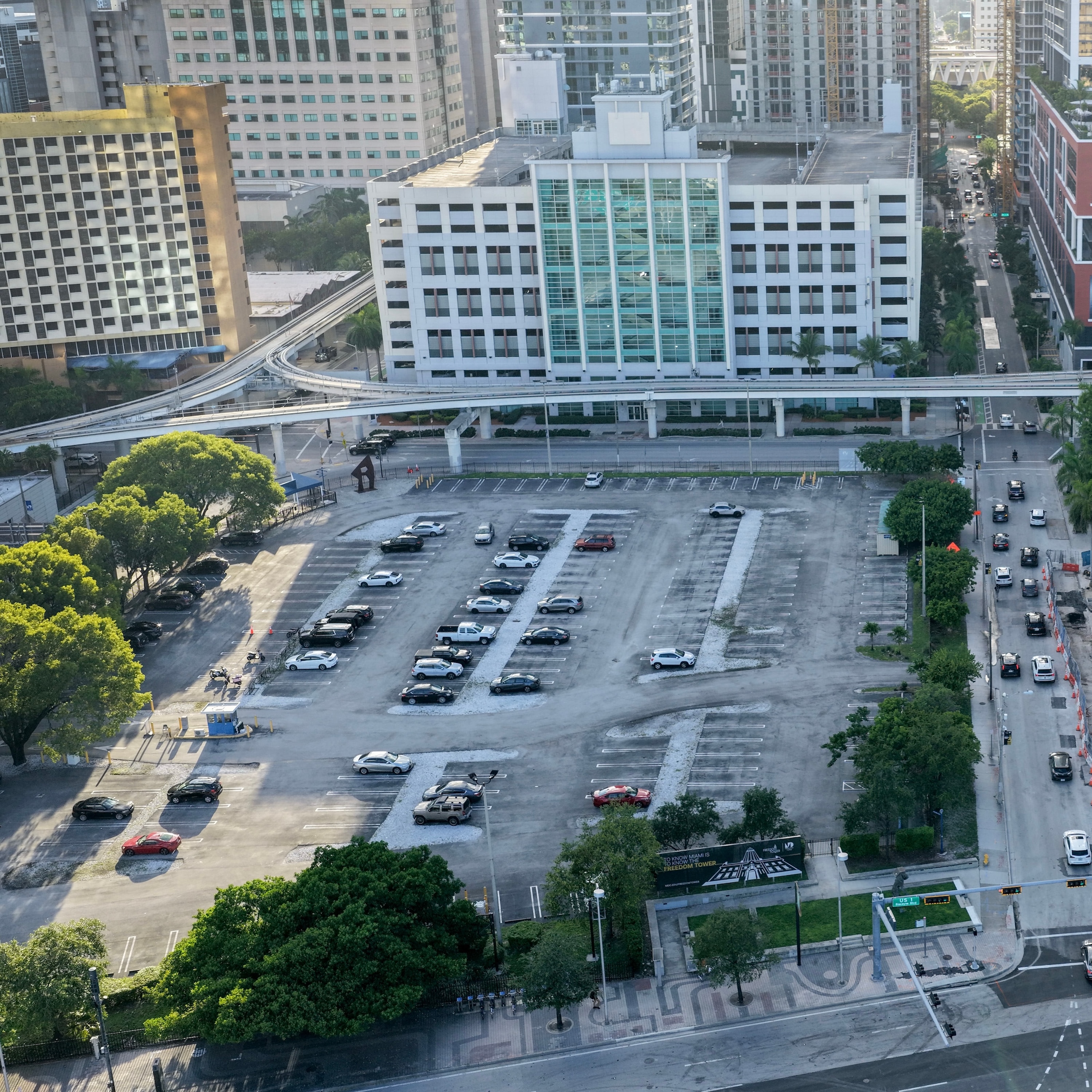
Post Reports
The making of Trump’s presidential library
00:15:13
Less than a year into President Donald Trump’s second term, planning for his presidential library is underway, with $50 million already raised from undisclosed donors. Today, how Trump’s library could memorialize his presidency.
Loading summary
Transcript33 lines
- [00:03]
Colby Biechowitz
Historically, presidential libraries have been used as sort of research hubs to house documents and artifacts from a president's time in the White House. They're also a monument to a president's legacy. The planning for President Trump's library is well underway.
- [00:18]
Eric Trump
I can promise you it's going to be the greatest shrine to the greatest president this country has ever had. And I promise you, I mean, it's going to be the greatest structure ever created for a president by far. It's going to be the greatest library ever envisioned.
- [00:32]
Colby Biechowitz
Eric Trump, Trump's oldest son. He was giving an interview on a conservative leaning podcast back in the fall. Eric Trump was talking about the creation of his father's presidential library. Trump has raised $50 million from undisclosed donors to build it. And the state of Florida has gifted Trump acres of land in downtown Miami for it. What's less clear is what will be in the library. From the newsroom of the Washington Post, this is Post Reports. I'm Colby ekowitz. It's Monday, December 15th. Today, I speak with investigative reporter Michael Kranish about Trump's plans for his presidential library and why some historians worry that it could misrepresent this moment in history by telling the story only through Trump's eyes. Michael, thank you so much for joining me.
- [01:30]
Michael Kranish
Thanks for having me.
- [01:31]
Colby Biechowitz
So, Michael, you reported over the weekend on President Trump's plans for his presidential library in Miami. And I want to get into all the ways that Trump wants to memorialize his presidency. But first, like, what has historically been the point of a presidential library? How have past presidents used them?
- [01:50]
Michael Kranish
Well, I think it started with fdr. He had all these papers. What do we do with them? And there was this idea that we'd store them, have a library, make them available to the public. So there's been about maybe 15 presidential libraries so far, and they're all done pretty differently. But the bottom line is, according to a court ruling that happened some time ago, the papers are the property of the public. They're not the property of the president.
- [02:11]
Colby Biechowitz
So when you say presidential papers, what does that encompass?
- [02:14]
Michael Kranish
So they don't have to be literally papers. A lot of this obviously, would be electronic communication. Presidential libraries also have artifacts of the presidency. So there's a mass of material, but the papers belong to the public. So the National Archives is the one that controls these papers. So for the libraries have been the repository. For example, at the LBJ Library, you can go in, they've got tons and tons of papers from that presidency. Robert Caro, the historian, has written a Multi volume biography of LBJ famously says he goes there and he wants to turn every page. So that's the image that a lot of people probably have of a presidential library, but it's changed. So under President Obama's library formulation, it's not really a library at all. He is building what he calls a presidential center. They put aside $5 million to help the National Archives digitize Obama's papers, but basically it's a presidential center. You're not going to go there to research his presidency. You do that online.
- [03:04]
Colby Biechowitz
Okay, so as I understand it, a presidential library, a place to keep all the archives and documents and artifacts from a presidency, but that is owned by the National Archives, not by the President himself. So who's paying for these libraries?
- [03:20]
Michael Kranish
It's done differently everywhere. The National Archives says that they spent a fourth of their budget regarding presidential libraries. They want to sort of stop that cost from growing even more. It's only recently that there's been this idea that if this really has to be privately done, there is money that the National Archives spends to help on these other libraries, but they're trying to sort of get out of that business, which may seem contrary to the public purpose that people see of these libraries and presidential centers.
- [03:45]
Colby Biechowitz
Okay, Michael, so what you're saying is these presidential libraries have long had at least some part of it be funded by the government. But in recent years, we've shifted to having these libraries be exclusively privately funded. How did that start?
- [04:04]
Michael Kranish
So Obama started what people consider a new model of presidential libraries or centers. He has a private foundation. It's raised about $1.6 billion. Might raise more. That's an awful lot more than other centers and libraries have raised. And that money is going to basically build this facility on a 19 acre campus in Chicago. So that opens in June of next year. That model is now likely what Trump will use, particularly since they're fundraising through a private entity, the Trump Library Foundation. So far, they've raised $50 million and spent 6 million. Trump had said that some of his money has come from settlements against media organizations like his lawsuits against CBS and abc. Because it's a private foundation, they don't need to disclose where the money's coming from. It could come from companies or others that have interest before the government. And Trump is doing this while he's still president. So there's folks who say, you know, that's not appropriate. But Congress has not provided money for building these centers. They provide money to maintain existing libraries in some ways, but in some ways they've created this situation where they say you have to build a presidential library center if you want one, there's no lawsuit, you've got to construct one. So of course there's going to be, you know, criticism of how money is raised by whichever party's not in power, but they're not providing that money.
- [05:18]
Colby Biechowitz
Is it unusual that a president would start raising money for their library this soon in their term? Was President Obama raising money for his center during his time in the White House?
- [05:29]
Michael Kranish
I don't think Obama was raising much, if any, money before it was known that he was gonna build the center. He was there for two terms. It is obviously easier to raise money while you're president. Cuz then people maybe they're trying to influence you or they just, you know, they just wanna do it while you're president. Now the example of how this can be so hard is President Biden. President Biden to build some kind of library or center. His filing says he's raised $4 million. That is just almost nothing in this business of building centers. When you look at Obama's $1.6 billion that he's raised and what Trump's doing. So right now Biden is going to be talking about this, but it's harder to raise money after you've left office. So for Trump, he is able to raise more money while he's in office. He's doing this for the construction of the East Wing, for example, his ballroom. The ballroom and the library is sort of analogous to that. And that this is a huge project. And these questions come up about using private funds while he's still president the way Trump is doing it. I mean, there's no laws that people are saying have been broken. The Democrats have introduced what they call the Presidential Library Anti Corruption Act. Under that act, it would ban fundraising until after a president leaves office, except from nonprofits. And it would require a two year delay after a president leaves before donations can be accepted from foreign nationals, foreign governments, lobbyists, individuals seeking pardons, and federal contractors. So you can see that this would be a way to avoid these conflicts of interest or appearance of conflicts and so forth. So far, only Democrats have supported that legislation. So it doesn't seem to be going anywhere in this Congress.
- [07:03]
Colby Biechowitz
Okay, so as of right now, there's no guardrails around where the funding comes from. And that's what the Democrats are suggesting should change. But is there anything in place that acts as kind of an oversight of what actually gets put into these libraries, like what piece of history and how.
- [07:19]
Michael Kranish
History is remembered well, the presidential papers, the artifacts, those are all overseen by the National Archives, and that won't change. They'll probably be at the national archives here in D.C. not at the library. But it's possible they could be at the Trump facility, if that's what he decides. That's how some earlier libraries have been built, also the museums, and that's key here. Like in the Nixon Library, years ago, they had a Watergate exhibit that said Watergate was just a conspiracy against Nixon. The National Archives came in, put an archivist there in charge and said, you can't have an exhibit like that. It has to be factual. So the library ended up changing at the direction of this new Archives appointed director. And that factual exhibit about Watergate is what's in the library today. But if Trump constructs his library or center entirely funded by his private foundation, the museum there would have no obligation to work with the National Archives, who in other cases might have had oversight to keep things accurate from an independent point of view. So Trump could tell whatever story he wants about the history of his own election. And maybe he would say the 2020 election was stolen, as he had say, which of course is false. I did ask former President Obama's spokesperson about this and how that works at the Obama center, which sort of set the model for this. And they said they've used historians to come in and review their museum and so forth. We don't know if there'll be independent historians who would do that in the Trump Library case.
- [08:48]
Colby Biechowitz
That's a great place to pause, Michael, because after the break, I want to talk to you more about what we do know about Trump's plans for his library. We'll be right back.
- [09:05]
Podcast Sponsor/Ad Narrator
As a listener of this podcast, you've by now no doubt heard of HelloFresh. They're the number one meal kit in America, making home cooking easier with chef crafted recipes and fresh ingredients delivered straight to your door. But here's the thing. This fall, they're serving up even more to love. This isn't the HelloFresh you remember. It's bigger. After literally doubling its menu, you can now choose from 100 options each week, including new seasonal dishes and recipes from around the world. HelloFresh is now healthier too. Choose from 15 high protein recipes each week with options like grass fed ribeyes or lamb chops. HelloFresh now helps you eat greener with new veggie packed recipes that have two or more veggies per dish. Best of all, it's even tastier. Savor the season with hearty fall recipes like Classic Beef Chili or Honey Glazed Pork Tenderloin. Discover new seasonal produce each week, from broccolini to Italian eggplant and more. Last time I told you I had just put in an order for the beef chili. Well, it was even better than expected. Super easy to cook, as hearty as any chili I've ever had, and tasted so good. Best of all, zero minutes spent shopping the best way to cook just got better. Go to hellofresh.com posttenfmnow to get 10 free meals plus a free breakfast for life. One per box with active subscription free meals applied as discount on first box. New subscribers only. Varies by plan. That's hellofresh.compostfm to get 10 free meals plus free breakfast for life. Holiday gifting can be really stressful sometimes. Let's be honest, it's really hard to give things people will actually love. You know the beautiful, timeless pieces they'll wear for years. That's why this year I'm going with quince. From Mongolian cashmere sweaters to Italian wool coats, everything is premium quality at a price that actually makes sense. Quince really does have something for everyone, like soft Mongolian cashmere sweaters for $50 that look and feel like designer pieces. Silk tops and skirts for dressing up, perfectly cut denim for everyday wear and outerwear that actually keeps you warm. Every piece is made with premium materials from ethical, trusted factories and priced far below what other luxury brands charge. It's elevated, timeless and made to wear on repeat. I've told you before how much I love the cashmere sweaters. I also just got myself an Italian wool coat. It looks designer and I get compliments all the time. When I tell people the price, though, they genuinely don't believe I actually have to show them on the Quint's site. So this holiday find gifts so good you'll want to keep them with quints. Go to Quince.com reports for free shipping on your order and 365 day returns. Now available in Canada too. That's Quince.com reports to get free shipping and 365 day returns. Quince.com reports.
- [11:44]
Colby Biechowitz
So Michael, we mentioned earlier that Trump's library is going to be in Miami. Obviously Florida is a very friendly state to Trump. It's where he has Mar a Lago and West Palm Beach. What do we know about this choice of location? Kind of why, where?
- [12:00]
Michael Kranish
How so? This is a 2.6 acre site. It's right in downtown Miami, right next to a place called the Freedom Tower, a very prominent location so what happened? There was. There was a meeting in September by the Miami Dade College, which is a state institution, and they had a notice in the Miami Herald, and it very vaguely said there'll be a meeting about a land transfer. Didn't say it was about Trump, didn't say anything about what it was, and they unanimously approved. The board of trustees approved giving this 2.6 acre parcel to the state, which then promptly gave it to the Trump Library Foundation. That transfer is being contested in the courts. But the bottom line is this property is their various estimates. It was appraised at more than $60 million. Some real estate folks told us it might be worth More than $300 million. And Eric Trump himself has said it's one of the most valuable pieces of property in Florida. So no doubt it's a very valuable gift to start off with, to have this. And from my college's standpoint, there are other campuses across the country that do have an association with the presidential, so it's not unheard of. But there's some people who say, you know, this should have been more thoroughly vetted. You know, this site doesn't make sense. So there was a lot of controversy over it. The bottom line is the board of trustees, after being sued, voted a second time unanimously to give this land. But that is still being contested in the courts.
- [13:15]
Colby Biechowitz
What else do we know, if anything, about Trump's plans for his library? You know, with Obama's, it's opening in June. We know it's going to have an athletic facility and an auditorium, a garden. Do we have any sense at all of what will be in Trump's library?
- [13:32]
Michael Kranish
Well, we don't really know exactly what he's gonna build. We know, of course, the Trumpian language where he said, this is. The folks in the Trump world have said it's gonna be iconic. It's gonna be the best presidential library ever. But we only know a few things that they've said over time. For example, Eric Trump, he's the part of the board of the Trump Library Foundation. When he went on a podcast hosted by Benny Johnson, the host asked him, you know, would you have a fake news wing? And Eric idea jumped on it, by the way.
- [13:59]
Eric Trump
I hadn't thought of that, but that's beautiful.
- [14:00]
Michael Kranish
So that's going to be controversial if it happens, because he's telling this story.
- [14:05]
Eric Trump
I actually think that'd be a great exhibit about how dishonest these people are and how they will lie, cheat, and steal.
- [14:11]
Michael Kranish
And that has certainly been one of the things that President Trump has said time and time again. So from Trump's perspective, that's a big part of his presidency. He believes the media has been against him. It's the enemy of the people, according to him. So it's not surprising, really, that they would say that. But it certainly is something we don't usually see in a presidential library or center. And we know that President Trump has said that Qatar is giving him a 747 to be Air Force One, which would then be turned over to the library to be displayed there in some way or maybe at another site. But they haven't released any specific plans other than statements from time to time of what they want it to be. So they'll have to do that sort of pretty soon to say what they want to do. And as they start gathering more funds and put together plans, you know, past.
- [14:55]
Colby Biechowitz
Presidential libraries, they were incentivized to be historically accurate. But there's nothing that says that Trump can just not mention his two impeachments. What does that mean for the future of understanding Trump's presidency, for future historians, future biographers?
- [15:16]
Michael Kranish
I actually just finished a series about Thomas Jefferson, and one of the stories in that series was about the Jefferson Memorial. And I got interested in that because I knew the panel on Memorial on slavery was misleading. It left out key parts, it was doctored, it used some phrases, but did not follow up phrases, and didn't mention that Jefferson owned 600 slaves in his lifetime. So I went back and I told the story of how that happened. And the reason that's so relevant here is because it just shows you that time and time again, there are people who want a certain story to be told about a former president. So in that case, that was arranged by Jefferson's great, great grandson who was on the Thomas Jefferson Memorial Commission. So here we have the Trump Library. His son, Eric Trump, is leading this effort. We do see this. So I certainly wouldn't want to say, well, Trump's the only one who's doing it differently. We've seen time and again that, you know, there are monuments here that people will disagree and for, you know, the way they are, but it is the way that those monuments were done at the time. And sometimes there's one interpretation, and then later on, people come on and say, you know, I have a new take on this history and I found new things.
- [16:18]
Eric Trump
And.
- [16:19]
Michael Kranish
And that is part of the process, the historiography, as it's called. So no doubt there'll be people, you know, for decades to come, studying the Trump presidency. And you have new perspective, and hopefully people can look at it and get their own sense, gather all the information, and it's something that's important today and for history.
- [16:40]
Colby Biechowitz
Michael, thank you so much for coming on.
- [16:42]
Michael Kranish
Thanks so much for having me.
- [16:46]
Colby Biechowitz
Michael Kranish is a political investigative reporter for the Post. That's it for Post Reports. Thanks for listening. We are so grateful to have you as a listener. Now we want to learn more about your listening habits and how you think we can be better. We've got a new survey that we're running for a limited time, and we would love to hear from you. It shouldn't take more than 10 minutes to complete. To do that, you go to washingtonpost.com again, that is washingtonpost.com podcastsurvey when you're done, you can enter to win $100 gift card one more time if that got your attention. That is washingtonpost.com podcastsurvey Today's show was produced by Thomas Lu and mixed by Shawn Carter. It was edited by Ariel Plotnick. Thanks to editor Dan Egan. I'm Cole Biechowitz. We'll be back tomorrow with more stories from the Washington Post.