← Post Reports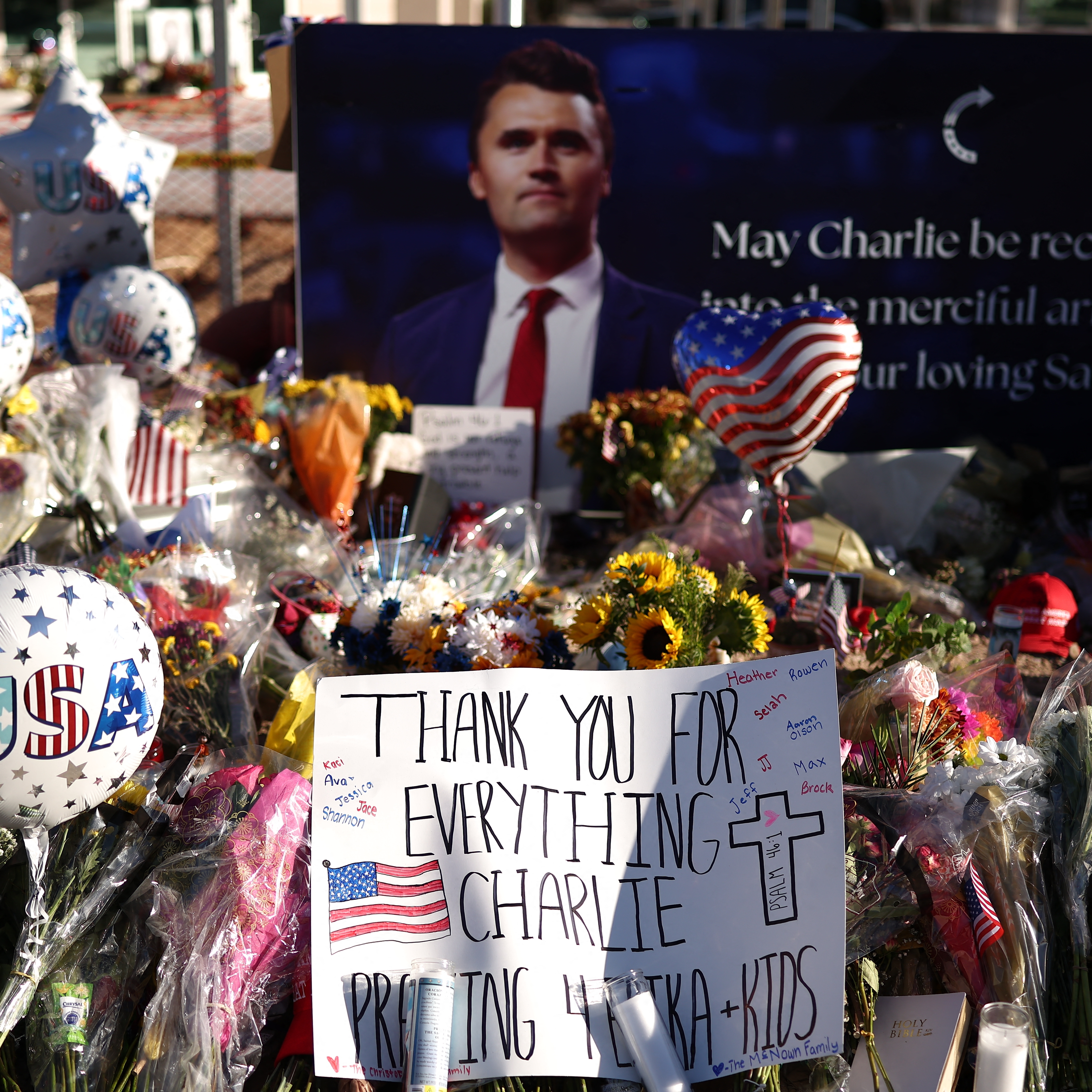
Post Reports
The political divides after political violence
00:30:55
Charlie Kirk’s shooting has left both Republicans and Democrats worried about more political violence. How are prominent leaders in both parties responding to the tragedy?
Loading summary
Transcript49 lines
- [00:01]
A
At Constellation, we bring the energy powering America's growing economy every minute, every day. As the nation's largest producer of clean and reliable American made energy, Constellation is wherever you are. Hey, before we get into today's conversation, I want to share news that broke after we taped A suspect has been arrested in the death of Charlie Kirk. On Wednesday afternoon, Charlie Kirk, the founder of the conservative youth organization Turning Point USA and a prominent ally of President Donald Trump, was shot and killed during an event at Utah Valley University. Here is Utah Governor Spencer Cox at a press conference earlier today.
- [00:43]
B
Good morning, ladies and gentlemen. We got him.
- [00:46]
A
The suspect's name is Tyler Robinson. He's 22 years old.
- [00:50]
B
On the evening of September 11th, a family member of Tyler Robinson reached out to a family friend who contacted the Washington County Sheriff's Office with information that Robinson had confessed to them or implied that he had committed the incident.
- [01:06]
A
Police followed up on this tip. They matched Robinson's car and clothes to those believed to belong to the alleged shooter. A local Utah sheriff's office said he, quote, turned himself in. We're likely to learn a lot more about Robinson and what may have motivated this crime in the coming days. At the scene, police found bullet casings inscribed with cryptic messages.
- [01:27]
B
Inscriptions on the three unfired casings read fascist exclamation point, catch exclamation point, up arrow symbol, right arrow and symbol and three down arrow symbols. A second unfired casing read oh, Bella chow, Bella chow, Bella chow, chow chow.
- [01:47]
A
Robinson is facing at least three felony charges, including aggravated murder. You can follow all the latest reporting on this story@washingtonpost.com now here's the show from the newsroom of the Washington Post. This is Post Reports Weekly Politics Roundtable. I'm Colby ekowitz. It's Friday, September 12th. I'm joined this week by Maeve Rustin, a national political reporter based in California for the Post. Maeve, hey.
- [02:17]
C
Hey, Colby. How's it going?
- [02:19]
A
Good, good. And we're also here with senior national political correspondent Naftali Bendavid. Naftali, good to have you back.
- [02:26]
D
Good to be here. Thanks.
- [02:29]
A
On yesterday's Post reports, we covered Kirk's final moments and how he became so influential on the right. Today we're going to broaden out the conversation to focus on how prominent leaders from both political parties are responding to this moment and how this incident fits into America's long history of political violence. For starters, we should say we're taping this around 9:45am on Friday. Earlier this morning, President Trump appeared on Fox News. And he said he believed a suspect was in custody. So we will learn much more about the alleged suspect and his motives over the coming hours and days. But even without knowing anything about him, I was struck by the reaction to the shooting from the most senior Republicans, starting with President Donald Trump. Just hours after Kirk died, there was the president behind the Resolute desk in the Oval Office, a place that is often reserved for the most serious addresses to the nation. And. And he blamed the left for Kirk's death.
- [03:25]
D
For years, those on the radical left have compared wonderful Americans like Charlie to Nazis and the world's worst mass murderers and criminals. This kind of rhetoric is directly responsible for the terrorism that we're seeing in our country today, and it must stop right now.
- [03:47]
A
Naftali, what does it say that the president was already blaming his political opponents for this crime before we knew anything about the shooter?
- [03:55]
D
Well, to tell you the truth, I think even if we did know the motive of the shooter, and even if it did turn out that he was a political opponent of Charlie Kirk, I think it's fair to say that most presidents would use a moment like this to appeal for unity, to condemn violence on both sides, and to ask people across the political spectrum to reject violence and to engage in debate and to remind everybody that we have more in common than what divides us. That was certainly not the approach that the president took. He very explicitly blamed, blamed the left and the left only for the violence and for the mood in the country right now. There have certainly been incidents of violence against Democrats recently as well as Republicans. In Minnesota, a state legislator was murdered in her house. Governor of Pennsylvania Josh Shapiro saw his residence partly burned down. Of course, President Trump himself was the target of an assassination attempt. So there's been plenty of violence on all sides. The president chose, for whatever reason, to talk a lot about the violence on the left and not to mention the violence on the other side. The other thing that was notable, I think, about his comments, is he talked a lot about demonizing opponents. It's a long past time for all Americans and the media to confront the fact that violence and murder are the tragic consequence of demonizing those with whom you disagree day after day, year after year, in the most hateful and despicable way possible. And I think it's fair to say that a lot of his own rhetorical style is to harshly criticize and arguably demonize his own opponents as horrible, horrible people. In fact, Stephen Miller, one of his top aides, right after the killing, talked about the left as malicious and soulless and at war with family and nature. So as the president is condemning the demonization of the other side, his top aide is demonizing the other side. So it's just a very specific decision that he made to go at it from this way instead of this broader appeal to unity. And not all Republicans did that. Spencer Cox, the governor of Utah, where the shooting occurred, took a very different approach. He spoke after the killing. He seemed, I thought, visibly stricken by what had happened. He did mention the incidents of violence against Democrats and Republicans and appealed for us to come together, talked about how this is not what the country is about. So top Republicans did take somewhat different approaches and had different responses to what happened.
- [06:19]
A
Yeah. And you know, Maeve, when. When Naftali talks about the rhetoric that comes from the right, I think we should pause for a second and kind of understand briefly what. What Kirk stood for and how his worldview kind of relates to the modern Republican Party.
- [06:33]
C
So Kirk ran this youth focused conservative organization, Turning Point usa, that really has risen to prominence over the last couple of years. He was a very strong supporter of Donald Trump, very close with Donald Trump's son, Donald Trump Jr. And he echoed many of the Trump policies, but also far right stances, whether it was against immigration or against diversity, equity and inclusion initiatives. He was an advocate against abortion, also really vocal in being anti trans. And he did this very skillfully. He was obviously a very charismatic figure, very young, and was working through social media, through audio and video, through campus appearances, through podcasts, and really was able to kind of light a fire under conservatives and particularly young conservatives, sort of pushing his message through these controversial sound bites and debates with liberals, inviting people, as he did at the this appearance in Utah, to challenge him and prove me wrong. He was very combative in that sense and was really good at turning out not just conservatives, but liberals to debate him at these appearances at campuses all over the country. And he ultimately did really build like a movement. I mean, he sort of made conservatism cool again among young people.
- [08:10]
A
Another thing, you know, we talk about Kirk and how close he was to the Trumps. He was close to a lot of people in, like, the highest ranking parts of the Republican Party. And he also was close to people that kind of make up this informal online MAGA sphere. And Naftali, there have been those like Spencer Cox, who have taken a more a gentler approach, but there have been many others who have echoed Trump's rhetoric here and gone even further. I mean, you have Elon Musk, for one, who said on X after the shooting, that the left is the party of murder. You have Steve Bannon on his War Room podcast that said Kirk is a casualty of war and that we are at war in this country. Naftali, why is the right responding in this way? What is the political calculus of using this kind of language at a moment like this?
- [09:04]
D
Well, I mean, I don't think it's solely a political calculus. I think there's a genuine feeling of horror. Charlie Kirk was somebody who was well known personally as well as politically to a lot of folks on the right, and I think there's genuine grief at this murder. I also think that people in the MAGA movement, just as in some other movements, just believe very much in the righteousness of their cause, and they have used the language of war. The problem with that and the risk that I think a lot of experts in violence see is that in a war, what's the goal? The goal is to kill as many people on the other side as you can, and it does not lend itself to compromise, and it does not lend itself to conciliation. And I think there's a certain fear right now that will enter a cycle of retribution. One thing I was struck by is that there were some people in the conservative Twitter sphere who were saying, everybody on the left, all Democrats, are celebrating this killing without exception, whereas I think the overwhelming majority response from Democrats was horror and condemnation. And I'm just not sure why somebody would do that, except that they're sort of invested in this idea that everything on their side is moral and right and everything on the other side and everyone on the other side is kind of awful. So I think we're in a pretty dangerous moment right now where people really do see the other side often as the enemy.
- [10:24]
A
Yeah. And to that point, Maeve, like, it has struck me that the contrast between how Republicans and Republican officials, people on Capitol Hill, obviously, in the White House, have responded to this versus how Democratic officials have responded to Kirk's death. Because to Naftali's point, it's been like a mix of horror and pleas to, like, please tone down this rhetoric. I was hoping you could kind of talk us through what some of those notable reactions have been from Democrats.
- [10:49]
C
Yeah. You have had, across the spectrum, sort of an outpouring of solemnity and grief about the death of a young man who was so charismatic and known to so many people. New York City mayoral candidate Zora and Mamdani denounced the killing and asked supporters to come together and end political violence. Even though Kirk has been Extremely critical and controversial in his comments, both about Muslims and about Mamdani. But you also had former President Biden, former President Obama, Kamala Harris all put out statements condemning the violence and Kirk's killing, as well as figures like Gavin Newsom. And there's been at the same time a lot of left wing trolling bringing back Kirk's comments on mass shooting victims, for example.
- [11:51]
A
Yeah, I mean, I think the comment you're referring to from Kirk was he had said something at some point. This has been circulating all over social media that some gun deaths are necessary in order to protect the Second Amendment rights. And so you have seen some people on the left sharing that. But in no way have anyone in official Democratic politics been celebrating Kirk's death as some on the right have claimed.
- [12:17]
D
But I do think we should say. I mean, but as Maeve points out, there are some people on the left, some troll types who have, if not celebrated this, implied that he sort of got what was coming to him, or nobody on either side has been perfect. And I don't think we want to portray the left or liberals as sort of universally above all this.
- [12:38]
A
Yeah, for sure. I just think the distinction is that on the left, it's not coming from official Democrats or people in public office the way it is on the right, as far as I can tell.
- [12:48]
D
Yeah, I think that's definitely true. I haven't heard a single person in any sort of official Democratic capacity do anything but condemn and express grief at what happened.
- [12:56]
A
In fact, Maeve, like, some of them have gone even further to praise Kirk. I mean, you cover California Governor Gavin Newsom very closely, being there in California, and he put out a statement where he talked about how much he admired Kirk and then encouraged people to, quote, honor Charlie's memory through open debate. And I'm wondering, Maeve, why you think Newsom is going even a step beyond just condemning political violence, but also like, embracing Kirk's legacy in kind of the same language that the right is using to embrace his legacy.
- [13:26]
C
Yeah, it's been really interesting. Gavin Newsom has had a real fascination with Charlie Kirk for quite some time. His son is an avid listener of Kirk's programming. And in fact, you know, Newsom went through this very introspective period after the 2024 election, in part because he was so surprised by the size of Trump's victory. And he had Charlie Kirk as the first guest on his podcast because he was so impressed by the way Charlie Kirk had galvanized young voters. And he was trying to understand his appeal. And Also, you know, the ascendancy of Charlie Kirk's movement and his ideas. I think that he really respected him as someone who was able to encourage this open debate among a younger generation and wasn't afraid of it and really got out there and engaged people who were on the other side of the political spectrum.
- [14:32]
D
Yeah. One thing that I think a lot of Democrats admired about Charlie Kirk, even as they strongly disagreed with his message, was his willingness to sort of plunge into strongholds of the other side, namely liberal college campuses. I think we had gotten to a point in society where conservatives talked to conservatives and went on conservative radio shows and television programs and liberals did the same thing on the left. And so his willingness to cross over and talk to a liberal audience is something that a lot of Democrats think they need to be better at. In fact, you're seeing some of the prospective Democratic presidential candidates starting to appear on Fox News and appear on conservative podcasts. It's not like Charlie Kirk invented this idea, but in a sense he sort of welcomed plunging into the lion's den, so to speak. And so, so I think for that reason he was certainly, if not a subject of admiration by liberals. They looked at him and thought that they should be doing some of what he's doing on the other side.
- [15:28]
A
So we're going to take a quick break here and when we come back, we're going to get into how political violence has grown and why both parties have suffered from its escalation. We'll be right back. At Constellation, we bring the energy powering America's growing economy every minute, every day. As the nation's largest producer of clean and reliable American made energy, Constellation is wherever you are. From families to corner stores to manufacturers to the biggest data centers. We meet the nation's energy needs by generating emissions free electricity today and for our future. So I want to broaden out our conversation a little bit because Naftali, you wrote this really insightful piece on political violence this week where you said that America, that we're entering a new era of violence. What does that mean?
- [16:37]
D
Well, I think a lot of people do feel that it's gotten worse in the last few months and even years. But unlike sometimes, the data backs that up. People who follow these things and who track political violence say that there's been a significant increase. You know, occasionally in America we go through these spikes. I mean, people talk about the 1960s, for example. The 1920s and 30s was another period. Obviously there were periods before and after the Civil War. The Civil War itself is its own category. Of course, we're a country where, for all our democratic principles, there have been these outbursts. Four of our presidents have been assassinated. Several more have had assassination attempts direct against them. And this just seems to be a time when, driven by whatever it is, there is this increase, and people who study this stuff warn against. It probably needs to be said that an overwhelming majority of Americans oppose political violence in all its forms. You'll see some studies that say that, depending on how you phrase the question, 1 in 10 people are willing to say that they could support it under some circumstances at least. But, you know, it doesn't take very many people to perpetrate political violence. It takes one, as we see. So even if the great majority opposes it, you know, there is still a disturbing number of people who are in support of it. So when people feel that things are coming apart at the seams, that's not completely without foundation.
- [18:03]
A
Yeah. And it seems like the one thing that could come out of this is this era of fear. Right. Like, if you're a public official, if you're a prominent member of a political party, that you're gonna be scared. And we're seeing people. We're seeing people cancel events due to security concerns. You saw Representative Alexandria Ocasio Cortez, who's a Democrat from New York, Representative Nancy Mace, who's a Republican from South Carolina. They have canceled their events because they are afraid. Maeve, what do you make of that?
- [18:35]
C
Well, I think that we've actually been in this era for a while. AOC has talked about getting death threats. That's, you know, even after January 6th, there was a lot of concern about the safety of members of Congress. There was a debate over getting them more security and surveillance to make sure that they were safe. But, you know, I mean, as Naftali was saying, like, there have been other eras like this that were also very scary, whether it was, you know, the JFK assassination, the assassination of Dr. Martin Luther King, Jr. So we're in a moment where everyone is thinking about this at all times, and I think it will have kind of a chilling effect for a while on political activity and rallies. Obviously, from what we know so far of this incident with Charlie Kirk, he did have a security detail, a small security detail with him, but obviously he was outside in a venue that had a lot of vulnerabilities. And those are the kinds of things in campaigns that an advanced staff tries to think about way ahead of time.
- [19:53]
A
Yeah, I mean, I think about the fact that, like, one thing that makes our democracy so special is that people can approach their lawmakers right there were, you know, they march in parades, they go to events, they hold, you know, maybe not as much as they used to, but they hold town halls, they hold rallies. And, like, what does it mean for our democracy, Naftali, if people stop doing that?
- [20:19]
D
I mean, I think it would really change the character of it. It's true that one of our images of American democracy is people marching in those Fourth of July parades and attending ribbon cuttings. And, you know, we haven't mentioned yet former Congresswoman Gabrielle Giffords, who represented a district in Arizona, was holding a constituent event in front of a supermarket in. In 2011 when she was shot and grievously wounded and others in her party were killed. So I think there is a risk that it changes the character of our democracy. We're seeing town halls get very, very angry. These town hall meetings that are held by members of Congress, not for the first time, but we have seen some members cancel them. And so I think it is a real risk. I talked to Senator Tina Smith of Minnesota. Her name was on a hit list that was found in the car of the alleged perpetrator of the Minnesota killings. And she I'd be a fool not to change my routines. I mean, you have to worry about yourself. You have to worry about your family. So I do think that there's a risk here that as these things continue, if they do that, we'll see some change in the character of the American democratic process.
- [21:26]
A
Will it also change the people that involve themselves in the political process? Why run for office? Why do what Charlie Kirk was doing and try to mobilize voters on college campuses if it is something that puts your. Your life at risk?
- [21:40]
C
At the same time, Colby, I would say that, you know, people are so impassioned on both sides, and, you know, in the case of a lot of Liberals, after the 2024 loss, we've seen a huge surge in people wanting to run for office and really believing that, you know, this is something that is, you know, incredibly important for the political survival of the nation. There are a lot of people, like teachers and labor organ organizers and just regular people who are committing to run and are contacting these groups that help train them. You know, we saw Bernie Sanders recruiting a lot of young people to run and regular people to run and talking about how that's important at every level. So it's kind of like these two opposing forces that are converging here in a really fascinating way.
- [22:35]
A
It's a great point, Maeve, because it's also made me think, you know, in this incredibly heated partisan moment, to your point, like, Democrats were responding to Trump's political agenda, being incredibly critical of actions like sending the National Guard into cities or increasing immigration raids. And is there going to be a chilling effect on speech, too, when everything critical they say might be seen now through the lens of inciting violence against the right? Can Democrats still criticize Trump and not be accused of, again, inciting violence against him and his party?
- [23:15]
C
It's so tricky because there have been a lot of instances where people have talked about figures within Donald Trump's circle as Nazis or other inflammatory comparisons to really evil figures of the past. And, you know, you've seen that on the right as well. And so I think that, you know, that contributes to this, this boiling point in politics. And Donald Trump has been a huge driving force in all of that. I think that politics really changed forever when he first ran for president and escalated the rhetoric in the way that he has and in. It's something that the country continues to grapple with.
- [24:05]
D
And the other thing that I think is notable is that in his Oval Office address after the killing, President Trump talked about the language, the rhetoric that's being used, and he talked about going after people who contributed to the atmosphere that led to the violence against Charlie Kirk to his death. It was vague, so it's hard to know exactly what to make of it. But he, he seemed to be really critical of anybody who might be talking in a certain way, might be using very harsh rhetoric. And so it's possible that that would have a chilling effect, I think, just based on sort of the tone that the president used when he delivered his sharp criticism. It wasn't just criticism. That's the thing. It was a threat to clamp down on people who contributed to the current environment.
- [24:56]
A
These are such great points. And, Naftali, I'm glad you brought up what Trump said in the Oval Office about how he was gonna go after left wing groups that support or fund violence. Though, to your point, like, incredibly vague, but, like, you've also seen other efforts to clamp down on speech. You've seen people in the MAGA movement call for those who are critical of Kirk online to lose their jobs. There's like a watch list out there right now of exposing people who have said anything critical about Kirk in the aftermath of his death. We saw an official in State Department threaten people's immigration status if they seem to be, quote, praising, rationalizing or making light of Kirk's death. I mean, this, this does feel like a major clampdown on free speech, which, ironically, is the thing that they are celebrating Kirk for. Right. What message does that send?
- [25:44]
D
Well, I mean, I do think that, you know, there's a little bit of a pattern in American politics where, you know, when the other side says that it's incendiary and inflammatory, and when you say it as you just forceful rhetoric. Obviously, free speech has been a big topic of the Trump administration. There, of course, are many people who feel he's clamping down on free speech in universities, law firms, and other places. I think we do face a real problem in that a lot of the rhetoric, almost everyone would agree, is ugly and horrible. You know, I've been covering politics a long time. I've never seen people talk about each other in this kind of a way, as traitors, as animals, as monsters. But we do have a free speech principle in this country that's extremely important. And how you find that balance, I think, is very important, difficult. Ultimately, we've relied on a certain kind of communal consensus almost that certain kinds of speech are out of bounds. But when that consensus disintegrates and people are willing to say things about each other that they may not have been willing to say in years past, it's not clear what the enforcement mechanism is for that. I mean, I think we're learning again that ultimately our democracy depends to a great degree on people being willing to participate in it under agreed upon rules. And when that breaks down, I'm really not sure what the answer is.
- [26:56]
A
I want to close just talking a little bit about how Republicans are really trying to elevate and commemorate Kirk in his death. You saw a congresswoman circulate a letter yesterday asking to install a statue of Charlie Kirk at the U.S. capitol. You saw another congresswoman introduce a resolution that would authorize Charlie Kirk to lie in honor in the rotunda of the Capitol building, which is, you know, often reserved to officials and eminent citizens. There's only been a hand handful of private citizens that have gotten that honor.
- [27:30]
D
I mean, I have noticed that as well, that when people talk about how best to memorialize him, to memorialize this event, that there is talk of treating him as something like a public official, a government leader, a statesman, you know, rather than as a private citizen and one who engaged in partisan political combat. I'm reluctant to pass any judgment on that, but I just would note it as something that is true, I think, to conservatives. A lot of them see him as a civil rights leader. You know, they see DEI as racist and they see him as someone who was fighting that racism. And, you know, there's all kinds of reasons for that.
- [28:04]
C
I think that, as Naftali said, you have to sort of view this through the lens of how conservatives view Kirk. He is a figure with considerable stature in the Republican Party. And, you know, some have even said that he did more than anyone else on the right to really help Trump galvanize these younger voters and young men to help cement his victory. So, you know, even though he hasn't been, you know, in an official role, he is someone who has been a huge part of this inner circle of people around Trump. He has been in the rooms when strategy has been discussed. He is also just a real figure on the national stage among Republicans. And I think that they feel that he should be honored in a way that goes beyond political statements.
- [29:06]
A
Well, thank you both so much for this incredibly thoughtful conversation. That's it for today's episode. Naftali Maeve, thanks for coming on.
- [29:14]
D
Thanks so much.
- [29:15]
C
Good to join you.
- [29:22]
A
Naftali Ben David is a senior national political correspondent for the Post. Maeve Reston is a national political reporter for the Post. Before we get to the credits, I want to play one more piece of this morning's press conference, which you heard at the beginning of the episode. It fits with the overall theme of today's show. Here again is Utah Governor Spencer Cox praising his state for its response, response to political violence.
- [29:47]
B
There were, there were vigils and prayers and people coming together to share the humanity. And that, ladies and gentlemen, I believe, is the answer to this. We can return violence with violence. We can return hate with hate. And that's the problem with political violence, is it metastasizes because we can always point the finger at the other side. And at some point, we have to find an off ramp or it's going to get much, much worse. But see, these are choices that we can make. History will dictate if this is a turning point for our country. But every single one of us gets to choose right now if this is a turning point for us.
- [30:39]
A
That's it for Post Reports. Thanks for listening. Today's episode was produced by Arjun Singh with help from Zoe Cummings. It was mixed by Shawn Carter and edited by Laura Benchoff. Thanks also to Politics editor Dan Egan. Our team also includes Rena Flores, Ted Muldoon, Alana Gordon, Ariel Plotnick, Rennie Sternovsky, Sabi Robinson, Emma Talkoff, Peter Bresnan, Thomas Lu, Renita Jablonski, Elahi Ezadi, and Martine Powers. I'm Colby Ekowicz. Have a great weekend. At Constellation, we bring the energy powering America's growing economy every minute, every day. As the nation's largest producer of clean and reliable American made energy, Constellation is wherever you are.