← Post Reports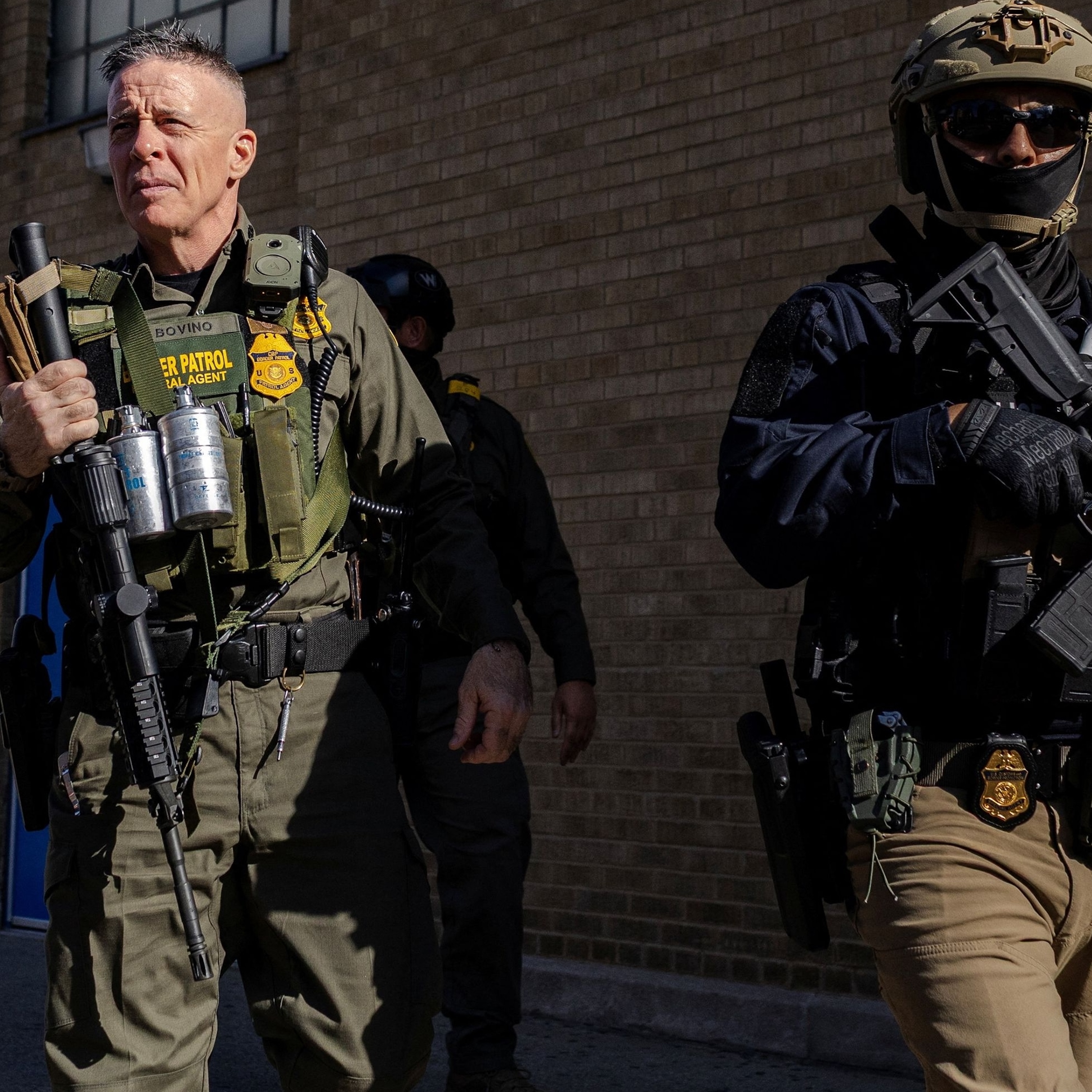
Post Reports
The rise of Border Patrol in US cities
00:27:35
The Trump administration is sending Border Patrol agents right into the heart of some of America’s biggest cities. We investigate how their tactics are shaping immigration operations from Los Angeles to Chicago to, as of this week, New Orleans.
Loading summary
Transcript109 lines
- [00:00]
Commercial Narrator
VRBO helps you swap gift wrap time. For quality time, go to VRBO now and book a last minute week long stay and save over $390 this holiday season. Book your next vacation rental home on VRBO. Average savings $396. Select homes only.
- [00:18]
Elahe Izadi
The Trump administration is sending Border Patrol agents right into the heart of some of America's biggest cities.
- [00:27]
Instead of policing America's rugged frontiers, these border agents are being deployed to Los Angeles, Washington, D.C. chicago, Charlotte, and as of this morning, New Orleans. They're joining other immigration agents from the Department of Homeland Security in these urban operations.
- [00:48]
Marianne Levine
We're seeing a really aggressive approach to immigration enforcement in these blue cities. We're seeing the rise of Border Patrol agents taking on a more prominent role in conducting these Bass arrests.
- [01:03]
Elahe Izadi
Marianne Levine covers immigration for the Post, and she says a clear pattern has emerged.
- [01:09]
Marianne Levine
We're really seeing the lengths to which the administration is willing to go when it comes to reaching President Trump's deportation goals.
- [01:19]
Elahe Izadi
The Trump administration claims to be going after, quote, violent offenders. And in each city, they're touting big arrest numbers. But verifying all this and who is even being deported is more complicated. So Marianne and our colleagues on the immigration team decided to go deep in one city, Chicago.
- [01:42]
Marianne Levine
One of the challenges in writing about DHS's efforts, and especially in a big city like Chicago, is often we're really reliant on bystanders to record what's happening because Chicago's obviously a sprawling city and oftentimes these arrests take place in a matter of minutes.
- [01:59]
Elahe Izadi
Marianne has been going through court documents and talking with agency officials, families, lawyers, residents, to really understand how this aggressive immigration enforcement is playing out on the ground. Chicago made it clear there's a new leader out front.
- [02:16]
Interviewer / Judge
Will you state your name, sir, please?
- [02:19]
Gregory Bovino
My name is Gregory Bovino.
- [02:21]
Interviewer / Judge
And your title?
- [02:23]
Gregory Bovino
Chief Patrol Agent.
- [02:29]
Elahe Izadi
Gregory Bovino, the man who's been commanding many of these operations.
- [02:36]
From the newsroom of the Washington Post, this is Post Reports. I'm Elahe izadi. It's Wednesday, December 3rd. Today I talk with Marianne about what her reporting in Chicago reveals about a new era of immigration enforcement and why we should all be paying attention to Bovino.
- [03:02]
Marian, thanks so much for joining me today.
- [03:04]
Marianne Levine
Thanks for having me.
- [03:06]
Elahe Izadi
So let's just start with the big picture here. Why has the federal government increased immigration operations in these cities?
- [03:13]
Marianne Levine
So I think that we have to look at this in the context of President Trump's campaign promise to conduct mass deportations. To do that, you have to increase arrest numbers. And so We've previously reported that the administration wants to conduct 1 million deportations by the end of President Trump's first year. Now, they're likely not going to hit that number. But this is a very numbers driven administration. And so the way the administration is thinking about this is they want to go into what's known as sanctuary cities to try to increase arrest numbers and to try to increase the number of people that they can potentially deport.
- [03:52]
Elahe Izadi
And what is a sanctuary city?
- [03:54]
Marianne Levine
A sanctuary city is basically a city where the cooperation from local authorities is limited with federal immigration enforcement. And the Trump administration has made a lot of allegations about these cities saying that they're harboring criminals. This is part of, you know, a message that we saw on his campaign as well. But basically, they have really targeted these blue cities in part because of their opposition to sanctuary cities. But also there's definitely a very clear political message here, too, in wanting to label these cities as Democratic cities that are harboring individuals committing crimes. And that's basically the administration's argument.
- [04:28]
Elahe Izadi
Yeah. I want to now turn to Chicago in particular, because as I understand it, you and your colleagues AR Elise Hernandez and Maria Sacchetti, you focused on this deployment of immigration agents in Chicago and you put together a very detailed account of what's been happening there. Why did you want to focus on Chicago?
- [04:51]
Marianne Levine
Well, Chicago's been a really high profile operation. Chicago also saw a lot of these high profile cases.
- [05:00]
Gregory Bovino
Breaking news.
- [05:00]
Interviewer / Judge
A man is dead and an ICE agent seriously hurt after an immigration arrest ended in gunfire in Franklin Park.
- [05:07]
Commercial Narrator
You're looking at video of pre K.
- [05:08]
Sponsor Narrator
Teacher Diana Galliano in the back of an unmarked car Federal agents used to detain her arrested while children were getting dropped off.
- [05:16]
Elahe Izadi
Here, a federal agent is seen firing pepper balls at protesters and outside an ICE processing center. And one of those pepper balls struck a Chicago pastor right in his head.
- [05:26]
Marianne Levine
And we thought that it was a really important example of all the ways in which the administration is trying to conduct its immigration enforcement operations and also the rising power of Border Patrol in conducting these efforts.
- [05:41]
Elahe Izadi
Is it unusual for Border Patrol, which the name implies, they are people who are focused on the border would be in a city like Chicago that's in the interior of the country.
- [05:56]
Marianne Levine
It is very unusual. In talking to former DHS officials and immigration experts, they said that they have not historically seen Border Patrol play this big role in interior arrests. It's a role that ICE has typically played, but we're now seeing that just given the demands that the administration has placed on ice, that Border Patrol is among the different law enforcement entities that are assisting in the arrest efforts. And there's. I think there's some concern among former DHS officials about Border Patrol's familiarity with aspects of interior enforcement. For example, how long someone's been in the country. And because when individuals are crossing the border, everyone basically is arrested because they're crossing illegally, I think there's some concern that that nuance might get lost when Border Patrol is conducting interior enforcement.
- [06:46]
Sponsor Narrator
Yeah.
- [06:47]
Elahe Izadi
Because some people might be in the process of a legal proceeding, and that is a very different situation than someone who's just come into the country and is not yet in the system at all.
- [06:55]
Marianne Levine
Correct.
- [06:57]
Elahe Izadi
So now let's really dig into Chicago here and what immigration enforcement looks like. Let's first start with what the Department of Homeland Security has told you and has said about the scale of their operation in Chicago.
- [07:12]
Marianne Levine
Yeah. So the Department of Homeland Security has said that they've made about 4,000 arrests since they began this effort, and that they have basically said that they've arrested people who are violent criminals, and they have said that they were going to go after the worst of the worst. And they claim that they have. And so those are the claims that DHS has made. We have found that in talking to some of the folks we spoke to for the story that many people do not have these criminal records.
- [07:41]
Elahe Izadi
Can you tell me about one of these cases?
- [07:43]
Marianne Levine
Yeah. One that stands out to me is the arrest of a man named Juan Manuel armenta Rodriguez. He's 45, he has a partner, and they have a teenage son in Chicago. My colleague, Arlise Hernandez, talked to him by phone about everything.
- [08:02]
She asked, when was it that you came to the U.S. he says, I arrived when I was 17 years old.
- [08:16]
So Juan was most recently working as a cook. And he said that the arrest happened when he was waiting at a bus stop en route to pick up his paycheck. He said that several armed men approached him and surrounded him.
- [08:32]
He told Arlis, the police asked me, do you have papers? How long have you been here? And he said, I didn't say anything. And then they asked me my name, and I told them my name was Juan Manuel Armenta Rodriguez.
- [08:51]
But Juan says, they kept insisting he was a different person with a different last name, a guy named Juan Manuel Armenta Martinez. His impression was that the immigration agents were either looking for someone else or they thought they had arrested someone else with a very serious criminal record. So he said he then went to sign some papers that he thought were release documents.
- [09:17]
But he later learned that he had signed a voluntary departure form. And what that means is he was agreeing to leave the United States and not to fight his deportation. So as a result of all this, he is very rapidly deported to Mexico. Two days later, he shows up in a DHS press release. The press release was titled Pedophiles Abusers, Rapists, and Other Violent Thugs. It also had a photo of his mud shot and described him as a criminal illegal alien with arrests for armed robbery and drunken driving.
- [09:48]
Elahe Izadi
Okay, so just to summarize, Juan basically gets picked up off the street in Chicago. He is undocumented, but he's been in the US For a long time. He gets quickly deported, and the whole time he's saying, wait, you've got the wrong Juan. Meanwhile, the federal government is saying, look, we've got these really dangerous people out of the country to include this Juan. They put out this press release, say all these people have done all these things. Marianne, do we know anything about Juan's background, or does he have a criminal record?
- [10:21]
Marianne Levine
So Juan Manuel Armento was never actually convicted of the crimes on the press release. He'd been arrested. But the press release did not mention, for example, that his DUI allegation was reduced to reckless driving and that police declined to charge him with the 2006 armed robbery charges. And I think this example is important because it shows how DHS can, at times, leave out really key information about individuals who they say are criminals. And a big part of this administration's message is that they are arresting criminals. But when you have dropped charges, that means there's no proof of criminality. And for the people who are affected, like Juan, it means there's also no due process or a way for them to challenge the allegations that DHS is making. So if they've been in the United States a long time or have US Citizen family members who could be harmed by his deportation, the avenues of challenging that can be really difficult.
- [11:14]
Elahe Izadi
What has the impact been on his family?
- [11:17]
Marianne Levine
I mean, I think it's been really hard. What they're asking is, where was his due process? And I think that it's a question that a lot of immigrant families have had in looking at how this administration has really tried to rapidly deport people.
- [11:31]
Elahe Izadi
And what has DHS said about this deportation?
- [11:34]
Marianne Levine
So when we asked DHS for comment, they basically reiterated that he had been arrested for armed robbery and that he was driving under the influence. And so they essentially restated the allegations with no acknowledgement that those charges had been dropped or reduced. And they Also told us that he had accepted a voluntary departure to return home to Mexico.
- [11:55]
Elahe Izadi
Marianne, what do we know about just overall the percentage of the people getting arrested and deported that have serious criminal backgrounds?
- [12:07]
Marianne Levine
DHS has offered us limited information about who they're arresting. They have a very select group of people that they like to highlight, but it really represents only a very small fraction of the arrests. And what we do know is from court cases and from analyses that we've done at the post of public data, just generally about the records that these individuals have. And one court case in Chicago, DHS had to turn over a list of more than 600 people who were arrested between mid June and early October. And on that list, fewer than 70 have been described by ICE as high public safety risks. So despite the claims that DHS is making that the vast majority of these individuals are criminals or that they're going after the worst of the worst, we found in our reporting that many do not have criminal convictions and that there is this tendency to view anyone who is here legally as a criminal.
- [13:04]
Elahe Izadi
Yeah. And Juan's story is just one story that paints that picture. I want to ask you about this other moment in Chicago that I'm here in D.C. and it caught my attention. And I'm curious how it fits into the reporting that you and your colleagues did. And that was this massive operation at an apartment building where people were dragged out of their apartments in the middle of the night. There were helicopters. It seemed quite dramatic even from here. And so what did that operation reveal to you?
- [13:33]
Marianne Levine
This operation showed the extent to which the administration has also taken a pretty performative approach to these immigration arrests.
- [13:45]
What happened was on the night of September 30, all of a sudden these residents who were living in an apartment complex in South Shore on the south side of Chicago, were woken up at 1 in the morning. They said they heard drones, helicopters, and they were basically taken out of the apartment complex by federal immigration agents, federal law enforcement agents. So this was a highly publicized operation. Administration officials invited News Nation, which is a Trump friendly news organization, to come along. And Bovino, who was leading the operation on the ground, spoke to them.
- [14:22]
Gregory Bovino
The individuals that we're going after. Train Day Aragua, one of the most violent gangs that the United States is plagued with right now. They traffic in arms, they traffic in humans. They have little regard for life.
- [14:35]
Marianne Levine
They tried to kind of portray this as this big law enforcement effort going into this building to go after people who are very dangerous.
- [14:44]
Gregory Bovino
We know there's weapons. They've actually there's been reports anyway of them taking over units in this apartment complex.
- [14:52]
Marianne Levine
But the stated reasons for going into this building have not necessarily been backed up by the events that have followed.
- [15:04]
Elahe Izadi
Okay, so they said they were going after gang members, that the building had been taken over at times by this Venezuelan gang, Trende Aragua. Why do you say that hasn't necessarily been backed up? What did your reporting find?
- [15:18]
Marianne Levine
What DHS has said is that they claim that Trend Aragua was present in the building. But in talking about the arrests from this operation, they said they had publicly found just two alleged members of Trend Aragua and that 35 other individuals who were swept up in this raid mainly had civil immigration violations, so had been in the country illegally.
- [15:40]
Elahe Izadi
So the government itself has said they just confirmed two members of this gang arrested.
- [15:45]
Marianne Levine
Yeah, two alleged members of the gang. There's been no proof of it, but that's what they're claiming.
- [15:49]
Elahe Izadi
Have they charged anyone with.
- [15:50]
Marianne Levine
No, there have been no federal charges. So they basically have not named the individuals that were arrested. They've not named the alleged Trend members. And there's just a lot of questions we have about an operation that led to US Citizens taken outside, people being taken and disturbed in the middle of the night, and, you know, terrified by some of these efforts.
- [16:20]
Elahe Izadi
After the break, more on the face of these expanding operations. Gregory Bovino and what happened when a judge pressed him on how he handled protesters. We'll be right back.
- [16:41]
Sponsor Narrator
Here's a situation I think we've all been in before. You're in bed, about to go to sleep, doing some last minute scrolling through your favorite shopping sites, looking for those great deals. Then, boom. The sweater or pants or kitchen appliance or whatever is finally back in stock. You hit that add to cart button as fast as you can. But when it's time to check out, you realize your cart is downstairs. And the last thing you want to do is get out of that warm and cozy bed. As soon as you're about to sadly abandon the cart, though, you see it. The purple shop button. That shop button has all your payment and shipping info saved so you can stay in that warm bed and still get that great deal you've been waiting for for months. That's Shopify. And there's a reason so many businesses sell with it. Because Shopify makes everything easier from checkout to creating your own storefront. Shopify gives you that leg up from day one with hundreds of beautiful, ready to go templates to express your brand style and forget about the code. Tackle all those important tasks in one place. From inventory to payments to analytics and more. Spread your brand's word with built in marketing and email tools to find and keep new customers. If you want to see less carts being abandoned, it's time for you to head over to Shopify. Sign up for your $1 per month trial and start selling today at shopify.com reports go to shopify.com reports shopify.com reports.
- [18:01]
To first responders every second counts. Firefighters, paramedics, law enforcement officers and 911 operators need to communicate instantly. And that's why FirstNet exists. FirstNet is the only network built with and for first responders. It's a unique public private partnership with the FirstNet authority making sure America's first responders always have priority access. Whether in the heart of a big city, a rural county or a remote territory. During natural disasters, major storms or large scale events, first responders know they can count on FirstNet to keep them connected. Even when other networks are congested or unavailable. FirstNet is more than a network. It's a commitment to first responders, a promise that America's public safety always comes first. FirstNet built with AT&T. Learn more@firstnet.com Public Safety First.
- [19:01]
Elahe Izadi
So now I want to focus more on this one person, Gregory Bovino, who as mentioned, is the public face of these operations and really this more aggressive, wide ranging approach to immigration enforcement. Marian, can you tell me a little bit more about who he is and how did he come to lead the agency in this way?
- [19:22]
Marianne Levine
Yeah. So Gregory Pavino is someone who a lot of people were not tracking before the second Trump administration. He had been leading the El Centro sector of Border Patrol. He's been a longtime Border Patrol agent and he was especially on the southern border. On the southern border, Correct. And he was in charge of this section, this very quiet 70 mile stretch of the US Mexico border in California. And days before the start of the second Trump administration, he did this really very high profile raid in California where border Border Patrol went to a very agricultural area far away from the border and detained people, many of whom were farm workers. Border Patrol has been spotted stopping sighting.
- [20:04]
Gregory Bovino
And fingerprinting people in Kern county this.
- [20:06]
Commercial Narrator
Week named Operation return to sender. CBP stationed over 60 agents in and around Kern county arresting 78 people whom they said were illegally in the US from Peru, Guatemala, El Salvador.
- [20:20]
Marianne Levine
That whole operation got a lot of attention and it basically prompted the American Civil Liberties Union to file a lawsuit alleging agents were indiscriminately arresting people who were not white regardless of their immigration status. And so our understanding is that this high profile operation is something that Trump administration officials liked and wanted to see more of. And I heard from one former DHS official that it helped get Bovino on the Trump administration's radar and really elevate his role in this administration in leading efforts like Operation Midway Blitz in Chicago.
- [20:56]
Elahe Izadi
And my understanding is you've asked him about his approach. What was his explanation of going into these cities now as leader of these operations beyond the border?
- [21:08]
Marianne Levine
He basically sees this as an effort to keep these cities safe. He has said that this operation has several messages that they want to send. One of the messages is that this administration enforces the law. Another message that that he wanted to send is really to encourage people to self deport. It doesn't have to be this way. People can sign up for the CBP home app and that they can essentially self deport. And I think he has a view that anyone who is here illegally, across the border, illegally has committed a crime, which is a viewpoint that the administration just broadly has put out there, even as they say that they're trying to target the worst of the worst. When I asked him, you know, how many of these individuals have criminal records in Chicago who you've arrested, his response was, they're all criminals. And so he definitely represents a viewpoint that the administration has of going after undocumented immigrants in this very aggressive way, and he's really emblematic of that.
- [22:11]
Elahe Izadi
I mean, as you've mentioned before, even at the top of this conversation, the administration has been invested in a more aggressive approach to immigration enforcement. Bovino, as you laid out here, is following along with that and also publicizing that. Is everyone in the administration on board with this?
- [22:33]
Marianne Levine
We are seeing kind of a divide within the administration over this. For those who want this really aggressive approach, like DHS Secretary Kristi Noem and her top aide Corey Lewandowski, for those who really want to see the increase in arrest, they like what Bovino is doing. They like that he's out there. They like that he is basically helping them increase their arrest numbers. Because Border Patrol is taking such an outwardly aggressive approach. But then you have more traditional ICE officials, more career officials, people who've been there for a long time, who privately have concerns about what this might look like and Border Patrol taking on such an aggressive role and what that might mean for their reputation.
- [23:18]
Elahe Izadi
Like, why are they concerned?
- [23:21]
Marianne Levine
Because I think there's concern just generally that Border Patrol is more aggressive in the rest, and therefore there's a bigger liability of something potentially going Wrong. But I think we are seeing Bovino play a really public role, more public than other administration officials in recent weeks. And I think that's an endorsement of the aggressive approach that he's taking from other officials in the administration.
- [23:46]
Elahe Izadi
Okay, so there's some internal tension around Bovino, but overall, he's got strong backing from the administration. But outside of the administration, has Bovino faced any kind of challenges, legally or even protests for the kinds of tactics being used in his operations, like in Chicago?
- [24:06]
Marianne Levine
So there's definitely been community pushback, and there's been pushback from elected officials. And one thing that we've seen in Chicago is there've been a lot of protests and a lot of protests of how Border Patrol and other federal law enforcement agents are approaching these immigration arrests and raids. And there have been some clashes between protesters and federal immigration agents. We've seen Border Patrol agents and other federal law enforcement agents deploy tear gas on protesters and journalists and even members of the clergy as they've approached immigration raids in Chicago. And those responses have led to legal challenges. And a lot of what we're learning about how Border Patrol is thinking about these operations is from information that's coming out of those court cases.
- [25:00]
One case in particular that we've been watching is a case that's representing journalists, protesters, and members of the clergy and alleges that Border Patrol and DHS have used excessive force.
- [25:13]
Interviewer / Judge
What is your role in Operation Midway Blitz?
- [25:18]
Marianne Levine
What's been interesting is we've learned a lot, too, through this court case, because Bovino has actually had to testify.
- [25:25]
Gregory Bovino
I'm the commander of Operation Midway Blitz, Customs and board protection assets.
- [25:31]
Marianne Levine
He had to sit for a videotaped deposition where he had to answer questions about Border Patrol agents, use of force, and his responsibilities in Operation Midway Blitz.
- [25:42]
Commercial Narrator
Okay.
- [25:42]
Interviewer / Judge
Have there been uses of force that have been less than proper?
- [25:47]
Washington Post Promo Narrator
No.
- [25:47]
Gregory Bovino
All uses of force have been more than exemplary.
- [25:51]
Interviewer / Judge
I see.
- [25:52]
Marianne Levine
And how his agents were responding to protesters?
- [25:57]
Interviewer / Judge
I'm asking you a question, sir. It's just a simple question. You have seen a number of uses of force over the course of your time here in the Chicago area, correct?
- [26:08]
Gregory Bovino
I have seen use of force here.
- [26:09]
Interviewer / Judge
You have participated in use of force, correct?
- [26:14]
Marianne Levine
Have what?
- [26:14]
Gregory Bovino
I have what?
- [26:15]
Interviewer / Judge
Participated in uses of force.
- [26:17]
Gregory Bovino
I have used force right here in Chicago.
- [26:21]
Interviewer / Judge
Okay.
- [26:26]
Marianne Levine
And Bavino himself was filmed throwing a tear gas canister into a crowd. And he's offered shifting explanations for what happened when he did that. Originally, Bovino said that he was hit by a rock and that he threw the tear gas canister in response. But then he appeared to change that story when he suggested that the rock was actually thrown at him after he threw the tear gas canister into the crowd. And so in response to that, the judge basically said that Bovino was outright lying when he said that he was hit in the head with a rock during the protest.
- [27:03]
Elahe Izadi
Were there any consequences to the judge saying that Bovino was lying?
- [27:11]
Marianne Levine
We've seen that Bovino's been admonished by this federal judge in Illinois, but. But so far we haven't seen any real legal consequences for Bovino. And he seems to still very much be out in front of these operations. He, after Chicago, headed straight to Charlotte. And I think we can see him continuing to play a pretty prominent role in the Trump administration.
- [27:34]
Elahe Izadi
So looking ahead, Bovino is still involved in immigration operations in other cities. What do you anticipate next, both for Chicago and these other cities?
- [27:44]
Marianne Levine
So Bovino has left Chicago, but we're still expecting immigration arrests and raids to continue. They just probably won't be as highly publicized as they have been for the past two months or so. But we can expect Bovino to continue these operations in blue cities. After Chicago, he headed to Charlotte, North Carolina, where DHS said it had arrested more than 350 people. So another example of the sweeping arrests that DHS is trying to make in these cities that they're going into, that operation does appear to have wrapped up pretty quickly, much faster than in Chicago. But we're seeing basically this pattern of Border Patrol agents in Bovino going into these blue cities for a finite amount of time, conducting these high profile arrests and then moving on.
- [28:35]
We don't know yet what the long term impact impacts of these operations are. But we know that in the current moment, the administration has definitely instilled fear in people living in these cities. And for people in the administration, for the Border Patrol agents, for the ICE agents who are working on immigration enforcement, we're going to continue to see this increased pressure campaign to ramp up arrests as a means to fulfilling the president's campaign promise of mass deportations in his second term.
- [29:15]
Elahe Izadi
Well, Marianne, thank you so much for joining and sharing you and your colleagues reporting. I appreciate it.
- [29:20]
Marianne Levine
Thanks for having me.
- [29:27]
Elahe Izadi
Marianne Levine covers immigration for the Post. That's it for Post Reports. Thanks for listening. If you love our show, help other people discover it by leaving a rating on Spotify or a rating and review on Apple Podcasts. Today's show was produced by Laura Benshoff. It was mixed by Shawn Carter and edited by Alana Gordon, with help from Rena Flores. Thanks to editor Christine Amario. I'm Elahe Izadi. We'll be back tomorrow with more stories from the Washington Post.
- [30:10]
Washington Post Promo Narrator
Think about why you listen to podcasts. It's like having a friend who makes you think or can help you wind down right? Well, the Washington Post has a lot of people you can turn to at any hour. You can read the most important and interesting stories. We can help you cook something delicious, give you advice on a tricky friendship. Rave about a movie or book that you shouldn't miss. When you become a Washington Post subscriber, you have a companion for whatever part of your day needs it most. Get it all for just $4 every four weeks. That's for an entire year. After that, it's just $12 every four weeks. Cancel anytime. Go to washingtonpost.com subscribe that's washingtonpost.com subscribe.