← Post Reports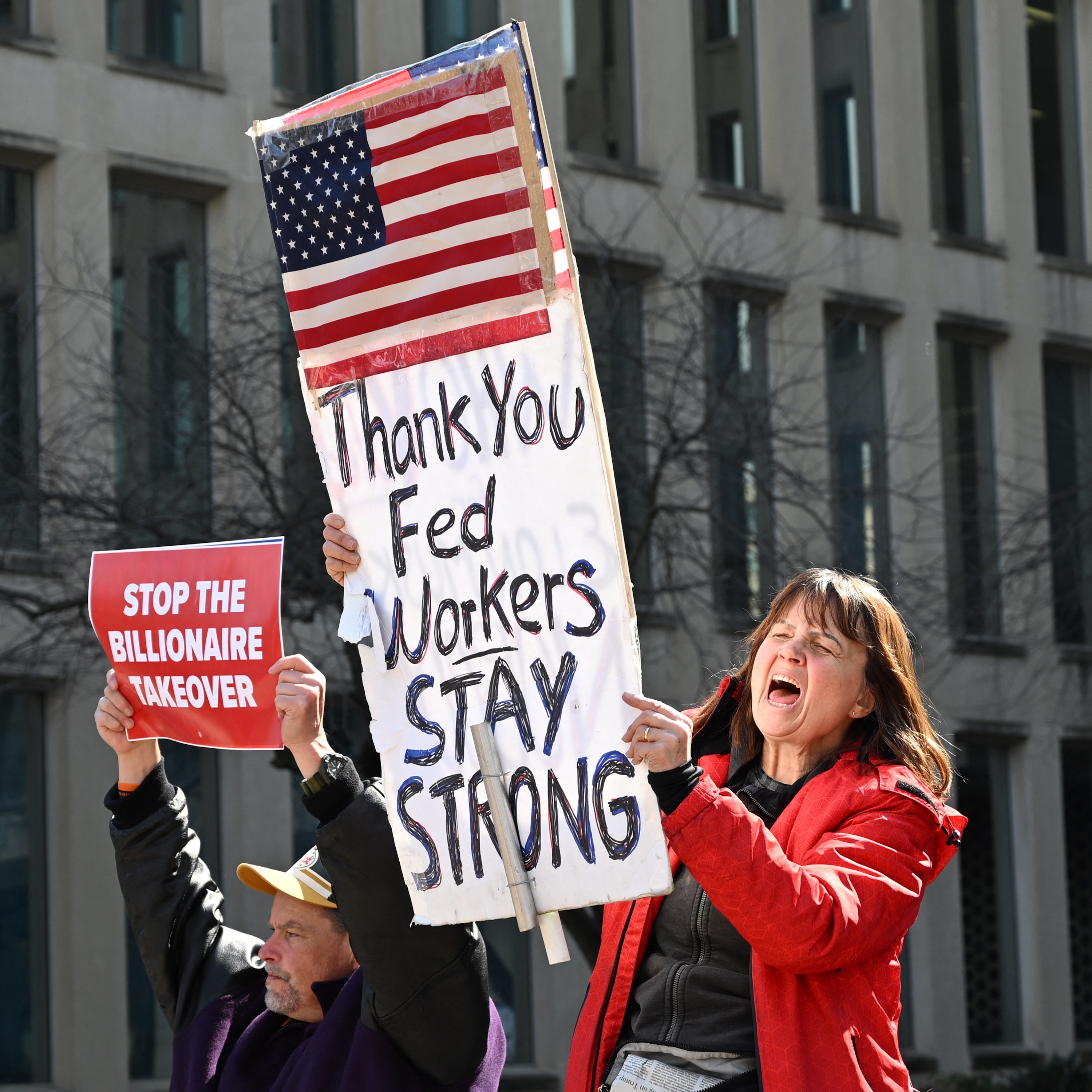
Post Reports
The Supreme Court opens the door to mass federal layoffs
00:18:12
The Supreme Court has temporarily cleared the way for the Trump administration to continue mass layoffs of federal workers. Today, the consequences of this decision and what it could mean for presidential power.
Loading summary
Transcript48 lines
- [00:03]
Colby Ikowicz
President Donald Trump's second term has been an exercise in remaking the federal government. His administration has fired tens of thousands of federal workers across almost all agencies. But a legal question has loomed over these actions. Can Trump unilaterally slice up the federal government however he wants? Yesterday, the Supreme Court weighed in. At least for now, Trump can continue to order mass layoffs. From the newsroom of the Washington Post, this is Post Reports. I'm Colby ikowicz. It's Wednesday, July 9th. Today we'll unpack the Supreme Court's decision to allow Trump to go ahead and order mass layoffs at federal agencies. The Post Anne Marimo joins me to explain this case, how it worked its way up and into the so called shadow docket and what this ruling could mean for the future of presidential powers. Anne, hi. Thanks for joining us.
- [01:05]
Anne Marimo
Thanks for having me, Colby.
- [01:07]
Colby Ikowicz
So, Anne, I want to understand. So there's been a new ruling from the Supreme Court this week, and the case itself is kind of confusing. I'm also a little confused how the Supreme Court is ruling on cases even though its term ended last month. So can you just walk me through kind of the beats of this, how we got to this point?
- [01:23]
Anne Marimo
Sure. So you're right. The Supreme Court's term officially ended on June 27 when they issued their final opinions from the regular merits docket. What we're talking about today are the court's emergency orders that can come at any time. And these are in response to requests from the Trump administration or other parties asking the court to please act quickly, saying there's an urgent need for you to look at this immediately and decide what the status quo should be while litigation continues in the lower courts.
- [01:57]
Colby Ikowicz
Got it. So this is like a temporary decision while the case kind of continues on through the courts, like you said.
- [02:03]
Anne Marimo
Exactly. And this docket, critics call it the shadow docket, used to be really for death penalty cases. When somebody was about to be executed, their lawyers would run to the court and say, please intervene, stop this at this moment. But this practice has really proliferated in recent years with presidents trying to enact their policies, running to the court and saying, lower court judges can't halt this. Please step in and let me enact my new policy.
- [02:30]
Colby Ikowicz
So what is this case about? Because it seems like a big one.
- [02:33]
Anne Marimo
Sure. So back in February, President Trump ordered federal agencies to plan for mass layoffs and a total restructuring of the federal government to shrink the federal workforce and to eliminate what he called waste and bloat. But several labor unions stepped in and filed a lawsuit in California and said that this is illegal, you need to coordinate with Congress and that the president can carry out his policies. But this is such a major restructuring that there needs to be a cooperation with Congress, which set up the agencies and directed their government functions across the board.
- [03:12]
Colby Ikowicz
Right. Because I mean, my understanding has always been like, well, if Congress authorizes and appropriates a program, then it would have to be Congress that would end that program. And I saw that the federal judge in California who took up this case kind of made that argument. Right, right.
- [03:27]
Anne Marimo
That's what the federal judge said, that, yes, the president is in charge of the executive branch, but Congress has allocated the money and directed what the agency should do. And so if there's going to be this major change, there needs to be cooperation between the president and Congress.
- [03:44]
Colby Ikowicz
Okay, so this federal judge in California rules to halt these plans. So what does Trump do?
- [03:51]
Anne Marimo
So after Judge Susan Ilston in California put Trump's plans on hold, he appealed to the Ninth Circuit. This is the appeals court. They upheld Ilston's order, and then Trump quickly appealed to the Supreme Court and said, I need your help. Please allow me to go forward with these plans.
- [04:11]
Colby Ikowicz
And so what did the Supreme Court decide?
- [04:13]
Anne Marimo
So last night, we got an order from the court with the majority saying that the president can go forward with these plans for mass layoffs and restructuring. We got one justice noting her dissent. That's liberal Justice Ketanji Brown Jackson. But what was interesting is that Justice Sonia Sotomayor, also a liberal justice, joined the majority here because she said President Trump's memo back in February directed agencies to act consistent with federal law. So she said, at this moment, this is preliminary. We're not looking at the legality of the plans or any specific layoffs, but the order to the agencies to come up with these reorganizations can go forward. And then there's always room, she said, for the judge to look again at the actual carrying out of these plans to see if those are legal. So the court did not answer the question of whether specific layoffs or restructuring of an agency is valid. And that's the issue that could come back to the court.
- [05:21]
Colby Ikowicz
This is interesting. So basically, the court is saying, you can go ahead with your plans to lay people off, downsize, but we're not going to actually get into the issue itself of whether or not it's legal to fire them.
- [05:39]
Anne Marimo
Yes. And this is what Justice Jackson picked up on in her dissent. She's basically saying that the harm will be done by the time any court gets to look at the legality of this. She said that her colleagues in the majority are allowing Trump to take a wrecking ball to the government now. And essentially it would be too late once a court steps in after the fact.
- [06:02]
Colby Ikowicz
Okay, but you said that Justice Sonia Sotomayor joined with the majority. Right. And so there's one more liberal justice, Justice Elena Kagan. How did she rule?
- [06:12]
Anne Marimo
So that's what's really interesting about the so called shadow docket. The orders are typically short and they're unsigned, so there's no vote count. All we know is what's listed in the order. And we know that Justice Jackson dissented. We know that Justice Sotomayor joined the majority. Justice Kagan did not sign on. So we can say that it appears she joined the majority in this decision.
- [06:37]
Colby Ikowicz
Okay, so if I understand this right, because Kagan didn't note her dissent, we can kind of assume that she joined the majority. So is it then surprising to you that the two other liberal justices, other than Jackson, may have sided with the majority in this case that's going to allow the Trump administration to go forward with its remaking of the federal government?
- [06:59]
Anne Marimo
Somewhat surprising, because at least one or two or three liberals have dissented in many of these other orders that have allowed the President to fire independent regulators, probationary employees. But here it looks like they're taking it as it comes. And they're saying the memo itself that ordered agencies to act in accordance with law suggests that they are going to give him the benefit of the doubt and let them proceed and then wait to see when the issue percolates again to sign, to decide whether or not those steps are legal.
- [07:34]
Colby Ikowicz
I'm curious, Anne, because at the end of the Supreme Court's term, they made a pretty big decision that basically said that federal judges can't order universal injunctions to halt executive orders like these. Did that ruling play into this decision at all, that a California judge shouldn't be able to stop the President?
- [07:56]
Anne Marimo
Yeah, it's unclear because it's not a full ruling from the court. It's just this brief order that doesn't include a lot of explanation or reasoning. But certainly the administration, when they celebrated this ruling last night, sort of made that point that a federal judge was stopping the President from carrying out these plans.
- [08:18]
Colby Ikowicz
Does this mean that we're about to see like a ton more mass layoffs at federal agencies this summer?
- [08:25]
Anne Marimo
That's a great question. I think it's too early to know the full impact of the order. I think it's pretty interesting to note that since Elon Musk left Washington, there have been questions about sort of the future of his Doge service. The Department of Veterans affairs earlier this week sort of backed off of its plans for huge layoffs and instead said that it can reduce its workforce through retirements and attrition. And then there's a separate case from Rhode island that also seems to put a pause on some of the layoffs at the Department of Health and Human Services. So I think it's too early to know the full impact. But I will say at the State Department, it's clear that they are moving ahead. My colleagues who cover the State Department were hearing from employees last night and today that they're getting messages already about conference rooms being booked for firings to take place.
- [09:25]
Colby Ikowicz
After the break, we discuss the ways the Supreme Court has permitted Trump's agenda and the way this might erode our Constitution's safeguards against unchecked presidential power. We'll be right back.
- [09:50]
Tom Sytsima
My name is Tom Sytsima, and I am the food critic for the Washington Post. I think a lot of great restaurant meals are like great books, films or concerts. You don't necessarily need them to live. But don't they make life more worth living? I see myself as sort of a reader advocate, going in there, spending the Post money, coming back and giving you the green light, yield sign or a stop sign. I like to be seen as sort of the best friend who happens to eat out a lot more than they do. I eat in about 10 restaurants a week. And I like creating memories for people and helping them create memories, whether those are first date, a 50th anniversary, grandma's 90th birthday, if you have special needs, whether they're dietary or otherwise. When you subscribe to the Washington Post, you support this kind of journalism. Learn more at subscribe. I'm Tom Sytsima, and I'm one of the people behind the Post.
- [10:54]
Colby Ikowicz
So, Anne, I've been thinking, like, this is not the first time the Supreme Court has ruled on cases related to executive orders from Trump. I mean, is it normal that the Supreme Court is ruling on so many things that the president is trying to do?
- [11:07]
Anne Marimo
Yeah. So what's different is the number of times that the president is coming to the court asking the justices to intervene. And just the huge number of executive orders that the president has introduced to really dramatically remake the government has prompted scores and scores of lawsuits. I think something over 200 lawsuits. So that's why we're seeing all of this action at the Supreme Court. And these cases are being filed in Districts where the judges may tend to be favorable to the parties challenging the president. So everything's moving very quickly, and that's why the Supreme Court's getting involved so often.
- [11:44]
Colby Ikowicz
I know that critics of the president say that he's kind of using the Supreme Court to essentially circumvent Congress, not go through normal legislative order, and to kind of push through his executive orders. Is that a fair criticism?
- [12:00]
Anne Marimo
Well, I mean, the court has checked the president in certain areas, particularly on due process for migrants that the administration has tried to deport on a fast track without any notice or opportunity to challenge their deportation. So we've seen pushback there. But it is true that they have been receptive to his claims of presidential power and again, allowed him to kick transgender troops out of the military, to fire independent regulators, even though they're protected by statutes passed by Congress. So they have been stepping aside and clearing the way for him, at least on a temporary basis. In many of these cases, cases.
- [12:40]
Colby Ikowicz
It occurs to me, Anne, that, like, you know, the ruling about, you know, federal judges not being able to intervene on these executive orders, you know, not going through Congress, really upsets kind of our traditional checks and balances that we have in place to regulate presidential power. Have any members of Congress or other lawmakers been. Been pushing back on this approach?
- [13:04]
Anne Marimo
Certainly, you've seen that from Democratic lawmakers, but we have not seen Republican leaders in con raising concerns about this. In fact, they've been saying that the court should put limits on lower court judges blocking presidents policies nationwide. And I'll just add that there still are ways for judges to check the president. It's just going to be more cumbersome and require more lawsuits to be filed.
- [13:31]
Colby Ikowicz
You know, and to outside observers who maybe aren't following the court day in and day out, it just feels like they've been permissive to Trump and all of his efforts to expand his powers. Is that true?
- [13:45]
Anne Marimo
So the administration has certainly had a lot of success on the emergency docket, getting the court to clear the way for the administration to move forward while litigation continues. But there are some examples of the court pushing back. Justice Amy Coney Barrett and the Chief justice joined with the liberals to say that the administration had to unfreeze certain foreign aid funding. Early on in the Trump administration, we saw the justices pushing back when Trump has tried to invoke a wartime power to fast track deportations of migrants. And probably most notably, the court said that Trump had to take steps to bring back Kilmar Abrego Garcia, the Maryland man who was wrongly deported and is now back in the United States.
- [14:34]
Colby Ikowicz
Yeah, And I'm glad you brought up Amy Coney Barrett, because I feel like more than anyone, she's gotten a lot of criticism from the right for, in some cases, ruling against the White House. Talk to me about that.
- [14:45]
Anne Marimo
Yes. So she is definitely the most unpredictable of the justices and has, in past terms, shown a willingness to join with the liberal justices on various issues. She also, early on, before Trump returned to office, said that his criminal sentencing could not be delayed. So that led to a lot of harsh criticism of her from conservatives and Republican allies of the president. But, but everyone should remember that Justice Barrett is the one who authored the major decision on the last day of the term really stripping lower court judges of the ability to halt the president's policies nationwide. She also was part of the majority that said states can ban gender transition care for minors. And she would have gone further than the majority in that case and raised concerns about the impact of the court's decision on other laws. For instance, bans on transgender athletes, on women's and girls sports teams.
- [15:43]
Colby Ikowicz
I mean, these rulings seem to really put the Supreme Court in an incredibly powerful position. And obviously conservatives have a majority, you know, a 6 to 3 majority in the court right now and probably will for maybe another generation or two. It really is the ultimate decider in these high stakes cases. Is the court giving itself too much power?
- [16:07]
Anne Marimo
So I think that's one of the takeaways that some critics have had from the last ruling of the term, which said lower court judges can't impose these nationwide injunctions, but that the Supreme Court can still have the final say over what the status quo will be while litigation continues. So that does consolidate more power in the justices.
- [16:30]
Colby Ikowicz
And I mean, I saw a little bit, you know, after the Supreme Court ruled on the federal judges and whether or not they could intervene, you know, what's going to happen when the Democrat is president. Right. Like, can a Democrat then, you know, issue a bunch of executive orders that would normally go through a legislative track and not have to answer to anyone? I mean, what precedent is all of this setting for kind of the expansion of presidential powers?
- [16:54]
Anne Marimo
So that's what Justice Sonia Sotomayor warned in her dissent. She said, you know, this will allow Democratic presidents to take away assault weapons from individual gun owners so that it will apply to whoever is in office. And that's the concern that she raised.
- [17:11]
Colby Ikowicz
And is there anything else, Anne, before we let you go? Obviously the term ended at the end of June, just a few weeks ago. Were there any other big cases that we should know about?
- [17:21]
Anne Marimo
So I think that we'll see throughout the summer, depending on litigation in the lower courts, more of these emergency requests from the administration. There's still several pending out there, one about dismantling the Department of Education. I think throughout the summer we'll continue to see these emergency orders as Trump gets opinions from lower courts trying to block his policies.
- [17:43]
Colby Ikowicz
And the Supreme Court also announced kind of what it's going to be hearing in the fall. Right. Is there anything interesting coming up in a couple months?
- [17:53]
Anne Marimo
Yes. So the court is still filling out its calendar, but they're showing that their willingness to wade into some of these big cultural battles again. They've taken two cases challenging state bans on transgender athletes on women's and girls sports teams. So they're going to be right back in the middle of these big cultural battles starting in October.
- [18:18]
Colby Ikowicz
Well, we'll all be watching. Ann, thanks so much for joining us. I really appreciate it.
- [18:22]
Anne Marimo
Thanks so much.
- [18:27]
Colby Ikowicz
Ann Marimo is a Supreme Court correspondent for the Post. That's it for Post Reports. Thanks for listening. If you want to show your support for the show, please subscribe to the Washington Post. Not only is it a great way to help us continue to do this work, but you can now get access to Washington Post podcasts ad free in Apple Podcasts, subscribe in Apple Podcasts or by following the link in our show notes. Today's show was produced by Arjun Singh with help from Ilana Gordon and Tadeo Ruiz Sandoval. It was edited by Ariel Plotnick and mixed by Shawn Carter. Thanks to Debbie Will Gordon. I'm Colbykowitz. We'll be back tomorrow with more stories from the Washington Post.
- [19:17]
Tom Sytsima
Think about why you listen to podcasts. It's like having a friend who makes you think or can help you wind down right? Well, the Washington Post has a lot of people you can turn to at any hour. You can read the most important and interesting stories. We can help you cook something delicious, give you advice on a tricky friendship. Rave about a movie or book that you shouldn't miss. When you become a Washington Post subscriber, you have a companion for whatever part of your day needs it most. Get it all for just $4 every four weeks. That's for an entire year. After that, it's just $12 every four weeks. Cancel anytime. Go to washingtonpost.com subscribe that's washingtonpost.com subscribe.