← Post Reports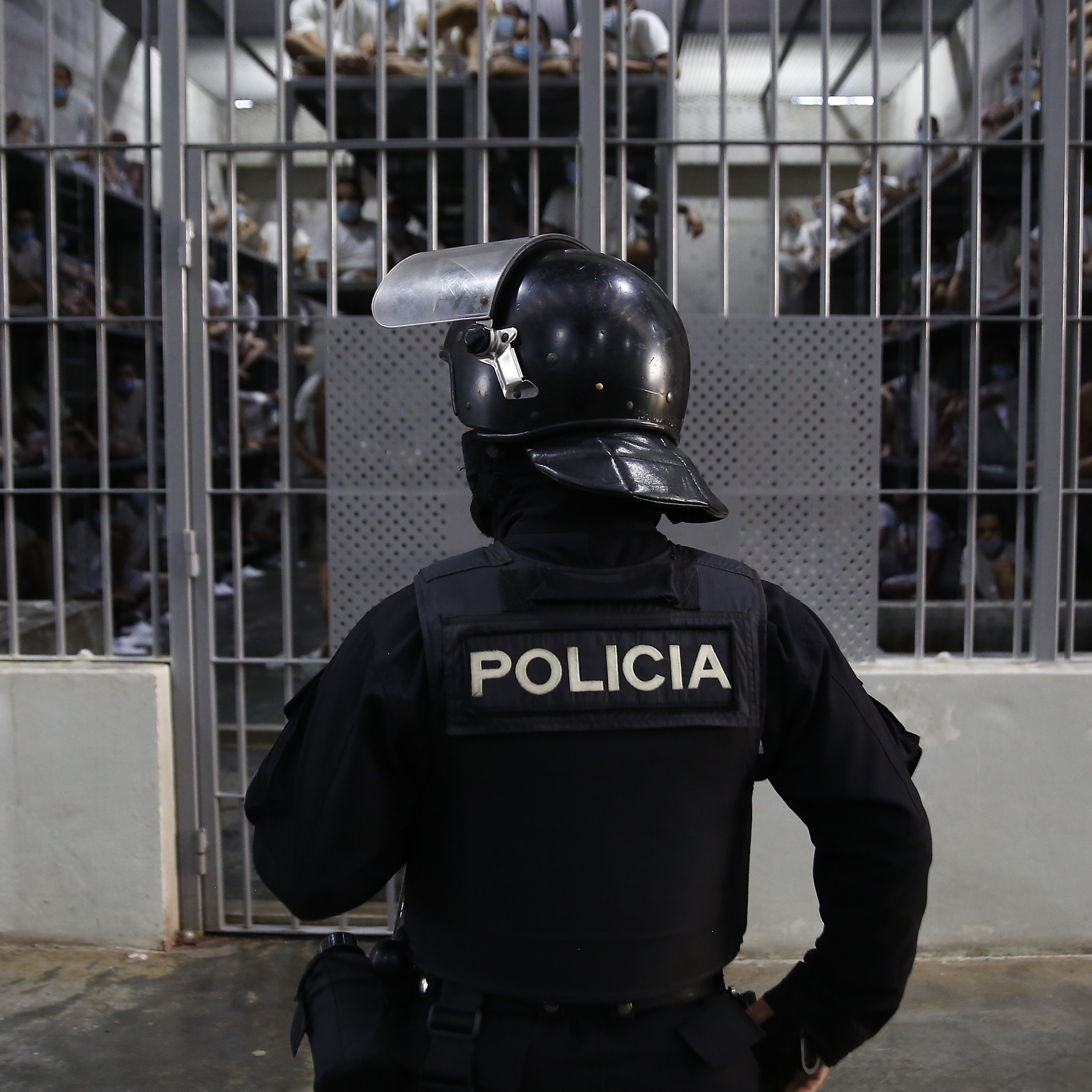
Post Reports
They were deported to El Salvador's megaprison. What happened inside?
00:36:01
The story of Roger Molina, a Venezuelan migrant who was sent by the Trump administration to El Salvador’s megaprison.
Loading summary
Transcript83 lines
- [00:01]
Washington Post Host
If you know your party's extension, press or say 1.
- [00:04]
Samantha Schmidt
To leave a message in our company mailbox, press or say 2. Spoiler alert.
- [00:08]
Washington Post Host
It will be full representative.
- [00:12]
Samantha Schmidt
Would you speak to your mother in that tone?
- [00:15]
Washington Post Host
Speak to a real human being.
- [00:17]
Samantha Schmidt
You shouldn't need to shout into the void to get your health insurance questions answered. Pacific Source Health Plans. This is a real person. How can I help you? Human service, not automated phone trees. Pacific Source Health Plans.
- [00:32]
Elahe Izadi
When Roger Molina arrived home in Venezuela, it was captured on camera by friends and family. The moment is euphoric, a cascade of family members. Squeeze him tight. He's in tears. The video that they posted online doesn't have any sound except for a song called Volver a Casa. It's by the Venezuelan singer Mario Caceres, and it translates. Translates to to return home. This song has become an unofficial anthem for families like Rogers, families whose loved ones were suddenly deported and then imprisoned. Just days before this video was filmed, Roger was in jail in El Salvador at the notorious megaprison called Secot. It was allegedly built for El Salvador's worst criminals. But in March, as part of President Donald Trump's immigration crackdown, Roger and more than 250 other deportees were sent to Seekot. The majority of them were Venezuelan, and many, like Roger, had no criminal records.
- [01:50]
Samantha Schmidt
Since this prison opened in El Salvador, we've had very little information about what actually goes on inside, and until now has been really a black box. Since very few people have left the prison and even fewer have spoken publicly about the treatment inside.
- [02:07]
Elahe Izadi
Samantha Schmidt is a bureau chief for the Post covering South America. She and several of our colleagues wanted to know what happened inside of ccot. So they started speaking to more than a dozen Venezuelan deportees who were released. They have now gotten the fullest picture yet into this prison, including from Roger.
- [02:32]
Samantha Schmidt
Here Roger is saying, I found myself at the entrance of the SECOT back in March. He had no idea he was even being sent to El Salvador.
- [02:40]
Washington Post Host
And suddenly he found himself at the entrance.
- [02:52]
Samantha Schmidt
The director started speaking to us and said, welcome to secot. You are here as condemned people. The only way that you will leave is inside a black bag.
- [03:12]
Elahe Izadi
From the newsroom of the Washington Post, this is Post reports.
- [03:16]
Washington Post Host
Eli.
- [03:17]
Elahe Izadi
I'm Elahei izadi. It's Tuesday, September 2nd. Today we follow Roger's journey into the world's most notorious prison. Sam shares her exclusive reporting, and we learn more about why the Trump administration sent people like Roger there to begin with and then how he and others got out and just A heads up, there are some graphic details about what happened inside of the prison. So please take care how and with whom you listen. Sam, I want to hear all about your reporting on this and what you've learned about this prison from people who were there. I call it Sicot. If you are, you know, a Spanish speaker, you probably call it Sicot. But first, I want to hear more about Roger.
- [04:13]
Samantha Schmidt
One of the cases that I've been following from the beginning is the story of Roger Molina. And now that Roger has been released, our colleague Elena Carpio in Venezuela went and spoke with him at his home in Venezuela after his release. She interviewed him on his front porch outside, and neighbors would come by and say hello and welcome him back. Roger molina is a 29 year old. He loves soccer. He was actually an aspiring professional soccer player. And his journey to the US Goes back years now. He had fled Venezuela and was living in Colombia. And in his last months in Colombia, where he was living with his girlfriend, he was working as a food delivery driver and, you know, living in a country where more than 2 million Venezuelans have moved. For years, Venezuelans have been living under an autocratic government, President Nicolas Maduro. And many of them have left in the aftermath of a severe economic crisis in the country, but also because of repression, particularly in recent years, thousands have been arrested, many political opponents have been arrested, and we've seen a mass exodus, one of the largest in the world. And many of them have in recent years gone to the United States. So, you know, many of his fellow Venezuelans had migrated to the US Crossing the Darien Gap, crossing through a very treacherous journey.
- [05:58]
Elahe Izadi
And that's the gap between Colombia and Panama.
- [06:00]
Samantha Schmidt
Yeah, yeah. A lot of people really crossed by foot from South America all the way to the US he was not one of those migrants. Last year or about a year before he went to the U.S. he started applying for something called the Safe Mobility Initiative, which is a program through the State Department that would basically pick a very select group of people to resettle in the United States as refugees. And he applied for this alongside his girlfriend. And ultimately, after a long vetting process, he and his girlfriend were selected to travel to the US and live there as refugees. And this took months of vetting. And finally they were given plane tickets, they were given a date and told they could travel to the US and start their lives there as refugees. It is a sort of top tier group of migrants who are welcomed into the United States because of their fears in their home country.
- [07:00]
Elahe Izadi
So what happened to Roger when he got this Notice that, hey, you were conditionally accepted into this program for refugees. What happened next?
- [07:10]
Samantha Schmidt
They were ecstatic. He's saying this was the American dream. This was an opportunity they never thought they would have, that they were overjoyed to be given and to build their lives there together as a couple, him and his girlfriend Daniela. It was a blessing for them. They had plans. I actually have a photo of them taking a photo on their way out of their apartment in Bogota with their suitcase. They were so excited. And they flew to Texas and thought everything was fine and actually had been put up in a. In a hotel by the airport and gone through final vetting before they left Colombia alongside other refugees who were resettling in the US and it wasn't until he got to the airport in Texas that he started being questioned in part because of his tattoos. Roger told us that at the Houston airport, an immigration agent took him to a room and started asking him about the trend. And he said, you're from Aragua, right? So do you know anyone from Trend Aragua? Because he's from the state of Aragua in Venezuela. And Roger says, just because I'm from Aragua doesn't mean I know someone from the Trend Aragua gang.
- [08:34]
Elahe Izadi
What is that?
- [08:36]
Samantha Schmidt
Trender Agua is now a notorious Venezuelan gang that has spread throughout South America. And the Trump administration has really used as justification to deport large numbers of Venezuelans this year. And in many cases, we know that people are profiled based on their tattoos, despite often not having much other evidence of gang membership.
- [09:04]
Elahe Izadi
And did Roger, do we know whether he had any evidence of belonging to this gang?
- [09:10]
Samantha Schmidt
He vehemently denies it. And we have documents from his vetting process to become a refugee showing that he was accepted and he had been vetted by federal law enforcement, by U.S. citizenship services, by the State Department. And all of that would have taken into account any previous criminal history. There is no indication to us that Roger was a member or is a member of the Nidragua. So ever since he was detained at the Houston Airport in January, in the last days of the Biden administration, he was detained in immigration facilities in the US his girlfriend was actually sent back to Colombia, and he was eventually under the impression he might be deported to Venezuela. But that is not what happened. Suddenly, on March 15, he found himself on a plane to an unknown destination that ended up being El Salvador. The Trump administration deported more than 200 Venezuelan migrants from the US to El Salvador. President Donald Trump invoked the Alien enemies Act of 1798, a seldom used wartime provision, saying the Venezuelans were members of a crime syndicate linked to the government in Caracas. It was on that day, on March 15, that the Trump administration rushed to send three flights with more than 260 migrants, including 23 Salvadorans, to El Salvador. The US will pay the country $6 million to hold around 300 gang members in its notorious prison. Many of them had no deportation orders, and we would later learn that many of them would not have criminal records either.
- [10:58]
Elahe Izadi
So the migrants were being sent to El Salvador, where there is this notorious prison. Cet Sam, what is the origin of this prison in El Salvador?
- [11:09]
Samantha Schmidt
So President Nayib Bukele opened this prison in 2023, and he unveiled it as this terrifying fortress that was supposed to house the worst of the worst criminals in El Salvador as part of his crackdown on the gangs that had made this country one of the most dangerous in the region. And his government has very proudly declared this the largest prison in the Americas.
- [11:36]
Elahe Izadi
Located near the Salvadoran capital, the massive 160 hectare compound is guarded by a security force numbering more than 800.
- [11:45]
Samantha Schmidt
Arrests can be made without a warrant, and detainees no longer have a right to a lawyer. And it has the capacity, they say, for 40,000 prisoners.
- [11:58]
Elahe Izadi
That's a huge amount of people.
- [11:59]
Samantha Schmidt
Yes.
- [12:02]
Elahe Izadi
Up until now, what has been this prison's reputation?
- [12:06]
Samantha Schmidt
It has been seen as the place where the worst gang members are sent. And we know very little about the conditions inside, in part because most of the prisoners inside don't have access to any communication with the outside world. They don't get access to lawyers. Human rights activists and human rights defenders have often sounded alarms about the lack of information about this prison, and many of them have not gone through a trial.
- [12:35]
Elahe Izadi
Isn't it also true that there have just been mass arrests in El Salvador? And there's also a lot of questions about who this prison population is and whether a lot of, like, innocent people have been swept up in all this.
- [12:50]
Samantha Schmidt
Yes. Since 2022, Bukele has ruled basically by emergency decree and has had total power to arrest anyone he suspects of being a gang member. And more than 85,000 people have been arrested ever since, which is a huge portion of the population in this small Central American country. And Bukele's policies have been incredibly popular among Salvadorans because the country has seen a massive decrease in crime and violence. People can walk on the streets again in places where they wouldn't have dared. But we know that many people have been arrested based on identifiers such as tattoos, and we have, in many cases, little evidence of gang Membership. And so the lack of due process has drawn considerable concern from human rights advocates.
- [13:46]
Elahe Izadi
What did Roger tell you and your colleagues about just even the journey to get to Seekot?
- [13:53]
Samantha Schmidt
I mean, it sounded terrifying because all of these Venezuelans get put on these planes. They have no idea where they're going. In one case, one man who kept insisting on asking for information on where they were going, his mouth was taped, and he was basically strapped to a chair in the back of the plane. They couldn't open the window shades. They were threatened and told that they would face consequences if they did. And they were shackled as well, shackled at their wrists, waists, and ankles. Many of them assumed they were going to Venezuela. And over the course of the flight, they start to realize that is not the case. At one point, they land in a country that they later find out was Honduras because they were given Domino's Pizza. And the Domino's said Honduras on the box. But they were there briefly and then landed in El Salvador. And some of the migrants we spoke to, you know, were brave enough to open up the windows, and one of them saw the Salvadoran flag waving in the distance. And apparently on one of the flights, a female deportee who could understand English on a document she was given read for the passengers that they would be detained for at least a year in El Salvador. And that was when migrants started panicking and refusing to get off the plane. Roger's saying that we started getting beaten right away. It's just beatings and beatings as we're getting forced off the plane. I tried to ask an officer, please, I don't understand what I'm doing here. He was told to shut up. He starts pleading with them, I haven't committed any crime. Please let me talk to someone. I don't understand what I'm doing here.
- [15:48]
Elahe Izadi
Yeah, I mean, I can't imagine the panic he's experiencing in this moment, because in one moment he has all this documentation and is told, yes, come, we've cleared you to come to the United States. And then almost like in a blink of an eye, he's all of a sudden in this, like, sounds like horrifying experience. What did he and others you spoke to tell you about what this prison was like once they were inside?
- [16:14]
Samantha Schmidt
So the Venezuelans were all housed in cells that have the capacity for up to 80 Salvadoran inmates. We know that the Salvadorans often have even more than 80 and are very crowded in these cells. The Venezuelans had up to about 20. But they are basically these cells where you have st of metal bunk beds, essentially, like stacked four levels of bunk beds. Yeah. Imagine like, shelves, essentially. And they're in these cells where they have two toilets and, like, a concrete wash basin right in front of the beds. So they're forced to use the bathroom right in front of everyone else. They are rarely allowed to leave these cells. They have to bathe in these same cells. They're surrounded by the stench of their own sewage. There are lights glaring above 24 hours a day. So they honestly could often not tell whether it was day or night. There is no air conditioning. And this is a really, like, at this point, high temperatures during the day in this tropical climate in El Salvador. And at night, it's just excruciatingly cold on these metal bunks with no cushions, no blankets, nothing. And the prison staff tightly controlled access to water, access to food. They would only get it at certain times of day. And they were basically handed food through the bars of the prison cell and are basically eating in the same space that they're using the bathroom. My gosh.
- [17:48]
Elahe Izadi
And so, Sam, how were these Venezuelans then treated inside of the prison? What did you learn?
- [17:56]
Samantha Schmidt
We spoke with 16 of the Venezuelans that were detained in Secot. And many of them, all of them really described frequent, repeated beatings. And many of them were taken to this place known as La Isla, which is sort of short for aiz lamiento, which means isolation, but it also means the island. And it was the isolation cell where punishments would occur. And we know of cases where one detainee was beaten unconscious, another walked out bruised, struggling to walk, another was vomiting blood. At least one told us that he returned to his cellmates to say he had just been sexually assaulted by guards. It was this place where they would be held for hours in total darkness in this tiny cell where the only light would come through a small hole in the ceiling. There was basically no ventilation, and they would be beaten for hours at times. And you could hear the screams from down the hall. There were several key moments where the Venezuelans started to protest the conditions where they couldn't handle it anymore. In one case, they went on a hunger strike for four days. They didn't eat. They. And here's how Roger recalls that strike. He's saying that we went on a hunger strike for four days. And we told the prison staff we wanted access to the press. We wanted to be able to speak with the press. And they ripped up some of their sheets and were using toothpaste to write messages on the sheets saying, we are not Terrorists. We're migrants. Another case, they managed to use the metal railings on their bunk beds to unlock the chains on the cells. And so a group of the Venezuelans were able to escape and they were met with severe punishment. At another point, they used shards from metal pipes to slice their skin and write messages on their sheets and blood. One of the Venezuelans told us we wanted them to see we were willing to die.
- [20:39]
Elahe Izadi
Wow.
- [20:51]
Samantha Schmidt
Roger. Saying that there were moments I realized, or I thought that maybe the United States had no idea what was going on inside, that maybe the US didn't realize how much they were beating us and the extent of the abuse inside.
- [21:06]
Elahe Izadi
While they were going through this, was there anyone from the outside that they were able to connect with?
- [21:12]
Samantha Schmidt
Actually, there were a few different groups that came to visit Secot and one of them was Homeland Security Secretary Kristi Noem. Detainees told us that when Noem visited, they were actually given better food and thin mattresses for their bunks. Separately, when A group of U.S. politicians toured the prison, detainees with visible injuries were apparently moved to the further cells, as one detainee told us. So it does seem like the conditions were somewhat better during these visits. We also know the Red Cross came. They actually went twice to Sicot during the Venezuelans time there. And a delegation met with the men and collected brief spoken messages from them for their families. Things like, I love you, I miss you, I'm thinking of you. And the International Committee of the Red Cross mission actually told me that these messages were vetted by prison staff before they left the prison. So clearly they were, you know, very brief. They were not controversial. But that was the only contact that family members had with their loved ones inside Zicot during the four months that they were there.
- [22:26]
Elahe Izadi
After the break, what the US and Salvadoran governments have to say about all this and how Roger and others eventually made it out. We'll be right back.
- [22:49]
Washington Post Host
Think about why you listen to podcasts. It's like having a friend who makes you think or can help you wind down, right? Well, the Washington Post has a lot of people you can turn to at any hour. You can read the most important and interesting stories. We can help you cook something delicious, give you advice on a tricky friendship. Rave about a movie or book that you shouldn't miss. When you become a Washington Post subscriber, you have a companion for whatever part of your day needs it most. Get it all for just $4 every four weeks. That's for an entire year. After that, it's just $12 every four, four weeks. Cancel anytime. Go to washingtonpost.com subscribe that's washingtonpost.com subscribe.
- [23:33]
Elahe Izadi
So, Sam, the treatment that you've described here that the Venezuelans who were released told you and your colleagues they experienced sounds objectively horrific. Is it legal for them to have been treated this way?
- [23:51]
Samantha Schmidt
So it's been difficult to pinpoint the responsibility of the US in this. We spoke with some international legal experts about sort of international human rights conventions through the United nations, for example, and they said that if these accounts are true, the Venezuelan's treatments at Secot may have violated UN conventions against torture to which El Salvador and the US have signed. And because the US paid Bukele's government $6 million to hold the Venezuelans, they could be implicated in these, depending on the evidence and depending on how much U.S. officials knew about the conditions. But we know that if torture and arbitrary detentions, forced disappearances like this, as well as potentially sexual assault, if that is proved to be systematic and generalized and known to the government, the El Salvador government, those could be crimes against humanity. And we spoke with a member of an international panel that is preparing a report on El Salvador and investigating whether any of these crimes were committed. And he thinks that these allegations warrant a criminal investigation in the International Criminal Court based on the information he has reviewed.
- [25:11]
Elahe Izadi
Sam, I'm hearing some rain that always comes in Bogota, Colombia. Coming down from where you're talking to me from.
- [25:17]
Samantha Schmidt
Yep, it's that time of day here.
- [25:20]
Elahe Izadi
Well, so Sam, you have just described what possible violations of, you know, international law that El Salvador and other countries might be facing as a result. I'm wondering, did the Salvadoran government have anything to say about these allegations of abuse within the prison?
- [25:37]
Samantha Schmidt
So I sent detailed questions to three different communications officials for the Bukele government and have done so on many occasions in recent months, as we've reported on this since March. And they have never responded to me. So we have not gotten responses from them. Specifically. I did speak with a lobbyist for Bukele whose name is Damian Merrillo, and he's a US Based lobbyist for Bukele, who was actually in the Oval Office earlier this year in a meeting between Bukele and Trump. And he has continued to say that these detainees are criminals who belong in prison, that their claims are baseless. And he claimed that footage made available on social media of their departure from El Salvador showed them in good spirits, happily heading back to Venezuela. So they have really doubled down on the Trump administration's allegations that these are gang members.
- [26:35]
Elahe Izadi
You know, we're kind of the undercurrent to all of this, and you've touched on it already, is the US Role here and its relationship with both El Salvador in this prison. And we have talked about this on the show before. But can you remind us why the United States was sending deportees to El Salvador in the first place instead of, you know, Venezuela, where a lot of these deportees are from?
- [26:59]
Samantha Schmidt
Well, this all began early in the Trump administration. And the justification that Secretary of State Marco Rubio used was that the Venezuelans were not picking anybody up.
- [27:10]
Washington Post Host
They were not allowing anybody to go back.
- [27:12]
Samantha Schmidt
They're the only country in the hemisphere.
- [27:13]
Washington Post Host
That was refusing to accept anyone.
- [27:16]
Samantha Schmidt
These are people that Venezuela was not accepting back and that they were having trouble sending these alleged gang members back to Venezuela. But our reporting in an investigation earlier this year showed that Venezuela had been accepting deportation flights and there were actually deportation flights scheduled for that same week to Venezuela. So that argument has been called into question, but that was how they justified it.
- [27:45]
Elahe Izadi
Yeah. I remember when this first started happening in the United States, there was a lot of public outcry and concerns about due process and whether it was even legal for the president to send people to these third countries. Have those issues been settled in court?
- [28:01]
Samantha Schmidt
Many of those issues continue to be fought out in court. Importantly, President Trump invoked a Wartime Powers act, the Alien Enemies act, to remove over 100 of these Venezuelans without giving them a chance to contest their removals. And at least one case, they have said that they sent one man, Kilmar Abrego Garcia, a Salvadoran man, to El Salvador in error. The Trump administration has admitted that it was an administrative error, but that continues to be at the center of a long running court case.
- [28:36]
Elahe Izadi
So has the United States government said anything about what you and your colleagues have discovered in your reporting and what these Venezuelan detainees told you the conditions were that they faced?
- [28:48]
Samantha Schmidt
We reached out to the Department of Homeland Security with detailed questions about these allegations. And Tricia McLaughlin, a spokeswoman for the Department of Homeland Security, said that these detainees were members of the Trenderagua gang and repeatedly said that they were criminals, even though government officials from the Trump administration have acknowledged in court that many of them had no criminal record. McLaughlin said President Trump and Secretary Kristi Noem will not allow criminal gangs to terrorize American citizens. Once again, the media is falling all over themselves to defend criminal, illegal gang members. We hear far too much about gang members and criminals, false sob stories and not enough about their victims. We also reached out to the White House And White House spokeswoman Abigail Jackson said the Trump administration is grateful for its partnership with Bukele to help remove the, quote, worst of the worst illegal criminals, terrorists and gang members from the United States. She also deferred questions about specific allegations to El Salvador's government.
- [29:52]
Elahe Izadi
So last month, Roger and others like him were released from this prison. How did that happen?
- [30:00]
Samantha Schmidt
So it was this very carefully and long negotiated deal and it all happened on the same day in mid July.
- [30:10]
Washington Post Host
Secretary of State Marco Rubio confirming in.
- [30:13]
Samantha Schmidt
A social media post just a short.
- [30:14]
Washington Post Host
Time ago that 10Americans have been released from Venezuela in a prisoner swap. The exchange was between the United States.
- [30:21]
Elahe Izadi
El Salvador and Venezuela.
- [30:24]
Samantha Schmidt
It was part of an international prisoner swap in which the Venezuelan government agreed to release Americans detained in Venezuela and have them sent back to the US in exchange for having more than 250 Venezuelans return to Venezuela from El Salvador prison.
- [30:45]
Elahe Izadi
So why did Venezuela agree to this? Like, why were they agreeing to release people in exchange for these people, these Venezuelan detainees? What's in it for the Venezuelan government?
- [30:55]
Samantha Schmidt
This has been very politically advantageous for the Maduro government in Venezuela. They have repeatedly criticized this and said that the United States disappeared their citizens to a foreign prison. At the same time, the United States has been trying to negotiate the release of Americans that they say were wrongfully detained in Venezuela. So this was, I think, a sort of win win situation for both governments.
- [31:20]
Elahe Izadi
Did Roger and others like him when this prisoner swap was negotiated and then they were about to release, did they know this was happening?
- [31:29]
Samantha Schmidt
They started seeing some signs that they could be heading out. In their final days, conditions seemed to improve. Roger was taken to a doctor for an evaluation and he was given a clean shave and he was given a haircut of his choice. And many detainees told us that they were given brand name, Colgate toothpaste, Gillette razor and deodorant. And a prison official started taking photos and a director told them to brush their teeth. So it seemed like they were going to be heading out to the public soon. And at 5am on July 18, they were loaded onto buses, once again unsure where they were headed until they saw a man in uniform with a Venezuelan flag on one sleeve get onto the bus. And that was when they realized they were going home.
- [32:25]
Elahe Izadi
How did Roger feel in that moment?
- [32:28]
Samantha Schmidt
Euphoric. They started singing. Roger's saying, we broke into song and there's this Christian song we changed the words to. And the new words went, if I had faith as small as a mustard seed, I would tell my brothers we're leaving. We're leaving. We're leaving. And the locks will break. Officials told us to sit down and to put on our seat belts, and we said, no, we're happy. Let us celebrate.
- [33:09]
Elahe Izadi
That's so striking to me, Sam, because on the one hand, many of these people have left Venezuela for reasons, you know, and they had this idea and this dream of coming to the United States, but then they end up in this what you've described as a horrific place. But now they're back to where they started after having gone through this experience. But by what you're describing, it almost seems like they're overjoyed to be back in Venezuela. Has Roger said anything about what he plans to do next?
- [33:41]
Samantha Schmidt
Yeah. Many of the men are genuinely grateful to the Maduro government for negotiating their release when it seemed nobody else would. And that's including people who fled this country based on real concerns for their safety. But now they're just glad to be free from this prison. And apparently some of the men have considered leaving for the US Again, maybe once Trump leaves office. But when we talked to Roger about this, he said he didn't think he could do it again. Having lived through that, he said the American dream became a nightmare.
- [34:23]
Elahe Izadi
Sam, what is next for seacot? Are there still any deportees from the US There? Will the United States be sending more people there?
- [34:33]
Samantha Schmidt
We don't know if the US Will be sending more people there. We know that on the flights in March were several Salvadorans that were sent to the Secot prison, and those detainees are still in Secot and we don't know what's next for them. We don't know who they are. Even their names have not been released publicly, and they are among the thousands of Salvadorans in this prison. We understand that from sources in El Salvador that about 14,000 Salvadorans remain incarcerated in Secot, and there's no indication that they're going to be able to be released anytime soon or that they're going to have access to lawyers or access to due process, and they'll continue to be cut off from communication with the outside world for the foreseeable future. I think it was just really striking to me that all of the Venezuelans we spoke to were so willing to tell these stories. And I think they see the importance of this because they know that so many Salvadorans remain behind. And in many cases, they told us that the Salvadorans had worse conditions than them. And I think they hope that by speaking and sharing their stories, including reliving all of this abuse, they can help shed light on the experiences of so many others still inside Secote.
- [36:09]
Elahe Izadi
Well, Sam, thank you so much for sharing this reporting with us. I really appreciate it.
- [36:13]
Samantha Schmidt
Thank you so much for taking the time to listen to it.
- [36:20]
Elahe Izadi
Samantha Schmidt is the Bogota bureau chief for the Post. That's it for Post Reports. Thanks for listening. If you appreciate this reporting and find it valuable, help other people discover our show by leaving a rating on Spotify or a rating and review on Apple Podcasts. Today's show was produced by Ilana Gordon and edited by Rena Flores. It was mixed by Sam Behr. Thanks to Elena Carpio, Maria Paul, Teo Armas and Christine Armario. I'm Elahe Izadi. We'll be back tomorrow with more stories from the Washington Post.
- [37:21]
Washington Post Host
Think about why you listen to podcasts. It's like having a friend who makes you think or can help you wind down right? Well, the Washington Post has a lot of people you can turn to at any hour. You can read the most important and interesting stories. We can help you cook something delicious, give you advice on a tricky friendship. Rave about a movie or book that you shouldn't miss. When you become a Washington Post subscriber, you have a companion for whatever part of your day needs it most. Get it all for just $4 every four weeks. That's for an entire year. After that, it's just $12 every 44 weeks. Cancel anytime. Go to washingtonpost.com subscribe. That's washingtonpost.com subscribe.