← Post Reports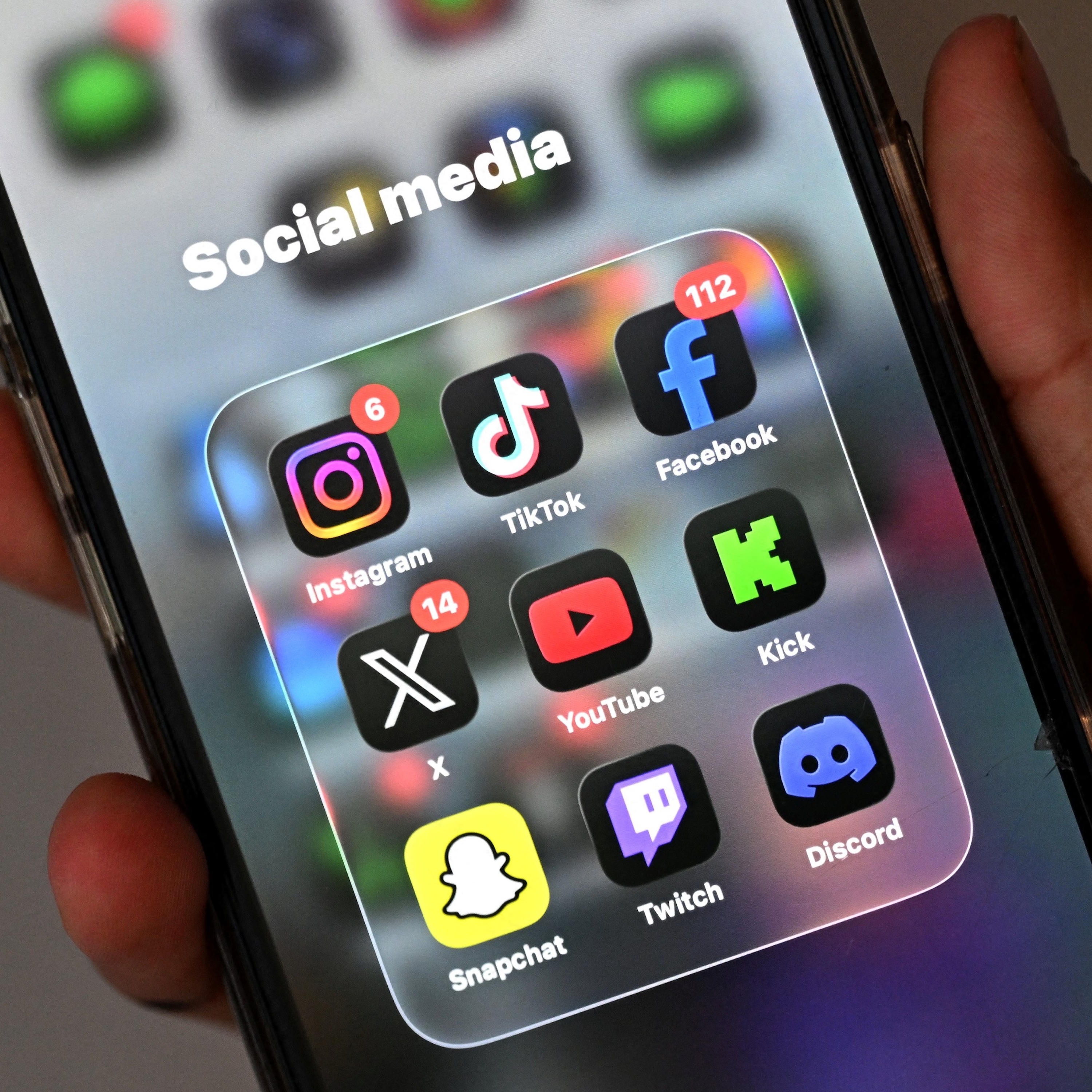
Post Reports
This school banned phones. Remarkable things happened.
00:22:19
After Ballard High School banned phones, they saw a 67 percent increase in students checking out library books. We hear from psychologist Jean Twenge about what phone bans can do for kids.
Loading summary
Transcript60 lines
- [00:02]
A
League 1 volleyball is coming to Minnesota in 2027. The world's best players together on American soil. This is volleyball like you've never seen before. Huge swings, massive blocks, jaw dropping digs. A sport where every play is a highlight. To learn more and get first access, visit lovbminnesota.com iheartra.
- [00:33]
B
This fall, I talked to a principal at a high school in Kentucky. The school had just instituted a bell to bell phone ban. That means no phones all day, not even during lunch. And the principal said that the change he saw in students was immediate.
- [00:53]
C
Students are talking to one another, they're having conversations, you know, engaging in class discussions. More assignments are getting turned in. Just the general vibe throughout the day has been very, very positive.
- [01:08]
B
This is Jason Neuss. He's the principal at Ballard High School in Louisville.
- [01:12]
C
Just seeing students engage with one another, especially during lunch, when normally, you know, the last couple of years, you'd walk in there and everybody's got their head down. They're just kind of scrolling through, not really interacting. And it's fun to see smiles on faces and, and students having a good time with it. We've gotten to the point where we even on Fridays during lunches have offered up bingo. And so the kids have kind of jumped in and started to do bingo. And now they've asked for other games and events and things like that to happen.
- [01:45]
B
He noticed something else too. Students were checking out way more library books.
- [01:52]
C
There's been about a 65 to 70% increase in books that have been checked out of the library.
- [01:59]
B
Jason actually sounded a little sad that his oldest son had already graduated because he missed out on the phone ban.
- [02:08]
C
He was somebody that was a big reader when he was younger. And, you know, through Covid and the shift to where there was a big push towards technology, his reading dropped just for pleasure. I only wish we would have done this years ago, but I don't know that we would have had the leverage to do it.
- [02:34]
B
So of course, the kids must be so happy too, right? They must be so grateful to be free of their phones.
- [02:42]
D
I'd say a lot of students are still really against it.
- [02:45]
B
This is Cali vickers. She's a 10th grader at Ballard High. Are there positives that you're noticing? Oh, talking to Cali was super interesting because she actually noticed a lot of the same things that Jason did. She just didn't necessarily think they were positive. Like how much other kids were talking.
- [03:08]
D
In class kids, because I feel like we never really, especially because of 2020, our group was in fourth to fifth grade during that time, never fully really learned how to emotionally regulate. So I feel like whenever they was no work to be done or like anything outside of actual classwork in class, they would just depend on that phone for emotional regulation. But now since that, like, distraction is missing, I feel like a lot of that hyperactivity comes out during class.
- [03:35]
B
But, okay, so it's just like the good old days where we used to just misbehave. From what Kali told me, it kind of sounded like she and her classmates almost. Almost had, like, separation anxiety about being without their phones, like they didn't know what to do with themselves.
- [03:53]
D
Kids are definitely a lot more active.
- [03:56]
E
That's.
- [03:57]
D
That's for sure. We're all still learning how to get off of that phone dependency. And just cutting phones just so suddenly was not necessarily what anyone was expecting.
- [04:07]
B
There's no question that smartphones and screens have fundamentally changed the experience of school.
- [04:13]
E
School.
- [04:14]
B
This really swung to an extreme during the pandemic when a lot of kids were going to school and socializing almost exclusively online. And there were some pretty dire consequences. Research has shown that kids became more depressed, more anxious, more isolated, less physically active. But I think the tide is starting to turn. Some young adults are actually giving up their. Their phones by choice. We did an episode about this last month, and school phone bans are becoming more and more common. So I wanted to talk to one of the leading researchers on kids and phones to see if she was feeling hopeful and get her advice on how we can all use our devices as tools and not feel like they're taking over our lives or our kids. This is Post Reports. I'm Maggie PENMAN. It's Friday, December 26th. I'm a reporter for the Optimist, the section here at the Post where we talk about what is going right in the world. And today I'm talking to the person who I think of as basically the first researcher to sound the alarm about kids and smartphones. Her name is Jean Twenge. She's a psychologist, and she has some really concrete solutions to these problems that feel so impossible.
- [05:35]
E
I am the author of 10 Rules for Raising Kids in a High Tech World and a professor of psychology at San Diego State University.
- [05:44]
B
Jean told me that around 2012, she started to notice that more and more teens were reporting that they felt lonely, they felt left out, they felt like they couldn't do anything right.
- [05:56]
E
And when I first started to see those trends, I had absolutely no idea what might be causing them. Misaligned with the economy stuff to think any of any event that happened then and kept going. And then I realized that that's also when smartphones and social media became increasingly popular. Also something that had a big impact on teens day to day lives. So I realized at that point that the two things might be related to each.
- [06:26]
B
Other. Here's the rest of my conversation with Jean. I hope you find it as useful and insightful as I did. What do you think the problem is with kids having smartphones and social media at their fingertips?
- [06:48]
E
There's many different problems. So for one thing it can display sleep. It's very tempting to stay up late or even look at that phone in the middle of the night. Common Sense Media found six out of ten 11 to 17 year olds use their phones between midnight and 5am on school nights. It's a terrible formula for mental health. It can interfere with getting together with friends in person, getting outside, exercising. And then there's all of the problematic content online, the ability for unknown adults to contact minors, the competition for likes and followers, the social comparison. It's a very, very long and I.
- [07:25]
B
Get the sense from reading your book that what started as a hunch has since been confirmed, sadly, which is that social media is actually causing depression in teenagers. Is that right?
- [07:39]
E
Yeah. So we have a lot more data now than when I first started to make this argument around 2017. So for one thing we've got a lot more correlational data, a lot more indicators that teen mental health has suffered and there's a lot more random assignment experiment data where people give up or cut back on social media and generally, especially at the end of three or four weeks, they tend to be happier and less depressed than those who kept up their usual social media use. So you take it all together and it definitely points towards social media being a cause.
- [08:09]
B
I am a parent, my daughter is still really young. So hopefully we're many years away from the smartphone social media conversation. But I already feel a little bit panicked about screens, honestly, because it's really painful just to see how addictive they are for kids and adults for that matter. But what I appreciate about your new book is that it's very actionable and it's really, I think, offering some hope because like it can feel like it's parents against the world a little bit trying to like rein these things in. So tell me what inspired you to write this book?
- [08:47]
E
So when I first started looking at this area for research, my own kids were pretty young, I have three children. But then they grew into teenagers and quickly it was that collision between My research life and my life as a mom and just realizing in my view, a lot of the advice out there for parents around technology isn't particularly helpful. A lot of it is really vague. A lot of it is focused on talking to kids, which of course we should do, but that's also not enough. So in the course of raising the three kids, I realized that there were some things, some kind of compromises and rules that we came to that made a lot of sense, that intersected with the research and that I wanted to share with parents to try to make our lives easier because it often is parents against the world in this area. These technologies are very under regulated. Social media in particular, you don't have to verify your age, parental permission isn't required. A lot of like 10 and 11 year olds are on social media. Often their parents don't even know it. So just thinking about how to prevent that. So we came up with a number of rules as our girls got older. One of them is no Internet enabled smartphone until you get your driver's license. That means they can't have social media on their phone, so you're already heading that off at the pass. And then they don't have that Internet enabled phone in their pocket all the time. So of course they're going to have Internet access through a laptop or something else. And Book talks about that too in terms of putting parental controls on the laptop and so on. But that has worked really well because our kids instead have basic phones that are designed for kids so they can text their friends. But there's no social media, there's no Internet browser. And crucial for recently there's no AI boyfriends or girlfriends or companion apps because that's the new worry for parents.
- [10:49]
B
Yeah, and why the link with the driver's license is there? What's the logic behind that rule?
- [10:56]
E
So there's a number of things. So first that means you're already going to be older, 16, 17 in some states. Plus you don't really need a smartphone until you get that license or say are traveling around by yourself. Even then, flip phone does pretty well. But for driving, having the Maps app makes a lot of sense. Maybe having Internet access in certain situations might make a difference, but you don't really need that until that point. Plus if you tie it to the driver's license, you're tying it to independence and getting together with friends in person. Then you don't have the dilemma of oh, mom or dad are busy and can't drive me to my friend's house. So we Might as well just get on Snapchat. Well, if you wait on that smartphone and thus also that helps wait on social media until that long, then it's not that false choice. Then it's, hey, I can get in the car and go see my friends.
- [11:47]
B
One of the other rules that I immediately felt like, oh, yes, great idea, was no smartphones in your bedroom at night.
- [11:56]
E
Yes. So ideally, no electronic devices in the bedroom at night. Sleep is so crucially important for physical health and for mental health. And if that phone is even just in the bedroom, even if it's off, it can disrupt sleep much less if it's going off with notifications and so on. Even if you have it on, do not disturb, your brain knows it's there. So getting it physically out of the bedroom can really improve sleep. And by the way, that's for adults too, and parents too. It's not just for kids and teens. Everybody will sleep better if you can get your device out of the bedroom at night. Now what people say next is, but I have to have my phone in my bedroom overnight because it's my alarm clock. To which I say, I have some advice for you. Buy an alarm clock.
- [12:39]
B
Yeah. Well, that actually brings me to a question I wanted to ask you, which is like, I think what's so interesting about all of these conversations around screens and kids is like, I think the uncomfortable thing is that a lot of parents are also addicted to their devices. And I wonder if, like, doing this research or setting up these rules for your family has changed the way you use your phone or if you have rules for yourself too, to help you kind of keep your device use in check.
- [13:13]
E
I do. And there's also a couple things that I've realized through just interacting with my kids is helpful. So one thing is if you do have your phone out in a certain situation and you take it out and you need to do something on it, tell your kids what you're doing. So say, hey, I just have to adjust the air conditioning on my app. Then it's clear. It's like you're not getting notifications on social media or that you're bored, which is the worst thing. This is called phubbing, by the way. It's a combination of phone and snubbing. Everybody has done it. Everybody hates it when they're talking to someone and they take out their phone. And that's true for parent child interactions as well. So I think that's one thing to do is just to narrate what you're doing. I also have A bunch of rules for myself that I try to follow. So one is certainly the no phones in the bedroom overnight. Another is I do not have social media on my phone. I don't have much social media anyway. I just have Twitter, but I can't access it on my phone. And I also just try to put my phone away, get it physically away. So I'll often leave it upstairs when I go down for dinner in the evening, for example.
- [14:23]
B
Yeah. And I think what you said about the phone snubbing, I love that. I've never heard that before. But, like, I think that's something that I've noticed even when, with my very young child is she knows when I'm, like, checking out and looking at my phone. She senses that. And I think it creates multiple problems with young kids. Like, one is, they want to be on your phone, too. So if I'm, like, responding to a work email, she's like, I want to type. That looks fun.
- [14:55]
E
Exactly.
- [14:56]
B
And if I'm looking at social media, she wants to look at social media. So I think that's something that has actually helped me, is her awareness of my screen usage has made me more aware of my screen usage. And I feel like much better spending time with her when my phone is in another room or upstairs or put away. Because I think kids get. When you're, like, not present.
- [15:23]
E
Yeah, absolutely. And, you know, that's a problem with. With kids even who are very young. A pediatrician once told me that she'd heard multiple preschoolers say something to this effect. It's not a smartphone. It's a dumb phone. Because they hated it when their parents were on their phones when they were trying to get their attention.
- [15:42]
B
And it also makes it much harder to set these boundaries or create these rules if you're saying to your kid, like, no, you can't have a smartphone, and they're like, well, you're addicted to your smartphone. Like, I think it. It kind of creates a sense of hypocrisy as kids start to get a little older and more aware of what's going on here.
- [16:01]
E
Yeah. And so I talk about this in the book. I say, look, you know, parents, many of us have demanding jobs. Maybe we have elderly parents where we're the contact. So we're allowed a certain amount of digital hypocrisy. That's what I like to call it. But only a certain amount, because if you do not want your teen on their phone at the dinner table, you better not be doing that yourself.
- [16:25]
B
So one thing that I have felt optimistic about is it does seem like after many years of people like you kind of like screaming into the void about this stuff, it feels like there are starting to be some real changes. I've noticed a lot of schools and even states implementing phone bans during the school day. I've noticed a lot of parents talking about waiting on giving their kids smartphones or social media. What makes you feel hopeful when you look at how things are moving in our society?
- [17:05]
E
I think there's a number of reasons for hope. One is that idea of no phones during the school day. Bell to Bell has really taken hold. That's starting to spread. It's great to see young adults themselves advocating for more regulation of social media. So that's encouraging. It suggests it's not just, you know, finger waving by older adults. I mean, I knew that anyway because the data I was working with was from teens themselves. But it's really, it's great to see Gen Z themselves speaking up and advocating for this. And I don't know if we'll get this in the US but Australia passed a law that you have to be 16 to use social media and actually verify age.
- [17:51]
B
After the break, Jean and I dig in on the benefits of Bell to Bell phone bans and we talk about what's making her optimistic right now. We'll be right back.
- [18:12]
F
When it comes to holiday gifts, let's just say it's not my strong suit. I'd love to give things people really love. Beautiful, timeless pieces they'll wear for years. I'm usually just a fail, but that's why this year I'm going with Quince. Quince has something for everyone. Soft Mongolian cashmere sweaters for $50 that look and feel like designer pieces. Silk tops and skirts for dressing up. Perfectly cut denim for everyday wear and outerwear that actually keeps you warm. Every piece is made with premium materials from ethical, trusted factories and priced far below what other luxury brands charge. The craftsmanship shows in every detail. The stitching, the fit, the drape. It's elevated, timeless, and made to wear on repeat. I've told you all so many times how much I love my Quince cashmere sweater. This year I'm gifting it to a bunch of my friends. They'll finally stop making fun of the gifts I give. Find gifts so good you'll want to keep them with quints. Go to quince.com reports for free shipping on your order and 365 day returns now available in Canada too. That's Q U I n c e.com reports to get free shipping and 365 day returns. Quince.com reports to first responders every second counts. Firefighters, paramedics, law enforcement officers and 911 operators need to communicate instantly. And that's why FirstNet exists. FirstNet is the only network built with and for first responders. It's a unique public private partnership with the FirstNet authority making sure America's first responders always have priority access, whether in the heart of a big city, a rural county or a remote territory. During natural disasters, major storms or large scale events, first responders know they can count on FirstNet to keep them connected even when other networks are congested or unavailable. FirstNet is more than a network. It's a commitment to first responders, a promise that America's public safety always comes first. FirstNet built with AT&T. Learn more@firstnet.com Public Safety First.
- [20:21]
B
Tell me a little bit about the benefits of Bell to Bell school bans. And I know it's still kind of early days for these things, so we might not fully know all the benefits yet, but what are we seeing already in terms of reported benefits?
- [20:35]
E
So principals say for one thing that discipline issues go way down, that you don't get as much of the drama around social media and what people have texted to each other. Plus then kids aren't taking videos, videos of each other in school bathrooms and locker rooms and posting them, which is unfortunately common. You take phones out of the equation, then that can't happen. Teachers will tell you that it's a lot easier to keep a teenager's attention when they don't have access to their phone and then they talk to each other at lunch. So principals who have instituted no phones during this school day, Bell to Bell say their lunchrooms used to be eerily quiet because all the kids were on their phones. And then after the band goes in place, then they're talking to each other and the lunchroom is suddenly loud again.
- [21:20]
B
Yeah, it's so interesting. I talked to a student at a school that did this and she was like it's so loud and distracting and like kids don't know how to behave. And I was like, yeah, like it sounds like when I was in school, like everyone's talking to each other and like that's actually part of the point of going to school. Right?
- [21:41]
E
Exactly, yeah. Having those conversations at lunch, building those social skills because kids are not spending as much time with each other face to face because of these online technologies. So then at least they can get some of that at launch.
- [21:53]
B
So if you were to wave a magic wand and change one thing in this realm, what would it be?
- [22:01]
E
It would probably be doing something like Australia has done to raise the minimum age of social media to 16 and verify age. So right now the minimum is 13. That was not developed for any logical reason. It was a compromise with the tech companies because what educator or parent or developmental expert would ever say 13, middle school, beginning of puberty. That's the best time to introduce social media. Of course it's not. It's a terrible time.
- [22:28]
B
Yeah.
- [22:29]
E
All right. So if we can delay the introduction of social media until later, I think that would do a lot of good.
- [22:38]
B
Of course, the new law in Australia isn't perfect. Critics say kids can get around it using VPNs, and there are some concerns it could drive them to darker, more dangerous parts of the Internet. There are also privacy questions with verifying kids ages. But before Jean and I wrapped, she added one more thing that I think is really important when it comes to laws or just rules at home.
- [23:05]
E
So one thing I really always want to emphasize, my favorite aphorism, don't let the perfect be the enemy of the good. And that means every parent these days, you know, feels like you're playing whack a mole with devices. It can be really discouraging. It can be tough. It feels, this is my experience as a parent, like every time I turn around, there's something else that I have to deal with. But I take comfort, and I think most parents can too, that, hey, if you've gotten those phones out of the bedroom, if you've given your kid a basic phone instead of a smartphone until they're older, that you've taken some steps to protect them, you're still doing a lot of good. And keep that in mind. Also keep in mind you can put the genie back in the bottle. If you've given the 12 year old a smartphone, take it back and get him a basic phone. And if they hate it, which they might tell them it's this or no phone at all, you'll probably win the argument.
- [24:00]
B
Yeah, that's good advice. Well, thank you, Jean Twenge. I really appreciate your time and your wisdom. Yeah, I really appreciate it.
- [24:08]
E
You're welcome.
- [24:12]
B
Jean Twenge is author of the book 10 Rules for Raising Kids in a High Tech World. That's it for Post Reports. Thanks for listening. Today's episode was reported and produced by me with help from Rennie Svirnofsky, who also makes the show. It was edited by Alison Klein. I hope you're getting a nice break with your family and maybe even a break from your smartphone. I'm Maggie Penman. We'll be back tomorrow with more stories from the Washington Post.
- [25:00]
G
Think about why you listen to podcasts. It's like having a friend who makes you think or can help you wind down right? Well, the Washington Post has a lot of people you can turn to at any hour. You can read the most important and interesting stories. We can help you cook something delicious, give you advice on a tricky friendship. Rave about a movie or book that you shouldn't miss. When you become a Washington Post subscriber, you have a companion for whatever part of your day needs it most. Get it all for just $4 every four weeks. That's for an entire year. After that, it's just $12 every four weeks. Cancel anytime. Go to washingtonpost.com subscribe that's washingtonpost.com subscribe.
- [25:43]
A
Nebraska get ready to feel the pride. Love, Nebraska. Volleyball is back. January 2026, representing the entire state, featuring some of the best players in the world and including Nebraska's own Jordan Larson, Lexi Rodriguez and Jaylee Winters. Massive blocks, long rallies and a statewide fan base that shows up loud. This is a season you don't want to miss. Tickets available now. Visit lovbnab. Com. Iheartra.