← Post Reports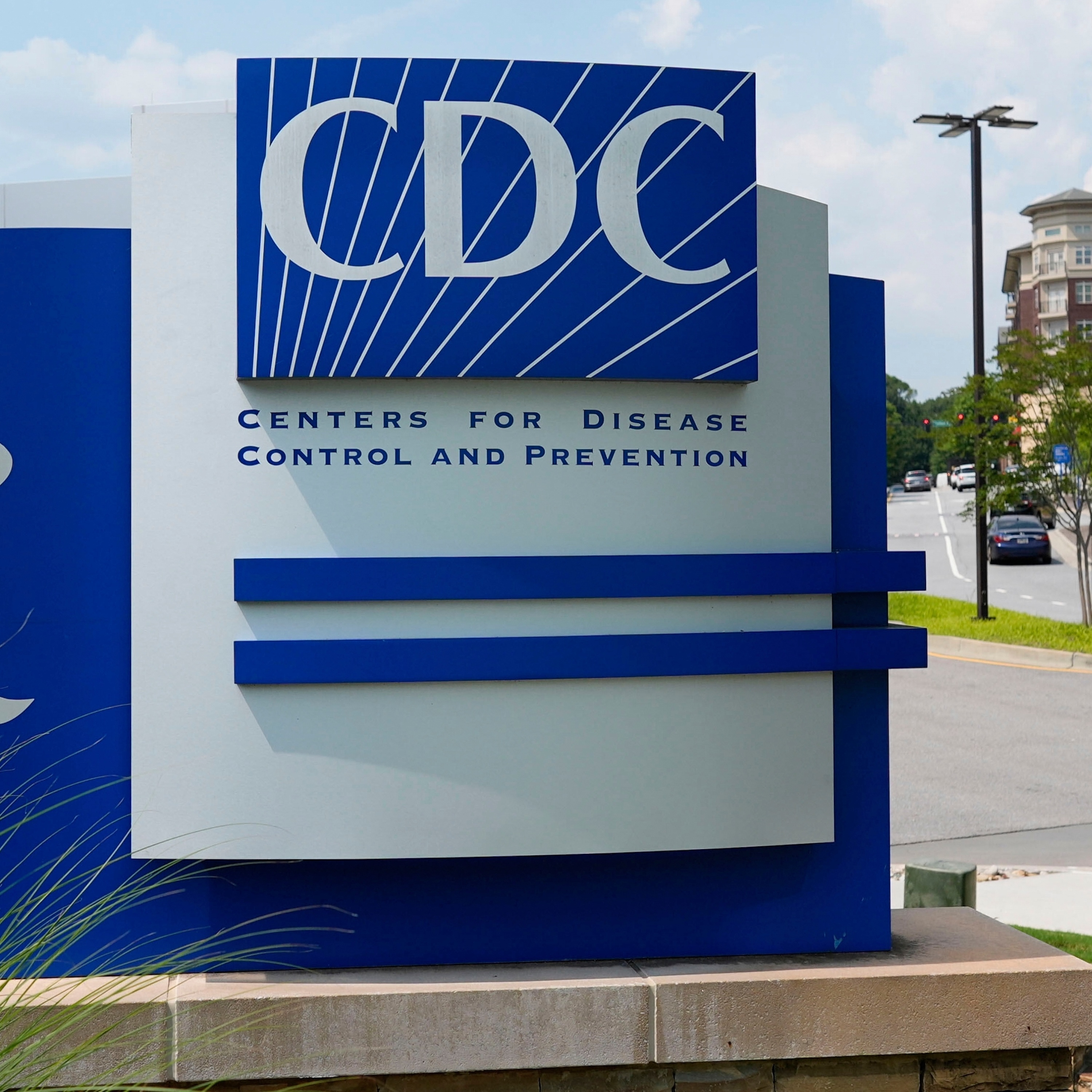
Post Reports
Trump firings spark CDC chaos, Fed uncertainty
00:25:41
This week, Trump set out to fire a governor at the Federal Reserve and the director of the Centers for Disease Control and Prevention. Chaos ensued.
Loading summary
Transcript80 lines
- [00:01]
Dan Diamond
If you know your party's extension, press or say 1. To leave a message in our company mailbox, press or say two. Spoiler alert. It will be full representative. Would you speak to your mother in that tone? Speak to a real human being.
- [00:17]
Colby Ekowicz
You shouldn't need to shout into the void to get your health insurance questions answered. Pacific Source Health Plans. This is a real person. How can I help you? Human service, not automated phone trees. Pacific Source Health Plans. This is not really about politics, but one thing that's gonna be challenging in this episode is how to address the two of you.
- [00:38]
Dan Marika
Yes, the Dans.
- [00:40]
Colby Ekowicz
The Dans.
- [00:40]
Dan Diamond
You can call me Dee. Dee Dee. My friends call me.
- [00:42]
Colby Ekowicz
Is that true? I can call you Dee Dee. I was also thinking like football coach. Like, I could just like call you by your last name. Like, hey, America, sure, get in the game.
- [00:49]
Dan Marika
That works.
- [00:50]
Colby Ekowicz
They were like, did you just say America?
- [00:52]
Dan Marika
People think it's like a pen name. Like I'm like, you know, took a name to write with.
- [00:57]
Dan Diamond
I mean, if you didn't end up with the Post, could you have actually taken that pen name and.
- [01:01]
Dan Marika
Yeah, maybe. America First.
- [01:05]
Colby Ekowicz
America. Oh my God. That is an amazing.
- [01:07]
Dan Diamond
Yeah, that's your substack. If this doesn't work out.
- [01:09]
Dan Marika
Yeah, if I really bomb this podcast we're starting.
- [01:13]
Colby Ekowicz
America First.
- [01:13]
Dan Marika
America first substack. Coming soon to Peters near you.
- [01:20]
Colby Ekowicz
From the newsroom of the Washington Post, this is Post Reports weekly politics roundtable.
- [01:25]
Dan Diamond
Colby.
- [01:25]
Colby Ekowicz
I'm Colby ekowicz. It's Friday, August 29th. I'm joined this week by Dan Marika, politics reporter and co anchor of the Early Brief newsletter here at the Post.
- [01:34]
Dan Marika
Dan, hey, how you doing?
- [01:36]
Colby Ekowicz
And we're also here with Dan diamond, the White House reporter focusing on public health and policy. Dan, thanks for joining us.
- [01:42]
Dan Diamond
Colby, great to see you.
- [01:44]
Colby Ekowicz
Today we're covering a big shakeup at the Centers for Disease Control and Prevention. The director of the CDC is out after refusing to change the government's vaccine policies. And we'll talk about President Donald Trump's continued pressure campaign against the Federal Reserve. In both cases, the White House is trying to exert political influence on what were traditionally expert led organizations. So, Dan diamond, you and your colleagues broke major news this week. On Wednesday, the White House fired Susan Menarez, the director of Centers for Disease Control and Prevention. This is the government agency that, among other things, sets the national vaccine schedule. What happened leading up to her firing.
- [02:22]
Dan Diamond
This week to set the scene? Colby, the Trump administration has been engaged in a major effort to change Americans relationship with vaccines. These life saving interventions that have forestalled disease that are credited as the greatest public health intervention of the 20th century. Some of that is because President Donald Trump has been skeptical of vaccines for a long time. Some is because of a change in the American public on how people think about vaccines, specifically Republicans. But a lot of that is Robert F. Kennedy Jr. Or Secretary of Health and Human Services. He has deputies at the Health Department who are looking into vaccine data. We're moving already to change recommendations from the federal government. And it came to a head with Susan Menarez this week because as head of the cdc, that agency makes numerous recommendations around vaccines, including around coronavirus vaccines. Robert F. Kennedy Jr. And his aides, according to reporting by me Lena Sun. Lauren Weber here at the Post met with Susan Menarez on Monday, basically gave her an ultimatum, said we want you to give us the blessing that if we're making big changes to the coronavirus vaccine recommendations, you're on board with that. Our understanding is Susan Minarez pushed back, said, I can't give you a blanket blessing for these changes. I would need to see the data. I need to talk to my expert advisors. Things spiraled from there. RFK Jr. Accused her of being insubordinate, basically said, you need to resign or we'll fire you. We also want you to fire senior staff at the cdc. Susan Minara has pushed back and as things spiraled over the subsequent days, other people got involved. Susan Menara has reached out to Senator Bill Cassidy, the Republican chairman of the health committee in the Senate, trying to get him engaged in protecting her. That only made RFK because he's a.
- [04:03]
Colby Ekowicz
Doctor, but he's a doctor who ultimately voted to confirm RFK Jr. Though he was skeptical. Right.
- [04:09]
Dan Diamond
He had a very public courtship with RFK Jr. Where he said he wasn't sure he could vote for him because of his physician background and his concerns about RFK as an anti vaccine activist. But ultimately he believed RFK Jun Jr would uphold vaccine access and that he had received promises, pledges from this administration not to change anything. So Cassidy had that in his back pocket. He also is the chairman of a committee that in theory, Colby could be a major pain in the butt for RFK Jr. And this administration. They can launch investigations, they can hold hearings. So Cassidy's involvement though only made RFK further mad. And by Wednesday, Manarez was effectively out. She said she was refusing to resign. She could only be fired by the president. The White House, in kind of a public display at Wednesday night, said, we have fired her.
- [04:55]
Colby Ekowicz
When did you first Hear that this was all going down. Did you get word of this on Monday when they had the first meeting?
- [05:02]
Dan Diamond
So I've been on paternity leave and slowly finding my way back. And I was actually lying in a dentist chair on Wednesday when my phone started blowing up with messages from my colleague Lauren Weber. And my mouth was open. They were working with the tools, and I finally kind of maneuvered my phone out of my pocket and sent her a message and said, I can't talk right now. And she said, we hear that the CDC director is getting fired. Can you help basically, with this? So over the course of my dental appointment to the confusion of my dentist, I was texting and confirming the story, and by the time I got up from the chair, our story was published.
- [05:38]
Dan Marika
Wow. Published from the dental chair.
- [05:41]
Colby Ekowicz
I mean, that's impressive.
- [05:42]
Dan Diamond
The first story was kind of short. We fleshed it out a little bit more. But Lena sun, our amazing dean of public health reporting, she was the one who had the first word that this had been going down.
- [05:53]
Colby Ekowicz
I mean, the thing with Minora is, it's so interesting, is like, she's not a career official at the cdc. She's a Trump appointee who was just confirmed by the Senate last month. I mean, it seems like this all happened really quickly. The tables turned fast on her within days, and now they're talking. You have a big scoop about who they might replace her with, at least in the interim.
- [06:13]
Dan Diamond
So the Trump administration is replacing her with Jim O', Neill, who is RFK Jr. S top deputy at HHS. He is the Senate confirmed deputy secretary. Now, unlike RFK Jr. Jim O' Neill is not someone who is anti vaccine. He testified repeatedly that he supports vaccines. He advised a vaccine company. He worked in the George W. Bush administration on pandemic flu response, which included vaccine response. But he has been pretty critical of the Biden administration and how they promoted the coronavirus vaccine and pushed for coronavirus vaccine mandates. So he. He would not be getting this job, Colby, if they didn't think that he would be more pliable than Susan Minarez and doing what this administration wants to do.
- [06:53]
Dan Marika
Part of me wonders if the Republican Senate, it's taking a lot of time to confirm officials, and so every official that is confirmed and then has to, you know, is forced out or resigns when they're dragging on so long. There's an actual impact to the Trump administration that if they're shaking up things from the folks who need to be confirmed, there's a real cost to that for the Trump administration.
- [07:16]
Dan Diamond
Well, I agree with that, but I also think my recollection from the first administration and this one sometimes too. Donald Trump likes when people are in flux. He likes the idea of these acting officials who can be more easily fired or reassigned because it keeps things more dynamic.
- [07:32]
Colby Ekowicz
I mean, Trump, he obviously has this long history of railing against experts and institutions across so many different areas, but including public health. I mean, Dan M. As you're watching this unfold this week, what are you thinking?
- [07:50]
Dan Marika
I think it's really difficult to be surprised by this, both because of the points that Dan Dimon just made, but Trump ran on a vendetta against these agencies, including the cdc. He made Anthony Fauci a major target during his campaign. He made a lot of claims, many of them false, about the COVID 19 pandemic. My broadest takeaway is it's very difficult to be surprised because we shouldn't be stunned that the man who ran as I alone can fix it and made his name on national television for a show that the catchphrase was, you're fired, is getting rid of people who don't agree with him or don't go along with him. Whether this continues will be an open question. And that's where I think you get into this question about does this bother the Republican Senate that is wasting time in this instance, confirming someone who's just going to be ousted a month later.
- [08:42]
Colby Ekowicz
I mean, I wonder if they're also bothered, if they're also gonna care that, you know, after she was ousted, several other top officials at the CDC quit, like in protest because she was gone. And these, these are like scientists, as far as I understand it, and medical experts. I wanna take a listen to some of what they told our colleague Lena.
- [09:04]
Dan Marika
Sen. My name is Dimitri Daskalakis. I'm an infectious disease doctor and I.
- [09:08]
Dan Diamond
Was the director of the national center for Immunization and Respiratory Diseases. I'm Dan Jernigan. I was until recently the director of the national center for Emerging and Zoonotic infectious diseases at CDC, I'm Dr. Howery.
- [09:21]
Colby Ekowicz
I was the chief medical officer who turned on a resignation yesterday.
- [09:24]
Dan Marika
I tendered my resignation because I could not be a part of the weaponization of public health.
- [09:29]
Dan Diamond
In cdc, we really think that the use of the scientific information as evidence to help the decision making with vaccines is critical. And if that is not the approach that is being taken, then Americans are not getting what they need from us.
- [09:44]
Colby Ekowicz
I'm a scientist. I think it's okay to question, but you shouldn't know what your recommendation is. Going to be before you have the data.
- [09:50]
Dan Diamond
We should always be questioning, but you.
- [09:51]
Colby Ekowicz
Shouldn'T have a preconceived idea before you have the data. I mean, it sounds like Dan diamond, that what they really struggle with is deciding on something before they have all the information, before they have all the data, and that you're putting the politics before the science. And it makes me wonder how Trump and RFK Jr are largely changing, like, the politics of public health and how we as a country think about our health.
- [10:20]
Dan Diamond
Colby, I think the research and studies here are on the side of vaccines. Things that Robert F. Kennedy Jr. And his aides have brought up tend to be disputed about the dangers of vaccines. Now, is there benefit in educating Americans about how vaccines work and being open about the side effects? Absolutely. Like, it's clear even before Donald Trump came back and office that there were many Americans who had questions about vaccines. But what RFK Jr. Has pledged and where he's pushing this department into, say, studies about the connection, which has been repeatedly debunked, between autism and vaccines. There are many public health officials, including some Republican, former Republican officials that I've talked to who say this is not just a waste of time, it's actively dangerous.
- [11:04]
Colby Ekowicz
Yeah, I've been wondering, like, if it could have a twofold issue where, like, you have the people that are already skeptical of vaccines, but then you have the people who believe in vaccines, but maybe don't trust the people that are in charge of them right now. And are they gonna be scared to get vaccines this fall because they don't know who's doing the research, who's doing the work? I wonder if people are worried that there's gonna be a lot of people scared to get Covid flu vaccines.
- [11:34]
Dan Diamond
You're raising an interesting question that reminds me of what happened five years ago when Donald Trump was in his first term. They were pushing hard his administration on coronavirus vaccines. And a number of Democrats said, we're not sure we can trust these vaccines if they come too fast. Now, I thought a lot of that was overblown. Totally made sense that Donald Trump, as someone who is making it a political issue, should be questioned about it. But the officials who are working on it at the CDC and other places were reliable in many cases, longtime government officials. Things have changed in this administration where some of the best, most reputed experts have been pushed out or publicly denigrated. And the people that RFK Jr wants to bring in or empower are in many cases discredited or have lost, in some cases, lost their medical license. So there is a real question how much can we trust what this government is going to tell us about federal health data? Some of the officials who just got pushed out or left on their own accord at CDC have said don't trust what's coming.
- [12:34]
Colby Ekowicz
There was another public health story this week. We had the tragic school shooting in Minneapolis earlier this week. And RFK Jr. He actually weighed in on it, and he said on Fox and Friends that the government is going to look into whether pharmaceutical drugs could be partially to blame for people committing such acts of violence. Let's take a listen.
- [12:56]
Dan Diamond
Word launching studies on the potential contribution of some of the SSRI drugs and some of the other psychiatric drugs that might be contributing to violence.
- [13:13]
Colby Ekowicz
The drugs that RFK Jr. Is talking about, these SSRIs, they're commonly used to treat depression and other mental health conditions. Of course, I haven't seen any evidence that the shooter in Minneapolis was on one of these drugs. But, you know, mental health is it's often blamed after a major shooting like this, and it's usually by, you know, people on the right who are trying to counter a conversation around stricter gun laws. So how does RFK Jr. S argument about mental health, drugs like, fit into the conversation around mental health itself causing violence?
- [13:52]
Dan Diamond
What we've seen, as far as I know, the SSRI connection with gun violence, I haven't seen a study on that. And I've been covering health care in America for the past decade.
- [14:04]
Colby Ekowicz
Whenever there's a horrific shooting like this, there's naturally then a conversation around the need for stricter gun laws. But then those conversations, they never result in any meaningful changes, despite the fact that there's widespread public support for stricter gun laws. I mean, Dan, America, what will it take to see serious policy changes to our gun laws?
- [14:25]
Dan Marika
I mean, sadly, this is a very familiar story. Yeah, you know, a shooting happens like this, a lot of Democrats rally around the idea of passing some sort of gun reform, calling for gun reform legislation, and then nothing really happens. You know, for years, Democrats thought that the nra, the National Rifle association, was kind of the main block, the main thing that was stopping any kind of legislation. But the NRA has been largely gutted from mismanagement and leadership issues and lawsuits. And that's still the case, that the Republicans are largely unmovable on this issue, despite there being, as you note, widespread support for some aspects of gun reform legislation.
- [15:07]
Dan Diamond
Can I just ask, as someone who hasn't covered it as closely, Dan Marika, have there been political consequences for lawmakers for not doing anything on gun control. Republicans who didn't move on it and then were voted out of office?
- [15:18]
Dan Marika
I don't believe so. I mean, I can't think of anybody, any Republican, especially, who has voted out of office for not taking action on this. It's certainly something that they are attacked for. And I think there's like this moment of it's like this inflection point for some of these gun reform groups where they want to figure out how to talk about this issue in a smart way, how that intersects with crime as well. I mean, crime is a huge issue in our politics right now. The role that guns play in crime is obviously significant. And so I think you're gonna see Democrats, as they grapple with their crime message, also grapple with how they work in gun reform into that message because polling shows that many Americans support aspects of reforming our gun laws.
- [16:03]
Colby Ekowicz
Well, let's take a break there. And after the break, we'll discuss another agency under scrutiny by the White House, the Federal Reserve, and whether Trump's meddling in these expert led organizations like the CDC and the Fed could backfire politically. We'll be right back.
- [16:30]
Washington Post Announcer
You listen because you know the power of good journalism and the Washington Post is there for you 24 7. When you become a Washington Post subscriber, you get exclusive reporting you can't find anywhere else. You also get sharp advice columns, delicious recipes, TV and music reviews and so much more. Right now, you can get all of that for just $4 every four weeks. That's for an entire year. After that, it's just $12 every four weeks. And you can cancel anytime. Add to your knowledge and discover all the Post has to offer, go to washingtonpost.com subscribe. That's washingtonpost.com subscribe.
- [17:16]
Colby Ekowicz
As usual in the Trump administration, this was not a slow week for political news. And we saw another big shakeup over at the Federal Reserve. We know that President Trump has long been critical of the Fed chair Jerome Powell, but now he's trying to fire a woman named Lisa Cook. She's one of the Federal Reserve governors. Cook is suing to keep her job. Dan Marika, just very quickly, what are Fed governors like? What do they do? And why does he want to fire her specifically?
- [17:42]
Dan Marika
The amazing thing about politics right now is we're talking about what would have been largely anonymous officials that we probably wouldn't have talked about in past political conversations. So there are seven members of the board of governors that oversee the Federal Reserve System. They take action on a whole host of monetary policy Issues, employment, prices. They're nominated by the President, but they serve staggered. So they're in different terms, 14 year terms. The length of that is to divorce them from politics. So the presidents, yes, they may name a few, but there are a number of governors from different presidents who are nominated at the same time. Cocon is an economist. They are often people with lots of economic experience. Trump says he's firing her because she committed mortgage fraud, which she denies. That mortgage fraud predates her time as a, as a governor.
- [18:37]
Colby Ekowicz
I mean, the Federal Reserve has always acted independently from the White House. Help me understand, like how big of a deal this is. If the President is to fire a Fed governor and suddenly this agency becomes, or this organization becomes less independent, that's significant.
- [18:53]
Dan Marika
If he can fire Cook, then it's likely Trump will appoint someone much closer to him, his thinking on the economy onto the board primarily because he wants to lower interest rates. I mean, he's been focused on this for a number of months. He thinks that lowering interest rates would be a boost for the American economy. There is some indication that the next Fed meeting, that the Fed could do exactly that, could lower interest rates, which is what Trump has been asking for. But there's also an irony here. You know, Trump in 2024 ran on inflation and prices and used it really to attack the Biden administration and Vice President Kamala Harris lowering interest rates. And if that happens too quickly, the most likely outcome will be a spike in inflation and a spike in prices. So there's an irony here that Trump is so eager to do the first thing, which is lower interest rates, that he might not be able to do the thing that he campaigned on so hard in 2024, which is bring prices under control. Now, you could make the argument, and plenty of folks around the president do that it past time to lower interest rates. I mean, this is the attack that they lob against Jerome Powell often is that he's just late, he's slow to make a decision. But there is a risk here and I think there are a number of Republicans who know that, that when you're approaching the 2026 midterms, where the main issues are going to be over things that Americans experience every single day, it would make the Fed less independent and possibly undermine confidence in the economy. And that gets back to everything we've talked about, about data and what's coming out of these kind of institutions that have very low trust across the board right now. If traders on Wall street, if folks who decide monetary policy economists can't trust the Fed can't trust what's coming out of the Fed. That has real implications for the future of the economy in the United States.
- [20:45]
Colby Ekowicz
This conversation about the Fed and this conversation about CDC seems related in that the White House is taking these independent groups run by nonpartisan experts and trying to exert greater control over them. And Dan diamond, in your role, how big of a deal is it if a health policy agency that had always been run by nonpartisan scientists suddenly becomes political?
- [21:10]
Dan Diamond
Well, I should push back on that because there have been political appointees leading the CDC for a long time. But what is different under the Trump administration? First some years ago in the first administration and now very much in the second one, the tighter and tighter control with more political appointees at cdc, more vetting by the White House of the message and more doubt about what CDC is saying. One of the officials who resigned this week, Dimitri Daskalakis, a physician who helped lead the nation's MPOX response a few years ago, had been a senior CDC official these past years. He published his resignation letter and he took issue with a document that CDC had circulated a few months ago, said that he and his colleagues didn't know who had advised the authors of this document. It was filled with bad data. And I'm just reading from his letter, quote, having worked in local and national public health for years, I have never experienced such radical non transparency, nor have I seen such unskilled manipulation of data to achieve a political end rather than the good of the American people. So in terms of is CDC going to be politicized like it's already there?
- [22:15]
Colby Ekowicz
Right.
- [22:15]
Dan Diamond
And I think we see that across the health department under Robert F. Kennedy Jr. Who has a very distinct viewpoint that is out of step with public health leadership.
- [22:24]
Dan Marika
Dan, you covered the CDC and public health during the coronavirus pandemic, Correct? The attack from Republicans on the Biden administration at the time was that they were politicizing this moment. They were politicizing the cdc, they were politicizing the push for vaccines. I mean, is that lost on anybody?
- [22:41]
Dan Diamond
Well, I think we're in an era danmerica of your side does it so we can do it and maybe we can do it worse. About five years ago, the Trump administration was meddling in CDC reports and this was a big deal. Republicans spoke out, some people left cdc. I don't think a similar story today would cause a ripple in part because Donald Trump is okay with this and the eight shake chest secretary is okay with this. The guardrails. Even in the first administration, Donald Trump was vaccine Skeptical. But there were people constantly telling him this is a bad idea. He doesn't have that anymore.
- [23:17]
Colby Ekowicz
The implication or not implication, but the consequence is, like, people's lives. Like in the case of the Federal Reserve, it's people's pocketbooks. In the case of the cdc, this is like life or death.
- [23:28]
Dan Marika
Remarkably high stakes.
- [23:29]
Colby Ekowicz
Yes.
- [23:30]
Dan Marika
Yeah. I think we ask ourselves all the time in D.C. is, does this matter? You know, like, we focus on this stuff, we cover this stuff. You especially folks who cover politics like myself, you ask yourself, does this matter to voters? But you make the great point that this is not just about somebody at the cdc. This is about someone's health, about what your doctor is recommending to you. This isn't about just someone at the Fed. This is about whether your bananas are going to be more expensive, whether your coffee is going to be more expensive, what your mortgage rate is going to be. These are all extremely personal issues that I do think, when it comes down to it, if you're looking at this through political lens, will matter to voters, because we've seen it matter before.
- [24:08]
Colby Ekowicz
Yeah, that's what I'm wondering. He obviously is taking on so much responsibility for these huge areas of public life. And so if the economy tanks ahead of the midterms, if people start getting sick ahead of the midterms, does he pay that political cost? Does Donald Trump get blamed for that?
- [24:26]
Dan Diamond
I think depending on what happens, quite possibly, yes. We saw in coronavirus there were things that the Trump administration could not have done. This was a global pandemic. It caused all kinds of chaos, even in countries that took pretty aggressive steps to deal with COVID Many of them got punished in different ways, too. Public health wise economically, and so on. So some of the pain that the Trump administration absorbed in 2020 and led to Trump's defeat, I think some of that was just, you're the president in charge. Americans frustrations roll up to you. Other things they deliberately did or didn't do that backfired and were mismanaging the pandemic. But we did see a case study, Colby, of Trump was in office. Things went bad in America. People took it out on Trump. The economy Biden inherited, there was high inflation. Maybe the Biden administration pushed that inflation up. Either way, people point the finger at the president. So if there's a big enough crisis, the person who's in the big seat gets blamed for it.
- [25:22]
Colby Ekowicz
Yeah. Even if your name is Donald Trump. Guys, let's leave it there. Thank you so much. This was an awesome conversation. Really appreciate having you both on.
- [25:31]
Dan Marika
Thanks for having us.
- [25:32]
Dan Diamond
Great to be here, Colby.
- [25:33]
Colby Ekowicz
Dan Marika is the co anchor of the Post's flagship political newsletter, Early Brief. Dan Dimon is a White House reporter for the Post. This journalism, like Dan's exclusive reporting, that's what you support when you become a Washington Post subscriber. If you don't yet subscribe the Post Labor Day sale is happening now. It's a great time to take the step. You can get our core subscription for $20 for an entire year. This is billed as a single $20 payment for the first year, then renews at $120 per year thereafter. And you can cancel anytime. Go to washingtonpost.com subscribe that's washingtonpost.com subscribe. There's also a link to some subscribe in our show Notes, Today's episode was produced by Arjun Singh and mixed by Rennie Sriranovsky. It was edited by Laura Benchoff. Thanks also to Politics editors Katie Burnell Evans and Sean Collins. Our team also includes Rena Flores, Ted Muldoon, Alana Gordon, Ariel Plotnick, Sean Carter, Sabi Robinson, Emma Talkoff, Peter Bresnan, Thomas Liu, Bernita Jablonski, Alahiazadi and Martine Powers. I'm Colby Ekowicz. Have a great weekend.
- [26:59]
Washington Post Announcer
You listen because you know the power of good journalism and the Washington Post is there for you 24 7. When you become a Washington Post subscriber, you get excited. Exclusive reporting you can't find anywhere else. You also get sharp advice, columns, delicious recipes, TV and music reviews and so much more. Right now, you can get all of that for just $4 every four weeks. That's for an entire year. After that, it's just $12 every four weeks. And you can cancel anytime. Add to your knowledge and discover all the Post has to offer. Go to washingtonpost. Com subscribe that's washingtonpost. Com Subscribe.