← Post Reports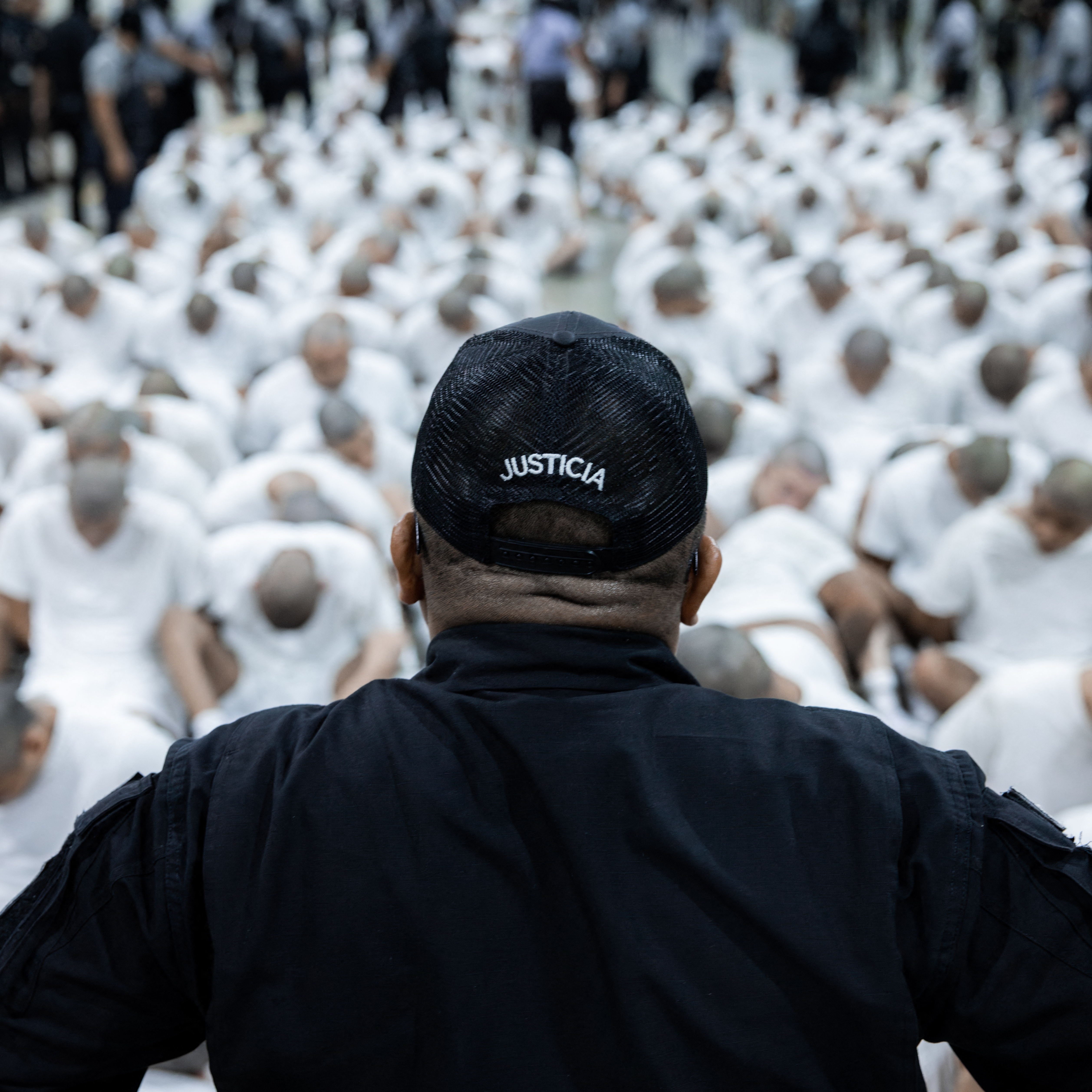
Post Reports
Trump used the Alien Enemies Act to deport migrants. Was it legal?
00:16:16
How the Trump administration used an obscure wartime law to expel Venezuelan migrants from the U.S. – and how they apparently defied a judge to do it.
Loading summary
Transcript45 lines
- [00:03]
Colby Ikowicz
On Friday, President Donald Trump signed a proclamation in secret. In it, he invoked an obscure law, the Alien enemies Act of 1798. It's a sprawling wartime power that hasn't been used since World War II. Then, over the weekend, the administration used this power to deport more than 100 Venezuelan migrants. The White House claimed they belonged to the gang Trende Aragua. These migrants received no immigration hearing and no due process. They're now stranded in a mega prison in El Salvador. From the newsroom of the Washington Post, this is Post Reports. I'm Colby IKOWICZ. It's Monday, March 17th. Today, the alien Enemies Act. I'm sitting down with immigration reporter Marianne Levine to talk about how the Trump administration used this wartime power to deport migrants and how they apparently defied a judge to do it. Marianne, I know you were really busy over the weekend. Could you just start by giving us a play by play of all the events that unfolded?
- [01:25]
Marianne Levine
So we had been hearing for, for some time that President Trump planned to invoke the Alien Enemies act to speed up deportations of migrants. And Trump had talked about this law on the campaign trail. He had talked about it during his inaugural address. So this was something that many immigrant advocates were ready for and were anticipating. So we see that Saturday morning, the ACLU and Democracy Forward foundation file the lawsuit against the Trump administration, essentially trying to preemptively stop the administration from using this wartime law. And as the day unfolds, we then see that the White House has actually posted publicly that Trump has already invoked the law and that he had invoked it for Friday night and had signed it Friday night, but the White House did not officially or publicly announce it until Saturday. So all this unfolds. The U.S. district Judge in Washington, D.C. basically preemptively blocks the administration from deporting the five migrants for the plaintiffs in the case from being deported under the Alien Enemies Act. They were not on these flights. And this all unfolds Saturday afternoon, and the judge schedules a hearing immediately. At that hearing, the judge basically orders the administration to stop the invocation of this law to speed up mass deportations, and orders them to return any migrants who have been in flight back to the United States.
- [03:01]
Colby Ikowicz
Any migrants that were in flight under this law?
- [03:04]
Marianne Levine
Correct.
- [03:04]
Colby Ikowicz
Okay. And how many was that? The.
- [03:06]
Marianne Levine
The administration had deported 137 migrants under this law to El Salvador.
- [03:12]
Colby Ikowicz
And so he used the Alien Enemies act as the legal justification. Can you kind of explain what that act is? What does it do? What does it allow the President to do?
- [03:21]
Marianne Levine
Yeah. So the Alien Enemies act is a very old, centuries old law that has not been invoked since World War II. But basically for the purposes of President Trump's immigration policy, this law essentially being used to deport migrants much faster. And the reason for why that process is much quicker is because this law essentially eliminates the right to due process, and it eliminates the right to a court hearing. So the United States can say, these migrants are from a country with which we're at war, they can be deported quickly, and they don't need to go through the typical legal process that would normally take place. Now, the caveat here is the United States is not at war. And that's something that legal experts quickly pointed out.
- [04:09]
Colby Ikowicz
Yeah, I wanted to ask that because. Because the last time we used this was World War II, when we were actually at war, and it laid the groundwork that allowed US to intern 110,000 Japanese Americans. But to your point, we're not at war with Venezuela. So how does Trump justify, or does he claim that we're at war with Venezuela? What is he saying?
- [04:27]
Marianne Levine
He claims that the gang is a national security threat and that basically this wartime law allows him to use whatever measures he can to expel alleged gang members from Trend Aragua, but it doesn't.
- [04:42]
Colby Ikowicz
Require the president to declare a war or to say that we're at war specifically.
- [04:47]
Marianne Levine
Well, that's the question. Right. And I think a lot of legal experts would say that in order for this law really to be invoked, the United States has to be at war, which historically has gone through Congress.
- [04:56]
Colby Ikowicz
Right.
- [04:56]
Marianne Levine
And so what critics will say is that this is another example of the Trump administration basically trying to circumvent Congress and trying to reach back to some of these arcane laws to try to fulfill as campaign promise of mass deportations.
- [05:10]
Colby Ikowicz
And so Trump is claiming that these migrants that were deported are part of this gang. Trende Aragua. What is this gang? And are the alleged members the only people that were deported over the weekend?
- [05:22]
Marianne Levine
Trunde Aragua is a transnational gang, and basically the administration has repeatedly sought to portray Trend Aragua as a. As a significant threat to the United States. Trend Day. This has been something that he's talked about a lot. Or is your law enforcement and law enforcement all over the world, they know them all over the world. They're a savage gang, one of the worst in the world. A lot of experts say that the gang does not pose this significant national security threat to the United States in the way that President Trump has sought to portray them, but they've Essentially tried to link the gang members to these terrible tragedies that have occurred where an undocumented immigrant commits a murder or crime. And that's been the context with which the administration has talked about the threat of trend. Aragua, specifically. There were also other alleged gang members that the administration said were also on these flights to El Salvador. When Salvador and President Bukele talked about the migrants who had arrived, he also said that there were more than 20 members of Ms. 13, which is another gang. Which is another gang. Correct.
- [06:29]
Colby Ikowicz
Are the people that were deported over the weekend, are they definitely members of this gang?
- [06:34]
Marianne Levine
So we haven't independently verified that.
- [06:36]
Colby Ikowicz
Huh. So some of the people that were deported over the weekend are Venezuelan nationals. Why then were they sent to El Salvador?
- [06:44]
Marianne Levine
So President Bukele over the weekend and administration officials confirmed that the United States is actually paying El Salvador to hold these alleged gang members, to hold them in this mega prison. So basically, El Salvador has offered to be a partner to the United States when it comes to detention and when it comes to assisting with the mass deportation operation, that's a big reason for why they were sent there.
- [07:08]
Colby Ikowicz
So this is a financial boon for El Salvador. They agree to take these prisoners in exchange for money from the United States. Is that how this arrangement is working?
- [07:17]
Marianne Levine
So our understanding as of today is that the United States has agreed to pay EL SALVADOR Approximately $6 million to detain these alleged gang members. But it's one way in which the Salvadoran government has sought to improve its relationship with the United States. We saw Secretary of State Marco Rubio call Bukele a. And so it's also, I think, a strategic way for El Salvador to get in the United States good graces.
- [07:45]
Colby Ikowicz
I saw in your story over the weekend, Marianne, that there was a really powerful quote from the Venezuelan government opposing this action. Can you kind of walk us through what their response has been?
- [07:55]
Marianne Levine
The Venezuelan government has condemned the actions of the administration and essentially comparing it to putting people into concentration camps. And so we're seeing a really, really vehement pushback from Venezuelan officials for what the administration has done.
- [08:11]
Colby Ikowicz
So we are seeing a lot of pushback. You're seeing it from the Venezuela government. You're also seeing it in the United States, which seems like it's going to be setting up a big legal battle here.
- [08:19]
Marianne Levine
Yeah, I mean, I think that it's very telling that the judge blocked the order so quickly. And I think the administration's actions are also very telling that they themselves had anticipated a legal battle. I mean, the fact that President Trump did not publicize the fact that that he had signed the Alien Enemies act invocation on Friday night. And we've been told that the administration is very ready to fight this out in court with the ACLU and with the groups that are challenging this invocation.
- [08:53]
Colby Ikowicz
After the break, we ask Marianne, were these deportations actually legal? We'll be right back. So as these deportations were happening over the weekend, there was this back and forth over the legality of it. It was going on between a US District judge and the Justice Department. Can you walk me through that back and forth legal arguments?
- [09:29]
Marianne Levine
Yeah. So basically what happened was the ACLU and Democracy Forward foundation put forward this lawsuit Saturday morning challenging the legality of invoking the Alien Enemies Act. And they did this on behalf of five Venezuelan migrants. A couple hours later, the judge immediately reacts and preliminarily blocks the deportation of these five individuals under the Alien Enemies Act. Later, the judge holds a hearing and essentially issues this order that blocks the use of the Alien Enemies act to deport people broadly and orders the return of flights to the United States that may have already been en route.
- [10:10]
Colby Ikowicz
And there were flights en route.
- [10:12]
Marianne Levine
That's our understanding. So we looked at the flight data. Our colleague Joyce Lee did an amazing job going through all the flight data. And it looked like as this whole process was taking place around 5 o'clock, there were two flights that took off and headed to Texas, stopped in Honduras, and then would later arrive in El Salvador with some of the migrants who were alleged gang members. Now, we saw, based on the flight data that Joyce put together, that even after the judge's order, another flight took off from Texas and was headed to el Salvador around 7:36pm that was a third flight.
- [10:54]
Colby Ikowicz
So just so I understand the judge blocked these five migrants from being deported, but also said if there were any deportations happening, they needed to turn around and bring them back.
- [11:05]
Marianne Levine
So basically it was a two part process. So there is the initial blocking before the hearing even took place. And then the judge issued the broader order which essentially blocked the administration from using this law for mass deportations. And the judge ordered that any migrants that had been put on these flights, that the flights turn around and come back.
- [11:26]
Colby Ikowicz
But they did not turn the flights around.
- [11:27]
Marianne Levine
The flights did not turn around. No.
- [11:29]
Colby Ikowicz
I know that you and our colleagues are going to continue reporting this out over the days to come, but it certainly sounds like the administration just openly defied a court order.
- [11:39]
Marianne Levine
They would push back on that and they would say they did not defy a court order because they're saying that the flights, that two of the flights at least took off before the order had been officially invoked. And we can see that there were two flights that left Texas, one at 5:26pm and another at 5:45pm and that was before the order completely blocking the use of the law and requesting that people return was invoked. So they're saying that they were already over international waters at that point, but it doesn't address the third flight that left after the order was invoked.
- [12:18]
Colby Ikowicz
Is it also true that if it was in fact over international waters, that then the judge has no jurisdiction, like it's still a US Plane, it's still a US Taxpayer paying to send these people to El Salvador. Is that an actual sound legal argument from the Trump administration?
- [12:33]
Marianne Levine
So I think we're going to have to see, and I think we're going to see this continue to play out. It's been interesting to read the latest filings from the aclu, and they're pointing to the flights and they're pointing to some of the flight patterns as an argument against the government's case. I mean, we haven't seen the use of the Alien Enemies act since World War II and never in this kind of context. So I think there's a lot of broader legal questions that we don't frankly know the answers to. But what we do know is that the White House is very prepared to fight this in court. A White House official told one of my colleagues that if this goes up to the Supreme Court, they're ready to fight it and that they're arguing that the president does have this broad executive authority to do this.
- [13:12]
Colby Ikowicz
And so you and I are talking right now on Monday afternoon. This is a fast moving story, but where has the case landed right this moment? And what are you going to be watching for over the next hours and days?
- [13:24]
Marianne Levine
So as things stand, we're set to have another hearing today at 5pm with the U.S. district Judge. And the U.S. court of Appeals for the D.C. circuit is also going to hear the Trump administration's request to stay the judge's orders blocking the invocation of this law and its application to Venezuelans.
- [13:45]
Colby Ikowicz
And so these migrants are now detained in El Salvador. What happens to them now?
- [13:52]
Marianne Levine
I mean, that's a great question. Right now they're in a mega prison. There is a question about what happens with the migrants who are there, especially amid the judge's orders for them to come back. And I think we don't know the answers to those questions. Do they stay in this mega prison if this use of the act is overturned. We don't know. And we know also very little about the identities of the individuals who were taken to the mega prison. And so we have a lot of questions about, about what the conditions are going to be and also what happens if the courts ultimately rule that this was illegal. What does the administration do? Does the Salvadoran government cooperate in bringing these people back to the United States? It's really hard to know what that's going to look like. And I think we don't know because it's all very unprecedented.
- [14:45]
Colby Ikowicz
Marianne, thank you so much.
- [14:46]
Marianne Levine
Thanks for having me.
- [14:53]
Colby Ikowicz
Marianne Levine covers immigration for the Post. On Monday afternoon, the legal back and forth continued. In a court filing, the administration made a claim about that third flight Maryanne mentioned earlier, the one that left Texas after a judge ordered the administration to stop deportations using wartime powers. Trump's lawyers now say that the flight in question didn't actually have any migrants on it who had been expelled under the Alien Enemies Act. And so they say that when it took off is irrelevant. The Post has not been able to independently verify whether the Alien Enemies act applied to those deportees on that third flight. That's it for Post reports. Thanks for listening. If you're looking for the latest updates on the big news of the day, check out our morning News briefing. The Seven we bring you seven stories you need to know about every Weekday morning by 7am you can listen to it wherever you get your podcasts. Today's show was produced by Rennie Svirnovsky and Ted Muldoon, who also mixed the show. It was edited by Rena Flores with help from Lucy Perkins. Thanks to Jenna Johnson. I'm Cole Bjkowicz. We'll be back tomorrow with more stories from the Washington Post.