← Post Reports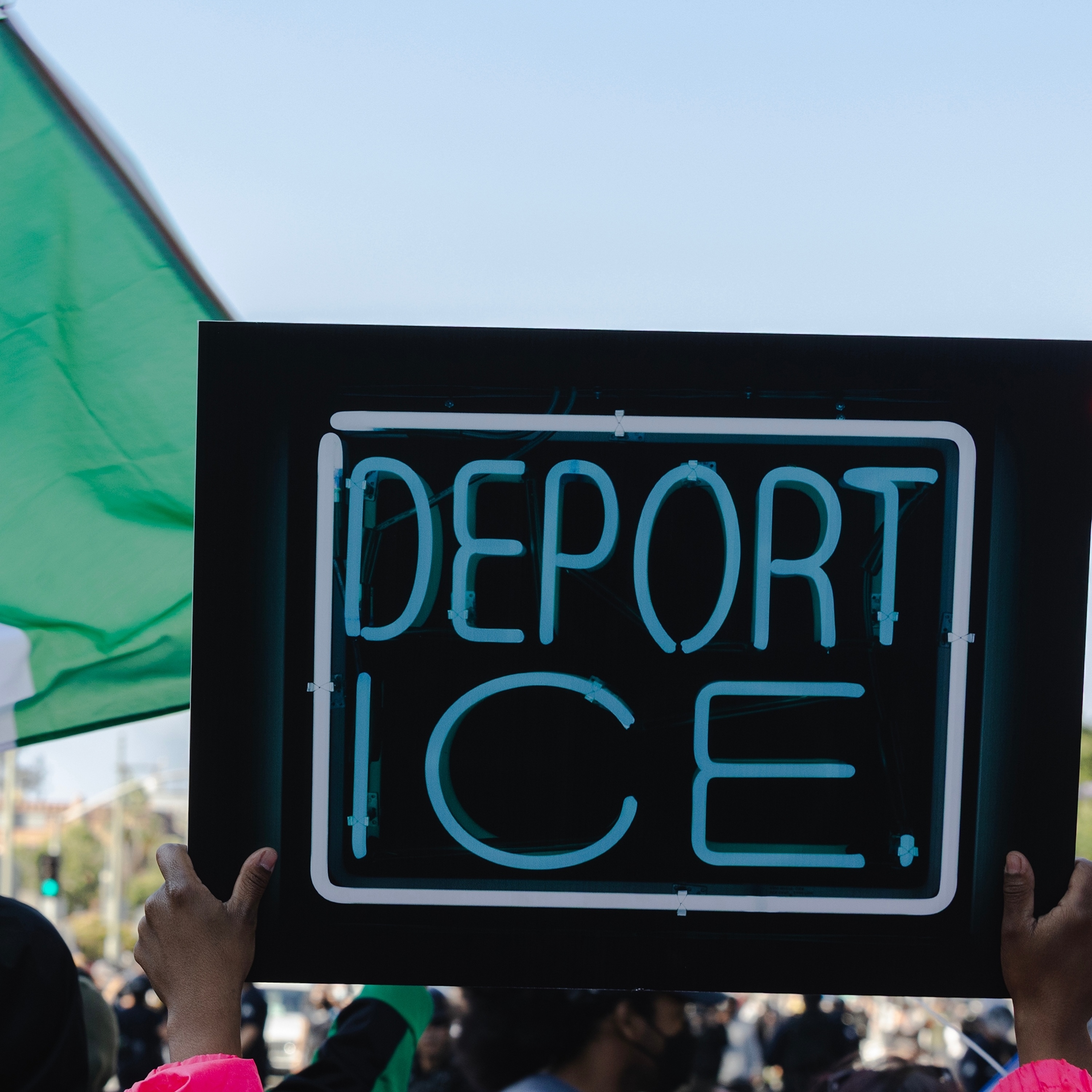
Post Reports
Trump’s crackdown in L.A. sets up a legal crisis
00:18:05
Demonstrators turned out in Los Angeles to oppose ICE raids. Trump called in the National Guard.
Loading summary
Transcript66 lines
- [00:00]
Oregon Lottery Representative
In the summer, all of Oregon is our playground thanks to our incredible park system. That's why it's so cool that Oregon Lottery gameplay like video lottery or cash pop helps support tons of parks projects statewide like accessible trails at Silver Falls State park or upgrades to your favorite dog park in Newburgh. It's just one way a little lottery play for many Oregonians can add up to a lot of good the Oregon Lottery. Together we do good things. Lottery games are based on chance and should be played for entertainment only. Must be 18 or older to play.
- [00:34]
Colby Ikowicz
It's Monday, early afternoon on the West Coast. The standoff between California and President Trump continues. This all started on Friday with sweeps in and around LA by Immigration and Customs Enforcement, including at two Home Depots where day laborers often gather looking for work. Many undocumented immigrants witnesses say ICE officers arrested anyone they could grab as people standing in the parking lot began to run.
- [01:05]
Justin Juvenal
One thing to keep in mind in these immigration arrests is what people are telling us is that ICE agents aren't necessarily questioning people or asking for their documents. They are grabbing people and taking them.
- [01:20]
Colby Ikowicz
AR Elise Hernandez covers immigration for the Post. She's currently on the ground in la. She says these ICE raids were shocking to people in the city who then came out to protest the government's actions.
- [01:31]
Justin Juvenal
Yesterday I was downtown watching some of this unfold, and it was throngs of people of all ages, a lot of them wearing, you know, masks from COVID era facial masks, but folks who came down to express their displeasure, in fact, their disdain for what's happening and a need to protect their immigrant neighbors.
- [01:57]
Colby Ikowicz
A.R. elise and my other colleagues who have been out reporting say these were pretty typical protests. The protests had been mostly peaceful, with some exceptions. The LAPD even put out a statement Saturday night thanking the protesters for exercising their First Amendment rights responsibly. Both the LA mayor and the governor of California said they had the situation under control. But on Saturday night, things escalated dramatically. President Donald Trump nationalized the California National Guard, deploying them to LA against the wishes of governor Gavin Newsom. Something like that hasn't happened in more than half a century. The tension between protesters and law enforcement only intensified Sunday after the first National Guard troops arrived in several locations around the city. Protesters set vehicles on fire and law enforcement used tear gas, stun grenades and rubber bullets to push crowds back. Over the weekend, Trump defended his decision, and today he told reporters on the South Lawn that he would support border czar Tom Homan arresting Governor Newsom, though for what? It's unclear. Newsom and other state and local officials in California say this is a Trump created problem, and the state of California is now suing the president. From the newsroom of the Washington Post, this is Post Reports. I'm Colby IKOWICZ. It's Monday, June 9th. Today we turn to my colleague Justin Juvenal to talk about the power struggle between California and the president and how Trump is testing legal limits with his actions. Justin, thanks for being here.
- [03:42]
Justin Juvenal
Thanks for having me on. It's great to be back.
- [03:44]
Colby Ikowicz
So, Justin, this was all unfolding over the weekend, and I kind of want to understand how it happened a little step by step. So what first sparked these anti ICE protests that have been happening in and around Los Angeles?
- [03:59]
Justin Juvenal
Yeah, the protests were in response to ICE raids that occurred in and around the Los Angeles area late last week. There was a raid on a donut shop and on a Home Depot parking.
- [04:11]
Colby Ikowicz
Lot where there were some day laborers.
- [04:13]
Justin Juvenal
Right, Day laborers, yeah. And that sparked these protests, which began on Friday and then continued into Saturday and Sunday. Some of the protests got violent at times with some of the demonstrators lighting cars on fire and shooting fireworks. And law enforcement responded with stun grenades and also some tear gas. So things escalated quite a bit.
- [04:39]
Colby Ikowicz
And how did the National Guard get involved?
- [04:42]
Justin Juvenal
So what happened was local police, Los Angeles Police Department, and other officials were controlling the protests. And California officials said that they had no issues controlling the protests that were going on. But then late on Saturday, President Trump decided to federalize California's National Guard and call up 2,000 National Guard troops to deploy in the Los Angeles area. Because he said that, you know, the, the protests had gotten out of control, which was something that California officials said was totally inaccurate.
- [05:17]
Colby Ikowicz
Yeah, he spoke to Governor Gavin Newsom, as I understand, who told him, like, we have the situation under control. You don't need to federalize the National Guard.
- [05:23]
Justin Juvenal
That's right.
- [05:24]
Colby Ikowicz
But Trump did it anyway.
- [05:26]
Justin Juvenal
Yes, that's correct.
- [05:27]
Colby Ikowicz
So if the governor is telling the president that everything's under control, why does Trump still send in the National Guard?
- [05:34]
Justin Juvenal
That's actually one really unusual aspect of the situation. Generally, in the past, when the National Guard has been called up, it's come at the request of the governor of a state saying, hey, I have a situation in my state where law enforcement is totally overwhelmed. We need help, we need to bring in troops to try to calm the situation. But what happened was Trump unilaterally used a rarely used authority under federal law to call the troops up himself over the objections of California Governor Gavin Newsom. And it's very unusual for the president to go over the authority of a governor and call up the National Guard himself. In fact, the last time it happened was back in 1965, like about 60 years ago, when Lyndon Johnson, President Lyndon Johnson, called up the National Guard to protect civil rights demonstrators in Alabama.
- [06:25]
Colby Ikowicz
Wow. And the governor there in Alabama did not.
- [06:28]
Justin Juvenal
The governor didn't, did not request the National Guard.
- [06:31]
Colby Ikowicz
And why would Newsom. Why would Newsom be opposed to the National Guard coming in?
- [06:35]
Justin Juvenal
Well, I think what Newsom has said is that there's no reason for the National Guard to come in. He said that local law enforcement has the protests under control. There's not major unrest like we've seen in the past with, like the Rodney King riots, for instance. So I think he also thinks that actually bringing in troops who are well armed and have riot gear on that might actually inflame the situation and cause more violence.
- [07:03]
Colby Ikowicz
So after Trump sends in the National Guard, how have California officials like Gavin Newsom and maybe other lawmakers responded to his decision?
- [07:14]
Gavin Newsom
Well, I mean, look, Donald Trump has created the conditions you see on your TV tonight. He's exacerbated the conditions. He's lit the proverbial match. He's putting fuel on this fire ever since he announced he was taking over the National Guard.
- [07:29]
Justin Juvenal
So on Sunday night, Gavin Newsom actually sent a letter to the Trump administration requesting that they withdraw the National Guard troops. And he called what they were doing unconstitutional.
- [07:40]
Gavin Newsom
Where's your decency, Mr. President? Stop rescind disorder. It's illegal and unconstitutional. And I said it. I'll say it again, it's immoral. You're creating the conditions that you claim you're solving and you're not, and you're putting real people's lives at risk.
- [07:55]
Justin Juvenal
So they're quickly moving into taking legal.
- [07:58]
Gavin Newsom
Action over this in a legal act, in a moral act, an unconstitutional act. And we're going to test that theory with a lawsuit tomorrow.
- [08:04]
Colby Ikowicz
Is it unconstitutional?
- [08:06]
Justin Juvenal
Well, if you talk to legal experts, the situation is fairly unprecedented in a number of ways. So the president does have the legal authority to federalize National Guard troops and call them up. Trump used a section, a rarely used section of the law, which says the president can use and take control of states National Guard troops if there is a rebellion or a foreign invasion going on. So obviously, this is a situation that doesn't come up very often. Yeah, there's an interesting distinction here. Usually what happens in these situations is the president will use this law and then also invoke another law called the insurrection act, which people may have heard. Trump, when he was on the campaign trail when he was running for president, often talked about invoking the Insurrection act to send troops into Democratic run cities to, you know, enforce order. And basically what happens when you invoke the Insurrection act is it allows National Guard troops to have law enforcement powers. So that means they can arrest people, they can conduct searches similar to the way local police officers would. So since Trump did not invoke the Insurrection act in this particular case when he deployed the National Guard troops to California, most legal experts say they cannot do stuff that National Guard troops would normally do. They can't make arrests, they can't do searches, they can't do other things that law enforcement on the ground normally does. So basically, they're restricted to protecting federal facilities and protecting federal operations. So technically, they should not be out in the streets engaging in arrests or doing anything like that.
- [09:54]
Colby Ikowicz
Is it our understanding that they are, though?
- [09:56]
Justin Juvenal
I have not seen any reports of that so far.
- [09:58]
Colby Ikowicz
Okay. And so do we think it's likely that Trump will invoke the Insurrection act to broaden the powers that the National Guard can use in Los Angeles?
- [10:07]
Justin Juvenal
Well, it's possible he could. You know, some legal experts have said that his use of this federal law to call up the troops may be a prelude to him invoking the Insurrection act, and that could still be coming. Some also, you know, surmise that maybe what's going on is Trump is trying to, you know, essentially invoke the Insurrection act without invoking it by using this rarely used federal law because, you know, a lot of people have heard about the Insurrection Act. It's generated a lot of discussion and controversy, you know, during Trump's presidency and run for president. And some people think that maybe for political reasons and political calculations, he didn't want to invoke the Insurrection act because it's so controversial.
- [10:52]
Colby Ikowicz
And why would invoking the Insurrection act be so controversial?
- [10:55]
Justin Juvenal
It's controversial because under US Law, the military is not generally supposed to be involved in policing protesters and doing law enforcement activities on US Soil. We also have a long tradition in the US of not having the military involved in domestic action. A lot of people think it's. It harkens to, like, authoritarian countries where the military is often used to put down dissent and protest.
- [11:25]
Colby Ikowicz
Trump is saying there's these violent protests in LA that require the National Guard. It's not our understanding that they were, in fact, that violent. Why is Trump really doing this?
- [11:38]
Justin Juvenal
Well, I can't get inside Trump's mind, but, you know, it's possible that, you know, as Trump said on the campaign trail, this is something he's been wanting to do for a while. He even cited Los Angeles on the campaign trail in one appearance in Iowa, where he said, you know, these Democratic run cities like New York and Los Angeles and Chicago, you know, they're full of crime. And when I'm president, I'm just gonna act unilaterally and send in troops to take care of the situation and enforce order.
- [12:06]
Donald Trump
New York City is a crime den. Chicago is a crime den. You look at these great cities, Los Angeles, San Francisco, you look at what's happening to our country, we cannot let it happen any longer. And one of the other things I'll do, because, you know, you're supposed to not be involved in that, you just have to be asked by the governor or the mayor to come in the next time. I'm not waiting. One of the things I did.
- [12:32]
Justin Juvenal
So this is clearly something that Trump has been wanting to do for a while. I mean, I think there's probably also a political calculation. You know, Trump, one of his major issues that he ran on was immigration enforcement. And I think he probably feels that the idea of having a showdown with a blue state and a major foe like Gavin Newsom over the immigration issue is a winning political move for him.
- [13:00]
Colby Ikowicz
I wonder, though, how the American public will respond to the militarization of a major city. It's not something we see in America very often, is troops taking over.
- [13:12]
Justin Juvenal
Yeah, it's a very unusual situation, and one that, you know, hasn't come up very often in American history. The last time we saw a president call up troops, and this time it was with the authority and the blessing of the governor of California, was back in 1992 during the LA riots that followed the acquittal of the police officers and the beating of Rodney King. And that was a news event that generated huge amounts of coverage and interest. And the situation there, you know, was much more dire in terms of the amount of property damage and arrests and things that were going on than the current situation we're seeing in Los Angeles.
- [13:55]
Colby Ikowicz
And, Justin, I also wonder what you make of the idea that this is an intentional provocation by the Trump administration. We heard that accusation leveled by Los Angeles Mayor Karen Bass over the weekend.
- [14:06]
Donald Trump
We're working with officials, we're organizing resources. But what we're seeing in Los Angeles is chaos that is provoked by the administration. When you raid Home Depot and workplaces, when you tear parents and children apart, and when you run armored caravans through our streets. You cause fear and you cause panic. And deploying federalized troops is a dangerous escalation.
- [14:31]
Colby Ikowicz
Justin, what do you make of that argument?
- [14:33]
Justin Juvenal
I mean, I think that's a point that we've heard from a number of people in and around the protests. Protesters have made that point.
- [14:40]
Karen Bass
What do you think about the National Guard behind you being deployed here?
- [14:45]
Colby Ikowicz
I mean, I think, I think it's really a joke that there's armed individuals.
- [14:50]
Justin Juvenal
When we have signs, cardboard signs.
- [14:53]
So my colleague Molly Hennessy Fisk got audio of a protester named Estrella Corral making this point.
- [15:01]
And Trump is just trying to be.
- [15:03]
Colby Ikowicz
Inflammatory and escalate the situation and make us look out of control when really.
- [15:08]
Justin Juvenal
His ICE agents and military trucks are out of control.
- [15:13]
And the ACLU also put out a statement yesterday saying that if you're, you're going to bring in federalized National Guard troops, you're essentially going to be adding fuel to a fire and you're going to not only put protesters lives at risk, but you're going to put these National Guard troops at risk for a situation that doesn't necessarily, you know, warrant this kind of military deployment.
- [15:41]
Colby Ikowicz
After the break, Justin tells us what he's watching for next and why this deployment of troops might not just be limited to Los Angeles. We'll be right back.
- [16:02]
Karen Bass
As the temps start rising, I feel that familiar urge to refresh my closet. But I'm not wasting money on pieces I'll only wear once or just for one season. Quince changes that their clothes are timeless, lightweight, and far more elevated than anything else. At this price, it finally feels like my wardrobe matches my standards. By working directly with top artisans and cutting out the middlemen, Quint's gives you luxury without the markup. And Quintz only works with factories that use safe, ethical and responsible manufacturing practices and premium fabrics and finishes. For me, a linen shirt is a wardrobe staple, especially for the humid D.C. summers. But quality linen at an affordable price is hard to find. The ones from Quince are made from 100% European flax linen, so they're lightweight, breathable, and get softer every time it's worn. Exactly what I want in a summer shirt. Give your summer closet an upgrade with quince. Go to quince.com reports for free shipping on your order and 365 day returns. That's Q U I N-E.com reports to get free shipping and 365 day returns. Quince.com reports.
- [17:08]
Jacob Bogage
My name is Jacob Bogage, and I'm the Congressional economic correspondent at The Washington Post. I cover anything with a dollar sign in front of it. In Congress, that means taxes, benefit programs like Social Security and Medicare trade. The Washington Post is personal to me. I grew up in this area. I grew up fighting with my brother for the sports page. So to be able to work at this institution when I can see outcomes of my reporting on really important issues, issues about the health of our democracy, the health of the most vulnerable people in this country. I've seen policies change specifically because of work that I have done with so many of my talented colleagues in this newsroom. I tell people they should subscribe to the Washington Post because we covered the most powerful city in the world from the most powerful city in the world. This is what we live every day. Subscribers support this work. Learn more@washingtonpost.com subscribe I'm Jacob Bogage, and I'm one of the people behind the Post.
- [18:13]
Colby Ikowicz
So what next, Justin, do we wait to see whether Trump does invoke the Insurrection Act? What will you be watching as this continues to unfold?
- [18:22]
Justin Juvenal
Yeah, I mean, I think there'll be a couple things that we'll be watching. One is if he does invoke the Insurrection act, the other thing we'll be watching is how are the National Guard troops deployed on the ground in la? Are they simply protecting federal facilities, or are they actually getting involved in arrests and, you know, more proactive activities? I think that'll be something to watch. There's one other aspect of Trump's executive order that's gotten a little bit less attention. That's also something I'm watching. In addition to deploying the 2,000 National Guard troops to Los Angeles, Trump also gave the Pentagon the authority to send armed forces to any federal facility or federal operation around the country. And if you talk with legal experts, they said that this power can allow Trump to deploy troops around the country, not just to Los Angeles, but to other cities where there might be protests. So one thing I'll be watching for sure is whether, you know, this kind of troop deployment expands from Los Angeles to other cities where there might be protests going on.
- [19:25]
Colby Ikowicz
Wow. And he would do that only if there were protests?
- [19:30]
Justin Juvenal
Possibly, you know, presumably. But, you know, he could maybe preemptively deploy troops thinking that, you know, there might be protests that are going to erupt.
- [19:39]
Colby Ikowicz
Wow. Well, Justin, thank you so much for explaining all that to us. I really appreciate it.
- [19:44]
Justin Juvenal
Thank you for having me.
- [19:52]
Colby Ikowicz
Justin Juvenal covers the Supreme Court for the Post. That's it for Post Reports. Thanks for listening. Today's show was produced by Reni Srimnoski. It was edited by Maggie Penman with help from Lucy Perkins and mixed by Sean Carter. Thanks to Ariel Plotnick, Peter Bresnan, Afrin Hernandez Jr. And Susan Levine. Today, we are also delighted to welcome our new intern, Tadeo Ruiz Sandoval. He's a recent graduate of the University of Missouri. He grew up in Mexico City and tells us he loves movies and coffee. We are so excited to have him here and we can't wait to work with you today. I'm Cole B. Ikowicz. We'll be back tomorrow with more stories from the Washington Post.
- [20:45]
Oregon Lottery Representative
In the summer, all of Oregon is our playground, thanks to our incredible park system. That's why it's so cool that Oregon Lottery gameplay like video lottery or cash Pop, helps support tons of parks projects statewide, like accessible trails at Silver Falls State park or upgrades to your favorite dog park in Newburgh. It's just one way a little lottery play for many Oregonians can add up to a lot of good the Oregon Lottery. Together, we do good things. Lottery games are based on chance and should be played for entertainment only. Must be 18 or older to play.