← Post Reports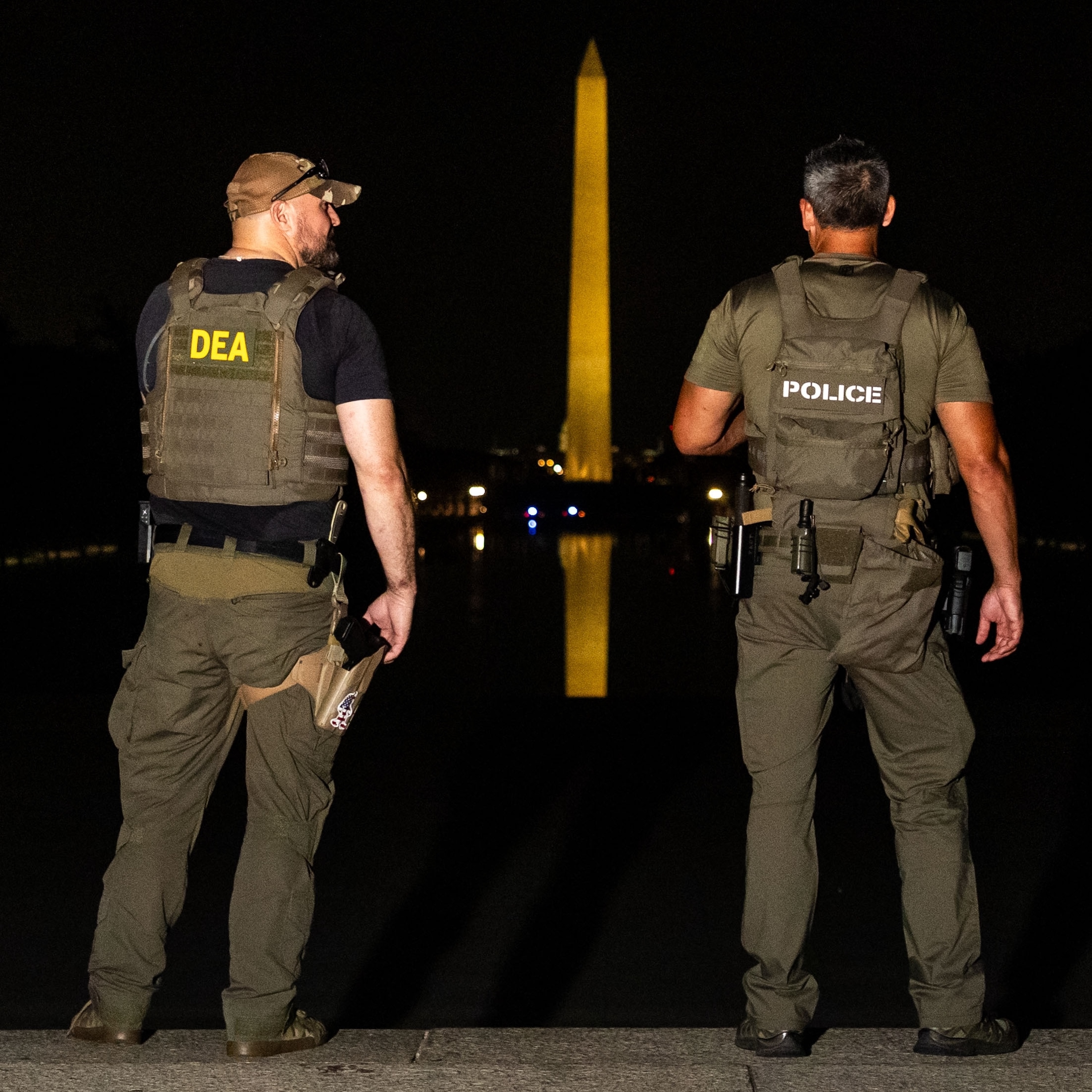
Post Reports
Trump’s D.C. police takeover was planned and the Putin meeting stakes
00:26:17
The story behind Trump’s D.C. police takeover, how the mayor is pushing back, and a preview of Trump’s meeting with Putin.
Loading summary
Transcript58 lines
- [00:03]
A
Has anybody else gone down like a Sean Dunn? Are we recording?
- [00:06]
B
Yeah, but on purpose.
- [00:07]
A
Okay. Like, has anybody else gone down like, a Sean Dunn rabbit hole, or is it just me? He's the guy, allegedly, that threw the hoagie.
- [00:17]
B
Oh.
- [00:17]
C
Oh, yeah. You think it was planned?
- [00:20]
A
I don't know. So here's my problem. Here's my problem. And it's like a personal problem. We hear about all these, like, seminal moments in American history, like the shot heard around the world. And don't shoot until you see the whites of, like, our. Our moment is like, you know, hoagie throw on 14th and you. And I just. I kind of want to do Over.
- [00:45]
B
From the newsroom of the Washington Post, this is Post Reports weekly Politics Roundtable. I'm Colby ekowitz. It's Friday, August 15th. I'm joined this week by White House reporter Cleve Woodson Cleave. Hey.
- [00:57]
A
Hi, there.
- [00:58]
B
And we're also here with the Post's White House Bureau chief, Matt Viser. Hey, Matt.
- [01:02]
C
Hey, Colby.
- [01:03]
B
So happy to have you both. So today we're going to go deeper inside President Donald Trump's federal takeover of the D.C. police. We have some new reporting showing that Trump was thinking about doing this before he took office for a second term. And we'll get into what the takeover has actually looked like here in D.C. and finally, we'll touch briefly on Trump's meeting with Russian President Vladimir Putin that's scheduled later today. So, as we covered in an episode earlier this week, Trump took control of the D.C. police Department on Monday. Under the Home Rule act, it's a law setting out how the District of Columbia is governed. The president can do that for up to 30 days. And he also deployed the National Guard, like the actual military, to help patrol the streets here, which he says is necessary to lower crime. So, Cleve, Matt, we all live in and around D.C. we work in downtown D.C. we. What has this takeover actually looked like on the ground? What have we seen?
- [02:02]
C
I mean, like, on my commute in, I ride my bike in, and I've noticed a lot more police officers in Georgetown. Yesterday, I was in an Uber and there were just like, the downtown was a little eerily quiet to the point that Uber driver said, like, this is weird. It's so quiet. And part of that is just the police presence all around. I have not been down to the mall where our colleagues have seen sort of National Guard presence, but, you know, there's clearly much more visible presence of police officers. But it's interesting because D.C. is kind of a Place that's used to sort of seeing these kind of buildups. We have the inauguration every four years, Fourth of July. There's barricades all over the place. So it's hard to figure out how much to attribute to Trump's latest decision because you're sort of used to seeing law enforcement and, you know, kind of barricades around the city and, like, how.
- [02:57]
B
Much of the sleepiness. August, right. The town kind of shuts down. Everybody's on vacation, everyone's gone anyway. So, like, are people staying home because there's more police or are they just at the beach?
- [03:06]
A
I haven't seen any roving bands of anybody. I've seen maybe more police officers at Metro stations. I also ride a bike into work. Matt's not the only one with cabs. But, you know, like, I. One of the things that I found interesting is it seemed, at least initially, that police were using this sort of added federal resources to actually go to crime hotspots. There was some reporting by some of our colleagues. There is a. That this thing actually is able to, like, staunch some crime, at least in the short term, if they are actually going to the places where crime is happening and trying to be a part of a larger, more holistic policing strategy as opposed to just putting tanks at the National Mall.
- [03:48]
B
It doesn't feel like that, though. Like, the other night they put up a checkpoint at 14th and W for people that don't live in D.C. that's a really popular corridor with a very fancy bakery and a very expensive, like, doggy daycare and like a high end outdoor apparel store. Like, it's got a real mix of, like, gentrification and lower income people as well. But they were like, stopping cars and checking ideas and asking about the general immigration status of people that were driving up 14th Street. Like, I'm not really sure how that stops crime.
- [04:21]
C
Well, I think, I think we're sort of seeing this evolve a little bit over the course of the week. First is sort of just the visible presence, and next is sort of what are they going to do? And I think you're seeing that with the checkpoints where it's a little bit confusing about what the, what the overall aim is. Yeah, we're seeing reports of as of yesterday about immigration enforcement and that some of these police officers and the Trump administration wants to use this to enforce immigration laws. So I think it also gets at the broader aim of what Trump's trying to do. I was with him at the Kennedy center earlier in the week, where, in addition, naming Kiss And George Strait and the Kennedy Center Honors. He went on sort of an extended riff about what he's trying to do. Fighting crime is a good thing. We have to explain we're going to fight crime. That's a good thing. Already they're saying he's a dictator. The place is going to hell and we've got to stop it. So instead of saying he's a dictator, they should say, we're going to join him and make Washington safe. And some of that is crime. But there's also a lot of beautification, changing the infrastructure. He was talking about traffic medians, cleaning up the streets, removing graffiti. It's almost like a mayor, you know, the President wants to be the mayor of D.C. you know, he's sort of talking about this in a much broader way than just the crime. And so you're seeing the tent encampments and things like that as he sort of widens the scope, I think, of potentially what he's trying to do.
- [05:50]
B
I mean, we know that Trump often talks about D.C. as being, like, dirty and dangerous, and we touched on this last week, but there was this attempted carjacking and, like, a pretty bloody assault of a former Department of Government efficiency staffer, Edward Korstein, who goes by the nickname Big Balls. Trump was talking about that a lot in the lead up to this takeover of DC and it really seemed like maybe that was the impetus for him doing this. But, Matt, you had great reporting this week that this was actually something Trump was considering, like, long before he even got reelected. What did you learn?
- [06:24]
C
Yeah, I mean, this dates back in, like, many things to his first term where he had expressed desires of taking over D.C. but was thwarted and convinced otherwise by the people around him. Now, a lot of those people are not around him. And so our reporting showed that they had almost a playbook kind of ready to implement with, with several different options for him, from taking the entire government of D.C. to, to federalizing the police force to the National Guard. And so he was ready to do it. And I think a lot of people around him were sort of waiting for the right moment and the, you know, there were a couple instances of sort of high profile crime. But the big balls, you know, attempted carjacking eight days before he announced that he was doing this. That eight day period is where they really sort of ramped up and prepared for what we saw Monday, which was the President surrounded by most of his top cabinet officials who had been laying the groundwork for this unprecedented display of force on the streets of D.C. i.
- [07:34]
A
Think there's kind of an evolving image of President Trump. I mean, in his first term, I think a lot of folks thought of him and maybe still think of him as mercurial, impetuous. You know, he sees this thing on Fox News and he tweets about it, and then this becomes policy and all of that stuff. And I think what we're seeing with this reporting and with other reporting about executive orders and how they're waiting on a particular moment or the particular timing is a much more strategic Trump in his second term, who has a list, a litany of things that they want to do, that they want to accomplish, but also an acknowledgement that there is the right time and that there's patience required to wait for the right time to implement these things, whether it's executive orders, whether it's a takeover of DC But I just think there's just sort of this evolving viewpoint that we're kind of our insight into, like the way that Trump works, which is not just mercurial, you know, a gigantic presidential id, but as strategic as any politician.
- [08:33]
C
I agree completely with Cleave, and it's interesting to see people react to that because our reporting showed that D.C. officials were caught completely off guard in some sense. They were not prepared. They didn't get much of a heads up. They didn't know Trump was going to do this. But on the other hand, Trump has been talking about this for a long time. And so there was this idea, I think, among city officials that maybe he won't do it. You know, maybe he's not going to live up to what he has been talking about, which you've seen in other respects on the tariff issue with Trump, where he'll propose something, he'll kind of back off it, and then he'll kind of go towards some middle ground. I think it's also worth pointing out that D.C. is uniquely positioned because of its home rule aspect, because the federal government has oversight over it. It makes it easier for D.C. to be the incubator for Trump's attempt to take over city policing.
- [09:30]
B
I mean, Cleve, you wrote about this this week, right? You wrote about his long standing fixation on crime and how he's always talking about how, you know, cities are a mess and, you know, he was worried about crime in New York when he was living in New York back in the 80s. Talked about crime a lot during the campaign. Like, it feels like these weeks actions kind of fit with his both longstanding beliefs and his politics.
- [09:52]
A
I think one thing that's also really important like with the folks that I've talked to over the last week and the people that I've talked with over the last four or five years in covering Trump and Biden is there's also just a racial element to this, just under the surface of it. If you look at that press conference on Monday, it is a mostly white administration telling members of majority minority city, a black led city, that basically you can't handle the basic aspect of keeping people safe in your city. And the reason I think that's important is because throughout Trump's ascent, he has sort of leaned into these arguments that are based on race, that are based on grievance, that are based on otherism, in order to sort of fuel his political rise. And I think that for some residents of D.C. and some of the experts that I've talked to, this feels like a sort of dog whistle way of getting into that. That's sort explains why D.C. you know, chocolate City becomes sort of the petri dish for this and could be a launching off point for other places.
- [10:59]
B
Is it for photographs?
- [11:00]
A
And there's a, perhaps the photo that stands out in my mind are like three green military Humvees in front of the Washington Monument. Like when was the last time somebody was like carjacked, you know, at the Washington Monument or whatever? And so there is a question, like a fundamental question about whether this is just about the images or the optics. I guess the other side of that coin too is that increasing a law enforcement effort in a city that kind of doesn't want it increases the chance that those conflicts like the hoagie throw heard around the world or whatever will happen. And I wonder if that's sort of giving Trump the image that he wants. The photos, the videos that scene maga world went crazy.
- [11:48]
B
That's interesting.
- [11:49]
C
And I think one of Trump's tricks is to poke at somebody and hope for an overreaction by them. And he's done that with great effect, oftentimes with Democrats or with his political opponents. Here we haven't yet sort of seen that. And I think the D.C. mayor's reaction, Muriel Bowser, has been interesting to watch in that respect of like trying to kind of walk a fine line, to not sort of fully react in a negative way, at least in the initial part of this.
- [12:22]
B
Yeah, hold that thought because I want to talk more about that relationship between Trump and Mayor Bowser. We're going to take a quick break and when we come back, we'll discuss that. And we'll also discuss how this push, you know, illustrates Trump's pushing the boundaries of his presidential power. We'll be right back. Okay. So, Matt, I've been super struck by this relationship between the D.C. mayor, Mural Bowser and President Trump and how she has struck this conciliatory tone with the president since the start of this term. I mean, right at the beginning, she had painted over a mural, a Black Lives Matter mural that was put on 16th street in front of the White House during the 2020 racial injustice protests. So, like, what. What is their relationship?
- [13:18]
C
It's interesting. I mean, she's the one that initially had it painted in the first place during the racial unrest in 2020. So, you know, the relationship then was. Was not good at all. You know, they were antagonizing one another. I think she deliberately came into this term trying to be much more conciliatory toward Trump, and Trump has done this thing with her, like he does with a lot of people, of complimenting, you know, she's doing a good job. You know, I like her.
- [13:47]
A
I think that even as he criticize.
- [13:48]
C
Even if, yeah, the city's terrible, but the mayor's great, you know, and so I think that relationship could change as. As we're seeing toward the end of the week now, we're starting to see a little bit more of the tension come to the forefront. But at least, you know, her initial reaction on. On Monday was really mild compared with what Trump was trying to do to her city.
- [14:11]
A
Yeah, there just seems to be a recognition on her part that Trump is the guy for the next four years, that because of the unique status of DC that he wields tremendous power over what happens in the District, as we've seen over the past week. And there seems to be just a recognition on Bowser's part that while she is the spokesperson for this city and that she is of the opposite party and on opposite sides of a lot of issues with Trump, that you have to contend with somebody who wields tremendous power over your city.
- [14:41]
B
Yeah, I mean, we did see some signs of tension yesterday, though. Right, because we saw the US Attorney General, Pam Bondi. She ordered the mayor and the D.C. police chief to recognize Terry Cole, the head of the Drug Enforcement Administration, as the District's emergency police commissioner. And that seemed to really undermine this idea that local officials would maintain some authority over police during this period. Bowser has called the order unlawful, suggested they're not going to comply. So what could happen next in this standoff?
- [15:11]
C
It's interesting because on Monday, it was totally unclear who ultimately is in charge of the D.C. police Force and the city officials kept sort of suggesting, well, we're working together, we're collaborating. And only later in the week does it become like crystal clear, as Pam Bondi makes clear, that my guy is in charge. And that's created this tension. But where it goes next is hard to predict. Like, Trump also is talking about extending this well beyond 30 days. He wants some congressional legislation which, given Republican control of both chambers, is within the realm of possibility. So who knows? I mean, but it seems like this is not going to be over in 30 days, as we initially may have thought. It seems like a much bigger thing.
- [16:00]
B
You know, we've been talking about Trump's fixation with crime, especially crime in cities. And I just want to bring up that there was a big shooting at the Centers for Disease Control and Prevention in Atlanta last Friday that the Post has been covering. So far, Trump hasn't mentioned it at all. It just seems odd that Trump, like, fixates on this 19 year old getting beat up in DC but doesn't mention that a federal building was sprayed with bullets and that a police officer was actually killed. So why do you think he hasn't talked about that at all?
- [16:32]
C
It's interesting to follow sort of what he talks about and what he doesn't. And this is one in which I think political instincts oftentimes are to support his base. And in this case, it seems like the shooter was, was motivated by vaccines and Covid vaccines, which aligns with his base. But a police officer was shot, which doesn't necessarily align with his base and his, like, efforts to defend the police, especially in a week where he's sending police officers onto the streets of D.C. so I think it's a more complicated political scenario for Trump, so he's just completely avoided it.
- [17:11]
B
So what we've heard from Democrats and other critics of Trump this week is that this move that he's made to militarize D.C. it feels straight out of an authoritarian playbook that dictators send the military into the streets to show that they and only they are in control. I mean, is that a fair characterization of what he's doing here in D.C.
- [17:31]
A
This factors into what I would say, like the end of every interview that I do over the last couple of weeks. It's maybe not the subject matter, but I kind of, when I'm talking to academics or historians or whatever, I'm like, you know, is this the red line? You know, have we crossed into it? You know, whether it be, you know, deporting people without a court case or Taking money from colleges and universities that disagree with him. It's unclear. Right. There is no, like, international arbiter of totalitarianism. You know, like, there's not some person that decides. And so it can be very, very dicey because a lot of readers will email me and say, you should call this an authoritarian thing. And my somewhat saucy response is often like, who gets to decide that? You know, I think what a lot of people would agree is that there are authoritarian or totalitarian aspects to it, or, you know, they can see shades of history in Nazi Germany or Communist Russia or whatever. But, like, I don't know if there's ever going to be a point, at least, you know, in the next week or so where we all say, yep, yep, that's it. That's authoritarianism right there.
- [18:40]
C
Yeah, I don't know that it's crossed that line quite yet. I mean, it could head there. You know, he's doing things that are within his power. They're unprecedented. Previous presidents haven't used their power to do this kind of thing. But he's not yet in an unlawful territory. I think D.C. officials are now trying to challenge that. And so I think that gets into more authoritarianism if you're using your power in ways that you're not allowed to, that the law restricts you from. And I don't know that we're quite at that point just yet.
- [19:18]
B
Sure. I mean, I think there is this sense that these aren't long term solutions to crime and homelessness. Right. This is a band aid fix to crime in the city. And, and all the kind of systemic social service programs that actually work are not what he's suggesting.
- [19:37]
A
Yeah. I think that if you are like, before I was a political reporter, I was a police reporter. You can make a joke about the intersection of that if you want. There's no need. But there are a lot of proponents that say that the way to attack crime is to attack society's ills and to give more people an opportunity and all of that stuff. And that what is happening in this month, in the past week is that you're putting a whole bunch of police officers on the street who are just going to have a chilling effect on crime because there are a whole bunch of police officers on the street. But it's not a long term solution. It doesn't provide long term opportunities, it doesn't get at the root causes of crime. And so we'll just go right back to normal. But because Trump may be able to lower crime in the short term, he gets to say my way works.
- [20:27]
B
Right. And the city was terrible before and it's beautiful now. Right. Is what we'll hear him say.
- [20:31]
A
We have no idea where those homeless people are. But yeah.
- [20:35]
B
I wanted to mention another piece of exclusive reporting from the Post this week, which came from one of our military reporters, Alex Horton. And it was about how the Trump administration wants to create like a special Federal National Guard task force. This idea would be that the force would be standing by at all times to respond quickly in, in U.S. cities to civil unrest, like what we saw happen in Los Angeles when there were protests against immigration raids. How does that plan fit in with what we're talking about here?
- [21:04]
C
I mean, I think it's an indication that he wants to broaden this to other cities. You know, he talks about Chicago a lot. He talks about New York a lot. You know, usually blue states, you know, cities, you know, he seems to oftentimes ignore the, the cities in red states that also have issues with crime. But I think it's an indication of him wanting to deploy them in a greater way, use the federal resources in a greater way to address crime, which it's interesting to me also to think about. Fema, another federal effort to address issues of, you know, natural disasters is something he wants to like, get rid of.
- [21:53]
B
You know, that's really good.
- [21:54]
C
In some ways, he's talking about federalizing an effort on crime as he's at least earlier in his term has talked about unfederalizing, you know, our response to natural disasters.
- [22:06]
B
Yeah. So we're gonna put aside this story for now. But you know, our reporters, as you mentioned, are all over this story and you can catch up on all of it with a seven day pass to the post for just $7. So find out more@washingtonpost.com WeekPass before we go, we should probably note that there's a big meeting happening today. We're all talking Friday morning. This afternoon, President Trump is taking this really high stakes meeting in Alaska with Russian President Vladimir Putin about the ongoing war in Ukraine. Matt, what do we know about the stakes of this meeting and what could come of it?
- [22:44]
C
It, I mean, it's a meeting that Trump has, you know, almost craved for a long time. You know, a one on one meeting with Vladimir Putin. And, you know, throughout the week, Trump's rhetoric has changed a little bit. It's been, at some points this is a huge meeting. At other points he's sort of like, it's a touch base. We're going to see if, you know, it's an initial meeting. But there are a lot of issues at play and Putin is such a canny figure on the international stage. So it sort of validates Putin in a way, in, in a way that a lot of that certainly Joe Biden and, you know, tried to ostracize him. So but there's a lot at, at stake for, for Ukraine. And Trump earlier this week suggested that this is the first of potentially at several meetings. But, but yeah, the stakes are high.
- [23:38]
A
I wonder, to Matt's point about being a canny politician or canny global figure if Putin notches a win even before he steps off the plane. Putin has been a global pariah. Isn't he charged with war crimes in connection with Ukraine?
- [23:53]
B
Yeah, there's been calls for his arrest. Right.
- [23:55]
C
One reason we have to host it in the United States is cause there are certain other countries where he would.
- [23:59]
A
Be arrested the moment he steps off the plane. And now he is ostensibly meeting with the leader of the free world. He's back, at least in the sense of having a dialogue, of having conversations and all of that stuff. And there's always this back and forth with Trump about who's kind of winning in that contest of wills and all of that stuff. And it seems like Putin, once he steps off of the plane, is already on the foot because he's suddenly back into the conversation.
- [24:34]
B
Well, that's all we have time for today, but listeners can keep up with the latest on that meeting by visiting washingtonpost.com we'll be covering it closely. Thank you. Matt Cleave. It was a great conversation.
- [24:46]
C
Thank you.
- [24:46]
A
Thanks for having us.
- [24:50]
B
Cleve Woodson is a White House reporter for the Post. Matt Visor is the White House bureau chief for the Post. Today's episode was produced by Arjun Singh and mixed by Shawn Carter. It was edited by Laura Benchoff. Thanks to Politics editors Amy Gardner and Katie Burnell Evans. Our team also includes Rena Flores, Alana Gordon, Ariel Plotnik, Rennie Starnovsky, Sabi Robinson, Emma Talkoff, Peter Bresnan, Thomas Lu, Tadeo Ruiz Sandoval, Ted Muldoon, Josh Carroll, Renita Jablonski, Alahia Ezadi, and Martine Power. I want to make a special shout out now to Maggie Penman, our longtime executive producer here at Post Reports. Maggie is a ray of sunshine wherever she goes. And so she will be taking on a new role at the Post after this week writing for our Optimist section, which it could not be a more perfect fit. It's a bittersweet day for us because, Maggie, we are so happy for you, but so sad to see you go. Oh, and one more note. I'm actually going to be on vacation next week, but Cleave is going to be sitting in my seat hosting the round table. So good luck to you next week, Cleave. Can't wait to listen.
- [25:59]
A
Yeah, I will try to do you justice.
- [26:02]
B
Perfect. All right, everyone, have a great weekend.