← Post Reports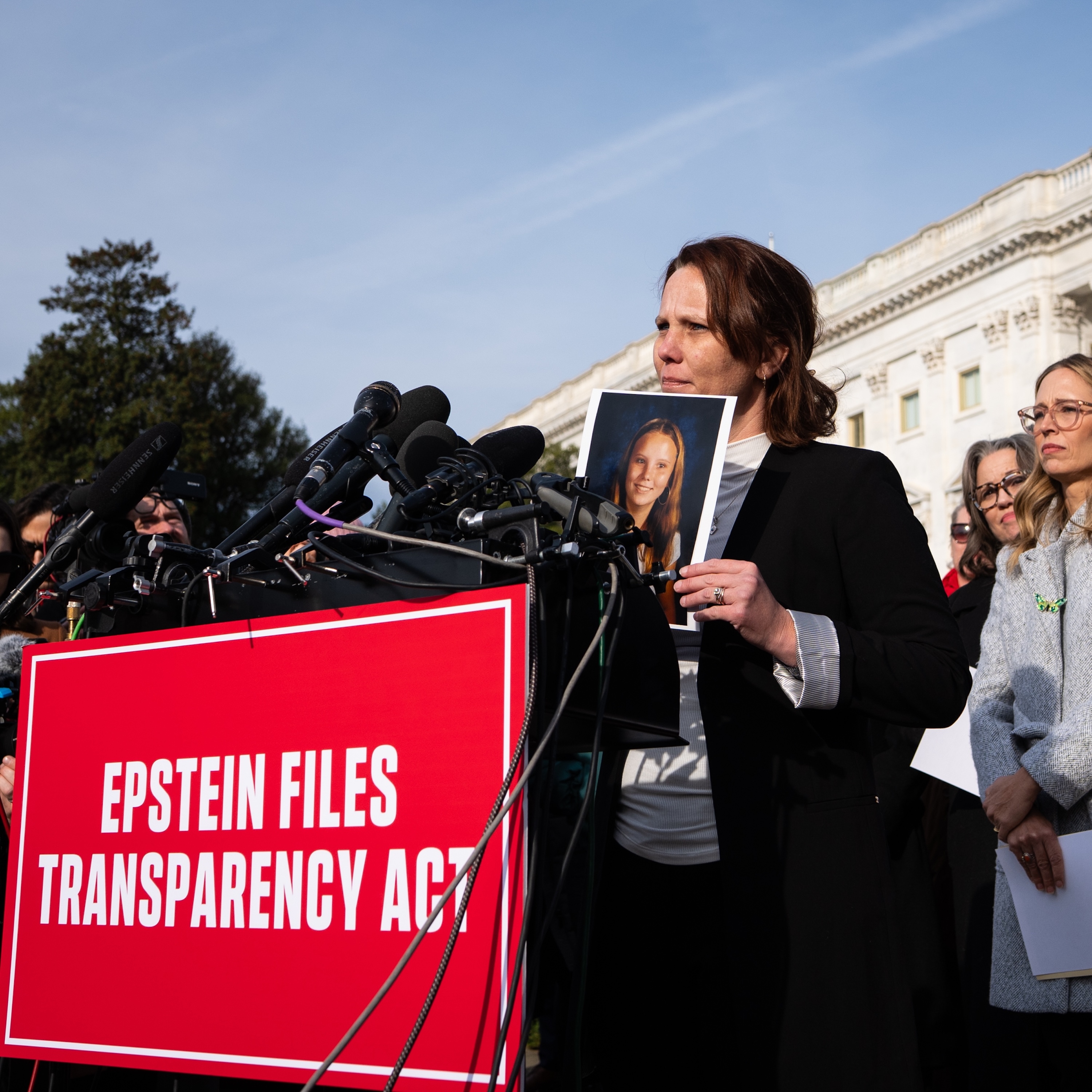
Post Reports
Trump’s pivot on the Epstein files and his polling plunge
00:27:49
Congress voted overwhelmingly to release the Epstein files this week. But does that mean the public will see them any time soon?
Loading summary
Transcript75 lines
- [00:00]
Vrbo Advertiser
Vrbo Last minute deals make chasing fresh mountain powder incredibly easy. With thousands of homes close to the slopes, you can easily get epic pow freshies, first tracks and more. No need for months of planning. In fact, you can't even plan. Pow Pow is on its own schedule. Thankfully somewhere in the world it's always snowing. All you have to do is use the last minute filter on the app to book a last minute deal on a sloped side private rental home. Book now@vervo.com there's kind of this push.
- [00:32]
Dan Marica
And pull with Trump throughout. The story is that at one point he had to have known that he was going to lose this vote in the House. Yeah, he was willing to go about this about face and backtrack on Epstein because maybe worse for him is looking weak inside the party. He's had this hold on the Republican Party for years.
- [00:56]
Colby Ekowicz
From the newsroom of the Washington Post, this is Post Reports weekly Politics Roundtable. I'm COLBYAKOWICZ. It's Friday, November 21st. Congress voted overwhelmingly this week to release the Epstein files. But does that mean that the Justice Department is going to let us see them anytime soon? That's the question and more that I'll pose to my guests today. Back at the table is Dan Marica. He's the co anchor of the politics newsletter the Early Brief. And we're thrilled to also be joined by Jeremy Rope Buck, the Post's Justice Department reporter. Guys, thanks so much for joining me.
- [01:29]
Dan Marica
It's great to be here again.
- [01:30]
Jeremy Roebuck
Thanks for having us.
- [01:34]
Colby Ekowicz
So, guys, let's start with the latest in the Epstein saga. There was months of buildup for this moment. Congress votes this week to compel the Justice Department to release their files on Epstein. Dan, walk us through that.
- [01:50]
Dan Marica
You're right, there was a lot of buildup. And I think that if you would have predicted the outcome that actually happened months ago, you would have been shocked because two members of Congress, Ro Khanna, a Democrat from California, and Thomas Massie, a Republican from Kentucky, were the main drivers behind this discharge petition. And then, you know, initially all Democrats signed the discard discharge petition, which is basically a vehicle for the party and the minority in the House to force a vote in Congress. And they got all Democrats to sign and a small handful of Republicans which put them over the 218 threshold. That was forced.
- [02:24]
Colby Ekowicz
To force a vote.
- [02:25]
Dan Marica
Yeah, to force a vote because Republicans were not going to put this on the floor without that. They put it on the floor. They got the discharge petition through because of those Republicans who signed. And Congress overwhelmingly Backed it, I mean, not just near unanimous, except for one person. Clay Higgins, a congressman from Louisiana, voted against it because he said he wanted to protect some of the witnesses and some of the people who were injured and harmed throughout the Epstein saga. The reason that it was supported unanimously is because of an about face from Donald Trump. After months of saying he didn't want these documents to be released, of attacking and criticizing people who did, he had an about face. And once it was clear that this was going to happen, he said Republicans should vote for this. And so, with his blessing, instead of having, you know, what would have been a few dozen, maybe 100 Republicans voting for it, every Republican except for one voted for it. Then, because of that overwhelming majority, the bill headed to the Senate across Capitol Hill, and the Senate voted for it through unanimous consent, which is ostensibly just, you know, everyone here agree, great, it passes. No vote was actually taken on that because there was no one who was gonna stand in the way. It went to Trump's desk this week and he signed it. But it does not bring to end this saga, this question about what happens next, because now it is in the Department of Justice hands, and there are a number of questions about where it goes from here.
- [03:51]
Colby Ekowicz
And that's where we turn the table to Jeremy, which is what does the law say the Justice Department must do?
- [03:57]
Jeremy Roebuck
Now, the law, it's called the Epstein Files Transparency act, and it specifically compels the Justice Department to release essentially everything that the department gathered in all of its investigations of Epstein, his associate Ghislaine Maxwell, and any sort of third parties or other businesses that they may have interacted with that may also have been at various points, under investigation by the FBI. Now, that's a whole lot of material. There was one judge in New York earlier this year that had some sense of what still was to be released, and he classified it as, like, 100,000 pages or more of material that could include things like, you know, summaries of interviews that FBI agents did with potential witnesses. It could include information that might not be relevant to the specific cases that the Justice Department was building in the past against Epstein and Maxwell for sex trafficking crimes. And I guess we should pause to say that Epstein was charged in 2019 with sex trafficking.
- [04:55]
Colby Ekowicz
Sex trafficking, minors specifically, but he committed.
- [04:57]
Jeremy Roebuck
Suicide in custody while awaiting trial. And then Maxwell was convicted of those same crimes in 2021 and is serving a jail sentence or prison sentence in Texas right now of 20 years. No, there has been some production of documents already over the years, whether that came out through Maxwell's trial, whether it came through people petitioning courts to unseal certain things that had been held back. And, you know, this year we've seen some very limited productions from the Justice Department of document documents that they have released publicly, you know, in the name of transparency, in their words. But a lot of that information had already been released through these other means. So really what I think people are anticipating is that we're finally going to see things that maybe they've been holding back. But there are some loopholes that they can hold onto documents, like how long.
- [05:45]
Colby Ekowicz
Do they have to get these documents out to the public?
- [05:48]
Jeremy Roebuck
So it gives them 30 days. You know, that may be open to some negotiation as we go forward. But I think what Congress is looking for is a good faith effort on the part of the Justice Department to really move and act on this request.
- [06:00]
Colby Ekowicz
And let's stay on the Justice Department for a second because there are some concerns that I've seen that there might be ways for them to get around. You mentioned some loopholes, but ways for them to get around releasing the documents or maybe redacting information. Can you walk us through, like, what DOJ could do with these files?
- [06:22]
Dan Marica
Sure, sure.
- [06:22]
Jeremy Roebuck
You know, they're not requiring the Justice Department to release anything that might, you know, identify potential victims in a way they can redact that information, although you must provide, you know, a reason for redaction for everything that you redact. And that's part of what needs to be made public. There are also other things like grand jury material that may still be under court seal that they can't legally require DOJ to put out there. And this is the key one. There's a carve out for anything that may interfere with an active investigation. And that's important because right before Trump had his about face on this vote, he directed Pam Bondi, the attorney attorney general, in a post on social media last week to open an investigation into Democratic figures that, you know, have been caught up in this whole Epstein saga just through their past associations with him. Those include people like Reid Hoffman, the Democratic mega donor, Bill Clinton, the former president and others. And Pam Bondi very quickly turned around and said, yes, we'll investigate this. We're assigning the Manhattan U.S. attorney to lead this investigation. And and then a couple days later, Trump has his about face on the vote.
- [07:33]
Colby Ekowicz
So President Trump, so just so I understand President Trump has said, any, you know, major Democrats that show up in these files, we want an investigation into their relationship with Epstein. Have those Democrats, people like Bill Clinton said anything publicly about their relationships with.
- [07:51]
Jeremy Roebuck
Epstein, Clinton, Hoffman, many others have long denied that they knew anything about Epstein's alleged crimes. And you know, more importantly, they've adamantly said that they had no involvement in anything like that.
- [08:06]
Dan Marica
Trump's focus on these Democrats speaks to kind of the origin story of his interest in the Epstein files.
- [08:11]
Jeremy Roebuck
Yes.
- [08:11]
Dan Marica
This is a man who has ceded all of the interest, really political interests, at least in Epstein for years now, since his rise in 2016.
- [08:20]
Colby Ekowicz
Right. He thought he could use it against Hillary Clinton when she was running for president.
- [08:24]
Dan Marica
The association between Bill Clinton and Jeffrey Epstein was used as a kind of cudgel by not just Trump, but broader Republican ecosystem against Hillary Clinton in 2016. You had him bring it up throughout his 10 year decade in political life and in part because he saw Epstein and has said this as much that he saw Epstein as a big benefactor, someone who donated Democrats. I think recently even he called him a lifelong Democrat. And that association with Bill Clinton and other Democrats kind of is the genesis for that.
- [08:55]
Colby Ekowicz
It's so interesting, Dan, because I think a lot of people wonder this Trump, did he not consider that he would be opening himself up to questions because he does have a documented long relationship, a friendship with Jeffrey Epstein that dates back several decades.
- [09:13]
Dan Marica
I mean, they both were kind of operators. They had the social lives in Palm beach, which is where Donald Trump has his kind of winter escape, Mar a Lago. Jeffrey Epstein also had a house on Palm Beach. They had known each other socially for many years. Donald Trump's name has come out in many of the disclosures from the estate, from the Epstein estate. We've seen some of these emails be disclosed over the last few weeks and months. And President Trump's name has been in those emails. Now, Donald Trump claims that he kicked Jeffrey Epstein out of his club, that he never knew about what was alleged at the time to have been Jeffrey Epstein's crimes, and that he called him a creep and viewed him negatively because of his actions in Palm Beach. And obviously Donald Trump has denied any wrongdoing and denied that he knew anything about Epstein's crimes. But I mean, Donald Trump has to know that he knew Epstein for many years and is going to be in and around his files in his life.
- [10:19]
Colby Ekowicz
Yeah, go ahead, Jerry.
- [10:20]
Jeremy Roebuck
I also think it's important to note that this investigation of Democrats and their ties, he ordered this as he was under a microscope because of these email releases.
- [10:29]
Dan Marica
Jeremy's exactly right. That like the timing of when he came out and called for these investigations was noteworthy because there's kind of this push and pull with Trump during this throughout the story is that at one point he had to have known that he was going to lose this vote in the House. Yeah, he was willing to go about this about face and backtrack on Epstein because maybe worse for him is looking weak inside the party. He's had this hold on the Republican Party for years. He's very rarely told no by Republicans. And what that House vote would have been if it had been against Trump, even if it was a dozen, two dozen, maybe 50 lawmakers, Republican lawmakers, it would have been them ostensibly saying no to Donald Trump and it would have looked like a major break in the party. So by backtracking even on something he has called a hoax, he's attacked people who have wanted to release these documents. Backtracking like that was a way for him to protect this idea that he is still the dominant force in the Republican Party.
- [11:29]
Colby Ekowicz
That's a great note to pause on because after the break we're going to talk about how this episode fits into Trump's difficult November. We'll be right back.
- [11:47]
Shopify Advertiser
So there I was last night lying in bed scrolling through my favorite clothing website. When I saw the sweater I've been craving is finally back in stock. I slammed the add to cart button. But then I remembered my card was downstairs and the last thing I wanted to do was get out of the warm bed. But just as I was ready to abandon my cart, boom. There it is. The purple Shop button. That shop button has all my payment and shipping info saved, saving me time and letting me stay warm and cozy in bed. That's Shopify. And there's a reason so many businesses sell with it. Because Shopify makes everything easier from checkout to creating your own storefront. Shopify is the platform behind 10% of all E commerce in the US from household names like Mattel and Gymshark to brands just getting started. Shopify gives you that leg up from day one with hundreds of beautiful ready to go templates to express your brand style. Spread your brand's word with built in marketing and email tools to find and keep new customers. Oh, and did I mention that iconic purple shop pay button that's used by millions of businesses around the world? It's why Shopify has the best converting checkout on the planet. Your customers already love it. If you want to see less carts abandoned, it's time for you to head over to Shopify. Sign up for your $1 per month trial and start selling today at shopify.com reports. Go to shopify.com reports shopify.com reports to first responders every second counts. Firefighters, paramedics, law enforcement officers, and 911 operators need to communicate instantly. And that's why FirstNet exists. FirstNet is the only network built with and for first responders. It's a unique public private partnership with the FirstNet authority making sure America's first responders always have priority access, whether in the heart of a big city, a rural county or a remote territory. During natural disasters, major storms or large scale events, first responders know they can count on FirstNet to keep them connected, even when other networks are congested or unavailable. FirstNet is more than a network. It's a commitment to first responders, a promise that America's public safety always comes first. FirstNet built with AT&T. Learn more@firstnet.com Public Safety first.
- [14:06]
Colby Ekowicz
So, Dan, you were talking before the break about Trump's hold over the Republican Party. And this month has really tested that. I mean, I don't think it's just me in saying that the President has had a pretty rough November.
- [14:21]
Dan Marica
Yeah, it's been a November to forget for Donald Trump for sure. And I talked to a historian actually for something I'm working on, and he kind of mused that it might have been one of the worst months for a president in the first year of a term. This is usually when presidents are riding high. They're passing legislation because they have all this political capital built up from their election win and they're spending it. So they're using it to do things. They're passing legislation, they're working their party. And Trump has done some of that. I mean, you have the one big beautiful bill earlier in the year. He has certainly gotten a lot done, a lot more than I think people would have expected done on the international stage. But domestically in particular, it's been a really rough month. It began with the thumping that Republicans took at the ballot box in these off year elections. It wasn't just Virginia, New Jersey and New York where Republicans lost. You also saw the party losing in places like Georgia and Mississippi. Then you look at the government shutdown. This should have been a win for Donald Trump. Republicans held the line, the House was gone. Senate Republicans held the line. And it took Democrats caving to reopen the government. But if you look deeper in the aftermath of the shutdown, Republicans were blamed for keeping the government closed in poll after poll. And not only did it hurt the Republicans, it also hurt Trump's brand. And if you look at the way that the polls that that test how he's handling the federal government right now. Those were down from earlier in the year, and that is in a direct association with the government shutdown. And then once the government reopened, all of this Epstein stuff kind of burst onto the scene. So it really has been a tough month for Trump. And it's remarkable to see that this Teflon don image that he has kind of garnered over the last decade in politics that not much sticks to him, he kind of invites controversy, and then it falls off, has really taken a hit in this month. And the question will be, where does he go from here? How does he build over the next year towards the midterms, and is he able to fight what has been a bad November?
- [16:18]
Colby Ekowicz
Yeah. And, Jeremy, he's also facing some obstacles at the Justice Department. Right. Because he has ordered investigations into what he considers his political enemies. But what's going on there? Because some of those are. Seem to be falling apart a little bit.
- [16:34]
Jeremy Roebuck
Yeah, well, I guess you could say it's been a week on that front. So people might remember that Trump earlier this year pressed the Justice Department to prosecute two of his, you know, frequent targets of his wrath, former FBI Director Jim Comey and New York Attorney General Letitia James, initially the U.S. attorney in Eastern District of Virginia, declined to move forward on those cases, saying there wasn't any evidence to warrant such a case. And then that guy was shoved out, and Trump replaced him with one of his former personal attorneys, Lindsey Halligan, who moved quickly to get indictments against both. For Comey, it was an indictment saying that he made false statements to congress during a 2020 Senate Judiciary hearing. For Letitia James, it's a mortgage fraud case.
- [17:18]
Colby Ekowicz
Right.
- [17:19]
Jeremy Roebuck
Both of those cases, Comey and James have argued that the cases should be thrown up for a number of reasons, including that, you know, these cases are improperly just an extension of Trump's own animosity towards them, which is not really a legal motive to bring a case against someone. But before we even get to those threshold issues, we've seen a number of problems come up this week that may sink these cases going forward. There are things, three different judges in the last week that have raised serious questions in the Comey case about the process that Lindsey Halligan, the U.S. attorney, who we should note, had never prosecuted a case before she was installed in this office as U.S. attorney.
- [17:55]
Dan Marica
She was an insurance lawyer. Right.
- [17:56]
Jeremy Roebuck
She's a former insurance lawyer. She goes to the grand jury. And from what we've learned from these court hearings and judicial rulings over the past couple days, it seems like it was a very irregular process. It was not the way things normally go when prosecutors take cases for a grand jury before a grand jury. Number one, she went entirely by herself to present this case on her first couple days on the job. That's not normal. But in this case, a number of the prosecutors in her office wouldn't go with her because they agreed with this assessment earlier that there was insufficient evidence here. Now, there was a magistrate judge earlier this week who ruled that there were so many improper, his words, improper things that occurred in front of this grand jury, that it was, it could amount to prosecutorial misconduct is what is how he described it. Those things included things like he said that Halligan misstated the law at issue in several instances in front of the grand jury. And then we learned Wednesday during a court hearing on, we should say, an entirely different matter. It came out that Lindsey Halligan hadn't ever presented the final version of the Comey indictment to the full grand jury that supposedly signed off on it. Now, what happened was that there was a first version of the indictment that charged Comey with three counts. The grand jury rejected one and supposedly approved the other two. The Justice Department says that they all they did was chop off the one that the grand jury rejected and just had the grand jury, four person sign the, the revised document before they presented that to the judge. But that's not how these things normally go.
- [19:35]
Colby Ekowicz
Jeremy, can you just explain briefly, like, why it matters that they wouldn't put forward the final indictment to the grand jury, and then also, like, why all of this could blow back on Trump. Sure.
- [19:48]
Jeremy Roebuck
Broadly, Grand Jury 101, you know, it's the grand jury that indicts people. It's not the prosecutors that indict people. So here we have a situation where there's potentially an indictment that is served against someone and the grand jury who authorize and on whose authority those charges are being brought, may not have seen the final version of this document. Now, where that's bad for Trump, it's for two reasons. One, he really pushed Lindsey Halligan in this role. So if it all falls apart because of her inexperience, that's not a great look for him. But in the broader sense, you know, his base has been calling for some sort of prosecution, some sort of retribution, some sort of accountability for these people, and in fact, had recently become quite animated that they didn't feel like this was moving along fast enough.
- [20:34]
Colby Ekowicz
Yeah.
- [20:35]
Jeremy Roebuck
And so if the first big swing of the Justice Department to go after some of these people, that Trump has called for to be prosecuted for so long falls apart. That's also not a great look.
- [20:45]
Colby Ekowicz
And so is there. It sounds like there's a real chance that this, at least this case against Comey gets thrown out.
- [20:51]
Jeremy Roebuck
It's hard to say. These are a number of procedural errors. I think, you know, there are judges that are looking at this very skeptically right now. There's, in addition to all these grand jury questions, there's a pending challenge against the legality of Lindsey Halligan appointment in the first place. And because she was the only prosecutor that took this before the grand jury, if her appointment is found to be invalid, then that kind of throws into question everything she did while she was in this office. So that's another grounds on that could complicate this case. And these things that are threatening the case now are all, before we get into the really meaty questions of like, was this a vindictive prosecution? Are there other, you know, are there key pieces of evidence that should be suppressed because they don't belong in these cases? That's all coming out now, and it could frustrate these cases going forward.
- [21:37]
Colby Ekowicz
And I imagine President Trump will be extremely frustrated if these cases go away.
- [21:44]
Jeremy Roebuck
Yes, I think you're right. He will be frustrated. But it's also interesting that, like, key Justice Department officials have said, not necessarily in relation to these specific cases, but have kind of floated this idea of, like, sometimes the investigation or the outcome of the case doesn't actually matter to them. They're in it to. In the words of Ed Martin, the former inner U.S. attorney in D.C. they're out to name and shame people. So it's really humiliate them. Exactly. It's more about the process putting them through the same legal gauntlet that they say that Trump had to go through when he was charged during the last administration.
- [22:18]
Colby Ekowicz
And it probably is costing those people a lot of money in legal claims. Yeah, they are not cheap. And so you're also not only shaming them, but you're putting them through a process that's both very timely but also very expensive. I wanted to ask you both because, as we've established, Trump has not had a great month. You know, we're heading into the holidays, and then we're gonna. It's gonna be like full speed ahead with the 2026 midterms. How do you see Trump trying to turn things around?
- [22:48]
Dan Marica
I think what's been fascinating about his presidency is that if you would have asked somebody after the election in 2024, what is Trump gonna focus on? The most you would've almost exclusively talked about domestic issues. But his greatest successes have been internationally. I mean, compare the November that he had with October. He struck a trade deal with China. He traveled to the Middle east and struck this Gaza, Israel ceasefire that is holding on, at least for now. And the question will be whether that resonates with voters who I think more than anything vote on domestic issues. Domestic issues. And you've seen Trump's polling numbers go down over the last few months. I mean, there's a Fox News poll that came out this week that had his disapproval number at 58%. And the thing that's interesting about that is the strength of the disapproval. 45% of poll respondents said that they strongly disapproved of Donald Trump. When someone is strongly disapproving of someone, it's hard to kind of turn that around. And the fact that that's a 45%, I think is really telling with where the electorate is right now with the president.
- [23:56]
Jeremy Roebuck
And I think in terms of his relationship to the Justice Department, I think we are seeing him turn back to some of these things that have animated his, his base before. The sense of we need to go after and prosecute people, the sense of grievance, these Democratic figures, these people that they feel have done them wrong. And you know, we've seen that now with increasing frequency he's going to social media, including on Thursday when he was calling for certain members of the Democratic members of the House to be prosecuted and tried for various crimes, because there has been this sense among some of the right wing influencers that the Justice Department hasn't done enough to fulfill the sense that they felt Trump was going to bring retribution when he came back into the White House.
- [24:38]
Colby Ekowicz
He certainly ran on that. So we're end the show a little differently today. Dan, as we always mention, you are the co writer of our Early Brief newsletter and this week you did a call out for reader questions that we could answer on this podcast and we got a few great ones. But we're gonna answer one from Paul Anagonastas. He comes from Orlando, Florida. And I'm gonna read here what he asked us and have you both respond. He writes, it seems to me the most important story of the week got short shrift. The federal court throwing out the Texas redistricting plan. This will have a massive impact on the midterms if it's allowed to stick. And then he asks what will the Supreme Court say about it? Obviously, this case is complicated, but let's try to explain what happened this week in Texas, with Texas and what it means going forward.
- [25:29]
Dan Marica
I'll let Jeremy guess what, the Supreme Court, or read the Supreme Court's mind, that's what we care about. But it is a huge story and it really matters because Texas went through a whole process. They kicked off this cascade of news about gerrymandering earlier this year. They went through a mid decade process which is out of the norm at the behest of Donald Trump and Republicans to try and give Republicans an advantage. So they passed new congressional maps through both arms of their state legislature and they were adopted and accepted. And if it worked, it would give Republicans a five seat advantage in Texas. That's a huge win for the party.
- [26:08]
Shopify Advertiser
Yeah.
- [26:09]
Colby Ekowicz
When the House is so narrow.
- [26:10]
Dan Marica
Yeah. I mean, when the House. I mean, you're talking about a possible majority maker if the House is as narrow as it is right now. But this week, a panel of judges ruled 2 to 1 that they issued a temporary order stopping these new maps to go into effect and ordering the state to go back to the maps that they had drawn during a traditional redistricting process in 2021. If this ruling stands, it's a huge victory. Democrats, many of whom are in Texas and have been running for kind of seats that are up for grabs. And there's a question going forward about what the Department of Justice does from here. But because Texas kicked off this whole cascade of redistricting questions, it also raises the fact that this map was thrown out. Also raises questions about other redistricting efforts as well.
- [26:57]
Colby Ekowicz
Yeah. So, Jeremy, if this federal court says, okay, what Texas did, they can't do that. Does that then invalidate the other states like California, which, you know, approved during the early elections earlier this month to redraw their maps and get a five seat advantage for Democrats in that state. Is it going to invalidate other maps that have been redrawn?
- [27:16]
Jeremy Roebuck
Not necessarily. The issues at play in this case were very specific to the pattern of events that led up to the Texas redistricting effort. The judges cited a effort by the Justice Department that kind of kicked off the whole redistricting effort in Texas in which the Justice Department urged lawmakers there to focus on four non white majority districts in South Texas, especially in the Rio Grande Valley, which is a heavily Latino area, part of the state. And the judges looked at that and said, okay, this is a explicitly racially motivated reason that you are laying out for redrawing these maps.
- [27:55]
Colby Ekowicz
Yeah.
- [27:55]
Jeremy Roebuck
Now, there are obviously challenges going on in these other states to some of the maps that are Underway there. The Justice Department is suing over the California maps. And that's all still to be hashed out. But I don't necessarily think we can necessarily read too much into this specific ruling in terms of how that will play with the efforts in other states.
- [28:13]
Dan Marica
Because the Supreme Court, correct me if I'm wrong, the conservative majority has seemed more inclined to allow partisan gerrymandering, which is gerrymandering, specifically to grant one party an advantage versus racial gerrymandering, which is to disadvantage a certain group of people. That's the correct read, Right?
- [28:30]
Jeremy Roebuck
Right.
- [28:30]
Colby Ekowicz
I think the Supreme Court has actually even said that it's not even a preference. It's just they've said we're not going to rule on partisan gerrymandering cases. That's not in our purview.
- [28:39]
Jeremy Roebuck
Right.
- [28:39]
Dan Marica
But it is hard to predict. I mean, the Supreme Court right now, it's unique and it's hard to predict what the Supreme Court's gonna do. So to Paul's question, you can't guess what the Supreme Court's going to do on any issue right now. And who knows? But why this matters is, as we said earlier, the House majority could be decided by, you know, a few seats.
- [28:57]
Colby Ekowicz
Yeah.
- [28:58]
Dan Marica
And if, if Democrats have maps that are more favorable to them in Texas and these California maps stand, I mean, you could see a scenario where redistricting plays a major role in who controls the House for the second two years of Donald Trump's second term in office. That has huge implications for not only the House, but the future of Trump's presidency. So that's why there's so much focus on redistricting now, because I think both parties know that it's going to be a. Could be a critical factor in the 2026 midterms.
- [29:31]
Colby Ekowicz
Yeah. Well, Paul, thank you so much for. Great question.
- [29:33]
Dan Marica
Yeah, great question.
- [29:34]
Jeremy Roebuck
Thanks, Paul.
- [29:34]
Colby Ekowicz
That's it for today's show. Dan, Jeremy, thanks so much for being with me for a great conversation.
- [29:39]
Jeremy Roebuck
Thanks.
- [29:39]
Dan Marica
Thanks for having us.
- [29:42]
Colby Ekowicz
Dan Marika is co anchor of our politics newsletter, the Early Brief. Jeremy Roebuck covers the Justice Department for the Post. So if you'd like to watch this episode, we also filmed it. You can find it on our Washington Post podcast YouTube channel, and we'll add a link to that in our show Notes. Today's episode was produced by Laura Benchoff and Josh Carroll. It was mixed by Shawn Carter. It was edited by Rena Flores. Thanks also to our politics editors. Our team also includes Peter Bresnan, Thomas Liu, Ted Muldoon, Alana Gordon, Ariel Plotnick, Rennie Siernofsky, Sabi Robinson, Emma Talkoff, Elahi Zadi and Martine Power. I'm Colby Ekowicz. Have a great weekend.
- [30:38]
Washington Post Subscriber Advertiser
You listen because you know the power of good journalism, and the Washington Post is there for you 24 7. When you become a Washington Post subscriber, you get exclusive reporting you can't find anywhere else. You also get sharp advice, columns, delicious recipes, TV and music reviews and so much more. Right now, you can get all of that for just $4 every four weeks. That's for an entire year. After that, it's just $12 every four weeks. And you can cancel any time. Add to your knowledge and discover all the Post has to offer. Go to washingtonpost.com subscribe. That's washingtonpost.com subscribe.