← Post Reports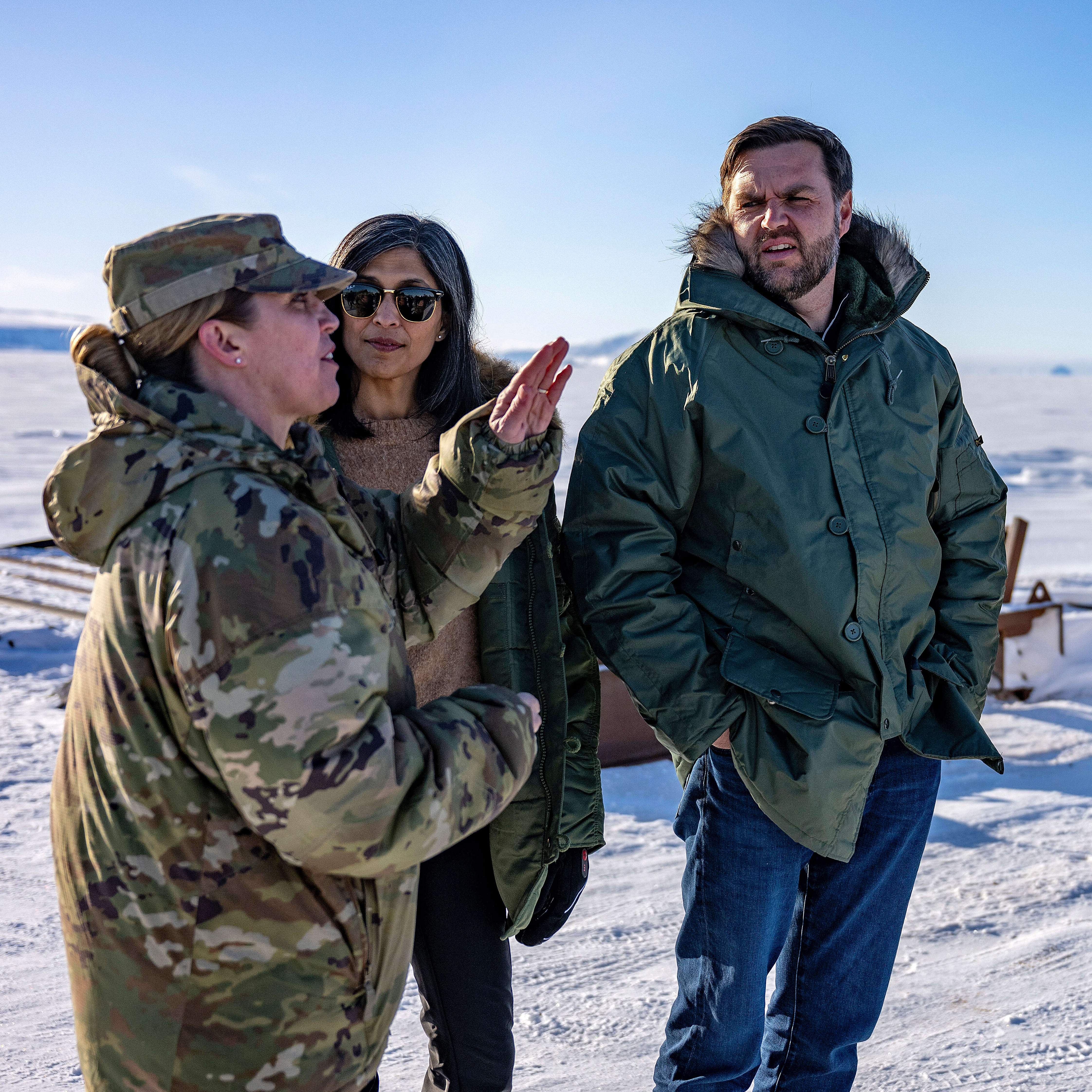
Post Reports
Trump’s plan to take over Greenland
00:21:18
The White House is figuring out how much it would cost to take control of Greenland. But how would making Greenland into a U.S. territory actually work?
Loading summary
Transcript44 lines
- [00:00]
Cascade Natural Gas Representative
Cascade Natural Gas believes a warm home, hot water, and natural gas energy should be available to everyone. That's why Cascade established the Oregon Low Income Bill Assistance and Energy Discount Programs. These programs provide income qualified applicants a discount on their monthly bill and, if needed, help with past due balances. Qualifying for assistance is easy by calling Cascade or any of our partner community action agencies. Get complete bill assistance info@cngc.com help.
- [00:33]
Cole Bjkowicz
President Donald Trump likes to make big claims and bold promises. A lot of the time they don't come true. But earlier this week, our Washington Post colleagues found out that the Trump administration is actually laying the groundwork for one of Trump's more surprising ideas.
- [00:48]
Michael Birnbaum
So we heard that the number crunching part of the White House has been running through scenarios to try to understand what it would cost the United States if it took over green Greenland from Denmark and operated it as a US Territory.
- [01:09]
Cole Bjkowicz
That's White House reporter Michael Birnbaum.
- [01:12]
Michael Birnbaum
Donald Trump has talked about obtaining Greenland for the United States for a long time. It's something that came up in the first term as well. For a long time, it's felt like a bit of a joke. So what we're seeing is the transformation of an idea into something that has numbers attached to it and that could, ideally, from the White House perspective, actually be executed.
- [01:39]
Cole Bjkowicz
From the newsroom of the Washington Post, this is Post Reports. I'm Cole bjkowicz. It's Wednesday, April 2nd. Currently, Greenland is a part of Denmark. Today we'll talk about Trump's plans to make the island part of the United States. I guess the big question, Michael, is why? Why does Trump want the US to take over Greenland of all places?
- [02:07]
Michael Birnbaum
So President Trump has been interested in Greenland, which is an autonomous island territory that's part of the Kingdom of Denmark. He's been interested in it since his first term. He's been talking about it as something that he wants the US to possess. He says it has minerals. He says that it is a strategically important island territory, that China and Russia are interested in it, and that the US Is losing out on the competition. And he says he wants to expand U.S. bases and the U.S. military presence there. So he sees it, for economic and security terms, as an asset for the United States.
- [02:49]
Cole Bjkowicz
I remember in Trump's first term when he first kind of asked his aides to look into what it would take for the US to acquire Greenland. And it felt back then this was coming out of nowhere. And then it wasn't really a major campaign issue, but it's clearly stayed on his mind. Do we know how Trump became so fixated on this idea.
- [03:08]
Michael Birnbaum
Well, so there were some people, some of his friends put it into his head in the first term. Ronald Lauder is a sort of major New York magnet who's friendly with Trump and has his ear on some foreign policy issues. He was an early proponent of this idea and Trump talked about it in the first term. And he got into some arguments with the Danish Prime Minister who then as now is Mette Frederiksen, a sort of strong woman leader that Trump has not gotten along with. President Trump slammed Meta Frederiksen after she rejected the President's idea to purchase Greenland. She reportedly that the conversations are, quote, an absurd discussion. Greenland is not for sale. Greenland is not Danish. Greenland belongs to Greenland. But it felt very much like a joke in the first term, right? This time it doesn't feel like a joke. And what we're seeing now increasingly is the whole policy apparatus of the US Government going into motion to try to game out what it would actually be like to control Greenland.
- [04:22]
Cole Bjkowicz
So what are Republicans and Trump's other allies saying? Are they all supportive? Has it become a talking point now for is this a MAGA talking point that America should run Greenland?
- [04:32]
Michael Birnbaum
It is very much a MAGA talking point. And there have been a number of high level US delegations to Greenland. Last week, Vice President J.D. vance made a brief trip to a US military base in Greenland. There's been a US military presence in Greenland since the Cold War. So Vice President J.D. vance visited this military base in Greenland last week and really blasted the Danish government for not doing right by the people of Greenland. So it was a little bit like a campaign speech. He was trying to win the hearts and minds of Greenlanders and took aim again at Danes. Our message to Denmark is very simple. You have not done a good job by the people of Greenland. You have underinvested in the people of Greenland and you have under invested in the security architecture of this incredible beautiful landmass filled with incredible people. That has to change. After Vance visited, Danish Foreign Minister Lars Luca Rasmussen responded. Much is being said these days. Many accusations and many allegations have been made. And of course we are open to criticism. But let me be completely honest, we do not appreciate the tone in which it's being delivered. This is not how you speak to your close allies.
- [06:03]
Cole Bjkowicz
And Michael, let's back up for one second because obviously you mentioned that Greenland is a territory of Denmark. So let's talk about how the island is govern now. We know it's in the middle of the Arctic Ocean. Let's just learn a little bit about Greenland itself.
- [06:18]
Michael Birnbaum
So Greenland is a very, very big island. When I was a kid, I always kind of stared at it on the map because, I don't know, it was kind of weird and interesting, just like Australia. I had a hard time imagining that something could be an island and gigantic at the same time. And it has a complicated history with Denmark. The modern kingdom of Denmark has possessed it in various forms and configuration since the 19th century. There are only 58,000 Greenlanders. So it's this large territory. Almost everybody lives in Nuuk, the capital city. It is mostly frozen tundra and is not a very hospitable place. Doesn't have much of an economy. It has some fishing, and it has some, as we talked about, mineral resources. And in recent decades, it has gotten more and more autonomy, governmental autonomy, from Denmark. It operates sort of its own social services and its own domestic policy, but Denmark still controls its foreign policy, its defense, and other aspects of its operations.
- [07:34]
Cole Bjkowicz
Maybe also, Denmark would be responsible for making sure that another country doesn't take it over.
- [07:39]
Michael Birnbaum
Denmark would be responsible for making sure that its ally, the United States, does not invade Greenland by force.
- [07:52]
Cole Bjkowicz
Yeah, I mean, how has Denmark reacted to all of this talk by Trump that he wants to take Greenland from them?
- [08:02]
Michael Birnbaum
So the Danish government is just astonished about what is going on. They don't understand. They are extremely frustrated. They feel as though they're being treated terribly by their US Ally. They acknowledge they haven't always had the best relationship with Greenland. It is a complicated and kind of colonial history. And so the United States is walking into an existing tense relationship. But they look at Washington and Trump. I mean, it's not just that Trump says he wants to possess Greenland. It's that there's this whole aggressive rhetoric around it, that Denmark has been a terrible ally, that Denmark has not done right by the Greenlanders, that they've been neglecting it, that they've allowed China to muscle in. None of which is really strictly factually accurate. I mean, it's a complicated situation. But the Danes certainly see this all as unfair.
- [09:11]
Cole Bjkowicz
And do the Greenlanders feel this way? Do they feel like they haven't been taken care of by Denmark?
- [09:17]
Michael Birnbaum
It is a relatively popular political stance in Greenland to desire independence from Denmark, and it's complicated. They get a lot of money from the Danish government. And the big political discussion in Greenland at this point is, at what speed do they desire independence from Denmark? And what would be the practical realities of figuring out some other funding source for that large subsidy that the Danish government gives them.
- [10:02]
Cole Bjkowicz
After the break, Michael and I talk about how this plan for the US to take over Greenland could actually play out. We'll be right back.
- [10:21]
Podcast Host
Think about why you listen to podcasts. It's like having a friend who makes you think or can help you wind down right? Well, the Washington Post has a lot of people you can turn to at any hour. You can read the most important and interesting stories. We can help you cook something delicious, give you advice on a tricky friendship. Rave about a movie or book that you shouldn't miss. When you become a Washington Post subscriber, do you have a companion for whatever part of your day needs it most? Get it all for just $4 every four weeks. That's for an entire year. After that, it's just $12 every four weeks. Cancel anytime. Go to washingtonpost.com subscribe that's washingtonpost.com subscribe.
- [11:02]
Cascade Natural Gas Representative
Cascade Natural Gas believes a warm home, hot water and natural gas energy should be available to everyone. That's why Cascade established the Oregon Low Income Bill Assistance and Energy Discount Programs. These programs provide income, qualified applicants a discount on their monthly bill and, if needed, help with past due balances. Qualifying for assistance is easy by calling Cascade or any of our partner community action agencies. Get complete bill assistance info@cngc.com help.
- [11:37]
Cole Bjkowicz
So Denmark isn't really interested in giving Greenland up. Greenland wants to control itself, but the Trump administration seems, according to our reporting, to be moving ahead with at least the planning process. And so how does the Trump administration envision that it would actually work to have the US Running Greenland as its own territory?
- [12:00]
Michael Birnbaum
Well, you know, there are precedents. The US has other territories. It has Puerto Rico, it has Guam, the U.S. virgin Islands. These are places where residents are U.S. citizens. They don't have representation in Congress, but they are tied to the U.S. government and U.S. funding streams. The calculation, as far as we understand it from our reporting, is how is there a situation that they can present to the Greenlanders that would be better than the status quo? So right now Greenland is getting about $600 million a year from the Danish government. And that covers social services, that covers the sort of basic operations of life, education, this sort of thing. How would the United States substitute for that and up the ante? How can they make life more attractive for Greenlanders as a U.S. territory rather than a Danish one?
- [13:06]
Cole Bjkowicz
So they might say like, well, the Danes are giving you 600 million, but we're willing to give you a billion. You know, the Trump administration has been so focused on slashing spending. Right. They're going around the federal government and cutting all over the place. But I imagine this would be pretty expensive. So have they come up with an, like, how much would this actually cost the United States to run Greenland?
- [13:31]
Michael Birnbaum
So it's a little complicated. The Danish government spends about $600 million a year on Greenland. The US idea is to improve that, to make it more attractive to Greenlanders. We don't have exact figures. One number we heard being bandied about from one of our sources was kind of in the tune of a billion dollars a year. But the exercise that's happening right now is very much a sort of scenario strategizing situation where they're coming up with various ideas. So there's not a single number in mind. Also, one of the ideas is that the purpose of taking over Greenland is partly to get its mineral wealth. And so it would be a boon to the US Economy and potentially pay for itself or at least offset part of the costs.
- [14:29]
Cole Bjkowicz
But Michael, would Greenlanders ever even be open to an agreement like what the US Is proposing?
- [14:35]
Michael Birnbaum
Well, so, you know, this is the short answer is the Greenlandic reaction to all of this has been intense frustration and anger toward the United States. Today Danish Prime Minister Mette Fredriksen has started a three day visit to Greenland, which I have heard from multiple Danish officials. This was at the invitation of the Greenlandic government. They really wanted to stress that this is driving Greenland actually toward Denmark. And there's a brand new Greenlandic prime minister. They just had elections this month. The government came into office on Friday. And so this is Mette Fredriksen going for her initial meetings with the new leaders of the territory. But the Greenlanders don't seem to want to be controlled by the United States. What they say they want is to stand on their own as Greenland and make their own decisions. They don't want to swap one, what they see as a colonial power for a different one.
- [15:50]
Cole Bjkowicz
I mean, you mentioned this earlier, but is there any scenario where the US would try and take Greenland by force, that they would use the US Military?
- [16:00]
Michael Birnbaum
So it is hard to envision the leading military power in the world, the United States, seizing the territory of an ally that fought along the United States and Afghanistan. Soldiers, Danish soldiers, died there. They were very committed. I think that it might have been. Per capita they sustained higher losses than the United States. It's hard to imagine a situation where that would happen. But if you ask Donald Trump, the President of the United States, he won't rule it out. You know, he says explicitly he'd Rather not use the military. But he said, you know, this is not something he's not going to rule out. Any options, Your references to Greenland and the Panama Canal, so forth. Can you assure the world that as you try to get control of these areas, you are not going to use military or economic coercion?
- [16:58]
Cole Bjkowicz
No.
- [16:58]
Michael Birnbaum
Can you tell us a little, little bit about. I think they would prefer to acquire Greenland through moral persuasion and perhaps through money. But he's not saying no U.S. military.
- [17:12]
Cole Bjkowicz
I mean, I think for some Americans, it's confusing why this has become such a major policy point, why he's antagonizing allies in Europe. What is your sense of kind of public opinion about Trump's desire to take over Greenland?
- [17:31]
Michael Birnbaum
Well, my general sense is that I don't think that the US public is clamoring to possess Greenland as a specific policy option. Like you said, this wasn't part of the campaign at all. You know, President Trump referenced Manifest Destiny in his inaugural address, which is the period of American history where we were expanding our territory. The United States will once again consider itself a growing nation, one that increases our wealth, expands our territory. I think that it fits into a broader political message that he's trying to portray a story, he's trying to write of America astride atop the world, powerful, feared by friends and foes alike, and one that is flexing its muscle and perhaps indeed expanding its territory in a way that it hasn't in many generations. So I do think that he is trying to tell a story through this that does have some political resonance, at least with some Americans.
- [18:42]
Cole Bjkowicz
Yeah. I mean, the desire to expand US territory feels almost Putinesque. Is that a parallel that's worth drawing out? Do you see similarities between how Vladimir Putin sees Russia's place in the world and how Trump thinks about the US's role?
- [18:59]
Michael Birnbaum
So I wanna be careful how I talk about this.
- [19:01]
Cole Bjkowicz
Fair enough.
- [19:02]
Michael Birnbaum
But I was the Moscow bureau chief for the Washington Post for a few years, and I lived in Moscow, spent a lot of time talking to Russians, and I was there from 2014 to 2016 at a different moment in which Russia seized territory, annexed Crimea from Ukraine, which until then was a relatively friendly country to Russia. And I've always felt, and I'm not alone, that Russian President Vladimir Putin is interested in telling a story about Russia and rebuilding the Russian empire, rebuilding Russia as a powerful force in the world, an idea that to the Russian people was lost or damaged after the breakup of the Soviet Union in 1991, and that Putin's grand goal is to inscribe himself in the history books of Russia as someone who expanded Russian territory and made Russia great again. And I don't know how consciously Trump is emulating Putin, and I would be careful. I don't want to say that he is. But he certainly has a tremendous amount of respect for Putin and Putin's displays of strength. So I do think that there are some resonances and some echoes in what Putin is doing in Trump's ambitions for making America great again.
- [20:34]
Cole Bjkowicz
Yeah. And Greenland is part of Just a is one of many places that Trump has talked about taking. We had an episode a few weeks ago where we talked about Trump's, like, frequent remarks about annexing Canada to make it the 51st state. He talks about the Panama Canal. Where does Greenland fit into those plans? Like, does he see one as more likely than the other in terms of, you know, the chances that America could actually take it over?
- [21:02]
Michael Birnbaum
I mean, he sees you mentioned Canada, you mentioned the Panama Canal. So these are other areas he says he wants to take over. Greenland inside the administration is viewed as the easiest target. Someone told me and our colleague Natalie Allison it makes sense from just a plain old national security chess game perspective for the president to acquire Greenland. And they see Greenland, partly because of this independence movement, as a winnable territory for the United States.
- [21:48]
Cole Bjkowicz
Michael, thank you so much for explaining all this to us.
- [21:51]
Michael Birnbaum
Great to be here.
- [21:56]
Cole Bjkowicz
Michael Birnbaum is a White House reporter for the Post. That's it for Post Reports. Thanks for listening. One more thing before you go. I want to tell you about a new, fresh version of Impromptu, a podcast from our friends on the opinion side. You can now get it twice a week on Tuesdays, columnist Dana Milbank asks a few of his colleagues to join him to process the biggest political news of the week. And on Fridays, Drew Goins and Molly Roberts ease you into the weeknd, breaking down the cultural moments you can't stop thinking about. It's smart when you need it and fun when you want it. Check out Impromptu wherever you get your podcasts. Today's show was produced by Ariel Plotnick and Sabi Robinson. It was mixed by Shawn Carter and edited by Peter Bresnan and Rena Flores. Thanks also to Amy Gardner. Colby. I'm Colby Ikowicz. We'll be back tomorrow with more stories from the Washington Post.
- [23:06]
Washington Post Advertiser
You listen because you know the power of good journalism and the Washington Post is there for you 24 7. When you become a Washington Post subscriber, you get exclusive reporting you can't find anywhere else. You also get sharp advice columns, delicious recipes, TV and music reviews and so much more. Right now, you can get all of that for just $4 every four weeks. That's for an entire year. After that, it's just $12 every four weeks. And you can cancel anytime. Add to your knowledge and discover all the Post has to offer. Go to washingtonpost.com subscribe. That's washingtonpost.com subscribe.