← Post Reports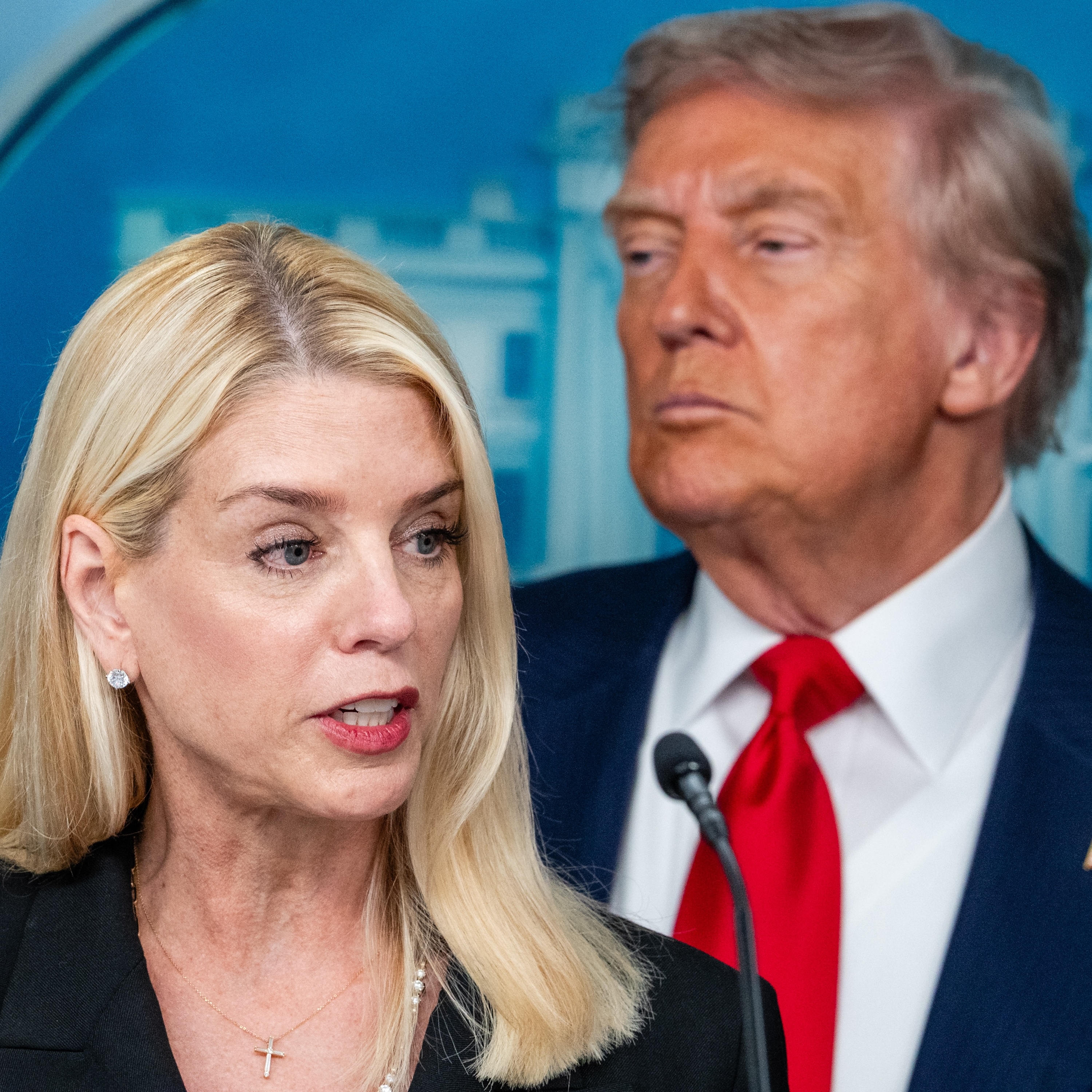
Post Reports
Trump’s pressure on Pam Bondi and the DOJ
00:28:53
President Donald Trump wants the Department of Justice to prosecute his political opponents. Today, more on his demands and the alarms they raise.
Loading summary
Transcript103 lines
- [00:03]
Donald Trump
When it comes to reducing carbon emissions, the heaviest industries face the toughest challenges. That's where we come in. ExxonMobil is investing in technology to help American industry lower its emissions, including in our own operations, all while empowering businesses and creating job opportunities. It turns out that fewer emissions can mean a stronger economy. ExxonMobil, let's deliver.
- [00:33]
Elahe Izadi
Donald Trump has long promised retribution. Since 2020, he said he'd wage war against people he sees as enemies if he ever became president again. Now he's back in the White House, and we're seeing what that looks like in action. Over the weekend, the president took to social media with marching orders for the Justice Department.
- [00:57]
Conservative Commentator
The word unprecedented gets thrown around a lot these days. But last night, the president took an extraordinary step. He publicly urged his attorney general, Pam Bondi, to go after his political adversaries. He posted just last hour, quote, pam.
- [01:13]
Elahe Izadi
I have reviewed over 30 statements and.
- [01:15]
Conservative Commentator
Posts saying that essentially same old story.
- [01:18]
Washington Post Advertiser
As last time, all talk, no action.
- [01:20]
Elahe Izadi
He called them, quote, guilty as hell.
- [01:23]
Conservative Commentator
And he complained, quote, we can't delay any longer.
- [01:27]
Elahe Izadi
I was watching all this unfold, and I really wanted to understand what this all meant. So I brought my colleague Jeremy Roebuck into the studio. He covers the Department of Justice at the Post. Jeremy says the actions the president has taken to get directly involved in how the DOJ prosecutes people goes beyond anything we've seen since Watergate.
- [01:51]
Jeremy Roebuck
For a president, that's extraordinary statement. Here he was directing his attorney general publicly to prosecute specific people. It was huge. And it came on the heels of an already busy, you know, couple of months on doj. But this crossed even a further line.
- [02:10]
Elahe Izadi
From the newsroom of the Washington Post, this is Post Reports. I'm Elahe izadi. It's Wednesday, September 24th. Today, Jeremy explains how the Trump administration is encroaching on the independence of the Justice Department. We'll go through three specific people Trump once prosecuted and how the investigations they're facing Mark a historic turning point. Hi, Jeremy. Thanks for joining us today.
- [02:40]
Jeremy Roebuck
I'm glad to be here.
- [02:42]
Elahe Izadi
Jeremy, I want to take a step back here. Overall, how would you characterize what Trump is doing with the Justice Department?
- [02:51]
Jeremy Roebuck
So Trump came in his second term guns blazing. We knew there were going to be big changes at the Justice Department. This was a political agency that he, you know, in his words, made his life hell for the years that he was out of office. They oversaw the investigations that led to his indictments. Some of them, he and other Republicans had already had complaints that the justice system had been, quote, weaponized against them for political purposes. And he came in promising wholesale change.
- [03:20]
Elahe Izadi
And what does some of that change look like?
- [03:22]
Jeremy Roebuck
So it started off with things like a lot of political appointees and top leaders that had been at the Justice Department were moved out. Now we're starting to see that trickle down towards some of the U.S. attorney's offices in ways that are really unusual, where there are specific demands involving specific cases that federal prosecutors are being pressured to investigate.
- [03:45]
Elahe Izadi
So I wanna start with the social media posts from Trump that we talked about earlier. He wrote on his own social media platform, Truth Social. What exactly did Trump say?
- [03:55]
Jeremy Roebuck
Around 6:44pm on last Saturday night, he posted this to Truth Social, a message that started Pam Colon. It was very clear he was addressing this directly to his Attorney General. He said that he had been hearing a bunch of complaints from his supporters, upset that there had not been action taken so far on charging some of his adversaries and critics, people including Letitia James, the Attorney General of New York, California Democratic Senator Adam Schiff, and former FBI Director Jim Comey. And he said that the cases they were building against these figures were, quote, great cases. And he demanded that justice must be served now.
- [04:36]
Elahe Izadi
And so why these people, Jeremy? Why are these people the focus for Trump?
- [04:42]
Jeremy Roebuck
So Letitia James, the Attorney General of New York, Adam Schiff, the Senator from California, a Democrat, and Jim Comey, the former FBI Director, are all people who Trump views as people who came after him unfairly during his first term and then in his years out of office.
- [04:58]
Elahe Izadi
So let's take them one by one then.
- [04:59]
Donald Trump
Sure.
- [05:00]
Elahe Izadi
Let's start with Letitia James. Donald Trump and the other defendants have committed persistent and repeated fraud.
- [05:09]
Jeremy Roebuck
So James, as the Attorney General in New York, secured last year this half a billion dollar civil fraud judgment against Trump and his real estate organization.
- [05:18]
Elahe Izadi
We proved that in our motion for summary judgment.
- [05:23]
Jeremy Roebuck
And the charges there were that the organization was allegedly lying about the value of the real estate in their portfolio to secure better loan terms and lower their taxes that they owed.
- [05:33]
Elahe Izadi
And this was at a when Trump was facing charges for a lot of different things. But this was one where there was a judgment here not in his favor.
- [05:40]
Jeremy Roebuck
It was not in his favor. And there subsequently been an appeal that knocked down some of the value of that judgment. But the judges and the appeals court still upheld the overall finding in that case, which was that Trump and his, his real estate organization had committed fraud. And since he returned to office, she's also been front and center on a lot of like lawsuits that have been challenging his. His policies.
- [06:01]
Elahe Izadi
This week, I joined Democratic attorneys general from across the country in fighting to stop the chaos, confusion and conflict caused by the president and his administration. Their policies are making life more difficult. So let's go to the next person. Comey. Some people will definitely remember this name, but remind us of what Trump views that he did.
- [06:20]
Donald Trump
I remember sometime in the summer of 2016, I think August, during a meeting in the Situation Room, I told the President that the FBI was endeavoring to understand whether any American were working or associated with the Russian effort to attack the election.
- [06:37]
Jeremy Roebuck
So Jim Comey, the former FBI director that Trump fired in his first term, Trump has held a sense of grievance against Comey for ever since then, blames him for a lot of the investigation that hung over the first Trump administration over Russian interference in the 2016 election and the investigation into whether Trump and people around Trump during that campaign were somehow colluding with Russia.
- [07:03]
Elahe Izadi
And let's go to this third person, Adam Schiff.
- [07:05]
Jeremy Roebuck
So Adam Schiff, now a senator at the time of the Trump first Trump administration, was in the House of Representatives representing California, and he was the head of the House Intelligence Committee. So he investigated a lot of the stuff that led to Trump's first impeachment over allegations that Trump had abused his office by pressuring Ukraine to investigate Joe Biden.
- [07:27]
Donald Trump
The president used official state powers available only to him and unavailable to any political opponent to advantage himself in a Democratic election.
- [07:38]
Jeremy Roebuck
And Schiff was not shy about going on TV and talking about all of this, publicly explaining their case to the American people. And Trump has always been a TV watcher. So a lot of those statements Schiff was making stuck in his craw.
- [07:53]
Washington Post Advertiser
Yeah.
- [07:54]
Elahe Izadi
Made it to him. Okay, so we have these three people. You've explained why Trump is so focused on them. Are they being accused of particular crimes here? Like, what are they being accused of having done wrong?
- [08:06]
Jeremy Roebuck
So there are active investigations going on right now in a couple U.S. attorney's offices across the country. Letitia James and Adam Schiff are both under investigation for allegations of mortgage fraud. These are claims that came from Trump allies in the administration. They recommended the Justice Department investigate these people for these claims. They have to do with statements they made on loan applications when they were buying houses outside of their home states. Supposedly, they lied by saying this new home that they were buying was going to be their primary residence. In James's case, it was a home in Norfolk, Virginia, when clearly, as the Attorney General of New York, she lives in New York. Schiff's case, it was a home in Maryland when clearly, as a senator, his primary residence is in California. The allegation with Jim Comey is entirely separate from those mortgage fraud investigations. This one into Jim Comey has to do with some congressional testimony that he gave to Congress in late 2020 about the origins of the investigation into the Russian interference claims. And they are now alleging that he lied during that testimony and looking to prosecute him for making false statements to Congress.
- [09:17]
Elahe Izadi
And so these investigations into people Trump believes are his enemies, they're all being conducted by Trump's Justice Department right now. What exactly is happening with the investigations into these three people?
- [09:31]
Jeremy Roebuck
So Schiff is still being investigated in Maryland, but the real focus in the past week has been on the Eastern District of Virginia, where Letitia James and Jim Comey. The investigations into both of those figures has been going on. So for the past five months, those probes have been going on under the Trump appointed interim U.S. attorney there, Eric Siebert, who has been kind of overseeing some of these prosecutions in conjunction with some Justice Department officials. But very recently, he and his staff concluded in both cases that there wasn't enough evidence to bring charges against James and that there wasn't enough evidence to bring charges against Comey, and he wasn't going to recommend that these go before a grand jury for a possible indictment. So with this recommendation made, obviously you can guess the president and some of those around him were not particularly happy with that determination.
- [10:26]
Elahe Izadi
I'm assuming, given everything we've discussed so far.
- [10:29]
Jeremy Roebuck
Yeah. And so there was a lot of pressure over the past week, building, building and building, for him to either reverse course or step down and make way for someone that potentially might be willing to pursue those charges.
- [10:43]
Elahe Izadi
For Siebert. For Siebert to leave his job because he would not bring forward charges.
- [10:48]
Jeremy Roebuck
Correct. There was also a question in the air whether the Trump administration might fire him first before he gets to make that decision. All that came to a head on Friday when Trump, speaking to reporters in the Oval Office, was asked a question about Siebert and these cases.
- [11:03]
Donald Trump
Are you disappointed that the U.S. attorney for the Eastern District of Virginia has not prosecuted Leticia James? Do you intend to fire him? Well, we're going to see what happens. I am not following.
- [11:13]
Jeremy Roebuck
And Trump very plainly just said, I want him out.
- [11:16]
Donald Trump
Do you want him fired? Do you want him out? Yeah, I want him out. Yeah.
- [11:20]
Jeremy Roebuck
And within moments, within hours after that, Sieber resigned. And that set off a bomb within everyone observing these cases.
- [11:30]
Elahe Izadi
How remarkable was that, that you have this U.S. attorney basically being pushed out because he is refusing to bring forward cases because he says there isn't enough evidence.
- [11:42]
Jeremy Roebuck
It's remarkable in the fact that you had, in this case, people within the Trump administration, high level people at the Justice Department, including Pam Bondi, the Attorney General, and Deputy Attorney General Todd Blanche, who's a close ally of Trump, represented him in all of his criminal cases as a personal lawyer, both lobbying on behalf of keeping Mr. Siebert, and in this case, the president and other people around him decided, no, he needed to go.
- [12:07]
Elahe Izadi
And so now we're seeing that Trump is saying he'll nominate a new person to replace. Who is it?
- [12:15]
Jeremy Roebuck
It's a woman named Lindsey Halligan, who is an attorney who represented Trump in some of his legal matters down in Florida in the years when he was out of the White House.
- [12:24]
Conservative Commentator
Simply put, it seems that under the Biden administration, the government conceals what it wants to, the government does what it wants to, and American citizens need to protect their country from its government.
- [12:36]
Jeremy Roebuck
She's only been a lawyer for about a decade. She has no prior prosecutorial experience.
- [12:41]
Elahe Izadi
I'm sorry, she's never been a prosecutor, but she's being nominated to be. Is that normal?
- [12:45]
Jeremy Roebuck
It's not typically normal. We have seen it in a few other instances in appointments that Trump has made since. Since returning to the White House. You know, Alina Haba in New Jersey, the U.S. attorney there, another personal lawyer of his who had never worked as a prosecutor before. So we're starting to see more and more of this.
- [13:03]
Elahe Izadi
Is it reasonable to view this as Trump has picked this new person to replace Siebert because he expects her to carry out his agenda and move these prosecutions?
- [13:15]
Jeremy Roebuck
I think the administration would say he trusts her to carry out his vision and his. The goals of his administration. They might push back on saying, we're putting her there to bring these prosecutions. But Trump himself said it in a post to social media over the weekend where he announced her nomination and said that he was putting her there to, quote, get things moving, particularly on these cases.
- [13:37]
Elahe Izadi
Jeremy, I think at this point, it's worth bringing up another major development that has emerged from the Justice Department recently, and that is one about an investigation that was actually stopped. This is about Tom Homan, who is now Trump's border czar. What happened there?
- [13:54]
Jeremy Roebuck
So, in September 2024, before the election and before Homan was named to this White House position, he was caught on tape allegedly accepting a $50,000 bribe from undercover FBI agents posing as businessmen that were seeking contracts related to immigration work with the administration. At the time, Homan, you know, assuming Trump won the election, had a pretty good sense that he was going to land some job related to immigration work in the White House, although nothing had been offered to him yet and nothing was confirmed. Now, this investigation was going on at the time, and it was being overseen by the Public Integrity Section of the Department of Justice, and it didn't resolve in any charges. No charges were filed before the changeover in administrations. Now, when the Trump administration came in, the new FBI director, Kash Patel, the new Department of Justice leadership under Attorney General Pam Bondi, were kind of reviewing this case, among many others that were still pending when they came in, and they decided, based on the evidence that had been presented to them, that they did not believe there was credible evidence that any sort of corruption or bribery occurred here that could result in a winnable case, and they decided to shut the investigation down.
- [15:09]
Elahe Izadi
So how does this fit into this other conversation we're having about investigations that are being pursued and Trump calling for specific people to be prosecuted?
- [15:18]
Jeremy Roebuck
Well, if nothing else, the optics of this are particularly bad. This news about the Homan investigation broke over the weekend around the same time these cases that we've been talking about already were in the news. So, on the one hand, you have Trump publicly calling for certain people to be prosecuted, and then on the other hand, you have at least allegations from some people on the outside, outside saying, hey, this looks like a case where a Trump ally was actually caught on tape accepting a bribe and that was shut down. Now, it's important to note here that the White House is saying, you know, that the Homan investigation was entirely political. It was, you know, an entrapment case that was seeking to go after someone that's close to Trump. And an example of what they've described as this weaponization of the justice system.
- [16:04]
Elahe Izadi
Has Homan said anything about this?
- [16:06]
Jeremy Roebuck
He's denied that he did anything illegal. Importantly, on a Fox News interview this week, he did not say that he didn't accept the money, but was very insistent he did nothing illegal and was targeted. Now, the White House subsequently has said that he didn't accept any money. And there's still that question lingering as to what exactly occurred here.
- [16:29]
Elahe Izadi
Jeremy, another thing is that I know that Trump, before he took the White House again, he was under several investigations. He went to trial, and him and his allies would often complain that all of this was taking an enormous toll on him. It was inconvenient, it was expensive, it hindered his campaign. Now, Putting aside the comparison between the investigations and trials that Trump had and what the DOJ is doing now with investigating people Trump sees as his enemies, is this what Trump is trying to do? Like, does he view this as, well, they made my life difficult, I'm going to make their lives difficult?
- [17:08]
Jeremy Roebuck
Exactly similar to what Trump complained about during his time when he was under investigation for various things. One of the men that's leading a lot of these investigations into Trump's adversaries right now, Ed Martin. He was at first nominated to be the US Attorney in dc. They had to withdraw that nomination. But on his way out the door, he gave a press conference where he not speaking specifically about these people, but said he viewed his role that he was going to take at the DOJ to be, if we can't bring cases, we're going to basically name them and shame them publicly.
- [17:42]
Donald Trump
There are some really bad actors, some people that did some really bad things to the American people. And if they can be charged, we'll charge them. But if they can't be charged, we will name them and we will name them. And in a culture that respects shame, they should be people that are shamed.
- [17:59]
Elahe Izadi
You know, earlier we talked about this idea that Trump on the campaign trail promised retribution. When asked, is Trump trying to take revenge on his perceived enemies? What does the White House have to say about that?
- [18:12]
Jeremy Roebuck
I think they would frame it more as accountability, not retribution. But as they go on talking about it, it's very. It becomes more clear that what they are pursuing here is some sort of, you lashed out at me. I wanna lash back out at you. He blames Letitia James. He blames Jim Comey. He blames Adam Schiff for bringing these investigations that bedeviled him. He says they were corrupt and those were not proper investigations. But if you look at what we're talking about now, mortgage fraud, lying to Congress, those crimes have nothing to do with the things that he was saying were corrupt, the investigations that brought all that about.
- [18:55]
Elahe Izadi
After the break, we talk about why all of this is so alarming to attorneys who work for the doj. We'll be right back.
- [19:17]
Conservative Commentator
Fall is the perfect time to give your wardrobe a reset. And quince makes it easy. Their pieces look as good as they feel, so you can stay warm, polished and on budget. Think elevated fall essentials, 100% Mongolian cashmere, starting at just $50. Machine washable silk tops and skirts, perfectly tailored denim, and even those timeless wool coats I've been eyeing as the weather cools down. The best part, you get designer level quality without the designer price tag. Quince partners directly with ethical world class factories, cutting out the middlemen to bring you luxury that actually feels smart and effortless. Keep it classic and cozy this fall with long lasting staples from quince. Go to quince.com reports for free shipping on your order and 365 day returns. That's quince.com reports to get free shipping and 365 day returns. Quints.com reports.
- [20:12]
Washington Post Advertiser
You listen because you know the power of good journalism and the Washington Post is there for you 24 7. When you become a Washington Post subscriber, you get exclusive reporting you can't find anywhere else. You also get sharp advice, columns, delicious recipes, TV and music reviews and so much more. Right now you can get all of that for just $4 every four weeks. That's for an entire year. After that, it's just $12 every four weeks. And you can cancel anytime. Add to your knowledge and discover all the Post has to offer. Go to washingtonpost.com subscribe that's washingtonpost.com subscribe.
- [21:00]
Elahe Izadi
So what we've laid out thus far, the president pressuring the DoJ to prosecute specific people, pushing out an attorney who could have prosecuted a couple of them but declined because of a lack of evidence. This might just seem like a very basic question, but can you lay out to me why is this behavior bad? Like, how does this compare with how the Justice Department should function or normally functions?
- [21:26]
Jeremy Roebuck
Well, for almost 50 years there have been these norms in place that started back with the performs after Watergate and Richard Nixon and scandals that went on with the Justice Department back then. I think most people, when they think about Watergate, if they know much about it at all, think about, remember the break in at the Democratic National Committee at the Watergate building.
- [21:46]
Elahe Izadi
What they don't think about the Robert Redford movie?
- [21:49]
Jeremy Roebuck
Dustin oh, true, of course. But as the investigation into that went on, it became a whole mess of interlocking scandals. And a lot of that ended up being focused on Nixon's attempts to pressure the Justice Department to help conceal his administration's involvement in that break in, but also to, you know, in earlier instances, kind of steer it towards prosecuting or putting pressure on some some folks he considered political enemies. And as all of this came out of through investigations and Congress and reporting after Nixon was forced to resign, there were a lot of calls that like, hey, we need to put some firewalls up between the White House and the.
- [22:30]
Elahe Izadi
Justice Department that there needs to be some measure of independence between these two.
- [22:33]
Jeremy Roebuck
Entities, politics should not be influencing prosecutions directly.
- [22:38]
Elahe Izadi
And then what exactly did these reforms do?
- [22:41]
Jeremy Roebuck
So after Watergate, the attorney General under Jimmy Carter came in and said, we want to kind of clean the slate and make sure something like this doesn't happen again. They instituted a number of reforms that were intended to put up some firewalls between the White House and the Justice Department so that there would be no real direct influence on the White House being able to direct specific criminal cases, specific civil cases. But for the most part, a lot of these were not. They didn't have the teeth of, like, a law, for instance. They were more policies that could be revised during each subsequent administration, and they were norms. But despite the fact that, you know, the Justice Department is part of the executive branch, so the branch does kind of have to answer to the president. Presidents from both Republican side and the Democratic side for roughly 50 years after Watergate have thought that it was important enough to have some distance between the White House and the Justice Department, that they've all broadly adhered to that standard.
- [23:51]
Elahe Izadi
Why is it important for the politics and the legal system, you know, that these two things be separated, like, for our system of governance?
- [23:59]
Jeremy Roebuck
I mean, just imagine if you allow politics and political considerations to really seep into deciding which cases you're going to bring, who's going to be prosecuted, when they're going to be prosecuted for what, you risk having a situation where, you know, the president in power can decide and bring the full weight of the US Criminal justice system down on people just because they are on the opposite side of the line politically from him. We've seen this kind of thing in dictatorships in other countries, and America, at least, has always held itself up as we have a fair and neutral justice system. You know, there have been times that has not always played out exactly as it should, but that is the ideal that we've built ourselves towards.
- [24:40]
Elahe Izadi
So one thing Republicans and Trump supporters will often say is, well, like, look, Biden did this first. Democrats did this first. They are the ones who have also pursued politically motivated investigations into Donald Trump. There have been civil and criminal investigations into his activities. Trump famously refers to this all as a witch hunt. What do you make of that argument?
- [25:02]
Jeremy Roebuck
So Republicans have been beating that drum for a while, and, you know, there's still being argued and debated in congressional hearings even today. I will point out a couple things, though. Merrick Garland, the Attorney General under President Joe Biden, made very clear when he was coming into office, signed a bunch of internal Justice Department policies, reestablishing Some firewalls between the White House and the Justice Department. And if you'll remember, back during the investigations of Trump, President Joe Biden was repeatedly asked about, you know, his opinion on what the Justice Department should do, whether they should charge him with the election interference cases, that sort of thing. And, you know, was always like, that's not up to me. That's up to the Justice Department. So, you know, there are still, there are still many people in the Republican Party who would say, okay, that was all for show. And they'll point to ways in which they say that the Justice Department during the Biden administration was weaponized against them. But I think even if you accept there's some truth to that, which, you know, we're accept that argument for the purposes of our discussion, what is happening now is significantly different than that, because again, here you have the president publicly, in his social media posts, directing Pam Bondi.
- [26:14]
Elahe Izadi
I mean, it sounded like a direct message to her. I almost wondered, like, was that meant privately?
- [26:18]
Jeremy Roebuck
Well, he took it down for a minute and then reposted it. Okay, so he had the opportunity to take it down.
- [26:23]
Elahe Izadi
Okay, well. And here he's saying directly to her to go after these people.
- [26:28]
Jeremy Roebuck
Correct? Correct. So there's not even a pretense of distance at that point.
- [26:33]
Elahe Izadi
How have both Democratic and Republican lawmakers responded to these specific calls from Trump.
- [26:40]
Jeremy Roebuck
For prosecutions about how you might expect? I mean, Democrats, of course, including Senate Minority Leader Chuck Schumann Schumer, have come out very strongly with statements condemning this. Schumer told CNN the other day that this is the path to dictatorship.
- [26:59]
Donald Trump
That's what dictatorships do. It is so. It is so very, very frightening and damaging to our republic.
- [27:06]
Jeremy Roebuck
Republicans, there has been some minor pushback from individuals like Senator Rand Paul of Kentucky.
- [27:12]
Donald Trump
Lawfare of all sorts is wrong. Republican or Democrat, it's wrong.
- [27:16]
Jeremy Roebuck
Now, however, even as he's saying that, he suggested, well, the Democrats did it first.
- [27:21]
Donald Trump
What they did to Donald Trump was an abomination. But, yes, it is not right for the Trump administration to do the same thing.
- [27:28]
Jeremy Roebuck
But then there are others, like Senator Mark Wayne Mullen from Oklahoma, who basically responded to these posts with the verbal equivalent of a shrug.
- [27:38]
Donald Trump
Well, I think what we know is President Trump is very open and transparent with the American people, and he speaks his mind, and that's what his supporters love about him, and that's what America loves about him.
- [27:52]
Elahe Izadi
Jeremy, you're someone who covers the Justice Department. How are these actions landing within the agency? You know, the lawyers there, the rank and file. What can you Tell us about that.
- [28:02]
Jeremy Roebuck
I think there's a lot of concern right now among the career rank and file prosecutors about what's going to happen next. I think they are worried that they are going to be, there's going to be actual direct pressure on them to bring indictments that they don't feel they can ethically stand behind. And I think they are waiting to see how the top leaders at the Justice Department respond to Trump's call in his social media post over the weekend.
- [28:28]
Elahe Izadi
So just going back again to these three people, Schiff, James and Comey, if charges are filed, but these are weak cases. Let's say they're weak. Let's say there isn't really much evidence there. What happens then?
- [28:42]
Jeremy Roebuck
A number of things could happen. I mean, it could be thrown out by a judge before it even gets to a jury. It could get to a jury eventually that would ultimately decide to acquit. We could even see a scenario where it doesn't even get to an actual indictment being charged in any one of these cases. The U.S. attorneys and the federal prosecutors there are going to have to take these allegations before a grand jury to secure an indictment. And it's possible, as we've seen a lot happening in D.C. where these grand juries say there's not even evidence to indict. And that would be remarkable given that at the grand jury stage, the level of evidence that you have to bring in is much lower than you would have to bring in to secure a conviction. I mean, I think there have already been questions raised in this second Trump term about what independence is left at the Justice Department. You know, this, this pressure that we've seen in the Eastern District of Virginia, where Eric Siebert, the prosecutor, resigned, that's just one district. Right now there are investigations going on involving Trump adversaries in a number of districts across the country, including Maryland, as we mentioned with Senator Schiff. There's also an investigation into Federal Reserve Governor Lisa Cook, a similar mortgage fraud case that's happening down in Georgia. We could be entering a scenario soon where any number of those people could also be facing similar pressure from the administration.
- [30:05]
Elahe Izadi
Well, thank you so much, Jeremy, for joining me and explaining all this. I really appreciate it. Of course, Jeremy Roebuck covers the Department of Justice for the Post. That's it for Post Reports. Thanks for listening. Today's show was produced by Laura Benshoff and Sabi Robinson. It was mixed by Shawn Carter and edited by Rena Flores. Thanks to Efrain Hernandez. If you want to show your support for our show. Please subscribe to the Washington Post. Not only is it a great way to help us to continue to do this work, but you can now get access to Washington Post podcasts ad free in Apple Podcasts. You can subscribe in Apple Podcasts or by following the link in our show Notes. I'm Elahe Izadi. We'll be back tomorrow with more stories from the Washington Post.
- [31:06]
Washington Post Advertiser
You listen because you know the power of good journalism and the Washington Post is there for you 24 7. When you become a Washington Post subscriber, you get exc exclusive reporting you can't find anywhere else. You also get sharp advice, columns, delicious recipes, TV and music reviews, and so much more. Right now, you can get all of that for just $4 every four weeks. That's for an entire year. After that, it's just $12 every four weeks. And you can cancel anytime. Add to your knowledge and discover all the Post has to offer. Go to washingtonpost. Com subscribe. That's washingtonpost. Com Subscribe.