← Post Reports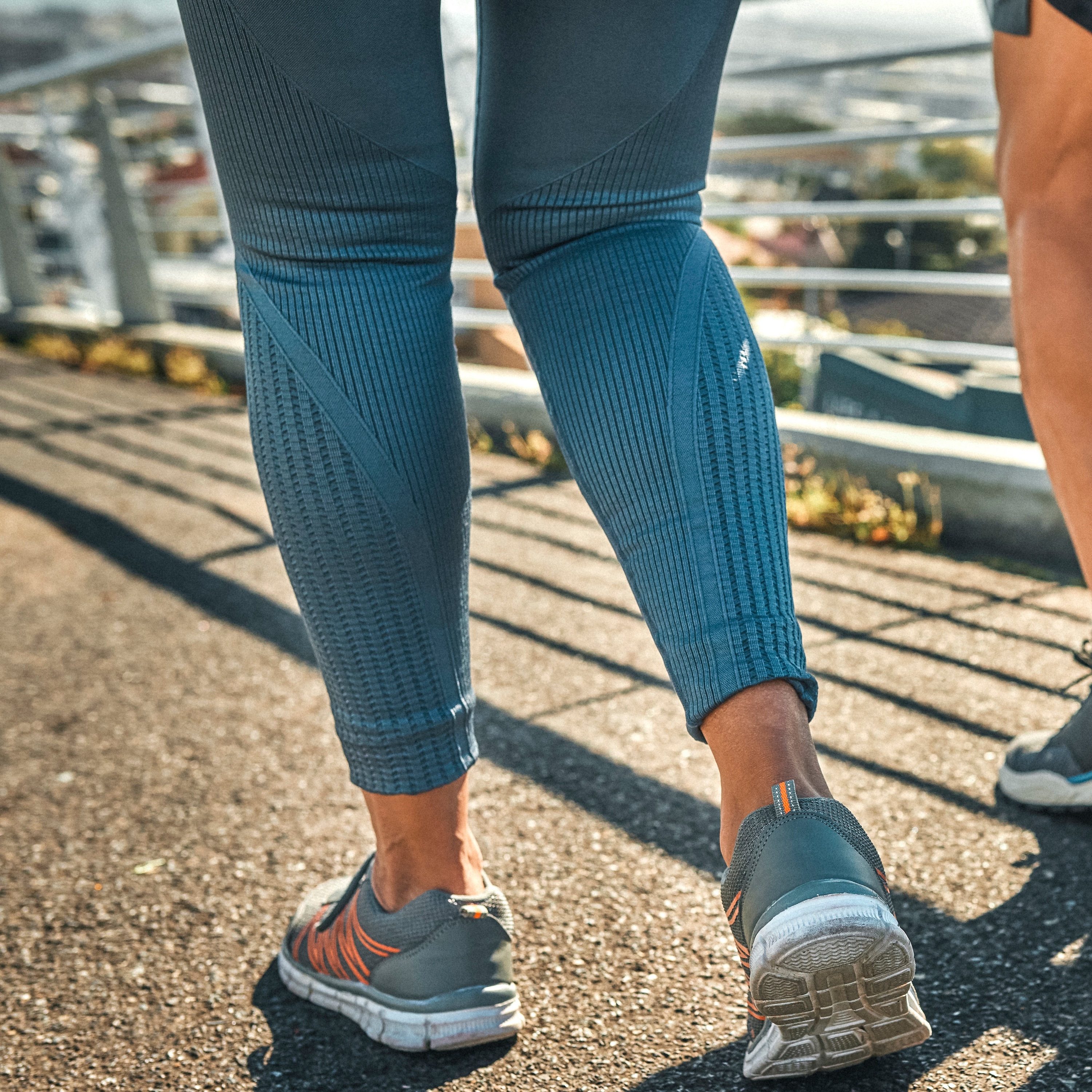
Post Reports
Want to live longer? Try fartleks.
00:21:38
Today, we revisit one of our favorite episodes from the past year: how fartlek training – or “speed play” – can help you exercise more joyfully and more frequently.
Loading summary
Transcript73 lines
- [00:00]
Jonathan Goldstein
Jonathan I'm Jonathan Goldstein and on the new season of Heavyweight.
- [00:04]
Elahe Izadi
And so I pointed the gun at him and said, this isn't a joke.
- [00:08]
Jonathan Goldstein
A man who robbed a bank when he was 14 years old and a centenarian rediscovers a love lost 80 years ago.
- [00:17]
Gretchen Reynolds
How can a 101-year-old woman fall in love again?
- [00:24]
Jonathan Goldstein
Listen to Heavyweight wherever you get your podcasts.
- [00:27]
Martine / Alahiadi
Foreign. Hey there, it's Martine. I hope you've had a wonderful holiday season so far. So today we wanted to re air this delightful episode that we had from earlier this year. It's with my co host Alahiadi, and she interviewed our exercise columnist, Gretchen Reynolds. Gretchen came on the show to explain an often overlooked, decades old and surprisingly easy way to get some daily movement into your life. Okay, without further ado, here's the show.
- [01:11]
Gretchen Reynolds
Good morning. I'm out on one of my favorite running routes. I'm about to start fart licking. I've warmed up with about 10 minutes of running. It's a beautiful, cold morning. I saw a lovely sunrise as I was warming up, and now I'm about to start my regular Bartleck route. I just picked up the pace. I'm going to be running to the next cross traffic street here, which is one of my longer little fart licks.
- [01:53]
Elahe Izadi
This is Gretchen Reynolds. She writes about exercise for the Post, and recently she wrote about a way to make your workouts more efficient. It's called the fartlick.
- [02:05]
Gretchen Reynolds
Okay, I'm coming up to the crossroad and now I'll slow back down. I can feel my heart rate slowing somewhat. It's a little rest period. And now I will start to run again. I'm going to go to the next cross street here.
- [02:45]
Elahe Izadi
Fartliff is a Swedish word. It means speed play. Basically, whether you're walking or biking or jogging or running, you just increase your speed for a short period of time and then come back down.
- [03:01]
Gretchen Reynolds
Some of my Bartleck intervals are longer than others. Some are shorter. It's all fine. You do whatever you want to do for as long as you want to do it. Or short. And here is my favorite marker. I'm going to stop and say hi to some dogs. Can I say hi to the dogs? What is it? Bugsy and Vacho. Hi, Bugsy and Vacho.
- [03:44]
Elahe Izadi
We're well into February, and most studies show that the vast majority of people have already given up on their New Year's resolutions by now. But no fear, if you started the year with some big fitness goals, Gretchen says you can get back on track. And the fartlick can help. Plus, it's pretty fun to say, what is. Is it fartleking? Like, how do you say this word?
- [04:09]
Gretchen Reynolds
Since I don't speak Swedish, I'm assuming it is fartlek, but that's certainly how I pronounce it, is fartlek.
- [04:18]
Elahe Izadi
I want all of my exercise routines to be hilarious. From the newsroom of the Washington Post, this is Post Reports. I'm Elahe Izadi. Today, Gretchen explains why adding the fartlick to your workouts is so effective. Plus, she shares some surprising new fitness science. Gretchen, before we dig into the fartlick, I have to say I'm very impressed at your ability to both run and talk and record yourself. Like, just listening to you run around and narrate what's going on, I'm like, is, what kind of exercise is that? Like, what is that called?
- [05:09]
Gretchen Reynolds
That actually is why I love the fartlek is because you can go a little bit fast, but then you get to go much slower.
- [05:17]
Elahe Izadi
Yeah, but talking just adds a whole other layer to working out, don't you think?
- [05:22]
Gretchen Reynolds
It does. Although we can and should talk a little bit about the talk test, which is how you can tell how hard you're going, which means if you can still talk and then you're right in the intensity zone you want to be in, but you shouldn't be able to sing.
- [05:39]
Martine / Alahiadi
Did you try.
- [05:39]
Elahe Izadi
Did you try to sing to see if you were in the right zone?
- [05:41]
Gretchen Reynolds
I don't wanna hear myself singing, so no.
- [05:45]
Elahe Izadi
Well, if any neighbors hear me sing while I'm running around, that's why. Well, first of all, before we get into the fartlich itself, as we said, this is a Swedish word. So how did your journey into finding the best fitness tips for people of all ages and all levels, how did that take you to Sweden?
- [06:07]
Gretchen Reynolds
Well, in all honesty, I am all about making exercise really easy and really simple and mostly fun, because those are the things I want out of my exercise routines. And so I was really thinking for our January coverage about what kind of workouts anyone can do. And that doesn't mean just runners, marathoners, almost anyone could do to make their exercise a little bit more effective and a lot more fun. And that brought me to the fart lick, which I honestly started doing during the pandemic when I couldn't go to a gym. And I realized I needed to find a way to make my own workouts, both occasionally a little bit harder, but mostly entertaining. And so I did start fart licking.
- [07:01]
Elahe Izadi
So you started doing it. Well, can you just tell me, break down for me, what exactly is fart licking?
- [07:09]
Gretchen Reynolds
Fart licking is a very informal version of interval training. And anyone who's done any kind of sports knows interval training and probably dreads interval training. Interval training just means you really go hard for a set period of time, usually a minute, maybe two minutes. You slow back down, you rest for a few minutes, and then you repeat that interval.
- [07:36]
Elahe Izadi
It's like highly regimented too. I feel like sometimes I'll do tabata, which is like 30 seconds on, 10 seconds off or something like that. It's very regimented.
- [07:45]
Gretchen Reynolds
It's very regimented. Tabatas are all out intervals. That means you go as hard as you can until you feel honestly like you might throw up. That's not.
- [07:54]
Elahe Izadi
Yeah, that sounds right.
- [07:56]
Gretchen Reynolds
It can be effective. People who do really serious intervals, you will get faster, you will get more fit. It's not gonna be fun. And you also tend to need a coach, you need a track, you need some experience, you need all sorts of things that a lot of us do not have. So that's the really great thing about fartlex is that they are a version of interval training that almost any of us can do and can do where we live. We can do it right outside of your house because all you need to do is go out and warm up for a few minutes so that your body is ready. And then whether you're walking or running or biking or whatever activity you like, pick up the pace. Just choose something in the landscape, like a tree or a car or the next house or anything that's up ahead of you. Pick up the pace until you reach that marker. Slow down again. It doesn't have to be a specific amount of time or distance. Just pick something that's up ahead of you, go until you get to it, slow down, let your heart rate settle and then pick another marker, go to that one and pick up the pace. You're fart licking.
- [09:20]
Elahe Izadi
So it's almost like the way you're describing it makes me feel like this is the non threatening, more fun, accessible cousin to Tabata, basically, or any sort of high intensity interval training. It's less intense, it's more fun, it's more accessible and you can kind of choose your own adventure with it.
- [09:38]
Gretchen Reynolds
That's exactly what it is. It is the easy sort of entry point to doing interval training and it will be very effective.
- [09:47]
Elahe Izadi
So, Gretchen, I mean, here we should just talk about what does the science say about why interval training of any kind is beneficial to your health. Like, why is this a good way to move?
- [10:00]
Gretchen Reynolds
There does seem to be something about intensity. There are things that happen when you push your body a little bit that do not happen. If you always go easy, your heart rate speeds up a little bit more, you produce a little bit more lactate, which is actually a good thing. It's good for your muscles. It's good for your brain. The most important thing is that if you push yourself a little bit, you get more fit faster. You will start increasing your VO2 max, which is a measure of how fit you are much faster if you occasionally do some more intense exercise than if it's always easy. So just again, get out of your comfort zone for a little while and your exercise becomes so much more effective. Okay, I'm on my what's about to be my last Bartleck interval. I'm gonna go from one tree to another tree and then congratulate myself for fart licking in public.
- [11:20]
Elahe Izadi
After the break, Gretchen and I talk about new research into exercise and living longer. We'll be right back.
- [11:34]
Jonathan Goldstein
I'm Jonathan Goldstein, and on the new season of Heavyweight.
- [11:37]
Elahe Izadi
And so I pointed the gun at him and said, this isn't a joke.
- [11:41]
Jonathan Goldstein
A man who robbed a bank when he was 14 years old and a centenarian rediscovers a love lost 80 years ago.
- [11:50]
Gretchen Reynolds
How can 101-year-old woman fall in love again?
- [11:57]
Jonathan Goldstein
Listen to Heavyweight wherever, wherever you get your podcasts.
- [12:03]
Michael J. Fox Foundation Announcer / Podcast Promo
This giving season. Don't miss a special edition of the Washington Post's Try this podcast, brought to you by the Michael J. Fox foundation for Parkinson's Research. The series explores the science and psychology of generosity and includes practical tips on how giving can benefit not only others, but ourselves. And don't miss a special segment from the Michael J. Fox foundation, which is dedicated to finding better treatments and a cure for Parkinson's. Find out about the impact the foundation is making and how you can be a part of it. Visit the Try this podcast page on washingtonpost.com or wherever you get your podcasts.
- [12:36]
Elahe Izadi
Gretchen, did you speak with any researchers or scientists who unpacked more for you the science of this pretty simple approach to exercise.
- [12:45]
Gretchen Reynolds
It is a very simple approach, but it also is based on very good science. I talked, for instance, with Dr. Ulrich Wisloff.
- [12:53]
Ulrik Wisloff
Yeah, so I'm Ulrik Wisloff from the Norwegian University of Science and Technology, and I'm a professor in exercise physiology, and.
- [13:01]
Gretchen Reynolds
He'S done a lot of research into the benefits of intense exercise. And he's a huge Fan of Fartlex. He does Fartlex himself.
- [13:13]
Ulrik Wisloff
I really like to run outside in the forest where we have. When there's a hill, I just go all. Not all out, but I increase the speeds.
- [13:23]
Gretchen Reynolds
And what he told me is that doing exercise that does challenge you, that does push you out of your normal aerobic comfort zone, has truly unique benefits.
- [13:39]
Ulrik Wisloff
The reason we are on the planet Earth is that it's oxygen here and every single cell in the body need oxygen. So it's important to have a high capacity of taking up and utilizing oxygen. And we have shown that to have a high maximum oxygen intake that reduce the risk of developing probably up to 30 different diseases. So it's super important.
- [14:02]
Gretchen Reynolds
It seems to be much better for our brain, for instance, than just doing a jog all the time. It does increase your endurance faster and it is associated with longevity. It does seem to be important for living longer.
- [14:20]
Elahe Izadi
Gretchen, tell me a little bit more about the increase in longevity and what kind of impact this kind of exercise can have on not just that, but things like dementia. Do we know that? Because there have just been some new studies coming out predicting a big spike in dementia cases as more of us age.
- [14:42]
Gretchen Reynolds
Yes, and that makes this type of exercise even more compelling. Dr. Wisloff has done some research into the role of relatively intense exercise. The word intense can be really intimidating to people. But what Dr. Whisloff found was that this kind of exercise that does challenge you a little bit does seem to be uniquely important for brain health. And there are lots of reasons why that might be true. Produce different sorts of biochemicals when we're pushing ourselves than when not. Some of those do seem to go to the brain and have effects on neuron health. But there's a very strong association between doing somewhat harder exercise sometimes and having a lower risk of dementia. There's also a strong association between this kind of relatively intense exercise and, as I said, living longer. I wrote about a pretty big study of about 7,500 men and women, and they looked at how they moved throughout the course of the day using very sophisticated accelerometers. And what they found was that people who moved more often were less likely to die, just in general over the next seven to 10 years. But people whose exercise even sometimes was a little bit more intense, they were moving a little faster, a little harder. Their risk of dying was even lower than people who exercised a lot. So it does look like you get more benefits out of even a little intense exercise than just always going easy. One of the really Interesting things to me, as someone who does often write about fitness is the increasing amount of evidence that, yes, a walk is very good for you. You will get most of the benefits of any kind of exercise by just getting up off the couch and moving at all. You can then add to the benefits in this really simple way by just picking up the pace a little.
- [17:13]
Elahe Izadi
So, Gretchen, as you said, you write a lot about fitness, you think about health, and I'm wondering in the past year whether you have come across any research that challenged your thoughts and assumptions about fitness or just staying active and mobile as we age.
- [17:35]
Gretchen Reynolds
Actually, one of my favorite studies of the year is one that fits into this conversation we're having really nicely, which was a very large study that looked at a lot of previous research about whether it was more important to be thin or to be in shape for how long you were likely to live. And what the overwhelming amount of research said was if you want to live a long and and healthy, relatively disease free life, it was so much more important to be in shape than to be thin.
- [18:15]
Elahe Izadi
When you say in shape, do you mean like, are they like your cardiovascular health, cholesterol? Like, what does that mean?
- [18:22]
Gretchen Reynolds
In this case it was how long could you run on a treadmill? Because these people were getting stress tests done. And so people who were in the lowest 25%, the lowest quarter, were 22 to three times as likely to die prematurely, to die in the next 10 years after their testing than people who were in the next quartile. And it didn't matter what people's BMI was, it didn't matter how heavy they were. People who were quite heavy but were aerobically fit had a much lower risk of dying young than people who were thin but had really poor aerobic fitness. So to me, that was really inspiring. Even if you could move yourself from being in the lowest quarter of fitness to being 26%, that dropped people's risks of dying by half. And that's really achievable, especially if you fart licks.
- [19:32]
Elahe Izadi
Yeah. And it just goes to show you can't look at someone or look at yourself and make an assumption about your health based on how you appear.
- [19:40]
Gretchen Reynolds
No. And it also does mean if you are picking your goals, resolutions, all of that for the coming year, honestly, I mean, I think it's totally fine that if anyone wants to lose weight, that's great, I applaud you. But if you're thinking about the one thing you can do for yourself that will probably improve your health and your lifespan, the most it is raising your endurance by any amount.
- [20:11]
Elahe Izadi
So on that note, Gretchen, before we go, a lot of people have entered the new year thinking about how they do wanna make some kind of change to their fitness and health. And let's say someone does wanna improve their endurance or tackle any other sort of goal, but they find it overwhelming or difficult to do or sustain because they feel busy or, you know, we just all get so taxed as. As. As obligations pile up. So we've spent a lot of time talking about fart licking as one very actionable way people can do this for themselves. Is there any other tip or any other tips you have that people can try as soon as they're done listening to this podcast to. To get healthier?
- [20:53]
Gretchen Reynolds
Well, one of them that I strongly recommend is we. We recently published a seven minute workout that is based on interval tr.
- [21:03]
Martine / Alahiadi
Simple.
- [21:04]
Gretchen Reynolds
And that you can do in your living room. You can do it in your office cubicle.
- [21:09]
Elahe Izadi
Wait, Gretchen, didn't you popularize the idea of the seven minute workout? Isn't this like your thing?
- [21:14]
Gretchen Reynolds
It is. I actually, I do the seven minute workout whenever I'm really busy or when I'm traveling or I. When I am writing. Spending all my time writing about exercise and not doing any because it is very short. And again, this is based on how interval training makes even a small amount of exercise more potent. So in this case, you can do seven minutes of exercise and get both endurance and strength training. And we published one already. And over the next three months we're going to be publishing several more, including a gentle seven minute workout for people who might have mobility issues. And we're also going to publish one for people to do with their kids. So watch for all of that.
- [22:01]
Elahe Izadi
That's great. So there's options for everyone. I love it. Well, well, Gretchen, I think I'm gonna fartlick on my walk home today. I'm gonna start right now. No better time than the present.
- [22:13]
Gretchen Reynolds
Tell all your friends. I always tell my husband I'm gonna go off to Fartlick and he just rolls his eyes at me.
- [22:21]
Elahe Izadi
Gretchen, thanks so much for joining me. I so appreciate it.
- [22:24]
Gretchen Reynolds
Thanks so much for having me.
- [22:28]
Elahe Izadi
Gretchen Reynolds is a health columnist who writes about exercise for the Post. We'll include a link in our show Notes to the seven minute Workout. Gretchen. Men. And it's really a great way to improve your fitness with just a very short amount of time. That's it for Post reports. Thanks for listening. This episode was produced by Alana Gordon. It was edited by Maggie Penman and Mixed by Sam Behr. Thanks to Anjuman Ali. I'm Elahe Izadi. We'll be back tomorrow with more stories from the Washington Post.
- [23:10]
Michael J. Fox Foundation Announcer / Podcast Promo
This giving season, don't miss a special edition of the Washington Post's Try this Podcast brought to you by the Michael J. Fox foundation for Parkinson's Research. The series explores the science and psychology of generosity and includes practical tips on how giving can benefit not only others, but ourselves. And don't miss a special segment from the Michael J. Fox foundation, which is dedicated to finding better treatments and a cure for Parkinson's. Find out about the impact the foundation is making and how you can be a part of it. Visit the Try this podcast page on washingtonpost.com or wherever you get your podcasts.
- [23:40]
Gretchen Reynolds
America is changing, and so is the world.
- [23:45]
Michael J. Fox Foundation Announcer / Podcast Promo
But what's happening in America isn't just the cause of global upheaval. It's also a symptom of disruption that's happening everywhere.
- [23:53]
Gretchen Reynolds
I'm Asma Khalid in Washington, D.C. i'm.
- [23:55]
Michael J. Fox Foundation Announcer / Podcast Promo
Tristan Redman in London, and this is the Global Story.
- [23:59]
Gretchen Reynolds
Every weekday, we'll bring you a story from this intersection where the world and America meet.
- [24:05]
Michael J. Fox Foundation Announcer / Podcast Promo
Listen on BBC.com or wherever you get your podcasts.